
商业航天

Search documents
立足国际视野 统一战线助力打造“首都新国门”
Xin Lang Cai Jing· 2026-01-30 06:15
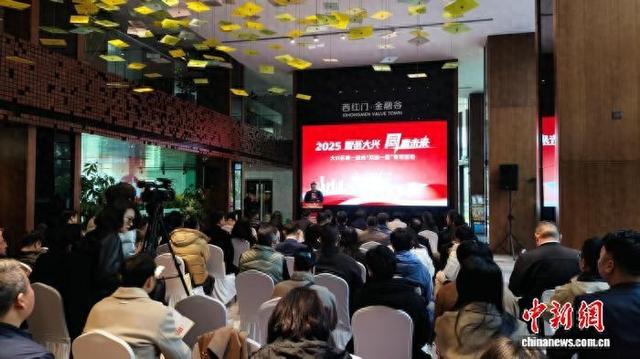
Group 1 - The core viewpoint of the articles highlights the significant role of Beijing Daxing International Airport in enhancing international connectivity and economic development in the Daxing District, with a projected passenger throughput exceeding 50 million by 2025 [2] - Daxing District is leveraging its airport's global reach to establish "window parks" for industries such as hydrogen energy, biomedicine, and commercial aerospace, aiming to showcase national enterprises on the international stage [2] - The Daxing District's United Front is actively proposing high-value projects to inject vitality into the region's high-quality development, focusing on internationalization opportunities [2] Group 2 - The Daxing Airport has spurred the development of the air economy, prompting continuous attention from the United Front members on how to tap into the economic potential behind route aggregation [3] - A proposal was made to construct a logistics information platform to promote "one-stop" customs clearance and accelerate the development of modern logistics supply chains during the 14th Five-Year Plan period [3] - The "Double Plus One Promotion" initiative has resulted in the submission of 237 pieces of information, with 20 proposals being adopted, focusing on various sectors including hydrogen energy and cultural tourism [3] Group 3 - Daxing District is facilitating connections between local enterprises and national businesses through frequent visits and industry matchmaking, resulting in the establishment of 58 high-quality projects since the launch of the "Double Plus One Promotion" initiative [4] - The projects include those in the biomedicine sector, focusing on innovative drug development and clinical needs in neurodevelopmental and neurodegenerative diseases [5] - The Daxing District is committed to supporting enterprises in expanding their operations and enhancing international market access through collaborations and resource sharing [5]

地产下游季节性回调,上游价格改善
Hua Tai Qi Huo· 2026-01-30 05:52
Industry Overview Upstream - International oil prices improved compared to last week, and prices of eggs, palm oil, copper, and zinc continued to rise [2] Midstream - PX and urea prices remained high, power plant coal consumption was low, and road asphalt construction was at a low level [3] Downstream - Commercial housing sales in first, second, and third-tier cities declined seasonally, while domestic flight frequencies increased [3] Industry Events Production Industry - The Commercial Spacecraft and Application Industry Chain Co-chain Action Conference announced that China will layout more "space +" future industries, and China Aerospace Science and Technology Group will implement five major projects during the 15th Five-Year Plan period [1] Service Industry - The State Council issued a work plan to support service consumption, focusing on key and potential areas, and encouraging the improvement of infrastructure for residential services [1] Key Price Indicators | Industry | Indicator | Price | Change | | --- | --- | --- | --- | | Agriculture | Spot price of eggs | 8.5 yuan/kg | 4.28% | | Agriculture | Spot price of palm oil | 9296.0 yuan/ton | 5.30% | | Non-ferrous metals | Spot price of copper | 103206.7 yuan/ton | 2.97% | | Non-ferrous metals | Spot price of zinc | 25280.0 yuan/ton | 4.05% | | Energy | Spot price of WTI crude oil | 63.2 dollars/barrel | 4.27% | | Energy | Spot price of Brent crude oil | 67.4 dollars/barrel | 3.26% | | Chemical | Spot price of PTA | 5314.8 yuan/ton | 4.24% | | Chemical | Spot price of polyethylene | 6905.0 yuan/ton | 3.11% | [34]
多视角解锁中国商业航天规划未来新图景 | 如何干?一文梳理↓
Yang Shi Wang· 2026-01-30 05:37
Core Viewpoint - The Commercial Space Industry Chain Conference held in Shanghai announced significant developments, including the potential reduction of launch costs, promotion of space tourism, resource development, and space traffic management [1] Group 1: Launch Cost Reduction - The vision report projects that by 2030, the low Earth orbit constellation will be largely established, and the cost of launching will decrease to below 10,000 yuan per kilogram, down from the current approximately 70,000 yuan per kilogram [7] - The advancement of reusable rocket technology and new applications could significantly expand the range of application scenarios in the commercial space sector [7] Group 2: Communication Coverage - The vision report highlights plans for achieving full communication coverage in remote areas, with further integration of Tian Tong and Bei Dou terminals to eliminate communication blind spots in oceans and deserts [9] - Centimeter-level positioning will be realized to ensure no blind spots in coverage, benefiting tourists and workers in remote areas [9] Group 3: New Development Areas - During the 14th Five-Year Plan period, the industry aims to promote new fields such as space tourism, space digital infrastructure, space resource development, and space traffic management [11] - The construction of gigawatt-level space digital infrastructure is planned to enable comprehensive data processing capabilities [11] Group 4: Space Resource Development - The "Tian Gong Kai Wu" major special project will focus on key technologies for resource exploration, intelligent autonomous mining, low-cost transportation, and in-orbit processing of small celestial bodies [12] - Recent discoveries of natural single-walled carbon nanotubes and graphite carbon in lunar samples suggest the potential for high-value materials on the moon and other celestial bodies [15] Group 5: Space Traffic Management - The industry will address the growing challenges of space traffic safety by developing key technologies for monitoring, warning, and clearing space debris [17] - This initiative aims to establish a solid foundation for China's active role in international space traffic management regulations and ensure the safe operation of space infrastructure [17]

商业航天企业 IPO 加速,商业航天产业有望加速扩张
Changjiang Securities· 2026-01-30 05:08
Investment Rating - The industry investment rating is "Positive" and maintained [7] Core Insights - The commercial aerospace industry in China is at a critical stage of transitioning from technology incubation to industrial explosion, driven by policy support and technological breakthroughs. Major commercial aerospace companies are expected to undergo a series of IPOs, which will facilitate industry development through capital operations. Attention is recommended on core suppliers across the industry chain, particularly those related to satellite applications [2][11]. Summary by Sections Recent Developments - Recently, three companies, Xinghe Power, Interstellar Glory, and Tianbing Technology, updated their IPO guidance progress. Following the acceptance of Blue Arrow Aerospace's IPO on the Sci-Tech Innovation Board, five domestic commercial aerospace companies focusing on launch vehicles have initiated the IPO process [2][4]. Market Dynamics - The financing market is active, reflecting the high prosperity of China's commercial aerospace industry. In 2025, the total financing amount for the commercial aerospace industry reached 18.6 billion, a year-on-year increase of 32%. The most popular financing areas include satellite applications (8.7 billion), rocket manufacturing (6.17 billion), and satellite manufacturing (3 billion) [11]. Future Outlook - The commercial aerospace market in China is projected to reach 1.2 trillion by 2024 and is expected to exceed 3.5 trillion by 2030, with an average annual growth rate of approximately 18%. The active financing market indicates a positive outlook for the development of commercial aerospace, and with continuous breakthroughs in reusable technology, the market is likely to expand further [11].
我国将布局更多 “太空+”未来产业
Xin Lang Cai Jing· 2026-01-30 04:12
Group 1 - The core viewpoint of the article is that China is planning to expand its "space+" future industries through the development of commercial aerospace applications and infrastructure [1][2] - China Aerospace Science and Technology Corporation will lead the commercial aerospace industry chain during the 14th Five-Year Plan, focusing on strategic deployment and ecosystem construction [1] - Five major projects will be implemented, including the development of space digital infrastructure, space resource development, space traffic management, and space tourism [1] Group 2 - In terms of space digital infrastructure, the plan includes building gigawatt-level space digital infrastructure and creating a new space system architecture that integrates cloud, edge, and terminal [1] - For space resource development, a major project called "Tian Gong Kai Wu" will be launched to focus on key technologies such as small celestial body resource exploration and low-cost transportation [1] - In space traffic management, efforts will be made to develop key technologies for monitoring, warning, and clearing space debris, which will support the establishment of international rules for space traffic management [1][2] Group 3 - The space tourism sector will see accelerated development of suborbital and orbital space tourism vehicles, with plans for operational systems to facilitate suborbital space tourism flights [2] - The conference on commercial aerospace applications was attended by over 400 representatives from government, enterprises, research institutions, and financial organizations [2]
【掘金行业龙头】数据中心+商业航天+业绩预增,公司海底数据中心产品全面进入商业化阶段,2025年净利预增超3.8倍
财联社· 2026-01-30 03:59
《电报解读》是一款主打时效性和专业性的即时资讯解读产品。侧重于挖掘重要事件的投资价值、分析 产业链公司以及解读重磅政策的要点。即时为用户提供快讯信息对市场影响的投资参考,将信息的价值 用专业的视角、朴素的语言、图文并茂的方式呈现给用户。 数据中心+商业航天+业绩预增,海底数据中心产品全面进入商业化阶段,先后参与国内两大项目,2025年净 利预增超3.8倍,联合中标海上回收船项目,这家公司雷达产品打入欧洲市场。 前言 ...

1月30日证券之星午间消息汇总:央行出手!公开市场净投放3525亿元
Sou Hu Cai Jing· 2026-01-30 03:45
Macro News - The central bank conducted a net injection of 352.5 billion yuan today through a 4.775 trillion yuan reverse repurchase operation at a rate of 1.40%, maintaining the previous rate [1] - The National Bureau of Statistics plans to improve the statistical system conducive to the construction of a unified market by 2026, focusing on enhancing statistical monitoring in various sectors [1] - President Trump declared a national emergency, threatening to impose tariffs on goods from countries supplying oil to Cuba [1] Industry News - Shanghai announced plans to build a commercial aerospace industry worth 100 billion yuan in the Minhang district, aiming for a total industry scale of around 100 billion yuan by 2027 [2] - The "Rocket Star City" will cover an area of approximately 9.3 square kilometers, focusing on the entire chain of commercial aerospace from R&D to application [2] - China has achieved a breakthrough in ground-space laser communication with a speed of 120 Gbps, marking a significant advancement in its business application capabilities [3] - The European chemical industry is facing severe pressure, with a reported closure of 37 million tons of capacity, representing 9% of total capacity, and a drastic reduction in annual investments [4] Sector Insights - UBS maintains a bullish outlook on gold, raising its price targets for March, June, and September 2026 to $6,200 per ounce, with a year-end forecast of $5,900 per ounce [5] - Galaxy Securities highlights lithium as a key mineral for energy transition, predicting a long-term positive trend despite short-term oversupply expectations [5] - Aijian Securities notes that the current price increase cycle is driven by dual demand from servers and smartphones, with AI server demand expected to remain strong [5]
全球风险溢价重估之下,中国资产的独特价值正在显现
私募排排网· 2026-01-30 03:35
Core Viewpoint - The article emphasizes the shift in global asset pricing logic from focusing on growth and policy to being influenced by conflicts and uncertainties, particularly in the context of rising geopolitical risks and their impact on investment strategies [3][4]. Group 1: Global Market Dynamics - Over the past decade, global asset pricing has primarily revolved around central bank policies, inflation trajectories, and economic growth, but this framework is changing due to prolonged geopolitical conflicts [4]. - The World Economic Forum's 2026 Global Risk Report identifies "geoeconomic confrontation" and "interstate conflict" as major long-term risks, indicating a heightened focus on tail risks among global investors [4][5]. Group 2: Impact of Geopolitical Risks - The changing landscape leads to three main impacts: asset prices becoming more sensitive to sudden events, increased risk premiums for safe and physical assets, and a decline in the effectiveness of relying solely on economic recovery and profit growth for asset allocation [6]. - The surge in gold prices above $5,000 per ounce and silver prices above $100 per ounce reflects the dominance of "conflict premium and safe-haven demand" in pricing, indicating a need for strategies that address both trends and uncertainties [6]. Group 3: China's Asset Advantages - China's assets are gaining recognition for their policy independence, which is particularly valuable in a high-uncertainty environment, as the country maintains a focus on stable growth and liquidity [9]. - This policy orientation suggests that Chinese assets are less exposed to external geopolitical conflicts, making them more attractive for long-term investors seeking stability and potential growth [9]. Group 4: Investment Reallocation - With the expiration of high-interest deposits and a low-interest environment, long-term funds are seeking new allocation directions, with potential flows into wealth management, insurance, public funds, and A-shares [10]. - The annualized return of the CSI 300 index at approximately 7.62% highlights the relative attractiveness of equity assets compared to other investment options, such as real estate and government bonds [10]. Group 5: Asset Allocation Strategy - A-shares are positioned as a core holding in investment portfolios due to their lower direct exposure to external conflicts and the potential for policy support [12]. - Satellite positions in portfolios should focus on commodities and macro strategies to enhance flexibility and mitigate risks associated with geopolitical uncertainties [12].

商业航天热点跟踪
2026-01-30 03:11
Summary of Key Points from SpaceX and Commercial Space Industry Conference Call Company and Industry Overview - **Company**: SpaceX - **Industry**: Commercial Space Industry Core Insights and Arguments - **Revenue and User Growth**: SpaceX's revenue exceeded $15 billion in 2025, with approximately 5 million new users, bringing the total user count close to 10 million across 35 new markets [1][2] - **Satellite Deployment**: By the end of 2025, SpaceX had launched a total of 10,839 satellites, with over 9,000 operational, indicating rapid business expansion [1][3] - **Starlink Network Performance**: In 2025, Starlink achieved significant improvements in network speed, with average download speeds exceeding 200 Mbps and upload speeds reaching 30 Mbps, with a latency of 26 milliseconds [1][4] - **Future Satellite Plans**: SpaceX plans to produce and deploy V3 version satellites in 2026, expecting download speeds to exceed 1TB and upload speeds to reach 200GB. The FCC has approved the deployment of an additional 7,500 second-generation satellites, bringing the total authorized to 15,000 [1][4] - **Global Coverage Goals**: By 2030, SpaceX aims to complete a global network of 42,000 satellites, enhancing internet connectivity and integrating with Tesla's autonomous driving technology to promote smart city development [1][5] - **IPO Preparation**: SpaceX is preparing for an IPO with a valuation of $1.5 trillion, expecting to raise several billion dollars, reflecting market confidence in its future growth and business model [1][6] Additional Important Insights - **Core Drivers of SpaceX**: Key drivers include the mass production of Starship rockets, expansion of the Starlink network, development of space computing centers, and strategic competition in AI [2][7] - **China's Space Strategy**: China is following a differentiated strategy in space, focusing on a unified network to ensure communication sovereignty and security, with plans to deploy 203,000 satellites by 2026-2027 [2][16] - **International Competition**: The global space launch sector is experiencing rapid growth, with SpaceX leading the market. In 2025, there were 329 launches globally, with SpaceX accounting for 165 of those [2][18] - **Technological Challenges**: The industry faces challenges in satellite manufacturing, including the need for advanced components and the transition to automated production processes [31][36] - **Investment Opportunities**: The commercial space market is expected to reach a trillion-dollar scale in the next decade, with significant investment opportunities in reusable rockets, satellite production, and integrated navigation technologies [57][58] Conclusion The commercial space industry, particularly through SpaceX's advancements, is poised for significant growth and transformation. The combination of technological innovation, strategic planning, and market demand presents numerous investment opportunities in the coming years.
千亿商业航天产业蓄势待发,航空航天ETF(159227)近1周份额增长1.7亿份
Xin Lang Cai Jing· 2026-01-30 03:06
Group 1 - The China Aerospace Science and Technology Corporation plans to enhance commercial launch capabilities and develop competitive commercial rockets for regular transportation, aiming for reusable rockets to achieve scalable and mature commercial applications [2] - Shanghai is focused on becoming a national hub for the commercial aerospace industry, targeting an industry scale of approximately 100 billion yuan by 2027, with a planned area of about 9.3 square kilometers for the "Rocket Star City" [2] - The East Wu Securities report highlights that SpaceX is set to enter a quiet period ahead of its IPO, aiming to raise over $30 billion, with part of the funds allocated for developing space-based data centers [2] Group 2 - The Aerospace ETF (159227) closely tracks the China Aerospace Index, covering key industry chain segments such as aerospace equipment, satellite navigation, and new materials, with a high weight of 70% in commercial aerospace concepts [3] - The top ten holdings in the Aerospace ETF include industry leaders such as Aerospace Development, China Satellite, and Aerospace Electronics [3] Group 3 - As of January 30, 2026, the China Aerospace Industry Index (CN5082) showed mixed performance among its constituent stocks, with Beimo High-Tech leading at an increase of 8.87% [1] - The Aerospace ETF recorded a turnover rate of 7.49% and a trading volume of 244 million yuan, with an average daily trading volume of 732 million yuan over the past month [1] - The Aerospace ETF experienced a significant increase in shares, growing by 170 million shares in the past week, with a net inflow of 131 million yuan recently [1]


