
服务业

Search documents
推动人工智能更好赋能高质量发展
Jing Ji Ri Bao· 2025-08-29 00:09
Core Insights - Artificial intelligence (AI) is recognized as a strategic technology driving a new wave of technological revolution and industrial transformation, with the Chinese government emphasizing the integration of AI into various sectors to enhance economic and social development [1][2][3] Group 1: Advantages and Conditions for Promoting "AI+" - China possesses rich data resources, a complete industrial system, and a vast market, which are advantageous for the development of AI [2][3] - The total national data production is projected to reach 41.06 zettabytes (ZB) in 2024, reflecting a year-on-year growth of 25% [2] - The country has a comprehensive industrial system that supports the application and innovation of AI technologies across various sectors [2][3] Group 2: Key Areas and Main Tasks for "AI+" Implementation - The "AI+" action plan outlines development goals for 2027, 2030, and 2035, aiming for comprehensive AI empowerment of high-quality development by 2030 and a transition to an intelligent economy and society by 2035 [4] - The plan focuses on deep applications of AI in science and technology, industrial development, consumer quality enhancement, public welfare, and governance capabilities [4] Group 3: Specific Applications of "AI+" - In scientific research, AI is transforming traditional paradigms into data-driven approaches, significantly shortening research cycles and enhancing innovation [5] - AI is set to upgrade traditional industries, improve manufacturing quality and efficiency, and foster new industries and business models [6] - The consumer ecosystem will evolve with AI, enhancing service quality and creating new consumption scenarios [6][7] - AI will enhance public welfare by improving education, healthcare, and employment opportunities [7] - Governance capabilities will be strengthened through AI, promoting smart city initiatives and integrated public safety systems [7][8] Group 4: Support for Sustained "AI+" Implementation - Continuous implementation of "AI+" requires advancements in foundational research, key technologies, and infrastructure [9][10] - There is a need for innovation in data supply and computing infrastructure, with a focus on building a national integrated computing network [9] - Talent development and a robust policy framework are essential for fostering a conducive environment for AI growth [10]
90家苏企入围发挥挑大梁作用
Xin Hua Ri Bao· 2025-08-28 23:44
江苏作为民营经济大省,2024年全省民营经济增加值7.98万亿元,占全省GDP比重达58.2%,在经济大 省挑大梁中发挥着重要作用。在2025中国民营企业500强榜单中,江苏入围企业数位居全国第二。其 中,苏南入围71家,苏中入围11家,苏北入围8家。江苏营业收入千亿元以上企业11家,比上年增加1 家。 入围500强企业是江苏发展新质生产力的重要力量,其中制造业企业61家,分布在全省"1650"产业体 系,具有较强的行业影响力和带动力;服务业企业18家。入围企业研发投入总额达到751.7亿元,研发 人员8.3万人,有效国内发明专利数2.4万件,分别比上年增加7.5%、5.1%、32.6%。入围企业纳税总额 1353.6亿元,年纳税额超过10亿元的企业28家。吸纳就业总数130.6万人。 本报讯 (记者 黄伟 崔昊) 昨日,全国工商联发布2025中国民营企业500强、中国制造业民营企业500 强、中国服务业民营企业100强榜单,江苏分别有90家、82家、15家入围,比上一年分别增加1家、3 家、2家。京东集团、阿里巴巴、恒力集团位居中国民营企业500强前三。其中,恒力集团位居制造业民 营企业500强首位。 本次 ...
《中共中央 国务院关于推动城市高质量发展的意见》发布 建立可持续的城市建设运营投融资体系
Zhong Guo Zheng Quan Bao· 2025-08-28 22:09
Core Viewpoint - The document outlines a comprehensive plan by the Central Committee and the State Council to promote high-quality urban development, emphasizing sustainable financing, urban infrastructure, and enhanced city governance by 2030 and 2035 [1][4]. Group 1: Urban Financing and Debt Management - The plan aims to establish a sustainable urban construction and operation financing system, emphasizing the need to curb new local government hidden debts [1][4]. - It encourages the integration of fiscal funds, social capital, and financial channels, with increased central government support for major safety and basic livelihood projects [4]. Group 2: Urban Development and Infrastructure - The document proposes 23 policy measures to enhance urban development, focusing on optimizing urban systems, fostering new development drivers, and promoting green low-carbon transitions [2][3]. - It highlights the importance of developing modern urban clusters and metropolitan areas, enhancing inter-city cooperation, and improving urban governance capabilities [2][3]. Group 3: Housing and Community Development - The plan emphasizes the need for a new model of real estate development to meet diverse housing demands, including safety, comfort, and sustainability [5][6]. - It advocates for the renovation of old urban areas and the construction of integrated communities with improved public services [6]. Group 4: Technological and Infrastructure Advancements - The document calls for the enhancement of urban infrastructure, including the rollout of 5G networks and the optimization of transportation systems to improve commuting efficiency [6]. - It stresses the importance of developing new urban infrastructure to support modern living and economic activities [6].
浙江民企蝉联“三榜”第一:创新驱动量质齐升 全球布局深化
Sou Hu Cai Jing· 2025-08-28 19:06
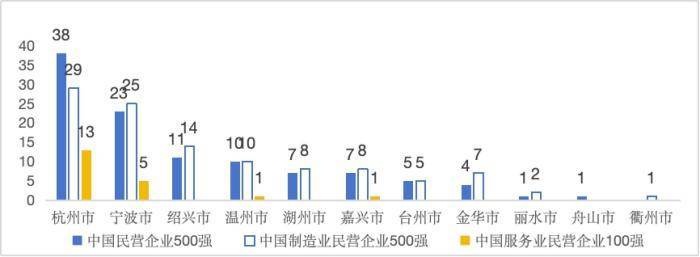
Core Insights - Zhejiang has 107 companies listed in the "Top 500 Private Enterprises in China," an increase of 1 from last year, maintaining its position as the top province for 27 consecutive years [1] - The revenue threshold for the three lists has increased, with the "Top 500 Private Enterprises" requiring a minimum of 27.023 billion yuan, the "Top 500 Private Manufacturing Enterprises" at 15.701 billion yuan, and the "Top 100 Private Service Enterprises" at 30.775 billion yuan [1] - The total revenue of the 107 listed companies reached 9.8 trillion yuan, with an average revenue of 919.56 million yuan, reflecting a growth of 6.95% and 5.95% respectively compared to last year [1] Group 1: Company Performance - 83 companies reported both revenue and profit growth, accounting for 77.57% of the listed companies [1] - There are 24 companies with revenue exceeding 10 billion yuan, an increase of 3 from last year, including new entrants such as Cainiao, Satellite Holdings, and Huayou Cobalt [1] - The manufacturing sector remains dominant, with 71 out of 107 companies in the "Top 500 Private Enterprises" being manufacturing firms, an increase of 2 from last year [2] Group 2: Innovation and R&D - Among the 107 companies, 100 reported a total R&D expenditure of 228.117 billion yuan, averaging 22.81 million yuan per company [3] - The number of R&D personnel across 99 companies reached 206,000, with an average of 2,080.57 per company, representing 11.07% of total employees [3] - Approximately two-thirds of the reporting companies have invested in strategic emerging industries, particularly in new materials and new energy sectors [3] Group 3: Regional Distribution and Global Expansion - The three lists cover 145 companies across 11 cities in Zhejiang, with Hangzhou, Ningbo, and Shaoxing leading in the number of listed companies [3] - Zhejiang companies are increasingly expanding their overseas investments, with a presence in all six continents, including 47 in Asia (excluding mainland China), 28 in Europe, and 21 in North America [5] - The improvement in the business environment in Zhejiang has supported the growth of these companies, with initiatives from the Zhejiang Provincial Federation of Industry and Commerce aimed at strengthening the "Top 500 Private Enterprises" [5]

万业企业:8月27日召开董事会会议
Mei Ri Jing Ji Xin Wen· 2025-08-28 18:47
Group 1 - The company Wan Ye Enterprise (SH 600641) announced on August 29 that its 12th third board meeting was held via communication on August 27, 2025, where it reviewed the proposal to cancel the supervisory board and amend the company’s articles of association [1] - For the year 2024, the revenue composition of Wan Ye Enterprise is as follows: real estate accounts for 48.34%, manufacturing accounts for 41.44%, services account for 8.72%, and other businesses account for 1.49% [1]

AI相关重磅文件发布,六大行动激活全领域智能化潜力
Di Yi Cai Jing· 2025-08-28 06:49
Core Viewpoint - The Chinese government has issued the "Opinions on Deepening the Implementation of 'Artificial Intelligence+' Action," emphasizing the integration of AI across various sectors to enhance productivity and improve living standards, ultimately contributing to China's modernization efforts [1][3]. Summary by Relevant Sections Six Key Actions - The "Artificial Intelligence+" initiative includes six major actions aimed at enhancing scientific technology, industrial development, consumer quality, public welfare, governance capabilities, and global cooperation [2][3]. Action 1: AI in Scientific Technology - AI is transforming the research sector from an "experience-driven" approach to a "data-driven" model, facilitating breakthroughs in fields like biomedicine and new materials, while also aiding in public policy formulation [4]. Action 2: AI in Industrial Development - The initiative aims to elevate three industrial sectors: - **Industrial Sector**: Transitioning from scale expansion to lean production through global optimization and precise control [5]. - **Agricultural Sector**: Addressing traditional farming challenges and promoting digital transformation across the agricultural supply chain [5]. - **Service Sector**: Redefining service models to enhance consumer experience and improve logistics and financial services [5]. Action 3: AI in Consumer Quality - This action focuses on upgrading demand-side consumption, expanding intelligent consumption scenarios in areas such as culture, tourism, health, and home goods, shifting from "product consumption" to "intelligent quality consumption" [6]. Action 4: AI in Public Welfare - AI is set to enhance public services by improving healthcare access, personalizing education, and upgrading elderly care from basic support to intelligent wellness solutions [8]. Action 5: AI in Governance Capabilities - AI technologies are expected to improve public governance efficiency, enhancing social security monitoring and optimizing government service processes [8]. Action 6: AI in Global Cooperation - The initiative encourages international collaboration in AI, promoting the global expansion of China's AI-related industries and enhancing its influence in the global value chain [8]. Long-term Value - The implementation of the "Opinions" is seen as a catalyst for profound productivity transformation, with AI expected to integrate deeply into various sectors, fostering new infrastructure, technology systems, industrial ecosystems, and job opportunities, thereby driving China's modernization in the intelligent era [9].
45岁的深圳 越来越开放|湾区观察
Di Yi Cai Jing· 2025-08-27 15:44
Core Insights - Shenzhen celebrates its 45th anniversary, marking its continuous commitment to reform and opening up, symbolized by the successful test flight of the third runway at Shenzhen Bao'an International Airport [2][3] Economic Performance - Shenzhen's GDP is projected to grow at an average rate of 5.5% from 2020 to 2024, reaching 3.68 trillion yuan, with a per square kilometer output of 1.84 billion yuan [3] - The city has achieved an impressive average annual compound growth rate of 10.2% in foreign trade over the past five years, surpassing the national average by 2.1 percentage points [3] - In 2024, Shenzhen's total import and export volume is expected to reach 4.5 trillion yuan, solidifying its position as "China's Foreign Trade Capital" [3] Foreign Investment - Over the past five years, Shenzhen has established 33,000 new foreign-invested enterprises, accounting for 14.6% of the national total, with actual foreign investment reaching approximately 40 billion USD [3][4] - The city is expanding its global economic ties, with investments now spanning 147 countries and regions, diversifying from traditional manufacturing to high-tech, finance, and energy sectors [3] Policy and Infrastructure Development - Shenzhen has implemented several initiatives to enhance its international business environment, including the 2025 work plan aimed at attracting global resources and improving competitiveness [5][6] - The city is actively pursuing cross-border infrastructure upgrades and customs reform to facilitate trade, as evidenced by record passenger traffic at border crossings [7] Future Outlook - Shenzhen aims to attract more global capital, enterprises, technologies, and talent, enhancing its role as a modern international metropolis [7][8] - The city is set to deepen its reform and opening-up efforts, focusing on cross-border trade facilitation and the integration of domestic and international markets [6][7]
人工智能+,重磅利好!国务院最新印发→
Sou Hu Cai Jing· 2025-08-27 01:57
Core Viewpoint - The State Council has issued the "Opinions on Deepening the Implementation of the 'Artificial Intelligence+' Action," aiming to integrate artificial intelligence across various sectors to enhance productivity and improve living standards, ultimately supporting China's modernization efforts [1][4]. Summary by Relevant Sections Overall Requirements - The implementation of the "Artificial Intelligence+" action will focus on leveraging China's rich data resources, complete industrial system, and broad application scenarios to foster new infrastructure, technology systems, industrial ecosystems, and job opportunities [5]. - By 2027, the goal is to achieve widespread integration of artificial intelligence in six key areas, with over 70% penetration of new intelligent terminals and significant growth in the core industries of the intelligent economy [5]. - By 2030, artificial intelligence is expected to fully empower high-quality development, with over 90% penetration of intelligent applications [5]. Key Actions - Six major actions are outlined: 1. Accelerating scientific discovery through AI-driven research methods [2]. 2. Promoting industrial development by fostering new AI-native business models and upgrading traditional industries [2]. 3. Enhancing consumer experiences through AI applications in various service sectors [2]. 4. Improving public welfare by creating smarter work and learning environments [2]. 5. Strengthening governance capabilities through AI in social management [2]. 6. Promoting global cooperation in AI to ensure equitable access and shared benefits [2]. Strengthening Support Capabilities - Eight foundational capabilities will be enhanced, including improving model capabilities, innovating data supply, optimizing application environments, and strengthening talent development [2][14]. - Emphasis on building a robust AI talent pool and enhancing educational frameworks to support AI development [14]. Organizational Implementation - The implementation of the "Artificial Intelligence+" action will be coordinated by the National Development and Reform Commission, with local governments and departments required to adapt the guidelines to their specific contexts [3][18]. - There will be a focus on promoting successful practices and fostering a collaborative societal atmosphere for AI development [3][18].
宁波富达:8月26日召开董事会会议
Mei Ri Jing Ji Xin Wen· 2025-08-27 00:11
Group 1 - Ningbo Fuda (SH 600724) announced the convening of its 11th 15th board meeting on August 26, 2025, to discuss the appointment of a vice president and other documents [1] - For the first half of 2025, Ningbo Fuda's revenue composition was as follows: Industrial accounted for 64.61%, commercial real estate 24.48%, retail 4.08%, services 3.66%, and other businesses 2.28% [1] Group 2 - The pet industry is experiencing a significant boom, with a market size of 300 billion yuan, leading to a surge in stock prices for related companies [1]

省政府“坚决扛好经济大省挑大梁责任”系列新闻发布会聚焦“勇争先”改革破障激活力,开放拓界显担当
Xin Hua Ri Bao· 2025-08-26 23:21
Economic Performance - Jiangsu's GDP reached 6.7 trillion yuan in the first half of the year, with a year-on-year growth of 5.7%, maintaining the highest economic increment in the country [1] - The province's foreign trade import and export totaled 2.81 trillion yuan, growing by 5.2% year-on-year, with actual foreign investment at 11.54 billion USD, both ranking first in the nation [1] Reform and Support for Private Economy - Jiangsu has established a dedicated bureau for private economic development, implementing 20 policies to support private enterprises, contributing over 64% to economic growth [2] - The province's industrial output value from private enterprises increased by 8.7% year-on-year in the first half of the year [2] Investment and Financing - From January to July, private capital in the water, electricity, gas, and heat sectors increased by 36.8% on top of an 84.9% rise last year [3] - The provincial financing coordination mechanism has provided over 2 trillion yuan in loans to support nearly 10 million small and micro enterprises [3] Innovation and Financial Mechanisms - Suzhou has introduced a "four-loan linkage" mechanism, issuing loans totaling 890.61 billion yuan from October last year to August this year [4] - The digital RMB transaction volume in Suzhou exceeded 9 trillion yuan, accounting for 70% of the national total [4] Open Economy and International Cooperation - Jiangsu is enhancing its high-level openness, combining "bringing in" and "going out" strategies to create a dual open hub [5] - The province has launched over 450 institutional innovation achievements through its free trade zone, with recent approval for a comprehensive development plan for the biopharmaceutical industry [5][6] Urban-Rural Integration and Infrastructure Development - Jiangsu is advancing urban-rural integration, with 460,100 agricultural transfer populations receiving housing support through public rental and guaranteed rental housing [8] - The province is implementing a comprehensive management system for urban infrastructure, enhancing safety and intelligence in urban management [9]