债券

Search documents
固定收益点评:超长债阴跌,怎么看?
Guohai Securities· 2025-12-03 06:33
Report Summary 1. Core Issues Addressed - Analyze the reasons for the recent decline in the bond market - Provide an outlook for the subsequent market trends [3] 2. Core Views - Interest rate decline requires positive factors for catalysis, and the yield curve may remain steep due to supply - demand dynamics - For band trading, it is advisable to avoid 30 - year treasury bonds for now. If investing in 30 - year treasury bonds, attention should be paid to the potential increase in liquidity of Special 02 and Ordinary 02 in the future - The coupon strategy has relatively higher certainty under loose liquidity conditions [6][8][18] 3. Summary by Section 3.1 Event - In the past month, despite many positive factors in the bond market (weak fundamentals, loose funds, less supply in the fourth quarter, and the traditional year - end front - running behavior of institutions), the market has seen more declines than gains, and ultra - long bonds have performed particularly weakly. As of December 2, 25 Special 02 has reached its highest level since listing [4][13] 3.2 Comments - **Central Bank's Bond Transactions**: In November, the central bank's treasury bond transactions were only 50 billion yuan. After the news was announced, the active 30 - year treasury bond showed a repair of about 0.5 basis points, indicating that the previous pessimistic expectations had materialized. The central bank's bond transactions are mainly for government bond issuance and to maintain liquidity, with limited actual benefits to the bond market [6][14] - **Banks' Bond Sales for Profit - Taking**: This year is the second year with a significantly higher proportion of ultra - long bond supply. As of December 2, the net financing of treasury bonds this year was 4.97 trillion yuan, of which bonds with a maturity of over 10 years accounted for 30% (1.48 trillion yuan), compared with 28% in 2024 and 7% in 2023. Due to duration assessment and profit requirements, banks have a "negative feedback" effect on ultra - long bonds. Some banks, such as rural commercial banks, are unable to absorb more ultra - long bonds, and banks as a whole have the demand to sell old bonds through AC/OCI accounts to realize floating profits [6][15] - **Trading - Desk Negative Factors**: The trading volume of 10 - year treasury bonds has significantly declined, with the daily trading volume of the active 10 - year treasury bond dropping from about 60 billion yuan to about 30 billion yuan. From the CNEX divergence index on December 2, the main selling institutions are funds and securities firms. Public funds are facing the uncertainty of new redemption fee regulations, and securities firms are still short - selling 30 - year treasury bonds by borrowing them [6][8][18] - **Insurance Institutions' Investment Preference**: This year, the main investment of insurance institutions is local government bonds, which may further increase the volatility of 30 - year treasury bonds [8][18]
第二批民营股权投资机构科创债发行,信用债和城投债发行规模环比分别下降15%和10%
Xin Lang Cai Jing· 2025-12-03 06:25
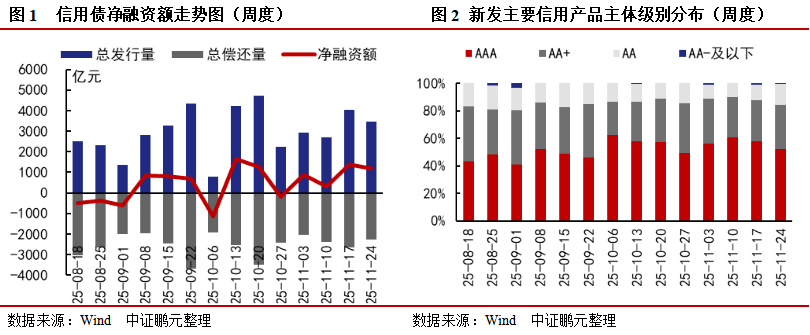
Key Points - The issuance scale of non-financial corporate credit bonds decreased by 15% week-on-week, with municipal bonds down 10% transitioning from net financing to net repayment, while real estate bonds increased by 35% with net financing up 1.7 times [1][48][53] - The average issuance rate of public corporate bonds and spreads widened, while medium-term notes, private bonds, and short-term financing showed mixed performance [1][21][67] - The total bond transaction volume decreased by 2% compared to the previous week, with credit bonds accounting for 15% of the total, down 0.5% [1][27] - The yield on 10-year government bonds rose by 2.5 basis points to 1.84%, with yields on government and credit bonds increasing across the board [1][29] - The yield on municipal investment bonds increased across all ratings [1][38] - There were 27 rating adjustments for non-financial corporate bonds last week, with no new credit risk events reported [1][41][50]


芦哲:明年资本市场将由流动性与科技双重驱动
Di Yi Cai Jing· 2025-12-03 04:48
Economic Outlook - The domestic economy is expected to grow steadily in 2026, with inflation gradually improving and corporate profits likely to continue rising after a turning point in 2025 [1] - China's economy is projected to grow by 4.9% in 2026, with a rebound in investment, accelerated infrastructure investment, and a narrowing decline in real estate investment [2] - Consumer spending is anticipated to be supported by subsidy policies, while export growth may be driven by demand from U.S. easing policies [2] Monetary and Fiscal Policy - Fiscal policy is expected to remain expansionary, with an increase of 620 billion yuan in incremental funds compared to 2025 [2] - Monetary policy will maintain structural easing, guiding funds towards key areas such as technological innovation [2] Asset Allocation - The overall preference for major asset classes is ranked as follows: stocks > commodities (industrial goods) > gold > exchange rates > bonds [1] - Bonds are viewed defensively, with 10-year rates expected to fluctuate between 1.7% and 2%, and 30-year rates between 1.9% and 2.3% [3] - The RMB is expected to appreciate gradually, potentially reaching around 6.8 by the end of 2026, with low annual volatility of 3% to 4% [4] Commodity and Stock Market Insights - Demand for non-ferrous metals like copper and aluminum is expected to increase due to AI computing and new energy, leading to a long-term price increase [4] - Gold prices are projected to fluctuate between $4,000 and $4,200 per ounce until the end of 2025, with an upward trend anticipated post-2026 due to liquidity easing [4] - The A-share market is entering the next phase of an "innovation bull," with inflation recovery driving profit restoration and valuation increases, supported by continuous inflows from foreign and domestic investors [4] U.S. Market Outlook - The U.S. stock market is expected to reach new highs, benefiting from a favorable macro environment and AI industry narratives, with upward revisions in earnings expectations for the S&P 500 for 2025 and 2026 [5] - However, high valuation levels and dependence on AI narratives may increase volatility and complicate trading conditions [5]
日本股市狂泻,债务远超警戒线,高市早苗嚣张喊话全球对日投资,日本团体接连请求访华!
Sou Hu Cai Jing· 2025-12-03 02:21
在全球经济不确定性加剧的背景下,日本近期股市大幅震荡、债务问题愈演愈烈,引发了国际社会的广泛关注和深思。根据日本媒体的报道,随着日 本央行行长植田和男开始暗示可能加息,日本日经指数狂泻近1000点,甚至一度跌破50000点,创下了近来的最大跌幅。这一系列动荡不仅重创了日 本资本市场,也波及到了美国和欧盟等主要资本市场,形成一场横扫全球的金融风暴。 首先,我们要深入了解日本当前的经济形势。日本的债务水平已超过GDP的200%,远远超过国际公认的60%安全线和90%高危线。在全球主要经济体 中,日本的财务状况可谓是最为严峻的。此种情况下,10年期国债收益率飙升、债券价格暴跌,既显示出市场对日本经济未来的不安,也反映出日本 政府在财政政策上的无所适从。 正如经济学家所言,国际资本是一群极度敏感的"逐利者",只有当他们评估了投资回报与风险后,才会做出决策。在当前台湾问题日趋复杂的局势 下,外国企业必然会对投资于日本持有更审慎的态度。这种焦虑或许并不会因为高市的激情四射而消失,相反,可能进一步加重了国际社会对日本经 济政策的不安。 不可忽视的是,日本的商界人士与政治领导层之间其实存有显著的分歧。诸多日本经济团体的领导, ...

日本加息对全球市场有何影响?
2025-12-03 02:12
日本加息对全球市场有何影响?20251202 摘要 日本央行加息预期引发市场波动,与此前预期新首相上台后延续宽松政 策不同,当前预期基于日本最新数据和通胀指标,显示宽松政策难以为 继,导致市场调整并转向加息预期。 PMI 数据显示企业主动去库存,11 月外需回升但生产端偏弱,企业为避 免亏损缩减生产和采购,用现有库存满足需求。此举短期增加经济压力, 但中长期有助于重启库存周期,或在明年下半年改善供需关系并推动 PPI 回升。 2025 年 A 股流动性充裕,企业存款活化显著,活期存款占比提升。财 政发债增加企业现金流,反内卷和贸易战导致制造业投资下滑,资金流 入股市,风险偏好上升亦促使企业资金入市,预计该趋势在 2026 年上 半年持续。 当前债券市场表现不佳,但央行关注价格而非数量,下半年利率区间维 持在 1.3%-1.5%。降息可能要等到 2026 年,目前不宜看空债券市场, 关注中央经济工作会议是否带来超预期政策调整。 Q&A 日本央行加息预期对全球市场产生了哪些影响? 日本央行加息预期对全球市场产生了显著影响。首先,日元套息交易的反转导 致投资者卖出高息资产,回流日元,这直接推动了全球债券市场利率上行 ...
10月债券市场发行超6.3万亿元
Ren Min Ri Bao· 2025-12-02 22:16
Core Viewpoint - The People's Bank of China reported that in October, the total issuance of various bonds in China's bond market reached 63,574.6 billion yuan, indicating robust activity in the bond issuance sector [1] Group 1: Bond Issuance Breakdown - Government bonds issued amounted to 11,695.5 billion yuan, reflecting significant government financing efforts [1] - Local government bonds totaled 5,604.7 billion yuan, indicating ongoing infrastructure and local projects funding [1] - Financial bonds issued were 8,010.8 billion yuan, showcasing the financial sector's reliance on bond markets for capital [1] - Corporate credit bonds reached 11,836.2 billion yuan, highlighting corporate financing through bond issuance [1] - Asset-backed securities from credit assets were issued at 343.4 billion yuan, representing a niche but important segment of the market [1] - Interbank certificates of deposit issuance was substantial at 25,649.0 billion yuan, indicating liquidity management among financial institutions [1]
金融珍珠港?俄打响第一枪,首发人民币主权债,人民币回归6时代?
Sou Hu Cai Jing· 2025-12-02 13:31
Core Viewpoint - The issuance of RMB-denominated sovereign bonds by Russia signifies a pivotal shift in the global financial landscape, challenging the dominance of the US dollar and marking the transition of the RMB from a transaction currency to a sovereign currency [1][3][10] Group 1: Implications of RMB Sovereign Bonds - Russia's decision to issue RMB bonds indicates a willingness to integrate the RMB into its sovereign credit system, reflecting a significant geopolitical and economic strategy rather than a mere necessity due to exclusion from Western financial systems [3][5] - The issuance is driven by the increasing volume of RMB in Russia due to energy trade settlements, creating a need for investment options for the surplus RMB held by Russian entities [3][5] - By establishing RMB-denominated sovereign debt, Russia aims to create a financial anchor for its de-dollarization efforts, solidifying the RMB's role within its financial system [5][7] Group 2: Strategic Considerations - The move is a strategic response to the understanding that US Treasury bonds are central to the global financial system, and by choosing the RMB, Russia seeks to access a financial channel that is less influenced by US control [5][8] - This action serves as a model for other countries outside the dollar system, demonstrating that it is possible to conduct trade and finance using the RMB, potentially encouraging similar moves by nations wary of the dollar's dominance [7][10] Group 3: Broader Financial Landscape - The issuance of RMB sovereign bonds represents a significant crack in the global currency structure, suggesting a shift from a dollar-centric system to a multi-currency framework [10] - The long-term implications of this shift could lead to the RMB becoming a foundational financial instrument for emerging economies, altering the dynamics of global finance [10]

【笔记20251202— 债券交易涨中介费 堪比 3000点加印花税】
债券笔记· 2025-12-02 13:24
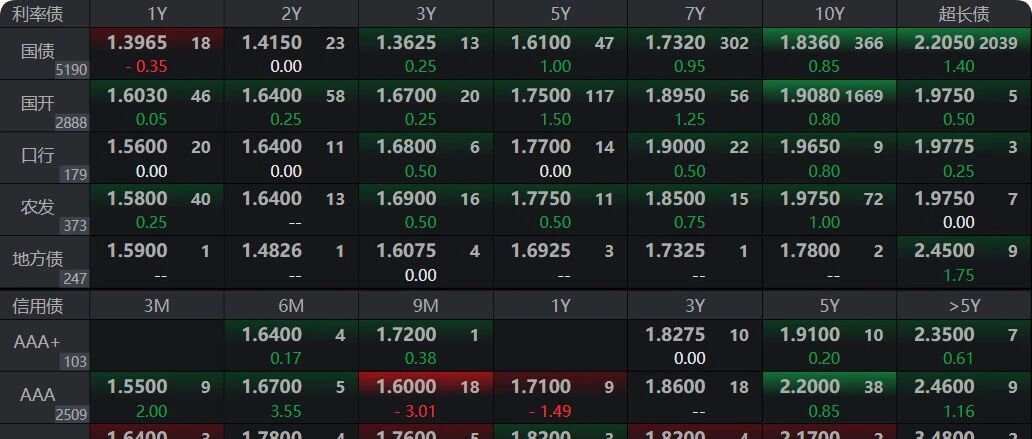
Core Viewpoint - The article discusses the challenges of predicting market movements and the emotional responses of investors to their predictions, highlighting the complexities of market dynamics and the impact of central bank actions on bond and stock markets [1]. Market Overview - The bond market is experiencing a slight increase in intermediary fees, comparable to the impact of a stamp duty on the stock market when it falls below 3000 points [3]. - The central bank conducted a net purchase of government bonds amounting to 50 billion yuan in November, while the stock market saw a slight decline [5]. - The liquidity in the market remains balanced and slightly loose, with the central bank conducting a 7-day reverse repurchase operation of 156.3 billion yuan, offset by 302.1 billion yuan maturing, resulting in a net withdrawal of 145.8 billion yuan [3][5]. Interest Rates and Bond Yields - The yield on 10-year government bonds opened at 1.828% and fluctuated throughout the day, reaching a peak of 1.836% before slightly retreating after the central bank's announcement [5]. - The weighted average rates for various repo codes are as follows: R001 at 1.36%, R007 at 1.49%, and R014 at 1.51%, indicating slight changes in the rates over the past month [4]. Investor Sentiment - Investors in the bond market expressed mixed feelings regarding the central bank's bond purchase announcement, with initial expectations of a larger purchase leading to a sense of relief when the actual figure was revealed [5]. - There is a growing concern among bond investors about the potential increase in intermediary fees for trading government bonds, which could further strain their profitability given the current low interest rates [5].
【信用债运行双周报】万科债券展期、商业不动产REITs试点将启动4家民营股权机构获风险分担工具支持拟发科创债9.3亿元
Xin Lang Cai Jing· 2025-12-02 11:41
Summary of Key Points Core Viewpoint - The credit bond market is experiencing significant activity with an increase in issuance and a variety of new products being introduced, while the secondary market shows rising yields and widening credit spreads. Group 1: Primary Market - The issuance scale of broad credit bonds has risen to 12,812.41 billion, an increase of 43.63%, with net financing rising by 2,332.98 billion to 4,082.25 billion [2][6] - Innovative products have seen a surge, with a total issuance of 2,136.64 billion, including 1,391.49 billion in sci-tech bonds and 731.28 billion in green bonds [2][6] - City investment bonds have also increased, with issuance rising by 23.42% to 1,090.82 billion and net financing turning positive at 206.96 billion [2][6][7] - The issuance scale of industrial bonds has reached 6,474.36 billion, up 43.91%, with net financing increasing by 1,021.88 billion to 2,294.91 billion [3][7] - Financial bonds have seen a rise in issuance to 3,763.3 billion, a 30.11% increase, with net financing up by 252.56 billion to 361.36 billion [3][8] Group 2: Secondary Market - Credit bond yields have generally risen, with the secondary market showing a quick upward trend in yields, particularly in subordinated perpetual bonds [4][9] - Credit spreads have widened, with the decline in credit bonds being more pronounced than in interest rate bonds, indicating a cautious market sentiment [4][9] - The market is expected to remain volatile in December, with attention on the impact of new regulations and the potential effects of Vanke's bond extension plan on the credit bond market [4][9]
香港第一金:降息预期拉满!黄金冲4264,白银暴涨100%,鲍威尔今晚定方向
Sou Hu Cai Jing· 2025-12-02 08:35
Core Insights - The recent surge in precious metals, particularly gold and silver, is driven by expectations of interest rate cuts by the Federal Reserve, with a market probability of 88% for a rate cut in December [4][5] - Economic indicators show signs of weakness in the U.S. economy, which supports the case for rate cuts and has led to increased demand for gold as a safe-haven asset [4][8] - Silver's price increase is attributed to its dual role as both a precious metal and an industrial commodity, benefiting from both monetary policy expectations and rising industrial demand [6][7] Group 1: Market Dynamics - Gold reached a six-week high of $4264 per ounce, while silver hit a historic high of $58.82 per ounce, reflecting a year-to-date increase of over 100% [3][4] - The decline in the U.S. dollar index to 99.01, its lowest in two weeks, has made gold cheaper for holders of other currencies, further stimulating demand [4] - The Federal Reserve's shift in focus from controlling inflation to stabilizing growth is expected to support gold prices, with predictions of gold potentially breaking the $4264 resistance level [5] Group 2: Silver's Unique Position - Silver's price surge is driven by its combination of safe-haven appeal and industrial demand, particularly in electronics and solar energy [6] - Recent improvements in manufacturing PMI in Europe and China have increased industrial demand for silver, contributing to its price rise [6] - Speculative interest in silver is heightened due to its higher volatility compared to gold, attracting investors seeking greater returns [6] Group 3: Economic Indicators - The U.S. manufacturing PMI fell to 48.2 in November, indicating ongoing contraction in the manufacturing sector, which could lead to broader economic impacts [8] - Upcoming key economic data, including the ADP employment report and PCE price index, will be critical in shaping market expectations regarding interest rates and economic health [8] - The potential for a dovish signal from Federal Reserve Chairman Powell could trigger a significant buying spree in the gold market [8]