消费电子

Search documents
Apple Creator Studio体验:重新定义生产力工具
Xin Lang Cai Jing· 2026-01-29 01:44
Core Insights - Apple has launched the Creator Studio, offering a subscription model at 38 yuan per month for students at 18 yuan, which includes access to nine major software applications such as Final Cut Pro, Logic Pro, and Pixelmator Pro [1] Pricing and Value Proposition - The total original price for purchasing all included software separately is 4478 yuan, making the subscription a cost-effective option at the price of a coffee per month [1] - The first month of the subscription is free, providing an incentive for users to try the service [1] Features and Compatibility - The Creator Studio supports AI visual search and rhythm detection, enhancing user experience [1] - It is compatible with both Mac and iPad devices, broadening its accessibility [1]



Mac mini被Clawdbot带火:统一内存+自部署AI,边缘计算的甜点来了
3 6 Ke· 2026-01-29 00:34
Core Viewpoint - The resurgence in sales of the M4 Mac mini is attributed to the deployment of the self-hosted AI assistant Clawdbot, which has gained popularity in overseas communities for its efficiency and ease of use [1][6]. Group 1: Product Performance and Features - Clawdbot is a self-deployable AI assistant that operates continuously, receiving information from various chat applications and utilizing different models and tools as needed [6]. - The Mac mini's unified memory architecture is highlighted as a significant advantage for AI applications, allowing for reduced data transfer times between CPU, GPU, and NPU [8][11]. - The unified memory design provides a larger usable memory pool at a lower cost, making the Mac mini a practical choice for AI tasks, especially in light of rising memory prices expected in 2026 [12][20]. Group 2: Market Dynamics and Trends - The popularity of the Mac mini is not solely due to its unified memory but also reflects a shift towards personal edge AI computing nodes, which are becoming essential for managing local and cloud resources [17][19]. - The current trend indicates that personal computing devices are evolving from mere input/output terminals to active computing nodes that can handle ongoing AI tasks [20]. - The Mac mini's success underscores a potential reconfiguration of hardware roles in the AI landscape, suggesting that future devices may integrate similar functionalities in a more lightweight form [20].

四大证券报精华摘要:1月29日
Xin Hua Cai Jing· 2026-01-29 00:13
Group 1: Market Trends and Investment Strategies - The A-share market has shown a significant divergence in index performance, with the CSI 500 index rising over 15% since the beginning of the year, while the Shanghai Composite Index only increased by 0.97% [1] - Private equity firms are analyzing investment logic and potential risks due to the widening "scissor difference" between indices, indicating a structural risk accumulation driven by the preference of incremental capital and macro liquidity [1] - The gold price has surged, breaking through important thresholds of $5200 and $5300 per ounce, driven by geopolitical tensions and economic factors, leading to increased investor demand for safe-haven assets [3] Group 2: Fund and Investment Product Developments - The number of qualified investors in the Beijing Stock Exchange has surpassed 10 million, marking a significant increase and indicating a new phase in market attractiveness and investor ecosystem development [4] - The scale of gold-themed ETFs has reached nearly 380 billion yuan, with a growth of approximately 100 billion yuan since the end of last year, reflecting the rising interest in gold investments [11] - "Fixed income +" funds have seen a steady increase in scale, reaching a historical high of 2.74 trillion yuan, as investors seek stable returns amid declining interest rates [9] Group 3: Economic Performance and Sector Growth - In 2025, 18 provinces in China outperformed the national GDP growth line, with Tibet leading at a growth rate of 7%, indicating a strong regional economic performance [13] - The consumer electronics sector is expected to thrive in 2025, with 18 out of 30 companies forecasting profitability, driven by advancements in AI and other emerging technologies [6] - The public fund management industry has reached a record high in assets under management, totaling 37.71 trillion yuan, with significant growth across various fund types [8]
TCL电子(01070.HK):TCL携手索尼 电视业务或将迎来新局
Ge Long Hui· 2026-01-28 21:49
Core Viewpoint - The company has signed a memorandum of understanding with Sony to establish a joint venture, with TCL holding 51% and Sony 49%, to operate Sony's home entertainment business globally, including product development, design, manufacturing, sales, logistics, and customer service [1] Group 1: Joint Venture Details - The joint venture aims to integrate operations for products such as televisions and home audio systems, with plans to start operations in April 2027 [1] - The memorandum includes arrangements for future licensing of patents, technology, and branding between the joint venture, Sony, and TCL [1] Group 2: Implications for Sony - Sony's television segment has seen a decline in market share from 6% a decade ago to 2% currently, as the company shifts focus towards IP-driven businesses like gaming and music [1] - The collaboration with TCL is expected to leverage TCL's cost efficiency and technology to revitalize Sony's television market presence and improve financial performance [1] Group 3: Implications for TCL - TCL is expected to gain access to high-end technology, top-tier branding, and distribution channels, enhancing the quality of its products [2] - The partnership is projected to significantly impact TCL's financials, with Sony's entertainment, technology, and services segment generating revenue of 2,409.3 billion yen and operating profit of 190.9 billion yen for FY2024, including television business revenue of 597.8 billion yen [2] - The combination of Sony's premium pricing and TCL's technological integration is anticipated to lead to improved profitability and performance for TCL [2] Group 4: Investment Outlook - TCL is positioned as a leading player in the global television industry, focusing on high-end products and global operations to steadily expand market share [2] - The company is expected to achieve adjusted net profits of 2.47 billion, 2.88 billion, and 3.45 billion HKD for the years 2025-2027, with corresponding dynamic P/E ratios of 13.1x, 11.2x, and 9.4x, maintaining a "buy" rating [2]
新技术催生新动能 18家消费电子公司2025年业绩预盈
Shang Hai Zheng Quan Bao· 2026-01-28 18:40
Core Insights - The A-share consumer electronics industry is expected to thrive in 2025, driven by technological innovation and business expansion, particularly in AI computing, new energy vehicles, and robotics [1] - Among 30 A-share consumer electronics companies that released 2025 earnings forecasts, 18 are expected to be profitable, with 8 companies projecting net profit growth exceeding 50% [1] Group 1: Emerging Business Growth - Companies are actively venturing into emerging fields like AI computing and new energy vehicles to counter intensified competition in traditional consumer electronics [2] - Lituo Electronics anticipates a net profit of 270 million to 330 million yuan for 2025, representing a year-on-year increase of 996.83% to 1240.57%, driven by improved profitability in computing and reduced losses in manufacturing [2] - Lianchuang Optoelectronics expects a net profit of 435 million to 532 million yuan, with a growth of 80.36% to 120.57%, benefiting from significant growth in its laser business [2] - Feirongda projects a net profit of 360 million to 420 million yuan, reflecting a growth of 57.23% to 83.43%, supported by diversified business segments [2] Group 2: Business Expansion and Digitalization - Yidao Information forecasts a net profit of 60 million to 78 million yuan, with a growth of 76.04% to 128.85%, attributed to business expansion and digital transformation efforts [3] - The company is also pursuing a strategic acquisition to enter the RFID sector, aiming to strengthen its market position [3] Group 3: Efficiency and Innovation - Leading companies are enhancing their profitability through technological innovation and smart manufacturing, optimizing supply chain efficiency [4] - Industrial Fulian expects a net profit of 35.1 billion to 35.7 billion yuan for 2025, an increase of 51% to 54% year-on-year, driven by rapid growth in diversified business areas [4] - Huqin Technology anticipates a revenue of 170 billion to 171.5 billion yuan, with a growth of 54.7% to 56.1%, and a net profit of 4 billion to 4.05 billion yuan, reflecting a growth of 36.7% to 38.4% [5] Group 4: Cost Control and AI Integration - Luxshare Precision aims for a net profit of 16.518 billion to 17.186 billion yuan, with a growth of 23.59% to 28.59%, through enhanced cost control and AI integration [6] - Qichuang Data focuses on smart computing and data storage, expecting a net profit of 1.05 billion to 1.25 billion yuan, with a growth of 51.78% to 80.69% [6] - The report indicates a trend towards maturity in AI hardware and software, with significant opportunities in the AI terminal market expected in 2026-2027 [6]

14年前的旧iPhone,仅55元一台,近30天订单量破十万,网友:可以玩游戏,拍“复古照”
新华网财经· 2026-01-28 14:11
Core Viewpoint - The resurgence of the iPhone 4S, originally released in 2011, has been driven by nostalgia and emotional connections, leading to significant sales despite its limited functionality and low price of 55 yuan [1][4][15]. Group 1: Sales and Market Response - The iPhone 4S has seen over 100,000 orders in the past month, significantly outperforming many new smartphone models [1]. - Social media discussions around the iPhone 4S have surged, with topics like "Is it worth buying an iPhone 4S for 55 yuan?" becoming popular search terms [3]. - The appeal of the iPhone 4S spans various demographics, including students, office workers, and digital enthusiasts [3]. Group 2: Consumer Sentiment and Nostalgia - Consumers are drawn to the iPhone 4S for its classic games and retro photography capabilities, which resonate with a sense of nostalgia [7][15]. - The low price point allows individuals who previously could not afford the device to finally purchase it, fulfilling a sense of regret from the past [15]. - The iPhone 4S is viewed as a "fashionable retro item," appealing to those seeking a connection to their youth and simpler times [4][15]. Group 3: Business Opportunities and Market Trends - The current trend reflects a shift in consumer demand from purely advanced performance to emotional resonance and simplified functionality [19]. - Companies are encouraged to capture nostalgic sentiments and integrate them into product designs, which could represent a new avenue for innovation [19]. - The ability of brands to identify and respond to these emotional connections will be a key indicator of their market insight and success [19].

内存涨价iPhone不涨价背后:苹果独占全球手机市场八成利润
Zhong Guo Jing Ying Bao· 2026-01-28 13:49
Core Viewpoint - Apple's pricing strategy for the iPhone 18 series is to "avoid price increases as much as possible," maintaining at least the starting price level of the iPhone 17 series, despite significant cost pressures from rising memory chip prices [2][4]. Group 1: Pricing Strategy - Apple aims to keep the starting price of the iPhone 18 series around 5999 RMB in the Chinese market, contrasting with expectations that new models would need to increase prices due to rising costs [4]. - This strategy is intended to enhance marketing effectiveness and solidify Apple's user base amid fierce competition, particularly as competitors may be forced to raise prices or reduce features [4]. Group 2: Cost Pressures - Samsung and SK Hynix have significantly raised the prices of low-power memory chips supplied to Apple, with increases of up to 80% to nearly 100% expected by the first quarter of 2026 [3]. - The negotiation cycle for memory pricing has shifted from biannual to quarterly, indicating increased price volatility and supply chain uncertainty [3]. Group 3: Profitability and Business Model - Apple's hardware products boast a gross margin of 36%, while its service business enjoys a gross margin of 75%, providing a strong financial cushion against rising costs [5][6]. - The iPhone business accounts for over 80% of the global smartphone industry's total profits, with net profits projected to reach approximately 840 billion RMB in the 2024 fiscal year [5]. - The iPhone 17 series, particularly the Pro models, has solidified Apple's dominance in the high-end market, with a net profit of 1500 RMB per unit sold, significantly higher than competitors [5]. Group 4: Service Business Growth - Apple's service revenue is projected to exceed 100 billion USD in the 2025 fiscal year, with a year-on-year growth of about 13% and a gross margin of around 75% [6]. - More than 50% of Apple's profits now come from its service business, which includes App Store commissions, iCloud storage, and various subscription services, creating a sustainable cash flow engine [6]. - Each iPhone sold serves as an entry point for long-term services and potential subscription revenue, reinforcing Apple's strategy to maintain competitive pricing while expanding its user base [6]. Group 5: Industry Impact - Apple's pricing and cost management strategies are seen as significant indicators for the broader consumer electronics industry, potentially influencing stock prices beyond Apple and its suppliers [7].
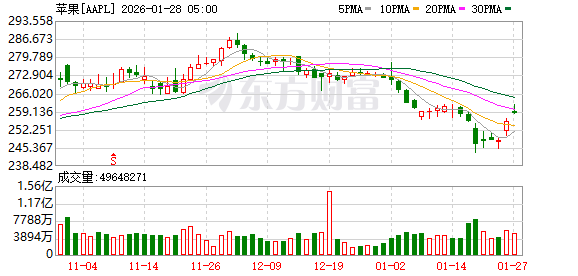
内存涨价潮席卷产业链 iPhone 18定价成谜
Guo Ji Jin Rong Bao· 2026-01-28 13:24
Core Viewpoint - The global storage chip industry is experiencing a price surge driven by AI demand, significantly impacting the consumer electronics sector, particularly Apple and its iPhone products [2][3]. Group 1: Price Trends and Supplier Negotiations - Apple is negotiating quarterly pricing for memory components, with expectations of further price increases in Q2 2026, reflecting a trend of rising costs due to tight memory supply [2]. - Samsung and SK Hynix are reportedly negotiating substantial price hikes for LPDDR memory supplied to Apple, with increases of over 80% and around 100% respectively [2]. - The anticipated launch of the iPhone 18 series may lead to additional price increases for LPDDR memory in the second half of 2026 [2]. Group 2: Market Dynamics and Demand Drivers - The current price increases in the storage chip market are attributed to a structural shift driven by AI demand rather than traditional cyclical fluctuations [3]. - AI servers are significantly increasing the demand for storage chips, with expectations of a 73% year-over-year growth in DRAM market value, reaching $165.7 billion by 2025 [3][4]. - The demand for DRAM is expected to continue rising, with first-quarter price increases projected to exceed 60%, and some product lines may see prices nearly double [4]. Group 3: Apple's Position and Strategy - Apple, as a major buyer of LPDDR memory, holds a strong negotiating position compared to other brands, which may struggle to secure memory supplies even if they are willing to pay higher prices [4]. - Despite potential pressure on hardware margins due to rising memory costs, Apple can leverage its brand strength and supply chain efficiency to maintain market share and profitability through service revenue [5]. - The upcoming earnings report on January 29 will be crucial for assessing Apple's ability to manage rising costs and the implications for its pricing strategy for the iPhone 18 series [5][6].
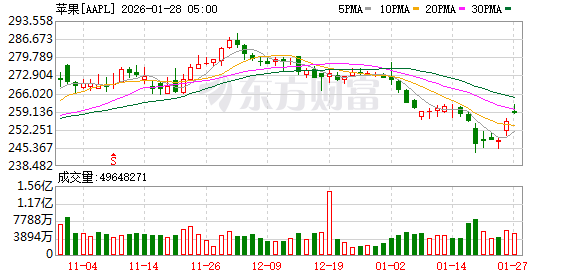
内存涨价潮席卷产业链,iPhone 18定价成谜
Guo Ji Jin Rong Bao· 2026-01-28 13:10
Core Viewpoint - The global storage chip industry is experiencing a price surge driven by AI demand, impacting the consumer electronics sector, with Apple facing rising memory costs for its products [1]. Group 1: Memory Price Increases - Apple is negotiating quarterly memory prices for its iPhones, with expectations of further increases in Q2 2026, reflecting a trend of rising costs due to tight memory supply [1]. - Samsung and SK Hynix are reportedly negotiating significant price hikes for LPDDR memory supplied to Apple, with increases of over 80% and around 100% respectively [1]. - The introduction of the iPhone 18 series is anticipated to further drive up LPDDR prices in the second half of 2026 [1]. Group 2: Market Dynamics - The current price increases in the storage chip market are attributed to a structural shift driven by AI demand rather than traditional cyclical fluctuations [2]. - TrendForce forecasts that the DRAM market will see a significant increase in value, reaching $165.7 billion in 2025, a 73% year-on-year growth, driven by increased demand from cloud service providers [2]. Group 3: AI Impact on Demand - AI servers are significantly increasing the demand for storage chips, with a notable rise in requirements for memory capacity, bandwidth, and access efficiency [3]. - The price increase for DRAM has been substantial, with last quarter's growth reaching 53-58%, and expectations of over 60% increases in the first quarter of this year [3]. Group 4: Apple's Position and Strategy - Apple is expected to maintain its pricing strategy for the iPhone 18 to avoid price hikes, leveraging its strong brand and supply chain management to mitigate the impact of rising memory costs [4]. - Despite potential pressure on hardware margins due to rising memory prices, Apple can offset costs through its large purchasing scale and by increasing market share in higher-margin service businesses [4]. Group 5: Market Reactions and Future Outlook - The upcoming earnings call for Apple is anticipated to influence stock prices across various sectors, with particular focus on management's comments regarding cost trends and supply chain risks [5].
美股“七巨头”财报,即将亮相
财联社· 2026-01-28 12:20
以下文章来源于科创日报 ,作者刘蕊 科创日报 . 科创圈都在关注的主流媒体,上海报业集团主管主办,《科创板日报》出品。 近几年来,每逢财报季,微软、苹果、英伟达、Alphabet、亚马逊、Meta和特斯拉这七家巨头公司都是聚光灯下的焦点,在本个财报季也 不例外。 北京时间本周四早间,"七巨头"中的三家(特斯拉、Meta和微软)即将率先公布财报,苹果也将在周五早间公布财报。 目前,华尔街分析师们对于"七巨头"的总体业绩充满信心,不过随着AI热潮逐步演变,那些能够从AI基建和变现势头中尝到甜头的公司显然 将更受投资者青睐。 "七巨头"的差异愈发凸显 与此同时,对于"七巨头"正大力推进的AI业务来看,来自资本、电力和政策等方面的限制也将愈发受到关注。 "七巨头"Q4业绩强劲 本周美股Q4财报季全面展开,标普500指数中有102家将公布财报,这其中就包括"七巨头"中的四家。 目前,华尔街对于"七巨头"的业绩表现充满信心。FactSet高级盈利分析师约翰·巴特斯预计,"七巨头"第四季度整体盈利增长率将达到 20.3%,远超其他公司4.1%的同比每股收益增长率,其中,英伟达、Alphabet和微软预计将会是最主要的领跑者 ...