
家电

Search documents
日企想在消费电子赛道继续挣扎,但意义不大了
3 6 Ke· 2026-01-28 09:06
Group 1 - Sony's collaboration with TCL has sparked discussions, marking a shift as the company plans to establish a joint venture while divesting its television business [2] - Sony has a history of divesting consumer electronics, having sold its VAIO business in 2014 and subsequently exiting the computer market, with its mobile division also facing layoffs [2][3] - By FY2024, Sony's entertainment segments—film, music, and gaming—account for over 60% of the group's revenue, indicating a strategic shift away from its identity as a consumer electronics giant [3] Group 2 - The global television market is projected to see a slight decline in shipments, with Sony's television sales significantly lagging behind competitors like TCL, which shipped 20.8 million units compared to Sony's 2.6 million in the first three quarters of 2025 [5][6] - Sony's display business revenue, including TVs and projectors, is expected to decline by approximately 10% year-on-year, reflecting ongoing challenges in profitability within the television sector [5][6] - The company aims to focus on high-value areas such as gaming, music, and film, which have proven to be more profitable, as evidenced by an increase in profit margins from 2.78% in FY2010 to 10.9% in FY2024 [6] Group 3 - Sony's partnership with TCL may leverage the latter's supply chain and cost efficiency to enhance global competitiveness in the consumer electronics market, with projections suggesting a combined market share of 16.7% by 2027 [7] - The global consumer electronics market is expected to grow, with a projected sales figure of $1.3 trillion in 2025, indicating a potential opportunity for companies like Sony to adapt and thrive [6][7] - Sony's venture into the electric vehicle market, with plans to launch its Afeela brand, reflects its ambition to diversify beyond traditional consumer electronics [8][9] Group 4 - The Japanese consumer electronics industry, including Sony, faces challenges as it struggles to maintain its position in a rapidly evolving global market, with many companies experiencing declines in market share [11][12] - The shift in focus from hardware to software and services is becoming increasingly important, with predictions that over 65% of future value in consumer electronics will come from software and subscription services [20][21] - Japanese companies, including Sony, are recognizing the need for innovation and adaptation in response to competitive pressures from global players, particularly in the areas of AI and smart technology [21][25]


突发,71岁董明珠卸任!
Sou Hu Cai Jing· 2026-01-28 08:40
Core Viewpoint - Gree's leadership transition, with Dong Mingzhu stepping down and Fang Xiangjian taking over, signals a strategic shift as the company matures in its semiconductor ambitions, particularly in silicon carbide chip production [2][5][14]. Group 1: Leadership Changes - Dong Mingzhu has resigned as the legal representative and executive director of Zhuhai Gree Electronic Components Co., Ltd., with Fang Xiangjian assuming these roles [2][3]. - This leadership change is perceived as a self-adjustment and management restructuring within Gree as it accelerates its semiconductor initiatives [5][14]. Group 2: Semiconductor Business Development - Gree's semiconductor venture, particularly in silicon carbide chips, has reached a significant stage of maturity, with the establishment of a fully automated production line for third-generation semiconductor chips [4][6]. - The company has invested heavily in chip research, with Dong Mingzhu previously stating that Gree would invest 50 billion yuan to ensure success in chip development [6]. - By the end of 2025, Gree's silicon carbide chip factory is expected to achieve an annual production capacity of 240,000 six-inch wafers, with over 70% of core equipment being domestically sourced [11]. Group 3: Market Position and Future Plans - Gree aims to expand its presence in the automotive chip market, targeting partnerships with major automotive companies like BYD and Changan, as the demand for chips in electric vehicles continues to grow [11][17]. - The domestic automotive chip market is projected to exceed 95 billion yuan by 2025, presenting a significant opportunity for Gree to establish itself in this competitive landscape [17]. - Gree's strategy includes transitioning from self-sufficiency to external expansion, with plans to produce chips for solar energy storage and logistics vehicles [17]. Group 4: Organizational Evolution - The leadership transition is part of Gree's broader organizational evolution, aiming to maintain strategic coherence while empowering capable individuals like Fang Xiangjian to lead specific initiatives [22][24]. - This shift reflects a move away from reliance on individual leadership towards a more systematic approach, which is crucial for navigating the complexities of the semiconductor and renewable energy sectors [24][25].


第八届「鼎新奖」榜单发布:创新标杆汇聚,共塑商业未来新范式
Jing Ji Guan Cha Wang· 2026-01-28 08:29
Core Insights - The "Dingxin Award" results were announced on January 28, recognizing companies that excel in innovation, sustainable development, and forward-looking leadership, aiming to promote high-quality development in the business sector [1]. Group 1: Award Winners - Corning China, Boss Electric (002508), Estée Lauder Group, and Innovent Biologics were awarded "Annual Outstanding Innovative Enterprises" for their competitive advantages through technological research and management breakthroughs [1]. - Feng's Group was recognized as the "Annual Globalization Innovation Model," highlighting its ability to integrate resources and expand markets across borders [1]. - Samsung China received the "Annual Social Responsibility Contribution Enterprise" award, while GoerTek (002241) and 3M were honored for their deep integration of ESG values and innovative practices in sustainability [1]. Group 2: Product Awards - The product awards focused on cutting-edge technology and market applications, with Huawei's Qingyun HM940, AMD's Ryzen AI Max+ 395 processor, Honor's Magic V5 foldable flagship, and Roborock's G-Rover robot vacuum being recognized as "Annual Benchmark Innovative Products" [2]. - Honeywell's Smart Ship solution won the "Annual Craftsmanship Product" award for its precision in complex industrial scenarios [2]. Group 3: Future Trends - The award results indicate a clear trend towards integrating technological innovation with sustainable development, emphasizing the importance of creating social value alongside business value for future leading enterprises [2].

中国TCL携手“SONY”对抗三星
日经中文网· 2026-01-28 08:00
Core Viewpoint - TCL Group is set to take over Sony's television business through a joint venture, aiming to become the world's leading television manufacturer by 2027, surpassing Samsung in market share [2][4][9]. Group 1: Joint Venture and Market Position - TCL will hold a 51% stake in the new joint venture with Sony, which will inherit Sony's television business and is expected to start operations in April 2027 [4]. - TCL's global market share in television shipments is projected to reach 14% in 2025, second only to Samsung's 16%, and is expected to grow to 17% by 2027, potentially surpassing Samsung [2][9]. Group 2: Financial Performance and Challenges - For the fiscal year 2024, TCL reported a revenue of HKD 99.3 billion and a net profit of HKD 1.7 billion, marking two consecutive years of sales and profit growth, although gross margins have been declining [6]. - The competitive landscape in China is intensifying, impacting profitability, as domestic demand is weak due to the real estate downturn and aggressive pricing competition [6]. Group 3: Strategic Moves and Brand Integration - TCL plans to leverage Sony's brand to enhance its high-end product offerings in both China and North America, where Sony's brand recognition is strong [6][7]. - TCL has expanded its production capacity by acquiring LG Display's factory in Guangzhou, which will help improve cost competitiveness when integrating Sony's brand [7]. Group 4: Historical Context and Future Outlook - TCL has a history dating back to 1981 and has been expanding internationally since the late 1990s, positioning itself as a significant player in the global market [10]. - The company aims to create synergies in sales networks and technology to enhance profitability while expanding its scale through the Sony brand [11].

震荡市资金偏爱谁?红利低波ETF华泰柏瑞(512890)成交居首,近60日吸金超45亿元
Xin Lang Cai Jing· 2026-01-28 04:24
Core Viewpoint - The report highlights the mixed performance of the top holdings in the Huatai-PineBridge Low Volatility ETF (512890), with various banks and companies showing different price movements during the trading session [1][5]. Group 1: Top Holdings Performance - As of the midday session, Shanghai Bank decreased by 0.54%, while Nanjing Bank increased by 0.29%. Other notable movements include Ping An Bank down by 0.09%, and Minsheng Bank up by 0.27% [1][5]. - The top ten holdings include Shanghai Bank, Nanjing Bank, Ping An Bank, and others, with varying performance metrics [2][9]. Group 2: Fund Flow and Market Trends - The Huatai-PineBridge Low Volatility ETF has seen significant net inflows, with 1.03 billion yuan over the last five trading days, 2.33 billion yuan over the last twenty days, and 4.58 billion yuan over the last sixty days [2][9]. - The fund's total circulation size reached 28.313 billion yuan as of January 27, 2026 [2][9]. Group 3: Market Analysis and Predictions - According to GF Securities, passive funds have significantly reduced their holdings in the banking sector, leading to weaker performance, with a total reduction of approximately 72.5 billion yuan, accounting for about 2% of the free float market value [4][11]. - Analysts suggest that the banking sector has adjusted to some pessimistic expectations, and the valuation is expected to stabilize, with large banks and wealth management banks likely to outperform [4][11]. - China Galaxy Securities indicates that the dividend distribution from listed banks remains strong and is expected to attract long-term capital [6][11]. Group 4: ETF Performance Metrics - The Huatai-PineBridge Low Volatility ETF has achieved a return of 36.04% over the past three years, outperforming its benchmark [6][11]. - The ETF is positioned as a stable investment tool in a volatile market, with options for investors to participate through regular investment plans or through its associated funds [6][11].
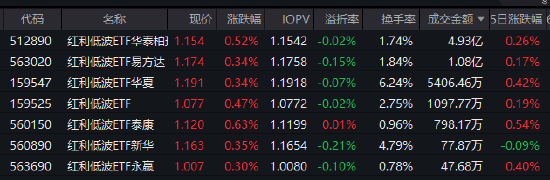
“唯一低费率”800现金流ETF(159119)飙涨超2%创年内第9次历史新高!白银有色、浙江龙盛涨停封板
Sou Hu Cai Jing· 2026-01-28 04:10
Group 1 - The core viewpoint of the articles highlights the strong performance of the dividend sector in the stock market, particularly the 800 Cash Flow ETF (159119), which is noted for its unique low fee rate of 0.2% per year [1][3] - The 800 Cash Flow ETF selects companies with strong cash-generating capabilities, referred to as "cash cows," from the top 800 companies in the market, with leading industries including automotive, petrochemicals, and home appliances [3] - The investment strategy represented by the ETF signifies a shift from traditional high dividend yields to a focus on sustainable free cash flow and company growth potential, indicating a deeper transition in investment philosophy towards value-based investing [3] Group 2 - The current macroeconomic environment is leading to a re-evaluation of the value of high-quality companies that can consistently generate stable free cash flow, highlighting their scarcity in the market [3] - This investment approach serves as a stabilizing force against economic fluctuations and aligns with the evolving trend from "high dividend" to "high quality" dividend investments [3]

我国消费市场规模质量双提升
Jing Ji Wang· 2026-01-28 03:34
Core Insights - The core message of the news is that in 2025, China's retail sales of consumer goods exceeded 50 trillion yuan for the first time, reaching 50.1 trillion yuan, with a growth rate of 3.7%. Consumption contributed 52% to economic growth, an increase of 5 percentage points from the previous year, highlighting the central role of consumption in China's economy [1][2]. Group 1: Consumption Growth - In 2025, the retail sales of consumer goods reached 50.1 trillion yuan, marking a 3.7% year-on-year increase [2][3]. - The contribution rate of consumption to economic growth was 52%, up by 5 percentage points from the previous year, reaffirming consumption's status as the "main engine" of the economy [2][3]. - The growth in durable goods consumption was notable, with retail sales of home appliances, communication equipment, and furniture increasing by 11%, 20.9%, and 14.6% respectively, driven by the trade-in policy [3]. Group 2: Rural and New Consumption Trends - Rural consumption retail sales reached 6.8 trillion yuan, growing by 4.1%, outpacing urban growth by 0.5 percentage points, indicating the potential of the rural market [3]. - New consumption trends such as digital, green, and health-oriented consumption are on the rise, with online retail sales of physical goods increasing by 5.2% and the penetration rate of new energy vehicles reaching 53.9% [3]. Group 3: Service Consumption - Service retail sales grew by 5.5% in 2025, with per capita spending on services increasing by 4.5%, accounting for 46.1% of total per capita consumption [4]. - Key service sectors such as cultural, leisure, and transportation services saw double-digit growth, with per capita spending on education and entertainment rising by 9.4% [4]. - The demand for personalized services, especially in the home service sector, has surged, reflecting a trend towards diversification and quality in service consumption [4]. Group 4: Policy and Market Initiatives - The Ministry of Commerce plans to enhance service consumption through optimizing supply, cultivating new growth points, and innovating diverse consumption scenarios [5]. - The "Buy in China" brand initiative aims to improve the international appeal of China's consumer market, supported by policies like visa exemptions and enhanced tax refund processes [6]. - Various regions are launching the 2026 "Buy in China" Spring Festival consumption season to stimulate local consumption and provide diverse cultural experiences for inbound tourists [7].
资金视角与基本面视角看-家电未来如何演绎
2026-01-28 03:01
Summary of Key Points from the Conference Call Industry Overview - The conference call focuses on the home appliance industry, particularly the white goods sector, and discusses the impact of various factors on its performance in 2026 [1][2][3]. Core Insights and Arguments - **Market Dynamics**: The home appliance sector's performance in 2025 was driven by passive funds like ETFs and insurance capital, leading to stock price fluctuations that diverged from fundamentals. The focus for 2026 will shift to opportunities from an insurance perspective [1][2]. - **Copper Price Impact**: Rising copper prices have increased production costs for white goods. However, leading companies can manage these costs through upstream negotiations, internal efficiency improvements, and price increases downstream. Historical data suggests that price transmission is the most effective method to mitigate short-term profit impacts [1][4][8]. - **Government Subsidies**: The continuation of national subsidy policies in 2026, with a focus on energy-efficient products, is expected to support demand for white goods. Rising raw material costs may lead to more cautious pricing strategies, potentially reducing competitive pressure [1][5][9]. - **Commodity Cycle Analysis**: Historical commodity cycles have significantly impacted the home appliance sector, with past copper price surges leading to a 3-4 percentage point decline in gross margins. However, the current cycle shows a more moderate copper price increase of about 30% since September 2025, with other raw material prices declining, resulting in manageable overall cost pressures [6][7][10]. Financial and Investment Insights - **Insurance Capital Trends**: There has been a notable increase in insurance capital investment in the stock market, driven by policy support and a preference for high-dividend stocks. The home appliance sector meets these criteria, being undervalued and cash-rich, making it a potential target for increased insurance capital allocation [3][15][18]. - **Potential Growth from Insurance Investments**: If 3%-15% of new insurance capital in 2026 is allocated to the home appliance sector, it could lead to an increase of approximately 100 billion RMB, resulting in an expected industry average growth of 5%-10% [3][21]. - **Valuation and Cash Position**: The home appliance industry is currently undervalued, with companies like Midea and Gree holding over 100 billion RMB in net cash. This strong cash position enhances their attractiveness as investment targets for insurance funds [19][20]. Additional Important Insights - **Exchange Rate Management**: The appreciation of the RMB reduces export revenues, but large home appliance companies can manage this risk through strategies like increasing overseas brand presence, establishing production capacity abroad, and employing foreign exchange hedging [12][14][13]. - **Competitive Landscape**: The competitive environment is shifting towards a more defensive stance, with smaller companies initiating price increases, which larger firms are likely to follow. This trend may help stabilize margins despite rising costs [9][10]. - **Future Outlook**: The overall outlook for the home appliance industry remains optimistic, with expectations of stable demand and potential for significant returns from high-dividend stocks in a defensive market environment [22][23].
未知机构:中泰科技消费丨家电低位价值标的高增过后短期大盘相对走平预计资金-20260128
未知机构· 2026-01-28 02:20
Summary of Conference Call Notes Industry Overview - The focus is on the home appliance industry, particularly on undervalued stocks following a period of high growth, with expectations that funds will favor these low-value targets in the near term [1] Core Insights and Arguments - **Market Expectations**: The high base from Q4 2025 has been fully digested, leading to a stable outlook for Q1 2026, with production data remaining flat compared to a slight decline in Q4 2025 [1] - **Performance Metrics for Key Companies**: - **Midea A**: Expected net profit growth of +10%, with a Price-to-Earnings (PE) ratio of 11.7X and a dividend yield of 5.9% [1] - **Haier A**: Expected net profit growth of +10%, with a PE ratio of 10.5X and a dividend yield of 5.2% [1] - **Gree**: Net profit expected to remain flat, with a PE ratio of 6.9X and a dividend yield of 7.5% [1] - **AUX**: Assuming a net profit of 2.6 billion for 2026, with a PE ratio of 7.3X and a dividend yield of 10% [1] - **Hisense Home Appliances**: Expected net profit growth of +6%, with a PE ratio of 9.9X and a dividend yield of 5% [1] - **Hisense Visual**: Expected net profit growth of +13%, with a PE ratio of 11.4X and a dividend yield of 4.5% [1] - **TCL Electronics**: Expected net profit growth of +23%, with a PE ratio of 11.2X and a dividend yield of 4.5% [1] - **Yadea**: Expected net profit growth of +15%, with a PE ratio of 10.5X and a dividend yield of 4.8% [1] - **Aima**: Expected net profit growth of +15%, with a PE ratio of 9.9X and a dividend yield of 5% [1] Additional Important Points - The overall sentiment indicates a favorable environment for investment in the home appliance sector, particularly for companies with strong fundamentals and attractive valuations [1]



未知机构:中泰科技消费丨家电关注低位价值标的高增过后短期大盘相对走-20260128
未知机构· 2026-01-28 02:15
Summary of Conference Call Notes Industry Overview - The focus is on the home appliance industry, particularly on undervalued stocks following a period of high growth. The market is expected to stabilize in the short term, with a preference for low-valued stocks in the home appliance sector [1] Key Financial Metrics - The fundamental updates indicate that the high base market expectations for Q4 2025 have been fully digested, and the fundamentals for Q1 2026 appear strong. Production data from the industry remains stable, with a slight decline compared to Q4 2025 [1] Company Performance Metrics for 2026 - **Midea A**: - Net profit growth: +10% - Price-to-Earnings (PE) ratio: 11.7X - Dividend yield: 5.9% [1] - **Haier A**: - Net profit growth: +10% - PE ratio: 10.5X - Dividend yield: 5.2% [1] - **Gree**: - Net profit growth: flat - PE ratio: 6.9X - Dividend yield: 7.5% [1] - **AUX**: - Assumed net profit for 2026: 2.6 billion - PE ratio: 7.3X - Dividend yield: 10% [1] - **Hisense Home Appliances**: - Net profit growth: +6% - PE ratio: 9.9X - Dividend yield: 5% [1] - **Hisense Visual**: - Net profit growth: +13% - PE ratio: 11.4X - Dividend yield: 4.5% [1] - **TCL Electronics**: - Net profit growth: +23% - PE ratio: 11.2X - Dividend yield: 4.5% [1] - **Yadea**: - Net profit growth: +15% - PE ratio: 10.5X - Dividend yield: 4.8% [1] - **Aima**: - Net profit growth: +15% - PE ratio: 9.9X - Dividend yield: 5% [1] Additional Insights - The analysis suggests a favorable outlook for the home appliance sector, particularly for companies with strong dividend yields and reasonable PE ratios, indicating potential investment opportunities in undervalued stocks [1]