
自动驾驶

Search documents
中芯国际部分涨价;京东回应巴黎仓库被盗抢丨科技风向标】
2 1 Shi Ji Jing Ji Bao Dao· 2025-12-24 02:59
Group 1: Starlink User Growth - Starlink, a satellite internet service by Elon Musk, has surpassed 9 million active users globally, providing high-speed internet in 155 countries and regions [2] - The user growth rate has accelerated significantly, with the latest addition of 1 million users occurring in just 47 days [2] Group 2: AI Model Developments - Alibaba Tongyi has released a new open-source voice interaction model, Fun-Audio-Chat-8B, suitable for various applications including voice chat and customer service [3] - Zhiyu AI has launched and open-sourced its flagship model GLM-4.7, which enhances programming capabilities and task planning [4] Group 3: Security Incidents and Responses - WeChat has refuted rumors regarding account theft linked to a live streaming platform, confirming that their security measures are intact [5] - JD.com has responded to reports of a theft at its Paris warehouse, disputing the reported loss of over €37 million and stating that operations have returned to normal [6] Group 4: Mergers and Acquisitions - Harman International, a subsidiary of Samsung Electronics, has agreed to acquire ZF Group's Advanced Driver Assistance Systems (ADAS) business for €1.5 billion (approximately $1.8 billion) [7] Group 5: Legal Challenges in AI - A group of authors has filed a copyright infringement lawsuit against six AI companies, including OpenAI and Google, claiming their works have been used without compensation [8] Group 6: Automotive Developments - Zoox, an autonomous driving company owned by Amazon, is recalling 332 vehicles due to software errors that increase collision risks [9] - Beijing has issued the first L3-level autonomous driving vehicle license plates, marking a significant milestone in the commercialization of autonomous vehicles in China [13] Group 7: Robotics and AI Investments - Galaxy General has signed a strategic cooperation agreement with Baida Precision to deploy over 1,000 intelligent robots in industrial manufacturing [10] - EVE Energy has initiated the construction of a sodium battery headquarters and an AI robotics center, with a total investment of approximately 1 billion yuan [10] Group 8: Semiconductor Industry Updates - SMIC has implemented a price increase of about 10% on certain capacities, driven by rising demand for semiconductor products due to mobile and AI applications [15] - Chip and Semiconductor has completed its IPO counseling, indicating a clear direction for its capital market activities [19]

马斯克薪酬案翻盘 特斯拉“回来了”?
Bei Jing Shang Bao· 2025-12-24 02:37
Core Viewpoint - Tesla's market capitalization has reached $1.63 trillion, driven by multiple positive factors including the reinstatement of Elon Musk's compensation plan and the expansion of Full Self-Driving (FSD) capabilities [1][2]. Group 1: Stock Performance - On December 22, Tesla's stock price rose by 3.66% to $498.82 per share, nearing the $500 mark, before closing at $488.73, reflecting a month-to-date increase of nearly 15% [1]. - Analysts' optimistic forecasts and the recent developments regarding Musk's compensation have contributed to the stock's upward momentum [1][2]. Group 2: Musk's Compensation Plan - The Delaware Supreme Court ruled that Musk's original $56 billion compensation plan must be reinstated, overturning a lower court's decision [2]. - The value of Musk's compensation plan has increased to approximately $140 billion, reflecting investor confidence in Tesla's future [2]. - A new compensation plan, approved by over 75% of shareholders, could be worth up to $1 trillion, although it includes challenging performance targets [2]. Group 3: FSD Expansion - Tesla announced the latest version of its "FSD Supervised" feature, which allows vehicles to autonomously navigate to destinations and park themselves [4]. - Musk indicated that this feature could be available in the UAE as early as next month, with the region serving as a potential model for broader adoption [4]. - The recent power outage in San Francisco did not affect Tesla vehicles using the FSD system, highlighting its reliability compared to competitors [4]. Group 4: Robotaxi Developments - Tesla is currently piloting a Robotaxi service in Austin without a safety driver, with Musk confirming ongoing tests [5]. - Analysts predict that Tesla will capture approximately 70% of the global autonomous driving market by 2026, with autonomous driving and robotics becoming core focus areas for the company [5].
港股异动 | 智驾概念股多数走高 北京发放L3级高速公路自驾车辆专用号牌
Zhi Tong Cai Jing· 2025-12-24 01:48
Core Viewpoint - The news highlights the significant progress in China's autonomous driving sector, particularly the issuance of the first L3-level highway autonomous vehicle license plates, marking a transition from testing to mass production in the industry [1] Group 1: Market Performance - Most intelligent driving concept stocks have risen, with Zhejiang Shibao (01057) up 8.25% to HKD 5.12, Youjia Innovation (02431) up 5.25% to HKD 14.23, Hezhima Intelligent (02533) up 2.02% to HKD 19.68, and Hesai-W (02525) up 1.2% to HKD 176.7 [1] Group 2: Regulatory Developments - On December 23, Beijing issued the first L3-level highway autonomous vehicle license plates to three BAIC Arcfox intelligent connected vehicles, marking a significant milestone in the country's autonomous driving development [1] - The Ministry of Industry and Information Technology previously announced the first batch of L3-level conditional autonomous driving vehicle approvals, including models from Changan and BAIC Blue Valley [1] Group 3: Industry Implications - According to CMB International, advanced driver assistance systems are becoming a crucial factor in Chinese consumers' vehicle purchasing decisions, with some automakers already capable of producing L3-level intelligent driving solutions and vehicles [1] - The formal implementation of L3-level autonomous driving regulations is expected to be a key catalyst for industry development by 2026, warranting close monitoring [1]
A股盘前播报 | 英伟达(NVDA.US)放风春节前向中国客户交付H200芯片
智通财经网· 2025-12-24 01:39
盘前要闻 1、英伟达放风春节前向中国客户交付H200芯片 类型:行业 情绪影响:正面 多位知情人士透露,英伟达已告知中国客户,计划于明年2月中旬,即春节前向中国客户交付其性能排 名第二的人工智能芯片H200。还表示,英伟达计划动用库存履行首批订单,预计发货总量为5000至 10000套芯片模组,相当于约4万至8万颗H200芯片。不过能否顺利交付仍存在较大不确定性。 2、我国自动驾驶正式进入量产!北京发放首批L3级车辆专用号牌 类型:行业 情绪影响:正面 12月23日,北京首批L3级自动驾驶车辆专用号牌正式发放给三辆智能网联汽车,这是国内首批发放的 L3级自动驾驶车辆专用号牌。标志着我国自动驾驶车辆已由测试示范进展到正式量产。研究认为,随 着特斯拉Robotaxi的持续放量验证,以及中国L3车型制度化落地,高阶自动驾驶产业拐点正加速到来。 3、伦铜突破12000美元、黄金涨破4500,贵金属牛市继续扩散 类型:市场 情绪影响:正面 在地缘政治紧张局势升级、以及美联储进一步降息预期的推动下,黄金和白银再度飙升至历史新高。截 至发稿,现货黄金首次涨破4500美元/盎司关口,白银每盎司超71美元。而伦铜突破12000 ...

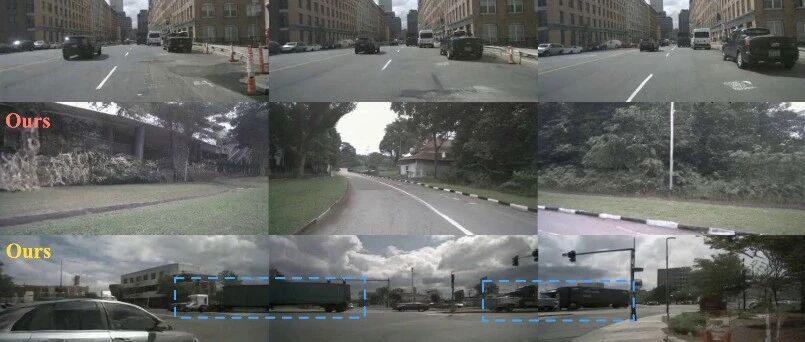
双SOTA!GenieDrive:物理一致的自动驾驶世界模型(港大&华为诺亚)
自动驾驶之心· 2025-12-24 00:58
Core Insights - The article presents GenieDrive, a new framework for autonomous driving that utilizes 4D Occupancy as an intermediate representation, offering a novel research path of "first generating 4D occupancy, then generating video" [2][25]. Summary by Sections Project Overview - GenieDrive is a novel framework for autonomous driving world modeling that achieves highly controllable, multi-view consistent, and physically accurate video generation [7]. - It operates with only 3.47 million parameters while achieving a reasoning speed of 41 FPS and a 7.2% improvement in mIoU for 4D occupancy prediction tasks [5][7]. Research Background and Challenges - Current autonomous driving world models face two main challenges: insufficient physical consistency and high-dimensional representation modeling [8]. - Existing methods rely on single video diffusion models, which complicate learning and can lead to results inconsistent with real physical laws [4][8]. Innovations of GenieDrive - GenieDrive features a two-stage world modeling and generation framework, incorporating 4D Occupancy as an intermediate state to inject explicit physical information into video generation [10][11]. - It employs a Tri-plane VAE for efficient compression, using only 58% of the latent representations of existing methods while achieving state-of-the-art occupancy reconstruction performance [11]. - The framework includes a Mutual Control Attention mechanism to explicitly model the impact of driving control on occupancy evolution, enhancing prediction accuracy through end-to-end joint training [11]. Experimental Results and Analysis - GenieDrive shows significant improvements in 4D occupancy prediction performance, with a 7.2% increase in mIoU compared to the latest methods [13]. - The model achieves a reasoning speed of 41 FPS with a total parameter count of 3.47 million [13]. - In video generation, GenieDrive reduces the FVD metric by 20.7%, outperforming existing occupancy-based methods [15]. Future Outlook - By introducing 4D Occupancy as an intermediate representation, GenieDrive aims to advance closed-loop evaluation and simulation technologies, potentially opening new research directions and applications in the autonomous driving field [23].

L4级Robotaxi的护城河一夜崩塌
3 6 Ke· 2025-12-24 00:39
Core Viewpoint - The discussion at the Horizon Ecological Conference highlighted the potential for a unified development paradigm that could bridge the gap between L2 and L4 autonomous driving systems, suggesting that the distinction between these levels may become obsolete [1][3]. Group 1: Unified Development Paradigm - The idea presented is to use L2 architecture and sensors to achieve L4 capabilities, which could lead to the collapse of barriers for L4 Robotaxi companies [1]. - The current approach of L4 Robotaxi companies relies on limited ODD areas and redundant safety measures through hardware and software, which may be challenged by a unified approach [1][4]. Group 2: Contrasting Approaches - The core conflict lies in whether the same architecture can be used for both assisted driving and Robotaxi services, with Tesla and Waymo representing opposing views [2]. - Waymo's strategy involves high-precision maps and multiple sensors to ensure safety, but this comes with high costs and challenges in scalability [2]. - Tesla advocates for a more flexible and cost-effective deployment by unifying the underlying technology for assisted driving and Robotaxi, although it currently lacks the safety levels of Waymo [2][3]. Group 3: Future Implications - If the unified approach is validated, it could significantly undermine the competitive advantages of traditional Robotaxi players who rely on heavy sensor use [4]. - Companies like Horizon and Hello Robotaxi are already moving towards this unified paradigm, indicating a shift in the Robotaxi landscape [4][5]. - The competition will increasingly focus on data accumulation rather than sensor redundancy, positioning data owners and algorithm companies as the most competitive players [5]. Group 4: Expansion and Performance Metrics - Reports indicate that by December 2025, Waymo plans to deploy 2,500 Robotaxi vehicles across the U.S., while Tesla's Robotaxi registrations have surged from under 100 to over 1,000 in just four months [5]. - Morgan Stanley's report highlights that Waymo's average accident-free mileage is approximately 360,000 miles, compared to Tesla's 50,000 miles in Austin [5]. Group 5: Future Outlook - The fundamental differences between data-driven approaches and traditional sensor-heavy methods suggest that Tesla's growth may outpace Waymo's, potentially leading to a collapse of Waymo's system [6]. - There are rumors that Waymo may be shifting towards a data-driven model similar to Tesla's [7].

A股头条:第六批国家高价值耗材集采启动;中芯国际对部分产能实施涨价;日本核反应堆泄漏水,浓度被认为“较高”
Jin Rong Jie· 2025-12-24 00:30
Group 1 - The Ministry of Commerce of China strongly opposes the U.S. decision to include all foreign-produced drone systems and key components in the "untrusted supplier list," citing market distortion and unilateral bullying practices [1] - The sixth batch of national high-value medical consumables procurement has been officially launched, introducing new mechanisms such as anchor pricing and multiple reactivation mechanisms to prevent malicious low pricing [2] - Shanghai Gold Exchange has issued a notice to strengthen market risk control due to recent volatility in precious metal prices, urging members to enhance risk awareness and maintain market stability [3] Group 2 - Beijing has issued the first batch of L3-level highway autonomous vehicle special license plates, marking a significant milestone in the production of autonomous vehicles in China [4] - LME copper prices have reached a historical high of $12,001.99 per ton, indicating a strong upward trend in upstream resources, including gold and silver [5] - Semiconductor company SMIC has implemented a price increase of approximately 10% on certain production capacities, driven by rising demand from mobile applications and AI [6] Group 3 - U.S. third-quarter GDP growth exceeded expectations, leading to a collective rise in major U.S. stock indices, with the Dow Jones up 79.73 points and the Nasdaq up 133.02 points [7] - The U.S. dollar index fell by 0.34%, while gold and silver prices saw significant increases, with silver reaching a historical high of $71.5784 [9] - Despite the overall rise in indices, approximately 3,600 individual stocks declined, indicating a lack of coordination among stocks [10] Group 4 - A radioactive water leak incident occurred at a nuclear reactor in Japan, with approximately 20 milliliters of water leaking, but no significant radiation exposure to workers has been reported [11] - New regulations will be implemented in China starting January 1, 2026, prohibiting kindergartens from charging fees beyond tuition and care fees under various names [12] - Companies such as Guolian Aquatic Products and Dahu Co. are highlighted as potential investment targets in light of upcoming regulatory changes [12]
华尔街见闻早餐FM-Radio | 2025年12月24日
Hua Er Jie Jian Wen· 2025-12-23 23:16
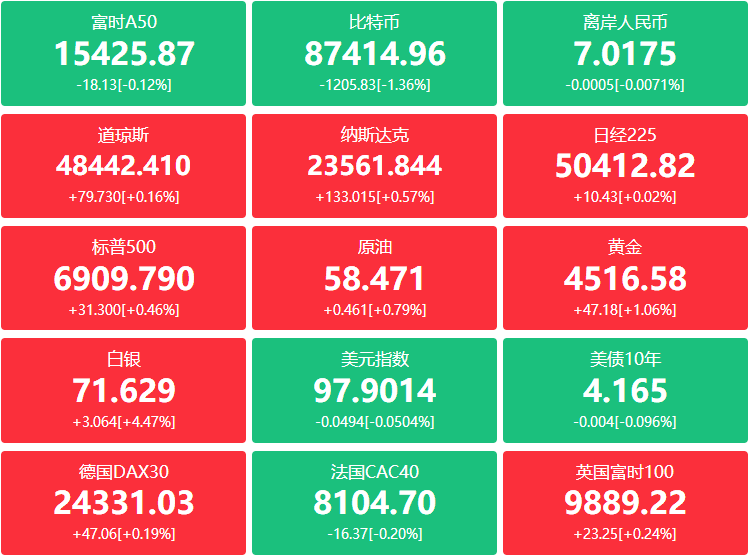
Market Overview - Technology stocks supported the three major US stock indices, which opened lower but closed higher, with the S&P 500 reaching a record high [2] - Nvidia surged by 3% following news about chip tariffs, while Tesla fell over 0.6%, being the only one among the tech giants to decline [2] - The approval of an oral weight-loss drug in the US led Novo Nordisk's stock to rise over 9%, contributing to European stock indices hitting new highs [2] - The US GDP grew by 4.3% in Q3, the fastest growth in two years, impacting interest rate expectations and causing US Treasury prices to fall [5][25] - Bitcoin dropped over 2%, falling below $87,000, while gold and silver prices reached historical highs [2][22] Key News - The Chinese government emphasized the importance of state-owned enterprises (SOEs) in contributing to national modernization and technological innovation [17] - The National Housing and Urban-Rural Development Conference outlined plans to stabilize the real estate market by 2026, focusing on city-specific policies [17][18] - The US added Chinese drone manufacturers to an "untrusted suppliers" list, prompting a strong response from the Chinese government [17] Company Developments - Beijing issued the first L3-level autonomous driving vehicle license plates, marking a significant step in the commercialization of autonomous vehicles in China [18] - Zhizhu AI launched its flagship model GLM-4.7 ahead of its IPO, outperforming leading models in several benchmarks [19] - Novo Nordisk's oral GLP-1 weight-loss drug received FDA approval, with a starting price of $149 per month, expected to help patients lose up to 16.6% of their body weight [31] Industry Insights - The copper market reached a historic high of over $12,000 per ton, driven by supply shortages and increased demand due to tariff expectations [21] - Gold and silver prices are on track for their largest annual gains since 1979, with silver surpassing $70 per ounce [22] - The AI infrastructure spending in the US is projected to exceed that of office buildings, with Oracle signing a significant leasing deal worth $248 billion [32]

国泰海通:具身智能迈向商业验证阶段 国内商业航天进展加速
智通财经网· 2025-12-23 22:45
Group 1: Tesla and Autonomous Driving - Tesla's CEO Elon Musk confirmed the company has begun testing autonomous taxis without safety drivers, indicating a breakthrough in embodied intelligence technology [1][2] - The investment landscape in the embodied intelligence sector is shifting towards leading companies and addressing supply chain gaps, with 35 financing deals reported in November 2025 [2] Group 2: Space Policy and Commercial Launches - On December 18, former President Trump signed an executive order outlining a vision for a "America First" space policy, aiming for a return to the Moon by 2028 and establishing initial facilities for a permanent lunar outpost by 2030 [3] - The Long March 12 rocket successfully launched from Hainan on December 12, delivering 16 low-orbit satellite internet satellites, marking a significant advancement in China's commercial space efforts [3] Group 3: Engineering Machinery Exports - In October 2025, China's engineering machinery trade reached $4.844 billion, with exports totaling $4.668 billion, reflecting a year-on-year increase of 1.29% [4] - November saw strong sales in key engineering machinery products, with excavator sales at 20,027 units (up 13.9% year-on-year) and loader sales at 11,419 units (up 32.1% year-on-year), indicating robust growth in overseas expansion for domestic companies [4]

Lumo、梅赛德斯-奔驰与Momenta将在阿布扎比推出高端自动驾驶网约车车队
Shang Wu Bu Wang Zhan· 2025-12-23 16:46
Core Viewpoint - The collaboration between Lumo, Mercedes-Benz, and Momenta aims to launch a high-end autonomous taxi fleet in Abu Dhabi, utilizing Level 4 autonomous driving technology on a mass-produced luxury platform [1] Group 1: Company Collaboration - Lumo, a national taxi company in the UAE, partners with Mercedes-Benz and Momenta to introduce an autonomous taxi fleet [1] - The fleet will be based on the new Mercedes S-Class and will incorporate Momenta's Level 4 autonomous driving system [1] - This initiative marks the first scalable autonomous taxi model based on a mass-produced luxury platform in the industry [1] Group 2: Market Expansion - The autonomous taxi fleet is expected to commence commercial operations in Abu Dhabi next year [1] - There are plans to expand the service to additional international markets following the initial launch [1] Group 3: Industry Impact - The collaboration is positioned to advance the development of smart transportation solutions [1]