咖啡

Search documents
传腾讯参与竞购星巴克
Guan Cha Zhe Wang· 2025-09-05 11:56
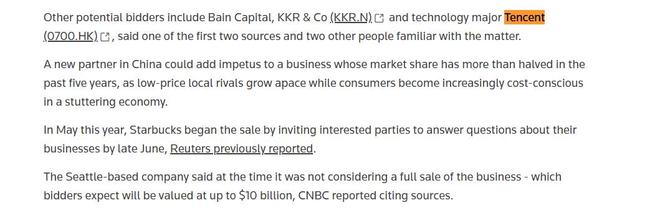
Core Viewpoint - Starbucks is facing multiple bids for its China business, with Tencent among the potential buyers, as the company seeks to navigate slow economic growth and intense competition from local brands [1][3]. Group 1: Bidding and Valuation - Multiple bidders have submitted offers as high as $5 billion, making this potential transaction one of the most valuable divestitures in the consumer goods sector in recent years [2]. - The valuation of Starbucks China is estimated at around 10 times its expected EBITDA of $400 to $500 million for 2025, with at least one bidder offering a multiple as high as 15 times, corresponding to a valuation of $7.5 billion [5]. - Competitors like Luckin Coffee are valued at about nine times their projected EBITDA for the next 12 months, indicating a competitive landscape for Starbucks in China [5]. Group 2: Market Challenges - Starbucks is experiencing challenges in its China operations, with its market share dropping to 14% in 2023 from 34% in 2019 [6]. - To counteract competition, Starbucks has taken steps to lower prices on certain non-coffee beverages and accelerate the launch of new products tailored for the Chinese market [6]. - Despite these challenges, Starbucks reported a 2% increase in same-store sales in China for the quarter ending June 29, compared to zero growth in the previous quarter [6]. Group 3: Company Strategy and Future Steps - Starbucks has expressed a cautious approach regarding the sale of its China business, stating it does not consider a full divestiture and intends to retain a significant stake [5][6]. - The company has not clarified the specific scale of the shares to be sold or the next steps in the sale process, indicating ongoing uncertainty [6].



咖啡迎“变”:市场格局重塑 并购重组增多
Zhong Guo Jing Ying Bao· 2025-09-05 11:44
Group 1: Mergers and Acquisitions - Keurig Dr Pepper (KDP) announced the acquisition of JDE Peet's for €15.7 billion (approximately $18.2 billion) to create a global coffee company [1] - Coca-Cola is considering selling its coffee brand Costa, having initiated preliminary talks with potential buyers [1][4] - The coffee market is experiencing a wave of mergers, with 60% of consumer goods executives expecting to sell assets in the next three years [5][6] Group 2: Market Dynamics - The Chinese coffee market is shifting, with local brands rising and first-tier cities becoming saturated, while lower-tier cities are emerging as growth areas [2] - JDE Peet's reported a strong organic sales growth of 23.8% in China, contributing to a global sales increase of 7.9% [4] - Starbucks is exploring the sale of a portion of its Chinese business, with over 20 institutions expressing interest [1][6] Group 3: Competitive Landscape - The competitive environment for Costa is challenging, leading to its potential sale by Coca-Cola due to poor performance and lack of synergy with its core business [5] - Local brands like Luckin Coffee are expanding internationally, increasing pressure on established brands like Peet's [4][6] - Starbucks is adapting its strategy in China, focusing on maintaining a significant equity stake to ensure quality control and brand integrity [8]



茶咖日报|热搜警告:布洛芬配咖啡,伤胃伤肾“双重刺激”
Guan Cha Zhe Wang· 2025-09-05 11:14
Group 1: Health and Safety Concerns - Ibuprofen should not be taken on an empty stomach or with coffee, as it can lead to increased risk of gastrointestinal damage and kidney strain [1][2] - The combination of ibuprofen and coffee can cause severe stomach pain and nausea, potentially leading to ulcers and bleeding with long-term use [2] Group 2: Coffee Export Industry - Vietnam's coffee exports reached 1.2 million tons and generated approximately $6.42 billion in revenue in the first eight months of 2025, marking an 8.7% increase in volume and a 59.1% increase in value compared to the same period in 2024 [3][4] - The average export price of Vietnamese coffee was about $55,800 per ton, reflecting a 46.4% year-on-year increase [3] Group 3: Coffee Retail Market - Luckin Coffee has surpassed 4,000 stores in Guangdong Province, making it the first province in China to achieve this milestone, indicating strong brand recognition and competitive positioning [5] - Black Rock Coffee Bar plans to go public on NASDAQ, aiming to raise up to $265 million, with projected revenues of $133 million and $161 million for 2023 and 2024, respectively [6] Group 4: International Market Expansion - Jiahe Foods is focusing on overseas markets as a strategic direction to overcome domestic competition, targeting regions with growing populations and a preference for coffee and tea products [7]


涪陵榨菜:榨菜销量下滑丨消费参考
2 1 Shi Ji Jing Ji Bao Dao· 2025-09-04 23:41
Group 1 - The core viewpoint is that Fuling Zhacai is reassessing its key pickled vegetable business due to changing market dynamics and consumer preferences [1][4] - In the first half of 2025, Fuling Zhacai reported a revenue increase of 0.5% year-on-year to 1.31 billion yuan, while net profit attributable to shareholders decreased by 1.7% to 440 million yuan [1] - Revenue from the pickled vegetable category was 1.12 billion yuan, with a year-on-year growth of 0.5%, while sales volume declined by 1.2% [1] Group 2 - The company is facing challenges in sales channels as consumer preferences shift towards alternative products, and urban population trends are affecting its market coverage [3] - Fuling Zhacai is implementing a strategy to expand product categories and market reach, focusing on new product development and channel expansion [3] - The company is adjusting its production plans by reducing conventional pickled vegetable production lines and increasing the production of multi-specification products and sauces [3] Group 3 - The stock price of Fuling Zhacai was reported at 13.24 yuan per share, with a slight increase of 0.76% [5] - The consumer index for the sector showed a decline, with the consumption index dropping by 2.21% [6]

【环球财经】雀巢拟投资10亿雷亚尔扩建巴西速溶咖啡工厂
Xin Hua Cai Jing· 2025-09-04 23:10
Core Insights - Nestlé Brazil announced an investment of approximately 1 billion reais (around 1.3 billion yuan) from 2025 to 2028 for the modernization and expansion of its instant coffee factory in Araras, São Paulo [2] - This project is part of Nestlé's total investment plan of 7 billion reais in Brazil for this year [2] - The Araras factory exports products to 65 countries, and the expansion will increase its production capacity by 10% [2] Investment and Modernization - The upgrade will include the introduction of a new extraction production line equipped with advanced artificial intelligence systems, enabling real-time monitoring of key variables such as roasting, humidity, and color through Advanced Process Control (APC) [2] - This initiative is a significant step towards transforming the factory in line with the "Industry 4.0" concept [2] Performance Improvements - Since 2019, Nestlé's smart transformation in Brazil has reduced unplanned downtime by over 30%, increased production line flexibility by 30%, and improved overall productivity by 16% [2] - In addition, Nestlé announced an additional investment of 500 million reais in its coffee business in Brazil for new product development, capacity expansion, capsule coffee, and food service solutions, indicating continued optimism in the Brazilian coffee industry [2]

社区微商圈④|从“靠熟客支撑”到游客打卡点,这家店靠什么翻盘?
Sou Hu Cai Jing· 2025-09-04 10:34
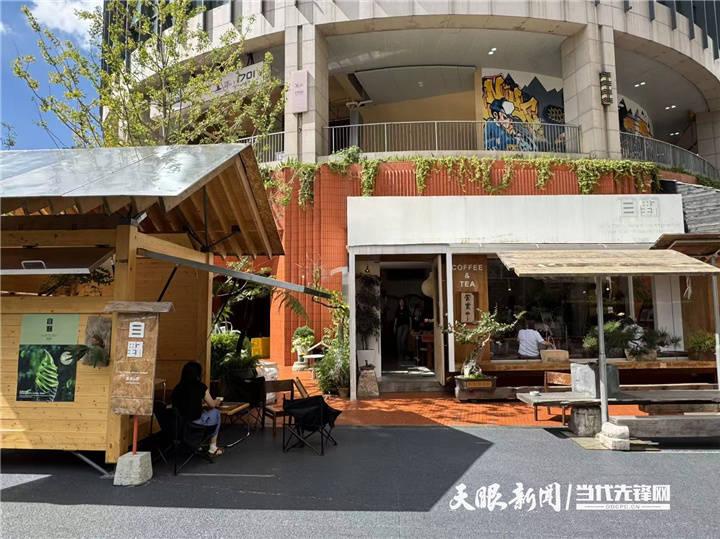
写在前面 社区街角的糖水铺、单元楼下的手工烘焙店、楼栋群里的咖啡屋……这些散布在居民身边的"微业态", 构成了社区微商圈的鲜活样本。它们以熟人社会为土壤,以"步行可达" 为半径,在满足日常所需的同 时,生长为社区活力的 "毛细血管"。 在贵阳阿云朵仓,有这样一家独特的咖啡店——自野咖啡,它像一颗从山野间萌发的种子,带着自由生 长的气息,在咖啡香里讲述着关于热爱、理想与现实融合的故事。 自野咖啡在阿云朵仓扎根3年。2022年入驻时,这里还处于建设更新阶段,前一年半被调侃为"工地咖啡 馆",周围花园、房屋施工不断,客源受到影响。但老板老管和合伙人并没有被困境击退。 老管在冲泡咖啡。 在咖啡选品与特调上,老管说:"我们用贵州刺梨做特调,刺梨汁和咖啡结合,再加点苹果汁中和酸 涩,能凸显咖啡豆的果味,让酸感更柔和。"老管还尝试过用抹茶和刺梨搭配,又打算用麻江蓝莓这些 本地食材,让咖啡自然融入贵州特色。自野咖啡凭老管多年咖啡品鉴经验选好豆,让客人味蕾记住这份 不同。 经营中,自野咖啡前几年基本靠老顾客撑着,"他们充会员、持续消费,'养'着店里日常运营。这两年 贵州旅游火起来,游客一多,我们的销售额直接翻倍,差不多一半客人 ...
狂卷加盟、冲击一线城市,幸运咖硬刚瑞幸库迪?
3 6 Ke· 2025-09-04 00:51
Core Viewpoint - Luckin Coffee is rapidly expanding its presence in the coffee market, aiming to replicate the success of its parent brand, Mixue Ice Cream, by leveraging a low-cost model and aggressive franchise strategies [1][4][10]. Expansion and Growth - As of July 2025, Luckin Coffee has signed over 7,000 stores nationwide, a significant increase from approximately 4,000 at the end of 2024, with a target of exceeding 10,000 stores by the end of 2025 [1]. - The company reported a 164% year-on-year increase in new store signings in Q2 2025, with 1,291 new stores opened in July alone, representing a month-on-month growth of over 330% [1][2]. Market Strategy - Luckin Coffee has shifted its focus from lower-tier markets to first and second-tier cities, particularly targeting the Yangtze River Delta and Pearl River Delta regions, with commercial streets as key expansion points [2]. - The franchise model requires full ownership by franchisees, allowing for unified market management and operational transparency, which facilitates rapid store replication [6]. Pricing and Supply Chain - The pricing strategy includes a low-cost model, with an American-style coffee priced at 5.9 yuan, benefiting from the supply chain advantages shared with Mixue Ice Cream [1][4]. - The company has established direct sourcing channels for coffee beans in major producing countries, enhancing its procurement scale and cost efficiency [4]. Franchisee Performance - Despite rapid expansion, franchisee profitability varies, with some reporting significant challenges and losses, leading to store closures or transfers [8][10]. - A franchisee in a university area reported a winter daily revenue of only 1,200 yuan, far below initial projections, resulting in a loss of 250,000 yuan before transferring the store [8][9]. Competitive Landscape - Luckin Coffee faces stiff competition from established brands like Luckin and Kudi, with franchisees noting that brand recognition significantly influences consumer choices [8][10]. - The company’s low-price strategy may not be sufficient to attract a broader customer base, as many consumers still prefer more recognized brands despite the lower franchise costs [8][10].
这个家族靠皮爷咖啡,一把变现125亿美元
Hu Xiu· 2025-09-03 12:16
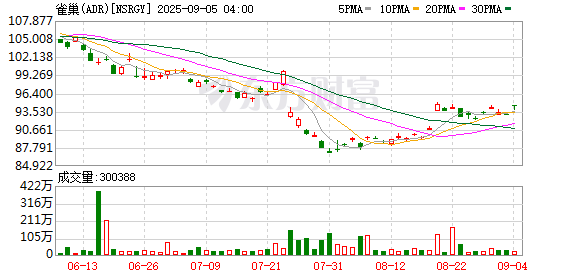
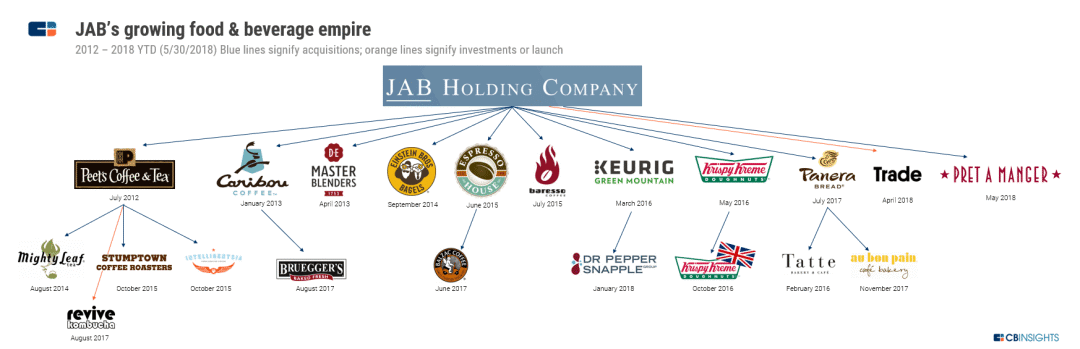
近期,美国饮料巨Keurig Dr Pepper Inc(KDP)豪掷157亿欧元(1314亿人民币)拿下JDE Peet's,JDE Peet's背后的控股股东JAB套现125亿美元。 JAB为雷曼家族的投资工具。截至2019年,雷曼家族为德国第二大富有家族,净资产为330亿欧元。虽然该家族"富可敌国",但他们却"默默无闻"。家办 新智点今日带你走进这个"神秘"的家族。 一、售价高达1314亿人民币 近期,美国饮料巨头Keurig Dr Pepper Inc(KDP)宣布将以全现金交易的方式收购JDE Peet's,价格高达157亿欧元(约1314.2亿人民币)。 这笔令人振奋的交易将通过双方的优势互补,打造一个全球咖啡新冠军:KDP在北美领先的单杯咖啡平台Keurig,将与JDE Peet's在全球范围内广受喜爱 的咖啡品牌组合强强联合。 在交易完成后,KDP计划拆分为两家独立的美国上市公司: 在交易条款下,KDP将以每股31.85欧元的现金价格收购JDE Peet's股东持股,相较于JDE Peet's过去90日成交量加权平均股价溢价33%,总股权对价约为 157亿欧元。 此外,JDE Peet's将在 ...
这个家族靠皮爷咖啡,一把变现125亿美金
3 6 Ke· 2025-09-03 12:06
近期,美国饮料巨Keurig Dr Pepper Inc(KDP)豪掷157亿欧元(1314亿人民币)拿下JDE Peet's,JDE Peet's背后的控股股东JAB套现125亿美 元。 JAB为雷曼家族的投资工具。截至2019年,雷曼家族为德国第二大富有家族,净资产为330亿欧元。虽然该家族"富可敌国",但他们却"默默无 闻"。家办新智点今日带你走进这个"神秘"的家族。 1 售价高达1314亿人民币 近期,美国饮料巨头Keurig Dr Pepper Inc(KDP)宣布将以全现金交易的方式收购JDE Peet's,价格高达157亿欧元(约1314.2亿人民币)。 这笔令人振奋的交易将通过双方的优势互补,打造一个全球咖啡新冠军:KDP在北美领先的单杯咖啡平台Keurig,将与JDE Peet's在全球范围内广受喜爱 的咖啡品牌组合强强联合。 在交易完成后,KDP计划拆分为两家独立的美国上市公司: 饮料公司(Beverage Co.):面向北美高增长的清凉饮料市场,年净销售额超过110亿美元; 全球咖啡公司(Global Coffee Co.):合并后年净销售额约160亿美元,成为全球排名第一的"纯咖啡公司 ...
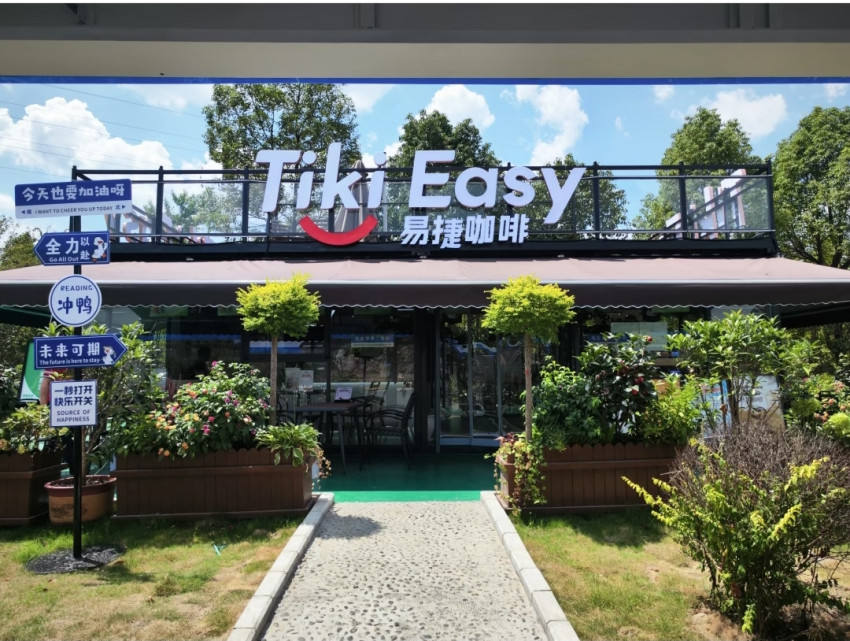
背靠中石化,咖啡赛道再迎来千店品牌
3 6 Ke· 2025-09-03 03:20
Group 1 - The core point of the news is the rapid expansion of Sinopec's Easy Coffee, which recently opened its 1000th store, marking a significant milestone in its growth strategy [1][5]. - Easy Coffee aims to open 3000 stores within three years, a goal set in 2020, and has now entered the "thousand-store club" after six years [1][4]. - The partnership with Luckin Coffee has contributed to the growth, with shared stores reaching 148 by the end of 2023 [2][4]. Group 2 - Easy Coffee's expansion strategy leverages Sinopec's extensive network of over 30,000 gas stations, allowing for low-cost operations and competitive pricing [5][6]. - The brand has shifted to a fully owned model after Luckin Coffee exited the joint venture, indicating a strategic move to consolidate resources [4][5]. - The store-in-store model has become popular among coffee brands, with several others like Tims and Kudi Coffee also adopting this approach to expand their market presence [6][8]. Group 3 - The store-in-store model allows for rapid expansion with lower investment and operational costs, making it attractive for coffee brands [9][11]. - However, challenges exist, such as limited product offerings and complexities in management and revenue sharing among partners [9][11]. - Despite these challenges, the store-in-store model remains a viable solution for coffee brands to enhance market coverage while managing operational costs [11].