
新能源

Search documents
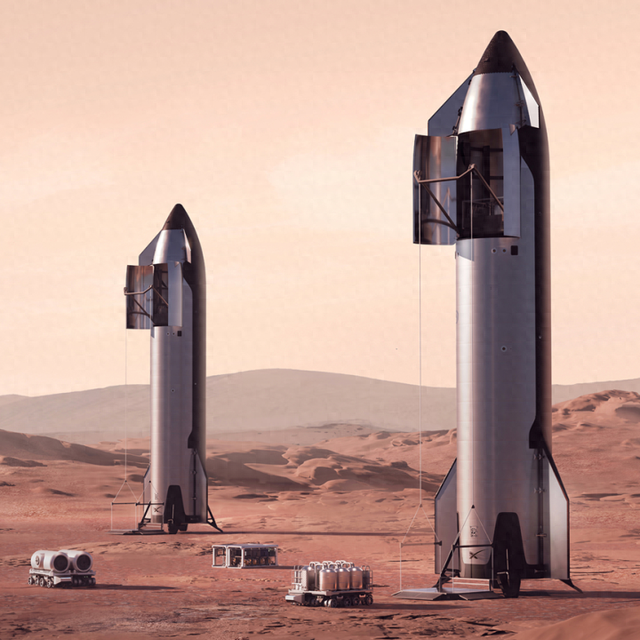
心智观察所:马斯克究竟想干什么?
Xin Lang Cai Jing· 2026-02-06 00:22
Core Viewpoint - The article discusses Elon Musk's ambitious plans to revolutionize energy and computing through space-based solar power and AI, suggesting a shift towards a new civilization operating system that transcends Earth's physical limitations [3][20]. Group 1: Space Solar Power and AI Integration - Musk's SpaceX aims to deploy solar-powered AI data centers in low Earth orbit, with a goal of building 200 GW of solar capacity in the U.S. within three years, which is ten times the current solar capacity [3][4]. - The near-Earth solar intensity is over 1.4 times that of the ground, allowing for nearly continuous power generation without interruptions from weather or day-night cycles [6][9]. - The integration of xAI into SpaceX's framework is strategic, as it requires vast, stable computing power that can only be achieved in space, avoiding the limitations of terrestrial power grids [10][22]. Group 2: Challenges and Solutions - Current solutions to energy demands from AI are inadequate, as they focus on optimizing terrestrial systems rather than addressing the fundamental limitations of Earth's resources [5][11]. - The efficiency of energy transmission from space to Earth is currently below 15%, leading to significant energy loss, and the deployment of solar arrays in orbit presents substantial engineering challenges [11][12]. - Musk's strategy avoids the most challenging aspects of energy transmission by having space-based data centers consume power directly in orbit, thus bypassing the need for energy return to Earth [12][13]. Group 3: Long-term Vision and Implications - Musk's approach is not merely about escaping Earth but rather about liberating it from the burdens of high-energy computing tasks, allowing for a more sustainable and livable planet [15][16]. - The article posits that the competition for orbital computing power will become a new frontier in global power dynamics, with control over energy and computing resources in space being crucial for future civilizations [20][21]. - Musk's plans are seen as a step towards achieving a Type II civilization, capable of harnessing energy from its star, with the 200 GW solar initiative serving as a prototype for future energy collection systems in space [21][22].

钧达股份(02865)股东将股票由结好证券转入盈透证券 转仓市值2.21亿港元
智通财经网· 2026-02-06 00:16
Group 1 - The core point of the article highlights that JunDa Co., Ltd. (stock code: 02865) has seen a transfer of shares from Jiejiao Securities to Yingtuo Securities, with a market value of HKD 221 million, representing 5.98% of the total shares [1] - JunDa Co., Ltd. signed a strategic cooperation framework agreement with Hangzhou Shangyi Optoelectronics Technology Co., Ltd. on December 21, 2025, focusing on the research and industrialization of flexible perovskite technology for space computing and energy applications [1] - The agreement is a preliminary cooperation intention, not legally binding, does not involve specific amounts, and does not require approval from the board of directors or shareholders' meeting [1]

2月6日早餐 | 海外市场连续下挫;OpenAI推出新产品
Xuan Gu Bao· 2026-02-06 00:13
Market Overview - US employment data shows weakness, leading to a decline in the stock market, with the S&P 500 down 1.23%, Dow Jones down 1.20%, and Nasdaq down 1.59% [1] - Software stocks ETF fell by 5%, with Oracle down nearly 7% and Microsoft down nearly 5% [2] - Gold prices dropped by 4%, silver plummeted by 19%, and cryptocurrencies faced significant losses, with Bitcoin down 12% and Ethereum down 11% [4] AI and Technology Developments - Amazon unexpectedly raised its spending guidance for AI to $200 billion, causing a post-market drop of over 10% [3] - Anthropic launched a new AI model, Claude Opus4.6, focused on financial research, while OpenAI introduced GPT-5.3-Codex, touted as the strongest programming agent to date [5] - Nvidia announced a delay in the release of new gaming chips due to a shortage of storage chips [6] - Apple plans to launch a "budget version" MacBook using iPhone chips, priced below $799 [7] Chinese Market Movements - Chinese concept stocks index rose against the market trend, with Baidu up 0.73% and Meituan acquiring Dingdong Maicai, which saw Meituan rise over 2% while Dingdong Maicai fell 15% [8] Sector Insights - Semiconductor sector: Infineon announced a price increase for power switches and related chips starting April 1, 2026, due to ongoing supply shortages and rising costs [11] - Huawei's HarmonyOS version of WeChat app surpassed 40 million installations, marking significant growth in its ecosystem [12] - Gas turbine manufacturers like GE, Siemens Energy, and Mitsubishi Heavy Industries are seeing increased orders due to a surge in natural gas power generation capacity in the US [13] Company Announcements - Jiangfeng Electronics plans to acquire 15.6424% of Kaide Quartz, with stock resuming trading [17] - Guoxuan High-Tech intends to raise no more than 5 billion yuan for a 20GWh power battery project [17] - Lixun Precision is set to engage in foreign exchange derivatives trading for up to one year, with a total not exceeding $4.9 billion [17] - Southeast Network Engineering won a joint bid for a 9.94 billion yuan EPC project [18]
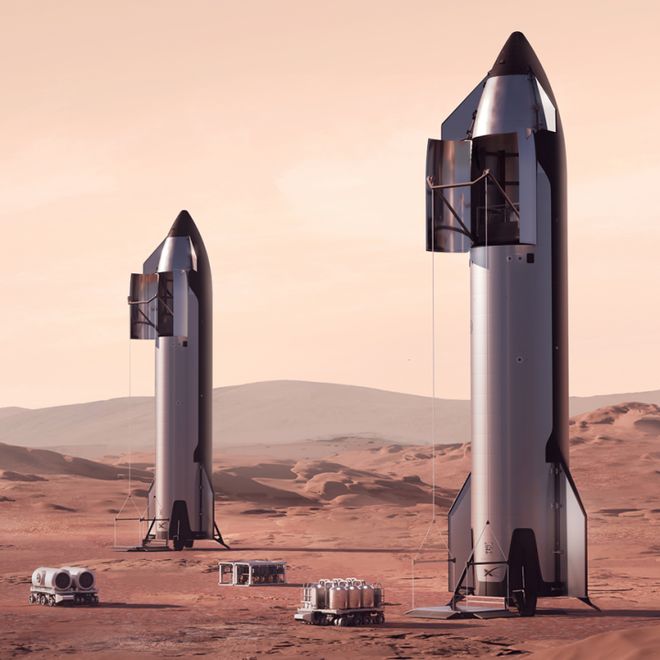
马斯克究竟想干什么?
Guan Cha Zhe Wang· 2026-02-06 00:13
Core Viewpoint - The article discusses Elon Musk's ambitious plans to revolutionize energy and computing through space-based solar power and AI, suggesting a shift towards a new civilization operating system beyond Earth's physical limitations [2][4][12]. Group 1: Space Solar Power and AI Integration - Musk's SpaceX plans to deploy solar-powered AI data centers in low Earth orbit, aiming for a target of 200 gigawatts of solar capacity in the U.S. within three years, which is ten times the current solar capacity [2][9]. - The near-Earth solar intensity is over 1.4 times that of the ground, allowing for nearly continuous power generation without interruptions from clouds or day-night cycles [5][21]. - The integration of xAI into SpaceX's framework is strategic, as it requires vast, stable computing power that can only be achieved in space, avoiding the limitations of terrestrial power grids [8][21]. Group 2: Challenges and Solutions - Current energy demands for AI are projected to reach 100 terawatts in the next decade, while global power generation capacity is only 3 terawatts, indicating a potential energy crisis [3][4]. - Traditional solutions focus on optimizing ground systems, which are insufficient due to Earth's resource limitations and geopolitical issues [4][10]. - Musk's approach bypasses the most challenging aspects of energy transmission by utilizing power directly in space, thus avoiding efficiency losses associated with ground transmission [11][12]. Group 3: Economic and Engineering Considerations - The cost of launching payloads to orbit is targeted to be below $10 per kilogram with the Starship, making it economically viable to deploy large-scale infrastructure in space [8][10]. - The current efficiency of energy transmission from geostationary orbit to Earth is below 15%, presenting significant challenges for the proposed solar power systems [10][11]. - Musk's strategy emphasizes a "good enough and fast" approach, focusing on creating a self-sustaining orbital ecosystem rather than achieving immediate profitability [11][12]. Group 4: Broader Implications and Future Vision - The shift of high-energy computing tasks to space is seen as a way to "liberate Earth" from the burdens of energy-intensive data centers, allowing for a more sustainable environment [14][15]. - This transition is compared to historical shifts in industrial practices, suggesting a significant reorganization of how civilization interacts with energy and technology [16][18]. - Musk's long-term vision aligns with the concept of a Kardashev Type II civilization, aiming to harness energy from the sun on a massive scale, which could redefine humanity's future [20][21].

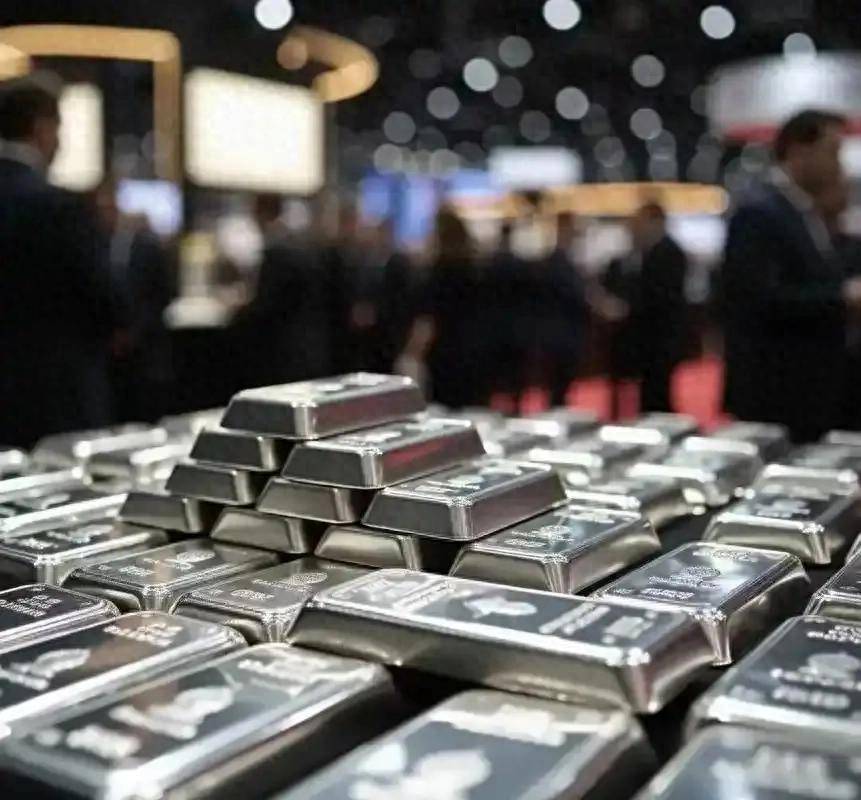
中国管制白银,最大成果不是中国胜了, 而是美国再无手段控制中国
Sou Hu Cai Jing· 2026-02-06 00:12
Core Viewpoint - The article discusses China's implementation of silver export controls as a strategic move to counteract U.S. attempts to dominate the global silver market and hinder China's industrial upgrades. This policy is seen as a significant shift in the global resource power dynamics, particularly in the context of high-demand industries such as photovoltaics and electric vehicles [1][3][29]. Group 1: China's Silver Export Controls - China has officially included silver in its state trade management list, enforcing strict export licensing regulations that will last until the end of 2027, effectively drawing a clear line in global silver trade [14][29]. - The new export management policy requires companies to meet specific criteria to apply for export qualifications, which will significantly reduce the volume of silver available for export [14][29]. - This control is aimed at ensuring that domestic industrial needs are prioritized, especially given that China consumes around 9,000 tons of silver annually while domestic production and recycling can only supply about 4,700 tons [16][33]. Group 2: U.S. Influence and Market Dynamics - The U.S. has historically leveraged its dominant position in global silver pricing and trading rules to manipulate silver prices, using financial instruments to create a disparity between physical silver supply and market demand [10][29]. - The U.S. has attempted to use silver as a tool to restrict China's industrial growth by driving up prices and creating supply shortages, particularly in critical sectors like photovoltaics and semiconductors [12][33]. - The article highlights that the U.S. strategy of using "paper silver" trading to influence prices is becoming ineffective as China redirects physical silver flows to meet its industrial demands [35]. Group 3: Industrial Demand for Silver - Silver is identified as a crucial resource for modern industries, with applications in photovoltaic cells, electric vehicle batteries, and semiconductor components, making it a foundational element for China's manufacturing sector [6][18]. - China's industrial silver consumption exceeds 90%, with the photovoltaic industry alone accounting for 35% of domestic silver usage, indicating a significant reliance on this metal for future technological advancements [6][18]. - The anticipated silver shortfall of approximately 4,769 tons in 2024 underscores the urgency of China's export controls to secure necessary resources for its high-tech industries [6][18]. Group 4: Strategic Long-term Planning - China's approach to silver export controls is characterized as a long-term strategy rather than a short-term fix, focusing on building a robust domestic supply chain to avoid future vulnerabilities [18][20]. - The strategy involves attracting global physical silver to fill domestic resource reserves while simultaneously restricting exports to ensure that domestic industrial needs are met first [20][33]. - The article suggests that this strategic positioning will ultimately undermine U.S. efforts to use silver as a geopolitical weapon against China, as the latter gains greater control over its supply chain [20][35].
美国囤铜引发价格飙升,中国冷静应对打破预期
Sou Hu Cai Jing· 2026-02-06 00:12
Core Viewpoint - The article discusses the strategic competition between the U.S. and China over copper and silver, highlighting how the U.S. has hoarded copper to manipulate prices, while China has shifted focus to silver as a critical industrial resource, thereby redefining the dynamics of global supply chains and technological development. Group 1: Copper Hoarding by the U.S. - The U.S. has significantly increased its copper reserves, leading to a surge in global copper prices, which is seen as a strategic move to hinder China's green transition efforts [4][5][8] - The U.S. consumes only a small fraction of the world's copper but has stockpiled a substantial amount, indicating a deeper strategy beyond mere market behavior [3][4] - This hoarding has resulted in increased infrastructure costs in the U.S., undermining the Biden administration's green initiatives [8] Group 2: China's Strategic Shift to Silver - In response to U.S. actions, China has elevated silver to a strategic resource, implementing strict export controls that could disrupt global supply chains [13][14] - Silver is now recognized as essential in modern industries, particularly in high-tech applications, making it a critical component for advancements in solar energy and electric vehicles [11][12] - The price of silver in Shanghai has surged, reflecting the impact of China's new export policies on global markets [15] Group 3: Diverging Development Philosophies - The U.S. approach is characterized by a "blocking" strategy, attempting to maintain its dominance through resource control, which is seen as a short-term tactic [19][20] - Conversely, China is adopting an "opening" strategy, using the pain of increased costs to drive domestic innovation and reduce reliance on imported materials [20][22] - This strategic divergence suggests a potential bifurcation in global energy systems, with the U.S. favoring traditional high-cost materials and China pushing for innovative, cost-effective solutions [26]
能源早新闻丨中老500千伏联网工程输电线路全线贯通
中国能源报· 2026-02-05 22:33
◐山东海阳核电三期工程首台盾构机顺利下线。 据新华社报道,2月4日从中铁十八局集团了解到,山东海阳核电三期工程首台盾 构机"海核一号"顺利下线,未来将用于循环水排水工程隧洞施工。此次下线的"海核一号"盾构机最大开挖直径达7.29米,整机长 126米,承担循环水排水工程5号机组隧洞掘进任务。 ◐吉林:推进新能源产业发展,年内投资逾千亿元。 据中新网报道,吉林省2月4日召开专题会议,研究2026年新能源开发及"绿氢 +"产业发展工作。该省锚定今年新能源新增开发装机突破1000万千瓦,产业投资超过1000亿元。 新闻聚焦 ◐工信部:公示绿色工厂、绿色工业园区(2025年)名单。 2月5日,工信部发布2025年度绿色工厂、绿色工业园区公示名单。其 中指出,经省级工业和信息化主管部门推荐及专家审核,现将2025年度新培育绿色工厂、绿色工业园区以及动态管理调整的工厂、 园区予以公示。 【更多详情】 ◐中老500千伏联网工程输电线路全线贯通。 据新华社报道,2月5日,中老500千伏联网工程中国段和老挝段输电导线在中国云南 省磨憨与老挝磨丁交界处实现物理连通,标志着该工程国内外线路全线贯通。该项目是继中老铁路之后,中老两国共 ...
协同聚势培育新质生产力——京津中关村科技城打造产城融合示范区
Jing Ji Ri Bao· 2026-02-05 22:11
Core Viewpoint - The Tianjin Baodi District is focusing on the development of the Baodi Beijing-Tianjin Zhongguancun Science and Technology City, which aims to enhance regional high-quality development through collaboration with the Beijing-Tianjin-Hebei region, leading to significant economic growth by 2025 [1][2]. Economic Growth and Development - By 2025, the industrial output value, retail sales, fixed asset investment, and tax revenue of the Baodi Beijing-Tianjin Zhongguancun Science and Technology City are projected to grow by 14%, 79.8%, 35.6%, and 24.3% respectively, contributing to a 5.1% increase in the district's GDP [1]. - The number of national high-tech enterprises in the technology city has reached 32, with over 2,000 operating entities [1]. Collaborative Framework - The Baodi District has established a high-level coordination mechanism between Beijing and Tianjin, signing a new round of cooperation agreements with the Zhongguancun Development Group to strengthen collaborative development [2][3]. - An investment of 800 million yuan has been made by Baodi District and the Zhongguancun Development Group to inject strong momentum into the technology city [3]. Innovation Ecosystem - The Baodi Beijing-Tianjin Zhongguancun Science and Technology City has developed a robust innovation ecosystem, becoming a core platform for cultivating new productive forces [4]. - The technology city has been recognized as a national high-tech industrial park expansion area and has initiated significant projects such as the SANY (Tianjin) Wind Power Intelligent Manufacturing Industrial Park [4]. Financial Support and Services - The Baodi District has implemented a "Chief Accompanying Officer" mechanism to streamline project approvals, saving an average of over 20 working days per project [5]. - Financial services have been enhanced, with over 70 million yuan in financing provided to enterprises in the technology city, supporting many high-quality projects introduced from Beijing [5][6]. Future Goals - By 2030, the Baodi Beijing-Tianjin Zhongguancun Science and Technology City aims to increase the number of operating entities and achieve an industrial output value exceeding 50 billion yuan [6].

普洛斯中国CEO赵明琪:向纵深发力 以新基建赋能中国经济高质量发展
Zhong Guo Zheng Quan Bao· 2026-02-05 20:27
Core Viewpoint - Prologis China has significantly benefited from China's rapid economic development and aims to continue empowering high-quality growth through its core philosophy of "global vision, deep cultivation in China" and new infrastructure initiatives [1][2]. Group 1: Company Background and Market Entry - Prologis China has been deeply rooted in the Chinese market for over 20 years, witnessing and contributing to the country's economic transformation since its entry post-WTO accession [1][2]. - The company identified the opportunity in the logistics and warehousing sector due to the surging demand for modern facilities, leading to the establishment of its first office in Shanghai in 2003 [2]. - Prologis China introduced international standards to the domestic logistics sector, evolving its standards into a "Chinese standard" that now leads globally [2]. Group 2: Business Evolution and Client Base - The company has transitioned its client base from predominantly multinational corporations to local enterprises, now serving over 2,500 new economy companies [3]. - Prologis China's growth reflects China's shift from an export-driven economy to one focused on domestic demand, supporting various industries including fashion, electronics, and new energy vehicles [3]. Group 3: Business Synergy and New Infrastructure - Prologis China has developed a synergistic business model that integrates logistics, supply chain, big data, and new energy, creating a closed-loop industrial ecosystem that supports high-quality economic development [4][5]. - The company has adapted to market demands by evolving from physical warehouses to data centers, enhancing asset value through infrastructure upgrades [4]. Group 4: Commitment to Sustainability and Innovation - Prologis China has initiated distributed solar power projects and is expanding into energy storage and wind power, aligning with national carbon neutrality goals [5][6]. - The company emphasizes operational efficiency over cost-cutting, aiming to enhance supply chain stability and sustainability [6]. Group 5: Future Strategy and Development Goals - Prologis China plans to invest in AI infrastructure and enhance its service offerings to support the development of new productive forces in line with the "14th Five-Year Plan" [7]. - The company aims to strengthen domestic market development by improving supply chain efficiency and expanding its logistics network to support consumption growth in emerging markets [7].
安徽含山举办“万名大招工”
Xin Lang Cai Jing· 2026-02-05 20:14
(来源:工人日报) 2月1日,安徽省含山县人社局举办的"年货大展销 万名大招工"活动在鑫乐广场举行。活动吸引50多家 本地重点企业参与招聘,涵盖机械制造、新能源、新材料、电子信息、食品加工等多个行业,提供生产 主管、技术工程师等300多个就业岗位,满足不同群体就业需求,吸引众多求职者前来咨询应聘。本报 通讯员 欧宗涛 摄 ...