保险业

Search documents
新华保险:前10月保费收入1819.73亿元 同比增长17%
Mei Ri Jing Ji Xin Wen· 2025-11-12 08:53
Group 1 - The core point of the article is that Xinhua Insurance (601336) reported a cumulative original insurance premium income of 181.973 billion yuan from January to October 2025, representing a year-on-year growth of 17% [1]

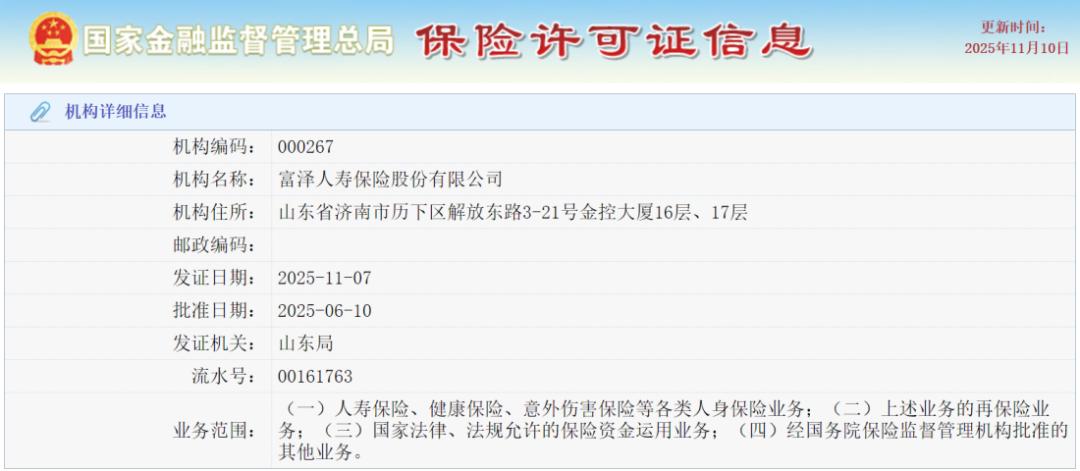
忠旺系君康人寿变身在即,山东国资牵头富泽人寿获批
3 6 Ke· 2025-11-12 04:25
Core Viewpoint - Fuze Life Insurance Co., Ltd. has been officially approved for an insurance license, marking its entry into the insurance market with a focus on various personal insurance products, including life, health, and accident insurance [1][2]. Company Overview - Fuze Life was established on June 19, 2023, with a registered capital of 17 billion yuan [2]. - The company is headquartered in Jinan, Shandong Province, specifically at Jin控大厦, 16th and 17th floors [4]. - The major shareholders include Jinan Jintou Holding Group Co., Ltd. (49.71%) and Jinan Zhengjintongda Investment Group Co., Ltd. (3.53%), collectively holding over 53% of the shares [2][3]. Business Scope - Fuze Life's business scope includes various types of personal insurance, reinsurance for these products, and investment of insurance funds as permitted by laws and regulations [1][2]. Management Team - The chairman and legal representative of Fuze Life is Feng Yi, who is also the director of the Jinan Municipal Financial Supervision Administration [4]. - The general manager is Xie Zhufeng, who previously held senior positions at China Post Life Insurance [4]. Strategic Context - The establishment of Fuze Life is seen as a strategic move to address the risks associated with Jun Kang Life Insurance, with plans to take over its assets and liabilities [5]. - Jun Kang Life, which has undergone several changes in ownership and management, faced significant financial challenges, including a reported net loss of 1.911 billion yuan in 2019 [7].

保险业:锚定发展目标 助力共同富裕
Jin Rong Shi Bao· 2025-11-12 02:29
Group 1: Core Insights - The insurance industry plays a crucial role in supporting the goal of "common prosperity" by contributing to economic growth and wealth distribution [1][2][3] - The second Fourming Insurance Forum emphasized the need for the insurance sector to find a balance between expanding the economy ("making the cake bigger") and ensuring equitable distribution of wealth ("dividing the cake well") [1][2] Group 2: Industry Development - Ningbo has launched nearly 350 innovative insurance projects, integrating insurance deeply into economic construction, social governance, and public welfare [2] - The insurance sector in Zhejiang Province reported an asset value of 1.2 trillion yuan, a year-on-year increase of 14.5%, with premium income reaching 389.2 billion yuan [2] Group 3: Key Focus Areas - The China Insurance Group highlighted three key areas for the insurance industry: supporting innovation and entrepreneurship, ensuring fair distribution and improving livelihoods, and enhancing economic resilience [3] - Long-term care insurance has emerged as a focal point in addressing the challenges of an aging population, with calls for a statutory long-term care insurance system [4][5] Group 4: Financial Integration and Social Governance - The insurance industry has a significant role in financial integration, with an investment balance of 36.23 trillion yuan as of mid-2023, including over 5.4 trillion yuan in stocks and equity funds [7] - Commercial insurance is essential in various sectors such as healthcare, pension, disaster reduction, and poverty alleviation, contributing to the reduction of public service gaps [7][8]
保险业锚定“十五五”发展蓝图:筑牢民生保障与实体经济“安全网”
Jin Rong Shi Bao· 2025-11-12 02:17
Core Insights - The insurance industry has provided significant support to the national economy during the "14th Five-Year Plan" period, with total compensation reaching 9 trillion yuan and agricultural insurance covering 800 million farming households, laying a solid foundation for the upcoming "15th Five-Year Plan" [1][9] - The "15th Five-Year Plan" emphasizes the role of the insurance industry in enhancing financial strength, supporting rural revitalization, and improving social welfare through various insurance products [1][2] Group 1: Financial Strength and Economic Support - The "15th Five-Year Plan" suggests accelerating the construction of a financial powerhouse, focusing on technology finance, green finance, inclusive finance, pension finance, and digital finance to strengthen the real economy [2][3] - The insurance sector has effectively gathered resources towards new productive forces, with technology insurance providing over 10 trillion yuan in risk coverage and green insurance projected to exceed 330 trillion yuan in 2024 [2][3] Group 2: Risk Management and Social Stability - The insurance industry is expected to enhance its risk management capabilities, developing a comprehensive risk management system that includes pre-warning, response, and post-event support [3][4] - The focus on social governance through insurance products such as inclusive insurance, pension insurance, and health insurance aims to ensure that all residents have access to suitable and affordable insurance coverage [3][6] Group 3: Enhancing Welfare and Healthcare Systems - The "15th Five-Year Plan" highlights the need for a multi-tiered pension and healthcare system, with commercial insurance playing a crucial role in providing supplementary coverage [6][7] - The commercial health insurance sector has paid out 1.8 trillion yuan in economic compensation, supporting a multi-tiered healthcare system and covering 1.22 billion urban and rural residents through major illness insurance [7][8] Group 4: Agricultural Insurance and Rural Development - Agricultural insurance has provided coverage for 800 million farming households, with significant compensation for natural disasters, indicating a robust safety net for rural areas [9][10] - The insurance industry is encouraged to develop tailored products for rural infrastructure projects and provide inclusive pension and health insurance for farmers, addressing their specific needs [10]
巨灾保险织就民生防护网
Jing Ji Ri Bao· 2025-11-11 22:07
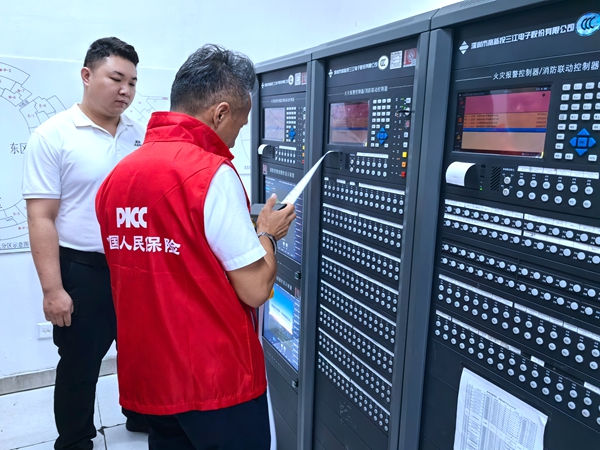
Core Insights - The fourth National Commercial Insurance Development Seminar highlighted the need to improve the insurance industry's role in major disaster relief, emphasizing the enhancement of compensation ratios for disaster losses and the diversification of risks for enterprises, families, and individuals [1] Group 1: Current State of Catastrophe Insurance - By the third quarter of 2025, natural disasters in China caused direct economic losses of 217.65 billion yuan, with the most significant losses occurring during the "July to August" period [1] - Catastrophe insurance is recognized as a crucial part of modern risk management, characterized by high resource allocation efficiency and flexible capital mobilization [1] - As of September 2023, the catastrophe insurance coverage by People's Insurance Company of China (PICC) extends to 23 provinces and 137 cities, protecting approximately 459 million people [2] Group 2: Innovations and Developments - Comprehensive catastrophe insurance pilots have been implemented in over 20 provinces, with various models such as all-cause coverage in Hebei and Hubei, and index-based insurance in Guangdong [2] - PICC has developed a multi-cause, multi-year, and multi-layered catastrophe insurance system, establishing a three-tier safety net that includes basic coverage, commercial supplements, and catastrophe protection [2] - Recent regulatory updates have expanded the coverage of urban and rural residential catastrophe insurance to include multiple disaster causes, enhancing the basic coverage levels [3] Group 3: Future Directions - The National Financial Supervision Administration aims to advance the top-level design of catastrophe insurance, enhancing the overall protection system and coordinating with relevant departments for effective disaster management [4] - Future initiatives will focus on utilizing technology for risk monitoring and rapid damage assessment post-disaster, alongside supporting risk evaluation and hazard identification efforts [4]
富泽人寿拿下保险许可证!君康人寿或迎终局,保险业“排雷”加速
Bei Jing Shang Bao· 2025-11-11 14:09
Core Viewpoint - The establishment of Fuzhou Life Insurance Co., Ltd. is significant in the context of tightened insurance license approvals, and it is expected to play a role in the risk disposal of Jun Kang Life Insurance, a company with a troubled history [1][4]. Group 1: Company Overview - Fuzhou Life Insurance received its insurance license on November 7, 2023, from the Shandong Regulatory Bureau of the Financial Regulatory Administration, with its registered capital set at 17 billion yuan [3]. - The company is based in Jinan, Shandong Province, and its business scope includes various types of life insurance, health insurance, and accident insurance, along with reinsurance and other approved insurance fund utilization activities [3][4]. Group 2: Shareholder Structure - The shareholder structure of Fuzhou Life Insurance includes Jinan Jintou Holding Group Co., Ltd. (49.7059%), China Insurance Security Fund Co., Ltd. (35.2941%), China Life Asset Management Co., Ltd. (11.4706%), and Jinan Zhengjintongda Investment Group Co., Ltd. (3.5294%) [3]. - This structure reflects a combination of local state-owned assets, industry security funds, and large insurance enterprises, indicating a strategic approach to risk disposal similar to previous cases in the industry [4]. Group 3: Risk Disposal Context - Fuzhou Life Insurance's establishment is closely linked to the risk disposal of Jun Kang Life Insurance, which has faced significant challenges over its 19-year history, including governance issues and financial losses [6][8]. - The involvement of local state-owned assets and the insurance security fund is expected to provide both local resources and professional credibility in managing the risks associated with Jun Kang Life Insurance [5][9]. Group 4: Industry Insights - The insurance industry has seen numerous risk disposal cases in recent years, highlighting the importance of risk prevention over mere disposal [9]. - Experts emphasize the need for improved corporate governance and regulatory oversight to prevent risks from accumulating to critical levels, which has become a priority for financial regulatory authorities [9][10].

告别“简单培训即上岗”!险企招募“拼手速”
Bei Jing Shang Bao· 2025-11-11 12:56
Core Viewpoint - The insurance industry is undergoing a significant transformation in its recruitment strategies, moving from a quantity-focused approach to a quality-driven model that emphasizes the need for specialized and multi-skilled agents [1][4][8]. Recruitment Strategies - Insurance companies like Taikang Life and China Merchants Life are actively recruiting agents with a focus on professional training rather than just sales skills, aiming to develop agents into multi-faceted professionals [1][3]. - New recruitment plans emphasize roles such as "health wealth planners" and "insurance health consultants," indicating a shift towards agents who can provide comprehensive financial and health management services [3][5]. Changes in Agent Demographics - The number of insurance agents in China has dramatically decreased from approximately 9 million to under 3 million, necessitating a rise in the quality and professionalism of agents to meet evolving market demands [4][8]. - The current market requires agents to possess a diverse skill set, including knowledge in healthcare, wealth management, and elder care services, transforming them into "six-sided warriors" [3][4]. Empowerment and Training - Companies are building comprehensive empowerment systems to support agents, including specialized training programs and the integration of AI tools to enhance their capabilities [5][6]. - For instance, Taikang Life has developed a growth path for its "big health business partners," while China Merchants Life has introduced a structured career development plan for its sales personnel [5][6]. Regulatory Influence - The recent regulatory framework issued by the Financial Regulatory Bureau emphasizes the need for improved professional standards among insurance sales personnel, pushing companies to enhance their recruitment and training processes [7][8]. - This regulatory push is driving a transformation in the insurance agent workforce from a focus on quantity to a focus on quality, requiring agents to be well-versed in multiple disciplines [8][9]. Future Talent Requirements - The insurance industry is seeking multi-disciplinary talent who can effectively utilize AI tools for marketing and client management, reflecting the industry's shift towards a more technology-driven approach [9][10]. - The recruitment of agents is increasingly targeting experienced professionals from other sectors and recent graduates, indicating a trend towards a more professional and career-oriented workforce [9][10].

1-9月阿塞拜疆收取保费规模同比增长6.6%
Shang Wu Bu Wang Zhan· 2025-11-11 03:14
Group 1 - The central bank of Azerbaijan reported that the country collected nearly 280 million manats (160 million USD) in insurance premiums from January to September this year, representing a year-on-year increase of 6.6% [1] - Mandatory insurance contributions amounted to approximately 110 million manats (60 million USD), with a year-on-year growth of 6.5% [1]
进博会保险“扩圈”!头部险企联合多领域巨头构建产业链新生态|聚焦2025进博会
Hua Xia Shi Bao· 2025-11-11 02:33
Core Insights - The eighth China International Import Expo (CIIE) has seen domestic insurance companies actively expanding their ecosystems in collaboration with global industry giants, focusing on sectors such as elderly finance, insurance technology, new energy insurance, and health management [1][2] - China Pacific Insurance Group aims to upgrade its "big health" strategy to "big health management" in response to the aging population, leveraging the CIIE platform to introduce international experiences and promote high-quality health management ecosystems [1][2] Insurance Industry Expansion - The CIIE has shifted from being a platform primarily for foreign exhibitors to one where insurance companies are actively seeking collaboration opportunities, thereby enhancing their influence and contributing to customer loyalty [2] - The focus on elderly finance has become a key area of interest during the CIIE, with insurance companies looking to expand their industry chains [2] Collaboration and Innovation - China Ping An is also leveraging the CIIE to explore new growth points in the silver economy, with its subsidiary, Ping An Good Doctor, announcing a deep collaboration with Medtronic to integrate digital and traditional medical services [4] - The collaboration aims to utilize big data and AI technology to enhance the efficiency of healthcare management, particularly in chronic disease management [4] New Energy Vehicle Insurance - The insurance industry's role in supporting China's new energy vehicle (NEV) sector was highlighted at the CIIE, with various stakeholders advocating for a comprehensive service network to facilitate the global expansion of NEVs [5] - The need for insurance to provide risk management and financial services across the entire production and operational lifecycle of NEVs was emphasized [5] Insurance Technology Advancements - The CIIE showcased advancements in AI technology within the insurance sector, with companies like MagiHealth introducing an AI-driven platform aimed at enhancing decision-making in commercial health insurance [6][7] - The platform integrates vast amounts of insurance and medical data to improve product design, marketing, and claims operations [6][7] AI and Data Integration - AI technology is transforming the insurance industry by enabling more effective handling of complex data, moving from traditional actuarial models to deep learning approaches that can capture intricate data relationships [8] - The integration of AI is seen as crucial for addressing the evolving landscape of insurance risk measurement, particularly with the advent of "insurance for those with pre-existing conditions" [9]



险企“长股投”增厚利润惹争议
2 1 Shi Ji Jing Ji Bao Dao· 2025-11-10 23:10
Core Viewpoint - The insurance industry is increasingly turning to long-term equity investments, particularly in undervalued bank stocks, to achieve asset-liability matching and stable returns amid a low-interest-rate environment and asset scarcity [1][11]. Summary by Sections Long-term Equity Investment Strategy - Insurance companies are seeking stable, long-term returns through long-term equity investments, which are seen as a strategic choice to smooth out volatility and achieve stable ROE and dividend returns [1][11]. - However, this strategy has sparked controversy, as some companies may misuse it as a financial engineering tool to quickly create profits and net assets, masking operational pressures [1][2]. Accounting Practices and Implications - Long-term equity investments are intended to reflect a long-term holding and stable return logic, but they can transform into a "reporting magic" under specific accounting rules, especially when investing in undervalued stocks [3][4]. - The new accounting standards allow insurance companies to classify investments as long-term equity investments if they have "significant influence," enabling them to use the equity method for accounting [6][9]. Financial Engineering Concerns - The equity method allows for initial measurement based on the higher of the payment amount or the share of the investee's net assets, which can lead to significant one-time profits being recognized on the income statement [7][9]. - This practice can create a disconnect between reported profits and actual cash flows, raising concerns about the sustainability of such financial engineering [17]. Market and Regulatory Pressures - The low-interest-rate environment and asset scarcity have intensified pressure on insurance companies, particularly smaller firms, to seek quick fixes for profitability and solvency metrics [11][12]. - Regulatory scrutiny is increasing as the misuse of long-term equity investments for short-term financial gains becomes more apparent, leading to calls for clearer standards and stricter oversight [20][21]. Recommendations for Improvement - To mitigate risks associated with long-term equity investments, it is suggested that insurance companies enhance internal controls, focus on sustainable cash flows, and separate short-term profits from long-term investment strategies [21][22]. - Expanding into alternative assets that align with long-term liabilities, such as infrastructure REITs and policy bonds, is recommended to reduce reliance on equity market fluctuations [21][22].