
冶金

Search documents
瑞浦兰钧(00666.HK)附属嘉兴兰钧与福建青拓订立建设工程施工合同
Ge Long Hui· 2025-12-09 15:06
Core Viewpoint - The announcement highlights the signing of a construction contract between Jiaxing Lanjun and Fujian Qingtou for a project involving the renovation of a factory area dedicated to lithium-ion battery cell and module production, which is crucial for the company's capacity layout strategy [1] Group 1: Project Details - The project involves the construction of a new production facility with an annual capacity of 45 GWh for lithium-ion battery cells and modules [1] - The specific focus of the contract is on the renovation of the 1 factory area, including the 10-axis to 16-axis and A-axis to ES-axis sections, particularly the steel structure components [1] Group 2: Contractor Information - Fujian Qingtou, the contractor selected through a rigorous bidding process, has over 20 years of experience in manufacturing and installing metallurgical equipment and steel structures, making it a competitive choice among qualified bidders [1] - Fujian Qingtou is associated with the Qingshan Group, the world's largest stainless steel and nickel producer, which ranked 247th on the Fortune Global 500 list in 2025 [1] Group 3: Strategic Importance - The project is deemed a key component for the company's strategic capacity layout, emphasizing the importance of engineering quality, construction timelines, and supply chain stability [1] - The technical expertise, quality assurance, cost-effectiveness, and professional engineering services provided by Fujian Qingtou are expected to meet the project's high standards [1]
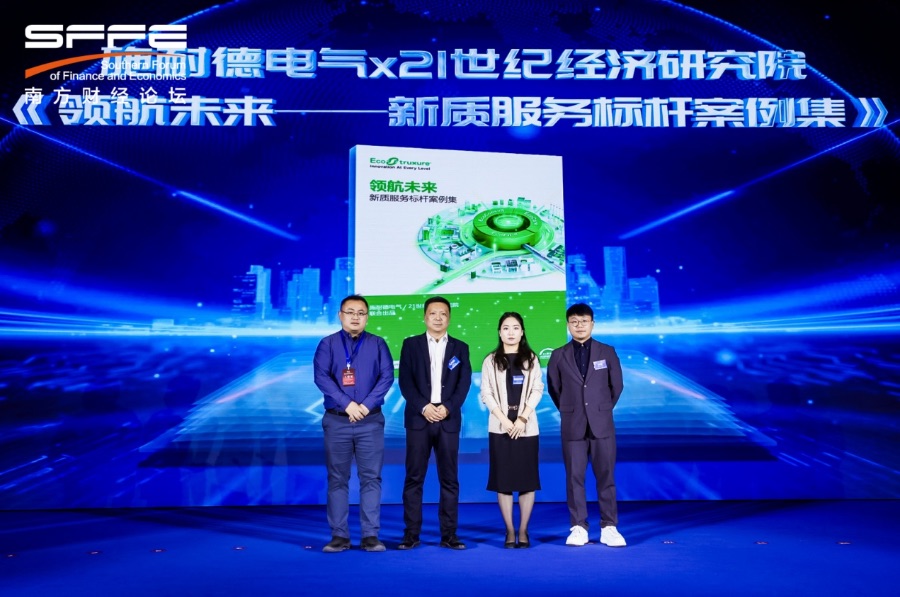
《领航未来——新质服务标杆案例集》正式发布,聚焦万亿市场需求
2 1 Shi Ji Jing Ji Bao Dao· 2025-12-09 13:58
Core Insights - The Southern Finance Forum's "21st Century Outstanding Board Annual Meeting" highlighted the theme "New Blueprint, New Opportunities" and released the report "Navigating the Future - Benchmark Cases of New Quality Services" [2] Group 1: New Quality Services - New quality services are characterized by three main features: new momentum driven by innovative production factors like information technology and AI, new ecosystems relying on partner networks for multidimensional coverage, and new models promoting deep integration of industries [2] - The emergence of new quality services is closely linked to the development of new quality productivity, which has been systematized since its introduction in September 2023 [2] Group 2: Market Dynamics - The new quality service market in China has entered a trillion-level explosive growth phase, with key sectors including industrial, electronic, transportation, medical, and construction [3] - In the industrial sector, equipment renewal needs are crucial for the foundation of the new quality service market, driven by policies promoting upgrades in high-end equipment and digital transformation [3] Group 3: Sector-Specific Insights - In the electronic sector, new quality services focus on digital technologies and are becoming a core engine for digital economic development, despite challenges like data security and talent shortages [4] - The medical sector's new quality services are centered on equipment intelligence upgrades, digital diagnosis, and green hospital construction, supported by increasing policy backing [4] - The transportation sector emphasizes equipment renewal and dual transformation, with new energy vehicles and smart logistics driving the market's explosive growth [5] Group 4: Schneider Electric's Role - Schneider Electric has established a new quality service system comprising EcoConsult, EcoCare, and EcoFit services, covering design, construction, operation, maintenance, and upgrades [5] - The report showcases typical cases from companies like Ansteel Group and Lianxin Pharmaceutical, illustrating how the new quality service system integrates into specific industry scenarios to accelerate the transformation of industries [5]

东吴证券:春季躁动之十五五规划
Xin Lang Cai Jing· 2025-12-07 09:29
Core Viewpoint - The spring market rally may occur earlier this year due to various catalysts and the late timing of the Spring Festival, with a shift in market focus from large-cap value stocks to small-cap growth stocks, particularly in the AI application sector [1][8]. Group 1: Spring Rally Dynamics - Historical patterns indicate that spring rallies are more likely when the market is in a state of speculation, particularly when there are divergences in the DDM three-factor model [2][9]. - The current economic environment is characterized by moderate recovery, making a spring rally a high-probability event under speculative conditions [2][9]. - The late timing of the Spring Festival this year may lead to earlier market movements influenced by policy changes, economic data, and risk events, similar to trends observed in 2013 and 2018 [2][9]. Group 2: Five-Year Planning Impact - The release of five-year planning proposals historically correlates with stronger spring rallies, as seen in the aftermath of proposals in 2010, 2015, and 2020 [3][11]. - The current proposal emphasizes a shift towards growth styles following the initial dominance of value styles, reflecting a broader trend observed in previous five-year plans [3][11]. - Key sectors highlighted in the five-year plans, such as high-end manufacturing, energy construction, and new technologies, tend to perform well during spring rallies [4][12]. Group 3: Strategic Focus of the 15th Five-Year Plan - The 15th Five-Year Plan focuses on optimizing traditional industries, expanding emerging industries, and forward-looking layouts for future industries, particularly in AI and technology [5][13]. - The plan prioritizes the construction of a modern industrial system, high-level opening up, and improving people's livelihoods, which are expected to drive economic growth [6][13]. - Specific sectors such as quantum technology, biotechnology, and renewable energy are identified as future growth points, aligning with global trends in technology and innovation [6][14]. Group 4: Investment Opportunities - The upcoming spring rally is expected to favor sectors related to technology trends, such as AI applications and consumer electronics, which have shown signs of stagnation [7][14]. - High-demand sectors like semiconductors, energy storage, and wind power are anticipated to benefit from the rally [7][14]. - The market is advised to pay attention to low-positioned technology sectors, including robotics and innovative pharmaceuticals, which may have rotation potential [7][14].

山东省及下辖各市经济财政实力与债务研究(2025)
新世纪评级· 2025-12-06 12:28
Economic Performance - Shandong Province achieved a GDP of 98,565.8 billion yuan in 2024, growing by 5.7% year-on-year, maintaining its position as the third-largest economy in China[2] - In the first three quarters of 2025, the GDP reached 77,115.0 billion yuan, with a year-on-year growth of 5.6%, surpassing the national average by 0.4 percentage points[2] - The province's industrial investment helped mitigate the negative impact of declining real estate investment, contributing to overall investment growth[2] Fiscal Strength - In 2024, Shandong's general public budget revenue was 7,711.74 billion yuan, a 3.3% increase from the previous year, ranking fifth nationally[4] - The tax ratio was 65.35%, down 4.7 percentage points from the previous year, placing it 13th among provinces[4] - Government fund budget revenue fell to 4,832.12 billion yuan in 2024, a decrease of 1.9% due to declining land transaction prices[4] Debt Situation - By the end of 2024, Shandong's government debt reached 28,428.81 billion yuan, an 18.9% increase from 2023, ranking second nationally[7] - The debt-to-budget revenue ratio was 4.46 times, indicating a moderate level of risk compared to other provinces[7] - The debt growth was concentrated in larger cities, with Qingdao and Jinan having the highest debt levels at 4,382.57 billion yuan and 3,770.56 billion yuan, respectively[8] City-Level Analysis - Qingdao, Jinan, and Yantai led the provincial economy with GDPs of 16,719.46 billion yuan, 13,527.60 billion yuan, and 10,782.83 billion yuan, respectively, accounting for 41.6% of the province's total GDP[3] - Most cities experienced a slowdown in economic growth, with the average growth rate around 5% to 7%[3] - In 2024, the general public budget revenue for Qingdao and Jinan was 1,339.26 billion yuan and 1,083.05 billion yuan, respectively, showing a clear leading advantage[5]
新质服务风起:产业转型升级催生万亿市场需求
2 1 Shi Ji Jing Ji Bao Dao· 2025-12-05 10:55
Group 1 - The core viewpoint of the article emphasizes the acceleration of innovation capabilities in China's industries, driven by policy support for cultivating new productive forces, leading to the upgrading of traditional industries and the rapid development of emerging industries [1][3]. - The emergence of new quality services is identified as a crucial engine for cultivating new productive forces, characterized by new dynamics through innovative production factors like information technology and AI, new ecosystems relying on collaborative partnerships, and new paradigms promoting deep industry integration [2][3]. Group 2 - The demand for new quality services is closely linked to China's focus on developing new productive forces, as highlighted in the "14th Five-Year Plan," which aims for significant breakthroughs in high-quality development and the construction of a modern economic system [4][5]. - Since the "14th Five-Year Plan," the average annual growth rate of the added value of high-tech manufacturing has been 9.2%, with projections indicating that by 2024, it will account for 16.3% of the total industrial added value [5]. - The "Two New" policies, which include large-scale equipment updates and the replacement of consumer goods, are expected to release market potential worth trillions, marking a significant step in the comprehensive deepening of these policies [5][6]. Group 3 - The new quality service market is entering a trillion-level explosive growth phase, with key sectors such as industrial, electronics, transportation, medical, and construction serving as core areas for this development [6][7]. - In the industrial sector, the demand for equipment updates is driving the foundation of the new quality service market, with policies promoting upgrades in high-end equipment and digital transformation [6][7]. - The medical sector's new quality services focus on intelligent equipment upgrades, digital diagnosis, and green construction, supported by increasing policy backing and rapid market growth [7]. Group 4 - The transportation sector is a key application area for equipment updates and dual transformation, with the shift to new energy vehicles and the development of smart logistics driving the new quality service market [7]. - In the construction sector, new quality services are centered on the renovation of old buildings, smart building construction, and the application of green materials, driven by urban renewal initiatives and carbon neutrality requirements [7][8]. - Overall, new quality services are seen as an inevitable trend in economic development, serving as a vital support for optimizing and upgrading the economic structure, driven by technological innovation and user demand [8].
应用:绿氢远期需求超9400万吨,绿氨、交通领域预计率先平价
2025-12-04 15:36
应用:绿氢远期需求超 9400 万吨,绿氨、交通领域预计 率先平价 20251204 摘要 绿氢制合成氨成本为 4,139 元/吨,较传统工艺高 22%-36%。实现平价 需碳价升至 192 元/吨或绿氢成本降至 13.7 元/千克,或碳价涨至 100 元/吨且绿氢成本降至 15 元/千克。 绿色甲醇生产成本约 3,900 元/吨,比灰色甲醇高 42%。实现平价需碳 价涨至 100 元/吨且绿氢成本降至 9.5 元/千克,电力成本降至 0.08-0.1 元/千瓦时,短期内实现难度大。 炼化行业对绿氢需求较少,因多数炼厂位于东部且有副产蓝氢,经济性 更优。中短期内,仅在缺乏蓝氢支持时才可能出现部分绿氢需求。 轻冶金行业到 2050 年绿氢需求预计超 900 万吨,实现平价需绿氢成本 降至 10.5 元/千克。气基直接还原竖炉减碳幅度大,宝武湛江正推进相 关项目。 钢铁领域碳中和需氢冶金,2050 年氢冶金比例提升至 10%-11%,需 求量为 903-1,053 万吨。目前氢冶金成本高 80%-100%,需补贴。平 价需碳价涨至 100 元/吨且滤芯成本降至 10.5 元/千克。 Q&A 绿氢在合成氨领域的应用 ...
绘就山东“十五五”发展新蓝图
Qi Lu Wan Bao· 2025-12-04 11:25
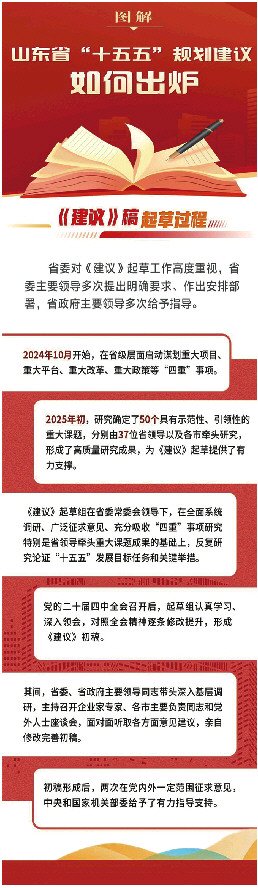
Core Viewpoint - The Shandong Provincial Committee has approved the "Suggestions" for the 15th Five-Year Plan, emphasizing the need for a modernized economic and social development strategy that aligns with national directives and local characteristics [4][13]. Economic Development - The "14th Five-Year" period has seen significant economic growth in Shandong, with 8 out of 21 key indicators achieved ahead of schedule and 13 meeting expectations, laying a strong foundation for the upcoming "15th Five-Year" period [3][12]. - The "15th Five-Year" period is critical for establishing a modern socialist province, with a focus on economic strength and modernization [3][12]. Strategic Planning - The "Suggestions" consist of three main sections, 14 parts, and 60 articles, aimed at implementing the spirit of the 20th National Congress and addressing the unique challenges and opportunities faced by Shandong [4][13]. - The plan emphasizes the importance of a modern industrial system as the foundation for provincial development, prioritizing the optimization of traditional industries and the cultivation of emerging sectors [6][15]. Innovation and Technology - The plan highlights the necessity of enhancing technological innovation, aiming to establish Shandong as a high-level innovative province and integrate technology with industry [6][15]. - Specific initiatives include the establishment of a regional technology innovation center and the promotion of collaborative innovation between enterprises and research institutions [6][15]. Open Economy - The "Suggestions" call for an optimized open economy framework, enhancing international competitiveness and resource allocation through expanded foreign trade and investment [7][16]. - Shandong aims to leverage international trade agreements and enhance its global economic presence through initiatives like "Ten Thousand Enterprises Going Global" [8][17]. Regional Development - The plan outlines strategies for regional coordination, focusing on the development of urban clusters and enhancing the competitiveness of the Shandong Peninsula city group [8][17]. - It emphasizes the implementation of the Yellow River strategy and the creation of a comprehensive development framework that connects various regions [8][17]. Social Welfare - The plan includes a strong focus on improving living standards, with a commitment to maintaining a high percentage of fiscal spending on social welfare, projected to exceed 1 trillion yuan in 2024 [9][18]. - Employment is prioritized as a key aspect of social welfare, with strategies aimed at supporting job creation and enhancing social security systems [9][18].
港产联动 广西防城港港企双向赋能成良性循环
Zhong Guo Xin Wen Wang· 2025-12-04 08:51
Core Viewpoint - The development of Fangchenggang Port has significantly enhanced its operational capacity, allowing for efficient unloading of large cargo ships and supporting the growth of the local port-based industry [1][2]. Group 1: Port Development and Capacity - A foreign cargo ship carrying 200,000 tons of imported iron ore successfully docked at Fangchenggang Port, showcasing the port's advanced capabilities [1]. - The port has 47 operational berths, with 41 capable of handling over 10,000 tons and 13 over 100,000 tons, achieving an annual throughput capacity exceeding 180 million tons [1][2]. - The port's cargo throughput surpassed 100 million tons in the first half of 2025, marking a historical high for the same period [2]. Group 2: Operational Efficiency and Technology - Fangchenggang Port has optimized its ship docking and unloading processes through scientific scheduling and equipment support, improving turnaround efficiency [2]. - The port has implemented smart upgrades, including a large digital bulk cargo center and automated container yard, enhancing operational efficiency and accuracy [2][3]. - The introduction of AI technologies for inspection and counting has further improved the efficiency of the entire operational process [2]. Group 3: Environmental Initiatives - The port has established a comprehensive dust control system, resulting in a 70% reduction in PM2.5 concentration compared to pre-treatment levels [3]. - A water recycling system has been implemented, reusing 1.5 million tons of water annually and achieving zero wastewater discharge [3]. - The port's energy consumption per throughput unit has decreased by 26.8% since 2020, with nearly 60% of transportation being green [3]. Group 4: Industrial Development and Local Impact - The iron ore unloaded at the port will supply Guangxi Shenglong Metallurgy Co., which will produce high-end silicon steel and galvanized sheets, enhancing the local industrial chain [3][4]. - Guangxi Hongwang New Materials Co., a joint venture, has invested over 3 billion yuan and aims to achieve an annual production capacity of 2 million tons of high-performance silicon steel and galvanized sheets [4]. - The company plans to establish a highly integrated smart control center with over 90% automation, positioning itself as a benchmark in the industry [5]. Group 5: Future Prospects - Fangchenggang Port aims to continue enhancing green energy applications, upgrading unloading automation, and improving multimodal transport collaboration to become a model for green smart ports [5].

中邮证券黄付生:制造业“K”型分化,居民财富将迎修复
Xin Lang Cai Jing· 2025-12-03 12:25
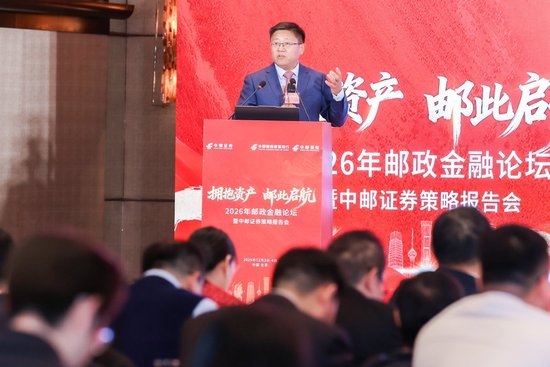
Core Insights - The report presented by Huang Fusheng at the "2026 Postal Financial Forum" highlights China's economic recovery, driven by the "14th Five-Year Plan" focusing on modern industrial systems and high-tech sectors [3][8]. Group 1: Economic Recovery and Industrial Policy - China is building a modern industrial system under the "14th Five-Year Plan," with a focus on high-tech sectors showing significant performance [3][8]. - The plan prioritizes the construction of a modern industrial system and strengthening the real economy, aiming to "recreate a Chinese high-tech industry" over the next decade [3][8]. - Key strategies include enhancing traditional industries, addressing core technology challenges, and fostering strategic emerging industries like new materials and quantum technology [3][8]. Group 2: Manufacturing Sector Performance - The manufacturing sector exhibits a K-shaped recovery, with high-tech product exports growing faster than the overall export growth rate of 5.3% in the first ten months of 2025 [4][9]. - Profit growth in upstream manufacturing sectors like transportation equipment and non-ferrous metal smelting significantly outpaces that of downstream industries such as furniture and apparel [4][9]. - A-share non-financial companies reported a revenue increase of 0.9% year-on-year in Q3 2025, with net profits rising by 3.29% [4][10]. Group 3: Consumer Wealth and Spending Trends - Recovery of resident wealth is projected to take 3-5 years, with service consumption identified as a future growth area [5][10]. - In 2025, there remains a significant gap in resident wealth compared to the peak in 2021, but optimistic scenarios suggest recovery to previous levels by 2028 [5][10]. - The consumption structure indicates a saturation in goods consumption (15% of GDP) compared to major Western countries, while service consumption in healthcare and education is below global averages, indicating substantial growth potential [5][10].
首钢股份:累计回购约2062万股
Mei Ri Jing Ji Xin Wen· 2025-12-01 08:41
每经AI快讯,首钢股份(SZ 000959,收盘价:4.3元)12月1日晚间发布公告称,截至2025年11月30 日,公司通过回购股份专用证券账户以集中竞价交易方式回购公司股份约2062万股,占公司当前总股本 的0.266%,最高成交价为4.66元/股,最低成交价为4.06元/股,支付总金额约为9042万元。 每经头条(nbdtoutiao)——5年期大面积下线,3年期利率低至1.5%仍一单难求:要么"售罄"要么"额度 紧张"!中长期大额存单为何在消失? (记者 王晓波) 2025年1至6月份,首钢股份的营业收入构成为:冶金占比100.0%。 截至发稿,首钢股份市值为333亿元。 ...
