
建筑

Search documents
GlC Private Limited减持中国建筑国际38.2万股 每股作价约9.39港元
Zhi Tong Cai Jing· 2026-02-25 11:09
Group 1 - GIC Private Limited reduced its stake in China State Construction International (03311) by 382,000 shares at a price of HKD 9.3947 per share, totaling approximately HKD 3.5888 million [1] - After the reduction, GIC's remaining shareholding is approximately 317 million shares, representing a holding percentage of 5.99% [1]


GlC Private Limited减持中国建筑国际(03311)38.2万股 每股作价约9.39港元
智通财经网· 2026-02-25 11:08
Group 1 - GIC Private Limited reduced its stake in China State Construction International (03311) by 382,000 shares at a price of HKD 9.3947 per share, totaling approximately HKD 3.5888 million [1] - After the reduction, GIC Private Limited's remaining shareholding is approximately 317 million shares, representing a holding percentage of 5.99% [1]
澳能建设(01183.HK)盈喜:预期2025年纯利同比增长375.6%以上
Ge Long Hui· 2026-02-25 10:18
Core Viewpoint - Aon Construction (01183.HK) expects to achieve a net profit of at least approximately 19.5 million Macanese Patacas for the fiscal year ending December 31, 2025, representing a growth of over 375.6% compared to the net profit of about 4.1 million Macanese Patacas for the fiscal year ending December 31, 2024 [1] Group 1 - The anticipated increase in net profit is primarily due to a rise in revenue from construction activities, attributed to the certification of significant construction projects, including a substation and a government data center in Macau [1] - Market expansion has led to an improvement in the gross profit margin of the smart manufacturing business [1]
晚间公告|2月25日这些公告有看头
Di Yi Cai Jing· 2026-02-25 10:16
Group 1 - Huylon New Materials is planning a change in company control, leading to a stock suspension starting February 26, 2026, for up to two trading days [2] - Longbai Group's subsidiary has partially resumed production of sulfuric acid after completing safety inspections and receiving approval from regulatory authorities [3] - Jiangxi Tungsten's stock experienced abnormal trading fluctuations, and the company is planning to issue A-shares to specific investors to raise up to 1.882 billion yuan for acquisitions [4] Group 2 - Chuanjinno reported market rumors about the U.S. potentially prioritizing phosphorus and glyphosate under the Defense Production Act, with unclear impacts on the company's operations [5] - Baibang Technology's subsidiary renewed its agreement with Apple to continue as an independent repair provider until June 30, 2030 [6] - Jiazhe New Energy received approval for a biomass power generation project associated with a green hydrogen production facility in Heilongjiang [7] Group 3 - Bluelight Optical reported a net profit of 388 million yuan for 2025, a 76.09% increase year-on-year, driven by strong demand in its optical prism and lens businesses [9] - Xindong Link's net profit for 2025 reached 302 million yuan, up 36.1% year-on-year, attributed to increased market penetration and strong customer orders [10] - Huachuang Technology's net profit for 2025 was 42.68 million yuan, a significant increase of 89.45%, due to higher sales of special protective products [11] Group 4 - Aiko Optoelectronics reported a net profit of 64.09 million yuan for 2025, a 307.63% increase, benefiting from growth in AI computing and new display technologies [12] - Huafeng Measurement and Control achieved a net profit of 538 million yuan for 2025, a 61.22% increase, supported by operational efficiency improvements and market recovery [13] - Transsion Holdings reported a net profit of 2.584 billion yuan for 2025, a decline of 53.43%, impacted by rising component costs and market competition [14] Group 5 - Hancable's net profit for 2025 was 592 million yuan, a decrease of 9.59%, despite a 13.04% increase in total revenue [15] - Fuda Co. plans to reduce its repurchased shares by up to 1% within three months, following a buyback of 8.7192 million shares [17] - Beijing Kerui won contracts totaling approximately 588 million yuan for various projects, enhancing its market position [19] Group 6 - Beixin Road and Bridge, in a joint venture, won a contract for the G60 Hukun Expressway reconstruction project worth 751 million yuan [20] - Zhiguang Electric's subsidiary secured a 182 million yuan contract for power cable supply to the Southern Power Grid [21] - ST Songfa's subsidiary signed contracts for building three large oil tankers, with a total value of approximately 300-400 million USD [22] - Huadian Science and Technology won an 827 million yuan contract for a coal power project in Inner Mongolia, enhancing its capabilities in the energy sector [23]


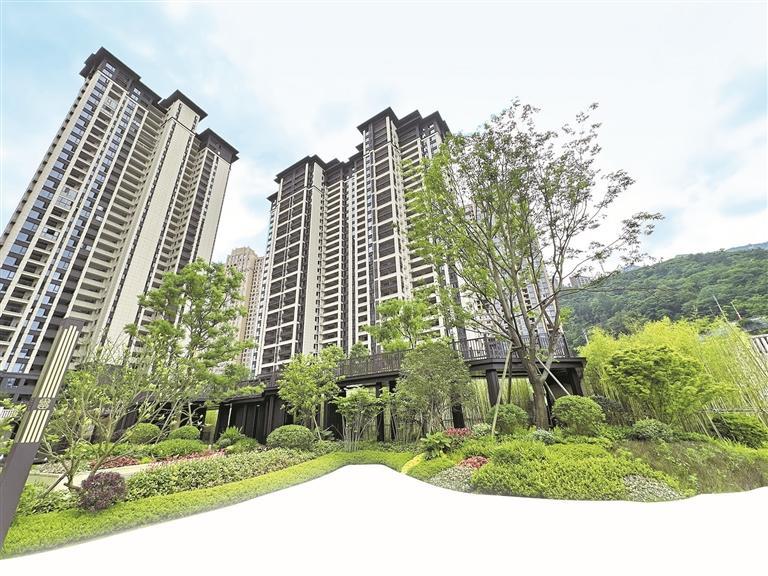
上海发布楼市“沪七条”,基建ETF(159619)盘中涨超2%,关注传统板块边际改善机会
Mei Ri Jing Ji Xin Wen· 2026-02-25 08:26
Group 1 - Shanghai has released the "Shanghai Seven Measures" to further optimize and adjust the city's real estate policies, effective from February 26, 2026, which includes reducing housing purchase restrictions to promote balanced living and working conditions [1] - The demand for infrastructure is expected to remain robust in 2026, with fiscal departments continuing to implement more proactive fiscal policies to stabilize investment [1] - In 2025, the eight major state-owned construction enterprises achieved a year-on-year increase in new contracts, indicating a potential marginal improvement in the operations of construction companies [1] Group 2 - The Infrastructure ETF (159619) tracks the CSI Infrastructure Index (930608), which selects listed companies involved in mechanical manufacturing and construction to reflect the overall performance of infrastructure-related securities [2] - The index components cover traditional infrastructure and some advanced manufacturing sectors, providing a high level of industry representation [2]
我省绘就2026住房城乡建设新图景
Xin Lang Cai Jing· 2026-02-24 22:23
Group 1 - The core objective for the province this year is to add 1,000 residential community owner committees and to implement around 50 "good housing" projects and 40 tourism real estate projects [2][3] - The province aims to promote the transformation of real estate development by guiding companies towards low debt, low leverage, and reasonable return business models, while enhancing the role of urban real estate financing coordination mechanisms [3] - A focus will be placed on developing tourism real estate by identifying quality land and project resources, establishing lists of ongoing, under negotiation, and planned projects, and actively engaging various business entities to implement quality projects [3] Group 2 - The province plans to integrate housing and urban construction work with multiple industries, including expanding the application of clean energy and promoting green and prefabricated buildings [4] - There will be an emphasis on smart construction and the use of advanced manufacturing equipment, as well as the full-process application of BIM technology to enhance construction efficiency [4] - The integration of emerging industries, particularly artificial intelligence, will be pursued to enhance applications in smart cities and construction processes, as well as in safety and property services [5]
南京部署企业复工复产安全防范工作
Xin Lang Cai Jing· 2026-02-24 22:23
Group 1 - The core message emphasizes the importance of safety measures during the resumption of industrial operations in Nanjing, with a focus on maintaining public safety and stability [1][2] - Companies are required to implement the "six essentials" for safety production, ensuring that safety measures are applied at every stage and position [1] - There is a strong emphasis on identifying and managing risks associated with equipment restart, process adjustments, and new employee onboarding, with a focus on checklist management and immediate rectification [1] Group 2 - The government is urging all sectors and departments to quickly understand the resumption timelines of various enterprises and assist in overcoming challenges prior to restarting operations [2] - The goal is to facilitate the early resumption of operations for more companies to support stable economic growth in the first quarter [2] - Key areas such as chemical enterprises and mining operations will undergo increased monitoring and inspections to ensure safety compliance during the resumption phase [1]
中国核工业建设股份有限公司股东减持股份结果公告
Shang Hai Zheng Quan Bao· 2026-02-24 17:10
Group 1 - The major shareholder, China Cinda Asset Management Co., Ltd., held 309,250,000 shares of China Nuclear Engineering Construction Corporation, accounting for 10.26% of the total share capital before the reduction plan [1] - The reduction plan was disclosed on October 28, 2025, with a timeframe from November 19, 2025, to February 18, 2026, allowing for a maximum reduction of 30,138,342 shares [1] - As of February 18, 2026, China Cinda reduced its holdings by 8,035,400 shares, representing 0.2666% of the total share capital, completing the reduction plan [1] Group 2 - The reduction subject had no concerted actions with other parties [2] - The actual reduction complied with relevant laws and regulations, and the implementation was consistent with the previously disclosed reduction plan [2] - The reduction plan was not terminated early, and there were no violations of the reduction plan or other commitments [2]

周期板块节后开工及行情展望
2026-02-24 14:16
Summary of Conference Call Records Industry Overview - **Construction Industry**: The total new contracts signed in the construction industry decreased by 6.6% year-on-year to 31.5 trillion yuan, while the market share of the eight major state-owned enterprises increased by approximately 10 percentage points to 51% [1][3]. The industry is undergoing supply clearance and business restructuring, with a shift towards "two buildings" projects benefiting leading state-owned enterprises and their partnered material suppliers [1][4]. - **Non-ferrous Metals**: During the Spring Festival, overseas metal prices generally rose, positively impacting domestic non-ferrous metal stocks. Despite a hawkish stance from the Federal Reserve suppressing precious metal prices, geopolitical tensions in Iran provided upward catalysts [1][5][6]. - **Coal Industry**: Indonesia's production reduction plans are still being implemented, and domestic production may continue to decrease post-Spring Festival. The port inventory is lower than the same period last year, indicating potential price increases in the domestic coal market [1][7][8]. - **Real Estate Market**: Various cities are piloting state-owned enterprises to purchase existing residential properties for rental housing. The second-hand housing market showed stable growth in key cities, although the overall market requires further observation [1][9][10]. Key Insights and Arguments - **Investment Outlook for Construction Materials**: The investment outlook for the construction materials industry in 2026 is optimistic, with a focus on sectors like waterproofing, coatings, and steel structures. The market is expected to stabilize and potentially see positive growth due to significant project funding and early issuance of special bonds [3][4]. - **Energy Sector Performance**: The energy sector performed well during the Spring Festival, with significant price increases in crude oil and coal, providing a positive signal for the domestic coal sector post-holiday [3][8]. - **Market Dynamics in Non-ferrous Metals**: The non-ferrous metals sector is expected to stabilize after a short-term adjustment, with a focus on energy metals and leading companies in the sector [6]. Additional Important Information - **Construction Sector Changes**: The eight major state-owned enterprises have reversed negative growth trends in quarterly orders since Q2 2025, indicating a recovery in demand and market share [4]. - **Coal Supply and Demand**: Historical data suggests that the coal sector typically performs better than the Shanghai and Shenzhen 300 Index post-Spring Festival, leading to an optimistic outlook for coal prices [7][8]. - **Real Estate Policy Changes**: The Chinese government is emphasizing stability in the real estate market, with measures to control inventory and optimize supply, which may influence future market dynamics [9][10]. This summary encapsulates the key points from the conference call records, highlighting the current state and future outlook of the construction, non-ferrous metals, coal, and real estate industries.
徐闻、揭西、龙门分享城镇建设和镇村片区组团发展探索路径
Nan Fang Nong Cun Bao· 2026-02-24 13:05
Core Insights - The article discusses the exploration of urban construction and town-village group development paths in three counties: Xu Wen, Jie Xi, and Long Men, focusing on how spatial restructuring can promote coordinated urban-rural development [10][56]. Group 1: Xu Wen County - Xu Wen County aims to leverage its geographical advantage by integrating port, industry, and city development, with a focus on high-quality development through the construction of a new city covering 50 square kilometers [19][20]. - The county has introduced 33 major projects with a total investment of approximately 26.2 billion yuan, enhancing its port capabilities and urban quality [26][30]. - Xu Wen's urban quality improvements include the establishment of parks and green spaces, achieving over 80% coverage in service radius [28]. Group 2: Jie Xi County - Jie Xi County is developing the Mianhu Town as a sub-center, successfully cultivating a 10 billion yuan electric cable industry and a 2.5 billion yuan e-commerce park, with a GDP exceeding 4 billion yuan [34][35]. - The county's planning includes a "three zones and two water systems" framework to enhance cultural tourism and public services while promoting industrial growth [36][39]. - Jie Xi aims to set a new model for small city development characterized by high-quality industry and efficient governance [41]. Group 3: Long Men County - Long Men County is focusing on a group development model, implementing 85 key projects with a total investment of about 20.5 billion yuan to transition resources from fragmentation to clustering [46]. - The county has developed a scenic tourism road and is attracting major hospitality enterprises and sports events to enhance local tourism [48]. - Long Men targets a GDP growth of 7.4% by 2025, with rural residents' disposable income expected to increase by 6.5% year-on-year [52][53]. Group 4: Overall Development Strategy - The article emphasizes the importance of spatial restructuring as a key driver for urban-rural coordination, with a focus on integrating new city construction with the renewal of old cities [56][58]. - The "Hundred-Thousand-Ten Thousand Project" is highlighted as a critical initiative for promoting high-quality development across counties, with a call for deeper participation from construction enterprises [57][58].
