能源贸易

Search documents
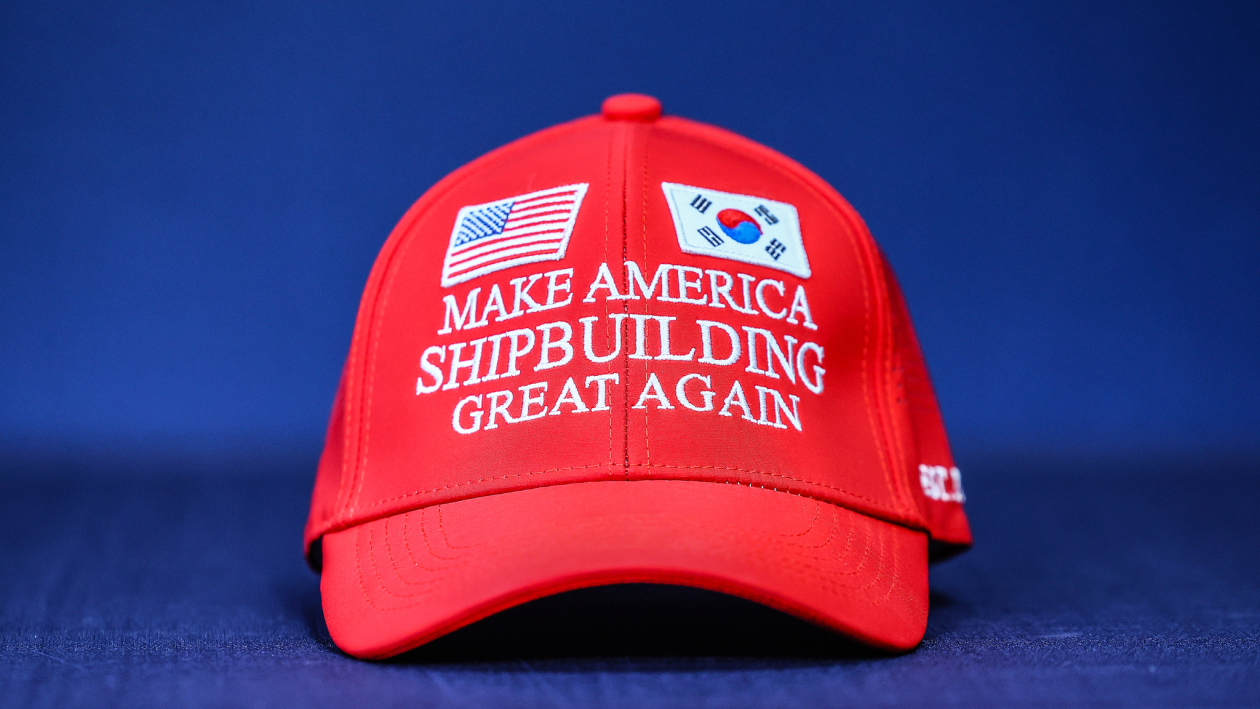
韩方披露韩美贸易谈判幕后细节:一顶红色棒球帽成关键……
Huan Qiu Wang· 2025-08-05 08:20
Group 1 - The core of the article discusses the recent trade agreement between the US and South Korea, highlighting the symbolic role of a red baseball cap labeled "Make American Shipbuilding Great Again" (MASGA) in the negotiations [1][3][4] - The MASGA project, led by the South Korean government, aims to encourage significant investments from South Korean shipbuilding companies in the US, supported by financial backing from public institutions like the Korea Export-Import Bank [3][6] - The design and production of the MASGA cap involved collaboration with local manufacturers in Seoul, and the concept was inspired by the preferences of the US President [3][4] Group 2 - The trade agreement framework includes South Korea investing $350 billion in the US and purchasing $100 billion worth of liquefied natural gas and other energy products [8] - Despite the agreement, there are concerns within South Korea regarding the implications of a 15% tariff on exports and the overall impact on the shipbuilding industry [9] - Ongoing discussions indicate that while a framework has been established, significant issues remain unresolved, particularly regarding agricultural topics and the specifics of the $350 billion investment [9]

中美推动关税延期!美国给中国挖了3个大坑,中方谈判难度有多大?特朗普真正目的不简单
Sou Hu Cai Jing· 2025-08-04 06:21
Group 1: Negotiation Dynamics - The US and China have agreed to extend the tariff truce for 90 days, providing short-term stability to their economic relationship, while underlying complexities in negotiations persist [1] - The US has introduced three main negotiation traps: pressure on China's manufacturing sector, energy procurement conditions, and technology decoupling strategies [3][4][5] Group 2: US Negotiation Traps - The US is pressuring China to limit production capacity in key industries like steel and solar, attributing the hollowing out of US manufacturing to Chinese low-priced goods [3] - The US has linked energy trade negotiations to sanctions, demanding China cease imports from sanctioned countries and set a $200 billion annual quota for US LNG purchases [4] - In technology, the US is pushing for unrestricted semiconductor equipment purchases and the lifting of export controls on rare earths, aiming to maintain its technological edge [5] Group 3: China's Strategic Challenges - The US is employing a multi-faceted pressure strategy involving tariffs, technology restrictions, and international rules, complicating China's negotiation position [7] - China's reliance on imports for advanced manufacturing, particularly in semiconductors, poses risks to its supply chain stability [7][8] - The EU's carbon border adjustment mechanism and India's demands for market access add to the international pressure on China [8] Group 4: China's Counterstrategies - China is diversifying its markets, with exports to Belt and Road countries increasing by 18%, which helps mitigate the impact of US tariffs [9] - China controls 60% of global rare earth processing capacity, using this leverage to impact US industries significantly [10] - Recent trade agreements and initiatives aim to reshape global economic rules, positioning China as a proactive player in international trade [10] Group 5: Future Negotiation Outlook - The current tariff negotiations are characterized by short-term concessions but long-term challenges, with the US maintaining its core demands [12] - China's decreasing reliance on foreign trade, from 64% in 2006 to an expected 32% in 2025, indicates a shift towards domestic market-driven growth [12] - The negotiation process is seen as a reflection of structural contradictions between the two economies, necessitating a balance between immediate compromises and long-term strategic interests [12]

特朗普又签4500亿美元大单,累计2.35万亿美元,部分关税再延期!
Sou Hu Cai Jing· 2025-07-31 08:23
Group 1 - The core point of the article highlights the significant trade agreements made by the Trump administration, particularly the $450 billion deal with South Korea, which includes $350 billion in investments in core U.S. projects and $100 billion in energy procurement [1][3] - The total value of trade agreements reached by the Trump administration with Japan, the EU, and South Korea in one month amounts to $2.35 trillion, indicating a dramatic restructuring of the global trade landscape [1][3] - The South Korean government has strategically preserved its agricultural markets by not opening rice and beef markets to the U.S., showcasing a balance between economic negotiations and domestic interests [3] Group 2 - The South Korean won experienced a brief increase of 0.4% following the agreement, but quickly fell back, suggesting market skepticism about the underlying implications of the deal [4] - The article critiques the nature of the agreements, noting that a significant portion of the promised investments from Japan and the EU are not direct investments but rather loans or guarantees, raising questions about the actual economic benefits [6][7] - The U.S. is leveraging exaggerated figures to create a facade of victory in trade negotiations, while allies are participating in this arrangement to secure tariff reductions [7] Group 3 - Specific allocations from the agreements include $150 billion for U.S.-Korea shipbuilding cooperation, $200 billion for sectors like semiconductors and nuclear energy, and a commitment to purchase $100 billion of U.S. liquefied natural gas over three and a half years [8] - The article discusses the implications of the U.S. imposing a 40% tariff on Brazil, highlighting the uneven impact of U.S. trade policies on different countries and the limited options for Brazil to retaliate [10] - The U.S. has shown a different approach towards China, extending a 90-day pause on tariff measures, indicating a more complex and nuanced trade relationship compared to other nations [12][16] Group 4 - The article notes that while tariff revenues appear substantial, they are insufficient to cover the rising national debt, with the U.S. Treasury expecting to borrow $1.01 trillion, nearly double previous estimates [14] - The Federal Reserve's cautious stance on interest rates reflects the economic challenges posed by the trade policies, as the U.S. grapples with balancing inflation control and economic growth [14] - The overarching theme suggests that the aggressive trade tactics employed by the Trump administration may lead to long-term economic consequences, as allies and adversaries alike reassess their positions in the global trade system [16]
美国贸易代表格里尔:韩国在与美国的贸易问题上总是非常具有挑战性。我们从韩国人那里获得了重大让步。欧盟提出了向美国购买能源。将持续监控贸易协议的合规情况。
news flash· 2025-07-30 23:20
Core Viewpoint - The U.S. Trade Representative, Katherine Tai, highlighted the challenges posed by South Korea in trade negotiations, indicating that significant concessions have been made by South Korea [1] Group 1: U.S.-South Korea Trade Relations - South Korea is consistently viewed as a challenging partner in trade discussions with the United States [1] - Major concessions have been obtained from South Korea during recent negotiations [1] Group 2: U.S.-EU Energy Trade - The European Union has proposed purchasing energy from the United States [1] - Ongoing monitoring of compliance with trade agreements will be maintained [1]
财经观察:欧盟购7500亿美国能源,能实现吗?
Huan Qiu Shi Bao· 2025-07-30 22:52
Core Viewpoint - The recent trade agreement between the EU and the US, touted by President Trump as "the largest trade agreement in history," includes a commitment from the EU to purchase $750 billion worth of energy products from the US, which has raised skepticism regarding its feasibility and implementation [1][2][9]. Group 1: EU's Energy Procurement Challenges - The EU's current energy imports from the US amount to only $759 million, which is less than one-third of the proposed annual target of $250 billion over the next three years [4][5]. - The procurement of energy is primarily managed by private companies rather than government entities, making it difficult for the EU to direct where and how much energy is purchased from the US [4][5]. - The energy procurement agreement conflicts with the EU's own energy development goals, as it aims to reduce reliance on Russian gas, while only a small fraction of the EU's gas imports currently come from Russia [5][6]. Group 2: US Supply Capacity Concerns - Analysts express doubts about the US's ability to meet the EU's energy demands, as the US's total energy exports are projected to exceed $330 billion in 2024, and even if all exports were redirected to the EU, the total would only reach $141 billion [6][7]. - The current capacity of US LNG terminals is nearly at full operation, and while expansions are underway, they will take years to complete [7][10]. - The US's oil production is stabilizing, and there are challenges in redirecting exports from other markets to meet EU demands, which complicates the feasibility of the agreement [7][10]. Group 3: Political and Structural Implications - The agreement lacks legal binding and is viewed more as a political vision rather than a practical plan, with significant adjustments needed in global energy flows to fulfill the procurement targets [9][11]. - The EU's commitment to increase energy procurement from the US is seen as a response to the geopolitical pressures following the Russia-Ukraine conflict, which has forced the EU to diversify its energy sources [10][11]. - The potential for the agreement to reshape global energy trade dynamics exists, but its immediate impact is expected to be limited, with long-term changes requiring further evaluation [10][11].
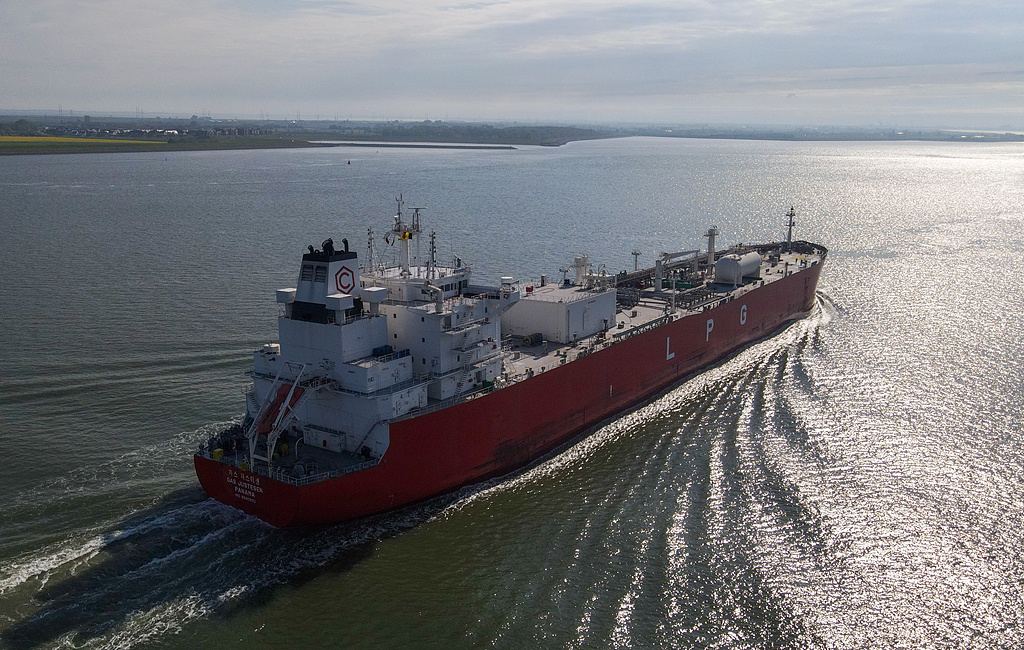
特朗普宣布与韩国达成全面贸易协议,征收15%关税
Hua Er Jie Jian Wen· 2025-07-30 22:24
市场有风险,投资需谨慎。本文不构成个人投资建议,也未考虑到个别用户特殊的投资目标、财务状况或需要。用户应考虑本文中的任何 意见、观点或结论是否符合其特定状况。据此投资,责任自负。 特朗普宣布,美国已与韩国达成全面的贸易协议,将对韩国征收15%的关税,韩国将向美国提供3500亿 美元投资,由美国拥有和控制;此外,韩国将购买1000亿美元液化天然气(LNG)或其他能源产品。 标普股指期货涨0.68%,纳指期货涨0.97%,小盘股指期货跌0.56%。 风险提示及免责条款 ...
欧美新关税协议能兑现吗
Guo Ji Jin Rong Bao· 2025-07-30 11:14
Group 1 - The agreement between President Trump and EU Commission President von der Leyen results in a 15% tariff on most EU exports to the US, a reduction from the previously threatened 30% [1][2] - The EU is expected to increase investments in the US by $600 billion and purchase $750 billion worth of energy products, which has sparked criticism within the EU [1][2][7] - The agreement is seen as a political victory for Trump, as it reflects a shift in US trade policy and a departure from rules-based global free trade [2][5][6] Group 2 - The 15% tariff is viewed as a compromise, with potential significant impacts on export-oriented industries, particularly the German automotive sector, but the overall economic impact on the EU is considered manageable [3][4] - There are notable divisions within the EU regarding the agreement, with some member states expressing dissatisfaction and viewing it as a political failure [6][8] - The energy purchasing plan is controversial, as it requires the EU to significantly increase its imports of US energy, raising questions about market realities and the feasibility of such commitments [7][9][10]
欧洲承诺购买7500亿美国能源 一张注定无法兑现的“空头支票”?
Hua Er Jie Jian Wen· 2025-07-30 10:29
Core Viewpoint - The ambitious plan of the EU to purchase $750 billion worth of energy products from the US faces significant practical challenges, with analysts deeming the target unrealistic given the current market dynamics and supply capabilities [1][2]. Group 1: Trade Agreement Details - The EU has committed to purchasing approximately $250 billion worth of US energy products annually, including LNG, oil, and nuclear fuel, which represents a more than threefold increase compared to the current energy trade volume of about €65 billion (approximately $76 billion) [2][3]. - To meet the $250 billion target, the EU would need to import around 67% of its energy needs from the US, which is not feasible given the current import levels and market conditions [3]. Group 2: Market Dynamics and Challenges - The US's total energy exports to all global buyers in 2024 are projected to be $318 billion, making it impractical for the EU to triple its imports from the US [3]. - Even with political will, market forces will dictate energy flows, and the EU cannot control the import decisions of its companies, which are primarily private entities [4]. Group 3: Energy Transition and Future Outlook - The EU's plan to increase fuel purchases contradicts its expected decline in demand as it transitions to cleaner energy sources, with oil demand having peaked several years ago [5]. - The most likely outcome of the trade agreement is increased participation of European companies in US LNG projects, rather than a significant change in market dynamics within the next five years [5].
欧洲承诺购买7500亿美国能源,一张注定无法兑现的“空头支票”?
Hua Er Jie Jian Wen· 2025-07-30 10:08
Core Insights - The EU's commitment to purchase $750 billion in energy products from the US faces significant challenges, as analysts believe this figure exceeds both EU import demand and US export capacity [1][2] - The agreement requires the EU to import approximately $250 billion annually in US energy products, which is more than three times the current energy trade volume of about €65 billion (approximately $76 billion) [1][2] - Market analysts warn that this commitment is impractical and could lead to rising global energy prices, affecting domestic energy costs in both the US and EU [1] Group 1: Demand and Supply Discrepancies - To meet the $250 billion target, the EU would need to import about 67% of its energy demand from the US, which is unrealistic given the current import levels [2] - In 2024, the EU's total energy imports from the US are projected to be around €65 billion, with LNG accounting for €20 billion (35 million tons) and oil products for €44 billion [2] - Even if the EU shifted all LNG purchases to the US, the total would only reach €40-50 billion, necessitating a complete withdrawal of other suppliers from the EU market [2] Group 2: Market Forces vs. Political Will - Despite political intentions, market forces will dictate energy flows, and the EU cannot control the import behaviors of its companies [3] - The EU does not directly purchase energy; transactions are conducted by private companies, limiting the EU's ability to enforce compliance with the agreement [3] - Analysts emphasize that the EU would either have to pay excessively high prices for US LNG or receive more LNG than it can handle, making the agreement impractical [3] Group 3: Global Competition and Energy Transition - The EU's plan to increase fuel purchases contradicts its expected decline in demand as it transitions to clean energy [4] - Other countries, such as Japan and South Korea, are also seeking to increase their energy imports from the US, intensifying competition for US energy supplies [3][4] - The most likely outcome of the trade agreement is increased European participation in US LNG projects, which would occur regardless of the agreement [4]
中美最关键一局打响!美国财长突然“放大招”,不许中国购买俄伊石油!中方拒绝就加500%关税
Sou Hu Cai Jing· 2025-07-30 07:14
Group 1: Geopolitical and Economic Context - The U.S. aims to disrupt the energy cooperation between China, Russia, and Iran, as these countries account for approximately 30% of China's crude oil imports [3] - The U.S. is using tariffs as a negotiation tool, with a proposed 500% tariff on goods from China if it continues to purchase oil from Russia and Iran, which exceeds WTO rules [3][4] - The U.S. is also attempting to shift China's energy purchases from non-Western countries to U.S.-led high-priced energy sources [3] Group 2: China's Response and Strategic Position - China has diversified its crude oil import sources, covering 15 countries, with over 60% of imports coming from the Middle East, Africa, and South America, making it less reliant on Russian and Iranian oil [4] - China controls 60% of global rare earth mining and 90% of deep processing capabilities, which could impact U.S. military technology if trade tensions escalate [4] - The Chinese government has initiated a "trade war emergency plan" with a $50 billion fund to support affected enterprises and is expanding procurement in ASEAN and Middle Eastern markets [9] Group 3: Global Market Implications - The ongoing negotiations have caused significant volatility in global financial markets, with the MSCI global index experiencing notable fluctuations and oil futures rising by 4.5% in a single day [8] - There is a trend of companies like Apple relocating production to countries like India and Vietnam, although these regions face challenges in supply chain efficiency [8] - OPEC+ countries are exploring pricing oil in renminbi, indicating a potential shift away from the "petrodollar" system [8] Group 4: Future Outlook and Recommendations - The U.S. faces internal contradictions, as a 500% tariff could lead to gasoline prices reaching $8 per gallon, potentially increasing inflation and affecting political support for the current administration [8] - The United Nations Conference on Trade and Development has called for a "tariff fluctuation stabilization mechanism," highlighting the need for a multilateral approach to trade disputes [12] - The emphasis on cooperation over confrontation is seen as essential for global economic stability, suggesting that both nations should seek non-zero-sum solutions [12]