智能汽车

Search documents
华为拟推合作新模式?定位预计介于“Hi”与鸿蒙智行之间 车企“含华量”争夺战再升级
Mei Ri Jing Ji Xin Wen· 2025-09-03 19:53
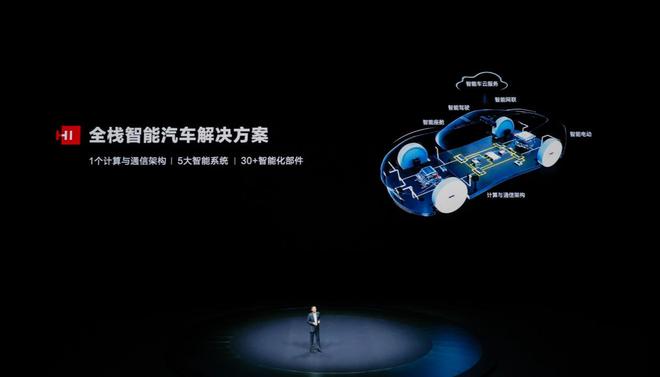
Core Viewpoint - Huawei is set to launch a new collaborative model for automotive companies within this year, which differs from its previous "Hi model" and "Smart Selection Car" approach, aiming to create a co-structured framework led by car manufacturers with deep integration of Huawei's technology [1] Group 1: Current Collaboration Models - Huawei currently has three collaboration models in the automotive sector: "Component Supply Model," "Hi Solution," and "Hongmeng Smart Travel" [2] - The "Hi Plus" model is being explored by various car manufacturers, indicating an evolution or variant of the existing Hi model [2][3] - Companies like Lantu and Avita are actively working on the "Hi Plus" model, with Avita planning to launch 17 new products by 2030 [2][3] Group 2: Characteristics of the Hi Plus Model - The Hi Plus model emphasizes deeper integration of Huawei's technology from the engineering phase, allowing for more extensive participation in product definition, marketing, and ecosystem services [4][5] - Compared to the Hi model, the Hi Plus model has a broader scope, including user insights and product development testing [5] - The model is seen as a bridge between the Hi model and the Hongmeng Smart Travel model, with differences in brand management and sales responsibilities [5][6] Group 3: Market Implications - The increasing number of car manufacturers collaborating with Huawei may lead to diluted technical solutions and overlapping product matrices, raising concerns about differentiation in the market [5][6] - Companies are encouraged to leverage Huawei's advanced technology to enhance their market competitiveness, especially as the automotive industry faces a phase of accelerated elimination [4][6] - The collaboration aims to cover more vehicle types and markets, benefiting Huawei's technology development and revenue [6]
华为汽车板块“朋友圈”扩容!八大国有车企在列
证券时报· 2025-09-03 09:11
Core Viewpoint - Huawei's automotive business is rapidly maturing, having established partnerships with all eight major state-owned car manufacturers in China, as well as several luxury brands, indicating a significant shift in the automotive landscape towards smart technology integration [4][10][11]. Huawei's Automotive Business Development - Huawei's automotive division originated from its vehicle communication sector and officially entered the automotive field in May 2019 with the establishment of the Intelligent Automotive Solutions Business Unit [5]. - The company has developed three main collaboration models with car manufacturers: component supply model, Hi (full-stack intelligent automotive solutions) model, and Hongmeng Zhixing (originally "Smart Choice Car") model [6]. - Huawei's automotive structure has solidified over six years, with its automotive business divided into two parts: the component supply model and the Hi model, both under Shenzhen Yingwang Intelligent Technology Co., Ltd. [6][9]. Recent Collaborations and Product Launches - The recent partnership between FAW Hongqi and Huawei marks a new phase for Huawei's automotive business, with plans to develop a flagship model named "Hongqi 9 Series," expected to launch in 2026 [10][11]. - Huawei's Hongmeng Zhixing model has achieved significant milestones, with cumulative deliveries surpassing 900,000 vehicles, indicating a successful transition from exploration to commercial expansion [11][12]. Competitive Landscape in the Automotive Industry - The automotive industry is evolving into a competitive landscape featuring traditional automakers, BYD, new energy vehicle startups, and technology companies like Huawei, highlighting a trend of accelerated transformation and cross-industry penetration [14]. - Huawei's growing influence and technology integration are expected to reshape the competitive dynamics, with potential challenges from other players like BYD and Tesla [14][15]. Future Prospects and Challenges - Huawei aims to become a core technology provider in China's smart automotive sector, leveraging its strengths in communication, chips, and intelligent driving solutions to enhance domestic brands' competitiveness [15]. - Despite rapid growth, Huawei faces challenges such as differentiation among its vehicle models and the need for rigorous testing of its technologies to ensure safety and compliance with regulations [16][17].

赛道Hyper | 特斯拉AI升级重塑车载体验
Hua Er Jie Jian Wen· 2025-09-03 07:15
Core Insights - Tesla's latest Model Y L integrates ByteDance's Volcano Engine's Doubao model and DeepSeek model, marking a significant step in the development of in-car AI ecosystems [1][3] - The collaboration with Volcano Engine allows for rapid deployment of localized large models while maintaining long-term self-research potential, which signals growth opportunities for investors [3][10] Model Functions - Doubao model is responsible for core functions such as navigation, media playback, climate control, and owner manual queries, showcasing its capabilities in voice recognition and natural language understanding [4][5] - DeepSeek model focuses on casual conversation and emotional interaction, enhancing user engagement and providing a personalized experience [6][7] Technological Advancements - Doubao model integrates voice recognition, natural language understanding, and vehicle control interfaces for real-time responses, improving the accuracy and speed of command execution [5][9] - The collaboration between edge devices and cloud services ensures low latency and high precision, addressing computational limitations in in-car AI [9] Market Positioning - Tesla's strategy in the domestic market emphasizes speed, cost-effectiveness, and long-term potential, contrasting with its international approach that focuses on self-research and control [10] - The dual model strategy of Doubao and DeepSeek enhances driving efficiency and user experience, positioning Tesla as a leader in the smart automotive sector [10] Future Directions - The future of in-car AI includes multi-modal integration, OTA smart upgrades, personalized interactions, and international adaptation, which will continuously enhance vehicle functionality and user engagement [10] - The development of a comprehensive mobile smart terminal is supported by the collaboration of functional and conversational models, creating a unified system that adds value for users and provides long-term advantages for the company [10]

德赛西威发布低速无人车品牌“川行致远”,S6飞翼款亮相
Feng Huang Wang· 2025-09-03 03:38
Core Insights - Desay SV's low-speed unmanned vehicle brand "Chuanxing Zhiyuan" launched two new models, S6 Feiying and S6 Side Door, in Shanghai [1] - The company views low-speed unmanned vehicles as a second growth curve, focusing on end logistics, sanitation, and delivery services [1] - The S6 series features seven core highlights, six of which are industry-first innovations, including a 25% climbing ability and a battery standard of 300,000 kilometers over six years [1] Group 1 - Desay SV's chairman emphasized the importance of low-speed unmanned vehicles for future growth in the smart mobility sector [1] - The S6 unmanned vehicle is designed to enhance loading efficiency, space utilization, and safety management in traditional logistics [1] - The vehicle is equipped with L4 autonomous driving algorithms, enabling all-weather operation [1] Group 2 - A demonstration of the S6 Feiying's operational process was conducted at the launch event [2] - Company executives and industry experts discussed the development path and collaboration opportunities for low-speed unmanned vehicles in smart logistics [2] - Desay SV aims to expand the application of low-speed unmanned vehicles in end logistics, promoting a smart, green, and efficient modern logistics system [2]
牵手8大国有车企 华为汽车板块扩大朋友圈
Zheng Quan Shi Bao· 2025-09-02 23:36
Core Viewpoint - Huawei's automotive business is rapidly maturing, having established partnerships with all eight major state-owned car manufacturers in China, as well as several luxury brands, indicating a significant shift in the automotive landscape towards smart technology integration [1][3][6]. Group 1: Huawei's Automotive Strategy - Huawei's automotive division evolved from its vehicle communication segment, officially entering the automotive sector in May 2019 with the establishment of the Intelligent Automotive Solutions Business Unit [2]. - The company has developed three main collaboration models with car manufacturers: component supply, Hi (full-stack intelligent automotive solutions), and Hongmeng Zhixing (originally "Smart Choice Car") [2]. - Huawei's automotive structure has solidified over six years, with its automotive business divided into two main parts: the component supply and Hi models under Shenzhen Yingwang Intelligent Technology Co., and the Hongmeng Zhixing model under Huawei's terminal BG [2][5]. Group 2: Recent Developments and Collaborations - The recent partnership between FAW Hongqi and Huawei marks a significant milestone, with plans to develop a new flagship model, the "Hongqi 9 Series," expected to launch in 2026 [3]. - Huawei's automotive technology has gained recognition from all major state-owned car manufacturers, with additional collaborations with BYD and several German luxury brands [3][6]. - The cumulative delivery of Hongmeng Zhixing vehicles has surpassed 900,000 units, indicating a successful transition from exploration to commercial expansion [5][6]. Group 3: Competitive Landscape - The automotive industry is witnessing a shift in competition, with traditional manufacturers, BYD, and new entrants like NIO and Xpeng emerging alongside Huawei [7][8]. - Huawei's technology is expected to accelerate the smart transformation of the Chinese automotive industry, helping domestic brands compete more effectively against international luxury brands [8][9]. - The Hongmeng Zhixing model is becoming a benchmark in the high-end automotive market, potentially positioning Huawei as a leading platform provider in the global automotive smart technology sector [9].
牵手八大国有车企华为汽车板块扩大“朋友圈”
Zheng Quan Shi Bao· 2025-09-02 23:35
Core Insights - Huawei has established partnerships with all eight major state-owned car manufacturers in China, marking a significant milestone in its automotive strategy [1][3] - The collaboration with FAW Hongqi signifies Huawei's growing influence and recognition in the automotive sector, as it aims to leverage its intelligent automotive solutions [3][5] Group 1: Huawei's Automotive Business Development - Huawei's automotive division has evolved from its telecommunications background, officially entering the automotive sector in May 2019 with the establishment of the Intelligent Automotive Solutions Business Unit [2] - The company has developed three main collaboration models with car manufacturers: component supply, Hi (full-stack intelligent automotive solutions), and Hongmeng Zhixing (formerly "Smart Choice") [2] - Huawei's automotive structure is now well-defined, with its component supply and Hi models under Shenzhen Yingwang Intelligent Technology Co., which is co-owned by Huawei and its partners [2] Group 2: Recent Collaborations and Product Launches - The partnership with FAW Hongqi aims to create a new flagship model, the "Hongqi 9 Series," expected to launch in 2026, utilizing Huawei's comprehensive technology stack [3][4] - Huawei's automotive ecosystem has expanded to include collaborations with various brands, including BYD, which has integrated Huawei's intelligent driving technology into its models [3][4] - The cumulative delivery of Hongmeng Zhixing vehicles has surpassed 900,000 units, indicating a strong market presence and acceptance [4][5] Group 3: Competitive Landscape and Market Position - The automotive industry is witnessing a shift in competition, with traditional automakers, BYD, and new entrants like NIO and Xpeng vying for market share alongside Huawei [6] - Huawei's technology is seen as a catalyst for the intelligent transformation of the Chinese automotive industry, helping local brands compete with international luxury brands [7] - The Hongmeng Zhixing model is positioned to challenge established luxury brands in the high-end market, particularly in the segment above 400,000 yuan [7] Group 4: Challenges and Future Outlook - Despite rapid growth, Huawei faces challenges in differentiating its offerings among various brands and models, as there is a risk of brand homogenization within the Hongmeng Zhixing lineup [8] - The company must ensure the safety and regulatory compliance of its intelligent driving technologies, as any failures could impact its reputation [8] - Huawei's future success will depend on its ability to adapt to local regulations and cultural contexts as it seeks to expand internationally [8]
湘财证券晨会纪要-20250903
Xiangcai Securities· 2025-09-02 23:32
Industry Overview - The electronic industry experienced a market increase of 6.28% last week, with semiconductor and consumer electronics sectors also showing significant gains of 5.46% and 8.13% respectively [3] - Nvidia reported a Q2 revenue of $46.7 billion, a 56% year-over-year increase, with data center revenue contributing $41.1 billion, also up 56% year-over-year [4][5] - The automotive industry is witnessing a surge in smart vehicle technology, with new product launches from companies like Zhijie and Wenjie, showcasing advancements in intelligent driving and smart cockpit features [7][8] - The real estate sector in Shanghai has seen policy changes, including the removal of purchase limits outside the outer ring, aimed at boosting housing demand [13][14] - The traditional Chinese medicine sector is seeing a recovery in performance, with Yiling Pharmaceutical reporting a 26.03% increase in net profit for H1 2025 [17][18] - The chemical industry, particularly in refrigerants, is experiencing high growth, with a 146.97% increase in net profit for Juhua Co. in H1 2025 [25][26] Electronic Industry - The electronic sector's PE ratio (TTM) is at 60.63X, up 3.53X week-over-week, indicating a strong valuation trend [3] - Nvidia anticipates Q3 revenue to reach $54 billion, reflecting a 53.93% growth driven by robust demand for computing power [5] - Investment opportunities are identified in AI infrastructure, edge SOC, and foldable smartphone supply chains, with a recommendation to focus on companies like Cambricon and Chipone [5] Automotive Industry - New models from Zhijie and Wenjie are equipped with advanced radar systems and intelligent driving technologies, enhancing user experience [8][9] - The market for smart vehicles is expected to grow, supported by government policies favoring electric vehicle adoption and technological advancements [11] Real Estate Industry - Recent policy adjustments in Shanghai aim to stimulate housing demand by easing purchase restrictions in outer areas [13][14] - The new policies are expected to alleviate inventory pressure in suburban regions, promoting sales in quality projects [14] Traditional Chinese Medicine Industry - Yiling Pharmaceutical's H1 2025 revenue was reported at 4.04 billion yuan, with a net profit increase of 26.03% [17][18] - The company is advancing its new drug development, with several products in various stages of clinical trials [19][20] Chemical Industry - Juhua Co. reported a revenue of 13.33 billion yuan in H1 2025, with a net profit increase of 146.97%, primarily driven by the refrigerant business [25][26] - The company is expanding its production capacity and expects continued growth in the refrigerant market due to strong demand [27][28] Innovation Drug Industry - Changchun High-tech reported a revenue of 6.60 billion yuan in H1 2025, with a net profit decline of 42.85% due to increased expenses [30][31] - The company is focusing on enhancing its R&D and sales capabilities to drive innovation and market expansion [32][33] - Future growth is anticipated through a robust pipeline of innovative drugs targeting unmet medical needs [34]
牵手八大国有车企 华为汽车板块扩大“朋友圈”
Zheng Quan Shi Bao· 2025-09-02 18:11
Core Insights - Huawei has established partnerships with all eight major state-owned car manufacturers in China, marking a significant milestone in its automotive strategy [1][3] - The collaboration with FAW Hongqi signifies Huawei's growing influence and recognition in the automotive sector, as it aims to leverage its intelligent automotive solutions [3][5] Huawei's Automotive Business Development - Huawei's automotive business evolved from its vehicle communication segment, officially entering the automotive field in May 2019 with the establishment of the Intelligent Automotive Solutions Division [2] - The company has developed three main collaboration models with car manufacturers: component supply, Hi (full-stack intelligent automotive solutions), and Hongmeng Zhixing (formerly "Smart Choice") [2] - Huawei's automotive structure has matured over six years, with its automotive division split into two main parts: component supply and Hi model, both under Shenzhen Yingwang Intelligent Technology Co., Ltd. [2] Recent Collaborations and Product Launches - The recent partnership with FAW Hongqi aims to develop a new flagship model, the "Hongqi 9 Series," expected to launch in 2026, utilizing Huawei's comprehensive technology stack [3][4] - Huawei's Hongmeng Zhixing has achieved over 900,000 cumulative deliveries, indicating a successful transition from exploration to commercial expansion [4][5] - Upcoming models include the Enjoy S9T and Shangjie H5, with the latter priced starting at 169,800 yuan, marking Huawei's entry into the sub-200,000 yuan market segment [4] Competitive Landscape - The automotive industry is witnessing a shift in competition dynamics, with traditional manufacturers, BYD, and new entrants like NIO and Xpeng, alongside Huawei, shaping the market [6] - Huawei's expanding partnerships and technology integration are expected to create a competitive ecosystem among different smart automotive brands [6][7] - The high-end market, particularly vehicles priced above 400,000 yuan, is increasingly influenced by Huawei's Hongmeng Zhixing, potentially challenging established luxury brands [7] Future Outlook - Huawei aims to become a core technology provider for China's automotive industry, facilitating the intelligent transformation of domestic car manufacturers [5][7] - The company is positioned to potentially lead global automotive intelligence standards, similar to how Android operates in the mobile sector, if it continues to innovate and deepen partnerships [7] - However, challenges such as brand differentiation and the need for rigorous testing of intelligent driving technologies remain critical for Huawei's sustained growth in the automotive sector [8]
德赛西威首发车规级低速无人车品牌
Zheng Quan Shi Bao Wang· 2025-09-02 10:35
Core Viewpoint - The launch of the "Chuanxing Zhiyuan" brand by Desay SV in the low-speed autonomous vehicle sector marks the beginning of a new era in vehicle-grade standards for this industry, focusing on solving the "last mile" logistics challenges and enhancing operational efficiency [1][2]. Group 1: Company Strategy and Vision - Desay SV aims to define its strategic intentions for 2030, focusing on "stable foundation, brave expansion, intelligent exploration, and promoting collaboration" to capitalize on the upcoming opportunities in the smart mobility sector [1]. - The company emphasizes its mission of "leading safe, enjoyable, and green travel" and its vision of "smart travel, globally shared" [1]. Group 2: Product Features and Innovations - The S6 series of low-speed autonomous vehicles features six innovative technologies, including full vehicle-grade development, intelligent axial control systems, and an increased climbing height capability from 20% to 25% [2]. - The S6 series is designed with safety and durability in mind, capable of operating for over 6 years and 300,000 kilometers, and includes a vehicle-grade battery that has passed rigorous testing [2]. Group 3: Market Position and Financial Performance - Desay SV is deeply focused on the integration of smart cockpits, intelligent driving, and connected services, maintaining a leading position in the industry [3]. - In the first half of 2025, the company reported a revenue of 14.644 billion yuan, a year-on-year increase of 25.25%, and a net profit of 1.223 billion yuan, up 45.82% year-on-year, with new project orders expected to generate an annualized sales revenue exceeding 18 billion yuan [3].
与车企合作方式不断“进化”,传华为将发布“HI PLUS”模式
Guan Cha Zhe Wang· 2025-09-02 08:55
Core Viewpoint - Huawei is set to launch a new collaboration model with automotive companies within the year, which differs from its existing HUAWEI INSIDE (HI) and "Smart Selection Car" models, focusing more on development rather than sales [1][3]. Group 1: New Collaboration Model - The new model, tentatively referred to as "HI PLUS," is expected to be officially announced at the Guangzhou Auto Show in November [3]. - Dongfeng's new energy off-road brand, Mengshi, is identified as a key pilot for this new model, with potential collaboration also with GAC Group [3][5]. - Currently, Huawei employs three main collaboration models with automotive companies: Smart Selection Car, HI model, and a traditional TIER 1 supplier model [5][6]. Group 2: Existing Collaboration Models - The Smart Selection Car model involves Huawei assisting in product design and leveraging its sales channels to help automotive companies sell cars, leading to the "Hongmeng Zhixing" brand [5][6]. - The HI model provides a complete set of hardware and intelligent driving solutions to automotive companies, although the "HI PLUS" model remains unconfirmed [6]. - The traditional TIER 1 supplier model focuses on supplying hardware and software components, with Huawei's collaboration with Mengshi being more in-depth than typical supplier relationships [6][11]. Group 3: Market Performance and Future Outlook - As of August this year, the cumulative delivery of vehicles under the Hongmeng Zhixing brand has surpassed 900,000 units, with the most successful collaboration being with Seres, which has achieved profitability [7][11]. - In contrast, brands using the HI model have received mixed market feedback, impacting their financial performance [7][11]. - The future success of Huawei's new collaboration model will depend on the market performance of the vehicles equipped with its technologies, as more products are launched [11].