银行业

Search documents
【新华解读】1月信贷总量平稳增长 需求端显现回暖动能
Xin Lang Cai Jing· 2026-02-13 14:17
Core Viewpoint - The People's Bank of China has reported that M2 and social financing growth rates remain high, creating a favorable monetary environment for economic recovery [1] Group 1: M2 and Social Financing - As of the end of January, M2 balance reached 347.19 trillion yuan, with a year-on-year growth of 9.0%, an increase of 0.5 percentage points from the previous month and 2.0 percentage points higher than the same period last year [2] - The social financing scale increased by 7.22 trillion yuan in January, 1.66 trillion yuan more than the same month last year, with a total balance of 449.11 trillion yuan, reflecting a year-on-year growth of 8.2% [2] - The rapid growth of M2 and social financing indicates a more proactive macroeconomic policy at the beginning of the year [2] Group 2: Monetary Policy and Fiscal Measures - The People's Bank of China has implemented various monetary policy tools to maintain liquidity, including a 0.25 percentage point reduction in the interest rate of structural tools [2] - Government bond net financing in January reached 976.4 billion yuan, an increase of 283.1 billion yuan compared to the same period last year, with government bond financing accounting for 13.5% of the total social financing scale, the highest level since 2021 [2] Group 3: Direct Financing Channels - Direct financing channels such as corporate bonds and equity financing are accelerating, supporting the transition of economic drivers and the rise of high-tech and strategic emerging industries [3] - By 2025, the proportion of stock and bond financing in the incremental social financing scale reached 47%, surpassing the proportion of loans [4] Group 4: Loan Growth and Economic Support - In January, new RMB loans increased by 4.71 trillion yuan, with a year-on-year growth of 6.1%, still above the nominal economic growth rate [5] - Corporate loans increased by 4.45 trillion yuan, with over 70% being medium to long-term loans, providing strong support for manufacturing and emerging industries [6] - Consumer loan growth was supported by pre-holiday spending, with transaction volumes in goods and services showing significant year-on-year increases [6][7] Group 5: Financial Structure and Costs - The balance of inclusive small and micro loans reached 37.16 trillion yuan, growing by 11.6% year-on-year, while service industry medium to long-term loans reached 60.03 trillion yuan, growing by 9.2% [8] - The average interest rate for new personal housing loans was 3.1%, and for corporate loans, it was approximately 3.2%, reflecting a decrease compared to the previous year [8] - The low financing costs indicate a relatively abundant credit supply and the effectiveness of financial support for the real economy [8]


一周热榜精选:非农CPI重塑降息预期,全球资金重新涌向日本!
Jin Shi Shu Ju· 2026-02-13 14:02
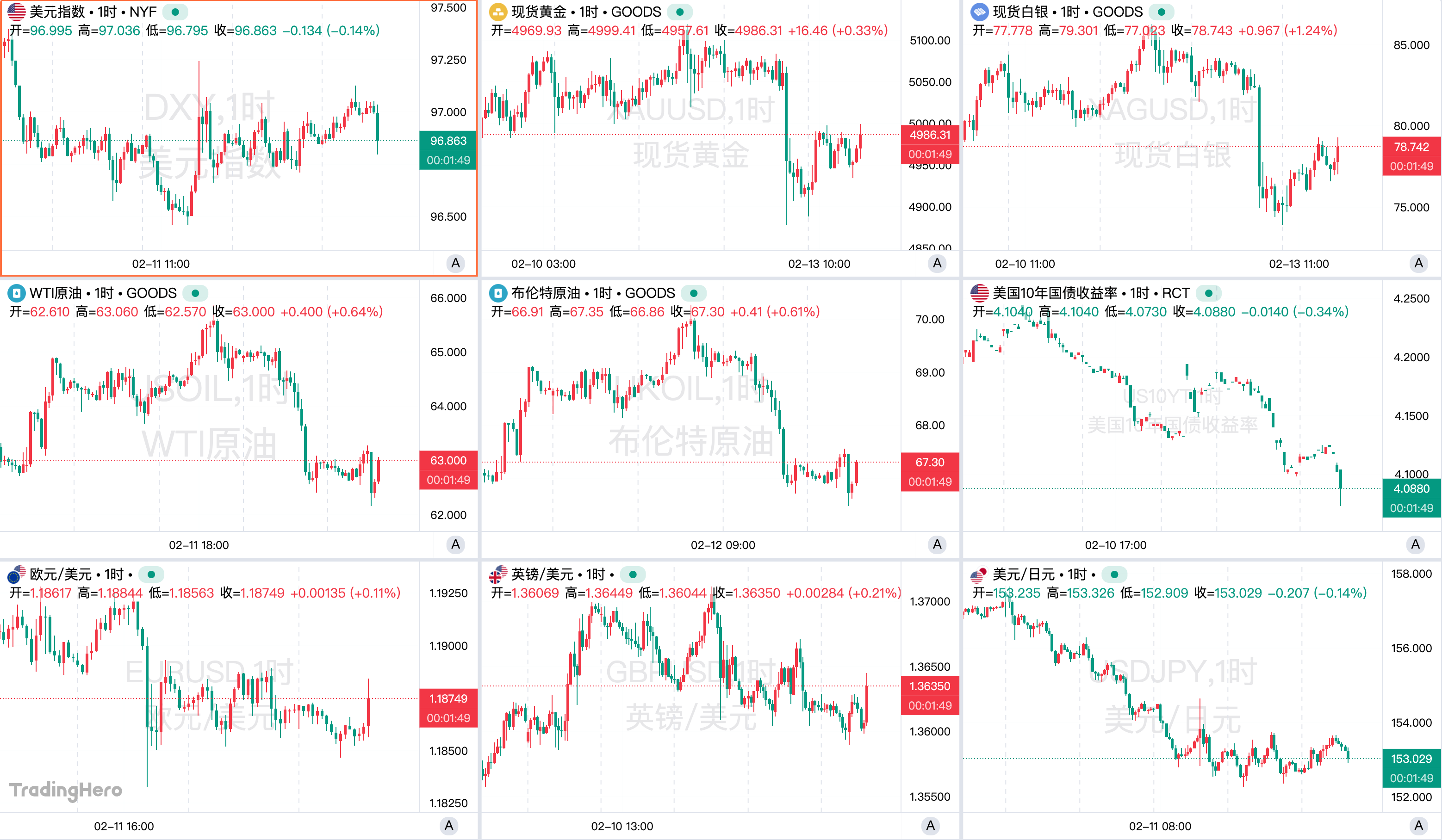
Market Overview - The US dollar has shown a general weakness this week, with the index experiencing significant fluctuations influenced by data-driven factors and changing expectations regarding Federal Reserve interest rate cuts [1] - Gold prices have been volatile, initially rising above $5100 per ounce due to a weaker dollar, but later dropping sharply before recovering, influenced by central bank buying and geopolitical factors [1] - Silver also experienced significant price swings, with a notable drop of over $9 in one day [1] Oil Market Dynamics - Oil prices exhibited a pattern of rising and then falling, initially boosted by US warnings regarding the safety of navigation in the Strait of Hormuz, but later pressured by unexpected increases in EIA inventory and reduced global demand forecasts [2] - The market is reacting to geopolitical tensions and supply concerns, with OPEC+ reportedly leaning towards increasing production starting in April [2] Stock Market Trends - The US stock market displayed a clear divergence, with technology stocks facing turbulence due to concerns over AI costs, while value stocks and cyclical sectors saw increased investment, pushing blue-chip indices to new highs [2] - Notably, Apple shares experienced a significant drop, resulting in a market capitalization loss exceeding $200 billion [2] Silver Market Insights - The Silver Institute indicates a structural supply shortage expected to last until 2026, with a projected supply gap of 67 million ounces and a 20% increase in investment demand [5] - JPMorgan forecasts an average silver price of $81 per ounce by 2026, with potential peaks in the fourth quarter [5] Federal Reserve Interest Rate Expectations - TD Securities has pushed back its expectations for Federal Reserve rate cuts from March to June, while still anticipating three cuts within the year [6] - The labor market's stability may lead the Fed to maintain interest rates for a while, despite inflation showing signs of easing [8] Economic Indicators - The US non-farm payroll report showed strong job growth, with 130,000 new jobs added, the largest increase since April 2025, and an unemployment rate drop to 4.3% [7] - The Consumer Price Index (CPI) data indicated a month-over-month increase of 0.2%, below expectations, suggesting a potential easing of inflationary pressures [7] Japanese Market Developments - Following the recent elections, the Japanese stock market has surged, with the Nikkei 225 index surpassing 58,000 points, driven by improved economic outlooks and foreign investment [12] - The new government plans to stimulate the economy through tax cuts without increasing debt, aiming for fiscal sustainability [12] Nickel Market Update - Indonesia has drastically cut the production quota for the world's largest nickel mine, reducing it from 42 million tons to 12 million tons, a 71% decrease, which has led to a spike in nickel prices [17] - This move is part of Indonesia's broader strategy to regulate mining output and support domestic processing industries [18] AI Industry Developments - The AI sector is witnessing a surge in product launches, with several companies unveiling advanced models that enhance video generation and reasoning capabilities [19] - Notable releases include ByteDance's AI video model and Alibaba's new multimodal model, indicating a competitive landscape in AI technology [20]
新华鲜报丨平稳开局!开年首月社会融资规模增量达7.22万亿元
Xin Hua Wang· 2026-02-13 13:55
Core Insights - In January, China's social financing scale increased by 7.22 trillion yuan, marking a historical high for the same period, which supports a stable economic start to the year [1] - The financial data reflects a robust monetary environment, with a 6.1% year-on-year growth in RMB loans and an 8.2% increase in the stock of social financing [3] - The People's Bank of China has implemented various monetary policies to support the real economy, including structural interest rate cuts and enhanced lending tools [3] Group 1 - The broad money supply (M2) reached 347.19 trillion yuan at the end of January, with a year-on-year growth rate of 9%, indicating a relatively ample financial supply [3] - In January, RMB loans increased by 4.71 trillion yuan, with corporate loans accounting for 4.45 trillion yuan, demonstrating strong demand for financing [3][4] - The balance of inclusive small and micro loans was 37.16 trillion yuan, growing by 11.6% year-on-year, while service sector medium and long-term loans (excluding real estate) reached 60.03 trillion yuan, up 9.2% [4] Group 2 - Consumer demand remains strong, with personal consumption loans supported by government policies and increased spending on goods and services [4] - The average interest rate for newly issued corporate loans was approximately 3.2%, down about 20 basis points from the previous year, reflecting a favorable lending environment [5] - The People's Bank of China is focusing on developing various financial sectors, including technology finance, green finance, and digital finance, to enhance support for consumption and stimulate economic growth [5]

猝不及防!美股暴跌1.34%、黄金跌超3%、白银崩10.73%,深夜闪崩真相曝光,普通人该抄底还是跑路?附避坑指南
Sou Hu Cai Jing· 2026-02-13 13:45
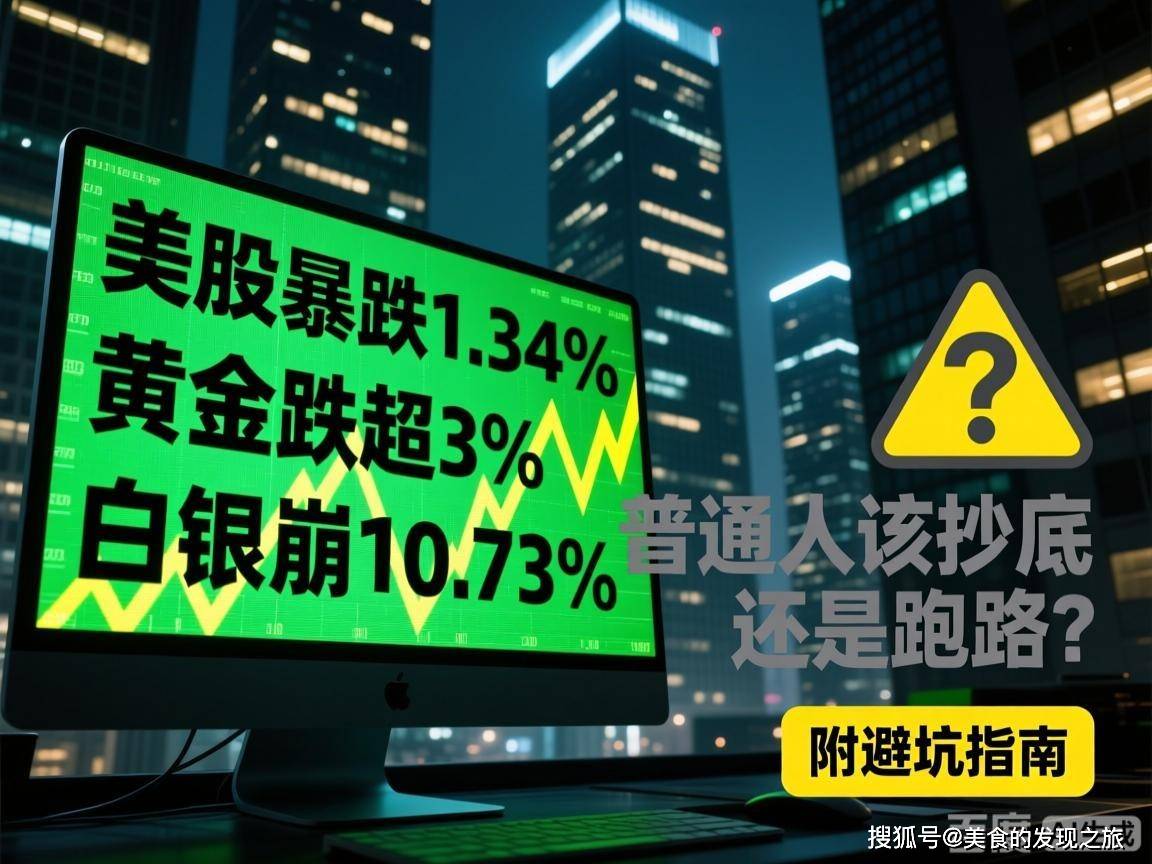
Core Viewpoint - The recent market crash on February 12, where both U.S. stocks and precious metals experienced significant declines, is attributed to multiple underlying factors, including unexpected U.S. employment data and a subsequent drop in interest rate expectations from the Federal Reserve [6][30]. Summary by Sections U.S. Stock Market Performance - On February 12, the three major U.S. stock indices opened in a downward trend, with the Dow Jones Industrial Average closing down 669.42 points, a drop of 1.34%, and the Nasdaq Composite Index falling 2.03%, down 469.32 points [3][30]. - The trading volume for the S&P 500 index reached a recent high, indicating a growing sense of panic among investors [3]. Precious Metals Market Performance - On the same day, international spot gold fell by over 3%, closing at $4921.7 per ounce, with a peak decline of more than 4% during the session [4][30]. - Silver experienced an even more dramatic drop, closing down 10.73% at $75.224 per ounce, marking one of the largest single-day declines since 2026 [4][30]. Key Factors Behind the Market Crash - The primary trigger for the market downturn was the U.S. non-farm payroll data, which exceeded expectations, leading to a significant reduction in the likelihood of interest rate cuts by the Federal Reserve [6][7]. - Concerns over the impact of artificial intelligence on job markets contributed to the sell-off in tech stocks, which in turn led to a liquidity crisis, prompting traders to liquidate precious metals to cover losses [9][10]. - Algorithmic trading exacerbated the situation by triggering stop-loss orders, resulting in a chain reaction of selling in both stocks and precious metals [11][12]. Implications for Investors - The market crash has direct implications for investors holding U.S. stocks, gold, or silver, as many experienced significant losses [14][30]. - Even those not directly involved in the markets should be aware of the broader economic implications, as U.S. monetary policy and economic performance can influence global markets, including domestic equities [14][30]. Investment Guidance - Investors are advised to control their positions and avoid leverage, ensuring that no single asset constitutes more than 10% of their total liquid assets [20]. - It is recommended to optimize investment tools and avoid blindly following market trends, as well as to establish clear stop-loss and take-profit strategies [21][27]. - Monitoring key economic indicators, such as the upcoming U.S. Consumer Price Index (CPI) data, is crucial for understanding potential market movements [28].


1月金融数据解读:居民信贷破冰
Guoxin Securities· 2026-02-13 13:38
Financial Data Overview - In January, China's new social financing (社融) reached 7.22 trillion yuan, exceeding the expected 6.51 trillion yuan[2] - New RMB loans amounted to 4.71 trillion yuan, surpassing the forecast of 4.50 trillion yuan[2] - M2 money supply grew by 9.0% year-on-year, above the expected 8.4%[2] Market Trends and Analysis - The total social financing in January showed a strong performance, with a month-on-month increase of 5.01 trillion yuan, marking a historical high[5] - Year-on-year growth rate of social financing slightly declined to 8.2% due to a high base effect from the previous year[5] - New loans to residents turned positive, increasing by 127 billion yuan, ending a six-month trend of year-on-year declines, indicating a marginal recovery in residents' willingness to leverage[5] Credit Structure Insights - Total credit continued to show a year-on-year decrease, but the structure improved, with a notable reduction in corporate bill financing[5] - New corporate loans totaled 4.45 trillion yuan, reflecting a year-on-year decrease of 3.3 billion yuan, while short-term loans increased by 310 billion yuan[12] - New resident loans amounted to 456.5 billion yuan, with short-term loans showing significant improvement, indicating a recovery in consumer demand[15] Deposit and Monetary Supply Dynamics - Total deposits increased by 8.09 trillion yuan, with a year-on-year increase of 3.77 trillion yuan, contributing to a rise in M2 growth[25] - M1 growth rate rebounded to 4.9%, indicating an acceleration in actual money circulation, corroborating the improvement in resident financing[26] - The M2-M1 growth differential narrowed to 4.1%, while the social financing-M2 differential expanded to -0.8%[26]
英国央行首席经济学家Huw Pill:通货紧缩进程不及预期
Xin Lang Cai Jing· 2026-02-13 13:29
英国央行首席经济学家Huw Pill周五表示,英国消费者价格通胀正在回落,但放缓速度不及央行官员预 期。 英国央行上周维持关键利率不变,但预测从4月起通胀将接近2%的目标。不过Pill指出,通胀回落很大 程度上是政府压低能源价格的举措所致,而非经济基本面驱动。 Pill称:"通胀放缓的进程仍在继续,但速度并不如我们原本希望的那样快。" 在英国央行货币政策委员会近期会议上,Pill比多数同僚更倾向于维持较高的关键利率。他是投票支持 按兵不动的五名委员之一,另有四名委员支持再次降息。 责任编辑:何云 英国央行首席经济学家Huw Pill周五表示,英国消费者价格通胀正在回落,但放缓速度不及央行官员预 期。 在英国央行货币政策委员会近期会议上,Pill比多数同僚更倾向于维持较高的关键利率。他是投票支持 按兵不动的五名委员之一,另有四名委员支持再次降息。 责任编辑:何云 英国央行上周维持关键利率不变,但预测从4月起通胀将接近2%的目标。不过Pill指出,通胀回落很大 程度上是政府压低能源价格的举措所致,而非经济基本面驱动。 Pill称:"通胀放缓的进程仍在继续,但速度并不如我们原本希望的那样快。" ...
美丽田园医疗健康(02373)附属认购总金额为8000万元的保本理财产品
智通财经网· 2026-02-13 13:26
Core Viewpoint - Meili Tianyuan Medical Health (02373) announced the investment of idle funds into principal-protected financial products from Pudong Development Bank, totaling RMB 80 million [1] Group 1: Investment Details - The company’s non-wholly owned subsidiary, Beijing Beilish, subscribed to a principal-protected financial product from Pudong Development Bank for a total amount of RMB 80 million on February 13, 2026 [1] - Additionally, the company, through Beijing Beilish and Shanghai Meili Tianyuan Medical Health, subscribed to several other principal-protected financial products from Pudong Development Bank, including RMB 70 million on November 21, 2025, RMB 10 million on November 28, 2025, and RMB 80 million on December 30, 2025 [1] - All the aforementioned financial products are still outstanding as of the date of the announcement [1]
1月金融数据解读:居民信贷“破冰”
Guoxin Securities· 2026-02-13 13:21
Group 1: Financial Data Overview - In January, China's new social financing (社融) reached 7.22 trillion yuan, exceeding the expected 6.51 trillion yuan[2] - New RMB loans amounted to 4.71 trillion yuan, surpassing the forecast of 4.50 trillion yuan[2] - M2 money supply grew by 9.0% year-on-year, above the expected 8.4%[2] Group 2: Credit and Financing Trends - The total social financing increased by 5.01 trillion yuan month-on-month, marking a historical high for January[5] - Year-on-year growth of social financing slowed to 8.2%, influenced by a high base from the previous year[5] - New loans to residents turned positive with an increase of 127 billion yuan, ending a six-month trend of year-on-year declines[5] Group 3: Structural Changes in Financing - Corporate bill financing saw a significant year-on-year decrease, while short-term and medium-to-long-term loans showed structural improvement[5] - New government bond financing reached 976.4 billion yuan, a year-on-year increase of 283.1 billion yuan, ending a five-month decline[20] - Direct financing for enterprises increased by 532.4 billion yuan year-on-year, with credit bonds contributing 503.3 billion yuan[20] Group 4: Deposit and Money Supply Insights - Total deposits increased by 8.09 trillion yuan, with a year-on-year increase of 3.77 trillion yuan[25] - M1 growth rate rebounded to 4.9%, indicating an acceleration in actual money circulation[26] - The M2-M1 growth rate differential narrowed by 0.6 percentage points to 4.1%[26]
2026年1月金融数据解读:居民存款搬家提速
Yin He Zheng Quan· 2026-02-13 12:54
Group 1: Monetary Supply and Growth Rates - M1 growth rate increased to 4.9% in January 2026, up from 3.8% in December 2025[1] - M2 growth rate rose to 9.0% in January 2026, compared to 8.5% in December 2025[1] - New social financing (社融) reached 7.2 trillion yuan in January 2026, an increase of 165.4 billion yuan year-on-year, with a growth rate of 8.2%[1] Group 2: Household Deposits and Trends - Household deposit growth rate estimated at 7.18% in January 2026, down from 9.68% in December 2025[1] - The difference between household deposit growth and M2 growth turned negative for the first time in 7.5 years, at -1.82 percentage points[1] - Non-bank deposits showed a rapid increase in the rolling 12-month sum[1] Group 3: Loan and Credit Dynamics - New RMB loans totaled 4.71 trillion yuan in January 2026, a decrease of 420 billion yuan year-on-year, with a growth rate of 6.1%[1] - The decline in loans was primarily driven by a decrease in corporate loans, particularly in medium to long-term loans, which fell by 280 billion yuan[19] - Residential credit showed a slight increase of 128 billion yuan, with short-term loans up by 159.4 billion yuan, while medium to long-term loans decreased by 146.6 billion yuan[19] Group 4: Financing Sources and Trends - Government bond financing increased by 2.83 trillion yuan year-on-year, with a net financing of 9.76 trillion yuan in January 2026[26] - Corporate bond financing rose by 579 billion yuan, driven by technology innovation bonds, which net financed approximately 2.52 trillion yuan[25] - The effective social financing growth rate, excluding government financing, was 5.31%, down from 5.62%[5]
东方创业:关于取得金融机构股票回购专项贷款承诺函的公告
Zheng Quan Ri Bao· 2026-02-13 12:45
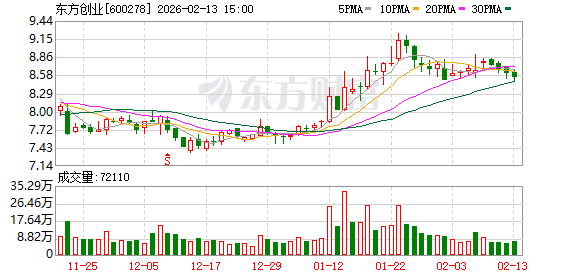
Group 1 - The company, Dongfang Chuangye, announced it has obtained a loan commitment letter from Minsheng Bank's Shanghai branch, agreeing to provide a special loan of up to 90 million yuan for a period of 3 years, specifically for the purpose of repurchasing company stock [2] - The stock repurchase plan was approved by the shareholders' meeting on November 21, 2025, with plans to use between 50 million to 100 million yuan to repurchase A-shares and subsequently cancel them, with a maximum price limit of 11.59 yuan per share [2] - The company noted that the loan commitment does not constitute a commitment to the repurchase amount and will implement the repurchase based on market conditions, with ongoing disclosures of progress [2]