钢铁

Search documents
方大特钢中标长赣高铁赣州段钢筋供应项目,合同总金额约4亿元
Xin Lang Cai Jing· 2026-02-26 06:44
Group 1 - Company Fangda Special Steel has successfully won the bid for the rebar supply project for the Ganzhou section of the Changgan High-speed Railway, with a total contract value of approximately 400 million yuan [1] - The Changgan High-speed Railway is a significant part of the national "eight vertical and eight horizontal" high-speed railway main corridor, with a total length of 429.4 kilometers and a designed speed of 350 kilometers per hour [1] - The railway is expected to be completed and open for traffic by 2030 [1]

方大特钢中标约4亿元长赣高铁赣州段钢筋供应项目
Xin Lang Cai Jing· 2026-02-26 06:30
Group 1 - The company Fangda Special Steel has successfully won the bid for the rebar supply project for the Changgan High-speed Railway Ganzhou section, with a total contract value of approximately 400 million yuan [1]
股市面面观丨节后A股市场稳步回暖,钢铁、有色领涨有何动力?
Xin Hua Cai Jing· 2026-02-26 05:52
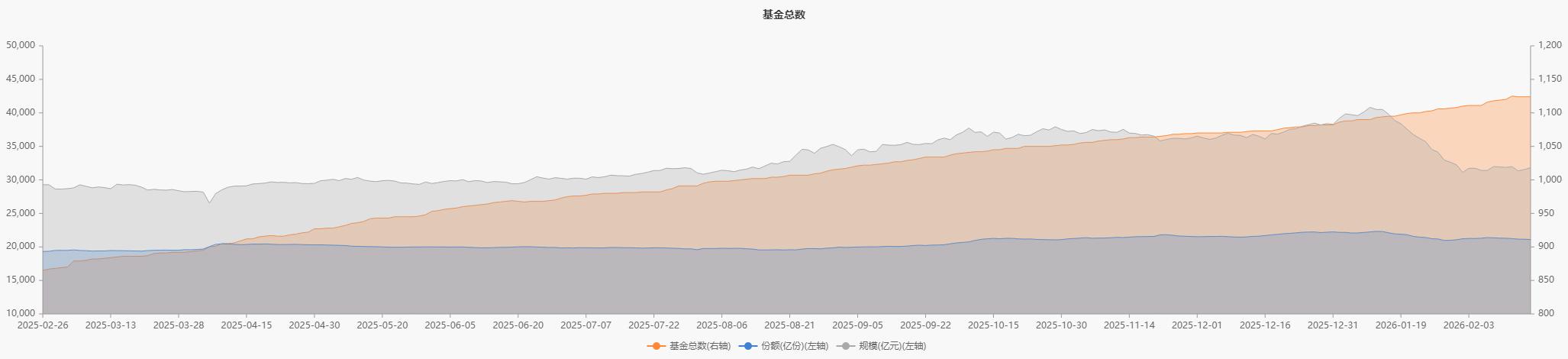
Market Overview - The A-share market has shown a significant recovery since the holiday, with the Shanghai Composite Index rising by 1.6%, the Shenzhen Component Index by 2.66%, and the ChiNext Index by 2.41% as of February 25 [1] - The average stock price in the A-share market increased by 1.62%, reaching 30.07 yuan per share, surpassing the 30 yuan mark [1] - Trading volume has also rebounded, with the first trading day post-holiday seeing a turnover of 2.2 trillion yuan, which further increased to 2.46 trillion yuan on the following day, exceeding the average daily turnover of approximately 2.09 trillion yuan before the holiday [1] Leverage and Fund Inflow - Leveraged funds have actively entered the market post-holiday, with net financing purchases reaching 338.9 billion yuan on the first trading day, marking the second-highest level of the year [2] - On February 25, net financing purchases amounted to 236.4 billion yuan, bringing the total for the two trading days to 575.3 billion yuan, surpassing the net selling scale before the holiday [2] - Prior to the holiday, the A-share market experienced a decline in financing balance from 2.722 trillion yuan to 2.572 trillion yuan, a drop of 150 billion yuan due to risk aversion among investors [2] ETF Market Stability - The A-share stock ETF market saw a rapid decline in late January, dropping from over 4 trillion yuan to around 3.1 trillion yuan, but has stabilized since February [2] - As of February 25, the asset scale of stock ETFs was reported at 3.18 trillion yuan, maintaining a steady state [2] Sector Performance - Among the 31 first-level industries, the steel, non-ferrous metals, building materials, oil and petrochemicals, and basic chemicals sectors showed the highest growth rates post-holiday, with the steel sector leading at a 7.19% increase [4][5] - Other notable sectors included non-ferrous metals at 6.90%, building materials at 6.56%, oil and petrochemicals at 5.73%, and basic chemicals at 5.68% [5] Economic Outlook and Policy Impact - Market participants have noted an increased expectation for macroeconomic recovery, particularly with the anticipation of stable growth policies being reflected in the A-share market [6] - Analysts predict that a series of investment-promoting policies will be implemented, leading to accelerated infrastructure investment in the first half of 2026 [6] - The market is expected to shift from "policy expectations" to "earnings realization" as companies begin to disclose their annual reports for 2025 and subsequent quarterly reports for 2026, which will serve as key market indicators [7]

市场|期货盘中走势显乏力 不锈钢现货考验成交
Xin Lang Cai Jing· 2026-02-26 05:49
201方面,冷热轧稳中有升,代理还是高企,J1四尺冷轧资源锡佛主流报至8300-8400左右,J2J5资源走 至7450-7500上下。 昨日华东钢厂有冷轧报盘14150锁价,今日另一钢厂则小幅调高至13950元/吨报出现款锁价盘,加之另 一派主力盘商继续按照限价维持报盘,市场价格仍在钢厂政策端的支撑中,喊涨刺激买盘则成为节后复 工复产的主基调。 随着复工复产队伍的继续壮大,市场也将迎来涨价后成交的考验。今日不锈钢期货盘中涨势有所收敛, 现货市场则反馈成交有些乏力,14000的价格则显得有些为难,市场也不乏有商家低于此价格寻求出 货。 来源:市场资讯 (来源:要钢网) 今日不锈钢价格在节后复工第三个交易日继续上行,受印尼削减镍矿配额政策推动预期,加之相关围绕 印尼矿企题材新闻炒作,支撑成本预期依旧存在,市场贸易商继续上抬不锈钢报价。 早间锡佛市场304民营四尺冷轧资源主流站上14000大关,报至毛边14000-14050区间,民营五尺热轧大 板资源主流维持在毛边13850-13900附近,整体保持节后续涨节奏。 ...
抚顺特钢2026年2月26日涨停分析:管理架构优化+项目融资推进+质押比例下降
Xin Lang Cai Jing· 2026-02-26 05:43
Group 1 - The core point of the news is that Fushun Special Steel (SH600399) reached its daily limit with a price of 7.52 yuan, reflecting a 9.94% increase and a total market capitalization of 14.83 billion yuan [1] - The reasons for the stock surge include management restructuring, project financing progress, and a decrease in the pledge ratio [2] - The company is optimizing its management structure by merging subsidiaries to enhance operational efficiency and reduce management costs [2] - The high-alloy plate production line has secured an 8-year loan from the China Development Bank, which supports project financing and enhances production capacity and competitiveness [2] - The shareholder pledge ratio has decreased from 45.12% to 13.99%, reducing equity pledge risk and boosting market confidence [2] - The company's core products are used in stable and growing sectors such as aerospace, national defense, and nuclear power, providing long-term support for its development [2] - On the industry level, the steel sector showed active performance on February 26, 2026, creating a certain sectoral linkage effect [2] - Technical indicators, such as the MACD, showed a bullish trend, attracting technical investors [2] - Significant net inflow of large orders indicates the involvement of major funds [2]

中信特钢股价涨5.3%,南方基金旗下1只基金位居十大流通股东,持有1975.92万股浮盈赚取1719.05万元
Xin Lang Cai Jing· 2026-02-26 05:26
Group 1 - The core point of the news is that CITIC Special Steel experienced a 5.3% increase in stock price, reaching 17.30 CNY per share, with a trading volume of 346 million CNY and a turnover rate of 0.40%, resulting in a total market capitalization of 87.316 billion CNY [1] - CITIC Special Steel, established on May 18, 1993, and listed on March 26, 1997, is located in Jiangyin City, Wuxi, Jiangsu Province, and its main business involves the production and sales of special steel products [1] - The revenue composition of CITIC Special Steel includes special steel bars at 39.23%, special seamless steel pipes at 27.20%, special steel wires at 13.11%, other products at 10.65%, and special plates at 9.82% [1] Group 2 - Among the top ten circulating shareholders of CITIC Special Steel, a fund under Southern Fund holds a position, specifically the Southern S&P China A-share Large Cap Dividend Low Volatility 50 ETF Link A (008163), which reduced its holdings by 523,800 shares, now holding 19.7592 million shares, accounting for 0.39% of circulating shares [2] - The Southern S&P China A-share Large Cap Dividend Low Volatility 50 ETF Link A (008163) was established on January 21, 2020, with a current scale of 8.9 billion CNY, and has achieved a year-to-date return of 0.77%, ranking 4883 out of 5572 in its category [2] - The fund has a one-year return of 8.3%, ranking 3724 out of 4311, and a cumulative return since inception of 87.76% [2] Group 3 - The fund manager of the Southern S&P China A-share Large Cap Dividend Low Volatility 50 ETF Link A (008163) is Cui Lei, who has been in the position for 7 years and 113 days, managing total assets of 137.02 billion CNY [3] - During Cui Lei's tenure, the best fund return achieved was 250.66%, while the worst return was -15.93% [3]

银河期货每日早盘观察-20260226
Yin He Qi Huo· 2026-02-26 05:21
Report Industry Investment Rating No relevant content provided. Core Viewpoints of the Report - Wednesday saw continued rises in stock index futures, with the overall market showing an upward trend driven by price - rising themes. The bond market was affected by real - estate policies and showed a complex short - term trend but remained optimistic in the medium - term. In the agricultural products market, factors such as weather and production forecasts influenced prices. The black metal market was affected by policies and demand recovery, with steel prices expected to oscillate. The non - ferrous metal market was influenced by macro and geopolitical factors, with prices showing different trends. The shipping and carbon emission markets were affected by geopolitical and policy factors. The energy and chemical market was affected by supply - demand relationships and geopolitical situations, with prices fluctuating [20][24][28]. Summary by Relevant Catalogs Financial Derivatives - **Stock Index Futures**: On Wednesday, the stock index continued to rise, with small - cap indexes performing better. Price - rising themes supported the market, and trading volume steadily increased. The trading strategies included going long on dips, conducting IM/IC 2609 long + ETF short cash - and - carry arbitrage, and using bull spreads [20][21][23]. - **Treasury Bond Futures**: On Wednesday, treasury bond futures closed down across the board. The relaxation of real - estate policies in Shanghai was a negative factor for the bond market. In the short - term, the bond market may fluctuate, but in the medium - term, the outlook is relatively optimistic. The trading strategies included a neutral - to - bullish approach for single - side trading and waiting and seeing for arbitrage [24][25]. Agricultural Products - **Protein Meal**: CBOT soybeans and soybean meal indexes rose. Weather disturbances in the producing areas affected crop yields, and the domestic soybean market was volatile. The trading strategies included waiting and seeing for single - side trading, arbitrage, and using a short strangle strategy for options [27][28]. - **Sugar**: ICE and London sugar prices were volatile. Brazil's sugar exports decreased, and India's sugar production increase was adjusted downward. The domestic Zhengzhou sugar was expected to maintain a bottom - oscillating trend. The trading strategies included waiting for the international sugar price to break through the previous high, waiting and seeing for arbitrage, and shorting put options in the short - term [30][33][34]. - **Oilseeds and Oils**: CBOT soybean oil and BMD palm oil prices changed slightly. Malaysia's palm oil exports and production decreased in February. The domestic oil inventory was at a moderately high level, and the market was expected to oscillate. The trading strategies included short - term oscillation, considering reverse arbitrage for p59 and y59, and waiting and seeing for options [36][37][38]. - **Corn/Corn Starch**: CBOT corn prices rose. The domestic corn market had stable prices in the northeast and falling prices in the north - central region. The inventory situation was complex, and the futures price was expected to oscillate. The trading strategies included a long - on - dip approach for the outer - market 05 corn, short - selling the 05 corn on rallies, and widening the 05 corn - starch spread [40][41][42]. - **Hogs**: Hog prices were stable overall, with supply pressure remaining. The trading strategies included lightly going long on the 05 contract, waiting and seeing for arbitrage, and using a short strangle strategy for options [43][45]. - **Peanuts**: Peanut spot prices were stable, and the futures price oscillated narrowly. The trading strategies included lightly going long on the 05 contract on dips, waiting and seeing for arbitrage, and shorting the pk605 - P - 7800 option [47][48][49]. - **Eggs**: Egg prices were stable to slightly falling after the holiday. The trading strategies included short - selling the June contract on rallies, waiting and seeing for arbitrage, and waiting and seeing for options [50][51][52]. - **Apples**: Apple inventory decreased, and high - quality apple prices were firm. The 5 - month contract price was expected to be strong. The trading strategies included going long on dips for the 5 - month contract, long 5 short 10 for arbitrage, and waiting and seeing for options [53][54][55]. - **Cotton - Cotton Yarn**: The outer - market cotton price rose. The global cotton supply - demand situation was relatively tight, and the domestic cotton price was expected to rise. The trading strategies included going long on dips for Zhengzhou cotton, waiting and seeing for arbitrage, and waiting and seeing for options [56][57]. Black Metals - **Steel**: Steel prices oscillated at night. After the holiday, the steel inventory increased, and the demand recovery was uncertain. The trading strategies included oscillating trends, shorting the coil - coal ratio on rallies, and waiting and seeing for options [59][60]. - **Coking Coal and Coke**: Australian coking coal prices were inverted, and port coke inventory decreased. After the holiday, coal mines resumed production. The trading strategies included going long on dips for coking coal, waiting and seeing for arbitrage, and waiting and seeing for options [61][62][63]. - **Iron Ore**: Iron ore prices fell slightly at night. The supply was abundant, and the demand might decline. The trading strategies included a weakening trend for single - side trading, waiting and seeing for arbitrage, and waiting and seeing for options [66][67]. - **Ferroalloys**: The cost of ferroalloys was strongly supported. The trading strategies included holding previous long positions, waiting and seeing for arbitrage, and shorting out - of - the - money put options [68][69]. Non - Ferrous Metals - **Gold and Silver**: London gold and silver prices rose. The dollar index fell, and the 10 - year US Treasury yield oscillated at a low level. The prices of gold and silver were expected to oscillate at a high level. The trading strategies included holding long positions against the 5 - day moving average, waiting and seeing for arbitrage, and buying out - of - the - money call options or using a bull call spread strategy [71][72][74]. - **Platinum and Palladium**: Platinum and palladium prices oscillated. Geopolitical and macro factors supported precious metals. The trading strategies included going long on platinum on dips, waiting and seeing for palladium, and long platinum short palladium for arbitrage [75][76]. - **Copper**: The copper price was expected to oscillate strongly in the short - term. The macro environment was favorable for copper consumption, but inventory increases limited the upside. The trading strategies included a short - term strong - oscillation trend, waiting and seeing for arbitrage, and buying out - of - the - money call options [79][80]. - **Alumina**: The alumina price was expected to oscillate strongly in the short - term. Attention should be paid to the resumption of production of northern capacity. The trading strategies included a short - term oscillating - to - strong trend [83][84]. - **Electrolytic Aluminum**: The electrolytic aluminum price was expected to oscillate strongly. NVIDIA's performance boosted the market, and the supply - demand relationship was supportive. The trading strategies included an oscillating - to - strong trend, waiting and seeing for arbitrage, and waiting and seeing for options [87]. - **Cast Aluminum Alloy**: The cast aluminum alloy price was expected to oscillate strongly following the aluminum price. The trading strategies included an oscillating - to - strong trend, waiting and seeing for arbitrage, and waiting and seeing for options [88]. - **Zinc**: The zinc price was expected to be bought on dips after a correction. The macro and fundamental factors influenced the price. The trading strategies included buying on dips after a correction, waiting and seeing for arbitrage, and waiting and seeing for options [91][92]. - **Lead**: The lead price was expected to oscillate within a range. The market was affected by inventory and demand. The trading strategies included going long on dips with light positions, waiting and seeing for arbitrage, and buying deep out - of - the - money call options [93][94]. - **Nickel**: The nickel price was dominated by macro factors. Indonesian policies and demand were the focus. The trading strategies included holding long positions at low levels, waiting and seeing for arbitrage, and shorting out - of - the - money put options [96][98]. - **Stainless Steel**: The stainless steel price followed the nickel price. The cost was supportive. The trading strategies included holding long positions at low levels, waiting and seeing for arbitrage [99][100]. - **Industrial Silicon**: The industrial silicon price was affected by the resumption of production of leading manufacturers. The trading strategies included waiting and seeing, with the option of short - term long positions [101][102]. - **Polysilicon**: The polysilicon market was bearish fundamentally. Attention should be paid to spot transactions. The trading strategies included waiting and seeing [104][105]. - **Lithium Carbonate**: The lithium carbonate price was likely to rise due to supply disruptions. The trading strategies included holding long positions at low levels, waiting and seeing for arbitrage, and shorting out - of - the - money put options [107][110]. - **Tin**: The tin price was expected to be strong. NVIDIA's performance boosted demand, and supply factors needed attention. The trading strategies included a short - term strong - oscillation trend, waiting and seeing for options [111][113]. Shipping and Carbon Emissions - **Container Shipping**: The spot freight rate of container shipping decreased. The market was affected by the Iran situation and seasonal factors. The trading strategies included short - term oscillation and waiting and seeing [114][115]. - **Dry Bulk Freight**: The BDI index rose. The market was influenced by demand recovery and geopolitical factors. In the long - term, the supply and demand situation needed attention. The trading strategies included a positive short - term trend [116][117]. - **Carbon Emissions**: The domestic carbon market had sporadic transactions, and the EU carbon market was affected by policies and public opinion. The carbon price in China was expected to be supported in the short - term, and the EU carbon market was in a tight supply situation. The trading strategies included waiting and seeing [121][122]. Energy and Chemicals - **Crude Oil**: OPEC+ might slightly increase production in April. The oil price was expected to oscillate at a high level. The trading strategies included high - level oscillation, waiting and seeing for arbitrage, and buying out - of - the - money call options [124][125]. - **Asphalt**: The demand for asphalt had not recovered, and the supply was expected to increase. The trading strategies included going long on the BU2606 contract on dips, waiting and seeing for arbitrage, and waiting and seeing for options [126][127]. - **Fuel Oil**: The fuel oil price was affected by supply and geopolitical factors. The trading strategies included a strong - oscillation trend, going long on the FU2605 contract on dips, and waiting and seeing for options [129][131][132]. - **LPG**: The LPG outer - market was strong. The domestic market was expected to oscillate at a high level. The trading strategies included high - level oscillation, waiting and seeing for arbitrage, and waiting and seeing for options [133][136]. - **Natural Gas**: The natural gas market was waiting for geopolitical guidance. The demand risk decreased, but the supply risk remained. The trading strategies included holding short positions for the US HH second - quarter contract, waiting and seeing for arbitrage, and waiting and seeing for options [137][138][139]. - **PX & PTA**: The PX and PTA prices were expected to oscillate. The supply - demand situation was gradually improving. The trading strategies included oscillating consolidation, waiting and seeing for arbitrage, and waiting and seeing for options [141][142]. - **BZ & EB**: The overseas supply of benzene and styrene was in a vacuum period. The domestic supply was stable. The trading strategies included oscillating consolidation, reverse arbitrage, and waiting and seeing for options [143][144][145]. - **Ethylene Glycol**: The ethylene glycol market had obvious inventory - building pressure. The supply - demand structure was improving, but the inventory was increasing. The trading strategies included range - oscillation, waiting and seeing for arbitrage, and waiting and seeing for options [146][149]. - **Short - Fiber**: The short - fiber price was expected to oscillate. The trading strategies included oscillating consolidation, narrowing the processing fee on rallies for arbitrage, and waiting and seeing for options [150][151]. - **Bottle Chips**: The supply of bottle chips was expected to be tight. The trading strategies included oscillating consolidation, waiting and seeing for arbitrage, and waiting and seeing for options [153][154]. - **Propylene**: Some propylene supply returned. The market was stable with a weakening trend. The trading strategies included oscillating consolidation, waiting and seeing for arbitrage, and waiting and seeing for options [155][156]. - **Plastic PP**: The PPI of plastic products declined for consecutive months. The trading strategies included holding long positions for the L 2605 contract, short - selling the PP 2605 contract on a small scale, and waiting and seeing for arbitrage and options [157][158]. - **Caustic Soda**: The caustic soda price oscillated. The supply pressure was still there, and the demand was improving. The trading strategies included a weak - oscillation trend, waiting and seeing for arbitrage, and waiting and seeing for options [160][161]. - **PVC**: The PVC price oscillated weakly. The supply was high, and the demand was low. The trading strategies included a weak - oscillation trend [163][164]. - **Soda Ash**: The soda ash price oscillated strongly. The supply was high, and the demand was resilient. The trading strategies included going long on dips, shorting glass and going long on soda ash for arbitrage, and waiting and seeing for options [166][169][170]. - **Glass**: The glass price oscillated strongly, but the fundamentals were weak. The trading strategies included short - selling on rallies, shorting glass and going long on soda ash for arbitrage, and waiting and seeing for options [171][172]. - **Methanol**: The methanol price oscillated widely. The international and domestic supply - demand situations were complex. The trading strategies included a strong - oscillation trend [174]. - **Urea**: Urea factories were reluctant to sell. The supply was at a high level, and the demand was expected to increase. The trading strategies included going long on dips, paying attention to the 5 - 9 positive arbitrage, and shorting put options on corrections [176][177]. - **Pulp**: The high inventory of pulp restricted the rebound. The market was in a supply - surplus situation. The trading strategies included holding previous long positions, waiting and seeing for arbitrage, and shorting the SP2605 - P - 5250 option [179][182][183]. - **Offset Printing Paper**: The demand for offset printing paper was average. The market rebound was limited. The trading strategies included short - selling on rallies, waiting and seeing for arbitrage, and shorting the OP2604 - C - 4200 option [184][185]. - **Logs**: The log market had weak supply and demand. The price was affected by supply and demand and cost. The trading strategies included waiting and seeing, with the option of lightly going long for aggressive investors, and paying attention to the 5 - 7 reverse arbitrage [185][186]. - **Natural Rubber and 20 - grade Rubber**: The ANRPC had marginal production cuts. The prices of natural rubber and 20 - grade rubber rose. The trading strategies included holding long positions for the RU 05 contract, going long on the NR 04 contract on opportunities, and holding the RU2605 - RU2609 spread [187][189]. - **Butadiene Rubber**: The inventory build - up of domestic automobiles slowed down. The butadiene rubber price fell. The trading strategies included holding short positions for the BR 04 contract, waiting and seeing for arbitrage, and waiting and seeing for options [190][192].
股指持续回升
Hua Tai Qi Huo· 2026-02-26 05:07
FICC日报 | 2026-02-26 股指持续回升 市场分析 地产松绑。宏观方面,上海市五部门联合印发《关于进一步优化调整本市房地产政策的通知》("沪七条"),自2026 年2月26日起施行。新政重点调减限购政策:非沪籍居民购买外环内住房社保年限从3年降至1年,缴纳社保满3年 可增购1套;持居住证满5年可购1套,无需社保。公积金家庭贷款最高额度可达到324万元。只要沪籍家庭新购住 房是其名下唯一住房,即可暂免征收房产税。美国贸易代表格里尔近日表示,将继续推进对中国履行中美第一阶 段经贸协议情况301调查,并可能采取关税措施。海外方面,美国商务部表示,将对从印度、印度尼西亚和老挝进 口的晶硅太阳能电池组件征收反补贴税,理由是其生产商受益于政府补贴,削弱美国本土产品竞争力。 指数上涨。现货市场,A股三大指数震荡走强,上证指数涨0.72%收于4147.23点,创业板指涨1.41%。行业方面, 板块指数涨多跌少,钢铁、有色金属、建筑材料、房地产、基础化工行业涨幅超2%,仅银行、传媒行业收跌。市 场延续放量,当日沪深两市成交额超2万亿元。海外方面,美国三大股指全线收涨,纳指涨1.26%报23152.08点。 IC增仓 ...
政策利好提振,钢价低位回升
Hua Tai Qi Huo· 2026-02-26 04:39
1. Report Industry Investment Ratings - Steel: Oscillation [1][2] - Iron Ore: Oscillation with a downward bias [2][3] - Coking Coal and Coke: Oscillation [5][6] - Thermal Coal: No specific strategy provided [6] 2. Core Views - Steel prices have rebounded from low levels due to policy support, but the supply - demand situation remains complex with supply stable and demand weak, and the policy effect needs further evaluation [1] - Iron ore prices have slightly rebounded, but the supply is strong and demand is weak, with high inventory pressure and short - term downward pressure [2] - Coking coal and coke prices are oscillating. Coke is short - term stable with attention on cost and downstream复产, while coking coal is short - term oscillating with attention on power coal and coal mine复产 [5] - Thermal coal prices are oscillating. In the medium - long term, the supply is loose, and attention should be paid to non - power coal consumption and restocking [6] 3. Summary by Related Catalogs Steel - **Market Analysis**: The futures market strengthened. The rebar futures main contract closed at 3076 yuan/ton, up 1.62%, and the hot - rolled coil main contract closed at 3236 yuan/ton, up 1.28%. The spot market was stable with individual adjustments, and trading sentiment improved after the holiday [1] - **Supply - Demand Logic**: There is an accumulation of industrial contradictions under the situation of stable supply and weak demand, and steel prices are still under pressure. Policy expectations and cost support are relatively favorable. Hot - rolled coil prices have rebounded due to policy support and production restrictions, but the supply pressure remains, and the upward drive needs to be tracked [1] - **Strategy**: Oscillation [1][2] Iron Ore - **Market Analysis**: Iron ore prices oscillated slightly upward. On February 25, the prices of mainstream imported iron ore varieties at Tangshan Port were stronger than the previous working day. The trading volume on the 25th was 468,000 tons, a 15.56% increase from the previous day [2] - **Supply - Demand Logic**: The global shipping volume increased by 23.5% compared with the previous period and significantly increased compared with the same period last year. The blast furnace operating rate and daily average pig iron output of steel mills increased slightly. However, steel mills have completed restocking, and speculative demand has declined. Port inventory decreased, and steel mill inventory increased significantly. The supply is strong and demand is weak, and the high - inventory pressure needs to be resolved through price cuts [2] - **Strategy**: Oscillation with a downward bias [2][3] Coking Coal and Coke - **Market Analysis**: The coke main contract closed at 1674.0 yuan/ton (+38.0, +2.32%), and the coking coal main contract closed at 1211.0 yuan/ton (+85.0, +7.02%). The policy of a 5 - yuan price - volume reward at the pithead during the Spring Festival continued until the 28th, and the overall situation was stable. Coal mines in the production area gradually resumed work [5] - **Supply - Demand Logic**: Coke is short - term stable, with attention on the cost of charging coal and downstream复产. Coking coal supply declined during the Spring Festival, and speculative demand weakened. After the festival, supply and demand will recover, and the复产 rhythm determines the pattern. The current inventory is low, and it is short - term oscillating [5] - **Strategy**: Oscillation for both coking coal and coke [5][6] Thermal Coal - **Market Analysis**: In the production area, coal prices oscillated strongly. Some coal mines gradually resumed production and sales, and supply slowly increased. At the port, the market continued to operate strongly, with low inventory and traders reluctant to sell. Imported coal prices were strongly supported due to policy disturbances in Indonesia [6] - **Supply - Demand Logic**: Supply and demand will gradually recover after the festival, and coal prices will oscillate. In the medium - long term, the supply is loose [6] - **Strategy**: No specific strategy provided [6]
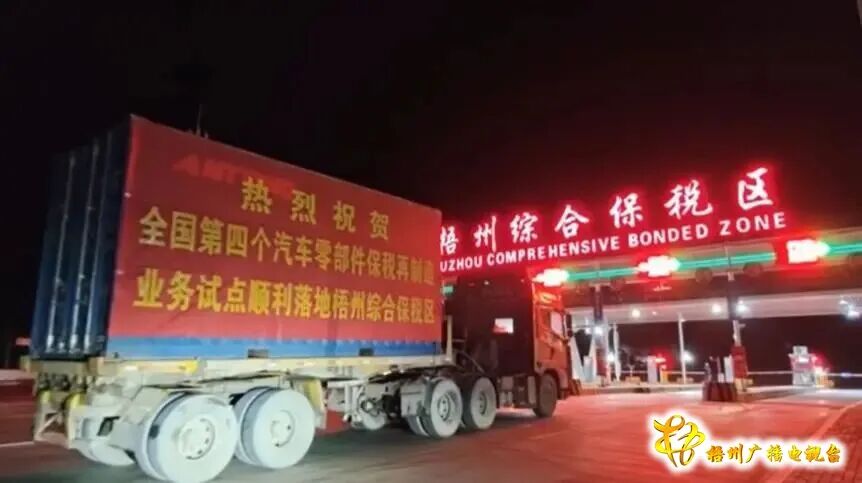
以高水平对外开放塑造外贸新优势丨“十四五”时期梧州市对外贸易提档进位
Xin Lang Cai Jing· 2026-02-26 04:14
Core Viewpoint - During the "14th Five-Year Plan" period, Wuzhou City has made significant strides in expanding high-level opening-up and optimizing foreign trade, achieving a total import and export value increase from 6.33 billion to 16.28 billion yuan, with an average annual growth rate of 20.8% [1]. Group 1: Trade Growth and Achievements - The total import and export value of Wuzhou City increased from 6.33 billion yuan to 16.28 billion yuan, surpassing the 10 billion and 15 billion yuan thresholds consecutively [1]. - The city has established three provincial-level foreign trade transformation and upgrading bases for Liubao tea, titanium dioxide, and renewable resources [5]. - The total import and export value of the Wuzhou Comprehensive Bonded Zone reached 9.95 billion yuan, with a year-on-year growth rate of 723% [7]. Group 2: Policy and Infrastructure Enhancements - Wuzhou City has implemented measures to optimize the business environment, including the establishment of a "green channel" for fresh agricultural products and a "remote inspection" model, reducing customs clearance time by nearly 30% [4]. - The customs inspection capacity at Wuzhou Port increased from 50 containers per batch to 450 containers per batch, significantly enhancing logistics efficiency [4]. - The city has opened nine foreign trade routes from Chishui Port, expanding its foreign trade market to over 110 countries and regions [5]. Group 3: Support for Enterprises and Market Expansion - Wuzhou City has focused on helping enterprises "go global" by organizing over 120 companies to participate in domestic and international trade events, achieving over 30 million USD in sales at the Canton Fair [6]. - The city has supported new processing trade enterprises and encouraged major commodity imports from companies like Chiji Steel and Jinsheng Copper [6]. - The establishment of the China (Wuzhou) Cross-Border E-Commerce Comprehensive Pilot Zone has further promoted the development of cross-border e-commerce, with export value reaching 440 million yuan, a year-on-year increase of 22 times [7].