金融

Search documents
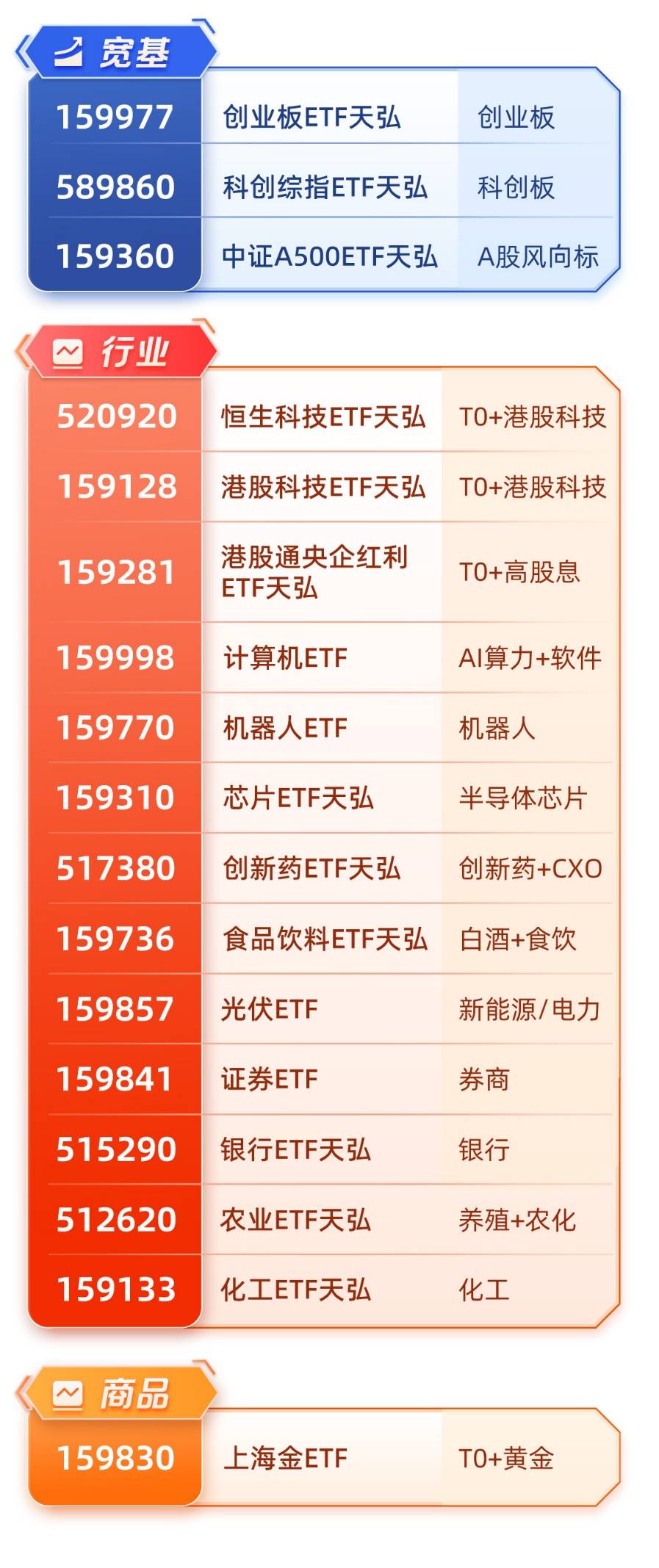
i茅台优化核心产品投放策略,食品饮料ETF天弘(159736)标的指数高开涨近1%,昨日净流入超1200万元,机构:白酒板块迎来周期底部配置机会
Sou Hu Cai Jing· 2026-01-09 02:03
Group 1 - The food and beverage ETF Tianhong (159736) has seen a trading volume of 2.0913 million yuan, with the tracked CSI Food and Beverage Index (930653) rising by 0.62% [1] - Notable component stocks include Guotou Zhonglu (600962) up 7.87%, Luyin Investment (600784) up 4.97%, and Lihai Food (300973) up 3.22% [1] - The net inflow of funds into the food and beverage ETF Tianhong (159736) reached 12.4998 million yuan as of January 8 [1] Group 2 - The CSI A500 ETF Tianhong (159360) experienced a trading volume of 6.9658 million yuan, with the tracked CSI A500 Index (000510) declining by 0.12% [1] - Leading component stocks include Weining Health (300253) up 12.32% and Meinian Health (002044) up 10.05% [1] - The net inflow of funds into the CSI A500 ETF Tianhong (159360) totaled 82.1737 million yuan over the last 21 trading days [1] Group 3 - The food and beverage ETF Tianhong (159736) focuses on high-end and mid-range liquor stocks, with approximately 60% of its portfolio allocated to leading liquor companies [2] - The top ten weighted stocks include Moutai, Wuliangye, and Yili, among others [2] - The CSI A500 ETF Tianhong (159360) employs a dual strategy of industry balanced allocation and leading stock selection, emphasizing sectors like power equipment, new energy, electronics, and biomedicine [2] Group 4 - iMoutai announced adjustments to the release schedule for its premium Moutai products, with specific purchase limits for consumers starting January 9 [2] - The release schedule includes four major nodes throughout the year, aligning with key Chinese festivals [2] Group 5 - CITIC Construction Investment Securities suggests that the white liquor industry is at a "five-bottom stage," indicating a potential turning point for the sector as the Spring Festival approaches [3] - The current market conditions are characterized by low expectations, low valuations, and low public holdings, presenting a buying opportunity in the white liquor sector [3]

帮主郑重:道指与纳指“分道扬镳”,市场在担心什么?
Sou Hu Cai Jing· 2026-01-09 01:50
Core Viewpoint - The current divergence in the U.S. stock market reflects a transition from high-valuation growth stocks to a re-evaluation of value and policy-benefiting sectors, indicating a healthy adjustment within the ongoing bull market [4] Market Dynamics - The divergence is marked by a decline in the Nasdaq index, driven by notable AI stocks like Nvidia and Oracle, alongside a continuous drop in Apple shares, signaling a reassessment of tech stock valuations [3] - The defense and industrial sectors are attracting investment, particularly in light of geopolitical tensions and proposed increases in defense budgets, such as Trump's call for a $1.5 trillion defense budget by 2027 [3] - Strong third-quarter productivity data and low unemployment rates in the U.S. suggest a macroeconomic environment characterized by stable growth and manageable inflation, providing leeway for future monetary policy adjustments by the Federal Reserve [3] Investment Strategy Insights - Investors should rationally view external market fluctuations, particularly the adjustments in high-valuation growth sectors, as they may influence related sectors in the A-share market [5] - Emphasis should be placed on the "application landing" logic, shifting focus from mere concept speculation to companies that effectively apply AI and robotics in sectors like healthcare, industry, and finance [5] - A balanced investment approach is recommended, incorporating not only aggressive tech growth stocks but also sectors benefiting from economic recovery and policy support, to mitigate volatility and adapt to changing market styles [5]

债券市场“科技板”交出硬核成绩单
Jin Rong Shi Bao· 2026-01-09 00:46
Core Viewpoint - The People's Bank of China emphasizes the high-quality construction and development of the bond market "Technology Board" to enhance financial support for technological innovation [1] Group 1: Performance of the Technology Board - The bond market "Technology Board" has issued a total of 1.8 trillion yuan in technology innovation bonds within 8 months, with 390 entities in the interbank bond market contributing over 1 trillion yuan [2] - 264 enterprises have issued approximately 660 billion yuan in technology innovation bonds, covering 28 provinces and cities, with an average issuance interest rate of 2.10%, which is a decrease of 17 basis points compared to the period before the board's implementation [2] - 60% of the enterprises have issued bonds with a maturity of over 3 years, indicating a high participation rate from private enterprises, which account for over 20% [2] Group 2: Support for Early-stage Enterprises - The Technology Board has innovative mechanisms to support early-stage technology enterprises by allowing equity investment institutions to issue bonds, thus attracting more social capital for early, small, long-term, and hard technology investments [3] - 53 equity investment institutions have issued 45.2 billion yuan in technology innovation bonds, while 73 financial institutions have issued 305.4 billion yuan, enhancing the liquidity and activity of the Technology Board [3] Group 3: Cost and Market Maturity - The median issuance interest rate for technology bonds is 1.99%, significantly lower than the average weighted interest rate for current loans, effectively reducing financing costs in the technology sector [4] - The average maturity of non-financial enterprise technology bonds has increased from 3.37 years in Q2 2025 to 3.53 years in the second half of 2025, reflecting a trend towards longer-term financing [4] - The diversity of issuers has increased, with a steady rise in the proportion of non-state-owned enterprises participating in the bond market [4] Group 4: Institutional Design and Future Development - The successful performance of the Technology Board is attributed to a series of institutional arrangements, including the inclusion of commercial banks, securities firms, and equity investment institutions as issuers, along with simplified disclosure and tax incentives [5] - The People's Bank of China has created a risk-sharing tool for technology innovation bonds to support equity investment institutions in issuing long-term bonds, with 22.5 billion yuan issued and an average interest rate of 2.20% [6] - Future developments of the Technology Board will focus on expanding the range of issuers, issuance scale, and types of bonds to effectively support high-quality development of the real economy [6]
U.S. stocks are up this year even as tech slides, with some already rallying more than 10%
MarketWatch· 2026-01-08 23:24
Core Insights - The U.S. stock market has shown resilience in early 2026, continuing to rise despite losses in the technology sector, indicating a broadening rally [1] Market Performance - The stock market's upward trend suggests a positive sentiment among investors, reflecting confidence in economic recovery and growth potential [1]

美股三大指数涨跌不一,军工股全线走强,中概股多数上涨阿里涨超5%
Feng Huang Wang· 2026-01-08 22:46
Market Overview - The U.S. stock market showed mixed results with the Dow Jones increasing by 270.03 points (0.55%) to close at 49,266.11, while the Nasdaq fell by 104.26 points (0.44%) to 23,480.02, and the S&P 500 rose slightly by 0.52 points (0.01%) to 6,921.45 [1] - Analysts noted a degree of profit-taking after several days of gains, with geopolitical risks remaining high as the market prepares for the upcoming earnings season [1] Economic Data - Initial jobless claims in the U.S. rose slightly, indicating continued weakness in labor demand, corroborating previous ADP employment data and JOLTS job openings data [1] - The market is awaiting the December non-farm payroll report, which is expected to be a significant macroeconomic data point following the end of the longest government shutdown in U.S. history [1] - Fitch Ratings upgraded its U.S. economic growth forecast, predicting a GDP growth of 2.1% in 2025 and 2.0% in 2026, accounting for delayed data due to the government shutdown [1] Sector Performance - Large-cap tech stocks mostly declined, with Nvidia down 2.15%, Microsoft down 1.11%, and Apple down 0.5%, while Tesla rose 1.02% and Amazon increased by 1.96% [2] - The defense sector saw gains, with Northrop Grumman up 2.4%, Lockheed Martin up 4.3%, and General Dynamics up 1.7%, following Trump's proposal to increase military spending to $1.5 trillion for FY2027, a more than 50% increase from the current record budget of $901 billion [2] Company News - Mining giants Glencore and Rio Tinto have restarted merger talks, with discussions focusing on a potential all-stock merger that could involve parts or all of their businesses [5][6] - General Motors announced a $6 billion one-time charge related to scaling back its electric vehicle investments, primarily due to changes in government policy and a cooling demand for electric vehicles [8] - Google is enhancing its Gmail service with new Gemini features, including AI-generated email summaries and real-time proofreading tools, aimed at improving user experience [7]
西联学校助学生“职”面未来
Xin Lang Cai Jing· 2026-01-08 22:04
Core Viewpoint - The event "Career Salon - Envisioning the Future, 'Job' Facing Life" organized by the Student Development Center of the affiliated school of Southwest United University in Kunming connects students with various industries through parental mentorship [1] Group 1: Event Overview - The event featured a "Career Mentor Group" consisting of parent representatives from over 20 industries, including education, healthcare, finance, technology, and arts [1] - Parents shared practical information about industry job content, skill requirements, career prospects, and subject selection advice [1] Group 2: Student Engagement - A popular immersive mock recruitment session allowed students to prepare resumes and showcase their personal strengths in a one-minute self-introduction [1] - Students actively competed for their ideal positions during the event [1] Group 3: Educational Impact - The career salon served as a platform for students to gain insights and explore future career options, helping them to develop clearer career plans [1]
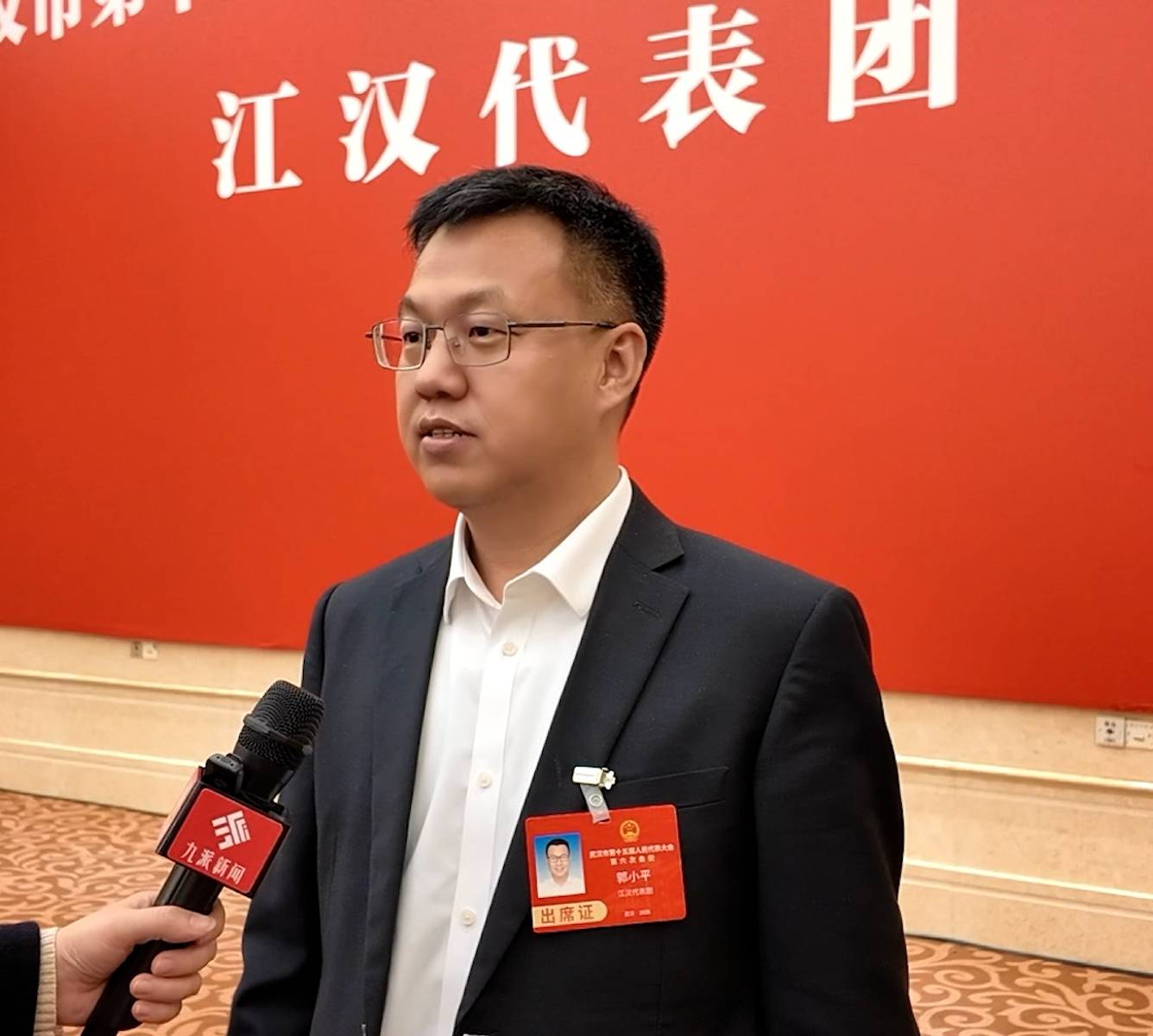
区长说两会|专访武汉市江汉区区长郭小平:打造世界级消费地标,用城市更新促产业转型
Sou Hu Cai Jing· 2026-01-08 20:53
Core Insights - The report from the Wuhan municipal government emphasizes a practical approach to development, focusing on concrete projects and data-driven strategies for the upcoming year [2] Group 1: Economic Development and Transformation - Jianghan District has a significant proportion of its economy based on traditional commerce and logistics, which presents challenges for transformation [4] - The district is leveraging new economic models such as first-store economy, live-streaming economy, and platform economy to accelerate the transformation of commerce and logistics [4] - During the 14th Five-Year Plan period, over 100 new first stores were added annually, including the first Ritz-Carlton hotel in Central China and the first duty-free store in the city [4] Group 2: E-commerce and Retail Growth - In the previous year, online retail sales in Jianghan achieved over 30% growth, while multi-modal transport and logistics services saw a 10% revenue increase, and total import and export volume grew by 45.5% [5] - Plans for 2026 include developing a world-class consumer landmark centered around the Wushang commercial circle and enhancing the international consumption environment [5] Group 3: Logistics and Infrastructure - The Wuhan Multi-Modal Transport Service Center was inaugurated, serving as a key platform for reducing logistics costs and enhancing connectivity among various transport modes [7] - Jianghan aims to create a comprehensive service platform integrating data, finance, and transactions to support logistics and trade enterprises [7] Group 4: Urban Renewal and City Planning - In 2025, Jianghan District completed urban renewal plans that included seven areas and 58 projects, with eight old residential communities renovated and ten complete communities established [9] - The district plans to focus on urban renewal as a key strategy in 2026, aiming to enhance cultural and industrial hubs while transforming the central business district into a comprehensive innovation and legal services area [9]
一财主播说 | 沪指录得K线15连阳 商业航天概念股再掀涨停潮
Di Yi Cai Jing· 2026-01-08 11:36
Core Viewpoint - The Shanghai Composite Index experienced a slight decline of 0.07% but closed higher than its opening price, marking a 15-day consecutive rise in K-line patterns [1] Market Performance - The Shenzhen Component Index fell by 0.51% and the ChiNext Index decreased by 0.82% [1] - The Science and Technology Innovation Index rose by 1.14% [1] - Total trading volume in the Shanghai and Shenzhen markets reached 28,265 billion, a decrease of 552 billion compared to the previous day [1] Sector Performance - The commercial aerospace sector showed strong performance, with Aerospace Hongtu hitting the daily limit of 20 cm, and nearly 40 stocks including Jieli Rigging and Taisheng Wind Power also reaching the daily limit [1] - The controllable nuclear fusion sector performed well, and AI applications were active [1] - In contrast, the large financial sector saw an expanded decline in the afternoon, while the rare earth permanent magnet sector continued to fall [1] - Overall, there were more gainers than losers, with over 3,700 stocks rising [1]


港股收盘|恒指跌1.17% 智谱上市首日收涨约13%
Di Yi Cai Jing· 2026-01-08 11:36
Market Performance - The Hang Seng Index closed at 26,149.31 points, down 1.17% [1] - The Hang Seng Tech Index closed at 5,678.34 points, down 1.05% [1] Company Specifics - Lenovo Group experienced a decline of over 5% [1] - Sunny Optical Technology fell by more than 4% [1] - Zhizhuo saw a first-day increase of over 13% upon listing [1]
2026年宏观经济与资产配置展望
Sou Hu Cai Jing· 2026-01-08 10:17
Group 1 - The core theme for China's economy in 2026 will focus on boosting domestic demand and emphasizing technology development, as external uncertainties persist due to factors like the US-China trade war [2][3][25] - The economic growth target for 2026 is set at approximately 5.0%, which aims to ensure over 10 million new jobs, balancing current needs with long-term goals [6][25] - The potential GDP growth rate is projected to decline to around 4.63% during the 15th Five-Year Plan period (2026-2030), influenced by structural constraints such as an aging population and diminishing capital returns [4][5][6] Group 2 - The government is expected to implement more proactive fiscal and monetary policies, maintaining a fiscal deficit of around 4% and a broad fiscal deficit rate potentially exceeding 10% [7][12] - To address insufficient effective demand, an annual injection of 4 trillion to 5 trillion yuan into the economy is necessary to maintain normal economic circulation [12][25] - The real estate market is anticipated to face significant challenges, with a projected need for approximately 4.58 trillion yuan to normalize unsold housing inventory [9][10] Group 3 - The focus on technology will include significant investments in AI infrastructure, semiconductor manufacturing, and high-end manufacturing sectors, with domestic companies expected to benefit from policy support [21][25] - The consumer market is expected to see a shift towards service consumption, with policies aimed at enhancing consumer environments and increasing household income [19][20] - Structural policies will be necessary to improve income distribution and enhance consumer spending, particularly targeting middle and low-income groups [14][17][25]