外卖

Search documents
“黄狗猪头肉”,刘强东在炒一份什么“菜”
Mei Ri Jing Ji Xin Wen· 2025-09-17 13:06
Core Viewpoint - JD.com is strategically expanding into the food and beverage and hospitality sectors, leveraging its supply chain capabilities to innovate and enhance customer experience [3][5][9] Group 1: Business Expansion - JD.com is entering the food and beverage sector with a focus on the "Seven Fresh Kitchen" brand, aiming to open 10,000 locations nationwide within three years [4] - The company is also venturing into the hospitality industry by signing a strategic partnership with Jin Jiang Hotels, marking its first major collaboration since announcing its entry into the hotel market [5][6] Group 2: Supply Chain Innovation - JD.com is implementing a unique supply chain model in the food delivery market, which includes a "100 million yuan" initiative to recruit partners for signature dishes, aiming to improve food safety and quality [4][8] - The company plans to integrate its "Seven Fresh Kitchen" brand into hotel settings, enhancing the guest experience by offering additional products and services [6] Group 3: Market Positioning - JD.com is positioning itself against competitors by emphasizing quality over price, with a goal to reduce the average industry gross margin from 60% to 20% through supply chain optimization [9] - The company aims to redefine the perception of pre-prepared meals by leveraging its supply chain advantages and ensuring transparency in food preparation [8][9]

外卖市场理性竞逐,稳就业、促消费价值凸显
Xin Jing Bao· 2025-09-17 13:04
Group 1 - The new service industry is rapidly creating job opportunities, with platforms like Taobao Flash Delivery reporting over 2 million active riders daily in August, generating over 1 million new jobs compared to the same period last year [1] - The number of riders earning over 10,000 yuan in July increased to 2.8 times that of the previous year, indicating significant income growth in the sector [1] - The overall number of delivery riders in the food delivery market has shown a notable increase, with a year-on-year growth rate of 74.8% for new blue-collar jobs in the delivery sector [1][2] Group 2 - The consumption spillover effect is significant, with each 1 yuan coupon from Taobao Flash Delivery driving an additional 6.76 yuan in consumer spending, encompassing both delivery and various online and offline purchases [2] - The rise of instant retail and new consumption habits is reshaping consumer expectations for quick delivery across various categories, from food to personal care products [2] - The "warehouse-store" model has matured, with Taobao Flash Delivery operating around 50,000 front warehouses, enhancing the ability to meet urgent consumer needs [2] Group 3 - The food delivery market has also contributed to indirect employment and supported the growth of small and medium-sized businesses, with significant increases in hiring within the restaurant sector [3] - Over 300,000 small shops achieved peak sales on Taobao Flash Delivery on the first day of autumn, and over 640,000 stores saw a more than 100% increase in night orders since July [3] - Platforms are enhancing worker protections, with Taobao Flash Delivery and Ele.me providing subsidies for pension and medical insurance, covering up to 100% of costs [3]
9月16日【港股Podcast】恒指、攜程、吉利、美團、聯想、嗶哩嗶哩
Ge Long Hui· 2025-09-17 12:31
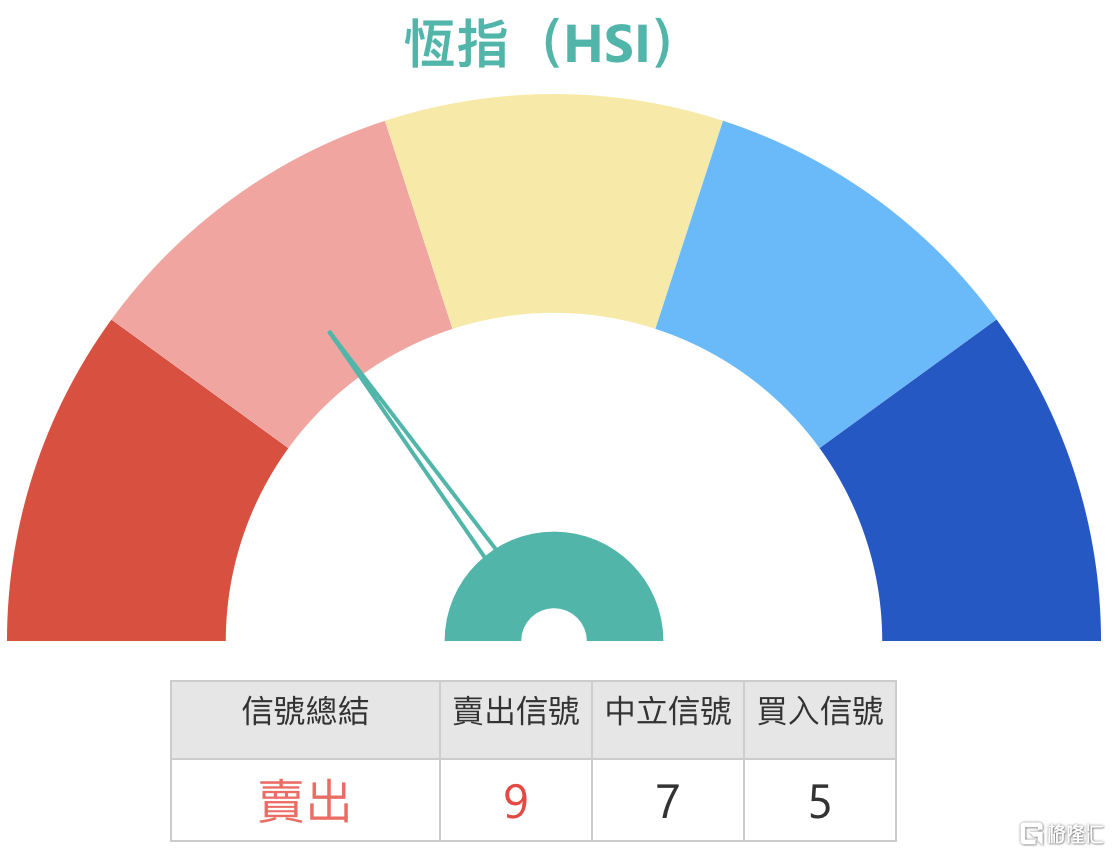
Group 1: Hang Seng Index (HSI) - The Hang Seng Index (HSI) closed at 26,438 points after reaching a high of 26,601 points, indicating a high open but a low close, which disappointed investors [1] - Technical signals suggest a "sell" with support levels at 25,860 points and 25,385 points, while resistance levels are at 26,642 points and 27,600 points [1] Group 2: Trip.com Group (09961.HK) - Trip.com Group's stock price has steadily increased over the past two weeks, rising by 4.09% to 597.5 HKD, although short-term technical signals indicate a "sell" [7] - Support levels are at 561 HKD and 520 HKD, while resistance is at 613 HKD [7] Group 3: Geely Automobile (00175.HK) - Geely's closing price is near the middle line of the Bollinger Bands, but the overall technical signal is leaning towards "sell" [14] - Support levels are at 18.3 HKD and 17.9 HKD, with resistance at 19.8 HKD and 20.3 HKD [14] Group 4: Meituan-W (03690.HK) - Meituan's stock price closed at 100.3 HKD, with technical signals indicating a "buy" [20] - Resistance levels are at 107.5 HKD and 117.7 HKD, while support levels are at 96 HKD and 91.7 HKD [20] Group 5: Lenovo Group (00992.HK) - Lenovo's stock closed at 11.7 HKD, close to the upper Bollinger Band, with a technical signal of "sell" [26] - Support levels are at 11.1 HKD and 10.9 HKD, while resistance levels are at 12.1 HKD and 12.5 HKD [26] Group 6: Bilibili-W (09626.HK) - Bilibili's stock reached a high of 220 HKD and closed at 212 HKD, with a technical signal of "sell" indicating potential adjustments after reaching high levels [32] - Short-term support levels are at 195 HKD and 181 HKD, with recommendations for longer expiration dates on options to mitigate time decay [32]

有外卖门店图用AI生成,江苏省消保委提醒:经营者恪守法律,平台有监督义务
Yang Zi Wan Bao Wang· 2025-09-17 12:18
江苏省消保委提醒:经营者必须恪守法律边界。根据《电子商务法》有关规定,电子商务经营者应当全 面、真实、准确、及时地披露商品或者服务信息。门店照片是消费者判断商家安全状况的重要参考,属 于应当如实披露的信息范畴。敬业者使用AI生成店面实拍图,不仅涉嫌侵犯消费者的知情权和选择 权,若违反《消费者权益保护法》相关规定,甚至可能构成对消费者的欺诈,需承担相应的民事责任。 若门头照片构成广告,还需遵守《广告法》相关规定,不得含有虚假或者引人误解的内容,不得欺骗、 误导消费者。 近日,有网友反馈,部分商家门店实拍图竟使用AI生成。本来卫生状况堪忧的小店,摇身一变成明净 整洁、顾客盈门的模样,令消费者真假莫辨、防不胜防。对此,江苏省消保委于日前发声提醒:经营者 必须恪守法律规范,平台亦负有监督义务。 江苏省消保委用AI生成的"苏消牛肉面"门店实拍图,如果没有水印,您能看出来吗? 针对AI技术滥用问题,监管部门已积极作为,厘清平台和AI企业的责任。今年五月份起,网信办开 展"清朗·整治AI技术滥用"专项行动,强化AI生成合成技术和内容标识管理,督促网站平台提升检测鉴 伪能力。《人工智能生成合成内容标识办法》已于9月1日正式施 ...

资金动向 | 北水火力加码!大买阿里巴巴超50亿港元,连续3日加仓美团
Ge Long Hui A P P· 2025-09-17 11:54
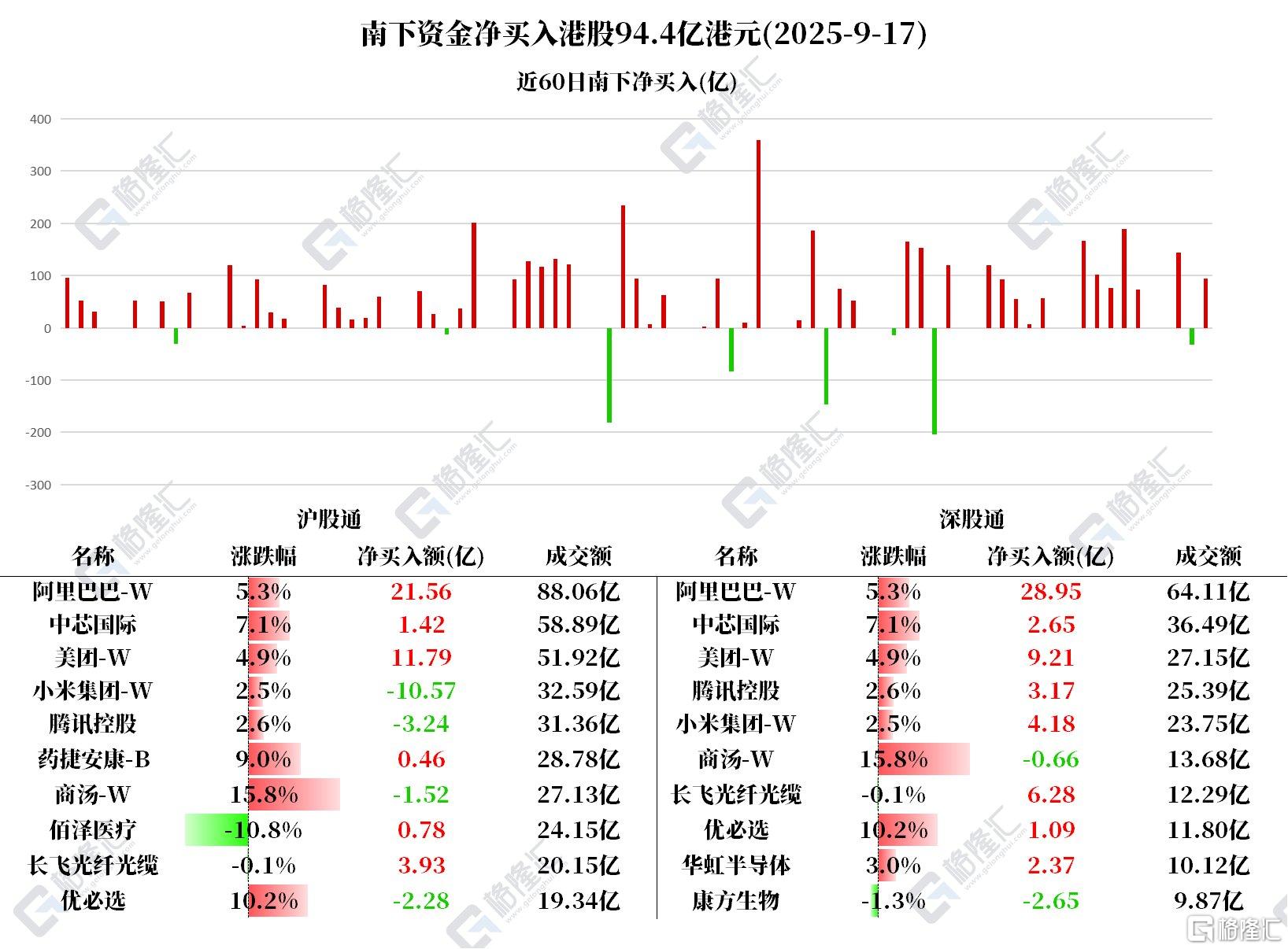
Group 1: Investment Trends - Southbound funds have recorded a net purchase of Alibaba amounting to HKD 50.51 billion, Meituan HKD 21 billion, and other companies such as Changfei Optical Fiber and Semiconductor Manufacturing International Corporation (SMIC) [1] - Southbound funds have continuously net bought Alibaba for 19 days, totaling HKD 548.91 billion, and Meituan for 3 days, totaling HKD 34.88 billion [1] Group 2: Company Performance - Alibaba's stock has increased by 5.3% with a net purchase of HKD 21.56 billion and a trading volume of HKD 88.06 billion [3] - Meituan's stock has risen by 4.9% with a net purchase of HKD 11.79 billion and a trading volume of HKD 51.92 billion [3] - Changfei Optical Fiber reported a net profit of HKD 296 million for the first half of the year, a decrease of 22% year-on-year, with a significant drop of 55% in the second quarter [4] - SMIC is reportedly testing a deep ultraviolet lithography machine manufactured by a Shanghai startup, indicating advancements in technology [5] Group 3: Analyst Ratings - Goldman Sachs has raised Alibaba's target price from USD 163 to USD 179, maintaining a "Buy" rating due to its strong market position and international expansion potential [4] - Changfei Optical Fiber is maintaining an "Overweight" rating while diversifying its product offerings [5]

刘强东首次透露
Xin Jing Bao· 2025-09-17 04:28
Core Insights - JD.com is re-entering the hotel and travel sector, signaling a strategic shift towards enhancing its lifestyle services, with a focus on leveraging its supply chain capabilities [1][2][3] - The company has launched a "0 commission" policy for hotel operators, aiming to disrupt traditional OTA commission models and attract more partners [5][6] - JD.com is not positioning itself as a typical OTA but is instead focusing on providing differentiated value to users and helping partners increase their revenue [2][3] Group 1: Business Strategy - JD.com is expanding its lifestyle services, including food delivery and hotel bookings, to address significant industry pain points [1][5] - The company emphasizes a supply chain-centric approach, stating that all its business operations revolve around supply chain optimization [3][6] - JD.com has signed a strategic cooperation agreement with Jin Jiang Hotels to enhance collaboration in travel services and supply chain integration [3][5] Group 2: Market Positioning - The company aims to create new market scenarios by integrating hotel and alcohol services, leveraging its supply chain advantages [2][3] - JD.com is competing in a mature market dominated by players like Ctrip and Meituan, which have established significant market shares [7][8] - The lifestyle service sector is increasingly important, with a growing share of total consumption and significant employment opportunities [9] Group 3: Financial Performance - JD.com has introduced the "JD Hotel PLUS Membership Plan," which offers hotel operators up to three years of zero commission, contrasting with the traditional OTA model where commissions range from 10% to 20% [5][6] - The company is actively promoting its hotel services through various marketing strategies, including exclusive member offers and promotional activities [5][6] - The lifestyle services segment is expected to contribute to JD.com's overall growth, especially as e-commerce growth slows and competition intensifies [6][9]
刘强东现身品酒会:七鲜小厨未挤压生存空间,周边商家单量反涨30%
Sou Hu Cai Jing· 2025-09-17 04:27
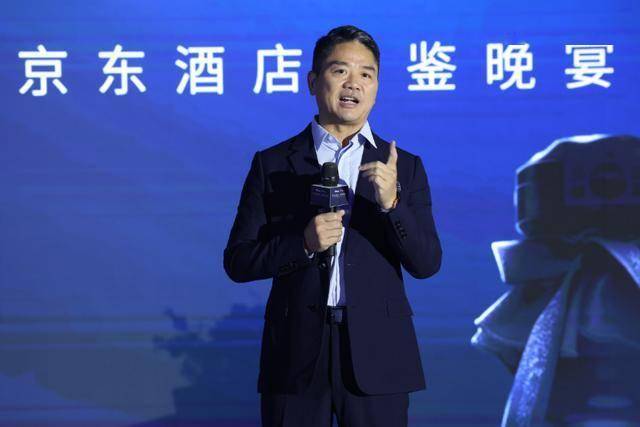
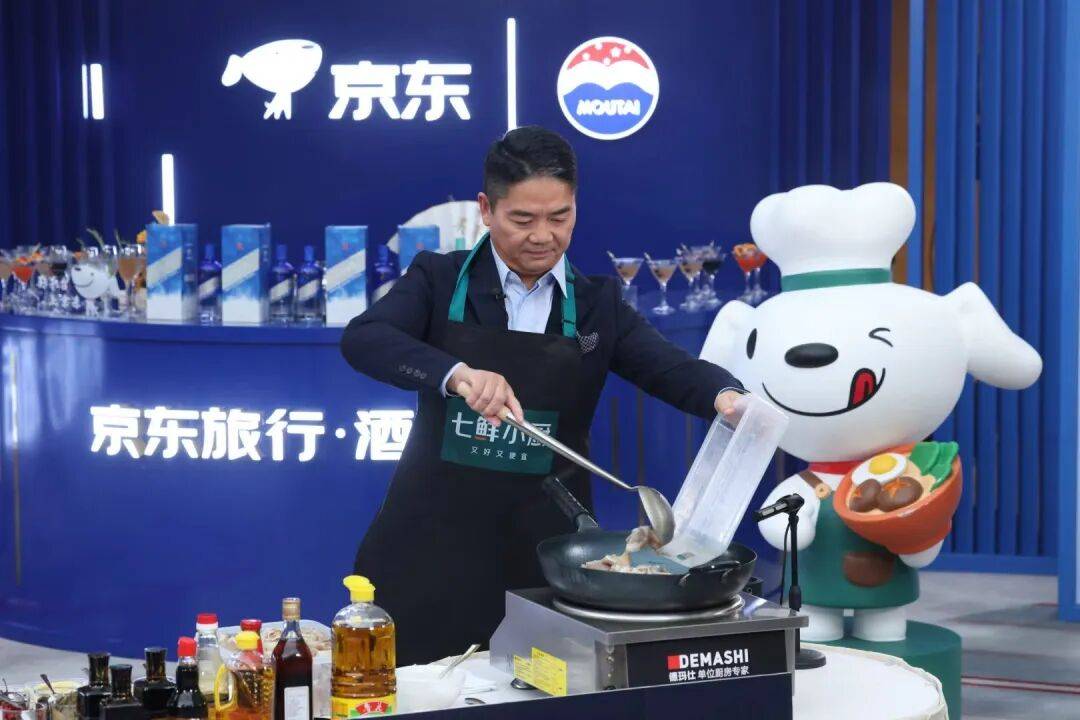
《星岛》见习记者 廖梓妤 深圳报道 没有挤压生存空间,七鲜小厨5公里内很多商家单量爆涨30% 9月16日,首场京东品酒会在北京国际饭店举行,京东集团创始人、董事局主席刘强东现场化身"大 厨",亲手烹制家乡宿迁名菜——黄狗猪头肉。 京东品酒会是京东时隔近20年重启的一次"用户见面会",现场邀请用户免费体验茅台酒专业品鉴、五星 级酒店专享定制晚宴。 在这场品酒会上,刘强东不断发表感言。他提到外卖平台扣点高达25%,迫使"幽灵外卖"横行,最终损 害的是食品安全和行业健康发展。谈七鲜小厨,不仅没有挤压周边商家的生存空间,反而带动了区域内 外卖生态的良性发展,5公里内很多商家单量爆涨30%。 对于京东进军酒旅行业,他直言不想把酒旅行业拉进"价格战",不会卷得服务品质下降,不会让酒店从 业者的利润受挤压,生态遭到破坏。他透露,"酒旅全新发展计划很快会释出,外卖也有商业创新待公 布。" 某些外卖平台扣点高达25%,迫使"幽灵外卖"横行 在京东品酒会的演讲中,刘强东提到,自己特别喜欢做菜,对餐饮也一直很关注,后来无意中聊天发现 外卖平台扣点高达 25%。"我很清楚,现在大部分餐饮的从业者都是夫妻老婆店,夫妻两人积攒 20 年 ...
刘强东直播炒菜,煤气灶从马云那买的?
Sou Hu Cai Jing· 2025-09-17 04:25
不是,现在的大佬蹭热点都这么吃香吗? 还记得前段时间外卖大战吧,美团、饿了么疯狂压价抛出大量外卖券。 好家伙,就因为刘强东突然跑出来也要分一杯羹,还要给京东外卖员工交社保,还搞出一个超时免费送,于是京东外卖就这样硬生生挤进了外卖行业。 图片来源:微博@谯华 最近西贝和罗永浩正因预制菜闹得热火朝天。 这会儿你东哥又突然跑出来亲自炒菜,还不忘调侃一波贾国龙和罗永浩。 照我说,这热点蹭的真是及时,那要是再过一段时间,恐怕又要出现"京东炒菜app"了...... 不得不服,穿西装爆炒江苏菜,优雅永不过时是吧? | DE FERE | | | | | 通常不回家 | | | 东哥直播下厨太真实了! 这才叫不装 | | | | --- | --- | --- | --- | --- | --- | --- | --- | --- | --- | --- | | 9-16 21:02 来自四川 | Z | 日 13: | | | | | | 9-16 21:13 来自北京 2 11 117 | | | | Free Bear Bearing Beach Beach Beach Beach Beach Beach Beach ...

刘强东直播秀厨艺,谈到这些→
Sou Hu Cai Jing· 2025-09-17 03:50
Core Insights - Liu Qiangdong, founder and chairman of JD Group, made his debut as a "chef" during a live streaming event, showcasing a local dish and discussing hotel development plans [1][3] - JD Group is re-entering the local lifestyle market with initiatives like JD Takeout and Qixian Kitchen, aiming to enhance service quality without engaging in price wars [5][6] Group 1: Live Streaming Event - Liu Qiangdong expressed his nervousness during the live cooking demonstration, comparing it to other notable first-time experiences [1] - The event marked JD's first user meeting in nearly 20 years, highlighting the company's focus on direct consumer engagement [3] Group 2: Qixian Kitchen and Hotel Development - Qixian Kitchen, a quality dining platform under JD, aims to support local restaurants by increasing their sales rather than competing with them [5] - Liu Qiangdong shared that Qixian Kitchen's first store achieved at least 1,500 orders per day within two months, contributing to a 30% increase in sales for nearby restaurants [5] Group 3: Strategic Partnerships - JD has signed a strategic cooperation agreement with Jinjiang Hotels to innovate in dining consumption scenarios and enhance hotel services [6] - The first pilot projects for Qixian Kitchen will launch in October at various Jinjiang hotel brands, integrating e-commerce with hotel supply chains [6] Group 4: Takeout Market Dynamics - The entry of JD Takeout has disrupted the previous duopoly in the takeout market, leading to a "three-legged" competition among JD, Taobao, and Meituan [7][10] - JD Takeout captured 23% of the national market share within six months, while Taobao's flash purchase service secured 37% [10] Group 5: Industry Transformation - The evolving competitive landscape is prompting platforms to shift from being "traffic harvesters" to "value co-creators," focusing on sustainable business practices [10] - The new market dynamics are expected to drive the industry towards a phase of "quality co-existence" rather than mere scale competition [10]
刘强东:尊重王兴,不是仇人,酒旅不打价格战,还有大招
2 1 Shi Ji Jing Ji Bao Dao· 2025-09-17 03:00
Core Viewpoint - The discussion emphasizes the importance of healthy competition among private enterprises, urging them to focus on strategic and value-driven competition rather than personal grievances [1][3][4]. Group 1: Competition and Industry Dynamics - The company advocates for a competitive environment that relies on strategy, business models, and value creation to win consumer trust [3][4]. - There is a call for private enterprises to maintain simplicity and openness in their interactions, avoiding personal conflicts [4]. - The company supports a "quality over quantity" approach in platform competition, encouraging upward competition that focuses on quality and safety [6]. Group 2: Hotel and Travel Business Strategy - The company plans to enter the hotel industry without engaging in price wars, aiming to protect service quality and profit margins for hotel operators [8]. - A new hotel development plan is expected to be announced soon, focusing on innovation rather than price competition [8]. Group 3: Food Delivery Industry Insights - The company entered the food delivery market due to the high commission rates (up to 25%) charged by existing platforms, which negatively impact food safety and quality [10]. - The company has committed to providing full social insurance for its delivery personnel, a first in the industry [12][10]. - The launch of "Seven Fresh Kitchen" has resulted in significant order volumes and increased business for local restaurants, demonstrating a complementary rather than competitive relationship [13][14]. Group 4: Entrepreneurial Journey and Business Philosophy - The company’s founder reflects on the journey from starting with a small computer accessories business to becoming a leading player in various retail sectors, emphasizing the importance of addressing consumer pain points [16][17]. - The company has consistently focused on transparent pricing and quality assurance, which has contributed to its growth and market leadership [16][17].