教育

Search documents
十一长假结束,有人提前行动了?
混沌学园· 2025-10-08 11:58
Core Insights - The article emphasizes the urgency for businesses to embrace AI as 2025 is projected to be a pivotal year for AI emergence [3] - It highlights a nationwide AI practical course organized by 混沌, aimed at helping businesses implement AI effectively [4] Group 1: Target Audience - The course is designed for various stakeholders including CEOs, business leaders, entrepreneurs, and 混沌 alumni who seek to leverage AI for efficiency and competitive advantage [5] Group 2: Course Highlights - The course features over 200 real-world AI case studies from diverse industries such as manufacturing, retail, education, internet, and healthcare, showcasing practical applications of AI [5] - Attendees will have the opportunity to hear from successful entrepreneurs in the AI field who will share insights and experiences from their own companies [6] - Participants can engage in workshops where they can receive free consultations from 50 AI coaches, aimed at developing actionable AI solutions [13] - The event includes an AI innovation market where attendees can experience AI products and network with industry peers for potential collaborations and investments [13] - A special tour to 海澜之家’s intelligent supply chain base will be available, providing insights into how traditional businesses are integrating AI into their operations [14]


国家发改委紧急安排2亿元支持广东海南台风灾害灾后应急恢复
Di Yi Cai Jing· 2025-10-05 08:20
Core Viewpoint - The National Development and Reform Commission (NDRC) has allocated 200 million yuan to support emergency recovery efforts in Guangdong and Hainan following the severe impact of Typhoon "Maitak" [1] Group 1: Emergency Response - The National Disaster Reduction and Relief Committee initiated a Level 4 emergency response on October 5 due to the significant damage caused by Typhoon "Maitak" in Guangdong and Hainan [1] - The funding will focus on the restoration of damaged infrastructure, including roads, bridges, water conservancy projects, schools, and hospitals [1] Group 2: Recovery Efforts - The NDRC will continue to monitor and guide the recovery efforts in Guangdong and Hainan, ensuring that the allocated funds are quickly directed to emergency recovery projects [1] - There is an emphasis on accelerating construction progress and strengthening supervision and management to maximize the effectiveness of the central budget investment [1]
“i人经济”爆发,改造七大消费场景
创业邦· 2025-10-04 10:08
Core Viewpoint - The rise of the "i-person economy" reflects a shift in consumer behavior towards low-interaction, personalized experiences, driven by the increasing popularity of the MBTI personality test and the growing preference for solitude among consumers [4][6][37]. Group 1: One-Person Dining - The "one-person dining" model is gaining traction, with the market expected to exceed 18 trillion yuan by 2025, showing a compound annual growth rate of 15.3% [6][8]. - Restaurants designed for solo dining, such as "Ichiran Ramen" and "23 Seat Noodle House," cater to the need for independent spaces while minimizing social discomfort through private booths and call buttons [6][8]. - Unmanned restaurants are emerging as innovative alternatives, utilizing a "three-no" model (no ordering staff, no cooking chefs, no cashiers) to enhance efficiency and meet the demand for a quiet, autonomous dining experience [8][9]. Group 2: Unmanned Hotels - Unmanned hotels are transforming the hospitality industry by eliminating social interactions during check-in and stay, thus providing a truly "no-disturb" experience for introverted consumers [11][13]. - The global smart hotel market is projected to grow from approximately $5 billion in 2020 to $15 billion by 2027, with a compound annual growth rate of around 15% [13]. - These hotels leverage technology to enhance user experience, including soundproofing, high-quality entertainment systems, and personalized service options [11][13]. Group 3: Unmanned Supermarkets - Unmanned supermarkets address the social pressures faced by introverted consumers and the efficiency challenges encountered by busy professionals, minimizing unnecessary interactions and wait times [15][17]. - The operational model relies on digital technologies such as RFID and computer vision to streamline the shopping experience, allowing for 24-hour operation and improved supply chain management [17][18]. - Despite their potential, unmanned supermarkets face challenges in accurately identifying products and providing assistance to customers when needed [17][18]. Group 4: Unmanned Study Rooms - Unmanned study rooms are emerging to meet the growing demand for quiet, independent study spaces among students and professionals, offering flexible rental options [20][21]. - The market for study rooms is expanding rapidly, with over 85,300 related businesses currently operating in China [23]. - However, the industry faces challenges such as reliance on a single revenue stream and intense competition, which may impact profitability [23]. Group 5: Unmanned Pet Grooming Shops - Unmanned pet grooming shops cater to pet owners seeking convenience and cost-effectiveness, allowing for a stress-free grooming experience without social interactions [25][27]. - These shops utilize smart technology for precise service and pricing, ensuring that consumers only pay for the services they need [27]. - The growth of the pet economy and the integration of technology into pet services are expanding the market for unmanned grooming options [27]. Group 6: Self-Service Car Washes - Self-service car washes are becoming increasingly popular among car owners due to their affordability and convenience, allowing for a flexible and stress-free experience [28][30]. - The average cost for a self-service wash ranges from 10 to 20 yuan, significantly lower than traditional car wash services [28][30]. - The rise in vehicle ownership in China, with over 353 million cars by the end of 2024, presents a significant opportunity for the self-service car wash industry [30]. Group 7: Self-Service Clothing Stores - Self-service clothing stores are gaining popularity by offering a no-interaction shopping experience that appeals to younger consumers seeking value and a pleasant shopping environment [31][33]. - These stores fill a gap in the traditional retail experience by allowing customers to try on clothes without the pressure of sales staff, enhancing the overall shopping experience [33][36]. - However, challenges such as inventory management and maintaining store cleanliness need to be addressed for sustained success [35][36].

丁爽:产能治理中的进与退|国庆大咖谈
Di Yi Cai Jing· 2025-10-04 01:15
Group 1 - The core viewpoint emphasizes the need to reduce excess manufacturing capacity while expanding effective capacity in the service sector to mitigate economic downturn risks and promote structural transformation [1][2] - China's manufacturing capacity has significantly exceeded domestic demand, leading to intensified competition and prolonged low price levels, with nominal GDP growth lagging behind actual GDP expansion [1][2] - The government has implemented capacity governance and anti-involution measures since July to prevent redundant investments and curb excess capacity, which helps break the negative cycle of falling prices and weakened demand [1][2] Group 2 - The long-term potential for the development of China's service industry is substantial, with its GDP share around 55%, significantly lower than the nearly 70% in developed countries [3] - There is strong demand and insufficient supply in various service sectors such as communication, education, healthcare, and tourism, necessitating further market opening to increase service capacity [3] - Policy measures should focus on breaking industry monopolies, lowering entry barriers, and opening up to private and foreign enterprises to fully unleash the potential of service supply and consumption [3]
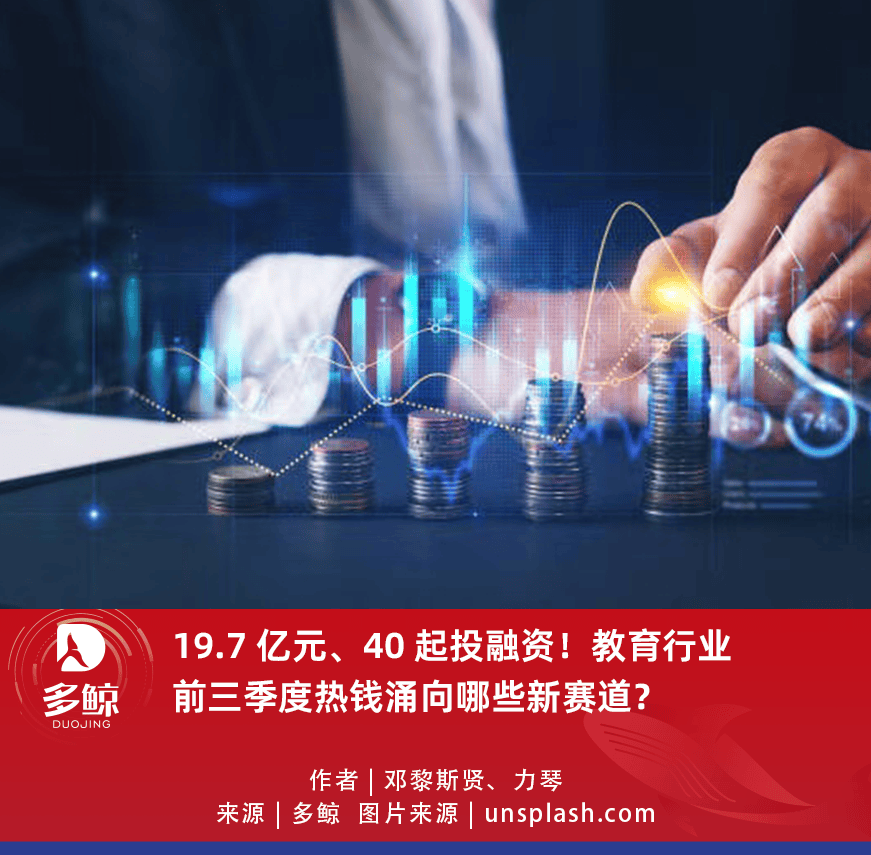
19.7 亿元、40 起投融资!教育行业前三季度热钱涌向哪些新赛道?
Sou Hu Cai Jing· 2025-10-03 03:32
Core Insights - The investment landscape in China's education sector remains active in the first three quarters of 2025, with a total of 40 disclosed financing events amounting to 1.97 billion yuan, reflecting a shift towards rational selection of projects after initial explorations [2][3] - The capital logic in the education industry is evolving from merely chasing trends to focusing on structure, scenarios, and long-term value [2] Investment Trends - In the first nine months of 2025, angel rounds dominated the financing landscape, accounting for 70% of the total events, consistent with the previous half of the year [3] - A notable increase in A round financing, from 3 to 7 events, indicates that some projects are transitioning from validation to growth stages [3][5] - The average financing amount across 40 cases was approximately 49.25 million yuan, with a median of 10 million yuan, highlighting a preference for fewer but more substantial investments [5][10] Notable Financing Cases - Haivivi, an AI children's toy brand, secured 200 million yuan in A round financing, marking the largest single A round investment of the year [4] - Xiaomawang, a youth programming education service provider, completed a D round financing, becoming the first disclosed case in the later stage of financing for the year [4][6] Sectoral Focus - AI continues to be a foundational logic across most projects, with a shift towards investments that can create closed-loop scenarios in education [7][9] - The emergence of vocational education and lifelong learning as stable investment choices reflects a clear market demand linked to employment and industry upgrades [8][9] - New variables in the investment landscape include family education and channel services, indicating a diversification of investment opportunities beyond traditional AI applications [8][9] Conclusion - The investment environment in the education sector is transitioning towards a "less but better" approach, with a focus on high-certainty and sustainable growth projects [10] - The capital's attitude suggests that education is viewed as a long-term value race rather than a short sprint, emphasizing the importance of rational selection in future investments [10]
法国再度发生多行业罢工 抗议政府财政紧缩计划
Zhong Guo Xin Wen Wang· 2025-10-03 00:54
Group 1 - The core viewpoint of the articles highlights the ongoing nationwide strikes in France, protesting against government austerity measures and demanding higher taxes on the wealthy [1][2] - The scale of the strikes has decreased compared to the previous month, with tens of thousands participating in demonstrations across the country [1] - Key sectors affected by the strikes include transportation, education, and healthcare, with notable closures such as the Eiffel Tower and some schools [1] Group 2 - The French Ministry of the Interior reported that nearly 200,000 people participated in the demonstrations nationwide, including 24,000 in Paris, while the French General Confederation of Labor claimed 600,000 participants [1] - The government has deployed 76,000 police and gendarmes to maintain order during the protests [1] - Prime Minister Le Cornu has expressed willingness to continue dialogue with union organizations regarding social welfare issues and is expected to finalize the new cabinet by the weekend [2]
发挥贴息政策促消费效能
Jing Ji Ri Bao· 2025-10-02 22:15
Core Viewpoint - The recent implementation of personal consumption loan interest subsidy policies by the central government aims to stimulate consumption and enhance domestic demand through financial collaboration, reducing credit costs for residents and businesses [1][2]. Group 1: Policy Overview - The new subsidy policies provide a 1% interest subsidy for one year, with potential extensions or expansions in support scope [1]. - As of August, the government allocated approximately 420 billion yuan in subsidies, leading to over 2.9 trillion yuan in goods sales [2]. - The policies are designed to enhance consumer willingness and capacity, benefiting upstream and downstream industries [2]. Group 2: Economic Context - China's consumption sector has significant growth potential, transitioning from goods to service consumption, with areas like elderly care and high-quality services presenting market opportunities [3]. - In August, the retail sales of consumer goods grew by 3.4% year-on-year, indicating a slight decline in growth momentum [3]. - The balance of consumer loans, excluding personal housing loans, stood at 21.04 trillion yuan, reflecting a year-on-year growth of 5.34%, which is relatively low compared to previous years [3]. Group 3: Implementation and Coordination - Stakeholders are encouraged to ensure the effective implementation of the subsidy policies, focusing on simplifying processes and enhancing efficiency [4]. - Banks are advised to manage credit funds responsibly, ensuring they are used for genuine consumption or business activities [4]. - A coordinated approach among fiscal, financial, industrial, and investment policies is essential to support consumption and improve living standards [5].
中国经济转型升级蕴含重大机遇(习近平经济思想指引下的中国经济专论)
Ren Min Ri Bao· 2025-10-02 22:13
Core Insights - China's economy continues to maintain stable and healthy development, providing certainty and positive energy for global economic growth. Despite some perceptions that investment opportunities are diminishing, China's economic transformation and upgrading present unprecedented opportunities for countries worldwide [1] Group 1: Industry Transformation and Upgrading - China's manufacturing sector remains the largest globally for 15 consecutive years, with 80% of it comprising traditional industries such as metallurgy, chemicals, machinery, light industry, and textiles. The acceleration of high-end, intelligent, and green development will release investment opportunities in these areas [1] - New industries such as artificial intelligence, robotics, and biomedicine are rapidly emerging, with China leading in several AI models and maintaining the largest industrial robot market for 12 years. The country is fostering the development of future industries and is open to sharing investment opportunities with global partners [1] Group 2: Technological Innovation and Talent Dividend - China is quickly rising in the global technology innovation landscape, with R&D expenditure exceeding 3.6 trillion yuan in 2024, approaching the OECD average. The country leads in high-level international journal publications and invention patents [2] - The integration of technological and industrial innovation is accelerating, with increasing patent conversion rates and the transformation of cutting-edge technological achievements into new productive forces. China produces over 5 million STEM graduates annually, enhancing the talent dividend, particularly in engineering [2] Group 3: Consumption Expansion and Upgrade - China's per capita GDP exceeds $13,000, with a steadily expanding market size. The retail sales of consumer goods are expected to surpass 50 trillion yuan by 2025, solidifying China's position as the world's second-largest consumer market [3] - Online retail sales have ranked first globally for 12 consecutive years, with significant sales in automobiles and air conditioners. Service consumption is becoming a new growth engine, with the proportion of per capita service consumption expected to reach 46.1% in 2024 [3] Group 4: Infrastructure Development - China's vast territory necessitates significant infrastructure development, particularly in the central and western regions where railway and road density is lower than in the eastern coastal areas. Traditional infrastructure construction and upgrades will yield long-term economic and social benefits [3] - Investment demand remains high for intercity railways and cross-river, cross-sea bridges, which improve transportation logistics and regional economic development. Rapid growth in new infrastructure areas such as computing networks, mobile communications, and smart cities will create vast market opportunities [3] Group 5: Urbanization and Social Welfare - China's urbanization is transitioning from rapid growth to stable development, focusing on improving quality and spatial layout, developing urban clusters, and modernizing cities. Urban renewal projects will create significant investment opportunities [4] - The demand for social welfare services, including childcare, education, elderly care, and healthcare, is increasing. By 2025, China aims to provide 4.5 childcare spots per 1,000 children under three, addressing gaps compared to developed countries [4]
同仁堂携手党建联建成员单位 “进校园、进社区”“送服务、促消费”
Bei Jing Ri Bao Ke Hu Duan· 2025-10-01 22:13
Core Insights - The article discusses the ongoing initiatives of the "Party Building and Industry Innovation Joint Construction Mechanism" (referred to as "Party Building Joint Construction") in Beijing, emphasizing its role in enhancing industrial collaboration and public services [1][2][5] Group 1: Party Building Joint Construction Activities - The Party Building Joint Construction has expanded its activities into enterprises, campuses, and communities, demonstrating a commitment to high-quality development through high-quality party building [1][4] - In September, the initiative hosted a series of events, including a traditional Chinese medicine cultural festival and a campus integration event, which collectively served over 2,000 residents [2][4] - The activities included health services, product showcases, and job recruitment, effectively bridging the gap between industry needs and community services [3][4] Group 2: Collaboration with Educational Institutions - The partnership with Beijing Technology and Business University marks a significant step in integrating education with industry, establishing a framework for long-term collaboration [3][5] - The signing of a joint construction agreement aims to enhance the connection between education, talent development, and industry needs, fostering a collaborative ecosystem [3][5] - The campus market event featured over 40 booths offering health consultations, product sales, and employment information, showcasing the tangible benefits of the collaboration [3][4] Group 3: Societal Impact and Future Directions - The initiative reflects a dual empowerment model where enterprises provide quality products and services while local governments support business development, enhancing community well-being [5][6] - The Party Building Joint Construction is positioned to continue expanding its reach, aiming for a regularized approach to integrating health knowledge, quality products, and job opportunities into various sectors [6] - This model not only addresses the challenges of integrating party building with business operations but also supports the development of new productive forces, contributing to both economic and social benefits [6]


预付费服务
Sou Hu Cai Jing· 2025-10-01 05:49
Core Insights - Prepaid services are increasingly common in daily life, allowing consumers to pay in advance for services to be used later, which benefits both businesses and consumers [2][5]. Summary by Categories Definition and Common Forms - Prepaid services involve consumers paying a certain amount before enjoying the service, applicable in various industries such as fitness, education, and dining [5]. - Common forms include membership cards, recharge cards, and course packages, which often provide cost savings compared to single purchases [5]. Benefits for Consumers - Consumers can enjoy price discounts by purchasing multiple services at once, leading to long-term savings [5]. - Prepaid services offer convenience by eliminating the need for separate payments for each use, saving time and effort [5]. - For frequent visitors to certain establishments, prepaid options can help in better planning of consumption habits [5]. Considerations and Risks - Consumers must pay upfront, which poses a risk if the service provider encounters operational issues [6]. - Prepaid services often have expiration dates, and unused services may become void if not utilized within the specified period [6]. - Some prepaid services may come with specific conditions or restrictions, necessitating careful review of terms before purchase [6]. Recommendations for Consumers - Choose reputable providers by researching their business status and reputation before purchasing prepaid services [8]. - Read contract terms thoroughly, focusing on usage periods, refund policies, and liability clauses [8]. - Select services based on actual needs rather than being swayed by discounts [8]. - Keep all relevant documentation, such as contracts and receipts, to protect consumer rights in case of disputes [8]. - Monitor the provider's business status during the usage period and communicate promptly if any issues arise [8].