
自动驾驶

Search documents
渝AD0001Z!国内首块L3级自动驾驶专用正式号牌诞生
证券时报· 2025-12-21 05:39
Core Viewpoint - The approval of L3 autonomous driving vehicles in China marks a significant step towards the commercialization of intelligent connected vehicles, with Longan Automobile leading the way in this new era [4][8]. Group 1: L3 Autonomous Driving Milestones - The first L3 autonomous driving dedicated license plate "渝AD0001Z" was issued to Longan Automobile in Chongqing, indicating the start of L3 autonomous driving in China [4][3]. - The Ministry of Industry and Information Technology (MIIT) announced the first batch of L3 autonomous vehicle approvals, allowing Longan Deep Blue SL03 and Arcfox Alpha S6 to conduct pilot tests in designated areas [5][8]. - Longan Automobile has conducted over 5 million kilometers of testing on its L3 autonomous driving system in complex environments [4][6]. Group 2: Market Reactions and Stock Performance - On December 19, stocks related to autonomous driving surged, with over ten companies, including Zhejiang Shibao and Luochang Technology, experiencing significant gains [2]. - Analysts suggest that the approval of L3 vehicles will accelerate the restructuring of the intelligent driving industry and create investment opportunities in key areas such as intelligent vehicles and control systems [8][9]. Group 3: Future Outlook and Industry Implications - Longan Automobile plans to begin pilot applications with its L3 vehicles in early 2026, targeting both B-end and C-end users as regulations evolve [6][9]. - The approval process for L3 vehicles involves strict safety requirements, which may lead to a gradual expansion of L3 autonomous driving across more cities and vehicle models [9]. - The development of L3 autonomous driving is expected to drive demand for new components and technologies, benefiting various segments of the automotive supply chain [9].



突发政策利好,资金涌入这个赛道,抢筹股出炉
Xin Lang Cai Jing· 2025-12-21 04:11
Group 1 - The core viewpoint of the news is the significant inflow of southbound funds into the autonomous driving sector following the approval of L3-level autonomous driving vehicles in China, with companies like Junsheng Electronics, Seres, Cao Cao Travel, and Youjia Innovation receiving substantial increases in holdings [1][12][21] - During the week of December 15 to December 19, the Hong Kong stock market saw major indices decline, with the Hang Seng Index dropping by 1.1%, the Hang Seng Tech Index down by 2.82%, and the Hang Seng China Enterprises Index falling by 1.96%. However, southbound funds recorded a net inflow of 16.274 billion HKD, reversing previous negative trends [1][12] - Southbound funds showed a clear preference for large technology stocks, with Xiaomi Group leading the net purchases at 4.101 billion HKD, followed by Meituan at 1.890 billion HKD, Alibaba at 1.111 billion HKD, and Tencent at 1.106 billion HKD [2][12][18] Group 2 - Xiaomi Group's southbound fund holdings have increased for 14 consecutive trading days, reaching 4.584 billion shares with a market value of 185.846 billion HKD. The company has also received an L3-level autonomous driving road test license in Beijing [2][13] - The approval of L3-level autonomous driving vehicles marks a critical step towards commercialization in China, with expectations for accelerated commercialization processes by 2026, despite existing operational limitations [10][21] - Notable increases in holdings were observed in several companies related to autonomous driving, including Junsheng Electronics, Seres, Cao Cao Travel, and Youjia Innovation, with Junsheng Electronics seeing a 60.69% increase in holdings [8][19][22]
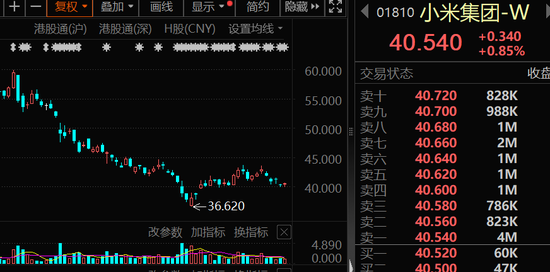
港股通大幅增持自动驾驶概念股
Xin Lang Cai Jing· 2025-12-21 03:53
Group 1 - The core viewpoint of the article highlights a significant net inflow of southbound funds amounting to HKD 16.274 billion during the week of December 15 to December 19, marking a shift from negative to positive net inflow [1] - A total of 11 stocks experienced a more than 20% increase in holdings by southbound funds, with FWD Group leading at a remarkable 377.84% increase [1] - Notable stocks with substantial increases in holdings include Chery Automobile, Sany Heavy Industry, and Joyson Electronics, with increases of 182.27%, 95.91%, and 60.69% respectively [1] Group 2 - The article emphasizes that several of the stocks with the highest increases in holdings are related to the autonomous driving sector, including Joyson Electronics, Seres, Cao Cao Mobility, and Youjia Innovation [1] - On December 15, the Ministry of Industry and Information Technology officially announced the first batch of L3-level conditional autonomous driving vehicle permits, indicating a critical step towards the commercialization of L3 autonomous driving in China [1]



国内首块!“渝AD0001Z”
Zhong Guo Zheng Quan Bao· 2025-12-21 00:48
Industry News - The National Development and Reform Commission, the State Administration for Market Regulation, and the National Internet Information Office jointly released the "Internet Platform Pricing Behavior Rules" to promote innovation and healthy development in the platform economy. The rules consist of 7 chapters and 29 articles, aiming to establish a balanced ecosystem with clear responsibilities and orderly competition. In the short term, platforms and merchants will need to adapt, while in the long term, the focus will shift from "subsidies for traffic" to "innovation and quality improvement" for sustainable high-quality development [1][2][3] - The People's Bank of China, along with other local authorities, has introduced a work plan for the "Five Major Financial Articles" in Fujian Province, outlining 18 specific measures to enhance support for technology finance, green finance, inclusive finance, pension finance, and digital finance [2][3] - The first L3-level autonomous driving license plate "渝AD0001Z" was issued in Chongqing to Changan Automobile, marking the start of the L3 autonomous driving era in China. Changan's L3 autonomous driving system has completed over 5 million kilometers of real-road testing in Chongqing [3][4] Company News - Zhiyuan Robotics announced a press conference for its "Qingtian Rental Platform" on December 22, aiming to transform robot leasing into an ecosystem. The company plans to collaborate with various partners to create a new leasing mechanism, allowing users to rent robots on demand [3][4] - ByteDance is reported to have achieved approximately $40 billion in net profit in the first three quarters of 2025, with an expected annual profit of around $50 billion. However, insiders have disputed these figures, indicating significant discrepancies [3][4] - Moore Threads held its first MUSA Developer Conference, focusing on full-function GPUs. The company plans to release a new GPU architecture called "Huagang" in 2026, which will enhance computing power density by 50% and energy efficiency by ten times [3][4] - Beijing Tongrentang Group expressed deep concern over recent media reports regarding "Antarctic Krill Oil" and has initiated an investigation into its subsidiary, Beijing Tongrentang (Sichuan) Health Pharmaceutical Co., Ltd. The company has apologized to consumers and is cooperating with regulatory authorities [4] Research Highlights - CITIC Securities reported that liquid cooling solutions are becoming the mainstream technology for energy saving in data centers, driven by increased power consumption in AI servers and chips. Domestic manufacturers are expected to benefit significantly from the rising demand for liquid cooling in AI data centers [5]
日本加息为何不跌反涨?黄金跳水,亚太股市全线飘红,4500股上涨
Sou Hu Cai Jing· 2025-12-20 20:07
Group 1 - The Asia-Pacific stock markets experienced a synchronized rally following the Bank of Japan's decision to raise its policy interest rate from 0.5% to 0.75%, marking the highest level in 30 years [1][3] - The A-share market saw significant trading activity, with over 4,400 stocks rising and a total transaction volume of 1.75 trillion yuan, an increase of 719 billion yuan from the previous day [3] - The controlled nuclear fusion sector emerged as a major winner, with stocks like Wangzi New Materials and Macro Micro Technology hitting their daily limits, driven by a merger announcement between Trump Media & Technology Group and TAE Technologies valued at over $6 billion [3][5] Group 2 - The autonomous driving sector also showed strong performance, with companies like Zhejiang Shibao and Huati Technology achieving consecutive daily limits, supported by the recent approval of L3-level autonomous driving models by the Ministry of Industry and Information Technology [6][10] - The commercial aerospace concept continued to thrive, with companies like Huati Technology and Western Materials achieving consecutive daily limits [8] - The nuclear fusion industry is expected to see significant growth, with the International Energy Agency predicting a market size approaching $500 billion by 2030 [5][10] Group 3 - The recent interest rate hike in Japan was aimed at alleviating yen depreciation pressure and controlling inflation, with the market having anticipated this move, resulting in limited short-term impact on various assets [8][10] - The silver market showed a divergence from gold, with silver prices nearing $66 per ounce, reflecting a year-to-date increase of nearly 130% [10][14] - The approval of L3-level autonomous driving vehicles is expected to pave the way for commercial applications, with specific models approved for use in designated congested and highway areas [6][10]

对话文远知行韩旭:中国真正的L4只有3家,马斯克不上激光雷达干不过Waymo | MEET2026
量子位· 2025-12-20 11:19
Core Insights - The article discusses the evolution of the autonomous driving industry, highlighting the achievements of the company WeRide under the leadership of Han Xu, who emphasizes the importance of talent acquisition and technological advancements in the field of Robotaxi [1][2][5]. Group 1: Company Achievements - WeRide has become the first publicly listed Robotaxi company in both the US and Hong Kong, marking a significant milestone in its eight-year journey [2][8]. - The company has successfully transitioned from a phase of skepticism about autonomous driving to achieving operational milestones, including the removal of safety drivers from vehicles [17][18]. - WeRide has deployed its Robotaxi services in 11 countries, demonstrating its global reach and operational capabilities [15][18]. Group 2: Industry Insights - Han Xu asserts that only three companies in China can truly operate Level 4 (L4) autonomous vehicles, emphasizing the technical barriers that still exist between Level 2 (L2) and L4 technologies [6][19][22]. - The article highlights the distinction between companies claiming to have L4 capabilities and those that have demonstrated actual operational success with a fleet of autonomous vehicles [21][24]. - Han Xu predicts that if Tesla continues to rely solely on production vehicles without integrating advanced sensor technologies, it will struggle to achieve the same level of autonomy as competitors like Waymo [45]. Group 3: Talent Acquisition and AI Impact - The company is actively recruiting top talent with salaries ranging from 3 to 5 million, reflecting the increasing demand for skilled professionals in the AI and autonomous driving sectors [46][49]. - Han Xu describes AI as a significant amplifier of talent value, suggesting that exceptional individuals can command much higher salaries in the current market [46][48]. - The company aims to attract talent by offering competitive compensation packages, indicating its financial strength and commitment to innovation [50][51]. Group 4: Future Predictions - Han Xu forecasts that within three years, if Tesla does not adopt multi-modal sensor technology for its Robotaxi, it will not reach the operational standards set by Waymo [53]. - He also predicts the emergence of a "Superdriver" within eight years, a level of autonomous driving that surpasses the capabilities of the best human drivers [53].
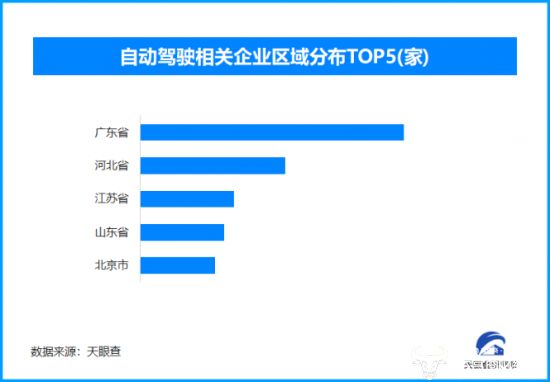
世界海拔最高无人驾矿卡测试成功 现存自动驾驶相关企业超8200家
Xin Lang Cai Jing· 2025-12-20 07:47
Group 1 - The core viewpoint of the article highlights the successful testing of the world's highest autonomous driving system at the Huoshaoyun lead-zinc mine in Xinjiang, which operates at an altitude of 5,700 meters, demonstrating the feasibility of unmanned transportation in extreme high-altitude environments [1] - The mine's harsh conditions, including only 50% oxygen levels compared to plains, strong winds, low temperatures, and high dust levels, make traditional manual driving labor-intensive and hazardous [1] - The introduction of the BeiDou navigation system and 5G communication technology has established a smart control platform that supports the operation of the autonomous driving system [1] Group 2 - The newly launched autonomous driving system integrates several core technologies suitable for plateau environments, enabling precise obstacle recognition, path planning, and driving control to navigate the mine's complex terrain [1] - The rapid development and application of autonomous driving technology have intensified industry competition, with a growing focus on corporate backgrounds and compliance [1] - According to Tianyancha's professional version of business information, there are currently over 8,200 autonomous driving-related companies in China, with Guangdong, Hebei, Jiangsu, Shandong, and Beijing leading in the number of such enterprises [1]
小马智行:Robotaxi实现单车盈利 轻资产模式重塑增长逻辑
Zheng Quan Shi Bao Wang· 2025-12-20 07:42
Core Insights - The company, Xiaoma Zhixing, has achieved single-vehicle profitability in Guangzhou, with daily revenue per vehicle reaching 299 yuan, and aims to expand its fleet to 1,000 vehicles by the end of 2025 and 3,000 by 2026 [2][3] - The company is leveraging a light-asset cooperation model to accelerate the commercialization of autonomous driving, moving from "technology validation" to "scale profitability" [2][4] - The seventh-generation Robotaxi has seen a 70% reduction in autonomous driving kit costs compared to the previous generation, supporting the company's profitability goals [3][6] Financial Performance - Daily average revenue per vehicle in Guangzhou is 299 yuan, with an average order volume of 23 orders per vehicle [3] - The company plans to achieve a fleet size of 10,000 vehicles by 2030, targeting a market share of 5%-10% in the domestic ride-hailing market [7][8] Technological Advancements - The seventh-generation Robotaxi features significant technological breakthroughs and cost optimizations, including a unified autonomous driving kit shared across multiple models [3][4] - The company employs a reinforcement learning framework to enhance the safety of its AI drivers, distinguishing itself from competitors relying on imitation learning [6][7] Market Strategy - Xiaoma Zhixing has become the first company in China to obtain autonomous demonstration operation licenses in major cities like Beijing, Shanghai, Guangzhou, and Shenzhen [4] - The light-asset cooperation model allows the company to share capital expenditures with partners, accelerating fleet expansion without bearing the full cost [5] Future Outlook - The company aims for a dual strategy of scale expansion and continuous cost optimization, with a projected 20% further reduction in autonomous driving kit costs by 2026 [7] - The focus will be on deepening market presence in first-tier cities while gradually penetrating second and third-tier cities through the light-asset model [7][8]
全球竞逐AI,阿布扎比不可忽视
Xin Lang Cai Jing· 2025-12-20 05:45
Core Insights - Abu Dhabi is positioning itself as a key player in the AI sector, leveraging its oil wealth to invest heavily in AI technologies and infrastructure [2][3][15] - The emirate aims to diversify its economy away from oil dependency, with a strategic focus on becoming a global hub for AI and advanced technologies [3][12][22] Investment and Economic Strategy - Abu Dhabi's sovereign wealth fund, Mubadala, invested over $57.6 billion in 2024, with a significant portion directed towards AI initiatives [3] - The UAE's AI strategy aims for AI to contribute up to 335 billion dirhams (approximately $91.1 billion) to the GDP by 2031, accounting for 20% of the non-oil economy [2][3] - Hub71, a tech incubator in Abu Dhabi, supported over 300 startups and facilitated approximately $2.17 billion in funding in 2024, marking a significant increase from previous years [15][16] AI Development and Talent Acquisition - Abu Dhabi has established the world's first Ministry of Artificial Intelligence and is actively recruiting global talent to support its AI ambitions [15][22] - The Advanced Technology Research Council (ATRC) has expanded rapidly, growing from zero to over 1,000 employees in less than four years, focusing on innovation and research in AI [10][11] - The emirate is promoting STEM education and launching initiatives like "AI for All" to enhance public understanding and skills in AI [12][22] Infrastructure and Innovation - Abu Dhabi is home to G42 and MGX, key players in the AI sector, focusing on AI infrastructure and advanced technologies [3][5] - The establishment of the Mohamed bin Zayed University of Artificial Intelligence (MBZUAI) and the first AI-focused undergraduate program at Khalifa University highlights the commitment to education in AI [6][13] - The emirate is also hosting events like the Abu Dhabi Smart and Autonomous Technology Week, showcasing its advancements in AI and robotics [14] International Collaboration and Market Expansion - Abu Dhabi is enhancing its ties with China, with a focus on AI, digital technology, and electric vehicles, aiming to attract Chinese companies to establish operations in the emirate [20][22] - The establishment of a $10 billion joint investment fund between China and the UAE reflects the growing economic partnership [20][22] - The emirate's strategic location facilitates access to global markets, making it an attractive hub for international businesses [21][22]
对话小马智行王皓俊:Robotaxi正进入1到1000的阶段
Hua Er Jie Jian Wen· 2025-12-20 05:31
Core Insights - The global autonomous driving industry is undergoing a paradigm shift, transitioning from experimental phases to tangible financial performance, with companies like Baidu and Pony.ai achieving operational profitability [2][4][11] - The competitive landscape for Robotaxi has evolved, focusing on profitability and operational efficiency as hardware costs decrease and AI reshapes operational rules [3][11] Commercialization Progress - Pony.ai's Robotaxi achieved unit economic model (UE) profitability in Guangzhou, indicating a successful transition from R&D to commercial viability [4][5] - The average daily revenue for Pony.ai's seventh-generation Robotaxi is approximately 299 RMB, with a target of 24 rides per day to ensure positive cash flow [4][5] - The company aims to scale its fleet to 1,000 vehicles by 2025, 3,000 by 2026, and 100,000 by 2030, integrating Robotaxi into daily life [2][11] Cost Management and Operational Efficiency - Significant cost reductions have been achieved, with the BOM cost of the seventh-generation vehicle dropping by 70% compared to the sixth generation [5][6] - The use of mass-produced components and optimized algorithms has enhanced operational efficiency, allowing for better performance with lower costs [5][6] - Insurance costs for Robotaxi are 50% lower than traditional taxis, reflecting the safety record of AI drivers [6] Industry Competition - The Robotaxi market is becoming increasingly competitive, with major players like Waymo and Tesla entering the fray, each adopting different strategies [8][10] - Waymo's recent funding round has pushed its valuation to nearly $100 billion, while Tesla is focusing on a low-cost, vision-based approach [8][10] - New entrants like XPeng and Hello are also planning to launch their own Robotaxi services, intensifying competition [9][10] Market Potential and Future Outlook - The Robotaxi market could reach $80 billion in major Chinese cities by 2030, with potential global market size reaching $3.94 trillion when including overseas markets [12] - As hardware costs decline, operational expenses will become a larger portion of the cost structure, emphasizing the importance of operational efficiency [12] - The industry is shifting from a focus on technology to one centered on operational capabilities and market presence [11][12] Strategic Shifts - Pony.ai is transitioning to a "light asset" model, partnering with vehicle manufacturers and service platforms to reduce capital expenditure [7][14] - The company is focusing on creating a value chain where it provides AI technology while others handle vehicle production and service distribution [7][14] - The emphasis is on building partnerships and leveraging local resources in international markets, particularly in the Middle East [6][18]