制造业

Search documents
2025年广西财政收支增速连续12个月“双增长”
Guang Xi Ri Bao· 2026-01-07 04:53
Group 1: Fiscal Policy and Budget - In 2025, the total general public budget revenue is projected to reach 192.05 billion, with a year-on-year growth of 4.6%, while expenditures are expected to be 674.218 billion, growing by 4.2% [1] - The region's fiscal departments are implementing a more proactive fiscal policy, achieving a continuous "double growth" in revenue and expenditure for 12 months, marking the first time in nearly six years [1] - Over 37.3 billion has been allocated to support major projects, including the Pinglu Canal and the Beibu Gulf International Gateway Port [1] Group 2: Economic Empowerment and Tax Policies - A series of tax reduction and fee reduction measures are expected to inject over 26 billion into the economy, with administrative fees decreasing by 13.9% year-on-year [2] - Financial support for enterprises includes over 115.1 billion in subsidized loans benefiting more than 44,000 businesses, reducing financing costs by over 1.2 billion [2] - The government investment guidance fund has facilitated investments in 147 enterprises, with a total of 23.114 billion in new capital contributions [2] Group 3: Social Welfare and Living Standards - In 2025, total spending on people's livelihoods is projected to be 539.235 billion, a year-on-year increase of 4.3%, accounting for 80% of general public budget expenditures [3] - Expenditures in key areas such as transportation, energy conservation, and social security have shown double-digit growth rates, indicating an improvement in the quality of life [3] - The scale of livelihood spending has reached a historical high, exceeding the previous peak by 22.3 billion [3]
爱沙尼亚2025年11月工业生产同比增长3.4%
Shang Wu Bu Wang Zhan· 2026-01-07 04:36
Core Insights - Estonia's industrial output increased by 3.4% year-on-year in November 2025, according to the Estonian Statistics Office [1] Group 1: Industry Performance - The mining sector experienced a significant growth of 10% year-on-year [1] - The manufacturing sector saw a growth of 4.5% year-on-year [1] - The energy sector, however, faced a decline of 8.7% year-on-year [1] Group 2: Manufacturing Sub-sectors - The production of motor vehicles, trailers, and semi-trailers surged by 57.7% year-on-year [1] - The computer and electronic equipment manufacturing sector grew by 4.4% year-on-year [1] - The wood processing industry recorded a modest growth of 1% year-on-year [1] - Conversely, the furniture manufacturing sector declined by 4.3% year-on-year [1] - The food manufacturing sector also saw a decrease of 4.1% year-on-year [1] - The metal products manufacturing sector experienced a slight decline of 0.7% year-on-year [1] - The electrical equipment manufacturing sector had a minimal decrease of 0.1% year-on-year [1]
上海奉贤区海归小镇运行一年,我院发布“凤至贤来”深度观察成果
Sou Hu Cai Jing· 2026-01-07 04:07
Core Insights - The article highlights the celebration of the first anniversary of the Fengxian Overseas Returnee Town and the release of a research report by the First Financial Research Institute, focusing on the development and support for returnee entrepreneurs and small businesses in the area [1][4]. Group 1: Overview of the Fengxian Overseas Returnee Town - The Fengxian Overseas Returnee Town is positioned as a hub for returnee entrepreneurs, providing various services and support to facilitate their integration and success in the local economy [4]. - The town aims to attract talent and businesses by offering initiatives such as the "Xianlai Wuyou Card" and "Xianlai Guesthouse," as well as creating a "15-minute overseas living circle" for returnees [4]. Group 2: Focus on Small and Medium Enterprises (SMEs) - SMEs are recognized as a vital source of economic vitality and resilience, with the First Financial Research Institute emphasizing their importance in policy improvement and economic analysis [2]. - The research institute has been collaborating with the Shanghai SME Development Service Center to focus on specialized and innovative small enterprises, leading to the publication of a book on Shanghai's "specialized and innovative small giants" [2]. Group 3: Insights from Interviews and Research - The research involved interviews with various stakeholders, including entrepreneurs and service providers in the Fengxian Overseas Returnee Town, revealing a strong sense of confidence and enthusiasm among returnees [3]. - Companies such as Puhuasen, Zhaosheng Sensor, and Huasheng Enhanced are highlighted for their innovative technologies in fields like AI imaging and sensor technology, showcasing the diverse industry presence within the town [3]. Group 4: Future Prospects and Development - The article expresses optimism about the potential for the Fengxian Overseas Returnee Town to nurture a new generation of returnee talent and drive advancements in China's biotechnology industry [4]. - The town is seen as a fertile ground for business development, with a commitment to supporting technological innovation and the intersection of biotechnology and AI [4].


2025年12月份全球制造业采购经理指数较上月微幅下降
Sou Hu Cai Jing· 2026-01-07 02:07
中新网1月7日电 据中国物流与采购联合会网站消息,中国物流与采购联合会发布,2025年12月份全球 制造业PMI为49.5%,较上月微幅下降0.1个百分点,连续10个月运行在49%-50%的区间内。2025年,全 球制造业PMI均值为49.6%,较2024年上升0.3个百分点。 表明2025年美国制造业复苏动能较2024年略有改善,但均值水平仍在49%以下,意味着美国制造业恢复 力度仍相对较弱。 展望2026年,美国银行全球研究预计,到2026年底,美国经济增速将维持在2%中段水平。值得警惕的 是,下行风险的累积仍需重点关注,美国政府停摆影响、就业市场的疲软以及关税政策推动商品价格持 续上涨等多重不利因素仍持续制约美国经济增长。近期美国消费者信心也进一步有所下降,2025年12月 消费者信心指数从11月修订后的92.9进一步下滑至89.1,连续第五个月走低,为今年4月以来的最低水 平,显示居民对经济前景的预期转弱。通胀方面,三季度核心美国PCE物价指数升至2.9%的高位,通胀 压力仍未完全消退,叠加劳动力市场的放缓,美联储未来决策复杂度增加,通胀反弹可能迫使降息进程 推迟或逆转,进而对整体经济复苏节奏产生连锁 ...
美国最新公布制造业指数创2024年10月以来新低
Huan Qiu Wang· 2026-01-07 01:14
【环球网财经综合报道】日前,美国公布的2025年12月经济数据显示,ISM制造业指数从48.2小幅下降至47.9,已连 续10个月低于50,并创下自2024年10月以来新低;新订单已连续第四个月收缩,出口订单仍然疲弱。就业人数连续 第11个月下降。 半岛电视台近日发文称,2025年美国经济经历了贸易紧张局势、关税加征和政府停摆的冲击,但消费支出强劲与人 工智能相关投资高位支撑了经济,人工智能成为经济增长支柱,投资驱动GDP增长。就业市场保持低失业率,但也 面临岗位增长放缓。 2026年,预计美联储将维持宽松货币政策,逐步减弱刺激政策,通胀将趋于美联储目标。科技股可能面临回调风 险,金融和房地产等行业有望受益。然而,美国经济的脆弱性仍受贸易政策、总统权力范围及全球贸易环境等风险 因素影响。 前美联储主席耶伦则在近日警告称,一种名为"财政主导"的情景正在酝酿,即庞大的债务规模可能迫使央行将利率 维持在低位以降低偿债成本,而非专注于遏制通胀。据美国国会预算办公室预计,美国赤字今年将达1.9万亿美元, 债务占GDP比重将升至100%并持续攀升。 ...
第二个“5万亿元”工业大市,呼之欲出
Mei Ri Jing Ji Xin Wen· 2026-01-06 23:48
Core Viewpoint - Suzhou aims to achieve an industrial output value of over 5 trillion yuan by 2026, marking a significant milestone in its industrial development, following Shenzhen's lead in reaching this target [1]. Group 1: Industrial Growth and AI Focus - Suzhou's industrial output is projected to reach 4.89 trillion yuan by 2025, with a target of exceeding 5 trillion yuan in 2026, indicating a consistent growth trajectory [1]. - The city has emphasized new industrialization and artificial intelligence (AI) in its annual meetings, showcasing a strategic focus on these sectors for future growth [1][3]. - The introduction of the "Ten Little Tigers" initiative highlights Suzhou's commitment to fostering AI enterprises, aiming to create a competitive environment similar to Hangzhou's "Six Little Dragons" [1][3][4]. Group 2: Competitive Landscape and Innovation - The competition between Suzhou and Hangzhou in the AI sector is intensifying, with Suzhou's "Ten Little Tigers" positioned against Hangzhou's established AI companies [3]. - Suzhou's historical industrial strengths, particularly in manufacturing, are being leveraged to enhance its AI capabilities, with a focus on integrating AI into traditional industries [6][8]. - The city plans to cultivate 150 industrial vertical models and establish 15 top-tier intelligent factories by 2026, aiming for an annual growth rate of over 20% in the smart economy sector [8]. Group 3: Strategic Development and Collaboration - Suzhou's strategy includes becoming a leading "One Person Company" (OPC) city, promoting the integration of AI with entrepreneurship to solve practical problems [5]. - The city is also focusing on enhancing its industrial internet capabilities, aiming to develop a complete industrial chain for AI applications [9]. - Collaboration with Shanghai is emphasized as a key strategy for industrial innovation, shifting from a model of "Shanghai R&D + Suzhou manufacturing" to a more integrated approach [10][11].
科技加速重塑价值链 资管大咖共话投资新愿景
Zhong Guo Zheng Quan Bao· 2026-01-06 20:42
Core Insights - The 2025 Overseas Investment Development Conference highlighted the complex investment landscape for 2026, driven by converging monetary and fiscal policies, technological advancements, and geopolitical changes [1][2] Group 1: Macro Economic Drivers - The driving forces of global asset pricing are shifting from a singular focus on monetary policy to a new phase where both monetary and fiscal policies play significant roles, influenced by rapid technological advancements [2] - Key factors affecting the market in 2026 include the divergence in monetary policies among major economies, particularly the expected interest rate changes by the Federal Reserve and the Bank of Japan [2][3] - Long-term trends such as global order adjustments, the AI technology revolution, and a weak dollar cycle will continue to shape the macroeconomic landscape for asset allocation [2][3] Group 2: Investment Opportunities - Three main investment opportunities identified include: 1. Fixed income investments driven by expected interest rate cuts by the Federal Reserve, potentially lowering rates by 50 to 100 basis points [3] 2. Emerging markets as a source of excess returns, benefiting from global monetary easing and internal demand recovery due to supply chain shifts [3] 3. Certainty in growth within the technology sector, particularly as AI applications begin to materialize in 2026 [3] - The Chinese manufacturing sector is poised for growth, presenting both risks and opportunities as companies expand internationally [3] Group 3: Risks and Market Dynamics - Two major risk factors highlighted include: 1. Policy expectation risk, where deviations from anticipated Federal Reserve rate cuts could lead to asset price corrections [4] 2. Geopolitical risks that could disrupt global energy and trade chains, impacting corporate profitability [4] - Market pricing reflects a consensus that requires respect, with a focus on the sustainability of AI valuations and the gradual improvement in real estate and consumer sectors [4] Group 4: AI Investment Strategies - 2026 is anticipated to be a pivotal year for AI applications, necessitating a reevaluation of investment strategies [5] - Key investment areas in the AI sector include energy, computing power (chips and data centers), large models, and application/data layers, with specific companies like Nvidia and Google highlighted for their leadership [5] - The concept of a "year of application" emphasizes the shift from AI model training to real-world applications, suggesting a potential structural revaluation in the market [5]
【环球财经】标普全球:土耳其制造业PMI回升 收缩态势趋缓
Xin Hua Cai Jing· 2026-01-06 16:59
在生产方面,制造业企业继续缩减产出,但降幅较11月明显放缓;就业小幅下降,采购活动亦呈现缓慢 回落。 调查还显示,受原材料价格上涨影响,企业投入成本显著上升,制造商相应上调销售价格。不过,成本 和出厂价格涨幅仍明显低于近年来的高位水平。 新华财经伊斯坦布尔1月6日电(记者许万虎)标普全球最新公布的调查数据显示,2025年12月土耳其制 造业活动收缩幅度进一步放缓,连续第二个月改善,显示年末制造业运行环境出现边际缓和。 据统计,由伊斯坦布尔工商会发布、标普全球编制的土耳其制造业采购经理指数(PMI)12月升至 48.9,高于11月的48.0,创近12个月以来新高。 调查显示,12月产出、新订单、就业及采购活动的下降幅度均有所收窄。其中,新订单降幅为2024年3 月以来最小,部分企业反映客户需求出现改善迹象,但新业务总量和出口订单仍处于回落状态。 标普全球市场情报经济学总监安德鲁·哈克表示,12月PMI升至一年高点,显示土耳其制造业在进入 2026年之际获得一定动能,为未来数月实现增长带来希望。 (文章来源:新华财经) ...
阿贝尔接棒巴菲特,伯克希尔将发生什么
2 1 Shi Ji Jing Ji Bao Dao· 2026-01-06 14:40
Core Insights - The transition of leadership at Berkshire Hathaway from Warren Buffett to Greg Abel marks the beginning of a new era, with Abel set to take over as CEO in 2026 as Buffett steps back at the age of 95 [1][4][5] - Berkshire Hathaway has achieved an astonishing total return of 5,502,284% from 1964 to 2024, significantly outperforming the S&P 500's return of 39,054% during the same period [1] - Abel is recognized for his effective management style and ability to take decisive actions, similar to Buffett, but he is expected to carve out his own path rather than replicate Buffett's investment success [2][12] Leadership Transition - Buffett has been at the helm of Berkshire Hathaway since 1965, transforming it from a textile company into a diversified investment holding company [4] - As Buffett ages, he has begun to step back from daily management, announcing his retirement in May 2025 while remaining as chairman [5][9] - Abel's management responsibilities will focus on overseeing the railroad, manufacturing, and energy sectors, while Ajit Jain will continue to manage the insurance business [7][12] Abel's Background and Achievements - Greg Abel, born in 1962, has a strong background in the energy sector, having led Berkshire Hathaway Energy to become one of the largest energy suppliers in the U.S. [11][12] - Under Abel's leadership, Berkshire Hathaway Energy's revenue grew from $2.3 billion in 1997 to $26.4 billion in 2022, with profits increasing from $139 million to $3.9 billion [12] - Abel has also played a key role in Berkshire's investments in Japan, establishing long-term partnerships with major trading companies [13] Market Reactions and Future Outlook - Following the announcement of Buffett's retirement, Berkshire's stock experienced a decline, reflecting investor concerns about the transition [16][17] - Analysts have mixed views on the future performance of Berkshire under Abel, with some expressing optimism about potential stock buybacks and increased investment activities, while others warn of challenges due to the company's size and performance pressures [16][17][19] - Berkshire's cash reserves have reached a record $381.7 billion, raising questions about how Abel will utilize these funds effectively [19] Investment Philosophy - Buffett has maintained a policy of not paying dividends, believing that reinvesting profits will create greater long-term value for shareholders [18] - The company has only paid a dividend once in its history, emphasizing a culture of reinvestment that has contributed to its remarkable growth [18] - Abel's approach may differ from Buffett's, with expectations that he will adopt a more hands-on management style while still respecting the autonomy of acquired companies [14][19]

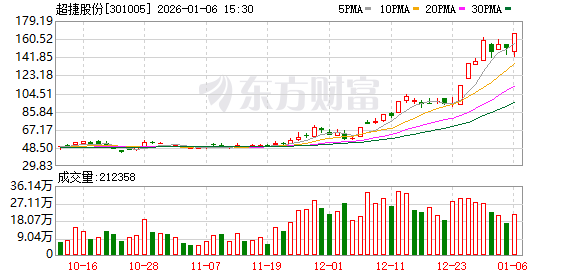
超捷股份:公司在2024年上半年完成铆接产线建设
Zheng Quan Ri Bao· 2026-01-06 13:40
Group 1 - The company, Chaojie Co., plans to complete the construction of its riveting production line in the first half of 2024, with an annual capacity of 10 million units [2] - The production line will provide products such as shell segments, fairings, and engine components [2] - The company can increase production capacity based on order demand, with a construction cycle of approximately 4 months [2]