投资银行

Search documents
瑞银王宗豪:料外资有望进一步流入中国股市
Zhi Tong Cai Jing· 2025-09-30 05:59
Core Insights - International asset management institutions are reassessing the investment value of the Chinese market, with a growing interest in Chinese stocks among global investors [1] - UBS's head of China equity strategy, Wang Zonghao, noted that many investors are increasingly optimistic about the market outlook [1] - The potential inflow of retail investor funds and strong market performance suggest that investors are unlikely to reduce their Chinese positions in the short term [1] Investment Trends - There remains an opportunity for further foreign capital inflow into the Chinese stock market [1] - The topic of "anti-involution" has been a focal point in discussions, with investors showing interest in China's AI/technology development and capital return prospects [1] - UBS's overweight stance on A-shares in the TMT (Technology, Media, and Telecommunications) sector and brokerage firms has garnered significant interest from investors [1]
高盛上调全球股票评级至 “增持” 年底前有望延续涨势
Huan Qiu Wang· 2025-09-30 03:03
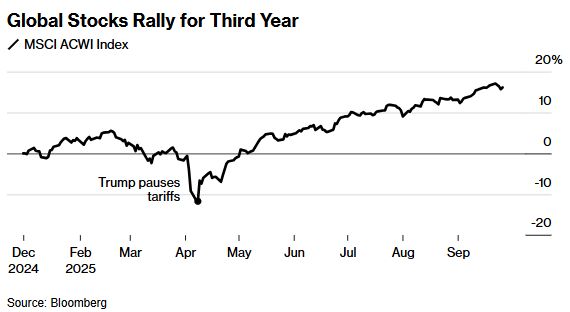
【环球网财经综合报道】美东时间周一,高盛在未来三个月展望中,将全球股票评级从 "中性" 上调至 "增持",核心依据包括全球经济势头持续改善、资产 估值具备吸引力,以及货币政策与财政政策的支持力度不断增强。 高盛进一步分析指出,历史数据显示,在经济周期末期的放缓阶段,若衰退风险维持低位且政策支持力度充足,股票市场往往会呈现良好表现,这一规律在 20 世纪 90 年代末与 60 年代中期的历史性反弹行情中均得到印证。 不过,高盛对全球信贷市场持谨慎态度,将未来三个月全球信贷前景从 "中性" 下调至 "减持"(即看空),认为经济周期后期的运行特征及估值过高,是当 前市场面临的主要阻力。 与此同时,高盛还将 12 个月展望中的现金评级下调至 "减持"(即看空),并发出警告:若美联储持续实施宽松政策,现金类资产的收益水平很可能在明年 进一步走低。(陈十一) 高盛分析师在报告中明确表示:"我们认为,良好的企业盈利增长、美联储实施宽松政策且不会引发经济衰退,加之全球财政政策宽松措施落地,将继续为 全球股市提供支撑。" 近期全球股市显著走高并创下历史新高,背后主要推动力是市场对美联储提前降息以规避经济衰退的乐观预期。当前,全 ...


高盛预警:年底前美股“金发姑娘”行情恐遭冲击
Feng Huang Wang· 2025-09-30 02:22
Core Viewpoint - Goldman Sachs warns that the "Goldilocks" market for U.S. stocks may face challenges before the end of the year, citing three potential risks: growth shock, interest rate shock, and a new dollar bear market [1][3]. Group 1: Market Conditions - The S&P 500 index is nearing historical highs, with valuations approaching levels seen during the internet bubble, raising concerns about a potential stock market bubble [1]. - Optimism surrounding artificial intelligence (AI) and technology companies continues to drive the U.S. stock market [1]. Group 2: Risks Identified - The "three bears" risks identified by Goldman Sachs include: - "Growth shock," which could arise from rising unemployment or disappointment with AI [2]. - "Interest rate shock," which refers to the possibility of the Federal Reserve not implementing further rate cuts [3]. - A "new dollar bear market," where the dollar could decline by 10%, negatively impacting foreign investment in U.S. stocks [3]. Group 3: Market Outlook - Despite the identified risks, Goldman Sachs emphasizes that these shocks have not yet materialized, and the short-term outlook remains stable [4]. - Comparisons have been made between the current S&P 500 index and the late 1990s internet bubble, suggesting that there may still be room for market gains before a potential downturn [4].
超6成私募表示将维持七成以上仓位,全球对冲基金加速买入A股
Huan Qiu Wang· 2025-09-30 02:17
Group 1 - The majority of private equity firms are optimistic about the A-share market post-holiday, with 65.38% of surveyed firms indicating they will maintain over 70% positions [1] - Technology growth sectors such as AI, semiconductors, humanoid robots, intelligent driving, and innovative pharmaceuticals remain the mainstream choice for nearly 60% of private equity firms [1] - Goldman Sachs reports that China is the largest market for net purchases by hedge funds in August, with a significant increase in A-share buying activity [1] Group 2 - Goldman Sachs has raised its target price for the CSI 300 index, suggesting a potential 10% upside over the next year [1] - The firm believes that the valuation of the Chinese stock market remains attractive, with major indices expected to maintain high single-digit growth in earnings over the next two years [1] - Morgan Stanley warns of isolated signs of overheating in the A-share market, emphasizing the need for improved corporate fundamentals and stronger policy support to sustain the upward trend [1] Group 3 - The China Securities Regulatory Commission has been guiding long-term funds such as insurance capital, social security funds, and pension funds into the market since last year, aiming to reduce market volatility and create a "slow bull" market similar to that of the US [2]
高盛分析师警告:美国经济可能重新加速 小心美联储货币政策转向
Zhi Tong Cai Jing· 2025-09-29 23:48
Group 1 - The core viewpoint of the report is that the U.S. economy is facing an increasing likelihood of re-acceleration, driven by resilient labor markets, expectations of fiscal stimulus, and a loose financial environment [1][2][6] - Key indicators show strong performance in the U.S. economy, with Goldman Sachs' U.S. Macro Economic Surprise Index recently surging and initial jobless claims providing positive signals [2] - The report identifies several factors contributing to this economic re-acceleration, including loose financial conditions, strong performance of risk assets, expectations of future rate cuts by the Federal Reserve, and a weaker dollar [3] Group 2 - Positive fiscal policy impulses are expected in the first half of next year, alongside continued capital expenditure growth in the artificial intelligence sector [4] - The U.S. consumer base remains solid, and the impact of deregulation should not be overlooked [5] - The combination of these favorable factors increases the likelihood of unexpected economic growth next year [6] Group 3 - The monetary policy path will significantly depend on the new Federal Reserve chair, with contrasting scenarios for 2025 and 2026 [7] - Current statements from Federal Reserve Chair Jerome Powell indicate that recent job growth is below the "breakeven" level, suggesting a path towards normalizing policy rates closer to neutral levels (3-3.5% range) [7][8] - Goldman Sachs' baseline scenario anticipates rate cuts of 25 basis points in October and December of this year [7] Group 4 - Two core questions arise regarding the Federal Reserve's actions: whether rates will be lowered below neutral levels even if the economy is healthy, and whether the Fed can raise rates during a potential Trump administration to counter economic overheating [8] - Two distinct trading strategies are proposed based on market expectations of the Federal Reserve's policy response: going long on U.S. long-term breakeven inflation rates, gold, and holding risk assets if low policy rates are expected, or anticipating a steeper U.S. Treasury yield curve if the Fed tightens policy in response to economic re-acceleration [9] - The current market measures of mid-2026 rate expectations indicate that the market has not fully priced in the risk of rate hikes, with the SFRM6/M8 spread hovering around -5 basis points [9]
中金缪延亮:国际货币体系新形势下人民币国际化的四条主线
中金点睛· 2025-09-29 23:35
Core Viewpoint - The article discusses the gradual internationalization of the Renminbi (RMB) since the 2015 exchange rate reform, emphasizing that the current level of RMB internationalization does not match China's economic and trade scale. It identifies four new trends in the international monetary system and proposes four main lines of action to accelerate RMB internationalization [2][48]. Group 1: New Trends in the International Monetary System - The article identifies four new trends: cracks in the credibility of the US dollar, the rise of Chinese manufacturing, the restructuring of global trade and monetary systems, and the emergence of digital and tokenized financial ecosystems [3][4][26]. - The credibility of the US dollar is weakening due to persistent fiscal deficits and high inflation, as well as the weaponization of its reserve currency status [9][10]. - Chinese manufacturing has maintained a leading position globally, with a significant share of global output and exports, and is moving up the value chain [16][17]. - The restructuring of global trade relationships is evident as the US imposes tariffs, leading to a decrease in its role as the final consumer and an increase in trade among non-US countries [27][28]. Group 2: Four Main Lines to Promote RMB Internationalization - The article suggests four main lines to promote RMB internationalization: expanding the supply of RMB-denominated safe assets, enhancing the settlement and pricing functions of RMB in commodity trade, coordinating onshore and offshore RMB markets, and utilizing digital RMB and tokenized RMB assets [5][48]. - Expanding the supply of RMB safe assets is crucial, as foreign holdings of Chinese government bonds are currently below 6%, and there is a need for more offshore RMB sovereign and quasi-sovereign debt [50][51]. - Enhancing the settlement and pricing functions of RMB in key commodities, such as lithium and LNG, is essential to increase the share of RMB in trade settlements [54][55]. - Coordinating onshore and offshore RMB markets can improve market stability and liquidity, while expanding the application scenarios for digital RMB can enhance its usage in cross-border transactions [6][63][71]. Group 3: Digital and Tokenized Financial Ecosystem - The rise of digital currencies, particularly central bank digital currencies (CBDCs), is reshaping the financial landscape, providing a bridge between traditional fiat currencies and digital assets [4][43]. - The digital RMB has seen significant adoption, with over 1.8 billion wallets opened and transactions exceeding 7.3 trillion RMB, indicating a growing acceptance of digital currencies [43][72]. - Tokenization of traditional financial assets is on the rise, with initiatives to issue tokenized government bonds and other assets, creating a comprehensive digital financial ecosystem [46][72].

Markets likely to steadily broaden out in 2026, says Piper Sandler's Kantrowitz
Youtube· 2025-09-29 17:41
Core Viewpoint - The market is at a significant cyclical turning point, with expectations of broadening participation rather than a booming market, indicating a potential shift in earnings growth across various sectors [1][2]. Economic Indicators - The macroeconomic environment has shown signs of improvement, with housing and manufacturing data indicating a potential upward trend after a prolonged period of stagnation [3][4]. - Interest rates have stabilized and begun to drift down, which is expected to positively influence anticipatory economic indicators [6][5]. Market Dynamics - The concept of a broadening market suggests an inclusion of various sectors rather than a mere rotation out of technology, with large-cap growth remaining significant [7][8]. - The current labor market conditions have alleviated inflation fears, contributing to a favorable environment for interest rate cuts by the Federal Reserve [8][10]. Historical Context - The current economic backdrop resembles a "Goldilocks" scenario, where both the unemployment rate and stock market have been rising together, a rare occurrence in historical terms [11]. Investor Sentiment - There is a diminishing impact of market fears, with investors becoming more resilient to uncertainties such as tariffs, indicating a shift in market behavior towards a more reactive stance [12][13].

高盛分析师警告:美国经济可能重新加速,小心美联储货币政策转向
Zhi Tong Cai Jing· 2025-09-29 13:47
Group 1 - The possibility of a re-acceleration in the U.S. economy is increasing, driven by a resilient labor market, expectations of fiscal stimulus, and a loose financial environment [1][2] - The U.S. macroeconomic surprise index has significantly risen, and initial jobless claims have shown encouraging results, with a projected Q3 GDP annualized growth rate of 2.6% [2][6] - Key factors contributing to this economic outlook include loose financial conditions, positive fiscal policies, and a solid consumer base [3][4][5] Group 2 - The monetary policy path of the Federal Reserve will be influenced by the new chairperson, with differing scenarios for 2025 and 2026 [7][8] - Current employment growth is below the "breakeven" level, suggesting a potential normalization of policy rates closer to neutral levels (3-3.5%) [7] - Two distinct trading strategies are proposed based on market expectations of the Fed's response to economic re-acceleration, including long positions in U.S. long-term breakeven inflation rates and gold if rates remain low, or a steeper yield curve if the Fed tightens policy [8]
经济韧性降低衰退风险,高盛称美股应"逢跌买入"直至年末
Hua Er Jie Jian Wen· 2025-09-29 12:18
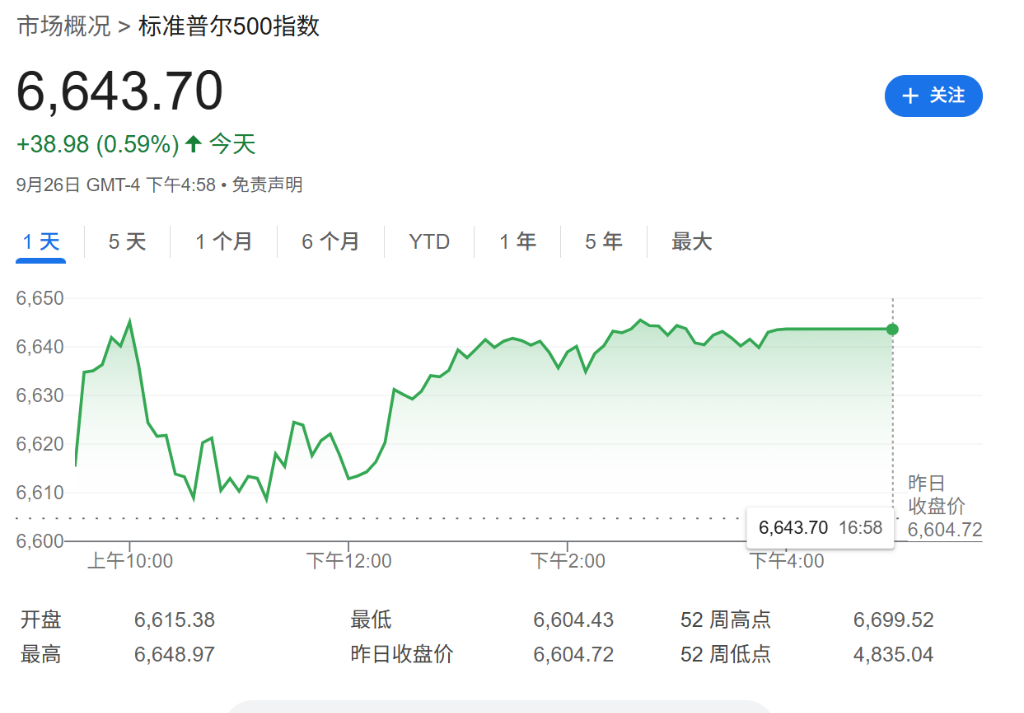
Group 1 - The core viewpoint of Goldman Sachs' strategist team is that global stock markets are expected to continue their upward trend before the end of the year, supported by U.S. economic resilience, favorable valuation levels, and a dovish shift from the Federal Reserve, recommending investors adopt a "buy on dips" strategy for stocks [1][2] - Goldman Sachs has upgraded its rating for U.S. stocks to "overweight" for a three-month horizon, citing strong earnings growth, the Fed's accommodative policy without triggering a recession, and global fiscal policy easing as key reasons [1][2] - The optimistic outlook aligns with current market sentiment, driven by expectations of timely rate cuts by the Fed to avoid economic recession and the boost from the AI boom for tech giants, leading global stock markets to reach historical highs [1][2] Group 2 - Goldman Sachs maintains a bullish outlook for stocks over the next 12 months, despite downgrading its credit rating from neutral to underweight, indicating that while stock valuations may exceed current levels, this poses constraints on credit [1][5] - The macro environment is deemed favorable for the stock market, with policy support identified as a key driver for stock price increases amid manageable recession risks [2] - The S&P 500 index target has been raised to 6,800 points, suggesting an additional upside of approximately 2% [2] Group 3 - Despite the bullish short-term recommendations, Goldman Sachs warns of existing risks in the market, including potential unexpected shocks to economic growth or interest rates, urging investors to remain vigilant [6] - The upcoming earnings season is expected to provide important insights, with analysts projecting a 7.1% year-over-year growth in S&P 500 constituent earnings for Q3, marking the smallest increase in two years, which may challenge market expectations [6] - The importance of diversification in investment strategies is emphasized, with a preference for international market diversification and maintaining a neutral stance across different regions to avoid concentrated risk exposure [6]
高盛:上调全球股市评级至“增持”,年底前有望延续涨势
Zhi Tong Cai Jing· 2025-09-29 11:19
Group 1 - Goldman Sachs strategists believe that global stock markets are likely to continue their upward trend until the end of the year, supported by the resilience of the US economy, strong valuations, and dovish signals from the Federal Reserve [1] - The strategy team, led by Christian Mueller-Glissmann, has upgraded their stock allocation rating to "overweight" for the next three months, citing strong earnings growth and a lack of recession backdrop as key factors [1] - The team suggests buying on market pullbacks before the end of the year, as recession risks are considered stable and manageable [1] Group 2 - Optimistic expectations regarding the Federal Reserve's timely interest rate cuts to avoid recession have driven global stock markets to historical highs, with Goldman Sachs raising its S&P 500 index target to 6800 points, anticipating a further 2% increase in the next three months [3] - Analysts expect a 7.1% year-on-year increase in S&P 500 component earnings for Q3, marking the smallest growth in two years, as the focus shifts to the upcoming earnings season [3] - Goldman Sachs warns of potential risks from growth falling short of expectations or interest rate fluctuations in the short term, while maintaining a "neutral" stance on regional allocation and recommending international asset diversification to mitigate risks [3]