体育娱乐

Search documents
麦迪逊广场花园体育公司批准探索可能分拆业务的计划后,盘前股价上涨10.3%。
Xin Lang Cai Jing· 2026-02-18 13:21
Core Viewpoint - Madison Square Garden Sports Corp. has approved a plan to explore a potential business spin-off, leading to a 10.3% increase in pre-market stock price [1] Group 1 - The company is considering a strategic move to potentially separate its business operations [1] - The approval of the spin-off exploration indicates a shift in the company's strategic focus [1] - The market reacted positively to the news, as evidenced by the significant rise in stock price [1]

2026年一季度中国经济观察报告-毕马威
Sou Hu Cai Jing· 2026-02-12 06:22
Economic Overview - In 2025, China's economy reached a total of 140 trillion yuan, with a real GDP growth of 5.0%, achieving the target set at the beginning of the year. The GDP growth rate for the fourth quarter was 4.5%, down 0.3 percentage points from the third quarter, with external demand being the main support while consumption and investment remained weak [1][15][30] - The economic landscape showed four distinct divergences: supply-demand, internal-external demand, new-old momentum, and macro data versus micro perception. Traditional industries faced demand losses and slow capacity clearance, leading to supply-demand mismatches that affected prices and corporate profits [1][31] Investment Trends - Fixed asset investment in 2025 saw a historic decline of 3.8%, marking the first annual negative growth since records began. In the fourth quarter, investment dropped by 12.8%, significantly worse than the 6.2% decline in the third quarter. Real estate, infrastructure, and manufacturing investments all saw substantial declines [19][50] - The government is expected to implement policies to stabilize and support investment, with a focus on "investing in people" and encouraging private investment. The manufacturing sector is anticipated to see marginal improvements due to the "14th Five-Year Plan" emphasizing technological innovation and industrial upgrades [2][51][60] Consumption Insights - The total retail sales of consumer goods in 2025 grew by 3.7%, with a notable decline of 1.8% in the fourth quarter, marking the first quarterly negative growth since 2023. However, service consumption and self-indulgent consumption showed resilience, with service consumption growth reaching 5.5% [18][37] - The consumption market is expected to continue its shift towards new and quality-driven consumption, with policies aimed at promoting green, intelligent, and elderly-friendly consumption [2][18] Export Performance - Exports in 2025 increased by 5.5%, with a trade surplus of nearly 1.2 trillion USD, a historical high. High-end manufacturing emerged as the core driver of exports, supported by strong demand from ASEAN, Africa, India, and other regions [21][30] - The government aims to address trade imbalances and enhance the quality of exports while navigating the challenges posed by global trade protectionism [21][30] Fiscal Policy - Public fiscal revenue in 2025 decreased by 1.7%, falling short of the initial budget growth target of 0.1%. Public expenditure growth was only 1.0%, the lowest completion rate on record at 96.8% of the budget [22][65] - The government plans to increase fiscal support for infrastructure and social welfare, with a focus on stabilizing investment and consumption in 2026 [22][65] Monetary Policy - In 2025, monetary policy was characterized by moderate easing, with a total of 50 basis points in reserve requirement ratio cuts and 10 basis points in interest rate cuts. The focus for 2026 will be on stabilizing expectations and promoting transformation [23][60] - The central bank is expected to maintain a flexible and effective monetary policy, with potential further cuts in interest rates and reserve requirements to support economic recovery [23][60]


美日中消费演进启示录:下一站,风起服务消费
Shenwan Hongyuan Securities· 2026-02-10 06:11
Group 1: Core Insights - The report emphasizes that China's consumption market potential lies not only in income growth but also in the effective release of consumption scenarios and time, with current policies addressing constraints in holiday optimization and work time regulations [3] - The evolution of consumption patterns in the U.S., Japan, and China shows a clear transition from "survival" to "experience" consumption, with China's service consumption significantly lower than that of developed countries [3][10] - The report identifies three core variables driving consumption changes: economic development stage, demographic shifts, and technological innovation, highlighting the structural transformation of consumer preferences in China [3][12] Group 2: Historical Consumption Evolution - The U.S. consumption history from the 1970s to the present reflects a shift from practical consumption during crises to brand-driven consumption, rational consumption, and experience-oriented consumption, culminating in technology-enabled and social consumption [10][11] - Japan's consumption evolution post-World War II transitioned from durable goods to quality and luxury consumption, followed by a rational return and the emergence of the "silver economy" due to aging demographics [18][20] - China's consumption history since 1978 has progressed from policy-driven practical consumption to brand consumption, and now to a blend of rational and self-indulgent consumption, with a notable rise of domestic brands [23] Group 3: Current Market Analysis - The A-share consumption sector has seen significant price adjustments, with stock prices declining by 40%-70% since 2021, indicating a potential for long-term investment opportunities as market sentiment begins to recover [3][6] - The report suggests that the consumption sector is currently undervalued, with low profitability and low holdings, presenting a significant expectation gap compared to the technology sector [3][6] - Service consumption is highlighted as a key area for alpha returns, with structural highlights in sectors such as cultural tourism, sports, emotional value, and beauty, indicating a potential for independent alpha performance among core companies in these fields [3][6]
去年我国对外直接投资比上年增长7.1%
Xin Lang Cai Jing· 2026-01-22 18:09
Group 1: China's Foreign Investment - As of the end of 2025, China will have established over 50,000 enterprises abroad, spanning 190 countries and regions, maintaining a top-three position in global foreign investment stock for nine consecutive years [1] - China's foreign direct investment is projected to reach $174.38 billion in 2025, representing a 7.1% increase from the previous year, solidifying its leading position globally [1] - Chinese enterprises are actively fulfilling social responsibilities, creating over 2 million jobs annually and investing in various public facilities, earning widespread praise from host countries [1] Group 2: Consumer Market Trends - In 2025, the number of consumers purchasing first-level energy-efficient or water-efficient appliances increased by 20%, with smart glasses, smartwatches, and smart bands each growing over 40% [2] - The retail sales of consumer goods in China reached 50.1 trillion yuan in 2025, marking a 3.7% growth, with retail goods sales increasing by 3.8% and dining revenue growing by 3.2% [2] - Final consumption expenditure contributed 52% to economic growth, continuing to serve as a primary engine for economic development [2] Group 3: Response to EU Regulations - The Chinese government expressed serious concerns regarding the EU's recent decision to classify certain Chinese companies as high-risk suppliers, which is seen as discriminatory [3] - Chinese enterprises have been operating in Europe in compliance with laws, providing quality products and services that support the development of the European telecommunications and digital industries [3] - The Chinese government opposes the EU's use of non-technical standards to restrict market access for Chinese companies, arguing that such actions distort competition and threaten supply chain security in the digital industry [3]
商务部:2025年我国消费市场规模与质量实现双提升
Zheng Quan Ri Bao· 2026-01-22 16:13
Group 1 - The core viewpoint of the article emphasizes the stable development of China's consumption market in 2025, highlighting a dual improvement in scale and quality, with significant advantages of a super-large market [1] Group 2 - In 2025, the total retail sales of social consumer goods will exceed 50 trillion yuan for the first time, reaching 50.1 trillion yuan, with a growth rate of 3.7%, and final consumption expenditure contributing 52% to economic growth [1] - The implementation of the old-for-new consumption policy will drive related sales to 2.61 trillion yuan, benefiting 366 million people [1] - Retail sales of major household appliances, furniture, cultural office supplies, and communication equipment will grow by 11%, 14.6%, 17.3%, and 20.9% respectively [1] - New types of consumption, such as green and smart products, are thriving, with retail sales of new energy vehicles growing by 17.6%, and by the end of 2025, 6 out of every 10 passenger cars sold will be new energy vehicles [1] - The number of consumers purchasing first-level energy-efficient or water-efficient appliances will increase by 20% compared to the previous year, with smart glasses, smartwatches, and smart bands each growing over 40% [1] - Retail sales of health-related products, including sports and entertainment goods, will grow by 15.7% [1] Group 3 - In terms of foreign investment, Chinese enterprises will maintain healthy and orderly development, with over 50,000 companies established abroad across 190 countries and regions by the end of 2025 [2] - The stock of foreign direct investment will remain among the top three in the world for nine consecutive years, with a direct investment of 174.38 billion USD in 2025, an increase of 7.1% from the previous year [2] - Chinese enterprises "going out" are actively fulfilling social responsibilities, creating over 2 million jobs annually and contributing to the construction of education, health, and environmental facilities, earning widespread praise from host countries [2]
商务部:下一步将坚持惠民生和促消费紧密结合 不断释放消费潜力活力
智通财经网· 2026-01-22 08:33
Core Insights - The Chinese consumption market is expected to maintain steady growth in 2025, with both scale and quality improvements, highlighted by a retail sales total exceeding 50 trillion yuan for the first time, reaching 50.1 trillion yuan, a 3.7% increase from the previous year, contributing 52% to economic growth [1][4][5] Group 1: Consumption Market Characteristics - Expansion: The retail sales of consumer goods will surpass 50 trillion yuan, marking a significant milestone with a growth rate of 3.7% year-on-year [1][4] - Benefits to the Public: The implementation of the old-for-new consumption policy led to sales of 2.61 trillion yuan, benefiting 366 million people [1][4] - Quality Improvement: New consumption trends such as green and smart products are thriving, with retail sales of new energy vehicles increasing by 17.6%, and the penetration rate expected to reach 60% by the end of 2025 [1][5] Group 2: Future Initiatives - The Ministry of Commerce will continue to combine policies and activities to stimulate consumption and release consumer potential [2][5]
2025年杭州经济成绩单“出炉”
Mei Ri Shang Bao· 2026-01-21 22:31
Economic Overview - In 2025, Hangzhou's GDP reached 23,011 billion yuan, growing by 5.2% year-on-year, surpassing the national average by 0.2% [1] Agriculture - The total output value of agriculture, forestry, animal husbandry, and fishery in Hangzhou was 569 billion yuan, with growth rates of 3.8% for planting, 5.3% for forestry, 0.2% for animal husbandry, and 4.2% for fishery [2] - Major agricultural products included a total grain output of 599,000 tons (up 3.9%), vegetable output of 3,860,000 tons (up 3.6%), and fruit output of 900,000 tons (up 3.9%) [2] Industrial Growth - The added value of industrial enterprises above designated size was 4,624 billion yuan, with significant growth in the computer, communication, and other electronic equipment manufacturing (up 13.4%) and automotive manufacturing (up 36.7%) [3] - New quality productivity showed remarkable results, with high-tech industries, strategic emerging industries, and high-end equipment manufacturing growing by 7.5%, 10.0%, and 9.5% respectively [3] - Production of new energy vehicles, industrial robots, and 3D printing equipment saw explosive growth rates of 383.0%, 38.6%, and 15.1% respectively [3] Service Sector - The added value of the service industry was 16,997 billion yuan, with the profit-making service sector growing by 7.0% and financial services by 6.4% [4] - From January to November, the revenue of the service industry above designated size reached 21,168 billion yuan, growing by 8.1%, with the information transmission, software, and IT services sector growing by 13.4% [4] Consumer Market - The total retail sales of consumer goods in Hangzhou reached 9,499 billion yuan, indicating a stable and upgrading consumption pattern [5] - The "8+4" economic policy led to significant growth in retail sales of household appliances (up 42.8%) and communication equipment (up 31.4%) [5] - Upgrading consumption demands were strong, with sports and entertainment goods growing by 45.3% and cosmetics by 12.3% [5] Foreign Trade - The total import and export value was 9,072 billion yuan, with exports at 6,469 billion yuan and imports at 2,603 billion yuan [6] - The export of electromechanical products reached 3,107 billion yuan (up 10.9%), and high-tech products reached 1,001 billion yuan (up 9.9%) [6] - The private economy accounted for 77.0% of total exports, with exports to Belt and Road countries growing by 14.1% [6] Living Standards - The per capita disposable income of residents was 80,017 yuan, with balanced growth across four income sources [7] - Urban residents had a per capita disposable income of 86,640 yuan (up 3.9%), while rural residents had 53,565 yuan (up 5.4%), narrowing the income gap to 1.62 [7] Price Stability - In 2025, the consumer price index remained stable compared to the previous year, with six categories of goods experiencing price increases and two categories seeing declines [8] - Hangzhou aims to achieve a GDP of 30 trillion yuan and a per capita GDP of over 30,000 USD by 2030, focusing on policy coordination and market demand stimulation [8]
突破50万亿元!超大规模市场优势持续显现
Yang Shi Xin Wen· 2026-01-21 04:06
Group 1 - The total retail sales of consumer goods in 2025 reached 50.1 trillion yuan, with a growth rate of 3.7%. The contribution rate of final consumption expenditure to economic growth was 52%, highlighting its role as a main engine for economic development [1] - The retail sales of durable goods showed a positive trend, with the sales from trade-in programs reaching 2.61 trillion yuan, benefiting 366 million people. The retail volume of passenger cars reached 23.74 million units, growing by 3.8%, with a penetration rate of 53.9% for new energy vehicles [1] - Retail sales of home appliances exceeded 1.17 trillion yuan, growing by 11%, while retail sales of communication equipment, cultural and office supplies, and furniture grew by 20.9%, 17.3%, and 14.6% respectively [1] Group 2 - The retail sales of daily consumer goods grew steadily, with retail sales of grain and oil food increasing by 9.3%. Health-conscious consumption became mainstream, with organic and green agricultural products gaining popularity [2] - Retail sales of sports and entertainment products grew by 15.7%, driven by high demand for ice and snow sports, hiking, and cycling equipment. Sales of smart glasses, smartwatches, and smart bands increased by over 40% [2] - The retail sales of cosmetics grew by 5.1%, influenced by Eastern aesthetics, while gold and silver jewelry sales increased by 12.8%, reflecting consumer preference for products that blend traditional cultural elements with modern design [2] Group 3 - The release of new products in the smart connected vehicle and smartphone sectors stimulated consumer activity. Domestic brands gained popularity, with collaborations between traditional brands and new consumption brands creating innovative products and experiences [2] - The "IP + consumption" trend thrived, with sales of movie merchandise during the summer season doubling year-on-year, leading to a surge in consumer interest [2]
商务部:2025年社会消费品零售总额突破50万亿元
Zhong Guo Xin Wen Wang· 2026-01-21 03:43
Group 1 - The core viewpoint of the articles emphasizes the significant growth in consumer spending and the successful implementation of consumption-boosting initiatives in China, particularly in the context of the "14th Five-Year Plan" [1][2][3] Group 2 - In 2025, the total retail sales of social consumer goods reached 50.1 trillion yuan, with a growth rate of 3.7%. Retail sales of goods increased by 3.8%, while catering revenue grew by 3.2%. Final consumption expenditure contributed 52% to economic growth, reinforcing its role as a primary engine for economic development [1] - The consumption of durable goods showed a positive trend, with the sales driven by the "old for new" consumption initiative reaching 2.61 trillion yuan, benefiting 366 million people. The retail volume of passenger vehicles reached 23.744 million units, growing by 3.8%, with the penetration rate of new energy vehicles at 53.9% [1] - Retail sales of home appliances exceeded 1.17 trillion yuan, marking an 11% increase, while sales of communication equipment, cultural office supplies, and furniture grew by 20.9%, 17.3%, and 14.6% respectively [1] - Daily consumer goods maintained stable growth, with retail sales of grain and oil food increasing by 9.3%. Health-conscious consumption became mainstream, with organic and green agricultural products gaining popularity [2] - Retail sales of clothing, shoes, and textiles grew by 3.2%, with new styles like Hanfu and "Ma Mian Qun" gaining traction. Daily necessities saw a growth of 6.3% [2] - Demand for upgraded products surged, with retail sales of sports and entertainment goods increasing by 15.7%. Sales of smart glasses, smartwatches, and smart bands grew by over 40% [2] - The jewelry retail sector saw a growth of 12.8%, with products that blend traditional cultural elements and modern design being favored by consumers [2] - The release of new products in sectors like smart connected vehicles and smartphones invigorated the economy, with domestic brands gaining popularity through innovative collaborations [2]
来奥园龙形水系冰场,感受冰上运动的快乐
Bei Jing Ri Bao Ke Hu Duan· 2026-01-11 08:25
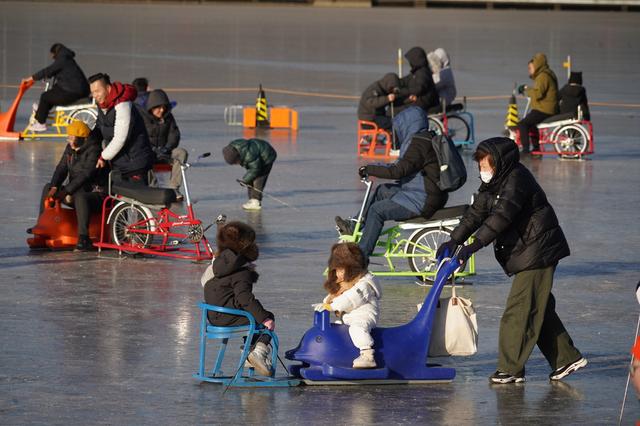
Group 1 - The core viewpoint of the article highlights the expansion of the Aoyuan Longxing Water System Ice Rink to include Lakes 1-9, making it one of the largest natural ice rinks in northern Beijing with a total operating area of approximately 60,000 square meters [1] - The ice rink features various ice entertainment options such as single and double ice cars, ice bicycles, and Bobby ice cars, catering to a wide range of visitors [1] - A new night experience has been introduced, with Zone 6 open until 21:00, allowing visitors to enjoy the night views of the Bird's Nest and Olympic Tower, enhancing the photo opportunities [1]