
厨具

Search documents
“圩镇客厅”迎客,“龙甫制造”通全球|广货行天下
Nan Fang Nong Cun Bao· 2026-02-11 12:31
Core Viewpoint - Longfu Town is emerging as a significant player in the global manufacturing landscape, supported by local government initiatives that enhance service and innovation in the industry [6][7]. Group 1: Manufacturing and Export - Longfu Town's manufacturing enterprises are capturing global market shares in niche sectors, with products being shipped worldwide [6][7]. - Four Seasons Electronics, a top PCB manufacturer, anticipates a production value breakthrough of 2 to 3 billion yuan this year, having established a production base in Thailand [12][14]. - Guangdong Ouliya Chemical's glass adhesive products have a balanced domestic and international sales ratio, with annual exports around 80 million yuan, reaching over 130 countries [17][20][22]. - Zhaoqing Yigaowei Kitchen Technology's enameled cast iron pots primarily export to the U.S., with an annual export value of approximately 40 million yuan [23]. - Zhaoqing Chuangfu New Materials Technology's exports grew over 400% last year, reaching over 57 million yuan, supported by over 130 patents [30][32]. Group 2: Government Support and Innovation - The "Xizhen Living Room" serves as a physical representation of government-enterprise collaboration, streamlining the process of attracting investment and providing services [8][10]. - The operational model of the "Xizhen Living Room" reflects the government's innovative service approach, facilitating partnerships with local companies for urban management and monitoring services [39][42]. - Longfu Town has been recognized nationally, ranking 45 places higher in the "Thousand Strong Towns" list over three years, with 63 industrial enterprises [46][48].


瑞德设计(831248):与宁波方太厨具有限公司签订2026年《技术服务合同》
Mei Ri Jing Ji Xin Wen· 2026-02-05 09:00
Core Viewpoint - Red Design announced a technical service contract with Ningbo Fotile Kitchenware Co., Ltd. for a total amount of RMB 20.3 million, indicating a significant business engagement with an associated party [1] Group 1 - The contract is set for the year 2026, highlighting a long-term collaboration between the two companies [1] - The transaction is classified as a related party transaction, which may have implications for corporate governance and financial reporting [1]
临淄农商银行:以金融力量赋能地方经济高质量发展
Qi Lu Wan Bao· 2026-01-28 06:59
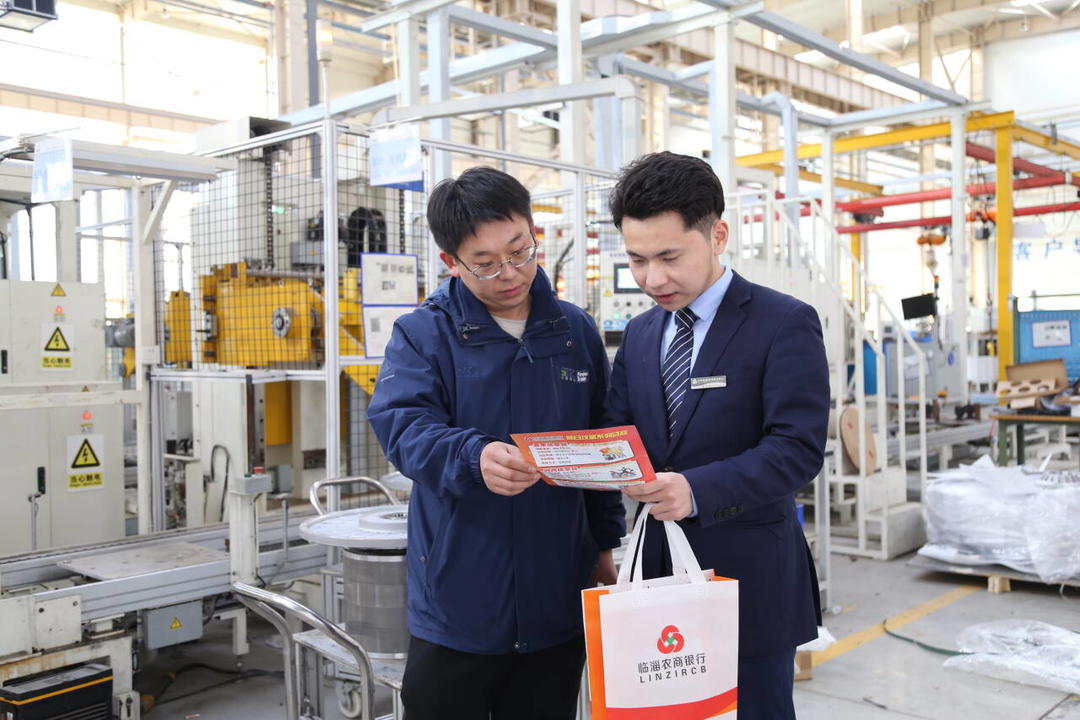
Core Insights - A profound transformation driven by financial innovation is taking place in Linzi, with Linzi Rural Commercial Bank playing a crucial role in providing funding and innovative services to support the high-quality development of the local economy [1] Group 1: Financial Products and Services - Linzi Rural Commercial Bank adopts a "one town, one product, one village, one feature" approach, conducting in-depth research on local industries to create a distinctive credit product system [3] - The bank has launched products like "Chef Easy Loan" and "Micro Loan" to support 189 clients in the kitchen equipment industry, disbursing loans totaling 96.89 million yuan [3] - In areas focused on vegetable cultivation, products such as "Planting Enjoyment Loan" provide timely financial support to greenhouse farmers, fostering a symbiotic relationship between finance and industry [3] Group 2: Support for Technology Enterprises - The bank targets technology enterprises characterized by "light assets and high growth," offering innovative financial products like "Technology Achievement Transformation Loan" and "Talent Loan" to meet their unique financing needs [4] - For Shandong Meiling Chemical Equipment Co., the bank provided over 9 million yuan through a "Technical Transformation Special Loan" to address funding gaps for their smart factory project, moving beyond traditional collateral requirements [4] - The outstanding loan balance for technology enterprises has exceeded 1.2 billion yuan, positioning the bank as an essential driver of regional technological innovation [4] Group 3: Collaborative Financial Ecosystem - Linzi Rural Commercial Bank collaborates with various departments, including the provincial agricultural guarantee company and agricultural rural bureau, to create strategic partnerships that address financing challenges [5] - The bank's collaborative model, which includes "bank + guarantee + supervisory department," effectively alleviates issues related to financing difficulties and high costs for agricultural operators and entrepreneurs [5] - Looking ahead, the bank aims to continue leveraging innovation to provide smarter and more precise financial services, contributing to the construction of a modern industrial system in Linzi [5]
广货出圈正当时!新春前后江门将打造超50场重点促消费活动
Nan Fang Du Shi Bao· 2026-01-28 03:02
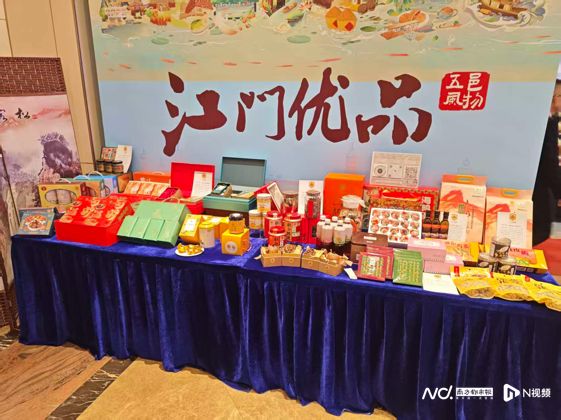
Group 1 - Jiangmen is organizing over 50 key promotional consumption activities to boost local products and enhance consumer engagement during the Spring Festival [1] - The "Guanghuo Goes Global" theme aims to promote Jiangmen's unique products, including coffee and local specialties, through various platforms [1] - The overseas Chinese community is actively participating in these events, showcasing Jiangmen's products to over 300 representatives from different countries [1] Group 2 - The Jianghai Quality Products New Year Festival introduces an innovative "time-slot" shopping model, bringing convenience to local consumers and promoting local brands [3] - This initiative aims to meet the New Year shopping needs of the public while expanding the distribution channels for Jianghai quality products [3] Group 3 - The Kaiping Gourmet Culture Week will feature over 120 national brands, creating a unique culinary experience that highlights local flavors [5] - This event is designed to attract food enthusiasts and promote Jiangmen's culinary offerings as a significant part of Guangdong's food landscape [5] Group 4 - The Taishan New Spring Festival will take place from February 9 to 18, focusing on a one-stop shopping experience that combines cultural elements and recreational activities [7] - The event will feature various stalls showcasing local products and daily performances, enhancing consumer engagement and promoting Taishan's unique offerings [7] Group 5 - The Fourth China Qiaodu (Jiangmen) Coffee Festival will occur from March 5 to 8, featuring over 200 coffee brands and aiming to elevate the event's brand influence [9] - Jiangmen is positioned as a national coffee roasting export base and a global coffee equipment production hub, using the festival to showcase its coffee products [9] Group 6 - Jiangmen is leveraging diverse promotional activities to enrich consumer experiences and enhance the visibility of quality local products [11] - The focus is on creating varied consumption scenarios and improving the overall quality of consumer experiences [11]
广东江门50场重点促消费活动助侨乡广货“出圈”
Sou Hu Cai Jing· 2026-01-27 16:17
Core Viewpoint - Jiangmen is focusing on the theme "Guangdong Goods Going Global" by organizing over 50 key consumer promotion events to enhance local products and cultural experiences, aiming to expand their market reach beyond Jiangmen [1][3] Group 1: Consumer Promotion Activities - Jiangmen will host a series of events including overseas Chinese gatherings, New Year markets, agricultural product feasts, and coffee industry festivals to promote local specialties [1] - The Jianghai District is innovating a "time-slot" consumer model for the Jianghai Quality New Year Festival, bringing convenience markets to key factories and government canteens, thus meeting the public's New Year shopping needs [1] Group 2: Upcoming Events - From January 29 to February 1, the Kaiping Gourmet Culture Week will take place, featuring over 120 national brands to create a unique culinary experience [3] - The "Qiaoyun New Year · Fortune in Taishan" event will run from February 9 to 18, combining overseas Chinese culture, New Year customs, and sports activities to provide a comprehensive consumer experience [3] - The Fourth China Qiaodu (Jiangmen) Coffee Festival will be held from March 5 to 8, showcasing over 200 coffee brands and positioning Jiangmen as a key player in the coffee industry [3]
2026年,滨州将着力塑强“6638N”现代产业集群优势
Qi Lu Wan Bao· 2026-01-20 09:00
Group 1 - The core focus of Binzhou's development strategy is to strengthen the real economy by enhancing the "6638N" modern industrial cluster and building a more recognizable modern industrial system by 2026 [1] Group 2 - Traditional industries will be upgraded through high-quality development actions in key manufacturing sectors, with a focus on 45 major projects to establish a world-leading aluminum lightweight materials manufacturing base [3] - The chemical industry will be supported by 48 key projects to create a fine chemical industry base in the Bohai Rim, leveraging companies like Jingbo and Binhua [3] - The textile industry aims to enhance international influence through 30 key projects, supporting companies such as Weiqiao Textile and Yuyue [3] - The food processing and aquaculture sectors will target high-end value chains, with 16 key projects aimed at establishing a national food industry base and high-quality livestock and aquatic product bases [3] Group 3 - Emerging industries will be promoted, with a focus on the Bohai Bay Future Technology Power Industry City and 29 projects in the new energy and new materials sector, targeting over 10% revenue growth [3] - A low-altitude intelligent network platform will be developed, with 20 key projects including a drone processing center to create a low-altitude economic cluster in the Bohai Rim [3] - The scale of emerging industries such as equipment manufacturing, health care, and digital economy will be expanded, with a focus on future industries like advanced materials and hydrogen energy [3] Group 4 - The industrial ecosystem will be optimized through the implementation of over 400 key technological transformation projects, promoting "smart transformation" with 20 intelligent factories [4] - The service industry will be enhanced, with 15 new projects in smart logistics and over 60 large-scale exhibitions planned [4] - The financial sector will see an 8% increase in credit investment, supporting the transformation of financial pilot cities [4] - The technology service industry will be accelerated, with the establishment of 10 service innovation centers to provide full lifecycle services for manufacturing [4]
张小泉:预计2025年净利润同比增长91.67%~171.53%
Xin Lang Cai Jing· 2026-01-15 10:18
Core Viewpoint - The company anticipates a net profit of between 48 million to 68 million yuan for the year 2025, representing a year-on-year growth of 91.67% to 171.53% [1] Group 1: Business Strategy - The company is focused on deepening its operational strategy by enhancing product quality and improving production processes [1] - The company aims to leverage technology to optimize overall supply chain efficiency [1] Group 2: Market Approach - The company is targeting diverse consumer needs by refining market channels and embracing interest-based e-commerce [1] - The company is pursuing two main paths: strengthening traditional e-commerce and delving into interest-based e-commerce to drive performance growth [1] Group 3: Research and Development - The company is committed to accumulating research and technical capabilities, facilitating the conversion of research outcomes into product applications [1] - The company has made steady progress in its operations, achieving growth in both revenue and net profit [1]
“县域力量”崛起:抖音电商超1/4兴趣产业带销售额来自县城
Guan Cha Zhe Wang· 2025-12-24 06:21
Core Insights - Douyin E-commerce has released a report indicating that its interest industry belts have exceeded 23,500, with nine of them achieving over 100 million orders in the past year and a year-on-year increase in transaction volume of nearly 100 billion [1][2] - The report highlights the significant contribution of interest industry belts to the platform's growth, with over 6,000 county-level interest industry belts joining Douyin E-commerce in the past year [1] Group 1 - The number of new brands emerging from interest industry belts has surpassed 9,200, with nearly 1,300 brands experiencing a year-on-year sales growth of over 285% [1] - Notable examples include the heritage brand "Yiben Tang," which, after modernizing its production, achieved sales of 600,000 in its first month on Douyin E-commerce and has stabilized monthly sales at 6 million [1] - Other popular non-heritage products include wooden combs from Changzhou, ceramic chopsticks from Jingdezhen, and incense from Xianyou, all of which rank among the most favored non-heritage items by Douyin users [1] Group 2 - In the past year, the number of active products from Jingdezhen ceramics increased by 535%, while the number of merchants in the traditional incense industry from Fujian grew by 128% [2] - The sales revenue of non-heritage merchants in the interest industry belts increased by 219% [2] - By 2025, there will be 491 interest industry belts on Douyin E-commerce with sales exceeding 100 million, with 108 of these coming from county-level areas, contributing to a quarter of total sales [2]

为中国式现代化提供坚强物质支撑
Ren Min Ri Bao· 2025-11-22 22:00
Core Viewpoint - The construction of a modern industrial system is essential for China's economic development, emphasizing the importance of the real economy and technological innovation as foundational elements for future growth [1][5][21]. Group 1: Importance of the Real Economy - The real economy is highlighted as the cornerstone of national strength, with a focus on its role in supporting economic stability and growth [1][3]. - In Shandong's Bingzhou, the local kitchenware industry, which includes over 2,800 enterprises, has successfully transformed through innovation and investment, now accounting for 40% of the national market [2][4]. - The industrial added value in China is projected to reach 40.5 trillion yuan in 2024, contributing approximately 30% to the GDP, with a year-on-year growth of 6.1% in the first three quarters of the current year [4]. Group 2: Modern Industrial System Construction - The modern industrial system is described as a key link between production and consumption, crucial for achieving high-quality development [5][21]. - The "14th Five-Year Plan" has laid a solid foundation for building this system, with China's manufacturing value added accounting for nearly 30% of the global total [6][7]. - The shift towards intelligent, green, and integrated transformations in the real economy is emphasized as vital for enhancing competitiveness [7][10]. Group 3: Emerging Pillar Industries - The concept of "emerging pillar industries" is introduced, which combines characteristics of both emerging and pillar industries, playing a significant role in economic growth and technological advancement [11][12][17]. - Predictions indicate that by 2025, the added value of strategic emerging industries will exceed 17% of GDP, marking a significant increase from previous years [18]. - The low-altitude economy is cited as a promising sector, with a market size expected to reach 1.5 trillion yuan this year and potentially 3.5 trillion yuan by 2035 [20]. Group 4: Future Outlook - The need to optimize traditional industries while strategically developing future industries is stressed, with traditional sectors currently accounting for about 80% of manufacturing value added [21]. - The potential for new industries to emerge as significant contributors to the economy over the next decade is highlighted, suggesting a transformative impact on China's high-tech sector [21].
浙江宁波集成四要素赋能发展新质生产力
Zhong Guo Zhi Liang Xin Wen Wang· 2025-11-19 06:44
Core Insights - Ningbo has achieved significant recognition in quality development, winning multiple national awards, including the China Quality Award and various nominations, highlighting its commitment to high-quality production and innovation [1][2][3] Quality Enhancement - Ningbo has implemented a "quality first" philosophy, leading to the establishment of quality management systems and initiatives that have improved the quality compliance rate of 12 categories of consumer goods [2][4] - The city has received 1 China Quality Award, 7 nominations, and numerous provincial quality awards, showcasing its dedication to quality improvement [2] Brand Development - The brand value of Fotile Group, located in Ningbo, reached 20.156 billion yuan, maintaining its leadership in the kitchen appliance industry for five consecutive years [3][4] - Ningbo has cultivated over 1,800 key brand enterprises with a total output value of 15 trillion yuan, emphasizing the city's focus on brand enhancement and internationalization [4] Standardization Efforts - Ningbo is actively promoting the integration of standardization with industry, having led or participated in the revision of 8,150 international, national, and industry standards [5][6] - The city has developed national standards in various sectors, including automotive safety, which enhances the competitiveness of Ningbo products in international markets [5][6] Intellectual Property Initiatives - Ningbo has implemented the "Head Goose Project" to drive high-value patent creation and utilization, resulting in over 72,000 invention patents and a high per capita patent ownership rate [7] - The city has seen significant commercialization of patented technologies, with sales of a high-precision placement machine reaching approximately 350 million yuan [6][7]