
电子电气

Search documents
——1-2月进出口数据点评:中游出口强劲的五大逻辑
Huachuang Securities· 2026-03-11 04:43
Export Performance - In January-February, China's dollar-denominated exports increased by 21.8% year-on-year, significantly exceeding Bloomberg's expectation of 7.2% and up from 6.6% in December[1] - The average export value in January-February compared to December decreased by 8.2%, marking the highest historical decline for the same period in 20 years[3] - The growth in exports was primarily driven by the strong performance of midstream manufacturing, with machinery and electrical products seeing a 27.1% increase, contributing 16.3 percentage points to total exports[3] Key Growth Drivers - Enterprises are actively expanding exports to non-traditional markets, with exports to these markets growing by 25.5%, outpacing traditional markets by 5.9 percentage points[4] - European credit expansion has led to a manufacturing recovery, resulting in a 27.8% increase in exports to Europe, contributing 4.1 percentage points to overall export growth[5] - Increased investment in AI and electricity in the U.S. has benefited exports of electronic and electrical equipment, with integrated circuit exports surging by 72.6%[6] Import Trends - Imports also exceeded expectations, with a year-on-year increase of 19.8%, far above the consensus forecast of 7% and up from 5.7% in December[1] - The average import value in January-February decreased by 9.1% compared to December, which is better than the historical average decline of 16.5%[67] - The electronic supply chain contributed to a significant 8.6% increase in imports, compared to 3.3% in December[73]
出厂价格继续改善——2月PMI数据点评
一瑜中的· 2026-03-07 06:17
Core Viewpoint - The manufacturing PMI for February decreased to 49.0%, indicating a contraction in the manufacturing sector, influenced by the Spring Festival holiday and related factors [2][3][11]. Group 1: Factory Prices Continue to Improve - The manufacturing PMI factory price index rose to 50.6%, remaining above the threshold for two consecutive months, indicating price increases for several goods [3][7]. - The BCI survey showed that the enterprise sales forward-looking index reached 69.12%, up from 64.71%, suggesting improved sales prospects [4][7]. - The rise in factory prices is expected to enhance corporate sales, with the BCI enterprise profit forward-looking index at 51.16%, indicating profitability above the threshold for two months [4][7]. Group 2: Data on Manufacturing PMI Decline - The manufacturing PMI for February was reported at 49.0%, down from 49.3% in January, with specific indices showing declines in production, new orders, and export orders [11][12]. - The new export orders index fell to 45.0%, down from 47.8%, indicating a slowdown in export activity [11][13]. - The construction sector's business activity index dropped to 48.2%, reflecting the impact of the Spring Festival on construction projects [11][13]. Group 3: Price and Inventory Trends - The main raw material purchasing price index was at 54.8%, remaining above the threshold for eight consecutive months, indicating sustained price pressures [12]. - The procurement index for February was 48.2%, down from 48.7%, suggesting a potential decline in inventory levels [12]. - The production index for comprehensive PMI output was 49.5%, indicating a slowdown in overall production activities compared to the previous month [14].


2月PMI数据点评:出厂价格继续改善
Huachuang Securities· 2026-03-05 05:45
Group 1: PMI Data Overview - The manufacturing PMI for February is 49.0%, down from 49.3% in the previous month, indicating a slight contraction in the manufacturing sector[1] - The production index decreased to 49.6%, a drop of 1.0 percentage points from 50.6%[1] - The new orders index fell to 48.6%, down from 49.2%, while the new export orders index dropped to 45.0% from 47.8%[1] Group 2: Price and Sales Insights - The manufacturing PMI's factory price index stands at 50.6%, remaining above the threshold for two consecutive months, indicating price increases for several goods[2] - The enterprise sales forward-looking index reached 69.12%, an increase from 64.71% in the previous month, suggesting improved sales expectations[3] - The BCI enterprise profit forward-looking index is at 51.16%, remaining above the threshold for two months, indicating positive profit expectations[3] Group 3: Sector-Specific Trends - The construction business activity index for February is 48.2%, a decrease of 0.6 percentage points from the previous month, influenced by the Spring Festival holiday[2] - The service sector's business activity index rose to 49.7%, up by 0.2 percentage points from the previous month, reflecting growth in consumer-related industries[1] - The comprehensive PMI output index for February is 49.5%, down 0.3 percentage points from the previous month, indicating a slowdown in overall production activities[1]
中金 | 向高处行:马来西亚冲刺高收入国家行列
中金点睛· 2026-02-24 23:41AI Processing
中金研究 高附加值制造强国,全球 产业影响 力凸显。 马来西亚是东盟唯一拥有本土内燃机汽车品牌(宝腾和第二国产车)的国家,2024年两大国产品牌占国内整 车市场份额的62%。其电气电子行业以47%的占比主导2024年制造业出口,半导体全球市占率达7%。依托"国家半导体产业战略"(注资250亿马币) 与"2030年新工业大蓝图",马来西亚半导体产业正加速向价值链上游转移,已吸引英特尔(71亿美元)与英飞凌(54亿美元)等重大投资。据世界银行, 马来西亚的营商便利度全球排名第12位,劳动力受教育程度高(识字率达95%),且劳动生产率保持稳定增长(2015–2024年复合年增长率2.9%)。 服务业为支柱产业,经济增长动力强劲。 2024年服务业占马来西亚GDP比重达59.3%,2015–2024年复合年增长率4.8%。2024年,数字经济GDP占比为 23.4%,持续吸引全球科技巨头注资。医疗旅游呈现复苏态势,受到成本优势及JCI认证医疗机构吸引力的驱动,2024年医疗旅游人次达152万,创收5.95 亿美元。马来西亚医疗旅游理事会提出了到2030年实现120亿马币医疗旅游收入的目标。 出口导向型经济,全球市场准 ...

中金2026年展望 | 马来西亚:林吉特强势,新叙事催化增长
中金点睛· 2025-12-23 23:36
Core Viewpoint - Malaysia's economy is projected to grow at 4.7% in 2025, supported by a strong labor market and sustained consumer spending, despite external pressures from geopolitical factors affecting key exports [2][6]. Group 1: Economic Outlook - The Malaysian economy is expected to maintain resilience with a GDP growth target of 4.5% to 5.5% set for the 13th Malaysia Plan (2026-2030), driven by sectors such as AI, semiconductors, and tourism [3][12]. - The unemployment rate has dropped to a ten-year low, contributing to robust consumer spending [2][6]. - The overnight policy rate (OPR) is likely to remain at 2.75% through the end of 2025 and early 2026, as current monetary policy supports economic growth [12][19]. Group 2: Capital Markets - The FBMKLCI index underperformed compared to regional markets in 2025, primarily due to weak earnings growth expectations and a lack of new tech IPOs [4][23]. - Despite the Malaysian ringgit appreciating by 8.8% against the US dollar in 2025, the market valuation remains below the ten-year average, indicating potential for upward movement [4][32]. - Foreign capital inflow may provide support for the market, as the ringgit's strength enhances the attractiveness of Malaysian assets [36][40]. Group 3: Investment Themes - Key investment opportunities are identified in sectors driven by AI capital expenditure, subsidies, and policy initiatives, including: - **Electrical and Electronics**: The sector is expected to benefit from a doubling of electronic exports to 1 trillion ringgit by 2030, supported by the national semiconductor strategy [5][48]. - **Digital Infrastructure**: Major investments in data centers by tech giants are anticipated to boost demand in the power and construction sectors [5][48]. - **Modern Retail**: Government subsidy programs are expected to enhance consumer spending and support retail growth [5][48]. - **Tourism Services**: The 2026 Malaysia Tourism Year aims to attract 47 million visitors and generate 329 billion ringgit in tourism revenue, with government support for infrastructure and promotional activities [5][49].

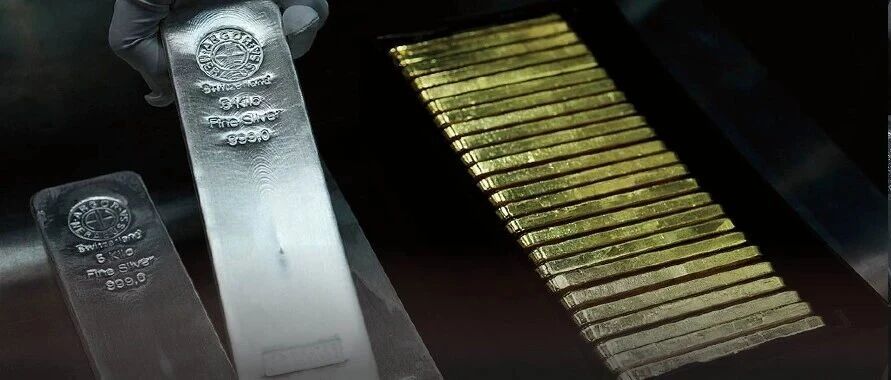
为什么白银比黄金更能涨?
吴晓波频道· 2025-12-18 00:29
Core Viewpoint - The article discusses the rising trend of silver prices, predicting that silver may outperform gold as an investment option due to its industrial demand and potential for significant price increases in the coming years [3][15]. Group 1: Price Trends and Predictions - As of December 17, the spot silver price reached $66 per ounce, marking a 130% increase from the beginning of the year when it was $28 per ounce [4][5]. - Predictions from institutions like BNP Paribas suggest that by 2026, the spot silver price could reach $100 per ounce, indicating a potential increase of over 50% from current levels [15]. - In contrast, gold prices have risen from $2600 per ounce at the start of the year to $4381 per ounce by late October, with a maximum increase of 68% [5]. Group 2: Demand and Industrial Use - Silver is increasingly favored over gold due to its dual role as both a precious metal and an industrial commodity, with over 58% of silver demand coming from industrial applications [12][24]. - Key industrial sectors for silver include electronics, photovoltaics, and medical applications, highlighting its essential role in modern technology [24]. - The World Silver Association projects that industrial demand will continue to grow, particularly in the electrical and solar energy sectors [12]. Group 3: Investment Considerations - The total market value of gold is approximately $30 trillion, while silver is around $4 trillion, making silver more susceptible to price manipulation and volatility [25]. - Investors are advised to consider silver stocks or physical silver investments, such as silver bars or jewelry, while being mindful of the inherent volatility [26]. - The article notes that while silver has shown strong performance, it does not possess the same monetary attributes as gold, which limits its appeal as a safe-haven asset [29][32].
第五届摩洛哥-埃及贸易联委会会议在摩召开
Shang Wu Bu Wang Zhan· 2025-12-16 05:27
Core Insights - The fifth Morocco-Egypt Trade Joint Committee meeting was held in Morocco, co-chaired by Morocco's Secretary of State for Foreign Trade Omar Hajjala and Egypt's Minister of Investment and Foreign Trade Hassan Hattab [1] - The committee serves as a key mechanism for monitoring and addressing tariff, non-tariff barriers, and market access issues, playing a significant role in deepening economic cooperation between the two countries [1] Trade Growth - Bilateral trade between Morocco and Egypt has seen significant growth, with trade expected to reach 1.1 billion USD in 2024 and approximately 897 million USD from January to October 2025 [1] Areas of Cooperation - Both countries' enterprises have shown considerable interest in collaborating across various sectors, including agriculture and fisheries, automotive and parts manufacturing, electronics, pharmaceuticals, shipbuilding and repair, chemicals, textiles, and engineering and technical services [1]
独家专访槟城招商局CEO:槟城广东产业互补,双向投资日益紧密
2 1 Shi Ji Jing Ji Bao Dao· 2025-12-15 11:56
Core Viewpoint - The investment cooperation between Guangdong, China, and Penang, Malaysia, is strengthening due to historical ties, cultural similarities, and strategic initiatives like the Belt and Road Initiative and RCEP, with a focus on sectors such as semiconductors and digital economy [1][2][10]. Group 1: Investment Cooperation - In October, multiple memorandums and cooperation agreements were signed at the 2025 China (Guangdong) - Malaysia (Penang) investment promotion event to enhance trade and investment exchanges [1]. - Approximately 70 Chinese companies are currently operating in Penang, reflecting a strong interest in investment opportunities [2][9]. - The direct flight route between Guangzhou and Penang, along with Malaysia's three-month visa exemption for Chinese citizens, facilitates business interactions [2][9]. Group 2: Economic Development - Penang is recognized as the "Silicon Valley of the East" due to its significant role in the global semiconductor industry and its high export and foreign investment rates [2][6]. - The state has over 350 multinational companies and more than 6,000 related manufacturing enterprises, primarily in the semiconductor and electronics sectors [6]. - Penang's semiconductor industry has a history of over 54 years, benefiting from the early transfer of the semiconductor industry from the West [6][8]. Group 3: Industry Focus - Key industries promoted during the investment conference include electronics, semiconductors, medical technology, automation equipment, IoT solutions, and digital economy [2][3]. - Penang is transitioning from backend semiconductor processes to upstream sectors, particularly integrated circuit design, which constitutes over 50% of the semiconductor industry's value chain [8]. - The region aims to enhance its manufacturing capabilities and attract foreign investment in high-value sectors, particularly in semiconductor materials and technology [7][10].
东南亚国家陷入两难困境:很依赖中国供应链,但又怕被美国加征转运附加费
Sou Hu Cai Jing· 2025-12-15 10:09
Core Viewpoint - The article discusses the impact of U.S. tariffs on Southeast Asian manufacturers as they face pressure from the upcoming Christmas shopping season, leading to supply chain disruptions and increased retail prices in the U.S. [1][2] Group 1: Tariff Impact on Southeast Asia - U.S. tariffs have affected low-cost export countries in Southeast Asia, including Malaysia, Vietnam, Laos, and Indonesia, deepening their involvement in the U.S.-China structural competition [1] - The new tariff regime has established a "China+1 penalty mechanism," where exporters relying on Chinese components face an additional 40% transshipment surcharge [2] - Manufacturers are struggling with increased production and logistics costs due to tariffs, which have disrupted delivery schedules [4] Group 2: Export Trends and Adjustments - Malaysia's exports of knitted products to the U.S. increased from $39,000 in June to $148,000 in July, reflecting a trend of manufacturers rushing to ship goods before tariff deadlines [5] - In August, U.S. apparel imports peaked at $244,000, as importers sought to reduce reliance on traditional garment hubs facing higher tariffs [5] - Malaysia's exports of electrical and electronic products to the U.S. reached nearly $24 billion, largely driven by the semiconductor industry [5] Group 3: Strategic Shifts in Manufacturing - Southeast Asian manufacturers are beginning to relocate final assembly operations to Vietnam, Indonesia, and Thailand while still depending on China for design and high-tech components [9] - Malaysia and Thailand are attracting more strategic long-term investments due to their lower exposure to new tariffs [9] - The U.S. has pressured Malaysia and Cambodia to accept "poison pill" clauses in trade agreements, which could reshape future trade negotiations in the region [9]

中国德国商会答21:中国创新步伐加快,德企愿在华继续深耕
2 1 Shi Ji Jing Ji Bao Dao· 2025-12-03 15:13
Group 1 - The core observation is that German companies are actively seeking collaboration in innovative sectors in China, such as automotive, electrical architecture, battery technology, and artificial intelligence, to leverage China's rapid innovation capabilities [1] - According to the "Business Confidence Survey Report 2025/2026," 60% of surveyed German companies believe that their Chinese counterparts will become or have already become innovation leaders in their industries within the next five years, marking a historical high [1] - The percentage of respondents who believe that Chinese companies are already innovation leaders has increased from 0% in 2019 to 9% in 2025 [1] Group 2 - The survey indicates a sustained optimism among German companies regarding China's economic prospects, with 65% expressing a positive outlook for the next five years, maintaining the high level seen in 2024 [2] - A significant 93% of surveyed companies have no plans to exit the Chinese market, and over half plan to increase their investments in China over the next two years [2] - 56% of respondents are considering deeper collaborations with Chinese partners to leverage knowledge sharing and brand advantages for business growth in China [2] Group 3 - The survey was conducted between September 1 and October 11, 2025, with 627 member companies of the China-Germany Chamber of Commerce participating, providing a highly representative sample [3] - This annual survey, initiated in 2007, serves as a key tool for measuring the confidence of German companies in the Chinese market and provides essential data for the Chamber's policy advocacy efforts [3]