石化产品

Search documents
霍尔木兹海峡航运受阻,11国就维护开放供应链发表联合声明
第一财经· 2026-03-31 14:51
Core Viewpoint - A joint statement from 11 countries, including New Zealand and Singapore, emphasizes the importance of maintaining open and resilient supply chains in light of potential disruptions in the Strait of Hormuz, particularly affecting oil, gas, petrochemicals, and essential goods [1]. Group 1 - The joint statement was issued by New Zealand, Costa Rica, Iceland, Liechtenstein, Norway, Panama, Rwanda, Singapore, Switzerland, the UAE, and Uruguay [1]. - The statement highlights concerns that the closure of the Strait of Hormuz could severely disrupt global supply chains, especially for critical products like oil, gas, and fertilizers [1]. - The countries reaffirm their commitment to maintaining supply chains that are open, diversified, transparent, competitive, and resilient [1].


新西兰、哥斯达黎加、冰岛、列支敦士登、挪威、巴拿马、卢旺达、新加坡、瑞士、阿联酋和乌拉圭发表联合声明
财联社· 2026-03-31 14:23
Core Viewpoint - A joint statement was issued by New Zealand, Costa Rica, Iceland, Liechtenstein, Norway, Panama, Rwanda, Singapore, Switzerland, the UAE, and Uruguay, emphasizing the importance of maintaining open, diversified, transparent, competitive, and resilient supply chains in light of potential disruptions caused by the closure of the Strait of Hormuz [1] Group 1 - The closure of the Strait of Hormuz could severely disrupt global supply chains, particularly affecting oil, natural gas, petrochemical products, and essential downstream derivatives such as fertilizers [1] - The countries involved reaffirm their commitment to ensuring the resilience of supply chains amidst these potential disruptions [1]

美伊战火点燃“石化炸弹”,一切下游商品都要涨?
财联社· 2026-03-30 08:26
Core Viewpoint - The rising prices of petrochemical products, driven by the increase in gasoline and crude oil prices, are expected to have a significant and gradual impact on consumers, leading to widespread inflation in various sectors [1][2]. Group 1: Impact of Rising Petrochemical Prices - The cost of petrochemical products, which include essential materials like benzene, butadiene, and styrene, has already begun to rise, although consumers may not yet be fully aware of this [1]. - Stanislav Krykun, CEO of DST-Pack, reported a 15% price increase from plastic particle suppliers due to rising raw material costs and market uncertainty, indicating that consumers will soon face higher prices [2]. - The price increases will not be immediate but will reflect a lag effect as production, transportation, and retail distribution processes take time to adjust [2]. Group 2: Broader Economic Implications - The petrochemical industry is heavily concentrated in the Middle East, with 79% of active petrochemical zones located in Saudi Arabia, Iran, and Qatar, making it vulnerable to geopolitical tensions [3]. - Jeff Krimmel from Krimmel Strategy Group highlighted that shortages and price hikes in petrochemical products will affect a wide range of everyday goods, including textiles and food packaging [3]. - The reliance on the Strait of Hormuz for shipping these products means that any disruption could have cascading effects throughout the global economy [3]. Group 3: Long-term Inflationary Pressures - Moody's Chief Credit Officer Atsi Sheth noted that the current situation is just the latest challenge for the petrochemical industry, which has already faced disruptions from the pandemic and geopolitical conflicts [4]. - Sheth indicated that while there has been an oversupply in the market, once existing inventories are depleted, inflationary pressures will become more pronounced [5]. - The ultimate burden of these cost increases will fall on consumers, particularly affecting low-income groups as prices for food, clothing, and retail goods rise [6]. Group 4: Market Adjustments and Consumer Impact - Companies are expected to adapt by simplifying packaging and redesigning products to manage costs, although these changes will take time to implement [7]. - The global supply of petrochemical raw materials and intermediates is significant, with approximately $733 billion flowing through the Gulf region annually, impacting downstream products worth $3.8 trillion [6]. - As companies navigate these challenges, they are likely to seek diversification in their investments, which may further increase operational costs [6].
危中有机:油价冲击下的行业配置
国泰海通· 2026-03-23 11:44
Group 1 - The report indicates that high oil prices will not lead to stagflation in China, as improved inflation expectations can catalyze an upward inventory cycle, benefiting manufacturing and cyclical industries amid global energy transition and capacity security [1] - High oil prices impact the A-share market through four main pathways: cost shock, inventory changes, external demand pressure, and valuation effects [4][33] - The report highlights that the cost transmission ability is ranked as upstream > downstream > midstream, with industries like transportation, chemicals, electricity, and construction being more affected by high oil prices [14][18] Group 2 - Historical analysis of the oil price shocks during the Libyan civil war (2010-2012) and the Russia-Ukraine conflict (2021-2022) shows that while upstream sectors benefited initially, sustained high oil prices eventually suppressed external demand and led to stagflation concerns [33][39] - The report emphasizes that the current economic cycle in China is in a recovery phase rather than overheating, suggesting that rising oil prices could accelerate the recovery of the Producer Price Index (PPI) [27][31] - Recommended sectors include those benefiting from the energy transition and capital goods exports, such as power equipment, new energy vehicles, and construction materials, which are expected to see price increases and inventory replenishment [4][33]
中国石油化工股份(00386):暴风雨前的平静
citic securities· 2026-03-23 07:17
Investment Rating - The report assigns a negative outlook for Sinopec, indicating that the 2025 performance is expected to be 19% lower than market consensus [2][3]. Core Insights - Sinopec's net profit for 2025 is projected at 32.5 billion yuan, a 34% year-on-year decline, and significantly below market expectations [3]. - The fourth quarter of 2025 showed a meager net profit of 400 million yuan, down 89% year-on-year and 95% quarter-on-quarter, primarily due to a 7.35 billion yuan inventory loss from falling oil prices [3]. - The downstream segments, including refining, marketing, and chemicals, have all weakened, with the marketing segment turning to a loss and the chemicals segment's losses tripling [4]. - The escalating situation in the Middle East is expected to impact Sinopec's downstream operations significantly, with potential supply disruptions in the second quarter of 2026 [5]. Summary by Sections Financial Performance - Sinopec's 2025 net profit is forecasted at 32.5 billion yuan, a 34% decrease from the previous year and 19% lower than market consensus [3]. - The fourth quarter of 2025 recorded a net profit of 400 million yuan, a drastic decline of 89% year-on-year and 95% quarter-on-quarter, largely due to inventory losses [3]. Downstream Operations - All three major downstream segments (refining, marketing, chemicals) showed deterioration in the fourth quarter of 2025, with the marketing segment reporting a loss and the chemicals segment's losses expanding significantly [4]. - The exploration and production segment remained relatively stable, with a 15% decline in earnings before interest and taxes [4]. Market Conditions - The report highlights that the Middle East situation could lead to significant supply disruptions, impacting Sinopec's operations and potentially leading to a shortage of refined products [5]. - The report notes that as the largest downstream operator in China/Asia, Sinopec may face substantial operational pressures due to these geopolitical developments [5].
入榜TOP10!磷酸铁锂“黑马”净利125亿!
起点锂电· 2026-03-19 11:45
Core Viewpoint - WanHua Chemical reported record revenue of 203.24 billion yuan in 2025, marking an 11.62% year-on-year increase, but net profit decreased by 3.88% to 12.53 billion yuan due to price declines in the chemical industry [4][5]. Group 1: Financial Performance - The company achieved a revenue of 203.24 billion yuan, surpassing the 200 billion yuan mark for the first time, setting a historical high [4]. - Net profit for the year was 12.53 billion yuan, a decline of 3.88% year-on-year, while the non-recurring net profit fell by 9.10% to 12.14 billion yuan, indicating pressure on core business profitability [4]. - The overall chemical industry is experiencing a cyclical downturn, with over 90% of tracked chemical products seeing year-on-year price declines, leading to squeezed profit margins across the sector [4][5]. Group 2: Strategic Initiatives - Despite challenges in traditional business, WanHua Chemical is expanding its revenue through various initiatives, particularly focusing on battery materials to cultivate a second growth curve [5][6]. - The company entered the lithium battery sector in 2020 by acquiring Zhoneng Lithium Battery and has set a target for its battery materials business to reach 100 billion yuan [6]. Group 3: Industry Positioning - WanHua Chemical leverages its chemical production experience and R&D capabilities to integrate "chemicals + new energy," creating a differentiated competitive advantage [7]. - The company aims to establish a closed-loop industrial chain from upstream resources to downstream applications and recycling, with plans to achieve 1 million tons of phosphate iron and phosphate lithium capacity by 2027 [7][8]. Group 4: Production Capacity and Projects - A new battery materials industrial park with an investment of 16.8 billion yuan is under construction in Yantai, with a planned capacity of 500,000 tons of phosphate lithium and 300,000 tons of graphite anode [8]. - The company has existing production capacity of 50,000 tons of phosphate lithium in Meishan, with an expansion project expected to be completed by the end of 2026, bringing total capacity to 220,000 tons [8]. Group 5: Technological Innovation - WanHua Chemical is increasing R&D investment, covering lithium battery anode and cathode materials, sodium battery materials, binders, solvents, and hydrometallurgy [9][10]. - The company has successfully launched its fourth-generation phosphate lithium product and is positioned as a "dark horse" in the industry, ranking tenth in China's lithium phosphate lithium cathode material shipments in 2025 [10]. Group 6: Market Outlook - The year 2026 is anticipated to be crucial for the new energy battery materials industry, with expectations of supply-demand optimization and profitability recovery [12]. - Companies are advised to accelerate high-end transformation, secure long-term orders, and enhance resource supply management to seize profit opportunities amid industry differentiation [12].


美财政部:有条件允许美国实体进行与委内瑞拉石油或石化产品相关交易,就油气、石化或电力领域进行谈判或签约
中国能源报· 2026-03-14 13:48
Group 1 - The U.S. Treasury Department has conditionally relaxed restrictions on energy-related transactions with Venezuela, allowing U.S. entities to engage in oil and petrochemical activities [1] - The new general licenses permit U.S. companies to provide goods and services for the development or production of oil, gas, and petrochemical products in Venezuela, as well as to negotiate or sign contracts in these sectors [1] - This authorization expands the scope of U.S. investment and activities in Venezuela's energy sector and allows Venezuela to export fertilizers directly to the U.S. [1] Group 2 - The context of this decision follows increased energy prices due to escalating tensions in Iran, prompting the U.S. to adjust its stance on Venezuela [1] - The U.S. military previously conducted a large-scale operation against Venezuela in January, which included the capture of President Maduro and his wife, leading to a shift in U.S. policy towards managing Venezuela until a "safe" transition occurs [1] - In late January, the U.S. government lifted some restrictions related to Venezuelan oil transactions, indicating a strategic pivot in its approach to the region [1]
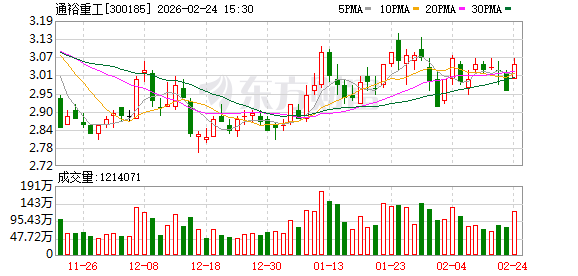
通裕重工:公司的产品涵盖能源电力、石化等领域
Zheng Quan Ri Bao· 2026-02-24 12:44
Core Viewpoint - Tongyu Heavy Industry's product range includes various sectors such as energy power (including wind, hydro, thermal, and nuclear power), petrochemicals, shipbuilding, offshore equipment, metallurgy, aerospace, mining, and cement [2] Group 1 - The company operates in multiple industries, showcasing a diverse portfolio [2] - Key sectors include renewable energy sources like wind and hydro, as well as traditional energy sources like thermal and nuclear power [2] - Other significant areas of operation encompass petrochemicals, shipbuilding, and offshore equipment [2] Group 2 - The company is also involved in metallurgy, aerospace, mining, and cement industries, indicating a broad market presence [2] - This diversification may provide resilience against market fluctuations in any single sector [2] - The company's engagement in both traditional and renewable energy sectors reflects a strategic approach to evolving market demands [2]

未知机构:长江金属大化工交运联合深度资源大时代下一个战略品种在哪里-20260224
未知机构· 2026-02-24 04:10
Summary of Key Points from the Conference Call Industry Overview - The conference call discusses the non-ferrous metal resources market and the implications of geopolitical factors and carbon neutrality policies on resource scarcity [1] - The focus is on strategic resources in China and the U.S., highlighting the competitive advantages in manufacturing and supply chain [2] Core Insights and Arguments 1. **Strategic Resources**: - China possesses a complete industrial chain and cost advantages, successfully capturing profits from both overseas raw materials and downstream exports, particularly in sectors like electrolytic aluminum, chemicals, and oil transportation [2] - Certain high-tech industries in the U.S., such as civil aviation, gas turbines, and semiconductors, have become strategic resources due to tariffs and geopolitical tensions [2] 2. **Global Trends**: - The trend of de-globalization is leading to a return of manufacturing to various countries and strategic inventory replenishment, which is expected to enhance the resilience of manufacturing demand [2] - The current low-interest-rate environment is facilitating financial liquidity that is being transmitted to the real economy, indicating a rotation cycle in commodities from "non-ferrous - chemicals - crude oil," with promising future potential [2] 3. **Price Dynamics**: - Compared to the record highs in non-ferrous resources, prices for electrolytic aluminum, chemicals, refining, and aviation are at historically low levels, creating a strong safety margin [2] - The constrained supply in smelting and manufacturing sectors results in profit margins significantly lower than those in mining; thus, a price rebound could lead to substantial profit elasticity [2] Additional Important Content - The discussion emphasizes the importance of understanding the interplay between geopolitical factors and market dynamics in identifying investment opportunities within the resource sector [1][2] - The potential for price recovery in the mentioned sectors is highlighted as a key area for investors to watch, given the current market conditions [2]
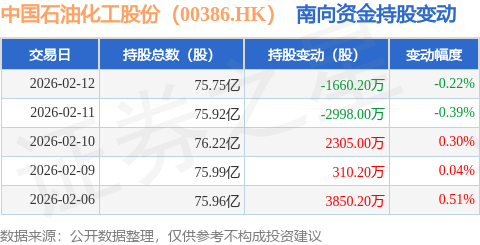
中国石油化工股份(00386.HK):2月12日南向资金减持1660.2万股
Sou Hu Cai Jing· 2026-02-12 19:15
Group 1 - The core point of the article is that southbound funds have reduced their holdings in China Petroleum & Chemical Corporation (00386.HK) by 16.602 million shares on February 12, 2026, while showing a net increase in holdings over the past 20 trading days [1][2] - Over the last five trading days, southbound funds increased their holdings on three occasions, resulting in a cumulative net increase of 18.072 million shares [1][2] - As of now, southbound funds hold a total of 7.575 billion shares of China Petroleum & Chemical Corporation, accounting for 31.84% of the company's total issued ordinary shares [1][2] Group 2 - The trading data shows that on February 12, 2026, the total number of shares held was 7.575 billion, with a decrease of 16.602 million shares, reflecting a change of -0.22% [2] - The previous trading day, February 11, 2026, saw a decrease of 29.98 million shares, which was a -0.39% change [2] - On February 10, 2026, there was an increase of 23.05 million shares, marking a 0.30% change [2]