
乐提葆

Search documents
四环医药发布年度业绩 股东应占溢利约1.8亿元 同比扭亏为盈
Zhi Tong Cai Jing· 2026-03-31 14:59
Group 1 - The core revenue growth is driven by the medical aesthetics business, which generated approximately RMB 1.485 billion in revenue, a year-on-year increase of about 99.6% [1] - The core product, Letibao, expanded its coverage to over 8,000 medical beauty institutions and 1,500 key institutions, contributing to steady revenue growth [1] - The innovative drugs and other pharmaceuticals generated approximately RMB 176 million, a year-on-year increase of about 206.3%, primarily due to increased sales of diabetes medications [1] Group 2 - The year 2026 is critical for the company’s strategic transformation and high-quality development, marking the beginning of its three-year strategic plan [2] - The company aims to become a benchmark enterprise in the Chinese medical aesthetics industry by focusing on compliance, growth in regenerative materials and collagen protein, and personalized anti-aging solutions [2] - The core strategy includes deepening dual-driven growth, releasing synergistic value, accelerating global layout, and enhancing capital efficiency [2] Group 3 - The total revenue for the year ending December 31, 2025, was approximately RMB 2.618 billion, a year-on-year increase of about 37.7% [3] - Gross profit was approximately RMB 1.802 billion, a year-on-year increase of about 45.1%, while overall research and development expenses were approximately RMB 291 million, a decrease of 38.5% [3] - The company reported a profit attributable to shareholders of approximately RMB 180 million, turning a profit compared to the previous year, with basic earnings per share of 1.97 cents [3]
港股评级汇总:海通国际维持信达生物买入评级
Xin Lang Cai Jing· 2026-02-10 08:36
Group 1: Company Ratings and Collaborations - Haitong International maintains a "Buy" rating for Innovent Biologics (01801.HK), highlighting a new global strategic collaboration with Eli Lilly, which includes a $350 million upfront payment and up to $8.5 billion in milestone payments, focusing on innovative drug development in oncology and immunology [1] - CITIC Securities also maintains a "Buy" rating for Innovent Biologics, emphasizing the trust from multinational corporations in its innovative capabilities and projecting a 45% increase in product revenue by 2025, alongside the commercialization of 17 drugs and advancements in multiple Phase III pipelines [2] - Yuanta Securities maintains a "Buy" rating for Innovent Biologics, noting the new "China PoC + global development" model that enhances its R&D capabilities and forecasts product revenue to reach 11.9 billion yuan in 2025, a 45% year-on-year increase [3] Group 2: Other Company Ratings - CICC maintains an "Outperform" rating for Guoquan (02517.HK) with a target price of 4.90 HKD, citing steady same-store growth in the second half of 2025 and an accelerated store opening pace in 2026, with over half of its market share in rural areas [4] - CICC also maintains an "Outperform" rating for Kelun-Biotech (06990.HK) with a target price of 550 HKD, highlighting the approval of TROP2 ADC for new indications and significant commercial potential expected in 2026 [5] - Guohai Securities maintains a "Buy" rating for Sihuan Pharmaceutical (00460.HK), forecasting a return to profitability in the first half of 2025, with a significant revenue increase in its medical aesthetics segment [6] - Everbright Securities initiates coverage on Yujian Xiaomian (02408.HK) with an "Accumulate" rating and a target price of 4.90 HKD, noting its leading position in the Sichuan-Chongqing flavor noodle market and strong growth potential through market penetration [7] - Guoxin Securities initiates coverage on Power Development (01277.HK) with an "Outperform" rating, highlighting its leading profitability in the mining sector and upcoming production increases from key coal mines [8] - Guoxin Securities maintains an "Outperform" rating for China Oriental Education (00667.HK), noting a recovery in professional enrollment and an increase in net profit margin to 19.0% [9] - Guotou Securities maintains an "Accumulate" rating for Yum China (09987.HK), projecting a 3% same-store sales growth in Q4 2025 and plans for significant shareholder returns starting in 2027 [10]
新力量NewForce总第4960期
First Shanghai Securities· 2026-02-06 12:20
Group 1: New Oriental (EDU) - New Oriental's FY26Q2 net revenue increased by 14.7% year-on-year to $1.191 billion, slightly exceeding the previous guidance of $1.132 to $1.163 billion[9] - Operating profit reached $66.3 million, up 244.4% year-on-year, while Non-GAAP operating profit rose by 206.9% to $89.13 million[9] - The company adjusted its FY26 revenue guidance to between $5.292 billion and $5.49 billion, reflecting a year-on-year growth of 8% to 12%[12] Group 2: Financial Metrics - The target price for New Oriental is set at $78.00, representing a potential upside of 24.3% from the current price of $62.8[6] - The company's EPS for FY26 is projected to be $0.31, an increase of 3% from the previous estimate of $0.30[2] - The net profit margin improved by 0.7 percentage points to 3.8%, while Non-GAAP net profit margin increased by 1.9 percentage points to 6.1%[10] Group 3: Business Performance - New business revenue grew by 21.6% year-on-year, with non-academic tutoring registrations reaching 1.058 million, a 6.4% increase[11] - The number of active paid users for the smart learning system and devices reached 352,000, up 34.8% year-on-year[11] - The company operates 1,379 learning centers and schools, a significant increase from 1,189 in FY25Q2[11] Group 4: Market Outlook - The company expects FY26Q3 net revenue to be between $1.313 billion and $1.349 billion, indicating a year-on-year growth of 11% to 14%[12] - The overall positive performance is attributed to the recovery of new business growth and effective cost management, leading to improved profit margins[10]

仲裁利好下,爱美客也难“翻身”
虎嗅APP· 2026-01-31 13:30
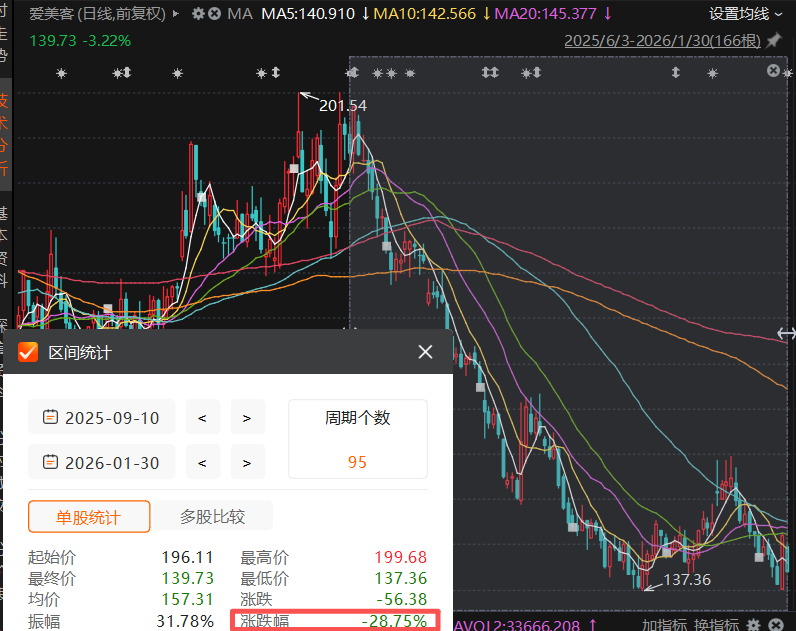
Core Viewpoint - The recent arbitration decision allows REGEN, a subsidiary of Aimeike, to sell AestheFill products in mainland China, but this is not a final ruling, and the ongoing dispute over distribution rights remains uncertain [2][8][20]. Group 1: Arbitration and Market Impact - Aimeike's subsidiary REGEN received a procedural decision from the Shenzhen International Arbitration Court, lifting a temporary measure that previously restricted its sales of AestheFill products in mainland China [2][8]. - Since the initial temporary measure was imposed on September 10, 2025, Aimeike's stock price has dropped nearly 30% [3]. - The arbitration dispute began after Aimeike acquired 85% of REGEN for $190 million in March 2025, leading to REGEN unilaterally terminating its exclusive distribution agreement with Dato Medical [6][8]. Group 2: Business Performance - Aimeike has faced a decline in revenue and profit for four consecutive quarters, with Q1-Q3 2025 revenues of 663 million, 636 million, and 566 million yuan, representing year-on-year declines of 17.90%, 25.11%, and 21.27% respectively [11]. - The decline in revenue is attributed to a weakened consumer confidence due to macroeconomic conditions and increased competition in the medical aesthetics industry [14][15]. - Aimeike's main revenue sources, solution and gel injection products, saw significant revenue drops, with total income from these products falling from 9.76 billion yuan in 2024 to 7.44 billion yuan in 2025 [15][16]. Group 3: Future Outlook - The AestheFill product, despite its potential, is expected to contribute only around 300 million yuan in annual sales, which may not significantly offset the revenue decline from Aimeike's core products [17]. - The competitive landscape for botulinum toxin products is also challenging, with established players dominating the market, making it difficult for Aimeike to gain market share with newly approved products [18]. - Overall, Aimeike is likely to continue facing significant performance pressures into 2026, despite the short-term positive impact of the arbitration decision [19][20].

仲裁利好下,爱美客也难“翻身”
Hu Xiu· 2026-01-31 09:16
Core Viewpoint - The arbitration decision to lift the temporary sales restriction on AestheFill products by REGEN, a subsidiary of Aimeike, is seen as a short-term positive development, but the underlying dispute over distribution rights remains unresolved, indicating potential volatility in the company's stock performance [1][4][14]. Group 1: Arbitration and Sales Rights - REGEN received a decision from the Shenzhen International Arbitration Court on January 29, 2025, which lifted a temporary measure that prohibited the sale of AestheFill products in mainland China [1]. - The temporary measure was initially imposed following REGEN's unilateral termination of its exclusive distribution agreement with Dato Medical, which claimed that Dato had transferred its distribution rights to a related party, violating the agreement [3][4]. - The arbitration decision is procedural and not a final ruling, meaning the dispute over the legality of REGEN's termination of the distribution rights is still ongoing [4]. Group 2: Financial Performance - Aimeike has experienced a decline in both revenue and profit for four consecutive quarters, with Q1-Q3 2025 revenues reported at 663 million, 636 million, and 566 million yuan, reflecting year-on-year decreases of 17.90%, 25.11%, and 21.27% respectively [5][6]. - The company's core products, including solution and gel injection products, saw significant revenue drops, with total income from these categories falling from 9.76 billion yuan in 2024 to 7.44 billion yuan in 2025 for solution products, and from 6.49 billion yuan to 4.93 billion yuan for gel products [9][10]. - The competitive landscape has intensified, with new entrants in the aesthetic medicine market impacting Aimeike's profit margins and market share [8][9]. Group 3: Future Outlook - The introduction of AestheFill is expected to provide some revenue support, but its annual sales of approximately 300 million yuan may not be sufficient to offset the significant revenue declines from Aimeike's core products [10][11]. - The company faces challenges in gaining market share for newly approved products, such as botulinum toxin, due to established competitors dominating the market [12][13]. - Overall, Aimeike is likely to continue facing substantial performance pressures into 2026, with the recent arbitration decision providing only a temporary boost [14].
轻医美重塑行业发展生态
Zheng Quan Ri Bao Wang· 2025-11-28 07:41
Group 1 - China has become the second-largest medical beauty market globally, with a current penetration rate of only 4.5%, indicating significant growth potential compared to other developed countries [1] - The "light medical beauty" segment is reshaping the industry ecosystem due to its core advantages of low risk, short recovery time, and high frequency [1] Group 2 - The upstream consumables and equipment sector has high barriers to entry, with a focus on the development and manufacturing of injectables, energy-based devices, and biomaterials, which are core high-margin segments of the industry [2] - From early 2024 to July 2025, 43 Class III injectable products, 2 types of botulinum toxin, and 22 types of phototherapy devices have been approved in China, indicating a significant acceleration in product approvals [2] - The market for recombinant collagen is expected to exceed 40 billion yuan in 2024 and reach 58.57 billion yuan in 2025, while the market for "童颜针" (youthful needle) is projected to grow from 500 million yuan in 2021 to 4.2 billion yuan in 2025, a 740% increase [2] Group 3 - Companies like 四环医药 (Sihuan Pharmaceutical) are rapidly rising due to their technological advantages, having developed products like "童颜针" and "少女针," which have received Class III medical device registration [3] - 四环医药 has become the only domestic company to hold compliant registrations for both "童颜针" and "少女针," and has secured exclusive agency rights for a collagen-based product in mainland China [3] Group 4 - The current market is dominated by a few companies that can consistently obtain Class III medical device certifications, creating a concentrated oligopoly [4] - In 2025, 80% of newly approved products are expected to come from companies with Class III device qualifications, leading to a market environment where small institutions are rapidly exiting [4] - The emergence of new materials like agarose and hydroxyapatite marks a shift towards ingredient diversification, while the rise of regenerative materials signifies a transition from "filling" to "tissue regeneration" [4] Group 5 - The trend is accelerating the concentration of resources towards leading companies with R&D systems, clinical teams, and compliance capabilities, indicating an irreversible trend towards specialization and compliance in the industry [5]
四环制药20251104
2025-11-05 01:29
Summary of the Conference Call for Sihuan Pharmaceutical Industry Overview - Sihuan Pharmaceutical has been expanding into the medical aesthetics sector since 2014, starting with the Korean botulinum toxin product, Letibotulinum, which was approved for sale in China in 2020. The revenue from this product is expected to reach nearly 1 billion yuan by 2025, accounting for 80% of the medical aesthetics business [2][3][4]. Key Points and Arguments - **Revenue Growth**: In the first half of the year, Sihuan Pharmaceutical achieved revenue of 585 million yuan, representing a year-on-year growth of 81%. The company anticipates a full-year growth of no less than 50% [2][3]. - **Product Launches**: The company has introduced self-developed products such as the "Youthful Needle," "Girl Needle," and "Water Light Energy Serum," which are expected to contribute significantly to revenue [2][3]. - **Market Coverage**: Sihuan Pharmaceutical has established a strong market presence, covering over 7,000 medical aesthetic institutions and achieving 100% coverage with 500 leading institutions. Additionally, strategic cooperation agreements have been signed with 1,400 key institutions [2][3]. - **Production Capacity**: The company operates three production bases to ensure product quality and currently sells six major products, including botulinum toxin, hyaluronic acid, and self-developed products [2][4]. - **Research and Development**: Sihuan Pharmaceutical has built five major R&D platforms, covering international innovative materials and regenerative materials, with over 60 medical aesthetic products in its portfolio. The company conducts hundreds of medical training sessions and market activities annually to enhance academic promotion [2][4]. - **Financial Position**: The company has approximately 3.9 billion yuan in cash, indicating strong financial resources to support future growth [2][4]. Competitive Landscape - **Botulinum Toxin Market**: Letibotulinum currently accounts for about 80% of Sihuan Pharmaceutical's medical aesthetics revenue. As new self-developed products are launched, this proportion is expected to decrease. Letibotulinum is the first Korean botulinum toxin brand approved in China and has maintained a leading position due to its suitability for Asian skin [3][4]. - **Market Penetration**: The domestic botulinum toxin market has low penetration rates, but the company believes that increased competition will drive growth in market penetration. The safety and affordability of botulinum toxin are expected to attract more consumers [4][5]. Product Differentiation - **Hyaluronic Acid Product**: The company’s hyaluronic acid product, "Bohuanrun," utilizes HEXALINK™ unidirectional cross-linking technology, enhancing its resistance to pressure and deformation, with a stable shaping effect lasting up to one year. It is positioned competitively in a crowded market [6]. - **Comprehensive Product Line**: Sihuan Pharmaceutical offers a wide range of products, including injectables, fillers, water light needles, collagen, and silk protein, establishing a comprehensive product layout [7]. Unique Selling Proposition - **CDK 4/6 Inhibitor**: The company’s CDK 4/6 inhibitor is the first and only approved drug for monotherapy in the domestic market, with low toxicity and broad indications. The company plans to leverage its unique characteristics and clinical performance to maximize market potential [8][9]. Future Outlook - **Revenue Targets**: Sihuan Pharmaceutical aims to achieve over 1 billion yuan in revenue from existing products and 200 million yuan from new products by 2025, with total revenue reaching 1.2 billion yuan. The company expects to maintain an annual growth rate of no less than 50% over the next two to three years [2][4][12].
从β到α,国内首款面部复合溶液水光针 “冻妍”获批上市,四环医药(00460)从制药巨头到平台型医美企业的价值重估之路
智通财经网· 2025-10-06 00:41
Core Viewpoint - The approval of "Frozen" marks a significant milestone for the company, indicating the successful implementation of its "medical beauty + biopharmaceutical" dual-engine strategy, which is expected to enhance the company's investment value across multiple dimensions [1][10]. Product Value - "Frozen" is positioned in a high-growth market, specifically the water light needle segment, which is recognized as a "golden track" in the medical beauty sector, driven by increasing consumer demand for skin quality management [1][2]. - The market for water light needle products in China is projected to grow from approximately 4.5 billion RMB in 2025 to 8 billion RMB in 2027, with a compound annual growth rate (CAGR) of 21.5%, significantly outpacing the global market's 10.8% CAGR [2]. - The regulatory tightening in the medical beauty sector presents a historic opportunity for compliant innovative products like "Frozen," allowing it to capture both incremental and existing market shares [2][3]. Financial Value - The launch of "Frozen" is expected to create substantial incremental revenue, enhancing the company's profit structure and providing a strong, predictable new growth driver for its medical beauty segment [5][6]. - "Frozen" is anticipated to contribute significantly to net profit, with its profit structure offering considerable advantages, leading to potential exponential growth in net profit rather than linear increases [6]. - The introduction of "Frozen" signifies an upgrade in the company's profit model, enhancing sustainability and maximizing customer lifetime value, which is crucial for long-term profitability [6]. Strategic Value - The successful launch of "Frozen" indicates that the company's dual-track strategy of self-research and business development (BD) has entered an efficient execution phase, establishing a long-term competitive barrier in the medical beauty sector [7][10]. - The company has developed a dual-engine model combining regenerative products and skin quality management, creating a self-reinforcing ecosystem within its medical beauty business [8]. - The company has a robust pipeline of products in development, with five regenerative micro-sphere products and eight hyaluronic acid products in the registration phase, ensuring continuous growth and market presence [9]. Summary - The success of "Frozen" represents a new phase in the company's medical beauty strategy, reflecting its strong research and development capabilities and substantial pipeline reserves, which are critical for long-term value [10][11]. - The investment logic surrounding the company is shifting from a focus on profitability to high-quality growth, as the medical beauty segment now accounts for over 50% of revenue and continues to grow [11][12]. - The company has transitioned from relying on a single blockbuster product to becoming a platform-based medical beauty enterprise, enhancing its growth potential and valuation premium [12].
四环医药(00460.HK):中报扭亏转盈 基本面反转向上
Ge Long Hui· 2025-09-04 03:32
Group 1 - The company reported a strong performance in H1 2025, achieving a revenue of 1.15 billion yuan, a year-on-year increase of 20.7%, driven by the high-margin medical aesthetics business, with an overall gross margin of 66.1%, up 2 percentage points year-on-year [1] - The company turned a profit with a net profit of 66 million yuan and a net profit attributable to shareholders of 103 million yuan, compared to a loss in the previous year [1] - Cash and cash equivalents, along with financial deposits, reached 3.89 billion yuan, indicating strong cash flow and payment capacity, with a declared dividend of 0.99 cents per share [1] Group 2 - The medical aesthetics segment achieved a revenue of 590 million yuan in H1 2025, a year-on-year increase of 81.3%, with segment profit reaching 310 million yuan, up 215.3% [1] - The company successfully deepened cooperation with leading institutions, adding 44 key partner groups and penetrating over 1,000 core high-end medical aesthetics institutions [1] Group 3 - The regenerative medicine category has established a dual-system covering over 200 high-end medical aesthetics institutions and 1,000 certified doctors, with a focus on existing product penetration and capturing market share in the regenerative field [2] - The generic drug business experienced a revenue decline of 15.8% to 500 million yuan in H1 2025 due to national procurement policies, but the company maintained stable cash flow and saw a 1.2% increase in operating profit to 170 million yuan [2] Group 4 - The innovative drug segment reported a revenue of 58 million yuan in H1 2025, a year-on-year increase of 96.6%, with the subsidiary having over 10 innovative drug products in the pipeline [3] - The company’s core product, insulin, expanded its coverage to 1,800 hospitals, achieving a 200% year-on-year sales growth due to volume-based procurement policies [3] Group 5 - The company is expected to achieve revenues of 2.43 billion yuan, 3.71 billion yuan, and 5.08 billion yuan from 2025 to 2027, with growth rates of 28%, 53%, and 37% respectively, and net profits of 180 million yuan, 680 million yuan, and 1.02 billion yuan [3]
四环医药(00460):中报扭亏转盈,基本面反转向上
Huafu Securities· 2025-09-02 12:24
Investment Rating - The report maintains a "Buy" rating for the company, indicating an expected relative price increase of over 20% against the market benchmark within the next six months [19]. Core Insights - The company has shown a significant turnaround in its financial performance, achieving a net profit of 0.66 billion yuan in the first half of 2025, compared to a loss in the previous year [3][7]. - The revenue for the first half of 2025 reached 1.15 billion yuan, reflecting a year-on-year growth of 20.7%, driven by the high-margin medical aesthetics business [3]. - The company has a strong cash position with total cash and equivalents amounting to 3.89 billion yuan, ensuring robust cash flow and payment capabilities [3]. Summary by Sections Medical Aesthetics - The medical aesthetics segment generated 0.59 billion yuan in revenue for the first half of 2025, marking an impressive year-on-year growth of 81.3%, with segment profit increasing by 215.3% to 0.31 billion yuan [4]. - The company has expanded its partnerships, adding 44 key cooperative groups and penetrating over 1,000 high-end medical aesthetics institutions [4]. Generic Drugs - The generic drug business experienced a revenue decline of 15.8% to 0.50 billion yuan in the first half of 2025 due to national procurement policies, but operating profit increased by 1.2% to 0.17 billion yuan [5]. Innovative Drugs - The innovative drug segment saw a revenue increase of 96.6% to 0.058 billion yuan in the first half of 2025, with significant growth in sales of diabetes medications and the launch of new oncology drugs [6]. - The company has a pipeline of over 10 innovative drug products under development, with two already approved for market [6]. Financial Forecast and Valuation - The company is projected to achieve revenues of 2.43 billion yuan, 3.71 billion yuan, and 5.08 billion yuan for 2025, 2026, and 2027 respectively, with growth rates of 28%, 53%, and 37% [7]. - The forecasted net profit for 2025 is 0.18 billion yuan, with significant increases expected in subsequent years [7].