音乐

Search documents
听出来的蓝海
Xin Lang Cai Jing· 2026-02-27 22:33
Core Insights - The audio economy is rapidly expanding, with the number of Chinese podcast listeners expected to exceed 150 million by 2025, a 25% increase from 120 million in 2023, indicating a growing market for audio consumption [1] - The rise of 5G and artificial intelligence, along with an increasing awareness of paid knowledge, is driving the development of various audio products, enhancing the audio experience and meeting the cultural needs of consumers in a fast-paced lifestyle [1][2] - The audio industry is projected to reach a market size of over 740 billion yuan by 2029, with online audio users expected to grow to 822 million [2] Industry Challenges - Despite the promising outlook for the audio economy, challenges such as inconsistent content quality, copyright issues, unclear profit models, uneven revenue distribution, and homogeneity in offerings are hindering further development [2] - The industry requires a regulated environment to meet the growing demand for high-quality audio content, prompting creators to innovate and provide meaningful content that resonates with diverse user groups [2] Future Opportunities - The continuous advancement of smart wearable devices and AI technology will create more diverse scenarios for audio engagement, necessitating platforms to optimize their audio product ecosystems and innovate business models to attract more content creators [2] - The audio market is experiencing a phenomenon of "many voices," highlighting the need for stringent content review and regulatory mechanisms to ensure quality and compliance [2]
高盛:农历新年内地消费显示线下业态分化 电影票房下滑40%
Zhi Tong Cai Jing· 2026-02-26 08:15
Core Insights - The report from Goldman Sachs indicates a divergence in offline entertainment during the Spring Festival, emphasizing that high-quality live content supply is the core driver of entertainment consumption [1] Group 1: Industry Trends - During this year's Spring Festival, tourism consumption increased by 19% year-on-year, while box office revenue for films was disappointing, reaching only 5.7 billion RMB, a 40% decline compared to the previous year, returning to pre-pandemic levels [1] - The lack of quality productions this year is highlighted, especially when compared to the 4.8 billion RMB box office of "Nezha 2" during the Spring Festival in 2025 [1] Group 2: Company Analysis - Certain companies' stock prices have recently corrected due to concerns over the disruptive impact of artificial intelligence and competition, with some stocks nearing the lower end of their five-year price-to-earnings (P/E) ratio range, such as Tencent Holdings at 15 times, NetEase at 13 times, and Kuaishou at 10 times [1] - It is anticipated that earnings per share will achieve high single-digit to low double-digit year-on-year growth by 2026 [1] Group 3: Future Outlook - In the gaming sector, Tencent and NetEase are expected to maintain strong performance due to their enduring IP advantages, with an increasing supply of new games and overseas expansion becoming key growth drivers [1] - The competitive landscape in the entertainment industry shows that Kuaishou and Bilibili have solid business foundations and AI potential, while the music and live streaming sectors face more intense competition [1]
石榴花开(组诗)
Xin Lang Cai Jing· 2026-02-21 20:16
Core Viewpoint - The articles depict the intertwining lives of two characters, Qimuge, a music teacher, and Dawei, a village official, highlighting themes of love, cultural identity, and the beauty of nature through vivid imagery and symbolism. Group 1: Characters and Relationships - Qimuge is portrayed as a passionate music teacher whose songs resonate with the essence of spring, symbolizing hope and renewal [2] - Dawei, a village official, utilizes his agricultural knowledge to improve fruit tree varieties, representing community service and dedication [2] - Their relationship is illustrated through shared moments in nature, emphasizing their connection to the land and each other [2] Group 2: Nature and Symbolism - The imagery of pomegranate flowers is used to symbolize love and cultural unity, representing the merging of different backgrounds [1][2] - The pomegranate seeds are metaphorically described as small notes of music, signifying the interconnectedness of individuals and their experiences [3] - The natural landscape, including the Xiliao River and the Khorchin grassland, serves as a backdrop for the characters' emotions and memories, enhancing the narrative's depth [3]
广东“首发经济”研讨会:探索产业转型路径 激发区域发展活力
Sou Hu Cai Jing· 2026-01-30 02:06
Core Viewpoint - The article discusses the challenges and opportunities faced by Guangdong Province in transforming its economy, emphasizing the need for innovation and the adoption of the "first-release economy" model to enhance competitiveness and drive sustainable development [1][5][7]. Group 1: Economic Context and Challenges - Guangdong Province is undergoing a critical period of structural adjustment and transformation, facing challenges such as squeezed profit margins in traditional industries and the need for enhanced innovation capabilities [1]. - The province's heavy reliance on OEM/ODM manufacturing has limited its position in the value chain, necessitating a shift towards self-innovation, brand development, and high-value-added segments for sustainable growth [5]. Group 2: "First-Release Economy" Concept - The "first-release economy" concept was introduced as a response to the challenges faced by traditional manufacturing, aiming to improve product competitiveness and quickly capture commercial value [7]. - The concept emphasizes the integration of emerging industries and cutting-edge technologies, with a focus on digital content and artificial intelligence as key drivers [9][11]. Group 3: Action Plans and Initiatives - The Guangdong Creative Industry Association's action plan for 2025 aims to establish a global hub for new product launches, creating a comprehensive development system that includes technology, standards, and ecosystem support [12]. - Specific initiatives include promoting supportive legislation for creative industries, building AI and blockchain laboratories, and facilitating the intelligent upgrade of traditional manufacturing clusters [9][23]. Group 4: Role of Digital Content and AI - The development of China's digital content international entrepreneurial ecosystem is highlighted, with sectors like online literature, animation, and gaming expanding into overseas markets [11]. - AI is seen as a crucial enabler for the "first-release economy," with its applications expected to reshape various sectors by 2030, thus supporting innovation and smart upgrades in industries [14][16]. Group 5: Collaborative Efforts and Future Directions - The conference provided a platform for collaboration among experts and industry leaders, focusing on addressing industry pain points and proposing a framework for an innovation-driven development system [21]. - Successful implementation of the "first-release economy" requires coordinated efforts from government and enterprises in policy guidance, technological development, and market expansion [23].

打造“闽派”文艺精品和文化品牌展现新时代八闽文化气韵风采
Xin Lang Cai Jing· 2026-01-28 23:06
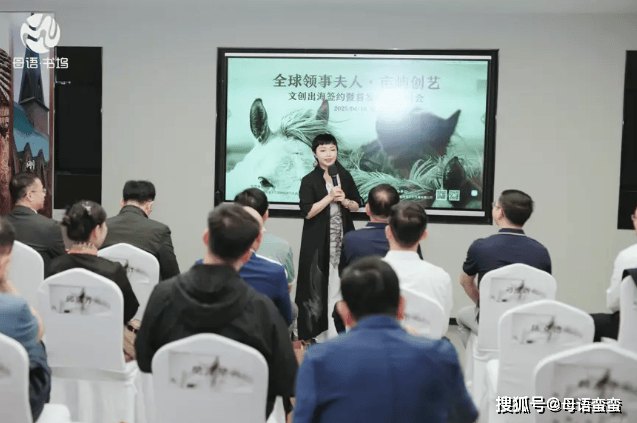
Core Viewpoint - The development of "Minpai" cultural brands and artistic masterpieces is a strategic move to support national modernization through local cultural development [2] Group 1: Cultural Development Strategy - Emphasize the cultural core and strengthen the spiritual essence by establishing a diverse cultural system rooted in Minxue and centered on "Fu" culture, while creating a graded database of cultural resources based on the Fourth National Cultural Relics Survey [2] - Deepen the study of Minxue cultural lineage and solidify the foundation for development by integrating academic resources and producing influential academic results that incorporate Minxue into the national education system [2] Group 2: Focus on Quality and Innovation - Prioritize the creation of high-quality works in music, drama, film, and short videos, and establish a "Minpai Film and Television Investment Conference" platform to promote new popular arts under internet conditions [2] - Develop tourism routes around world cultural heritage sites to enhance cultural tourism [2] Group 3: International Promotion - Create a visual identity system for the "Minpai" cultural brand to standardize promotion and communication, and advance the construction of the "World Minnan Cultural Exchange Center" to expand international outreach through overseas Chinese networks [2] - Enhance cultural exchanges along the "Belt and Road" initiative to showcase the charm of "Minpai" culture on a global scale [2]
挥别电视业务,索尼改革“无禁区”
日经中文网· 2026-01-22 08:00
Core Viewpoint - Sony Group is divesting its television business, transferring half of its stake in a joint venture to TCL, indicating that television is no longer an essential business for the company. The focus will shift towards the future direction of its smartphone business and other entertainment sectors [2][6]. Group 1: Business Strategy - The divestiture of the television business reflects Sony's strategic approach to actively pursue structural reforms, as articulated by CEO Yoshida Hiroki. The company aims to optimize its business segments and concentrate resources on core areas such as gaming and music [4]. - Sony has previously divested its financial business, which had low relevance to its core entertainment sectors, to streamline its organizational structure [4]. Group 2: Historical Context and Performance - Television was once a significant part of Sony's business, with the company launching the world's first portable transistor television in 1960 and achieving substantial profits in the early 2000s. However, due to intense price competition from Korean and Chinese manufacturers, the television business faced losses starting in the 2004 fiscal year [5]. - By the 2024 fiscal year, the display division, including television, generated sales of only 597.6 billion yen, which is less than half of the revenue from the television division in 2007 [5]. Group 3: Future Outlook - The role of television as a connection point for intellectual property (IP) and consumers is diminishing with the rise of video services. Sony's management has indicated the possibility of further reducing its stake in the television joint venture [6]. - The company's future focus will also include the smartphone business, which may be considered for divestiture if core technologies can be retained [6].


中国所有互联网公司市值加起来,竟然不如一个 Google?劝劝巨头们 别再卷了 通过免费打压行业对手追求垄断
Xin Lang Cai Jing· 2026-01-18 13:23
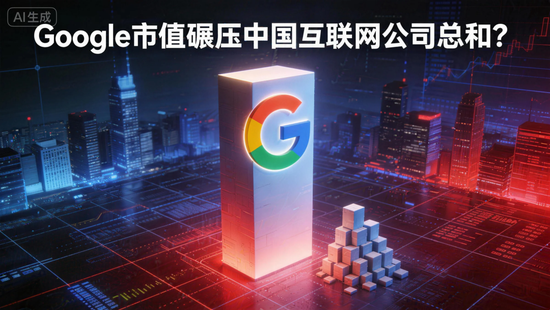
Core Viewpoint - The market capitalization of Google (Alphabet) is approximately $4 trillion, while the combined market capitalization of China's top internet companies is only about $1.8 trillion, indicating a significant disparity in valuation and market perception [25][28][30]. Market Capitalization Comparison - As of the end of 2025 or early 2026, the estimated market capitalizations of major companies are as follows: - Google (Alphabet): ~$40,000 million - Tencent: ~$5,917 million - Alibaba: ~$3,333 million - Xiaomi: ~$1,987 million - Pinduoduo: ~$1,486 million - Meituan: ~$975 million - NetEase: ~$852 million - JD: ~$471 million - Trip.com: ~$383 million - Kuaishou: ~$345 million - Tencent Music: ~$302 million - The total market capitalization of the top 10 Chinese internet companies is estimated to be around $17,000–20,000 million, which is more than 2.2 times less than that of Google [28][3][25]. Competitive Landscape - The primary issue in the Chinese internet sector is not a lack of effort but rather a misdirection in competitive strategies, focusing excessively on user acquisition, subsidies, and speed, leading to a dangerous cycle of competition [30][5]. - This competitive model, which relies on free services to gain scale and eliminate competitors, is damaging long-term sustainability in the industry [31][32]. Impact on Entrepreneurship - The current environment is systematically clearing out entrepreneurs, reducing their roles to mere tools for larger platforms, and stifling genuine innovation [34][37]. - The lack of reasonable pricing, stable profits, and long-term investment in research and development is leading to fewer companies being profitable and surviving [35][36]. Employment Challenges - The concentration of the industry into a few dominant platforms is contributing to job losses, with monopolistic structures eliminating positions rather than technological advancements like AI [39][10]. - As industry profits shrink, salaries are also compressed, leading to fewer job opportunities for young people [11][39]. Comparison with Google - Google’s strength lies not in the number of applications but in its focus on foundational capabilities, allowing ecosystem partners to thrive and generating productivity-based revenue rather than merely capturing attention [40][41]. - The competitive landscape in China, characterized by internal strife, hinders the emergence of globally competitive companies [41][42]. Future Outlook - If the current competitive practices continue, the industry may end up with a few platforms and many dependent entities, leading to a degraded ecosystem rather than a mature industry [42][45]. - A healthy internet ecosystem should support entrepreneurship and job creation, rather than relying solely on free services as a competitive tool [44][51].





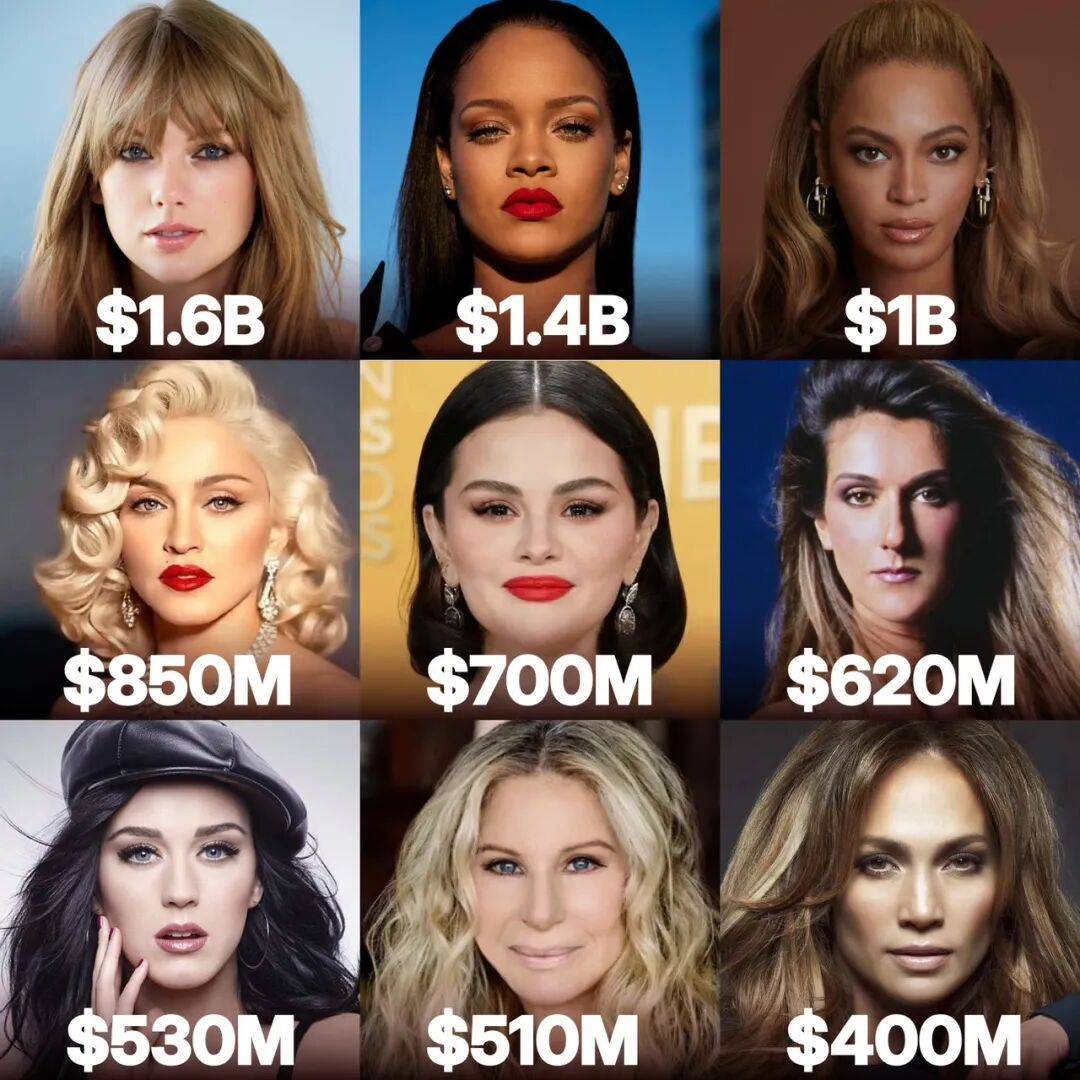
音乐界九大女富豪!
Sou Hu Cai Jing· 2025-12-29 19:03
Core Insights - The article presents a list of the wealthiest female musicians, highlighting their net worth and sources of income, which primarily include music, tours, copyrights, and commercial brands [1][3]. Group 1: Wealth Rankings - Taylor Swift has a net worth of $1.6 billion, making her the wealthiest female musician [1]. - Rihanna follows with a net worth of $1.44 billion [1]. - Beyoncé's net worth is reported at $1 billion [1]. - Madonna has a net worth of $850 million [1]. - Selena Gomez's net worth stands at $700 million [1]. - Celine Dion has a net worth of $620 million [1]. - Katy Perry's net worth is $530 million [1]. - Barbra Streisand has a net worth of $510 million [1]. - Jennifer Lopez's net worth is $400 million [1]. Group 2: Sources of Wealth - The wealth of these female musicians primarily comes from various streams, including music sales, concert tours, copyrights, and commercial ventures such as cosmetics, lingerie, and fashion brands [3]. - The estimated net worth figures may vary across different media outlets, such as Forbes and CelebrityNetWorth, due to differing estimation methods [3].
我在四川很安逸|台青程逸萱:成都让我的音乐梦想生根
Zhong Guo Xin Wen Wang· 2025-12-03 12:39
Core Viewpoint - The article highlights the cultural and musical exchange between Taiwan and Sichuan, emphasizing the personal journey of Cheng Yixuan as she finds inspiration and belonging in Chengdu's vibrant atmosphere [2] Group 1: Cultural Exchange - Cheng Yixuan appreciates the cultural similarities between Taiwan and Sichuan, believing that their shared acceptance of diverse cultures can lead to new musical collaborations [2] - The article suggests that the interaction between the two regions can foster a rich cultural dialogue, potentially enhancing the music scene in both areas [2] Group 2: Personal Journey - Cheng Yixuan has found a sense of belonging in Chengdu, which has positively influenced her music creation process [2] - The article describes how the scenic beauty and warm hospitality of Chengdu have helped alleviate her stress and provided her with creative inspiration [2]
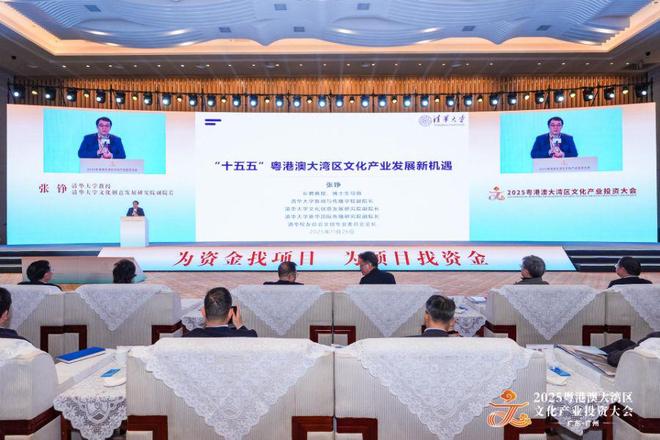
清华大学张铮:打造大湾区文化经济特区,改变有产品无IP局面
2 1 Shi Ji Jing Ji Bao Dao· 2025-11-26 04:01
Core Insights - The 2025 Guangdong-Hong Kong-Macao Greater Bay Area Cultural Industry Investment Conference highlighted significant achievements in the cultural industry during the 14th Five-Year Plan period and proposed strategies for the upcoming 15th Five-Year Plan [2][5]. Group 1: Achievements in Cultural Industry - During the 14th Five-Year Plan, Guangdong established notable advantages in digital creativity, animation, gaming, online audio-visual, and digital cultural manufacturing, with revenue shares of approximately 20% for digital publishing, 33% for animation, 25% for music, and 80% for gaming in the national market [2]. - Since 2022, the Guangdong Provincial Department of Culture and Tourism has issued cultural consumption vouchers totaling 39 million yuan, generating an average direct consumption boost ratio of about 1:5 [3]. - In cultural manufacturing, Guangdong's gaming and amusement equipment production reached 596,000 units in 2024, with domestic and international revenue of approximately 23.19 billion yuan, accounting for 98.8% of the national total [3]. Group 2: Future Development Strategies - For the 15th Five-Year Plan, strategies include enhancing IP development in cultural trade, promoting cultural content and technology standards internationally, and leveraging Hong Kong and Macao's roles to facilitate cross-border e-commerce and data flow [5]. - The cultural creative industry in Hong Kong saw its value added increase from 52.3 billion HKD in 2005 to 122.1 billion HKD in 2022, with its share of local GDP rising from 3.8% to 4.5% [5]. - Macao's cultural industry service revenue is projected to rise by 12.7% in 2024, reaching 9.73 billion MOP, indicating a growing contribution to the overall economy [5].