
基础设施贷款

Search documents
从穷沟沟到“桃花源”
Jin Rong Shi Bao· 2025-11-25 04:12
Core Insights - The transformation of the Bashan Grand Canyon into a thriving tourist destination is attributed to significant financial support and innovative credit products, resulting in over 11.92 million annual visitors and a tourism revenue exceeding 7.8 billion yuan [1] Financial Support and Infrastructure Development - The financial system in Dazhou has played a crucial role, providing a total of 2.339 billion yuan in loans for infrastructure development, cultural promotion, and poverty alleviation [1] - In 2016, the Bashan Grand Canyon was designated as a key tourism poverty alleviation project, leading to the issuance of 660 million yuan in poverty alleviation loans to improve transportation and connect scattered villages [2] - Additional loans of 250 million yuan for infrastructure and 16.55 million yuan in small credit loans were provided to support local development projects [2] Cultural Integration and Employment Generation - The integration of local culture with tourism has been emphasized, with performances like "Dreaming Back to the Ba State" and traditional Tujia drum performances enhancing visitor experiences [2] - A credit loan of 8 million yuan was provided to support the "Bashan Welcomes Guests" cultural show, which has increased local farmers' average annual income by 40,000 yuan [3] - The establishment of 243 guesthouses in Dukuo Township has created 8,670 jobs, with average annual income increasing fivefold since 2018 [3] Ecological and Economic Development - The Bashan Grand Canyon is leveraging its ecological advantages to develop a top-tier ski resort and wellness retreat, promoting a "scenic area leads to village" model for regional development [4] - The village of Chaoyang has been recognized as a provincial model for rural revitalization, with local guesthouses generating over 3.13 million yuan in annual revenue and providing employment for over 30 villagers [4] - The goal for 2025 is to achieve the status of the first 5A-level scenic area in the city, further enhancing the integration of cultural and tourism resources [4]
金融活水润实体 砥砺奋进新征程
Jin Rong Shi Bao· 2025-11-04 02:09
Core Viewpoint - The "15th Five-Year Plan" emphasizes the importance of financial support for the real economy, focusing on sectors such as technology, green development, and inclusive finance, providing a clear direction for future economic and social development [1][2][3] Financial Support for the Real Economy - The financial system has increased support for manufacturing, technological innovation, and green development during the "14th Five-Year Plan," with average annual growth rates of 27.2% for scientific research loans, 21.7% for medium- and long-term loans to manufacturing, and 10.1% for infrastructure loans [2] - The balance of inclusive loans for small and micro enterprises reached 36 trillion yuan, 2.3 times that of the end of the "13th Five-Year Plan," with interest rates decreasing by 2 percentage points [2] - The market capitalization of the A-share technology sector now accounts for over one-quarter of the total, with the number of technology companies in the top 50 increasing from 18 to 24 [2] Key Tasks and Financial System Positioning - The "15th Five-Year Plan" is crucial for laying the foundation for achieving socialist modernization, with systematic deployments around building a modern industrial system, accelerating technological self-reliance, and modernizing agriculture and rural areas [2] - The financial system needs to accurately position itself and enhance the quality and efficiency of services to the real economy [2][3] Focus Areas for Financial Support - Financial resources should be directed towards promoting technological innovation, advanced manufacturing, and green development [3] - Key areas include supporting original and disruptive technological innovations, enhancing green finance products, improving financing accessibility for small and micro enterprises, and developing financial services that adapt to an aging population [3] Enhancing Financial Services - The financial system must improve the transmission of monetary policy and optimize the financial institution framework to ensure comprehensive coverage of the real economy [3][4] - There is a need to deepen reforms in the Science and Technology Innovation Board and the Growth Enterprise Market to enhance equity financing capabilities for real enterprises [3] Serving the Public - Financial services should enhance the public's sense of gain, happiness, and security, focusing on areas such as consumption financing, rural financial services, and supporting rural revitalization [4] - The financial system aims to provide precise financial services to boost the construction of a modern industrial system and ensure effective collaboration with the real economy [4]
砥砺奋进五载路 金融强国建设迈出坚实步伐
Jin Rong Shi Bao· 2025-10-13 02:07
Group 1: Overview of China's Financial Sector - As of June 2023, China's banking sector total assets reached nearly 470 trillion yuan, ranking first in the world; stock and bond market sizes rank second globally; foreign exchange reserves have been the largest for 20 consecutive years [1] - The financial system has made significant achievements during the "14th Five-Year Plan" period, with comprehensive reforms deepening and the financial governance system modernizing [1] - The financial sector has enhanced its international competitiveness and influence, with a complete and competitive financial institution, market, and product system [1] Group 2: Financial Support for the Real Economy - The financial system has focused on serving the real economy, with total assets of the banking and insurance sectors exceeding 500 trillion yuan, averaging a 9% annual growth over the past five years [2] - Financial support for key areas such as manufacturing, technological innovation, and green development has increased, with average annual growth rates for loans in these sectors at 27.2%, 21.7%, and 10.1% respectively [2] - The balance of loans to small and micro enterprises reached 36 trillion yuan, 2.3 times that of the end of the "13th Five-Year Plan" [2] Group 3: Capital Market Developments - The capital market has accelerated its service to technological innovation, with over 90% of newly listed companies being technology-related [3] - The market capitalization of the A-share technology sector exceeds 25% of the total market, significantly higher than that of banking, non-banking financial, and real estate sectors combined [3] Group 4: Financing Costs and Transparency - Market financing costs have continued to decline, with the weighted average interest rate for new corporate loans at approximately 3.1%, down about 40 basis points year-on-year [4] - The introduction of transparent loan cost disclosures has improved the financing environment for enterprises, reducing hidden fees [4] Group 5: Risk Management and Financial Stability - Financial regulatory reforms have effectively mitigated risks, with key indicators such as non-performing loans and capital adequacy remaining stable [7][8] - The number of financing platforms has decreased by over 60%, and the scale of financial debt has dropped by over 50% compared to early 2023 [9] - The financial system has maintained stability in the foreign exchange and bond markets, with low default rates and effective risk management measures in place [10] Group 6: International Financial Integration - The financial sector has made strides in international openness, with significant increases in foreign investment and participation in global financial governance [11][12] - The RMB's international status has improved, becoming the largest currency for China's external payments and the third-largest trade financing currency globally [13] - The establishment of financial infrastructure in Shanghai aims to enhance its role as a global center for RMB asset allocation and risk management [14]
“金融天团”的170万亿元“大项目”如何改变你我生活?
Yang Shi Wang· 2025-09-23 03:01
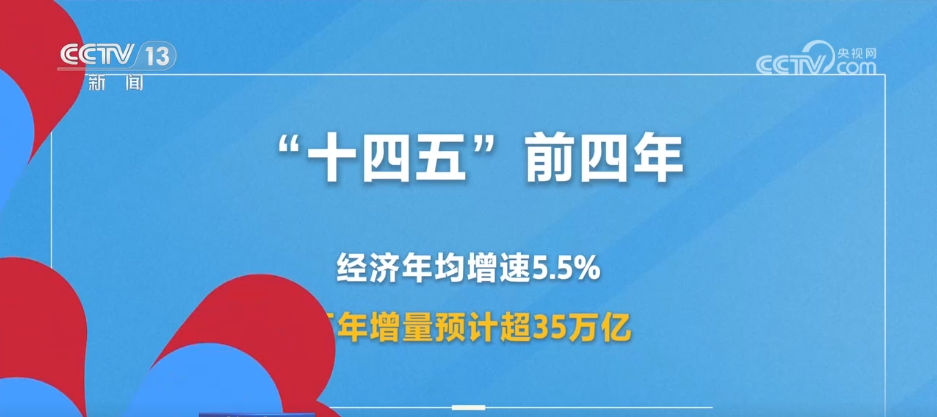
Core Insights - The financial industry in China has shown steady development during the "14th Five-Year Plan" period, with the banking sector's total assets ranking first globally and the stock and bond markets ranking second [1][3] - Over the past five years, the banking and insurance sectors have injected 170 trillion yuan into the real economy, supporting an average annual economic growth rate of 5.5% [3][5] - Financial support has been crucial for various sectors, including scientific research, manufacturing, and infrastructure, with significant annual growth rates in loans for these areas [5][7] Financial Support and Impact - Scientific research loans have grown at an average rate of 27.2% annually, while medium to long-term loans for manufacturing have increased by 21.7%, and infrastructure loans have risen by 10.1% [5] - The financial backing has facilitated major projects such as the launch of China's first large cruise ship and the operation of the world's first fourth-generation nuclear power station [5] - Individuals and businesses can access loans for various purposes, including home purchases, vehicle financing, and entrepreneurship, with decreasing loan costs [7] Capital Market Developments - In the past five years, listed companies have returned a total of 10.6 trillion yuan to shareholders through dividends and buybacks, which is more than double the total amount raised through IPOs and refinancing during the same period [9] - The financial infrastructure has become more accessible, allowing even remote areas to connect to national payment networks through mobile technology [13] Overall Financial Ecosystem - The financial sector is integral to the progress of the nation and the development of enterprises, continuously providing convenience to daily life [13]

21社论丨金融服务实体经济质效齐升,积极助力高质量发展
21世纪经济报道· 2025-09-23 02:51
Core Viewpoint - The article highlights the significant achievements of China's financial sector during the "14th Five-Year Plan" period, emphasizing the enhancement of financial services to the real economy, deepening financial reforms, and improving international competitiveness [1][2][4]. Financial Achievements - As of June 2023, China's banking sector total assets reached nearly 470 trillion yuan, ranking first globally, with stock and bond market sizes ranking second [1]. - Over the past five years, the banking and insurance sectors provided an additional 170 trillion yuan in funding to the real economy, with annual growth rates of 27.2% for scientific research loans, 21.7% for manufacturing medium- and long-term loans, and 10.1% for infrastructure loans [2]. Support for Innovation and SMEs - The financial system has focused on supporting technological innovation, with over 90% of newly listed companies being technology-related. The market capitalization of the A-share technology sector exceeds 25% [2]. - The balance of inclusive loans for small and micro enterprises reached 36 trillion yuan, 2.3 times that of the end of the "13th Five-Year Plan" [2]. Financial Market Opening and Internationalization - The "14th Five-Year Plan" period saw further deepening of reforms and opening up in the financial sector, with high-level institutional opening of capital markets and steady progress in the internationalization of the renminbi [2][3]. - By the end of July 2023, foreign institutions and individuals held over 10 trillion yuan in domestic stocks, bonds, and deposits, with panda bond issuance exceeding 1 trillion yuan [2][3]. Risk Management and Financial Stability - The period was crucial for transforming old and new growth drivers, with significant achievements in preventing and mitigating financial risks, including a reduction in the number of high-risk institutions and assets [3]. - By June 2023, the number of financing platforms had decreased by over 60%, and the scale of financial debt had dropped by over 50% compared to the beginning of the year [3]. Future Outlook - The financial sector aims to continue enhancing service quality and efficiency, supporting the real economy and technological innovation, while promoting high-level opening and the internationalization of the renminbi to lay a solid foundation for high-quality development in the "15th Five-Year Plan" [4].

四大金融管理部门详解“十四五”金融业硬核成绩单
Shang Hai Zheng Quan Bao· 2025-09-22 18:48
Group 1 - The People's Bank of China reported that multiple financial indicators rank among the top globally, with total banking assets nearing 470 trillion yuan, the largest in the world [2][3] - The banking and insurance sectors provided an additional 170 trillion yuan in funding to the real economy during the "14th Five-Year Plan" period [2][3] - The average annual growth rates for loans to technology-based SMEs, inclusive small micro loans, and green loans exceeded 20% [2][3] Group 2 - Loans for scientific research technology, medium to long-term loans for manufacturing, and infrastructure loans grew at average rates of 27.2%, 21.7%, and 10.1% respectively [3] - Insurance funds invested over 5.4 trillion yuan in stocks and equity funds, representing an 85% increase from the end of the "13th Five-Year Plan" [3] - The real estate financing coordination mechanism's "white list" project loans exceeded 7 trillion yuan, supporting the construction and delivery of nearly 20 million housing units [3] Group 3 - The foreign exchange market has shown stability, with the holdings of foreign institutions and individuals in domestic stocks, bonds, and deposits exceeding 10 trillion yuan [3] - The proportion of the renminbi in cross-border trade increased from 16% to nearly 30%, indicating enhanced resilience in the foreign exchange market [3] - The market-oriented formation mechanism of the renminbi exchange rate is continuously improving, with more effective macro-prudential management in the foreign exchange market [3]
“十四五”时期金融业发展成就:潘功胜、李云泽、吴清、朱鹤新重磅发声
Sou Hu Cai Jing· 2025-09-22 14:10
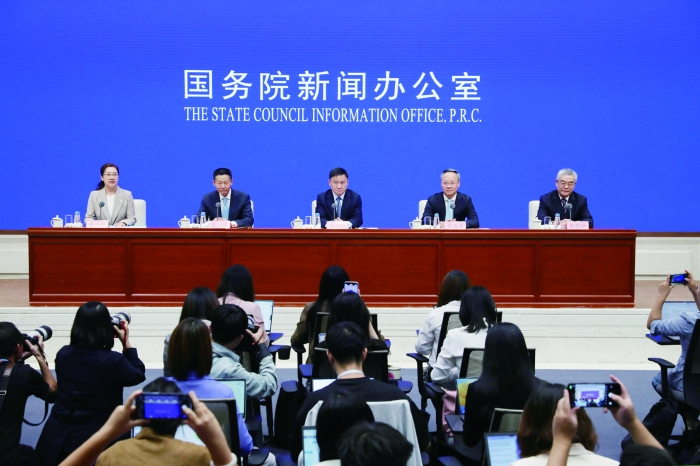
Core Insights - The press conference highlighted significant achievements in China's financial sector during the "14th Five-Year Plan" period, emphasizing the modernization and reform of the financial system, improved financial services, and enhanced risk management capabilities [1][5][10]. Financial Sector Achievements - As of June 2023, China's banking sector total assets reached nearly 470 trillion yuan, ranking first globally, with stock and bond market sizes second in the world [1]. - The financial system has seen a comprehensive deepening of reforms, with a more robust governance structure and improved financial service quality and efficiency [5][10]. - The financial sector's international competitiveness and influence have significantly increased, with 143 Chinese banks listed among the global top 1000 [10]. Financial Services to the Real Economy - The financial services provided to the real economy have improved significantly, with a focus on supporting major national strategies and addressing weak links in economic development [6][11]. - Loans to technology-based small and micro enterprises, as well as green loans, have seen an annual growth rate exceeding 20% during the "14th Five-Year Plan" [6]. Financial Risk Management - Important progress has been made in preventing and mitigating financial risks, with a focus on orderly resolution of prominent risk points in the financial sector [7][10]. - The overall health of the financial system remains stable, with key regulatory indicators showing positive trends [10]. Capital Market Developments - The capital market has experienced steady growth in both quantity and quality, with a robust regulatory framework established during the "14th Five-Year Plan" [13][14]. - The total market capitalization of A-shares surpassed 100 trillion yuan in August 2023, reflecting a significant increase in market activity [13]. Foreign Exchange Management - China's foreign exchange reserves have remained stable above 3 trillion USD since the beginning of the "14th Five-Year Plan," providing a strong economic stabilizer [16][18]. - The foreign exchange service environment has been optimized, significantly reducing administrative burdens and enhancing efficiency for enterprises [17].
潘功胜、李云泽、吴清、朱鹤新同日发声,信号巨大
2 1 Shi Ji Jing Ji Bao Dao· 2025-09-22 08:53
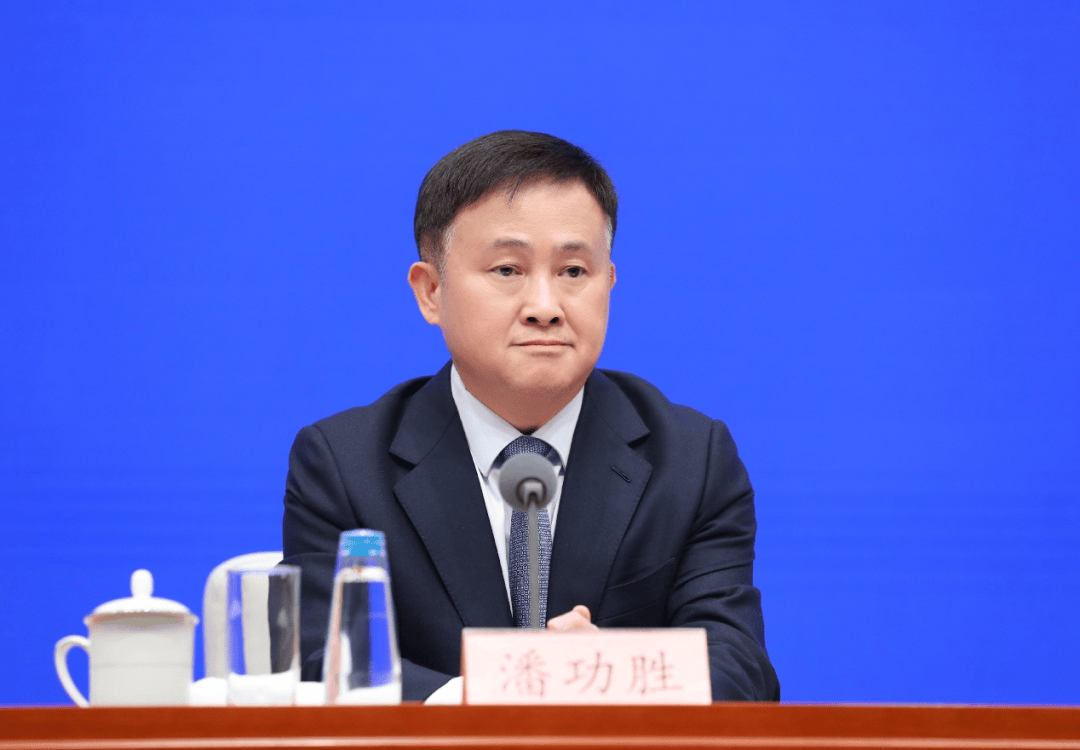
Core Insights - The press conference highlighted significant achievements in China's financial sector during the "14th Five-Year Plan" period, emphasizing the growth and stability of the banking and insurance industries [3][8][9]. Group 1: Financial Sector Achievements - As of June 2023, China's banking sector total assets reached nearly 470 trillion yuan, ranking first globally, with stock and bond market sizes second in the world [3]. - The banking and insurance sectors provided an additional 17 trillion yuan in funding to the real economy over the past five years, with average annual growth rates for loans to technology SMEs, inclusive small loans, and green loans exceeding 20% [4][8]. - The total assets of the banking and insurance sectors surpassed 500 trillion yuan, with an average growth rate of nearly 9% over the past five years [9]. Group 2: Regulatory Developments - The China Securities Regulatory Commission (CSRC) issued 2,214 administrative penalties during the "14th Five-Year Plan," with fines totaling 41.4 billion yuan, reflecting a 58% increase in penalties compared to the previous five-year period [17]. - The CSRC has enhanced market transparency and ecological integrity through strict enforcement actions, including the transfer of over 700 cases to law enforcement agencies [18]. Group 3: Market Resilience and Investor Engagement - The A-share market has shown increased resilience and risk management capabilities, with the annualized volatility of the Shanghai Composite Index at 15.9%, a decrease of 2.8 percentage points from the previous five-year period [15]. - Over the past five years, listed companies in China distributed a total of 1.06 trillion yuan in dividends and share buybacks, an increase of over 80% compared to the previous five-year period [12]. - The proportion of technology companies in the A-share market has risen, with their market capitalization now accounting for over one-fourth of the total [13]. Group 4: Foreign Exchange and International Investment - China's foreign exchange reserves have remained stable above 3 trillion USD since the beginning of the "14th Five-Year Plan," with recent figures exceeding 3.2 trillion USD [20]. - As of July 2023, foreign institutions and individuals held over 10 trillion yuan in domestic stocks, bonds, and deposits, indicating a robust international investment landscape [21].

滚动更新|“十四五”期间科技型中小企业贷款年均增速超20%
2 1 Shi Ji Jing Ji Bao Dao· 2025-09-22 07:32
Core Insights - During the "14th Five-Year Plan" period, the average annual growth rate of loans to technology-based small and medium-sized enterprises (SMEs) exceeded 20% [3] Group 1: Financial Contributions to the Real Economy - Over the past five years, the banking and insurance sectors have provided an additional 170 trillion yuan to the real economy through various financing methods, effectively playing a key role in financing channels [2] - The average annual growth rates for loans in key areas are as follows: scientific and technological loans at 27.2%, medium to long-term loans for manufacturing at 21.7%, and infrastructure loans at 10.1% [2] - The balance of inclusive loans for small and micro enterprises reached 36 trillion yuan, which is 2.3 times that of the end of the "13th Five-Year Plan," with interest rates decreasing by 2 percentage points [2] Group 2: Achievements in Financial Services - The financial services to the real economy have significantly improved in quality and efficiency during the "14th Five-Year Plan" period, with average annual growth rates for technology-based SMEs, inclusive small and micro loans, and green loans all exceeding 20% [3] - As of June this year, the total assets of the banking sector in China approached 470 trillion yuan, ranking first in the world, while the stock and bond market sizes ranked second globally [4] - China's foreign exchange reserves have maintained the world's largest position for 20 consecutive years, and the country leads in green finance, inclusive finance, and digital finance [4]
摩根大通和三菱日联金融集团牵头,为得州一个数据中心园区提供逾200亿美元贷款
Xin Lang Cai Jing· 2025-08-21 14:57
Group 1 - JPMorgan and MUFG are leading a loan exceeding $22 billion to support Vantage's plan for a large data center campus [1] - The total loan amount is approximately $23 billion, but the final scale is yet to be determined as project costs are still being calculated [1] - Other banks involved in underwriting this infrastructure loan include BNP Paribas, Goldman Sachs, Société Générale, Sumitomo Mitsui Banking Corporation, and Wells Fargo [1] Group 2 - Silver Lake Management and DigitalBridge Group Inc. have also committed to invest $3 billion in the project [1]

