嫦娥

Search documents
经济日报金观平:夯实未来产业发展基石
Xin Lang Cai Jing· 2026-02-19 02:32
Core Insights - The emphasis is on leveraging the advantages of a new type of national system to enhance key core technology breakthroughs and accelerate the application of scientific research achievements [1][2] Group 1: Technology and Industry Development - The future industries driven by cutting-edge technologies exhibit significant foresight, strategic importance, disruptive potential, and uncertainty [1] - The speed, breadth, and depth of future industry development are largely determined by the extent of technological breakthroughs [1] - The new round of technological revolution and industrial transformation is accelerating, with emerging technologies leading and supporting the rapid rise of future industries [1] Group 2: Research and Innovation - Strengthening basic research is crucial as it serves as the foundation for all technological issues [2] - Transitioning from "technical bonsai" to "industrial forest" requires strategic, forward-looking, and systematic layout of basic research to enhance original innovation capabilities [2] - There is a need for a comprehensive policy support system and the establishment of relevant concept verification, pilot testing platforms, and application scenario bases to facilitate efficient technology transfer [2] Group 3: Strategic Focus - The new type of national system is viewed as a vital tool for concentrating efforts on major tasks and winning key core technology battles [1] - It is essential to gather human, material, and financial resources to target critical areas such as high-performance chips and to increase R&D investment [1] - The current positive momentum in future industries, particularly in quantum technology, indicates a need to solidify the technological foundation and strategically position for the next wave of technological revolution and industrial transformation [2]
壹视界·我们的“十五五”|在深刻复杂变化中,我们如何识变应变求变?
Ren Min Wang· 2025-12-29 06:29
Core Viewpoint - The article emphasizes the importance of recognizing, responding to, and seeking change in a complex and evolving environment, particularly during China's 14th Five-Year Plan period [2][3][4]. Group 1: Recognizing Change - Recognizing change is the prerequisite for responding effectively. It involves understanding both the nature and trends of change [2]. - In March 2020, President Xi Jinping highlighted the need for new development strategies in response to changing conditions, leading to the proposal of a new development pattern that emphasizes domestic circulation [2]. Group 2: Responding to Change - The core of effective response lies in understanding the dialectics of "crisis" and "opportunity." It requires proactive measures rather than reactive fixes [3]. - The development of the Harmony operating system exemplifies a strategic response to the underlying needs of interconnected devices, showcasing a shift in system architecture and ecosystem creation [3]. Group 3: Seeking Change - Seeking change represents an elevation of recognizing and responding to change, reflecting the courage to lead and innovate [4]. - Recent achievements in autonomous innovation, such as the Chang'e lunar missions and the C919 aircraft, highlight the spirit of continuous change and innovation [4]. - The 20th Central Committee's proposals emphasize the importance of fostering emerging industries, future-oriented layouts, and innovative trade development, which are crucial for maintaining competitiveness in a global context [4].
积极识变应变求变(思想纵横)
Ren Min Ri Bao· 2025-12-08 22:10
Core Viewpoint - The article emphasizes the importance of recognizing, responding to, and seeking change in the context of China's modernization and development strategy, as highlighted by Xi Jinping's methodology of "identifying changes, responding to changes, and seeking changes" [1][2][3][4]. Group 1: Recognizing Change - Recognizing change is the prerequisite for responding to it, which involves not just perceiving the situation but also demonstrating strategic judgment [2]. - Xi Jinping's proposal to construct a new development pattern is based on accurately recognizing changes in the environment, marking a significant strategic deployment [2]. - The ability to grasp the overall situation and detect subtle trends is crucial for maintaining initiative in a complex and changing world [2]. Group 2: Responding to Change - The key to responding to change lies in proactive measures rather than reactive fixes, focusing on future-oriented actions [3]. - The development of the Harmony operating system exemplifies a strategic response that transforms challenges into opportunities by addressing foundational needs [3]. - Effective responses require a deep understanding of the situation and the ability to make decisive, forward-looking adjustments [3]. Group 3: Seeking Change - Seeking change represents an elevation of recognizing and responding to change, reflecting the courage to lead and innovate [4]. - Innovation is identified as the primary driving force for development and a critical means to solve problems, as demonstrated by various autonomous innovations in recent years [4]. - The emphasis on reform and innovation in the 20th National Congress highlights the need to break free from conventional thinking and continuously explore new pathways [4].
航天强国建设的四重逻辑
Si Chuan Ri Bao· 2025-11-30 21:04
Core Viewpoint - The article emphasizes the strategic importance of building a strong aerospace nation as part of China's "14th Five-Year Plan," highlighting its historical significance and the need for innovation and development in the aerospace sector [1][4][6]. Theoretical Logic - Science is identified as a core driver of social progress and productivity, with historical perspectives from Marx and Deng Xiaoping underscoring the importance of technological advancement in national development [2][3]. Historical Logic - The aspiration to build a strong aerospace nation is rooted in China's rich cultural heritage and historical achievements in space exploration, from ancient myths to modern technological milestones [4][5]. Realistic Logic - The necessity of developing a strong aerospace sector is framed as a response to global changes and national needs, with an emphasis on enhancing self-innovation capabilities and addressing international competition in space [6][7]. Practical Logic - Building a strong aerospace nation is positioned as essential for achieving a modern socialist country, requiring a focus on institutional support, innovation, talent development, and international cooperation [8][9]. Regional Focus - The article highlights the role of Sichuan province in supporting national aerospace development, leveraging local resources and capabilities to contribute to the broader goals of building a strong aerospace nation [10].
创新中国开启关键五年 ——“十五五”科技坐标解读之一
Ke Ji Ri Bao· 2025-10-27 06:20
Core Points - The recent Fourth Plenary Session of the 20th Central Committee approved the "Suggestions on Formulating the 15th Five-Year Plan for National Economic and Social Development," outlining a strategic framework for the next five years [1] - Emphasis on accelerating high-level technological self-reliance and innovation as a key driver for new quality productivity [1][8] Group 1: Five-Year Plan Significance - The Five-Year Plan serves as a guiding star for long-term economic and social development, playing a crucial role in directing technological innovation and economic growth [2][3] - Experts highlight the importance of the Five-Year Plan in establishing long-term goals and directions for technological innovation, showcasing its continuity and innovative characteristics [2] Group 2: Technological Advancements - China's global innovation index ranking has improved from 34th in 2012 to 10th in 2025, with high-level international journal papers and patent applications leading the world for five consecutive years [3] - The "14th Five-Year Plan" has positioned innovation-driven development at the core of national modernization, emphasizing original innovation and strengthening foundational research [5][6] Group 3: Future Outlook - The "15th Five-Year Plan" is seen as a critical period for achieving high-level technological self-reliance and building a strong technological nation, with a focus on artificial intelligence and addressing challenges such as population aging [7][8] - The plan aims to enhance the integration of technological and industrial innovation, fostering new quality productivity and supporting China's modernization efforts [7][8]
创新中国开启关键五年——“十五五”科技坐标解读之一
Ke Ji Ri Bao· 2025-10-26 23:42
Core Points - The 20th Central Committee's Fourth Plenary Session approved the "Suggestions on Formulating the 15th Five-Year Plan for National Economic and Social Development," outlining a strategic framework for the next five years [1] - Emphasis on accelerating high-level technological self-reliance and innovation as a key driver for new quality productivity [8] Group 1: Five-Year Plan Significance - The Five-Year Plan serves as a guiding star for long-term economic and social development, playing a crucial role in directing technological innovation and economic growth [2][3] - Experts highlight the importance of the Five-Year Plan in establishing long-term goals and directions for technological innovation, showcasing its continuity and innovative characteristics [2][3] Group 2: Technological Advancements - China's global innovation index ranking has improved from 34th in 2012 to 10th in 2025, with high-level international journal papers and patent applications leading the world for five consecutive years [3] - The "14th Five-Year Plan" has been pivotal in enhancing China's technological capabilities, emphasizing original innovation and strengthening foundational research [4][5] Group 3: Future Outlook - The "15th Five-Year Plan" is seen as a critical period for achieving high-level technological self-reliance and building a strong technological nation, with a focus on artificial intelligence and addressing challenges such as population aging [7][8] - The plan aims to deepen the integration of technological and industrial innovation, fostering new quality productivity [7][8]
研发人员总量世界第一!科技强国建设根基再夯实
Shang Hai Zheng Quan Bao· 2025-10-14 10:30
Core Insights - Since the beginning of the "14th Five-Year Plan," China's technological sector has achieved historic accomplishments and transformations, supported by the largest number of R&D personnel in the world [1][2] - A series of significant technological breakthroughs have emerged, reinforcing the foundation for building a strong technological nation and illuminating the path for innovative development [1][2] - The reform of the research ecosystem has injected vitality into scientific research, leading to a surge in innovative outcomes through various measures such as optimizing talent evaluation and funding systems [1][2] Talent Development - The talent pool for basic research has continuously expanded, with the number of personnel growing from 472,000 in 2021 to 575,000 in 2023, indicating a robust foundation for innovation [2] - Young scientists are increasingly taking on leadership roles, with 43.3% of project leaders in national key R&D programs being under 45 years old, and 80% of projects funded by the National Natural Science Foundation being led by individuals in this age group [2] - The presence of a large number of high-impact scientists has also increased, with 1,405 high-cited scientists in 2024, a 50% increase from 2021, representing one-fifth of the global total [2] Future Outlook - The next five years are deemed critical for building a strong technological nation, with a focus on strategic goals and the integration of education, science, and technology talent development [3] - The emphasis will be on cultivating top-tier leading talents and innovative teams through collaboration between education and industry, enhancing the competitive advantage in talent [3] Conclusion - The world's largest R&D workforce is committed to pursuing new frontiers and achieving high-quality advancements in technology [4]
10月10日晚间央视新闻联播要闻集锦
Yang Shi Xin Wen Ke Hu Duan· 2025-10-10 13:57
Group 1 - Xi Jinping congratulated Kim Jong-un on the 80th anniversary of the Workers' Party of Korea [5] - Xi emphasized the importance of advancing China's space exploration and innovation during the "14th Five-Year Plan" period, highlighting significant achievements in deep space exploration [6] - Li Qiang met with Kim Jong-un and paid tribute to the Chinese People's Volunteer Army martyrs [7][8] Group 2 - The "14th Five-Year Plan" period has seen advancements in inclusive, foundational, and safety net social welfare construction in China [3][12] - The government has introduced new regulations for the clinical research and application of biomedical technologies, effective from May 1, 2026 [9]
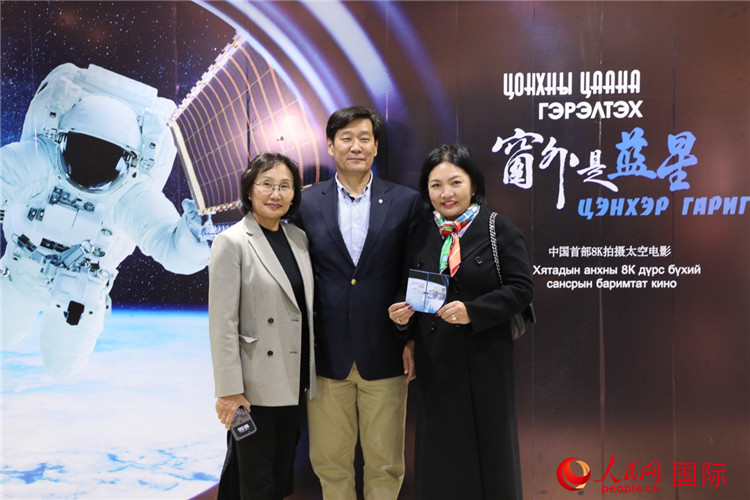
《窗外是蓝星》放映活动在蒙古国举办
人民网-国际频道 原创稿· 2025-10-10 03:49
Core Points - The film "The Blue Planet Outside" is China's first 8K space documentary, showcasing the extraordinary journey of Chinese astronauts who stayed in the Chinese space station for six months [1][4] - The film was screened for the first time in Mongolia, with special Mongolian subtitles produced by CGTN Ulaanbaatar [1][4] Group 1 - The film represents significant advancements in China's space exploration, highlighting the development of the Tiangong space station and Shenzhou spacecraft, as well as missions like Tianwen and Chang'e [4] - The event was organized by the Chinese Embassy in Mongolia, the Mongolian Academy of Sciences, and CGTN Asia-Africa Center Ulaanbaatar [4]

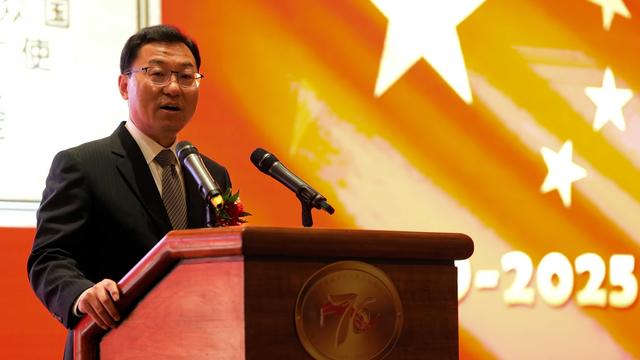
谢锋大使致辞:希望美方采取实际行动,与中方相向而行
Bei Jing Ri Bao Ke Hu Duan· 2025-09-29 05:15
Core Points - The speech celebrates the 76th anniversary of the founding of the People's Republic of China, highlighting the achievements of the Chinese Communist Party in leading the nation towards economic development and social stability [3][4] - China is advancing towards modernization and national rejuvenation through innovation-driven development, achieving significant milestones in various technological fields [3][4] - The country has maintained its position as the world's second-largest economy, with a GDP growth of 5.3% year-on-year in the first half of the year, and has made strides in poverty alleviation and social welfare [4] - China is committed to expanding its openness and creating win-win opportunities for global trade, with ongoing reforms to reduce restrictions on foreign investment [4] - The speech emphasizes China's role in promoting world peace and stability, advocating for mutual respect and cooperation in international relations, particularly with the United States [5][6] Group 1 - The speech acknowledges the contributions of overseas Chinese in the development of both China and the United States, highlighting their historical significance [7] - It calls for unity among Chinese people globally to support national rejuvenation and cultural exchange, emphasizing the importance of telling China's story [7] - The Chinese Embassy in the U.S. has been actively providing services to overseas Chinese, handling over 83,000 various certificates and addressing numerous consular cases this year [8]