
实物白银

Search documents
2026年白银是否还会涨价
Sou Hu Cai Jing· 2026-02-06 05:57
Core Conclusion Summary - The silver price in 2026 is expected to exhibit a "strong first half, weak second half" trend, driven by explosive demand from the photovoltaic industry and an expanding global supply-demand gap. The macroeconomic environment will be significantly influenced by the Federal Reserve's monetary policy and global economic growth rates. Goldman Sachs predicts silver prices may reach $120 per ounce in Q2, while UBS expects prices to hit $100 per ounce in the first half and decline to $75 per ounce by year-end. Short-term trading structure adjustment risks should be monitored, but long-term industrial demand presents structural opportunities [1]. Understanding Phase: Key Drivers and Basic Information - The core drivers of the silver price increase in 2026 include explosive industrial demand, an expanding supply-demand gap, and macroeconomic support. The photovoltaic industry is the main growth driver, with global installed photovoltaic capacity expected to grow over 25% year-on-year, leading to an 18% increase in silver demand in this sector, which accounts for 32% of total industrial demand. On the supply side, silver production growth is limited, with only a 1.9% increase expected in 2026, while London deliverable stocks have fallen to 233 tons, sufficient for only 15 days of industrial consumption [2]. - The relationship between silver prices and macroeconomic factors is strong. The global economic growth rate is projected to decline to 2.6% in 2026, affecting industrial demand for silver. If the economy underperforms, safe-haven demand may temporarily support silver prices. Monetary policy from the Federal Reserve and other central banks will also significantly impact silver prices, with potential dollar index fluctuations influencing market dynamics [3]. Analysis Phase: Supply-Demand Dynamics and Institutional Predictions - The supply-demand gap for silver is expected to continue widening. Supply growth is rigid, with a projected 0.6% decline in silver production in 2025 and a 1.9% increase in 2026. Industrial demand is anticipated to exceed 60%, primarily driven by the photovoltaic sector, with significant increases in silver consumption per unit of energy produced [5]. - Major institutions have differing short-term and long-term views on silver prices. Goldman Sachs expects silver prices to surge to $120 per ounce in Q2 2026 due to industrial demand, while UBS predicts a peak of $100 per ounce in the first half, followed by a decline to $75 per ounce in the second half. Both institutions caution about the volatility of silver compared to gold and the risks associated with capital withdrawal [6]. Decision-Making Phase: Investment Opportunities and Risk Management - Key investment opportunities in 2026 are concentrated in the first half due to the photovoltaic supply replenishment cycle and potential short-term gains from geopolitical tensions and Federal Reserve rate cuts. The silver demand explosion in the photovoltaic supply chain presents opportunities for silver futures and ETFs. Additionally, if global inflation rebounds, silver's anti-inflation properties may enhance its appeal as a hedge [9]. - The main risks include macroeconomic policy risks, demand shortfalls, and short-term trading risks. If U.S. inflation remains sticky, the Federal Reserve may delay rate cuts, leading to a stronger dollar and suppressed silver prices. A decline in photovoltaic installation growth or advancements in silver alternatives could also weaken industrial demand [10]. Practical Phase: Investment Products and Timing - Mainstream investment products for silver include silver futures, ETFs, physical silver, and silver stocks, each catering to different investor needs. Silver futures are suitable for high-risk investors due to their leverage and volatility, while silver ETFs offer a more stable investment for medium-risk investors. Physical silver is ideal for long-term value retention, and silver stocks are linked to silver prices and company performance [12]. - Entry points for investment should focus on the photovoltaic supply replenishment period in early 2026 and the timing around Federal Reserve rate cuts. Exit strategies should be aligned with institutional target prices and risk signals, with gradual profit-taking recommended as prices approach $95-$100 per ounce [14].
白银抛售潮背后:一则“2月15日IRS严打”的旧谣言如何被重新点燃?
Xin Lang Cai Jing· 2026-02-05 05:20
Core Viewpoint - The recent panic in the silver market, triggered by rumors of a crackdown by the IRS on silver holders, is based on misunderstandings and misinterpretations of existing regulations and deadlines [3][11]. Group 1: Rumor Clarification - The date of February 15 is not a new enforcement action by the IRS but rather a long-standing deadline for paperwork related to information reporting, specifically concerning forms like 1099-B [4][15]. - The IRS's deadlines can shift due to weekends and holidays, and the current guideline lists February 17, 2026, as the relevant date, not February 15 [4][15]. Group 2: Sources of Panic - Much of the fear surrounding silver stems from conflating three distinct systems, each with different triggers and purposes, leading to confusion among investors [5][16]. - The rapid spread of panic is partly due to the misconception that buying and selling silver are treated the same way in terms of reporting requirements [6][17]. Group 3: Reporting Requirements - Investors may need to report capital gains tax if they sell silver at a profit, which applies to many assets, not just precious metals [7][18]. - Certain transactions may require information reporting by dealers, such as the 1099-B form, but this is not automatic and depends on specific thresholds and conditions [7][18]. - The 8300 form, often mentioned in discussions, applies to cash transactions over $10,000 and is aimed at anti-money laundering efforts, not tracking silver ownership [7][18]. Group 4: Ownership and Transaction Dynamics - The ownership rules for silver have not changed, and there are no new registration requirements or enforcement actions against silver holders [10][21]. - The distinction between paper silver (like ETFs) and physical silver is crucial, as only certain transactions involving physical silver may trigger reporting obligations [9][20]. Group 5: Conclusion - The narrative surrounding the IRS crackdown on silver holders is largely based on outdated fears and misunderstandings, emphasizing the need for investors to verify information through authoritative sources and make decisions based on facts rather than rumors [11][22].


部分银行实物金条库存松动,投资情绪降温
Di Yi Cai Jing Zi Xun· 2026-02-02 11:53
Core Viewpoint - The recent significant fluctuations in gold and silver prices have led to a cooling of investor enthusiasm for physical gold, with some investors opting to wait and observe the market [2][3]. Group 1: Price Movements - As of February 2, spot gold has dropped by 6.80% to $4,562 per ounce, while spot silver has decreased by 11.46% to $75.49 per ounce [2]. - In January, gold prices surged, with COMEX gold futures reaching over $5,600 per ounce, marking a monthly increase of over 29%, while COMEX silver futures peaked at $120 per ounce, with a monthly rise of 72% [3]. - On January 30, both gold and silver prices experienced a sharp decline, with COMEX gold futures falling by 8.35% to $4,907.50 per ounce and COMEX silver futures dropping by 25.50% to $85.25 per ounce [3]. Group 2: Investor Behavior - Following the price drop, some investors have chosen to wait rather than invest in physical gold, as evidenced by the availability of gold bars in banks that were previously sold out [2][3]. - Various banks have reported a shift in inventory status, with some gold products now showing sufficient stock, contrasting with the previous high demand [5][6]. Group 3: Market Sentiment - Investor sentiment has become polarized, with some believing that gold prices will continue to decline, while others are taking the opportunity to buy at lower prices [7]. - The World Gold Council reported that global gold demand is expected to exceed 5,000 tons by 2025, driven primarily by strong physical gold investment demand [7]. Group 4: Institutional Insights - Analysts suggest that the recent volatility in gold prices is influenced by market sentiment and speculative factors, making it difficult to predict price movements accurately [9]. - Despite short-term risks, many institutions maintain a positive long-term outlook for gold, with expectations of a return to upward trends later in the year [8].
金银比再破50,意味着什么?
Sou Hu Cai Jing· 2026-01-22 10:45
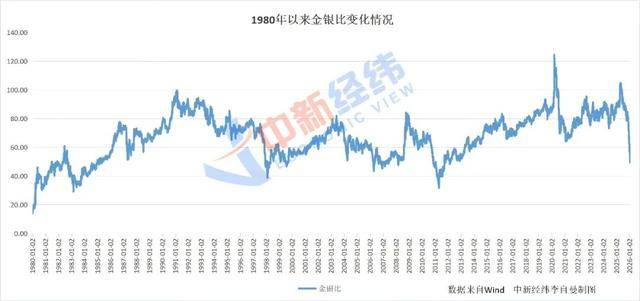
Core Viewpoint - The recent surge in gold and silver prices has led to a significant drop in the gold-silver ratio, which has fallen below 50 for the first time in nearly 14 years, indicating a strong performance of silver relative to gold and signaling potential market shifts [1][4][6]. Group 1: Gold-Silver Ratio Dynamics - The gold-silver ratio measures the relative price strength of gold and silver, calculated as the price of gold divided by the price of silver [1]. - As of January 22, 2026, the gold price reached approximately $4,839.35 per ounce, while silver was priced at about $94.39 per ounce, resulting in a gold-silver ratio of approximately 51.27 [1]. - Historically, the long-term average of the gold-silver ratio has been around 60-70, with significant fluctuations observed over the past century [4]. Group 2: Market Implications of the Ratio Drop - The recent drop below 50 suggests that silver is experiencing a relative strength phase, driven by both industrial demand and speculative investments [6][7]. - Analysts indicate that the current market environment reflects a transition from high-interest rates to a more liquid monetary policy, which has a more pronounced effect on silver prices [6]. - The structural changes in the market, including the increasing industrial demand for silver in sectors like renewable energy and semiconductors, contribute to its independent valuation apart from gold [6][10]. Group 3: Future Outlook and Investment Strategies - Short-term projections suggest that silver may continue to rise, but its growth will be constrained by global liquidity and industrial demand factors [8]. - Investors are advised to approach silver investments cautiously, focusing on low-premium, liquid options such as physical silver bars or silver ETFs, while managing risks associated with price volatility [11][12]. - The current market conditions indicate a potential for silver to act as a strategic asset, with its dual role as an industrial metal and a safe-haven asset becoming more pronounced [10][13].
有人买40斤白银2个月猛赚14万,白银深夜暴跌2026年还能买吗?
Xin Lang Cai Jing· 2026-01-01 18:45
Core Viewpoint - Silver experienced a significant price drop on December 31, 2025, but still showed a remarkable annual increase of approximately 147% compared to the beginning of the year, outperforming gold during the same period [1] Group 1: Price Performance - As of December 31, 2025, the spot silver price was $71.577 per ounce, reflecting a substantial rise throughout the year [1] - An investor purchased 20 kilograms of physical silver at around 11 yuan per gram in early October 2025 and later acquired additional silver ingots, resulting in a floating profit exceeding 140,000 yuan based on recent repurchase prices of approximately 18 yuan per gram [1] Group 2: Future Outlook - According to Li Zhao, head of macro asset allocation research at China International Capital Corporation, three key factors supporting silver prices in 2025 are expected to continue influencing the market in 2026 [1] - Qu Rui, senior deputy director of the research and development department at Dongfang Jincheng, predicts that international spot silver prices will likely remain on an upward trend in 2026, potentially reaching between $55 and $75 per ounce [1] - Silver ETFs and physical silver bars are anticipated to be the most favored investment options among investors in 2026 [1]
国泰君安期货:白银基金限购,普通人的“白银赛道”变窄了?
Xin Lang Cai Jing· 2025-12-26 03:51
Core Insights - The silver market has experienced a significant surge, with prices increasing by 38% in less than a month, attracting considerable investor interest [2] - The domestic public funds linked to silver are limited, making the Guotai Junan Silver Futures (LOF) a focal point for investors [2] - The excessive market enthusiasm has led to irrational trading, with the fund's market price deviating significantly from its net asset value, reaching a premium rate close to 60% [2] Group 1: Market Dynamics - The fund management has implemented measures such as temporary trading halts to mitigate overheating and alert investors to risks, but market sentiment remains volatile [2] - On December 26, the fund company announced a strict daily subscription limit of 100 yuan, effectively restricting ordinary investors' access to the silver market through public funds [2] Group 2: Alternative Investment Paths - Investors still interested in silver can consider physical silver and silver futures as alternative investment methods [10] - Investing in physical silver involves hidden costs and practical challenges, such as security concerns, authentication processes, and lower resale prices compared to market rates [10] - Silver futures offer advantages like margin trading, T+0 trading, and a dual trading mechanism, making it a more flexible and efficient option compared to physical silver [10] Group 3: Risks and Considerations - High leverage in futures trading can amplify both potential gains and losses, posing significant risks to principal amounts in a short time [11] - Investors need a certain level of professional knowledge to navigate futures trading, including understanding contract terms and margin rules [11] - Futures companies can provide essential support, including market analysis and risk management, helping investors make informed decisions [11]

美联储进退维谷,危险时刻即将来临?
Xin Lang Cai Jing· 2025-12-17 07:24
Core Viewpoint - The Federal Reserve is trapped in a cycle where lowering interest rates could trigger hyperinflation, while maintaining high rates may lead to deflationary collapse. The most likely future scenario is a resurgence of inflation due to current debt levels and policy inertia [1][4]. Group 1: Monetary Policy and Inflation - Modern monetary policy aims to avoid deflation at all costs, viewing it as a taboo under Keynesian principles. However, deflation can be necessary to correct market distortions such as poor investments and debt addiction [1][4]. - The financial system has developed a pathological dependence on inflation due to the Federal Reserve's refusal to allow market corrections, as seen during the 2008 financial crisis [5]. Group 2: Interest Rates and Economic Indicators - Despite recent interest rate hikes, the fundamental issues remain unaddressed. In the 1980s, rates had to exceed 20% to combat stagflation, while current increases are merely superficial [2][6]. - The U.S. government incurs quarterly interest payments of $250 billion, indicating unsustainable debt levels and eroding purchasing power of the dollar [6]. Group 3: Future Projections - A significant risk is anticipated in 2026, as the Federal Reserve may lower rates to avoid recession, leading to a resurgence of suppressed inflation [7]. - The likelihood is high that the Federal Reserve will choose to continue monetary easing, which could result in uncontrollable inflation unless drastic rate hikes are implemented [8]. Group 4: Market Reactions and Asset Strategies - The market is increasingly purchasing gold and silver as a hedge against anticipated inflation and the unsustainability of U.S. debt [6][8]. - The actual impact of tariffs on inflation is minimal, as companies can absorb costs, and reducing immigration to lower demand would require significant time and effort [8].
白银价格刷新历史纪录,飙涨超110%远超黄金,内行人提前预警
Sou Hu Cai Jing· 2025-12-12 17:25
Core Viewpoint - The recent surge in silver prices is driven by a combination of financial and industrial factors, with significant implications for investors and market dynamics [5][12]. Group 1: Price Movements and Market Reactions - A Shanghai investor purchased 20 kilograms of physical silver at approximately 11 yuan per gram, and with current prices exceeding 13 yuan per gram, the investor has realized a paper profit of 60,000 yuan [1]. - Silver prices reached a historic high of 60.83 USD per ounce in early December, with a year-to-date increase of over 110%, while gold's increase was around 60% [3]. - In Shenzhen, the demand for silver bars and silver products has surged, with some merchants selling dozens of kilograms of silver this month [3]. Group 2: Supply and Demand Dynamics - The current surge in silver prices is attributed to both financial attributes, influenced by U.S. Federal Reserve policy expectations, and industrial demand, particularly from the photovoltaic sector [5][11]. - The London Bullion Market Association (LBMA) reported a significant decline in silver inventories, with a drop of 300 tons in October alone, leading to the lowest levels since 2016 [7]. - The World Silver Association anticipates a continued annual deficit in the silver market through 2025 due to constrained supply and rising demand [7]. Group 3: Investment Considerations - Analysts suggest that the current market dynamics create a high volatility environment for silver, with ETF holdings and speculative positions at elevated levels [9][12]. - Investment in silver is seen as a dual-attribute asset, combining financial and industrial characteristics, which has attracted investors seeking alternatives amid limited returns from other investment channels [11][12]. - UBS has raised its silver price target for 2026 to between 58 and 60 USD per ounce, with potential for prices to reach 65 USD per ounce [14].
百利好丨贵金属投资平台都有哪几种?
Sou Hu Cai Jing· 2025-10-30 10:44
Core Viewpoint - Precious metals have long held a significant position in global asset allocation due to their unique safe-haven properties, offering various investment channels for investors to participate flexibly and conveniently [1] Group 1: Physical Precious Metal Trading Channels - Physical precious metals primarily include gold and silver, representing the oldest form of investment in this category with global liquidity [3] - Investors can trade physical gold and silver through legitimate channels such as commercial banks, branded gold shops, and qualified online precious metal platforms [3] Group 2: Banking Precious Metal Business - The banking sector's precious metal investments mainly consist of "paper gold" and "paper silver" account products, typically issued by commercial banks with strong creditworthiness [4] - Due to increased price volatility in precious metals, many banks have issued risk warnings and suspended new account openings and regular investment plans for certain precious metal businesses [4] Group 3: Electronic Trading Platforms for Precious Metals - Electronic trading encompasses spot gold, spot silver, and gold and silver futures, allowing investors to conduct two-way trading based on price trends, often with leverage [5] - Spot gold and silver are among the most actively traded electronic products globally, with specific classes of members in the Hong Kong Gold and Silver Exchange providing trading services [5] - The platform "Bailihao" has a long operational history in financial services, covering multiple global markets and emphasizing efficiency and security in fund transactions, regulated by institutions such as ASIC and SCB [5]

“黄金平替”成为市场“新宠”,现在入手合适吗
Jin Rong Shi Bao· 2025-07-09 04:06
Group 1: Market Trends - The "golden alternative" market is gaining traction, with silver and platinum becoming popular in the precious metals market [1] - Silver prices have surged, reaching over $37 per ounce in June, marking a nearly decade-high [1] - Platinum futures have also risen, hitting $1,447.9 per ounce, the highest since September 2014, with a year-to-date increase of over 50% [1] Group 2: Consumer Behavior - Consumers are shifting from gold to platinum jewelry, with some retailers reducing gold display space in favor of platinum [1] - Sales of silver investment products, such as silver bars and ingots, have seen a year-on-year increase of over 40% [1] Group 3: Investment Insights - Analysts suggest that the recent rise in platinum prices may stabilize, advising investors to focus on long-term asset allocation rather than short-term trading [3] - The demand for silver is driven by industrial needs in sectors like electric vehicles, AI, semiconductors, and 5G, alongside its appeal as a hedge against economic uncertainty [3][2] - A significant increase in new silver investment accounts and trading volume has been observed since May, indicating growing investor interest [3] Group 4: Investment Accessibility - The barriers to investing in silver are relatively low, with various channels available for domestic investors, including bank silver accounts and silver ETFs [4]