智能驾驶功能

Search documents
回望2025·实物见变迁丨车轮上的新体验——2025年汽车“智变”里的科技跃迁
Xin Hua She· 2025-12-22 01:37
Core Insights - The article discusses the rapid adoption of intelligent driving technologies in the Chinese automotive industry, highlighting the shift from traditional driving to smart driving experiences by 2025 [1][2]. Group 1: Market Trends - By the third quarter of 2025, new passenger cars equipped with Level 2 (L2) driving assistance features saw a year-on-year sales increase of 21.2%, with a penetration rate of 64%, indicating that over 6 out of every 10 new cars sold have basic smart driving capabilities [1]. - The focus of consumers is shifting from single highway scenarios to complex urban environments, with a growing preference for driving assistance systems that can handle city traffic and intersections [2]. Group 2: Technological Advancements - Continuous technological breakthroughs and rapidly decreasing costs are driving the smart driving revolution, with hardware costs halving every two years and user experience expected to improve tenfold in the same period [3]. - The Chinese smart driving market is at a critical turning point in 2025, transitioning from "technology validation" to "scene implementation," with L2 features becoming standard across all vehicle models [3]. Group 3: Industry Dynamics - The market is experiencing intense competition, leading to a significant industry reshuffle where only companies with technical strength and mass production experience will survive [4]. - The focus of market competition is shifting towards user experience, cost control, and product ecosystem, with a predicted market structure that will be characterized by significant stratification and specialization [5].
汽车行业将携“价值竞争”迈入2026
Guan Cha Zhe Wang· 2025-11-22 12:33
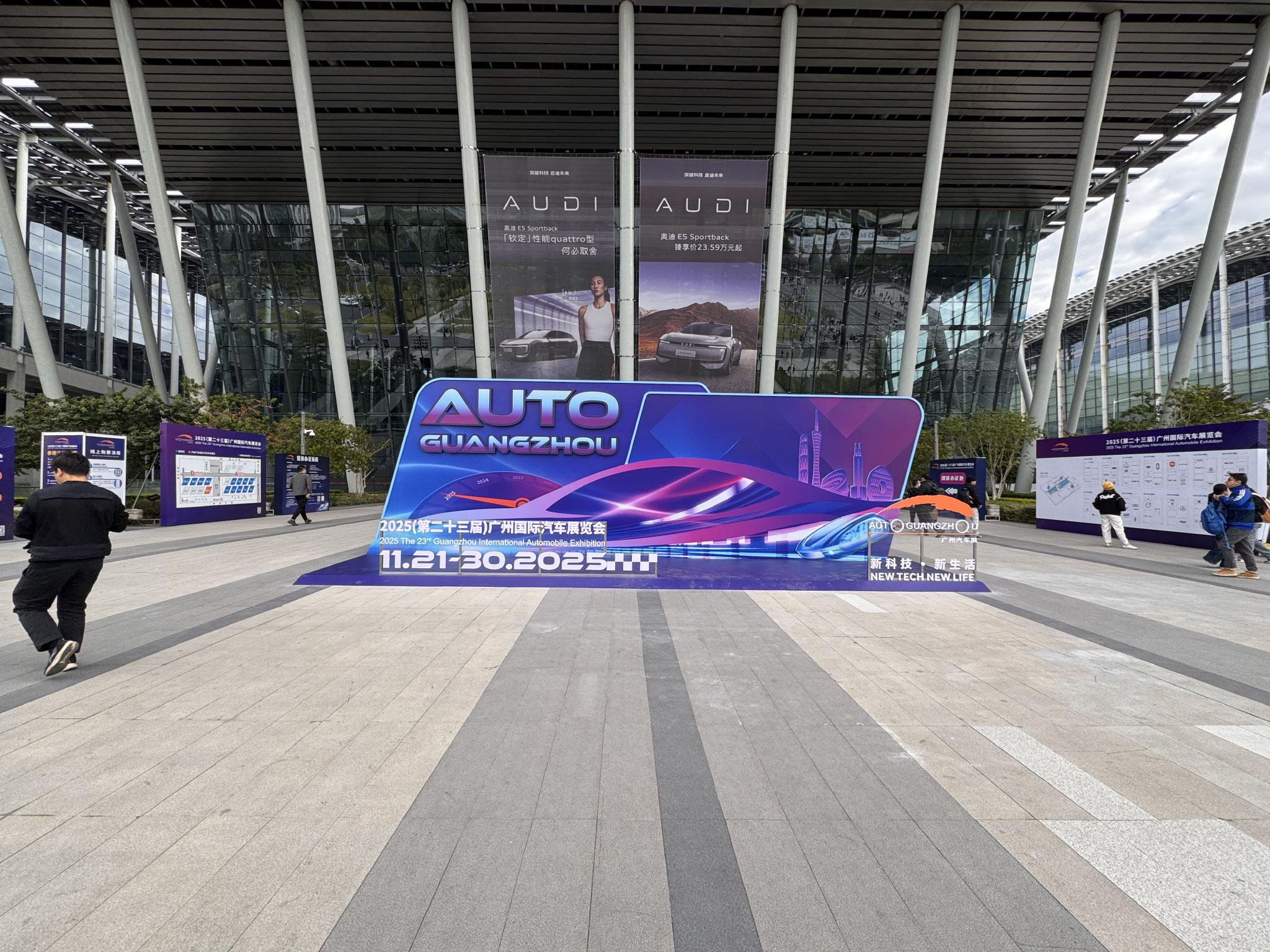
Core Insights - The 23rd Guangzhou International Auto Show marks a significant shift in the Chinese automotive industry from policy-driven growth to market-driven dynamics, emphasizing a transition from "price wars" to "value wars" [1][4][16] Industry Trends - A total of 1,085 vehicles were showcased at the auto show, with 629 being new energy vehicles (NEVs), representing 58% of the total, an increase of 14.3 percentage points from the previous year [4] - In the first ten months of this year, cumulative sales of NEVs in China exceeded 10 million units, achieving a market penetration rate of over 52.9% [4] - The shift in policy from direct subsidies to market-oriented growth is evident, with the Ministry of Industry and Information Technology announcing a reduction in NEV purchase tax starting in 2026 [4][16] Market Dynamics - The auto show highlighted a significant reshuffling in the market, with over 20 brands absent, including well-known names like Beijing Hyundai and Peugeot Citroën, indicating a trend of declining market performance for certain brands [6] - Brands are increasingly focusing on hybrid technology to meet consumer demand, with companies like Xpeng and GAC Aion expanding their product lines to include hybrid models [7] Technological Advancements - The concept of "smart driving equality" has gained traction, with advanced driving features becoming more accessible in mainstream models, as seen with the introduction of products like Leapmotor A10 and GAC Toyota's smart version [9] - Huawei has emerged as a key player in the auto show, showcasing its capabilities in smart driving and intelligent cockpit technologies, with its ADS having partnered with 33 vehicle models and accumulated over 5 billion kilometers of assisted driving mileage [13] Competitive Landscape - The automotive industry is transitioning from a focus on single product competition to ecosystem competition, with traditional automakers leveraging partnerships with technology suppliers to enhance their electric and intelligent capabilities [12] - A report indicates that only 15 out of 129 automotive brands in China are expected to achieve financial sustainability by 2030, suggesting an impending wave of consolidation and competition in the industry [16] Future Outlook - The auto show serves as a reflection of the past five years of transformation in the Chinese automotive sector while also pointing towards future trends, emphasizing the importance of value competition and long-term strategies for high-quality development [16]

中消协:潮玩经济升温 商品质量和售后服务问题引关注
Zhong Guo Xin Wen Wang· 2025-11-07 10:38
Group 1 - The rapid development of the trendy toy economy has led to increased consumer complaints regarding product quality and after-sales service [1] - In the third quarter of 2025, consumer associations in China received 536,761 complaints, a year-on-year increase of 7.9%, resolving 274,427 cases and recovering economic losses of 236 million RMB [1] - Issues with refund policies on trendy toy platforms have been highlighted, where consumers face refusals for refunds even when products have not been shipped or are defective [1] Group 2 - The rise of smart driving technology has become a competitive focus for automotive manufacturers, but there are concerns about the limitations and risks associated with these features [2] - Complaints regarding exaggerated performance claims by some automotive manufacturers and lack of transparency in driving data have been reported [2] - Other complaint hotspots include deceptive marketing in weight loss products, frequent disputes in pet consumption, ongoing issues with automatic renewals, and a surge in complaints related to power bank returns [2]
2025齐鲁秋季车展消费者调研报告出炉
Qi Lu Wan Bao Wang· 2025-09-29 04:04
Core Insights - The 2025 Qilu Autumn Auto Show attracted a record attendance of 336,000 visitors, with total sales exceeding 20,000 vehicles and sales revenue reaching 5 billion [1] - The event showcased nearly 100 brands and thousands of models, emphasizing the importance of the auto show for manufacturers and dealers to display new models and offer various discounts [5] Group 1: Consumer Insights - The consumer survey revealed a high overall satisfaction rating of 85.71 for the auto show, an increase from the previous spring show [3] - 86.3% of respondents indicated plans to purchase a vehicle, with a significant portion of attendees visiting primarily for vehicle comparison and consultation [13][6] - The main purchasing channel remains 4S dealerships and auto shows, highlighting the importance of these venues in the buying process [13] Group 2: Vehicle Preferences - SUV models are the most preferred among consumers, with over one-third of respondents favoring them for their versatility and family suitability [18] - Domestic brands have gained popularity, with 40.7% of respondents preferring them, particularly brands like BYD and Changan [23][16] - The majority of respondents (90.51%) have a budget of under 400,000, with 43.97% planning to spend between 100,000 and 200,000 [16] Group 3: Policy and Incentives - Over 60% of respondents reported increased purchasing intent due to favorable policies, including various subsidies and incentives during the auto show [23] - The most impactful policy was the exemption from new energy vehicle purchase tax, influencing 22.6% of respondents [25] Group 4: New Energy Vehicles - There is a growing preference for new energy vehicles, with 42.07% of female respondents and 39.43% of male respondents favoring them due to their advanced technology and cost-effectiveness [27] - Concerns about new energy vehicles include battery lifespan, charging infrastructure, and resale value, indicating a need for consumer education and infrastructure development [36] Group 5: Smart Driving Features - The demand for smart driving features is significant, with 54.67% of respondents willing to pay extra for these functionalities [40] - The penetration rate of vehicles equipped with advanced driving assistance systems reached 62.58%, reflecting a growing trend in the market [38]

“智驾”更名“辅助驾驶”是理性纠偏
Qi Lu Wan Bao Wang· 2025-05-06 08:21
Core Viewpoint - The shift from "smart driving" to "assisted driving" reflects a necessary correction in the automotive industry's marketing practices, emphasizing safety over misleading technological claims [1][2][3] Group 1: Industry Changes - Several electric vehicle manufacturers, including Xiaomi and Li Auto, have reduced the use of the term "smart driving" in their promotional materials, opting for "assisted driving" instead [1] - The Ministry of Industry and Information Technology has mandated that companies use a combination of "driving level + assisted driving" in their marketing to prevent misleading advertising [1][2] Group 2: Legal Implications - Companies that exaggerate or fabricate claims about assisted driving features may face fines ranging from five to ten times the advertising costs, with severe cases potentially leading to criminal charges [2] - By adjusting their marketing language, brands like Xiaomi and Li Auto are proactively complying with regulations to mitigate legal risks [2] Group 3: Consumer Education and Safety - Automotive companies are shifting focus from merely showcasing technology to emphasizing safety education, with initiatives like Xiaomi's "Safety Score Beta" and XPeng's "AI Assisted Driving Safety Training Camp" [2] - This transition indicates a broader industry movement towards shared responsibility for safety, moving away from the notion that advanced driving features can replace human drivers [2][3] Group 4: Market Perception - The renaming of "smart driving" to "assisted driving" signifies a fundamental change in the industry's values, prioritizing safety over marketing hype [3] - The previous marketing strategies created unrealistic consumer expectations regarding the capabilities of driving assistance technologies, leading to misconceptions about their functionality [2][3]
艾睿铂判断汽车关税政策对中国影响有限 中国汽车2030年全球份额或增长至30%
Zhong Guo Jing Ying Bao· 2025-04-27 09:31
Core Insights - Despite tariffs imposed by multiple countries on Chinese automotive brands, the overall impact remains limited, with a 24% increase in export costs amounting to $46 billion, which only represents 3.8% of China's total automotive industry output [1] Group 1: Tariff Impact - The U.S. tariffs on imported vehicles and specific auto parts, effective from April 3, 2023, have caused panic within the global automotive supply chain [1] - The impact of U.S. tariffs on China's complete vehicle exports is minimal, while the effect on auto parts exports is more significant, potentially affecting $20 billion to $30 billion in exports [2] - In 2024, China exported only 107,000 complete vehicles to the U.S., accounting for 1.81% of its total automotive exports [2] Group 2: Market Dynamics - China's automotive exports have become a crucial growth engine, with exports surpassing 6.4 million units in 2024, maintaining its position as the world's largest automotive exporter [1] - The demand for Chinese vehicles in Russia has doubled over the past five years, helping to mitigate the impact of global tariff fluctuations [3] - In 2024, Russia and the Middle East accounted for 35% of China's total automotive exports, surpassing exports to Europe and North America [3] Group 3: Technological Advancements - China leads in the adoption of intelligent driving features, with nearly 60% of passenger cars sold in 2024 equipped with L2 or higher assistance systems, compared to less than 40% in the U.S. [5] - The unique advantages of Chinese automotive products in electric and intelligent driving technologies have established a competitive edge in overseas markets [4][5] - Two-thirds of surveyed executives believe that China is at the forefront of intelligent driving systems, with other markets lacking the necessary conditions to replicate this success [5] Group 4: Future Projections - China's automotive exports are projected to grow by 23% in 2024, with passenger car exports reaching 6.4 million units, significantly outpacing Japan [6] - The growth rate is expected to slow to 4% in 2025, while the domestic market is also projected to grow by 4%, reaching 26.8 million vehicles [6] - By 2030, Chinese brands are anticipated to capture approximately 30% of the global automotive market, up from 21% in 2024 [6]
记者观察|智驾宣传:不能光讲能力“上限”,更要讲透安全“底限”!
证券时报· 2025-04-24 00:12
Core Viewpoint - The article highlights the shift in marketing strategies among automotive companies at the Shanghai International Auto Show, particularly in relation to "intelligent driving" features, following new regulations aimed at curbing misleading advertising practices [1][2]. Group 1: Marketing Changes - Major automotive companies, including BYD and Xiaomi, have toned down their promotion of "intelligent driving" technologies, with BYD changing "high-level intelligent driving" to "driving assistance" [1]. - The China Association of Automobile Manufacturers and the China Society of Automotive Engineers issued a statement urging companies to standardize their marketing practices and avoid misleading claims about driving assistance technologies [1]. Group 2: Industry Context - The article notes that despite the hype, the highest level of autonomous driving available in the Chinese passenger car market is currently only at Level 2, which still requires human control [1]. - Many companies focus on showcasing the upper limits of their intelligent driving capabilities, such as high-speed automatic emergency braking, while neglecting to mention the limitations of these technologies [2]. Group 3: Safety Concerns - The article warns that over-reliance on immature intelligent driving features can increase the likelihood of traffic accidents, highlighting the need for companies to balance marketing with safety education [2]. - It emphasizes that while competition in the automotive market is fierce, companies should prioritize long-term brand reputation and consumer trust over short-term marketing gains [2].