杭帮菜

Search documents
人均餐饮消费超7000元,这4座万亿GDP城市“真能吃”!
2 1 Shi Ji Jing Ji Bao Dao· 2026-02-12 11:02
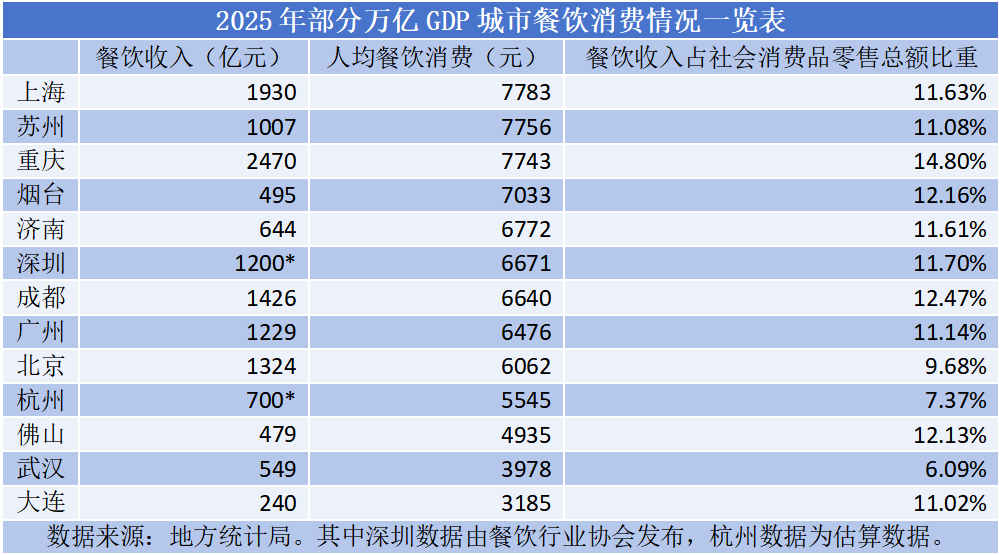
Core Insights - In 2025, four cities in China are projected to have per capita dining expenditures exceeding 7,000 yuan, namely Shanghai, Suzhou, Chongqing, and Yantai, with Chongqing showing the highest proportion of dining expenditure relative to total retail sales at 14.80% [1][3][4]. Group 1: Dining Expenditure Overview - Shanghai's per capita dining expenditure is expected to reach 7,783 yuan, the highest among the surveyed cities [2][3]. - Suzhou and Chongqing follow closely with per capita dining expenditures of 7,756 yuan and 7,743 yuan, respectively [3]. - Yantai, despite a lower total dining revenue of 495 billion yuan, has a high per capita dining expenditure of 7,033 yuan due to its smaller population [3]. Group 2: Total Dining Revenue and Market Share - Seven cities are projected to have dining revenues exceeding 100 billion yuan in 2025, with Chongqing leading at 2,470 billion yuan [3]. - The cities with dining revenue exceeding 12% of their total retail sales include Chongqing (14.80%), Chengdu (12.47%), Foshan (12.13%), and Yantai (12.16%) [4]. - Beijing, Hangzhou, and Wuhan have dining revenue proportions below 10%, indicating a lower impact of dining on their overall retail sales [4]. Group 3: Hangzhou's Dining Market Dynamics - Hangzhou's dining revenue was revised down significantly from 1,331 billion yuan to 669 billion yuan, affecting its previous standing as a top city for dining expenditure [5][6]. - Despite the decline in reported dining revenue, Hangzhou's reputation for dining continues to grow, with a notable number of Michelin-starred restaurants and high rankings in dining guides [6]. - The city aims to leverage its culinary resources to boost dining revenue as it approaches the milestone of a trillion yuan in total retail sales [6].

AI机器人“大厨”来掌勺!解锁“科技+文化+餐饮”新体验
Yang Shi Xin Wen· 2026-01-25 22:00
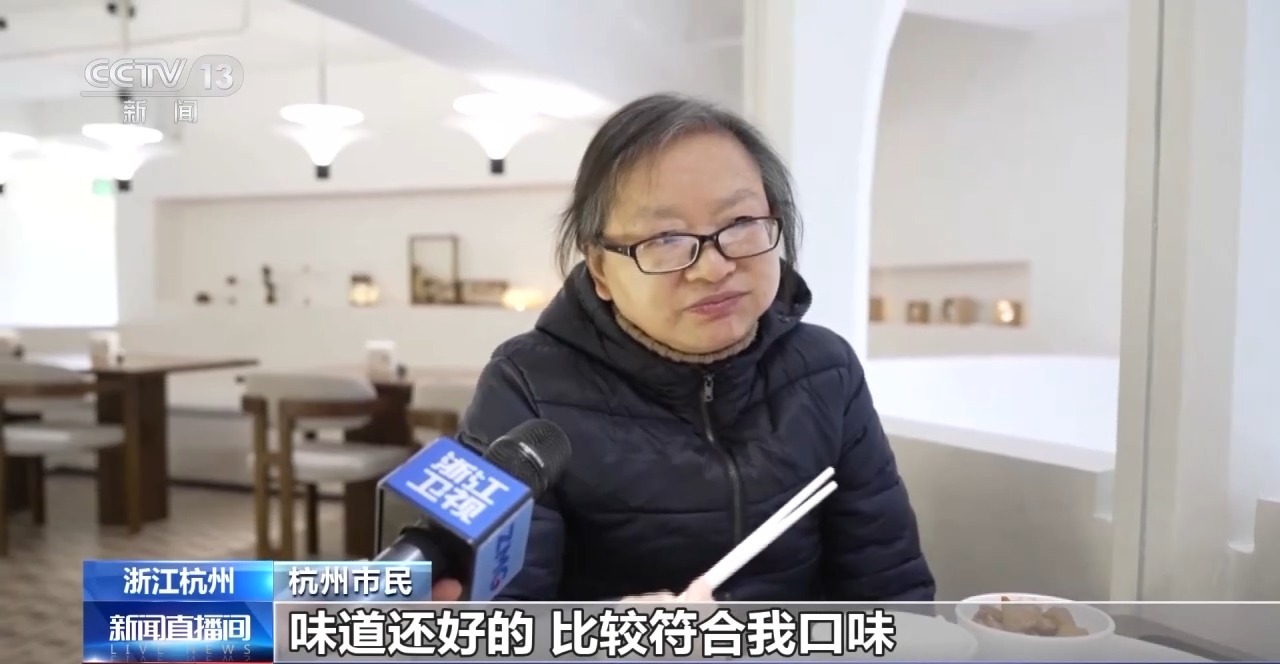
Core Insights - The first fully automated AI robot restaurant in Hangzhou, Zhejiang, has begun trial operations, where robots handle all cooking tasks from stir-frying to coffee and ice cream preparation [1] Group 1: Restaurant Operations - The cooking robot is capable of preparing dishes like "Three Cups Chicken" by following a programmed sequence for ingredient and seasoning addition, resulting in a flavorful dish [1] - The restaurant features over 10 robots, including those for cooking, noodle preparation, coffee making, and cleaning, covering multiple operational processes [6] Group 2: Menu and Technology - The cooking robot has an internal recipe database of over 100 dishes, primarily focusing on Hangzhou cuisine, and has developed 24 seasonal specialty dishes based on the 24 solar terms [6] - The noodle-making robot can simultaneously cook three types of noodles, with a preparation time of approximately 3 minutes [6] Group 3: Customer Experience - Local citizens express nostalgia and excitement about the robot cooking experience, likening it to childhood dreams of robots preparing food [3] - Feedback on the food quality indicates that while the taste is generally acceptable, there is room for improvement in tenderness [4]

“住宿+美食”激发杭州文旅市场新活力
Mei Ri Shang Bao· 2025-11-06 11:27
Core Insights - The "Hundred Counties Thousand Bowls" initiative is becoming a significant driver for the transformation and upgrade of the tourism hotel industry in Hangzhou, integrating local culinary culture into high-end dining experiences [1][2] - The initiative not only showcases local flavors but also serves as a cultural ambassador for the city, promoting tourism and enhancing consumer engagement in the cultural and culinary sectors [1][3] Group 1: Event Overview - The "Hundred Counties Thousand Bowls" culinary promotion event was held in Hangzhou, organized by the Hangzhou Municipal Bureau of Culture, Radio, Television, and Tourism, highlighting the integration of local cuisine into hotels [1] - Representatives from various districts shared innovative practices and operational experiences related to the initiative, with awards given to outstanding enterprises [2] Group 2: Culinary and Cultural Integration - The initiative has led to the establishment of a multi-layered culinary network, with 163 provincial-level culinary experience stores and various promotional materials created to showcase Hangzhou's culinary culture [3] - A composite development model of "accommodation + cuisine" has emerged, with hotels creating immersive cultural experiences through themed banquets and cooking activities [2][3] Group 3: Market Impact and Development - The initiative has stimulated the tourism market, with the development of gourmet tourism routes and the establishment of food aggregation areas around key scenic spots, enhancing the overall visitor experience [3] - Various promotional activities, including food promotions and consumer vouchers, have effectively invigorated the cultural tourism market, serving as a vital engine for economic development [3]
实施杭帮菜创新发展计划 提升杭州美食文化影响力
Hang Zhou Ri Bao· 2025-08-04 02:58
Core Insights - The meeting focused on the "Implementation of the Hangzhou Cuisine Innovation Development Plan" to enhance the cultural influence of Hangzhou's food [1][2] - The importance of Hangzhou cuisine as a cultural heritage and its role in the local economy was emphasized [2] Group 1: Meeting Outcomes - A total of 16 research groups were formed to conduct extensive surveys and gather opinions, resulting in one main report, 15 sub-reports, and a case collection [1] - 421 suggestions were submitted by participants during the online discussion [1] Group 2: Recommendations for Development - There is a call to systematically refine the elements of Hangzhou cuisine and innovate its dish system to adapt to modern trends [1] - Emphasis on creating a full industrial chain for Hangzhou cuisine and promoting cross-industry innovation [1] - Suggestions include strengthening talent development, enhancing the role of enterprises, establishing local food landmarks, advocating for industry self-regulation, and promoting comprehensive research and communication [1] Group 3: Cultural and Economic Impact - Hangzhou cuisine is seen as a vital part of the city's cultural identity and economic development [2] - The need for standardization in ingredients, techniques, and flavors was highlighted to ensure systematic growth [2] - Efforts should be made to integrate Hangzhou cuisine into daily life and enhance its recognition and influence through cultural storytelling and brand building [2]
用味蕾解锁拱宸桥的全新打开方式
Hang Zhou Ri Bao· 2025-07-11 02:35
Group 1 - The article highlights the introduction of traditional Hangzhou cuisine in the Gongchenqiao Urban Coexistence Memory Museum, featuring dishes that evoke local memories [2] - The Gongbei community dining hall has gained popularity since its trial opening in March and official opening in April, serving a variety of dishes primarily focused on Hangzhou flavors [3] - The community dining hall offers discounts for elderly patrons, with an average of over 100 elderly diners daily, making up about 40% of total customers [3] Group 2 - The article describes the innovative approach of the Qiaoxi community dining hall, which incorporates quality vegetarian options into its menu [4] - The presence of numerous coffee shops along Ningbo Road indicates a growing trend of blending traditional and modern culinary experiences in the area [5] - The "Gongchen 400" branding represents a park-like commercial district that embodies diverse lifestyles and flavors, reflecting the unique character of the Gongchenqiao area [5]
马卫光调研杭帮菜创新发展工作
Hang Zhou Ri Bao· 2025-07-08 03:03
Core Viewpoint - The focus is on implementing the "Hangzhou Cuisine Innovation Development Plan" to enhance the influence of Hangzhou's food culture [1][2] Group 1: Industry Insights - The restaurant industry is crucial for stabilizing employment, expanding domestic demand, and promoting consumption [1] - Hangzhou cuisine is considered the soul of the city's restaurant industry and a significant representation of its traditional culture [1] - The vitality of Hangzhou cuisine lies in its ability to innovate while preserving its authenticity [1] Group 2: Development Strategies - There is a need to strengthen the protection and transmission of Hangzhou cuisine, systematically exploring its evolution and cultural significance [2] - Emphasis on product innovation, standardization, and brand building to enhance the quality of Hangzhou cuisine [2] - The integration of culture and tourism is essential to activate new consumption dynamics and create distinctive culinary landmarks in Hangzhou [2] Group 3: Talent Development - A systematic talent cultivation mechanism is necessary to nurture successors of Hangzhou cuisine, ensuring the continuity of culinary techniques and innovation [2] - The city council is encouraged to leverage its strengths to conduct in-depth research and provide recommendations for the innovative development of Hangzhou cuisine [2]
寻味江南·十三鲜|西湖新消费的风,吹到了青年人心里
Sou Hu Cai Jing· 2025-06-30 01:52
Group 1 - The article highlights the emergence of innovative food landmarks in Hangzhou's West Lake District, particularly in the "Two Towns and Six Streets" area, which attract young consumers through a blend of cultural IP and commercial scenarios [1][4] - The "Wensanli" space, a 1000㎡ area, serves as a new gathering spot for young people, featuring unique architecture and delicious food, creating a relaxing atmosphere [4][6] - The article emphasizes the importance of creating spaces that resonate with youth culture, where food and art intersect, fostering a sense of community and belonging [10][11] Group 2 - The "Hunan Pepper" restaurant, transformed from a derelict building, showcases a unique take on traditional Hunan cuisine, emphasizing a home-like atmosphere and artistic design [13][16] - The "Tianmuli International District" has recently opened, promoting an open and inclusive environment, with a focus on "first-store" concepts that attract young consumers seeking new experiences [18][21] - The article notes that the "first-store" economy reflects the youth's anticipation for new trends and highlights the potential for stimulating consumer activity in the market [21]
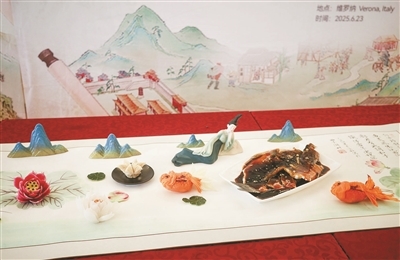
杭州美食文化推广走进意大利古城
Hang Zhou Ri Bao· 2025-06-26 02:47
Core Viewpoint - The "Song Rhythm Hangzhou" food culture promotion event successfully took place in Verona, Italy, showcasing the integration of Hangzhou's Song culture and local cuisine, emphasizing food as a cultural bridge between China and Italy [13]. Group 1: Event Overview - The event was organized by the Hangzhou Municipal Bureau of Commerce and featured speeches from local officials, highlighting the importance of food in fostering mutual understanding and friendship between the two countries [13]. - A plaque was awarded to a local restaurant in Verona, recognizing it as a "Promotion Service Point for Hangzhou Cuisine Internationalization" [13]. Group 2: Culinary Highlights - The culinary exchange team, led by Chinese chef Wang Zhenghong, created innovative dishes that combined high-quality Italian ingredients with traditional Hangzhou cooking techniques [14]. - Signature dishes included a version of "Lotus Leaf Chicken" that incorporated Italian chicken and black truffle, and a unique take on "Cod Fish Lion's Head" that blended cod and sea bass [14]. - The "West Lake Landscape" cold dish visually represented Hangzhou's West Lake, providing a dual sensory experience of taste and aesthetics [14]. Group 3: Cultural Exchange - Tea artist Zhou Jinyu performed a traditional Song Dynasty tea ceremony, illustrating the philosophical and artistic aspects of Eastern tea culture [15]. - The event attracted many Italian friends with ties to Hangzhou, who expressed appreciation for the evolution and internationalization of Hangzhou cuisine [17]. - The event was seen as a profound cultural and industry exchange, strengthening emotional connections and friendships between the two nations [17].
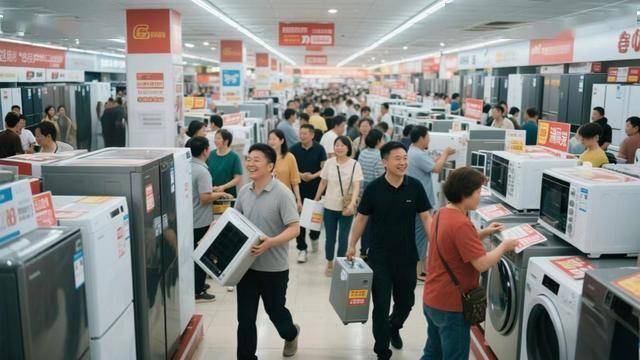
夏日消费“撒钱”狂欢!多地亿元券狂撒,吃喝玩乐嗨翻天
Sou Hu Cai Jing· 2025-06-25 13:50
Group 1 - The summer of 2025 is expected to see a surge in consumer spending driven by substantial distribution of consumption vouchers across various cities in China [1][3] - Major cities like Beijing, Shanghai, and Guangzhou are leading the initiative by issuing tens of millions to over a billion yuan in consumption vouchers [3] - Cities like Hangzhou are creatively issuing consumption vouchers in a serialized manner, targeting different sectors such as dining, tourism, and home appliances [3] Group 2 - Consumption vouchers are designed to be relatable and practical, with examples like Jinan issuing barbecue vouchers that provide discounts for street food [3] - The introduction of consumption vouchers has significantly boosted market activity, with reports of increased foot traffic in retail spaces and heightened sales for businesses [3][4] - The tourism sector is experiencing a notable increase in orders, with cities like Xi'an offering vouchers that cover popular attractions, leading to a surge in visitor numbers [4] Group 3 - The strategy of issuing consumption vouchers is creating a win-win situation for consumers, businesses, and the government, enhancing overall economic activity [6] - Consumers are finding ways to maximize their savings by combining vouchers with existing store discounts, leading to substantial reductions in their spending [5] - The competitive nature of voucher distribution has led to a frenzy among consumers, with many actively participating in the rush to claim these benefits [4][5]
京杭两地特色美食汇聚大运河畔
Bei Jing Ri Bao Ke Hu Duan· 2025-05-29 04:07
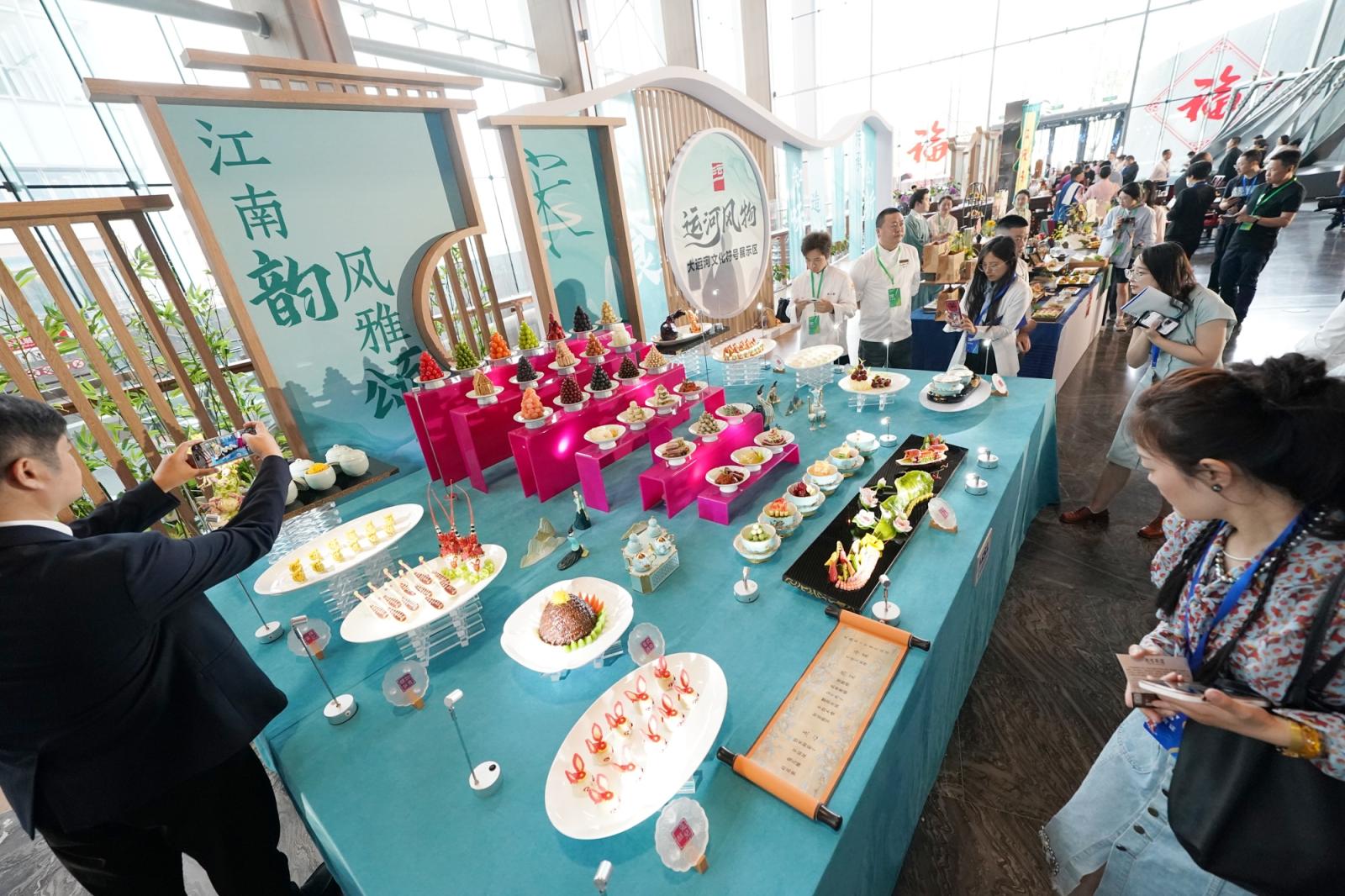
Group 1 - The "Grand Canal Cultural Belt" dialogue event between Beijing and Hangzhou was launched on May 29, 2025, at the Beijing Grand Canal Museum, showcasing cultural symbols and culinary heritage from both cities [1][3] - The event featured a cultural symbol exhibition themed "Canal Wind and Things," highlighting the regional characteristics and aesthetic life of Beijing and Hangzhou [3] - The exhibition included a tea break space with traditional tea service, emphasizing the cultural significance of tea in Beijing, where a bowl of tea costs only 0.02 yuan, reflecting the spirit of entrepreneurship and community [1][3] Group 2 - The Hangzhou exhibition area showcased the history and culinary techniques of Hangzhou cuisine, led by renowned chefs, and featured a creative cold dish called "Thousand Miles of Grand Canal" [3] - The Beijing exhibition area highlighted the cultural confidence of time-honored brands, featuring live demonstrations of Peking Duck preparation and showcasing various traditional snacks and creative products [3]