
注射用血塞通

Search documents
集采压价、存货积压、转型迟缓 珍宝岛研发投入“节衣缩食”却持续大额分红
Xin Lang Cai Jing· 2026-02-11 07:39
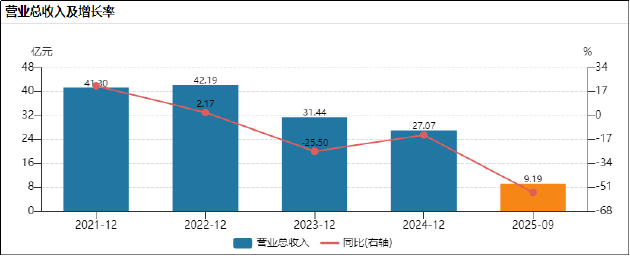
Core Viewpoint - The traditional Chinese medicine company Zhenbaodao Pharmaceutical is expected to report a net loss of between 1.012 billion and 1.173 billion yuan for the fiscal year 2025, marking its first annual loss since its listing in 2015, nearly erasing the total net profit from the previous three years [1][10] Financial Performance - The company's revenue peaked at 4.219 billion yuan in 2022 but plummeted by 25.5% to 3.144 billion yuan in 2023, with a further decline of 13.84% to 2.707 billion yuan in 2024, falling below 2018 levels. In the first three quarters of 2025, revenue dropped by 54.73% to only 919 million yuan, indicating a trend towards a historical low for the year [2][11] - The net profit, excluding non-recurring gains and losses, turned negative for the first time in 2022, with a loss of 280 million yuan. Although the loss narrowed to 31.84 million yuan in 2023, the downward trend continued, with an expected loss of between 1.073 billion and 1.234 billion yuan in 2025 [4][13] Asset Structure and Risks - The company faces significant asset structure risks, with accounts receivable reaching 3.111 billion yuan by the end of September 2025, while revenue for the same period was only 919 million yuan, resulting in a ratio of accounts receivable to revenue of 338.52%. This ratio has been on the rise in recent years [4][13] - Inventory levels surged from 1.005 billion yuan in Q3 2023 to 1.521 billion yuan in Q3 2025, reflecting a more than 50% year-on-year increase, indicating severe sales obstacles and inventory accumulation issues [4][13] Operational Efficiency - The company's operational efficiency has deteriorated, with inventory turnover days and accounts receivable turnover days reaching historical highs of 692.31 days and 919.37 days, respectively, more than doubling compared to the previous year [5][14] Impairment Losses - Zhenbaodao plans to recognize approximately 395 million yuan in credit impairment losses and about 266 million yuan in asset impairment losses, with these combined losses exceeding 660 million yuan, significantly impacting annual performance [7][16] Business Challenges - Core products have been included in the national centralized procurement of traditional Chinese medicine, coupled with increased pressure from national medical insurance cost control, leading to significant price reductions. The anticipated volume increase through price reductions has not materialized, resulting in a decline in both volume and price [7][16] Research and Development - Despite attempts to explore new growth avenues, the company has significantly reduced R&D investments, with R&D expenses dropping by 52.64% to 37.99 million yuan in 2024, accounting for only 2.60% of revenue, far below industry leaders [8][17] - The company announced plans to invest over 400 million yuan in building an R&D platform for innovative drugs, but actual investment progress has been slow, with only 92.17 million yuan spent by mid-2025, representing 26.26% of the planned investment [8][17] Dividend Policy and Governance Issues - Zhenbaodao has maintained a rigid cash dividend policy, distributing a total of 1.302 billion yuan since its listing, despite deteriorating fundamentals. In 2023 and 2024, the company distributed 188 million yuan and 141 million yuan, respectively [9][18] - The concentrated ownership structure raises concerns, as the largest beneficiary of dividends is the controlling shareholder, with a high pledge ratio of 81% for the controlling shareholder's equity, increasing financial risks [9][18] - Governance issues were highlighted by a lack of proper procedures in a significant 425 million yuan subsidiary equity transfer, exposing internal control deficiencies [10][19] Conclusion - Zhenbaodao Pharmaceutical is facing severe challenges due to industry changes, internal governance issues, and actions by major shareholders, necessitating a balance between short-term returns and long-term development to restore fundamentals and rebuild market trust [10][19]


中药注射剂龙头业绩失守:上市十年首亏超10亿元,珍宝岛业绩被什么击穿| 中药锈带
Hua Xia Shi Bao· 2026-02-06 09:17
Core Viewpoint - The traditional Chinese medicine company Heilongjiang Zhenbaodao Pharmaceutical Co., Ltd. has reported its first loss in ten years, highlighting the challenges faced by the industry during a significant transformation period [2][4]. Financial Performance - Zhenbaodao expects a net profit loss of approximately -1.173 billion to -1.012 billion yuan for the fiscal year 2025, marking a dramatic shift from profit to loss compared to the previous year [2]. - The company's net profit has decreased by 330.94% to 367.68% year-on-year, setting a record for the worst performance in its history [2]. - In the first half of 2025, the company's revenue plummeted by 57.04% to 713 million yuan, with a net loss of 78.29 million yuan, a 119.9% decline year-on-year [6]. Market Challenges - The decline in performance is attributed to several factors, including lower-than-expected sales of core products, price reductions, and significant credit impairment losses of approximately 395 million yuan [4][6]. - The company’s core products, which account for over 70% of its revenue, have been affected by national procurement policies and ongoing healthcare cost controls [4][5]. Strategic Issues - Zhenbaodao's heavy reliance on traditional products and slow innovation has led to strategic difficulties, forcing the company to drastically cut sales and R&D expenses to maintain cash flow [4][6]. - The company’s R&D expenditure has significantly decreased by 52.64% to 37.99 million yuan, representing only 2.60% of its revenue, which is well below the industry average [7]. Governance Concerns - The company faced criticism from the Shanghai Stock Exchange for a 425 million yuan equity transfer that bypassed required approval processes, raising governance concerns [8][9]. - Despite the financial downturn, Zhenbaodao continued to distribute dividends totaling 141 million yuan in 2024, leading to market skepticism regarding the management's priorities and potential wealth transfer to major shareholders [9]. Industry Outlook - The significant loss signals a broader trend where traditional Chinese medicine companies relying on single products and inefficient operations may struggle to survive as procurement practices become more standardized [10]. - Zhenbaodao is attempting to adjust its strategy by focusing on innovation in traditional Chinese medicine, biopharmaceuticals, and chemical drugs, while also restructuring its marketing approach [10].

珍宝岛药业全线满产释放强劲动能,推动企业价值重估
Zhong Guo Jing Ji Wang· 2026-02-02 07:19
Core Viewpoint - Zhenbaodao Pharmaceutical is experiencing robust production growth across its manufacturing bases, driven by strong market demand and a well-structured supply chain that enhances its competitive edge in the industry [1][5]. Group 1: Production and Supply Chain - The company's core formulation production lines are operating at full capacity, with a fully booked production schedule for Q1 2026, particularly for cardiovascular and respiratory products [1]. - Zhenbaodao has established GAP cooperative planting bases in Heilongjiang, Gansu, and Shandong, ensuring consistent quality and cost control of key raw materials through standardized processes and a comprehensive quality traceability system [1]. - The modern logistics system facilitates the efficient transportation of raw materials to the company's processing facilities, where advanced automated production lines operate under centralized control, ensuring precision and efficiency [2]. Group 2: Technological Integration - The integration of SCADA systems allows for real-time monitoring of production processes, ensuring that any deviations from standard values trigger alerts, thus maintaining high consistency across product batches even during full-capacity operations [3]. - The use of MES systems records every batch's process data and quality inspection results, creating a complete digital archive that enhances traceability from raw materials to finished products [2][3]. Group 3: Research and Development - Zhenbaodao is investing in R&D to build a future-oriented product pipeline, focusing on deep development of existing major products and exploring new clinical values [4]. - The company is actively involved in the development of innovative traditional Chinese medicine, biopharmaceuticals, and classic formulations, with recent breakthroughs in antibody-drug conjugates (ADC) for non-Hodgkin lymphoma [4]. Group 4: Competitive Advantage - The company's deep control over key raw materials and standardized production and quality systems provide it with strong operational certainty and profitability resilience amid macroeconomic uncertainties [5]. - Zhenbaodao's comprehensive supply chain model enhances its risk resistance and cost advantages, forming a "moat" that secures market supply and quality safety, laying a foundation for sustainable growth in future industry competition [5].
创新研发赋能,珍宝岛药业将逐步迈入收获期
Bei Ke Cai Jing· 2025-12-31 05:41
Group 1 - The core business of the company is traditional Chinese medicine, which has laid a solid foundation for its growth, with key products covering various medical terminals in China [2][3] - The company is expanding into the biopharmaceutical sector, with its investment in Zhejiang Teruisi Pharmaceutical Co., Ltd. entering a value realization phase, particularly with the ADC drug TRS005 receiving breakthrough therapy designation [1][5][7] - The company has launched a new innovative Chinese medicine product, Qingjiang Hewei Granules, which targets a complex condition with limited treatment options, potentially opening a market worth over 1 billion yuan [3][4] Group 2 - The biopharmaceutical market is experiencing significant growth, with ADCs being recognized as a promising platform product, projected to exceed $16.4 billion globally by 2026 [5] - The company has made strategic investments in the biopharmaceutical field, with Teruisi's TRS005 focusing on unmet clinical needs in non-Hodgkin lymphoma, marking a significant step in the company's transformation [6][7] - The company is also advancing in the chemical drug sector, with its independently developed raw material for an antihistamine drug receiving regulatory approval, indicating a strong market presence in a high-barrier segment [8][9] Group 3 - The company's dual-track strategy in chemical drugs, focusing on both raw materials and formulations, has been successfully implemented, enhancing its competitive position in the market [9][10] - The combination of traditional Chinese medicine, biopharmaceuticals, and chemical drugs creates a diversified growth strategy for the company, ensuring a more certain trajectory for future performance [10]
珍宝岛药业产业链协同效应持续发挥,积蓄业绩增长动力
Zhong Guo Jing Ji Wang· 2025-11-10 05:41
Core Viewpoint - The company is enhancing its competitive edge in the traditional Chinese medicine (TCM) sector through strategic collaborations, supply chain integration, and advanced manufacturing technologies, aiming for a comprehensive and efficient industry chain from cultivation to market [1][5]. Group 1: Strategic Collaborations - The company has partnered with Longjiang Forest Industry Group to establish a GAP planting base for Siberian ginseng, focusing on eight key areas including TCM supply and shared medical channels [1]. - This collaboration signifies a new phase of large-scale replication of the company's full industry chain synergy model, reflecting deep integration of "industry chain + manufacturing chain + innovation chain" [1]. Group 2: Market Positioning and Resource Integration - The company has developed the "Shennongzhou Traditional Chinese Medicine Health Theme Street" and an efficient spot trading area at its Bozhou TCM trading center, attracting over 2,000 pharmaceutical companies [2]. - The strategic layout extends to Southwest China, with a partnership between its subsidiary Guizhou Shennong Valley and the Guizhou TCM Industry Association to build a modern collaborative supply chain [2]. - This initiative enhances the company's control over key TCM resource areas and provides stable, high-quality raw material support for its industrial segment [2]. Group 3: Manufacturing and Quality Assurance - The company has established a mature smart factory system, achieving industry-leading stability in drug batch quality through a smart quality control platform [3]. - The transition from "experience manufacturing" to "scientific manufacturing" has been facilitated by the construction of national-level green factories and collaboration with Zhejiang University on a TCM CMC smart factory [3]. - The company plans to fully implement its "AI + medicine" strategy by 2025, utilizing AI technologies to ensure high product quality and consistency [3]. Group 4: Marketing Strategies - The company employs a differentiated market development strategy, rapidly covering various medical terminals through a dual-track approach of "medical institution penetration + grassroots network building" [4]. - Key cardiovascular products have shown stable growth in tiered hospitals and significant expansion in county markets, driven by collective procurement policies [4]. - The increasing number of terminal developments and quality customer contracts is expected to lead to a new phase of explosive growth in marketing performance [4]. Group 5: Performance Growth Drivers - The company has achieved efficient collaboration and value multiplication across its entire industry chain through resource integration, smart manufacturing upgrades, and innovative marketing strategies [5]. - Deep cooperation with strategic partners like Longjiang Forest Industry Group has further connected the industry loop from cultivation to terminal sales [5]. - Upcoming milestones, including clinical advancements and the release of new chemical drug varieties, are anticipated to provide robust growth momentum for the company's future performance [5].
珍宝岛药业精准把握集采机遇期,铺就业绩高增长通路
Zhong Guo Jing Ji Wang· 2025-07-03 05:13
Core Viewpoint - The article highlights the significant market opportunities for Zhenbaodao Pharmaceutical as it leads a marketing campaign during the critical phase of Traditional Chinese Medicine (TCM) procurement, aiming for substantial growth by 2025 through strategic initiatives and enhanced market coverage [1][2]. Group 1: Market Strategy - Zhenbaodao Pharmaceutical has initiated a "100-day battle" marketing campaign to capitalize on the implementation of national TCM procurement policies, with 28 provinces already executing related documents [2]. - The company has launched the "Thousand County Project" to enhance terminal development, focusing on comprehensive recruitment, systematic assessment, and deep market penetration [2]. - The marketing strategy emphasizes a proactive approach with a focus on ensuring effective implementation of targets and providing robust support for the campaign [2]. Group 2: Product Recognition and Market Growth - The company's core products have gained widespread recognition among medical professionals and patients, creating a positive feedback loop that drives market growth [3]. - Key products such as Blood Setong Injection and Xue Shuan Tong Capsules have achieved significant clinical recognition and accessibility, transitioning from high-end hospital specialties to standard offerings in grassroots medical settings [3]. - The price reductions of core products post-procurement are expected to benefit a broader patient base, significantly increasing their coverage in county-level medical facilities [3]. Group 3: Marketing Assurance Mechanism - Zhenbaodao Pharmaceutical's marketing performance for 2025 is backed by a dual assurance mechanism of "policy baseline + grassroots increment," ensuring strong revenue growth [4]. - The procurement rules provide a locked-in share for public hospitals, securing the company's revenue targets for 2025 [4]. - The combination of the "Thousand County Project" and the "100-day battle" is designed to rapidly enhance market penetration and overcome terminal barriers, positioning the company for significant market share redistribution [4].
珍宝岛: 中审亚太会计师事务所(特殊普通合伙)关于黑龙江珍宝岛药业股份有限公司2024年年度报告的信息披露监管问询函的回复
Zheng Quan Zhi Xing· 2025-06-29 16:17
Core Viewpoint - The financial performance of Heilongjiang Treasure Island Pharmaceutical Co., Ltd. for 2024 shows a decline in revenue and net profit, influenced by national drug procurement policies and internal cost management strategies [1][2]. Financial Performance Summary - The company reported a revenue of 2.704 billion yuan, a year-on-year decrease of 13.84%, and a net profit of 438 million yuan, down 7.30%. However, the non-recurring net profit increased significantly by 1,365.50% to 403 million yuan due to increased income and profit from the pharmaceutical industrial sector and reduced overall expenses [1][2]. - The gross profit margin for 2024 was 55.11%, an increase of 12.71 percentage points compared to the previous year [1]. Business Segment Analysis Pharmaceutical Industrial Sector - Revenue increased by 20.23% to 1.976 billion yuan, with a gross margin of 64.37%. The main contributors to this growth were products 1 and 2, which are traditional Chinese medicine preparations [1][3]. - The sales volume of key products showed significant growth, with product 1's revenue increasing by 335.96% and product 2's by 171% [2][3]. Pharmaceutical Commercial Sector - Revenue decreased by 52.05% to 313.58 million yuan, primarily due to the impact of national procurement policies, which led to lower prices and reduced order volumes from medical institutions [4][5]. - The tightening of hospital budgets and increased competition from major players in the industry further pressured the commercial distribution business [4][5]. Traditional Chinese Medicine Trade Sector - Revenue plummeted by 81% to 794.62 million yuan as the company anticipated a significant price correction in the market and strategically reduced its trading activities to mitigate risks [4][5]. - The company focused on securing raw materials for its own production needs while scaling back on non-essential trading activities [4][5]. Quarterly Revenue Trends - The first quarter showed significantly higher revenue compared to subsequent quarters, attributed to seasonal demand for respiratory and cardiovascular medications, as well as the timing of national procurement policies [5][6]. - The company’s sales strategy adjustments and the execution of procurement policies contributed to the observed revenue fluctuations across different quarters [5][6]. Changes in Business Model - The company has shifted its business model to focus more on regional distributors and large-scale partnerships, moving away from direct distribution to enhance efficiency and reduce costs [6][7]. - The operational model for each business segment remains largely unchanged, although there has been a strategic adjustment in the proportion of business activities across segments [6][7].
珍宝岛回复年报问询 阐释一季度收入明显较高合理性
Zheng Quan Shi Bao Wang· 2025-06-29 11:23
Core Insights - The company reported a revenue of 2.704 billion yuan in 2024, a year-on-year decline of 13.84%, and a net profit attributable to shareholders of 438 million yuan, down 7.3% year-on-year, while the non-net profit increased significantly by 1365.5% to 403 million yuan due to increased revenue and profit from the pharmaceutical industrial sector and a decrease in overall expenses [1] Group 1: Pharmaceutical Industrial Sector - The company's core products include cardiovascular drugs and respiratory disease medications, with higher demand observed in the first and fourth quarters due to seasonal factors [2] - In Q1 2024, there was a significant increase in the demand for respiratory disease medications due to a surge in viral flu cases, alongside a rise in cardiovascular drug demand during the spring [2] Group 2: Pharmaceutical Commercial Sector - The pharmaceutical commercial sector faced revenue impacts due to the increasing number and amount of products subject to national centralized procurement, leading to price reductions [3] - Hospitals are actively reducing procurement scales and amounts in response to ongoing medical reforms, resulting in decreased delivery orders for the company [3] Group 3: Traditional Chinese Medicine Trade Sector - The company anticipates a significant price correction in traditional Chinese medicine after a period of price increases, leading to a strategic reduction in non-productive trade activities to mitigate high-level risks [3] - In Q2, the company increased revenue by strategically selling part of its inventory of traditional Chinese medicine in anticipation of a price decline in the latter half of the year [3]
昆药集团Q1“开门黑”,华润三九入主第三年靠什么兑现双位数增长? | 直击业绩会
Tai Mei Ti A P P· 2025-05-30 13:28
Core Viewpoint - Kunming Pharmaceutical Group's stock price has experienced significant volatility, with a sharp decline following a brief rise, raising concerns among investors regarding its performance and future growth plans [2][3]. Financial Performance - In 2024, Kunming Pharmaceutical Group reported revenue of 8.401 billion yuan, a slight decrease of 0.34% year-on-year, while net profit attributable to shareholders increased by 19.86% to 648 million yuan [3]. - However, in Q1 2025, the company faced a substantial decline in performance, with revenue dropping by 16.53% to 1.608 billion yuan and net profit falling by 31.06% to approximately 90.48 million yuan [3][7]. - The company aims for double-digit revenue growth in 2025, despite the challenges faced in the first quarter [5][7]. Strategic Transition - The company is undergoing a significant transformation in its sales and channel management, moving from a decentralized distribution model to a more integrated and structured approach [4][5]. - The new channel system aims to enhance brand recognition and operational efficiency, focusing on long-term brand building and better collaboration with distributors [5][7]. Market Focus - Kunming Pharmaceutical Group is targeting the aging population and chronic disease management, positioning itself as a leader in the "silver health industry" [7][8]. - The company’s product portfolio includes treatments for cardiovascular diseases, with a noted decline in revenue from this segment, which fell by 17.45% to 2.195 billion yuan in 2024 [8]. Product Performance - Sales of key products, such as the blood stasis series and Tianma injection, have shown mixed results, with significant declines in some areas, such as a 54.66% drop in sales volume for the freeze-dried blood stasis injection [9]. - The company is actively working to improve its market presence and sales channels, particularly in retail and smaller medical institutions [9].


珍宝岛4.9亿现金收购:账面现金7.8亿元有息负债高达34亿 标的最新季报显示亏损
Xin Lang Zheng Quan· 2025-05-29 08:35
Core Viewpoint - The acquisition of a 49% stake in Guizhou Shennong Valley by Zhenbaodao for 490 million yuan is seen as a strategic move to enhance its presence in the traditional Chinese medicine industry in Guizhou, despite concerns over high debt levels and the target company's losses [1][2]. Financial Performance - In Q1 2025, Zhenbaodao's net profit attributable to the parent company plummeted by 74.33% to 75.29 million yuan, with negative cash flow from operating activities amounting to -267 million yuan, a 158% decrease year-on-year [2]. - The company's cash reserves decreased by 43% year-on-year to 781 million yuan, while interest-bearing liabilities reached 3.46 billion yuan, resulting in an asset-liability ratio of 35% [1][2]. Acquisition Details - The acquisition requires a payment of 490 million yuan, which would consume 62.7% of Zhenbaodao's cash reserves [1]. - Guizhou Shennong Valley reported revenue of 51.1 million yuan in 2024, with a net profit of only 162,800 yuan, and experienced a significant revenue drop to 197,200 yuan in Q1 2025, incurring a loss of 1.78 million yuan [2]. - The valuation of the 49% stake in Guizhou Shennong Valley at 490 million yuan corresponds to a static price-to-earnings ratio exceeding 3000 times, indicating a significant disparity between the estimated future cash flows and the transaction price [2].