
消费建材

Search documents
建筑材料行业周报:需求筑底中,关注原料价格波动
GOLDEN SUN SECURITIES· 2026-03-29 12:24
Investment Rating - The report maintains an "Overweight" rating for the construction materials sector, indicating a positive outlook for the industry [4]. Core Insights - The construction materials sector experienced a 5.04% increase from March 23 to March 27, 2026, with notable gains in various sub-sectors such as cement (2.87%), glass manufacturing (1.78%), and fiberglass manufacturing (6.78%) [13]. - Government debt issuance increased by 34.2% month-on-month in February 2026, which is expected to alleviate fiscal pressure and accelerate municipal engineering projects [13]. - The report highlights a structural recovery in demand for construction materials, particularly in municipal projects and consumer building materials, driven by policies stimulating consumption and renovation of existing properties [13]. Summary by Sections Cement Industry Tracking - As of March 27, 2026, the national cement price index was 337.5 CNY/ton, up 0.76% week-on-week, with a significant increase in cement dispatch volume by 30.33% [18]. - The cement market is in a seasonal recovery phase, but demand recovery remains weak, particularly in the housing sector, which is constrained by funding issues and insufficient new projects [18]. - The report notes a strong willingness among cement companies to raise prices due to rising costs, although actual price increases depend on demand improvements [18]. Glass Industry Tracking - The average price of float glass as of March 26, 2026, was 1196.28 CNY/ton, reflecting a 0.21% increase week-on-week, with inventory levels showing a slight decrease [32]. - The glass market is experiencing mixed trends, with some price increases not fully realized due to insufficient new orders from downstream processing plants [32]. - The report emphasizes the need to monitor order volumes and production line changes in the glass sector [32]. Fiberglass Industry Tracking - The market for fiberglass remains stable, with no significant changes in pricing for non-alkali roving, while demand for certain high-end products is showing improvement [43]. - The report indicates that the overall inventory levels are low, and there is potential for price increases in high-end products due to rising costs [43]. - As of March 26, 2026, the average price for 2400tex non-alkali winding yarn was 3716 CNY/ton, remaining stable week-on-week but down 3.05% year-on-year [43]. Consumer Building Materials - The demand for consumer building materials continues to show signs of weak recovery, with upstream raw material prices experiencing fluctuations [7]. - The report highlights the potential for long-term market share growth in consumer building materials, supported by renovation trends in the second-hand housing market [13]. - Key companies recommended for investment in this sector include SanKeTree, Beixin Building Materials, and Weixing New Materials [8].


春节错期扰动投资数据表现
HTSC· 2026-03-18 06:50
Investment Rating - The industry investment rating is "Overweight" for both the construction and building materials sectors [6]. Core Insights - Infrastructure investment in January-February 2026 showed a year-on-year increase of 11.4%, while real estate and manufacturing investments decreased by 11.1% and increased by 3.1%, respectively. The overall performance of infrastructure investment is positive, but sustainability remains to be observed due to the late timing of the Spring Festival [1]. - The report suggests focusing on opportunities in waterproofing and engineering pipe materials, as well as the impact of rising raw material prices on consumer building materials [1]. - The report highlights the potential for recovery in the building materials sector, with a narrowing decline in housing prices in major cities, indicating a possible improvement in retail sales of building materials [2]. Summary by Sections Infrastructure and Real Estate - In January-February 2026, infrastructure investment increased by 11.4% year-on-year, while real estate sales, new starts, and completions decreased by 13.5%, 23.1%, and 27.9%, respectively [1][2]. - The report emphasizes the need to monitor the sustainability of infrastructure investment growth and suggests that the recovery in real estate sales could signal a rebound in building materials sales [2]. Building Materials - The average price of cement in January-February 2026 was 351 RMB/ton, a decrease of 14.5% from December 2025 and 2.3% year-on-year. The average cement shipment rate was 28.0%, showing a year-on-year increase of 3.6% [3]. - The report notes that the price of flat glass has been under pressure, with a year-on-year decrease of 17.4% in January-February 2026, despite some support from production line cold repairs [4]. Stock Recommendations - The report recommends several stocks with a "Buy" rating, including: - Dongfang Yuhong (002271 CH) with a target price of 25.87 RMB - Yaxiang Integration (603929 CH) with a target price of 235.62 RMB - Zhongcai International (600970 CH) with a target price of 14.64 RMB - China Chemical (601117 CH) with a target price of 12.05 RMB - China Liansu (2128 HK) with a target price of 6.35 HKD [8][32].


建筑材料行业跟踪周报:关注内需品种-20260309
Soochow Securities· 2026-03-09 10:31
Investment Rating - The report maintains an "Overweight" rating for the construction materials industry [1]. Core Insights - The report highlights that the recent surge in crude oil prices has led to expectations of economic stagnation and significant liquidity tightening. However, the impact on China is relatively minor due to its substantial oil reserves and limited transportation disruptions. The domestic construction materials sector, particularly engineering materials, is expected to benefit from rising prices of basic metals and crude oil, which could lead to improved profitability [2][6]. - The report suggests focusing on domestic price increases, recommending companies such as Oriental Yuhong, Keshun, Sankeshu, Jianlang Hardware, and China Liansu. Additionally, it highlights high-dividend stocks like Tubao, Gujia Home, Xilinmen, and others as potential investment opportunities [2]. - The report emphasizes the importance of the technology sector, particularly in AI hardware and domestic semiconductor development, which is expected to accelerate. Companies in cleanroom engineering and fiberglass sectors are also recommended due to rising demand from AI applications [2][6]. Summary by Sections 1. Bulk Construction Materials Fundamentals and High-Frequency Data - **Cement**: The national average price for high-standard cement is 338.0 CNY/ton, down 0.5 CNY/ton from last week and down 52.3 CNY/ton from the same period in 2025. The average cement inventory ratio is 62.9%, down 1.3 percentage points from last week but up 7.7 percentage points year-on-year [6][15][24]. - **Glass**: The average price for float glass is 1174.9 CNY/ton, up 10.3 CNY/ton from last week but down 183.2 CNY/ton from 2025. The inventory of float glass is 6.972 million heavy boxes, an increase of 244,000 boxes from last week [6][46][49]. - **Fiberglass**: The market for fiberglass is expected to stabilize with limited new capacity due to historical low profitability. The effective capacity for fiberglass is projected to reach 759.2 million tons in 2026, a year-on-year increase of 6.9% [10][12]. 2. Industry Dynamics Tracking - The report notes that the cement industry is undergoing supply-side adjustments, with a focus on eliminating outdated capacity. The expected net reduction in capacity is 40.49 million tons, which is about 6.8% of the national design capacity by the end of 2024 [10][12]. - The glass industry is experiencing a supply contraction, which is expected to provide price elasticity in 2026. The report anticipates that the average daily melting capacity for float glass will decrease to below 147,400 tons in the first half of 2026 [10][12]. - The report also discusses the impact of policies aimed at orderly competition in the industry, which may help stabilize profitability and improve the competitive landscape for leading companies [10][12]. 3. Weekly Market Review and Sector Valuation - The construction materials sector has seen a decline of 4.32% this week, underperforming the CSI 300 and Wind A indices, which fell by 1.07% and 2.30%, respectively [6][12]. - The report includes a valuation table for construction materials companies, indicating potential investment opportunities based on dividend yields and market performance [12][14].
建筑材料行业周报:两会强调稳地产,期待更多政策落地
GOLDEN SUN SECURITIES· 2026-03-09 01:24
Investment Rating - The report maintains a rating of "Buy" for several key stocks in the building materials sector, including Yao Pi Glass, Yinlong Co., Puyang Co., San Ke Tree, and Beixin Building Materials, while maintaining an "Overweight" rating for Weixing New Materials [8][12]. Core Insights - The building materials sector experienced a decline of 0.87% from March 2 to March 6, 2026, with cement prices increasing by 0.71% and glass manufacturing by 0.27%, while fiberglass and renovation materials saw declines of 1.79% and 1.69% respectively [1][12]. - The government work report emphasizes stabilizing the real estate market, encouraging policies to activate existing housing stock, and promoting high-quality development in real estate companies [1][2]. - The cement industry is currently in a recovery phase, with demand expected to improve as personnel return to work post-festival and as the peak production season approaches in mid-March [2][17]. - The glass market is facing high inventory levels, with the average price of float glass at 1174.93 yuan/ton, reflecting a slight increase of 0.89% [30][31]. - The fiberglass market shows structural opportunities, particularly in high-end demand driven by wind energy and aerospace sectors, despite a weak demand for raw fiberglass [6][30]. Summary by Sections Cement Industry Tracking - As of March 6, 2026, the national cement price index is 330.38 yuan/ton, down 1.21% week-on-week, with a significant increase in cement output and direct supply [2][17]. - The capacity utilization rate for cement clinker production is 39.83%, reflecting a week-on-week increase of 4.54 percentage points [2][17]. - The market is characterized by strong infrastructure demand, although the recovery in the housing sector remains sluggish due to financial pressures [17][27]. Glass Industry Tracking - The float glass market is experiencing high inventory levels, with a total of 6,972 million weight boxes in stock, an increase of 244 million from the previous week [30][31]. - The average production cost for float glass remains under pressure, with negative profit margins reported for both pipeline gas and coal [31][36]. - The production capacity for float glass is currently at 263 lines, with 207 in operation, indicating a slight increase in daily melting capacity [37][38]. Fiberglass Industry Tracking - The fiberglass market is seeing price adjustments due to rising costs, with recent increases in the prices of electronic yarns and fabrics [6][30]. - The industry is facing a slight recovery in production rates, but demand remains weak, leading to increased inventory levels [6][30]. Consumer Building Materials - The consumer building materials sector is experiencing a weak recovery, with rising prices for upstream raw materials such as natural gas and asphalt [7][30]. - The carbon fiber market is stable, with production costs under pressure due to geopolitical influences affecting raw material prices [7][30].
建筑材料行业:2026年政府工作报告点评-多维驱动筑底向好,建材迎高质量发展新机遇
Zhong Guo Yin He Zheng Quan· 2026-03-05 10:24
Investment Rating - The report maintains a "Recommended" rating for the building materials industry [5] Core Insights - The government work report emphasizes stimulating domestic consumption and effective investment, which is expected to support demand for building materials in 2026 [2][3][7] - The report highlights the dual focus on consumption and investment as key drivers for the building materials sector, with significant opportunities arising from urban renewal and consumption upgrades [2][8] Summary by Sections Consumption-Driven Demand - The report anticipates that consumption demand for building materials will be driven by two main factors: revitalizing the existing housing market and consumption upgrades towards high-quality green materials [2] - Policies aimed at revitalizing existing housing stock and promoting urban renewal are expected to boost demand for renovation and refurbishment of building materials [2] Investment and Infrastructure - The government plans to allocate significant funds for infrastructure projects, which is expected to accelerate the demand for building materials as major projects commence [3] - The report notes that the "two重" projects will continue to support new construction demand in the building materials sector [3] Industry Transformation and Competition - The report discusses the ongoing transformation in the building materials industry towards a healthier competitive environment, driven by anti-competitive measures and green policies [4][8] - The "反内卷" (anti-involution) policies are expected to lead to a gradual improvement in supply-demand dynamics, particularly in the cement sector, which is projected to see a recovery in profitability [4][8] International Expansion and High-Performance Materials - The report highlights the potential for building materials companies to expand internationally, particularly in emerging markets, as domestic demand faces challenges [8] - There is a growing focus on high-performance materials, with companies investing in technology and innovation to meet the demands of new industries such as electronics and renewable energy [8] Investment Recommendations - The report suggests focusing on leading companies in various segments: cement (e.g., 华新水泥, 上峰水泥), fiberglass (e.g., 中国巨石, 中材科技), and consumer building materials (e.g., 东方雨虹, 北新建材) [8]
2026年政府工作报告点评:多维驱动筑底向好,建材迎高质量发展新机遇
Yin He Zheng Quan· 2026-03-05 08:57
Investment Rating - The report maintains a "Recommended" rating for the building materials industry [5] Core Insights - The government work report emphasizes stimulating domestic consumption and effective investment, which is expected to support demand for building materials in 2026 [7] - The report highlights the dual drivers of demand: revitalizing the existing housing market and promoting consumption upgrades towards high-quality green building materials [2][8] - The "anti-involution" policies and green carbon reduction initiatives are expected to improve the competitive landscape and supply-demand dynamics within the building materials sector [4][8] Summary by Sections Consumption and Demand Drivers - The government plans to implement policies to stimulate consumer spending, including a special bond of 250 billion yuan to support the replacement of old consumer goods, which is likely to boost the home decoration market and retail demand for building materials [2] - Demand for building materials in 2026 is anticipated to come from two main sources: revitalizing the existing housing stock and consumption upgrades towards high-quality green materials [2] Investment and Infrastructure - The government intends to allocate 755 billion yuan for central budget investments and 800 billion yuan in long-term special bonds for infrastructure projects, which will likely accelerate the construction of major projects and increase demand for building materials [3] Industry Transformation and Competition - The report discusses the ongoing transformation in the building materials industry driven by "anti-involution" policies, which aim to eliminate excessive competition and improve profitability [4] - The focus on green carbon reduction is expected to support the industry's transition towards more efficient production and the elimination of outdated capacities [4][8] International Expansion and Innovation - The report notes that Chinese building material companies are increasingly exploring overseas markets, particularly in emerging economies, to create new growth opportunities amid domestic demand pressures [8] - There is a growing emphasis on high-performance new materials, with companies accelerating R&D efforts to meet the demands of high-tech industries [8] Investment Recommendations - The report suggests focusing on specific companies within the cement, fiberglass, and consumer building materials sectors, highlighting their potential for growth and profitability in the coming years [8]
建材行业报告:电子布延续高景气,看好龙头中国巨石
China Post Securities· 2026-03-02 05:45
Industry Investment Rating - The investment rating for the construction materials industry is "Outperform the Market" and is maintained [1]. Core Insights - The report highlights that the electronic cloth sector has experienced four rounds of price increases since October 2025, with a price increase of 0.5-0.6 yuan/meter in early February 2026, driven by strong demand from AI-related products and a supply shortage [3]. - The cement industry is gradually recovering post-Spring Festival, with national demand expected to improve, although the construction market remains weak. Cement production in December 2025 was 144 million tons, down 6.6% year-on-year [8]. - The glass industry is facing continuous demand pressure, with high inventory levels among intermediaries. Despite some supply-side improvements due to production line repairs, prices are expected to remain low in the short term [15]. - The fiberglass sector is benefiting from AI-driven demand, with expectations for significant growth in both volume and price, particularly for low-dielectric products [4]. Summary by Sections Cement - National demand is gradually recovering, with a weak performance in the construction market and regional disparities in infrastructure demand. The cement production in December 2025 was 144 million tons, a 6.6% year-on-year decline [8]. - The price trend for cement is expected to be stable and weak in the near term, with a focus on gradual recovery post-holiday [8]. Glass - The glass industry is under pressure with demand declining, and inventory levels are high among intermediaries. The report anticipates that prices will remain low due to ongoing supply-demand imbalances [15]. Fiberglass - The fiberglass sector is experiencing a surge in demand driven by AI applications, with expectations for a significant increase in both volume and price for various product categories [4]. Consumer Building Materials - The industry is seeing a bottoming out of profitability, with strong calls for price increases due to competitive pressures. Major categories like waterproofing, coatings, and gypsum boards are expected to see price hikes in 2026 [4].
电子布延续高景气,看好龙头中国巨石
China Post Securities· 2026-03-02 04:26
Investment Rating - The industry investment rating is "Outperform the Market" and is maintained [1] Core Views - The report highlights that the electronic cloth sector has experienced four rounds of price increases since October 2025, with a price increase of 0.5-0.6 yuan/meter in early February 2026, driven by strong demand from AI-related products and a supply shortage [3] - The cement industry is gradually recovering post-Spring Festival, with demand showing signs of improvement, particularly in the civil market, while the overall capacity is expected to decline under production restriction policies, leading to increased profit elasticity [3] - The glass industry is facing continuous demand pressure due to real estate impacts, with short-term price fluctuations expected to remain low due to high inventory levels among intermediaries [4] - The fiberglass sector is anticipated to see explosive growth driven by AI demand, with a clear upgrade in product structure and a trend of simultaneous volume and price increases [4] - The consumer building materials sector is expected to see profit improvements as prices stabilize after years of competition, with major companies expected to issue price increases in 2026 [4] Summary by Sections Cement - National demand is gradually recovering post-Spring Festival, with a notable decline in cement production of 1.44 billion tons in December 2025, down 6.6% year-on-year [8] Glass - The glass market is under pressure with traditional peak season orders showing limited improvement, and supply-side adjustments are expected to keep prices low in the short term [15] Fiberglass - The demand for electronic yarn is strong, driven by the AI industry, with expectations for simultaneous increases in volume and price due to product upgrades [4] Consumer Building Materials - The sector's profitability has reached a bottom, with strong calls for price increases expected to lead to profit improvements for leading companies in 2026 [4]

财政货币双宽松托底地产链,建材板块或迎估值修复窗口期,借道建材ETF(159745)布局顺周期龙头
Sou Hu Cai Jing· 2026-02-09 06:17
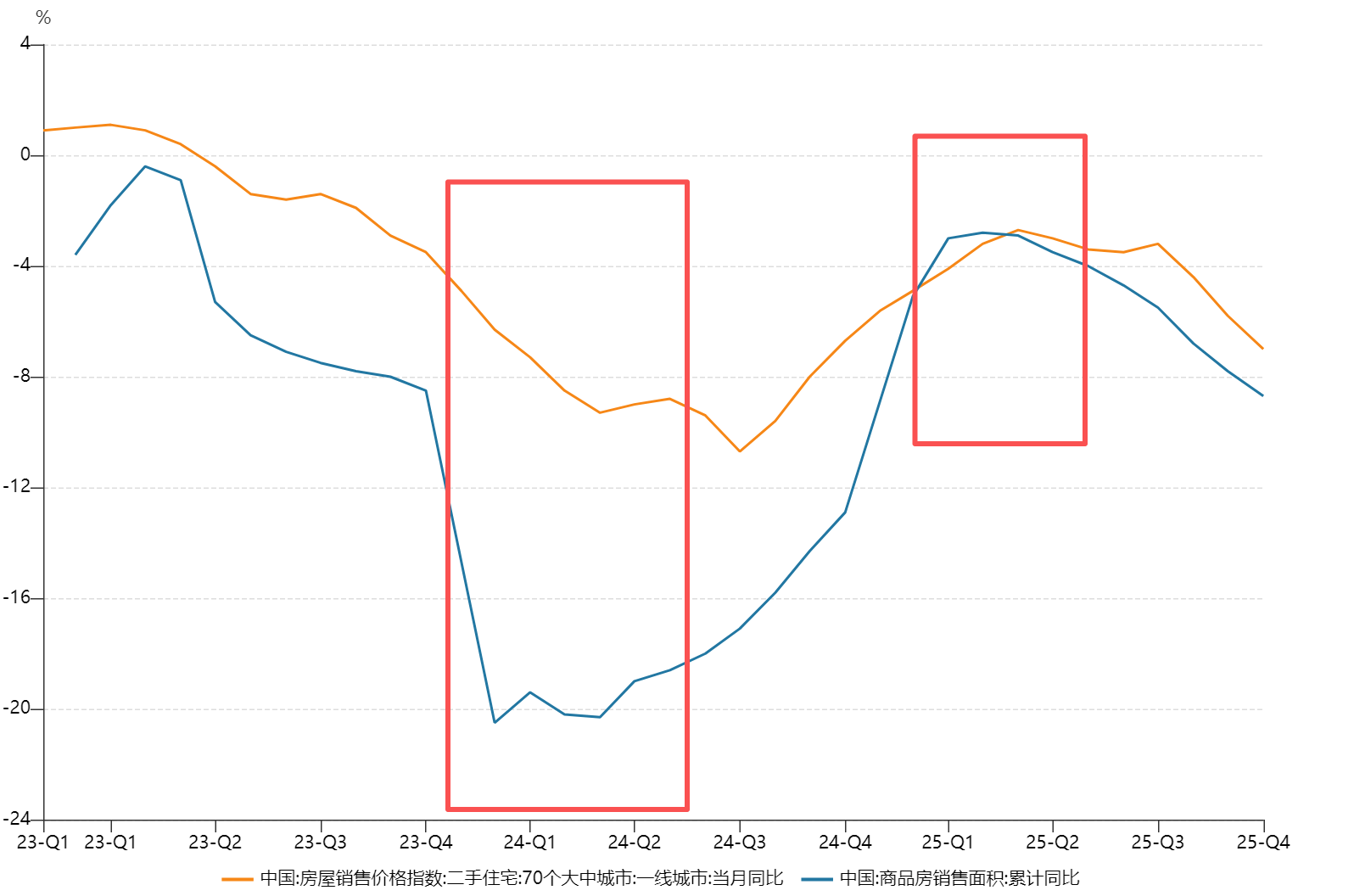
Core Viewpoint - The building materials sector is expected to experience fundamental improvement and valuation recovery due to dual drivers of policy support and real estate recovery, with a strategic window opening in 2025 [1] Policy Support - The fiscal policy for 2025 includes a record high special bond allocation of 4.4 trillion yuan, with 800 billion yuan directed towards "two major" construction and urban renewal projects, providing certainty for infrastructure demand [2] - Monetary policy is expected to maintain a moderately loose stance, with anticipated cumulative reductions in reserve requirement ratios of 150-250 basis points and interest rates by 40-60 basis points, benefiting infrastructure investment and real estate construction recovery [2] - Real estate policies aim for stabilization, with measures such as optimizing purchase restrictions and lowering down payment ratios, leading to signs of price recovery in first-tier cities; from January to May 2025, the year-on-year decline in commercial housing sales area narrowed to 2.9%, a significant improvement compared to 2024 [2] Market Trends - Starting in 2025, the sales area and prices of commercial housing are expected to rebound, particularly in the first half of the year, with a notable narrowing of overall declines [5] - The Ministry of Industry and Information Technology's "Building Materials Industry Stabilization Growth Work Plan (2025-2026)" emphasizes improving profitability and prohibits new cement clinker and flat glass capacity, promoting capacity replacement and staggered production to optimize the supply structure [5] - The real estate market in first-tier cities is projected to maintain high transaction levels post-2026, with second-tier cities like Hangzhou, Nanjing, Chengdu, and Tianjin also showing positive performance [5] Demand Dynamics - The policy to ensure housing delivery is expected to reduce the year-on-year decline in housing completion area to around 15% in the first half of 2025, directly stimulating demand for basic building materials like cement and glass [6] - The total urban housing stock in China is 37.3 billion square meters, with increasing renovation and upgrading needs driven by aging properties, leading to new growth in building material consumption; green building materials revenue is expected to exceed 300 billion yuan by 2026 [6] Investment Opportunities - The building materials sector has faced five years of decline, but positive signals are emerging, suggesting a potential recovery in the sector [8] - The Building Materials ETF (159745) tracks the CSI All Share Building Materials Index, covering leading companies across the entire industry chain, providing an efficient tool for investors to gain exposure to the building materials sector [8] - The current environment favors cyclical sectors, with the building materials industry presenting investment value due to demand recovery, supply optimization, and profitability restoration, alongside low valuations and high dividends [10]

中国银河证券:建材业传统品类走弱 涨价主线引领修复
Zhi Tong Cai Jing· 2026-02-09 01:47
Group 1: Cement Industry - The cement industry is expected to see the effects of capacity reduction by 2026, improving the supply-demand balance and leading to a price recovery, which will gradually restore corporate profitability [1] - In January, the cement market faced seasonal weakness with reduced demand and price pressure, but inventory levels are gradually decreasing, and prices are expected to stabilize in the short term, with potential increases in March due to seasonal construction [1] Group 2: Glass Fiber - In January, the price of raw glass fiber remained stable, supported by some demand recovery and inventory adjustments, while electronic fiber prices increased due to strong demand and supply constraints [2] - The demand for high-end glass fiber products remains robust, and prices are expected to maintain an upward trend in the short term, despite potential temporary declines in traditional electronic fiber demand [2] Group 3: Consumer Building Materials - The retail sales of building and decoration materials decreased by 2.7% year-on-year in 2025, with a significant drop in December, but demand is expected to recover slightly due to urban renewal strategies and the push for high-quality green building materials [3] - Leading companies in the consumer building materials sector are implementing price increases, which, along with anti-competitive policies, may help restore profitability [3] Group 4: Float Glass - The float glass market is experiencing weakening demand, with speculative purchasing increasing, leading to a decline in prices and high overall inventory levels [4] - Short-term demand is expected to continue decreasing, and the price center is likely to shift downward due to ongoing supply-demand pressures [4]
