游戏显卡

Search documents
中东冲突叠加AI恐慌,英伟达市盈率跌至七年最低!
Hua Er Jie Jian Wen· 2026-03-30 16:02
Core Viewpoint - The valuation of Nvidia, the world's highest market capitalization company, has dropped to levels seen before the AI boom sparked by ChatGPT, indicating potential buying opportunities but also reflecting deeper market doubts about AI investment logic [1] Group 1: Valuation Decline - Nvidia's stock price has fallen nearly 20% since its historical high in October last year, resulting in a market cap loss of over $800 billion, currently around $4 trillion [1] - The expected price-to-earnings (P/E) ratio for Nvidia has decreased to approximately 19.6 times, the lowest level since early 2019, and is notably below the S&P 500 index's overall P/E ratio of about 20 times [1] - Despite Nvidia's anticipated earnings growth rate exceeding 70%, significantly higher than the S&P 500's average of about 19%, the current valuation discrepancy is unusual [1] Group 2: Dual Negative Pressures - The sharp contraction in Nvidia's valuation is attributed to two overlapping negative factors: geopolitical risks affecting macro sentiment and doubts about the monetization of AI infrastructure investments [2] - Concerns over rising oil prices due to military actions in the Middle East have led to fears of renewed inflation, prompting expectations of interest rate hikes that negatively impact risk assets, including Nvidia [2] - The market perceives that the substantial investments by Nvidia's core clients, such as Microsoft and Amazon, in AI infrastructure may take longer to yield returns than previously anticipated, undermining investor confidence [2] Group 3: Technological Disruption Risks - Beyond macroeconomic concerns, the risk of rapid technological iteration is becoming another factor suppressing Nvidia's valuation [3] - The recent pullback in software company stock prices has raised worries that the fast evolution of AI technology could intensify industry competition and erode profit margins, a concern that also applies to the hardware sector [3] Group 4: Financial Fundamentals - Despite the valuation pressure, Nvidia's fundamentals remain robust, with the company achieving a gross margin of 75% over several consecutive quarters [5] - Analysts continue to raise their future earnings growth expectations for Nvidia, with an average forecast exceeding 70% for the current fiscal year, significantly higher than the S&P 500's projected growth rate of about 19% for 2026 [5] - The decline in valuation is primarily driven by the drop in stock price and the "scissors effect" of analysts raising their earnings expectations [5] Group 5: Institutional Perspectives - Despite cautious market sentiment, some institutions maintain a constructive outlook on Nvidia, recommending it to clients [6] - The current valuation, trading below the S&P 500's P/E ratio, is viewed by some as an attractive buying opportunity, although it remains uncertain whether this reflects a genuine discount or concerns about Nvidia's long-term competitive position [6]


盘点英伟达本年度的15个里程碑事件
Xin Lang Cai Jing· 2025-12-26 12:37
Core Insights - Nvidia is identified as the most influential company on Wall Street and in the AI industry for 2025, with significant attention on CEO Jensen Huang's activities [1] - In 2025, Nvidia's revenue surged to $187.1 billion, and its market capitalization briefly exceeded $5 trillion before settling in the $4 trillion range [1] Key Events - **January 6**: Nvidia kicked off 2025 at the International Consumer Electronics Show (CES) with the launch of new AI chips and enhanced gaming graphics cards, setting the tone for the year [2] - **January 27**: Nvidia faced a major setback when DeepSeek released its R-1 model, claiming it was trained without top processors, leading to a $600 billion drop in Nvidia's market value in one day [3] - **March 18**: At the GPU Technology Conference, Nvidia unveiled the Blackwell Ultra chip and GB300 superchip, designed for the AI inference era, indicating a strong focus on AI capabilities [4] - **April 2**: Following President Trump's announcement of tariffs, Nvidia's investment in OpenAI raised concerns about inflated AI spending, highlighting the interconnectedness of AI investments [5] - **October 17**: Nvidia celebrated the production of its first Blackwell chip made in the U.S. by TSMC, aligning with government initiatives to bring chip manufacturing back to the U.S. [6] - **October 29**: Nvidia's market value surpassed $5 trillion, following new partnerships announced at the first GPU Technology Conference in Washington [7] - **November 19**: Nvidia received approval to export over 60,000 Blackwell chips to Saudi Arabia and the UAE, promoting the concept of "sovereign AI" [9] - **November 25**: In response to reports of Google developing its own chips, Nvidia highlighted the superiority of its GPUs, emphasizing their capability to run all AI models [10] - **December 9**: Trump approved the export of Nvidia's H200 chip to China, which could potentially improve Nvidia's profitability, although the agreement's success remains uncertain [11]
目标价250美元!华尔街顶流分析师断言:英伟达(NVDA.US)AI盛宴才到第三年
智通财经网· 2025-12-26 09:04
Core Insights - Nvidia's rise in the tech investment sector is highlighted, with a target price of $250 set by Dan Ives from Wedbush Securities, indicating significant potential in AI profitability that the market has yet to fully recognize [1][4][7] - The transformation of Nvidia from a gaming graphics card company during the pandemic to a key player in the new computing era is discussed, with its market value skyrocketing to $4 trillion in just a few years [1][3] - Ives emphasizes that the AI adoption phase is still in its early stages, suggesting long-term growth potential for Nvidia as it plays a crucial role in AI infrastructure development [4][9] Nvidia's Financial Performance - Nvidia's stock price was approximately $32 at the end of November 2021, reflecting its previous focus on gaming graphics [1] - By the end of 2022, Nvidia's market capitalization reached $81 billion, but it was not yet a core player in the AI sector [2] - The company's market value surged to over $3 trillion from 2024 to 2025, eventually exceeding $4 trillion, representing a 50-fold increase from the end of 2021 [3] - An investment of $10,000 in Nvidia three years ago would now be worth approximately $123,000, marking a staggering increase of 1132% [3] Future Projections - Ives predicts Nvidia's stock price will reach $250 by the end of 2026, a 32.5% increase from its current price of $188.61 [4][7] - The projected financial performance timeline shows Nvidia's revenue increasing from $9.8 billion in January 2022 to $29.8 billion in January 2024, a 581% year-over-year growth [8] - By January 2025, revenue is expected to reach $72.9 billion, reflecting a 145% increase, as Nvidia's dominance in AI translates into profitability [8] Market Dynamics - Ives argues that the market has underestimated the scale and duration of AI infrastructure development, with only about 3% of U.S. companies effectively utilizing AI [9][10] - The anticipated capital expenditure in AI is projected to exceed $500 billion by 2026, indicating a significant underestimation of investment in AI infrastructure [9] - A geopolitical shift is noted, with the U.S. regaining a decisive technological advantage over China, adding a new dimension to the AI narrative [10]
都快2026年了,机械硬盘居然涨价了
3 6 Ke· 2025-12-23 23:48
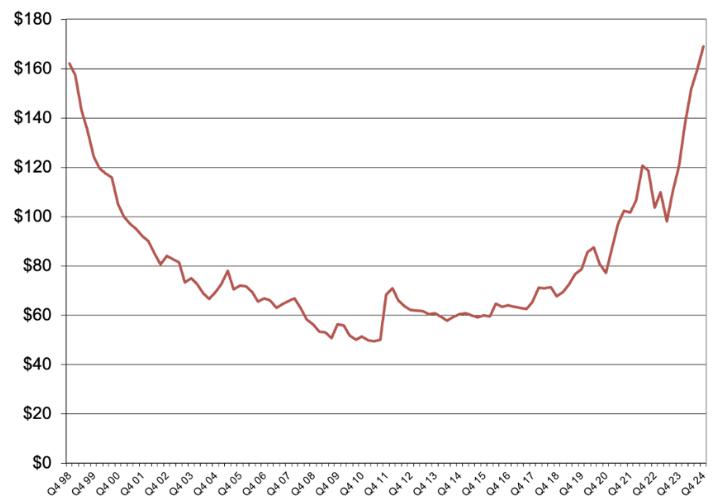
Core Insights - The consumer electronics market has struggled for years without profiting from artificial intelligence (AI), facing significant price increases in storage components due to AI infrastructure demands [1][5] - Mechanical hard drives (HDDs), which have seen a decline in shipments for nearly a decade, are experiencing a resurgence in 2024, with a notable increase in shipment volume and average selling prices returning to levels not seen since 1998 [1][8] Group 1: Market Dynamics - The average price of mechanical hard drives has significantly increased, with major manufacturers like Western Digital and Seagate raising prices due to heightened demand from AI and data centers [3][10] - The demand for HDDs is primarily driven by the need for "cold data storage," which is less frequently accessed but requires large storage capacities, making HDDs a cost-effective choice compared to solid-state drives (SSDs) [5][7] Group 2: Competitive Landscape - The market for HDDs is characterized by a lack of new production capacity, as major manufacturers are prioritizing higher-margin enterprise products over consumer-grade offerings, leading to price increases in the consumer market [10][24] - The competitive landscape is shifting, with SSDs becoming more prevalent, but HDDs still hold a significant cost advantage for large-scale cold storage needs, maintaining a price ratio of 7:1 compared to enterprise SSDs [21][22] Group 3: Industry Trends - The trend of rising prices in the storage market is not isolated to HDDs; other sectors, such as memory chips, are also experiencing price surges, impacting various consumer electronics [26][30] - Companies like Micron are exiting the consumer storage market to focus on larger-scale strategic clients, indicating a broader industry shift towards enterprise and data center solutions [28]


“常驻”2025年新闻头条!盘点英伟达年度15大关键事件
Jin Rong Jie· 2025-12-23 05:33
Core Insights - Nvidia is expected to have a significant impact on Wall Street and the AI industry by 2025, with revenue projected to soar to $187.1 billion and a market cap fluctuating around $4 trillion, briefly surpassing $5 trillion [1] Group 1: Key Events - January 6: Nvidia kicked off 2025 at CES with the launch of new AI chips and gaming graphics cards, setting the tone for the year [2] - January 27: The release of DeepSeek's R-1 model caused Nvidia's market value to drop by nearly $600 billion in a single day, but concerns about the need for high-performance chips were later deemed exaggerated [3] - March 18: Nvidia's GTC conference saw the launch of the Blackwell Ultra chip, designed for the "AI inference era," with a significant audience turnout [4] Group 2: Market Reactions - April 2: Following Trump's announcement of tariffs, Nvidia's stock fell from $110 to $94.31, recovering only by April 9 [5] - April 15: New chip export restrictions to China led Nvidia to incur a $4.5 billion impairment charge [6] - July 9: Despite challenges, Nvidia's market cap surpassed $4 trillion, marking a rapid increase of $3 trillion in just three years [8] Group 3: Regulatory Developments - July 14: Nvidia received assurances from the Trump administration to resume sales of the H20 chip to China [9] - August 11: The White House announced a 15% revenue share from Nvidia's sales to China, which investors viewed positively compared to previous restrictions [10] - December 9: Nvidia was granted permission to sell the H200 chip to China, although future sales remain uncertain [17] Group 4: Strategic Investments - September 22: Nvidia announced a $100 billion investment in OpenAI to support the development of data centers for AI model training [11] - November 19: Nvidia was authorized to export computing power equivalent to over 60,000 Blackwell chips to the Middle East, promoting the concept of "sovereign AI" [15] Group 5: Competitive Landscape - November 25: Concerns arose regarding competition from clients like Microsoft and Amazon developing their own AI chips, prompting Nvidia to emphasize its GPU's superiority [16]
明年将发债支持国补,摩尔线程回应拿钱理财
Xin Lang Cai Jing· 2025-12-16 04:45
Group 1 - The Ministry of Finance plans to issue 150 billion yuan of special long-term bonds in 2024 to support consumer subsidies for vehicle trade-ins and related appliances, with an additional 300 billion yuan expected in 2025 [1][17] - The "national subsidy" policy has positively impacted domestic consumption over the past two years, leading to a significant increase in sales, with over 25 trillion yuan in sales generated from trade-in programs benefiting over 360 million people [1][17] - The coverage of the "national subsidy" policy is expected to continue expanding, particularly for durable consumer goods like refrigerators and televisions [1][17] Group 2 - In November, the average sales prices of residential properties in 70 major cities showed a month-on-month decline, with first-tier cities down by 0.4% and second and third-tier cities down by 0.3% and 0.4% respectively [3][18] - The introduction of "home purchase interest subsidy" policies in several cities has led to a short-term increase in new home transactions, with some cities reporting over a 15% month-on-month growth in sales [3][18] - The real estate market is experiencing a downturn, with new home prices remaining relatively stable due to high-quality listings, while second-hand homes are seeing more aggressive price reductions [3][18] Group 3 - In November, the industrial added value for large-scale enterprises grew by 4.8% year-on-year, with a month-on-month increase of 0.44%, while the growth rate for the manufacturing sector was 4.6% [5][20] - High-tech manufacturing sectors, such as 3D printing and industrial robotics, showed significant growth, with production increases of 100.5% and 20.6% respectively [5][21] - The overall industrial growth rate has slowed, with traditional manufacturing sectors like cement and steel continuing to decline, indicating a need for structural adjustments in the economy [5][21] Group 4 - Vanke has faced challenges in extending a 2 billion yuan bond, with all proposed extension plans failing to meet the required approval threshold [7][22] - The company is in a precarious financial situation, with a potential default looming if an agreement with bondholders is not reached within the grace period [7][22] - Vanke's reliance on state-owned shareholders for support has diminished, raising concerns about its ability to navigate its financial difficulties independently [7][23] Group 5 - iRobot has filed for Chapter 11 bankruptcy protection, indicating severe financial distress despite being a pioneer in the robotic vacuum market [9][24] - The company has seen a significant decline in market share due to increased competition from lower-cost Chinese manufacturers and slow product innovation [9][25] - iRobot's financial situation is dire, with liabilities exceeding 500 million dollars and cash reserves dwindling to 24.8 million dollars [9][24] Group 6 - Samsung is reportedly in discussions with AMD regarding a potential partnership for 2nm chip manufacturing, aiming to enhance its position in the high-end semiconductor market [11][26] - Despite previous attempts, Samsung has struggled to gain a significant share in the high-end chip market due to issues with process maturity and yield rates [11][26] - The collaboration with AMD could provide Samsung with leverage in negotiations with other clients, particularly in the context of increasing demand for AI chips [11][26]


明年将发债支持国补,摩尔线程回应拿钱理财 | 财经日日评
吴晓波频道· 2025-12-16 00:30
Group 1: National Policies and Economic Measures - The Ministry of Finance plans to issue 1.5 billion yuan in special long-term bonds in 2024 to support consumer subsidies for vehicle trade-ins and related appliances, with an additional 3 billion yuan expected in 2025 [2] - The "national subsidy" policy has positively impacted domestic consumption over the past two years, with consumer goods trade-ins generating over 2.5 trillion yuan in sales from January to November, benefiting over 360 million people [2] - The coverage of the "national subsidy" policy is expected to continue expanding, particularly for durable consumer goods like refrigerators and televisions [2] Group 2: Real Estate Market Trends - In November, the sales prices of new residential properties in major cities showed a month-on-month decline, with first-tier cities down 0.4% and second and third-tier cities down 0.3% and 0.4% respectively [4] - The introduction of "home purchase interest subsidies" in several cities has led to a short-term increase in new home transactions by over 15% [4] - The real estate market is experiencing a downturn, with second-hand homes showing stronger sales performance compared to new homes due to price reductions by individual landlords [4][5] Group 3: Industrial Growth and Economic Indicators - In November, the industrial added value for large-scale enterprises grew by 4.8% year-on-year, with a month-on-month increase of 0.44% [6] - High-tech manufacturing sectors, such as 3D printing and industrial robotics, saw significant growth, with production increasing by 100.5% and 20.6% respectively [6] - The overall industrial growth rate is being constrained by weak demand and ongoing adjustments in the real estate market, leading to a cautious economic recovery [6] Group 4: Corporate Debt and Financial Challenges - Vanke's attempt to extend the maturity of a 2 billion yuan bond faced obstacles, as none of the proposed extension plans received the required 90% approval from bondholders [7][8] - The company is at risk of default if an agreement is not reached within the grace period following the bond's maturity [7] - Vanke's financial struggles are compounded by reduced support from state-owned shareholders, indicating a challenging path ahead for the company [8] Group 5: Technology and Market Developments - iRobot has filed for Chapter 11 bankruptcy protection, facing significant financial difficulties with liabilities exceeding 500 million dollars and cash reserves of only 24.8 million dollars [9][10] - The company, once a leader in the robotic vacuum market, has struggled to keep up with competitors offering better technology at lower prices [10] - Samsung is in discussions with AMD regarding potential collaboration on 2nm chip manufacturing, aiming to enhance its position in the high-end semiconductor market [11]


英伟达CEO黄仁勋:人工智能将使全球GDP增长五倍,将从从100万亿美元增长到500万亿美元!已成为核武器问世以来大国竞争中最具颠覆性的工具
Sou Hu Cai Jing· 2025-12-12 05:26
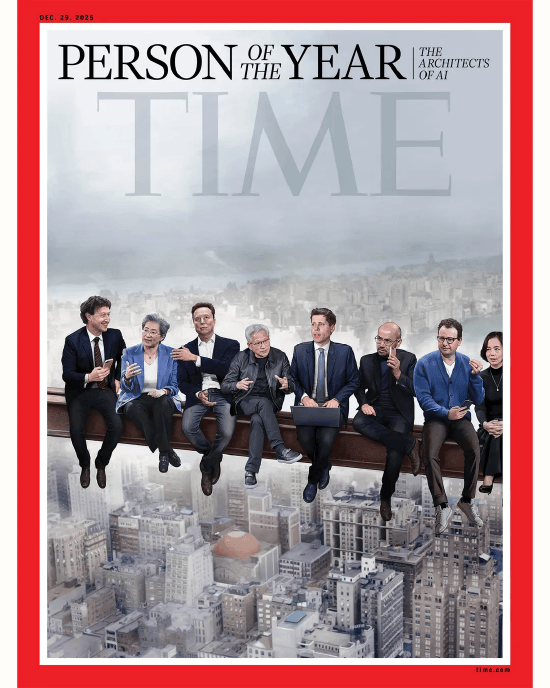
Core Insights - The CEO of Nvidia, Jensen Huang, believes that artificial intelligence (AI) will increase global GDP from $100 trillion to $500 trillion, emphasizing the necessity for every country to develop AI [2][5]. Group 1: Nvidia's Position and Influence - Nvidia has become the world's most valuable company, transitioning from a gaming graphics card manufacturer to a key player in the AI revolution, holding a near-monopoly on high-end chips [3][4]. - Huang is recognized as a pivotal figure in global politics, with his influence extending into national strategies and geopolitical dynamics [3][4]. - The company is seen as a strategic tool for nations, operating at the intersection of advanced technology, diplomacy, and geopolitics [3][4]. Group 2: AI's Impact on Industries - The rapid deployment of AI across various sectors is reshaping business strategies, with companies recognizing the need to adopt AI to avoid obsolescence [4][5]. - OpenAI's ChatGPT has reached over 800 million active users, showcasing the explosive growth of consumer applications in AI [4]. - Huang asserts that AI will lead to a productivity revolution in businesses by enhancing efficiency and driving revenue growth, ultimately leading to job creation in high-demand sectors [6]. Group 3: Concerns and Challenges - There are concerns regarding AI's potential for deception and manipulation, with warnings from experts about the risks associated with its rapid advancement [5]. - Huang acknowledges that while some jobs may disappear due to AI, it will also enhance the capabilities of professionals, such as radiologists, leading to increased demand in certain fields [6].
英伟达CEO黄仁勋:人工智能将使全球GDP增长五倍,将从100万亿美元增长到500万亿美元!已成为核武器问世以来大国竞争中最具颠覆性的工具
Ge Long Hui· 2025-12-12 04:56
Core Viewpoint - The CEO of Nvidia, Jensen Huang, believes that artificial intelligence (AI) will increase global GDP from $100 trillion to $500 trillion, emphasizing the necessity for every country to develop AI capabilities [2][6]. Group 1: Company Overview - Nvidia has become the world's most valuable company, transitioning from a focus on gaming graphics cards to a dominant position in high-end AI chips [4][6]. - Huang is recognized as a key figure in global politics and technology, with his company being described as a strategic tool in advanced technology, diplomacy, and geopolitics [4][6]. Group 2: AI Impact and Future Projections - AI is expected to revolutionize productivity in businesses by 2025, with tools like Cursor and Claude Code significantly enhancing coding efficiency [8]. - Huang asserts that while some jobs may disappear, AI will ultimately increase productivity and create more job opportunities in high-demand sectors [8]. Group 3: Industry Dynamics - The competition in AI has intensified, with every industry and company needing to adopt AI technologies to remain competitive [6][7]. - Huang's vision aligns with other tech leaders who warn of the potential risks of AI, yet he remains optimistic about its transformative potential for the economy [6][7].