平板玻璃

Search documents
建材行业双周报(2026/03/06-2026/03/19):楼市销售“小阳春”预期提升,建材产品提价有所蔓延-20260320
Dongguan Securities· 2026-03-20 09:20
Investment Rating - The report maintains a "Market Weight" rating for the building materials industry, indicating that the industry index is expected to perform within ±10% of the market index over the next six months [45]. Core Insights - The building materials sector is experiencing a "small spring" in real estate sales expectations, leading to price increases across various building materials. Cement prices have risen by 20 to 40 CNY per ton in several provinces, and the overall supply-demand balance in the cement industry is expected to improve in 2026 due to the initiation of major projects [2][38]. - The flat glass industry is currently facing a "double weakness" in supply and demand, with high inventory levels and overall losses. However, there is potential for price recovery and capacity clearance in the short term, driven by rising fuel costs and technological upgrades among leading companies [39]. - The photovoltaic glass market is characterized by high production and low procurement, with prices declining to historical lows. The industry is under pressure from overcapacity and high inventory levels, but leading companies are gradually improving profitability through technological advancements [39]. - The fiberglass sector is seeing increased demand driven by high-end applications related to AI computing power, with prices expected to rise. The overall supply-demand situation is improving compared to 2025, and leading companies are strengthening their market positions [39]. Summary by Sections Cement - Cement prices have been raised by 20 to 40 CNY per ton in various regions since mid-March 2026. National cement production for January-February 2026 reached 178 million tons, a 6.8% increase year-on-year, indicating a recovery in demand due to major engineering projects [2][38]. - Recommended stocks include Shangfeng Cement (000672), Tapai Group (002233), and Huaxin Cement (600801) due to their favorable fundamentals and high dividend yields [38]. Flat Glass - The flat glass industry is currently facing high inventory and losses, with production in 2025 declining by 3.0% year-on-year. Prices for flat glass have seen a slight increase due to rising fuel costs, but the overall market remains weak [39]. - The industry is expected to stabilize in the short term, with potential for price recovery driven by demand from green buildings and automotive lightweighting [39]. Photovoltaic Glass - The photovoltaic glass market is experiencing high production but low demand, with prices dropping to 9.5-10 CNY per square meter. The industry is characterized by overcapacity and high inventory levels, leading to continued pressure on profitability [39]. - The market's future growth relies on increased photovoltaic installations and technological innovations [39]. Fiberglass - The fiberglass sector is benefiting from increased demand in high-end applications, with prices expected to rise. The overall supply-demand situation is improving, and leading companies are enhancing their market positions [39]. - Recommended stock includes China Jushi (600176), which is positioned to benefit from the structural recovery in the fiberglass industry [39]. Consumer Building Materials - Recent price increases have been announced for various building materials, including waterproofing materials and gypsum boards, driven by rising raw material costs. The demand structure is improving, and leading companies are expected to recover their profitability [40][42]. - Recommended stocks include Beixin Building Materials (000786), Rabbit Baby (002043), and Sankeshu (603737) due to their strong market positions and growth potential [42].


建筑材料行业:双碳政策强化建材供给逻辑,盈利有望底部改善
GF SECURITIES· 2026-03-13 09:30
Investment Rating - The industry investment rating is "Hold" [2] Core Viewpoints - The dual carbon policy is expected to strengthen the supply logic of the building materials industry, leading to potential improvements in profitability from historical lows [5][34] - The cement industry is a key focus for carbon reduction, with an estimated clinker production of approximately 1.1 billion tons in 2025, contributing to about 8% of national carbon emissions [34] - The glass industry is also under scrutiny, with significant carbon emissions expected to be managed through cleaner fuel transitions and potential inclusion in carbon markets by 2027 [34] Summary by Sections Transition from Energy Consumption Control to Carbon Emission Control - The transition from "energy consumption control" to "carbon emission control" is expected to enhance the effectiveness of carbon reduction efforts [19][20] - The 14th and 15th Five-Year Plans emphasize the importance of reducing carbon emissions, with a target of a 17% reduction in carbon emissions per unit of GDP by 2025 [23][26] Cement Industry - The dual carbon policy is anticipated to lead to continuous improvements in the supply side of the cement industry, with administrative measures expected to force non-compliant and inefficient production capacities out of the market [34] - The carbon market is set to include the cement industry by 2025, with a gradual tightening of carbon quotas expected post-2027, which will increase costs for less efficient producers [35][36] Glass Industry - The glass industry is currently undergoing transformations to phase out outdated production capacities through cleaner fuel initiatives, with expectations of stricter environmental policies in the future [34] - The glass sector is projected to be included in carbon market regulations by 2027, which will further drive the exit of inefficient production capacities [34] Investment Recommendations - The report suggests that the dual carbon policy will enhance the supply-side logic of the building materials industry, with leading companies expected to benefit from improved profitability as supply conditions optimize [5][34] - Key companies to watch in the cement sector include Huaxin Cement, Conch Cement, and China National Building Material, while in the glass sector, focus on companies like Xinyi Glass and Fuyao Glass [5][34]



玻璃,2026,酝酿大行情
An Liang Qi Huo· 2026-03-09 04:54
1. Report Industry Investment Rating - Not provided in the given content 2. Core View of the Report - In 2026, glass has the supply - demand foundation to emerge from the industry trough and return to the normal price range. If there are positive policy benefits and demand improvement, the glass market may exceed market expectations [2]. - The reduction in glass consumption demand from the real - estate end due to the decrease in completion area is being replaced by consumption increments in other directions, and these increments are growing rapidly [6]. - In 2026, the supply of flat glass has significantly decreased and is expected to continue to decline, which is an important factor for a major change in the glass market [7]. - Although the current spot and futures prices of flat glass are still at the bottom, with positive changes in supply - side and consumption - side data, glass has some conditions to emerge from the trough [14]. 3. Summary by Relevant Catalogs 3.1 Demand - side Analysis - The market generally believes that the demand for glass is weak, mainly due to the decline in real - estate new construction and completion areas since 2020. For example, in 2025, the real - estate completion area decreased by 18.1% compared to 2024 [2][3]. - However, the supply of flat glass does not directly correspond to the real - estate completion area. The consumption reduction in the real - estate end is being replaced by consumption increments in other directions, such as increased glass use per unit area in commercial and residential properties, home - improvement glass, agricultural glass greenhouses, and rural self - built houses [6]. 3.2 Supply - side Analysis - **Supply Reduction Factors** - The daily melting volume of float glass has significantly decreased. For example, in 2026, the daily melting volume of float glass decreased by 5.5% year - on - year [8]. - The supply of common white glass in the float glass category has decreased as many glass production lines have been adjusted to produce ultra - white glass or colored glass due to long - term low prices and losses [10]. - **Uncertain Supply Factors** - **Environmental Protection**: Due to environmental protection requirements such as "coal - to - gas" and "petroleum coke - to - gas" conversions, the supply of flat glass from coal - gas and petroleum coke sources will inevitably decrease in 2026, but the specific time and daily melting volume reduction are uncertain [11][12]. - **Financial Issues**: Since May 2024, domestic natural - gas - based float common white flat glass has been in a state of overall loss. High - cost and financially - pressured glass enterprises may be forced to shut down, and this situation may become more severe in 2026 [12][14]. 3.3 Current Price Restrictive Factors - The supply is still relatively strong or the supply - demand is weak, and the supply - side data has not significantly fallen below the supply - demand balance point (the market generally expects the balance point to be a daily melting volume of 14.5 tons) [15]. - There are uncertainties in the supply - side data, with both production line cold - repair or shutdown expectations and cold - repaired production line ignition and resumption expectations [15]. - The inventory is relatively high, especially during the winter and around the Spring Festival, which is the peak inventory - accumulation period [15]. - The consumption recovery is not obvious, and it is difficult to feel the improvement in the short term due to the seasonality of glass consumption [15]. - The market has a negative view of glass, and the short - selling power is strong [15]. 3.4 Conditions for a Major Market in 2026 - The current low glass price and strong short - selling power provide necessary conditions for a major market [15]. - Domestic glass consumption is resilient, and glass demand is expected to stop declining or have a mild rebound in 2026 [15]. - Due to environmental protection and financial issues, glass supply will gradually decrease over time [16]. 3.5 Data Requirements for a Major Market - **Supply - side**: The daily melting volume of float glass needs to be below 14.5 tons and remain at this level for a sufficient period. The lower the daily melting volume and the longer the duration, the greater the market space [16]. - **Inventory - side**: There needs to be a significant reduction in flat glass inventory. A key point is an inventory of 40 million weight boxes in the upstream. If the inventory is below this level and remains so for a certain period, it indicates that the supply and consumption can support a market [16]. 3.6 Probable Time for a Major Market - Unless there are strong policy surprises, capital pre - layout, or other unexpected factors, the probability of a major glass market in the second half of 2026 is higher as it takes time for clear data to emerge [17].
建材行业双周报:地缘政治带来成本上涨,部分建材产品提价或加速-20260306
Dongguan Securities· 2026-03-06 09:09
Investment Rating - The report maintains a "Market Weight" rating for the building materials industry, indicating that the industry index is expected to perform within ±10% of the market index over the next six months [43]. Core Insights - The geopolitical situation is driving up costs, leading to price increases for certain building materials [2]. - The cement industry is expected to see an improved supply-demand balance in 2026, with a focus on controlling new clinker capacity and enhancing production quality [4][36]. - The flat glass market is stabilizing, with prices showing a slight increase, while the photovoltaic glass sector faces supply pressures despite some recovery in profit margins [4][37]. - The report highlights a trend of price increases among leading waterproofing companies due to rising costs and a shift towards value creation in the industry [39]. Summary by Sections Industry Overview - The building materials sector has experienced a slight decline of 0.05% over the past two weeks but has outperformed the CSI 300 index by 0.22 percentage points [13]. - The cement market is currently facing low demand, with average prices around 310 RMB/ton, down 0.96% from the previous week [21]. Cement Industry - The government is implementing measures to strengthen fair competition and control new clinker capacity, which are expected to improve the cement industry's supply-demand dynamics in 2026 [4][36]. - Recommended stocks include Shangfeng Cement (000672), Taipai Group (002233), and Huaxin Cement (600801) due to their favorable fundamentals and high dividend yields [4][36]. Glass and Fiberglass - The flat glass market is stabilizing with prices around 13.2–13.38 RMB/square meter, reflecting a 1.38% increase [4][37]. - The fiberglass industry is expected to see continued price increases driven by rising costs and strong demand for high-end products [39]. Consumer Building Materials - Leading waterproofing companies have announced price increases of 5% to 10% due to cost pressures and a strategic shift towards value creation [39]. - Recommended stocks in this segment include Beixin Building Materials (000786), Rabbit Baby (002043), and Sankeshu (603737) [39][40].

2025年12月建筑材料行业运行情况简报
Xin Lang Cai Jing· 2026-02-28 02:45
Core Viewpoint - The construction materials industry showed stable economic performance in December 2025, with production levels remaining steady and economic indicators improving, indicating a recovery in the external trade market [1]. Group 1: Production and Price Trends - In December, the non-metallic mineral products industry achieved a year-on-year value-added growth of 0.2%, a 2 percentage point increase from the previous month [1]. - Among 31 monitored construction materials, 10 products saw year-on-year production growth, while 21 experienced declines; notable growth was seen in fiberglass reinforced plastics, fiberglass cloth, fluorite, and sanitary ceramics, with growth rates exceeding 7% [1]. - The overall price of construction materials decreased by 0.2% month-on-month in December, with specific products like mineral fibers and building stones seeing price increases of over 1% [2]. Group 2: Economic Performance Indicators - For the year 2025, the construction materials industry's revenue decreased by 11.7% year-on-year, while total profits fell by 8.0%, with the decline rates narrowing by 0.5 and 40.6 percentage points respectively [3]. - Certain sub-industries, including mineral fibers and reinforced plastics, reported revenue growth, while others like fiber cement products and flat glass faced losses [3]. Group 3: Investment Trends - Fixed asset investment in the non-metallic mineral extraction industry dropped by 9.6% year-on-year, with a more significant decline of 10.2% in the non-metallic mineral products sector, reflecting a decrease of 22.9 and 11.8 percentage points compared to the previous year [3]. Group 4: Trade Market Recovery - In December, the export value of construction materials was $3.21 billion, a 6.7% year-on-year decline, but the total for the year was $33.47 billion, down 6.1%, with the decline rates narrowing [4]. - Exports to countries like India, Singapore, and the UAE showed significant growth, particularly in sanitary ceramics, marble products, and various glass products [4]. - The import value of construction materials in December was $1.39 billion, down 20.6% year-on-year, with the total for the year at $15.96 billion, a 26.4% decline, also showing a narrowing trend [4].


建材行业双周报(2026/01/30-2026/02/12):“防内卷”带来建材供需格局优化,电子布价格提升预期增强-20260213
Dongguan Securities· 2026-02-13 08:48
Investment Rating - The report maintains a "Market Weight" rating for the building materials industry, indicating that the industry index is expected to perform within ±10% of the market index over the next six months [46]. Core Insights - The building materials industry is experiencing an optimization in supply and demand dynamics due to the "anti-involution" policies, with expectations for price increases in electronic fabrics [2][4]. - The cement sector is anticipated to see a further contraction in total production capacity in 2026, driven by regulatory measures and a potential recovery in real estate sales in key cities [4][39]. - The flat glass market is showing signs of recovery with a slight increase in production and prices, although short-term demand remains weak due to seasonal factors [4][40]. - The photovoltaic glass market is facing challenges with excess supply and ongoing losses, but long-term demand is expected to be supported by the development of new energy bases [4][40]. - The glass fiber industry is in a structural recovery phase, with increasing demand for high-end products driven by advancements in AI and 5G technologies [4][40]. Summary by Sections Cement - The Ministry of Industry and Information Technology has implemented measures to control cement production capacity, leading to an expected reduction in total capacity in 2026 [4][39]. - Recent data indicates a recovery in real estate sales, which, combined with major infrastructure projects, may improve the supply-demand balance in the cement industry [4][39]. - Recommended stocks include Shangfeng Cement, Taipai Group, and Huaxin Cement, which have favorable fundamentals and high dividend yields [4][39]. Glass and Fiberglass - The flat glass production in 2025 is projected to be 97,591 million weight boxes, a 3% decrease year-on-year, but December 2025 saw a 3.4% increase compared to the previous year [4][40]. - The price of float glass has shown a slight recovery, with expectations for price stabilization due to supply-side adjustments [4][40]. - The fiberglass market is benefiting from increased demand for low-DK glass fabrics, with Taiwanese manufacturers shifting production to meet this demand [4][40]. - Recommended stocks in the fiberglass sector include China Jushi, which is expected to benefit from the structural recovery in the industry [6][40]. Consumer Building Materials - Leading companies like Keshun and Sankeshu have announced price increases due to rising raw material costs, indicating a trend of price stabilization in the industry [6][42]. - The demand for new construction is weakening, but renovation and urban renewal projects are expected to drive growth [6][42]. - Recommended stocks include Beixin Building Materials, Tubaobao, and Sankeshu, which are well-positioned to recover ahead of their peers [6][42].
三峡新材:公司主营业务为平板玻璃及特种功能玻璃的生产和销售
Zheng Quan Ri Bao· 2026-02-12 12:16
Core Viewpoint - The company, Sanxia New Materials, focuses on the production and sales of flat glass and special functional glass, and is involved in the research and development of new building materials, but does not engage in photovoltaic glass production or related fields [2] Group 1 - The main business of the company includes the production and sales of flat glass and special functional glass [2] - The company is also involved in the research and development of new building materials [2] - The company will continue to pay attention to technological iterations and market dynamics in the photovoltaic industry [2]

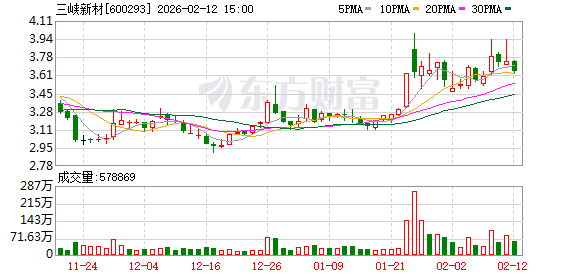
三峡新材:未涉及光伏玻璃生产及光伏相关领域
Ge Long Hui· 2026-02-12 08:05
Core Viewpoint - The company, Three Gorges New Materials (600293.SH), focuses on the production and sales of flat glass and special functional glass, as well as research and development of new building materials, and does not engage in photovoltaic glass production or related fields [1] Group 1 - The main business of the company includes the production and sales of flat glass [1] - The company also specializes in special functional glass [1] - Research and development of new building materials is part of the company's operations [1] Group 2 - The company explicitly states that it does not involve itself in photovoltaic glass production [1] - There is no engagement in photovoltaic-related fields by the company [1]
三峡新材(600293.SH):未涉及光伏玻璃生产及光伏相关领域
Ge Long Hui· 2026-02-12 08:01
Core Viewpoint - The company, Three Gorges New Materials (600293.SH), focuses on the production and sales of flat glass and special functional glass, as well as research and development of new building materials, and does not engage in photovoltaic glass production or related fields [1] Group 1 - The main business of the company includes the production and sales of flat glass [1] - The company also specializes in special functional glass [1] - Research and development of new building materials is part of the company's operations [1]
申万宏源:建材行业周期分化 关注消费建材个股修复
Zhi Tong Cai Jing· 2026-02-11 06:52
Group 1: Cement Industry - The cement industry is expected to see a phase of supply improvement starting in the second half of 2024, with profitability gradually recovering by 2026 [1][2] - The average cement price in 2025 is projected to be 372.8 yuan/ton, a decrease of 12.6 yuan/ton year-on-year, with a cumulative production decline of 7.2% [2] - A total of 16 million tons/year of capacity has been removed through capacity replacement, which may lead to asset impairment for several companies [2] Group 2: Glass Industry - The flat glass industry is experiencing a significant decline, with the average price in 2025 expected to be 1323.3 yuan/ton, down 383.4 yuan/ton year-on-year [3] - Daily melting capacity has dropped below 150,000 tons, a decrease of 27,000 tons/day from previous highs, indicating an acceleration in the cold repair cycle [3] - The profitability of photovoltaic glass is under pressure, with a projected average price of 21 yuan/square meter in 2025, down 3 yuan/square meter from 2024 [3] Group 3: Fiberglass and Electronic Fabrics - The average price of fiberglass yarn in 2025 is expected to be 3866 yuan/ton, an increase of 174 yuan/ton year-on-year, indicating stable market conditions [4] - The average price of ordinary electronic fabric is projected to be 9012 yuan/ton in 2025, up 539 yuan/ton year-on-year, reflecting improving market conditions [4] - Demand for special electronic fabrics is accelerating, contributing positively to the performance of companies in this segment [4] Group 4: Consumer Building Materials - Companies like Three Trees and Hanhai Group are maintaining strong revenue and profit performance through effective channel development and brand advantages [5] - Companies in the gypsum board and retail pipeline sectors are expected to maintain strong operational quality, with potential for significant performance improvement in 2026 [5] - Several consumer building material companies are anticipated to release credit risks in 2025, allowing for a more favorable performance outlook in 2026 [5]