电气机械

Search documents
科技经济v.s.地产经济:有何不同?
Orient Securities· 2026-02-24 00:25
Group 1: Economic Transition - The shift from real estate economy to technology economy involves significant changes in industrial structure, development models, and institutional reforms, impacting key macroeconomic variables such as production, inflation, employment, fiscal policy, and monetary policy[2]. - By 2025, the contribution of new quality productivity industries to total output has surpassed that of the real estate construction chain, indicating a need for macroeconomic research to focus more on new quality productivity[11]. - The traditional development model driven by urbanization and population growth is transitioning to one focused on stock optimization and quality improvement due to slowing urbanization[8]. Group 2: Industrial Structure and Macroeconomic Features - The industrial structure has shifted from a real estate and construction-centric model to one centered around new quality productivity, which includes emerging manufacturing and certain service sectors[12]. - New quality productivity industries are expected to have a greater impact on total output than the real estate construction chain by 2025, reflecting their higher efficiency and growth potential[20]. - The inflation impact from new quality productivity industries is weaker compared to upstream factors like commodities and real estate, indicating a limited ability to drive PPI increases[25]. Group 3: Employment and Development Models - The labor compensation in new quality productivity sectors is lower than in traditional industries, which may create pressure on income and employment, necessitating a focus on developing service consumption to mitigate these effects[31]. - The transition from a cost advantage to a quality advantage in the labor force is evident, as the number of highly educated graduates continues to rise, supporting productivity growth in manufacturing[41]. Group 4: Institutional Mechanisms and Macro Control - The macro control mechanisms need to adapt to support the technology economy, moving away from real estate dependency and enhancing the role of direct financing systems[54]. - The fiscal and tax systems must evolve to accommodate new business models and support emerging industries, with a focus on expanding local tax sources and creating a tax system that aligns with new economic realities[56].
【招银研究|宏观点评】圆满收官——中国经济数据点评(2025年全年及12月)
招商银行研究· 2026-01-19 12:29
Overview - The core viewpoint of the article is that China's economy in 2025 is characterized by a deepening supply-demand imbalance, with strong supply and weak demand, as well as a resilient external demand compared to internal demand. The GDP is projected to exceed 140 trillion yuan, with nominal growth of 4% and real growth of 5% [1][4]. Economic Structure - The economic operation in 2025 shows three main features: a deepening supply-demand imbalance, stronger external demand than internal demand, and initial success in price governance. The industrial added value increased by 5.9%, which is higher than GDP, investment, and consumption growth rates [4][5]. - The contribution rates to GDP growth from final consumption expenditure, capital formation, and net exports are 52%, 15.3%, and 32.7%, respectively [1]. Consumption - The total retail sales of consumer goods grew by 3.7% in 2025, with a "front high and back low" rhythm. The growth rates for goods and catering were 3.8% and 3.2%, respectively, indicating stronger performance in goods [12][15]. - In December, the retail sales growth rate dropped to 0.9%, reflecting a further weakening of growth momentum. Durable goods consumption faced significant pressure, with home appliances down by 14.3% [15][18]. Fixed Asset Investment - Fixed asset investment decreased by 3.8% in 2025, primarily due to declines in infrastructure (-1.5%) and real estate investment (-17.2%). Private investment continued to shrink for the third consecutive year, with a significant drop of 6.4% [18][20]. - Real estate sales showed a smaller decline compared to investment, with sales area and amount down by 8.7% and 12.6%, respectively, indicating a slight recovery in sales [20][21]. Foreign Trade - In 2025, exports maintained resilience with a cumulative growth of 5.5%, while imports showed no growth. Exports to the US fell by 19.9%, while exports to non-US regions grew by 9.9%, becoming the main support for overall export growth [29][30]. - In December, exports increased by 6.6%, driven by strong performance in automobiles and integrated circuits, which grew by 71.7% and 47.7%, respectively [29][30]. Supply Side - Industrial production growth accelerated in 2025, with the industrial added value increasing by 5.9%. The contribution rate of industry to economic growth reached 35%, up by 1.8% from 2024 [31][35]. - In December, industrial production showed a year-on-year growth of 5.2%, with a notable increase in high-tech industries [31][35]. Inflation - Inflation showed moderate recovery in 2025, with the CPI remaining flat year-on-year and core CPI rising to 1.2%. The PPI contracted by 2.6%, influenced by supply-demand balance and rising international metal prices [36][37]. - In December, CPI rose by 0.8%, marking the fourth consecutive month of increase, while PPI contracted by 1.9% [36][37]. Outlook - Looking ahead to 2026, it is expected to be a pivotal year for the "14th Five-Year Plan," with a GDP growth target of around 5%. Industrial production is anticipated to grow steadily, supported by resilient external demand and a recovery in consumption [40].


国联民生:出口超预期,“最热”非洲有何玄机?
Xin Lang Cai Jing· 2025-12-08 07:12
Core Viewpoint - The unexpected resilience of China's exports this year, particularly to Africa, has surprised the market, with November exports showing a significant recovery, driven by a 27.6% year-on-year increase in exports to Africa, contributing nearly 1.5 percentage points to overall growth [3][31]. Group 1: Export Growth to Africa - China's exports to Africa have significantly outperformed those to other major trading partners, with the growth rate rising from a negligible 0.2% last year to 1.3% this year, contributing approximately one-quarter of the total export growth [3][31]. - The African market is becoming a new growth point for China's exports amid the backdrop of U.S. tariffs and a restructuring of global trade patterns [3][31]. Group 2: Product Demand and Import Composition - The demand for infrastructure has led to a dominant share of electromechanical products in imports from China to Africa, with machinery, electrical machinery, automobiles, ships, and steel products accounting for about 55% of imports, contributing 75% to the export growth this year [5][35]. - In contrast, labor-intensive products such as plastics, furniture, textiles, and footwear have shown limited growth in export contributions due to factors like low-end industrial transfer and competition from ASEAN countries [9][37]. Group 3: Key Trade Partners - Nigeria and Liberia have emerged as core growth engines for imports from China, with these two countries accounting for 45% of Africa's total imports from China in the first ten months of the year, driving an 11% growth in imports [10][38]. - Nigeria's industrialization has created a rigid demand for machinery and automobiles, while Liberia's unique ship registration policies have led to a 50% year-on-year increase in imports from China [12][40]. Group 4: Future Potential and Economic Outlook - The explosive growth in exports to Africa is attributed to three main catalysts: the restructuring of global trade due to U.S. tariffs, the inherent potential of the African market, and the competitive pricing of Chinese products [20][48]. - The IMF predicts a steady recovery in Africa's economy, with GDP growth in sub-Saharan Africa expected to rise from 4.1% in 2024 to 4.4% in 2026, providing a solid foundation for continued trade growth [24][52]. Group 5: Industrialization and Investment Needs - Africa's low manufacturing share and the need for industrialization present significant growth opportunities, with manufacturing value added expected to account for only 10%-11% of GDP in 2024, far below the average of 20% in some developing countries [26][54]. - Continuous investment from China is crucial for Africa's transition from primary product exports to manufacturing upgrades, creating broad demand for trade [26][54].


中国出口的真正“爆单王”,为什么是遥远的非洲?
Ge Long Hui· 2025-11-13 09:23
Core Insights - China's exports to Africa have surged by 25.9% year-on-year, significantly outpacing other regions, with total exports expected to exceed $200 billion in 2023 [1][2] - The increase in exports is driven by strategic policy changes, strong demand, and China's competitive manufacturing advantages [2][3] Group 1: Policy and Trade Dynamics - Strategic policy initiatives, such as the implementation of a 100% zero-tariff policy on goods from 53 African countries, have opened new trade opportunities [2][5] - The restructuring of global trade dynamics, particularly in contrast to U.S. tariffs on African trade partners, has positioned China favorably in the African market [2][6] Group 2: Market Potential and Demand - Africa's significant market potential, characterized by a young population and a growing demand for infrastructure, has made China an essential partner in the continent's industrialization [3][4] - Key import categories from China include machinery, electrical equipment, and vehicles, which account for approximately 55% of imports, driving export growth [3][4] Group 3: Competitive Advantages - China's manufacturing sector benefits from a complete industrial chain, allowing for cost-effective production and competitive pricing in the African market [3][4] - The depreciation of the offshore RMB has further enhanced the price competitiveness of Chinese goods in Africa [4][5] Group 4: Structural Challenges and Risks - Despite the growth potential, Africa's economic and political risks, including varying levels of stability across countries, pose challenges for sustained trade [6][7] - The continent's weak industrial base, with manufacturing contributing only 10%-11% to GDP, indicates a reliance on primary product exports, making it vulnerable to global commodity price fluctuations [7][10] Group 5: Strategic Recommendations - Companies should adopt a long-term strategy focused on deepening cooperation and establishing a strong market presence rather than seeking quick profits [8][9] - Emphasizing core product categories, particularly in infrastructure and renewable energy, will be crucial for capturing growth opportunities in Africa [9][10]
贸易跟踪系列:出口超预期:“最热”非洲有何玄机?
Minsheng Securities· 2025-11-07 04:51
Group 1: Export Growth Insights - China's exports to Africa have significantly outperformed other major trading partners, contributing 1.4% to overall export growth, up from 0.2% last year, and accounting for about one-quarter of total export growth[1] - The export growth to Africa is driven by infrastructure-related products, including machinery, electrical machinery, automobiles, ships, and steel, which together represent approximately 55% of imports from China[13] - The demand for new energy products has surged, with double-digit growth in lithium-ion batteries, solar cells, and electric vehicles in the first eight months of 2025[13] Group 2: Key Market Dynamics - Nigeria and Liberia have emerged as core growth engines for imports from China, with Nigeria's industrialization driving high demand for machinery and automobiles, while Liberia's ship registration policies have led to a unique growth model[21] - Low-share African countries like Congo (Brazzaville), Guinea, Côte d'Ivoire, and Angola have shown remarkable import growth, with Guinea's imports driven by machinery and automobiles, and Congo (Brazzaville) experiencing a 260.2% increase in imports due to a surge in ship imports[28][32] - The restructuring of global trade dynamics, particularly due to U.S. tariffs, has accelerated the transfer of Chinese export orders to Africa, supported by China's implementation of a 100% zero-tariff policy for 53 African countries[38] Group 3: Future Potential and Risks - The African economy is expected to recover moderately, with GDP growth projected to rise from 4.1% in 2024 to 4.4% in 2026, providing a solid foundation for continued trade growth with China[45] - The industrialization process in Africa has significant potential for growth, with manufacturing accounting for only 10%-11% of GDP, indicating room for expansion and increased demand for Chinese products[46] - Risks include potential underperformance in export growth to Africa, unexpected tariff expansions, and geopolitical conflicts that could disrupt economic stability in the region[50]
2025从关税的“预期链条”怎么看美国经济景气线索?-工银亚洲研究
Sou Hu Cai Jing· 2025-10-09 08:18
Core Insights - The report from ICBC Asia Research analyzes the impact of the US "reciprocal tariff" policy on the economy, focusing on inflation, supply chains, economic data, and policy outlook, while outlining economic signals and future trends in the US economy [1][2] Inflation and Price Transmission - As of August, the PPI decreased to 2.6% year-on-year, while the CPI increased to 2.9%, indicating a clearer transmission of inflation effects from tariffs [2][12] - The core goods contributed a 0.4% increase to the CPI, with furniture and transportation products leading the price hikes [2][12] - The inflationary impact is expected to become more pronounced in the fourth quarter as inventory buffers are depleted and companies gradually pass on costs [2][12] Economic Data and Trends - Economic resilience was supported by non-residential investment and consumer behavior, with GDP growth exceeding 1.5% in Q1 and Q2 when excluding tariff disruptions [2][19] - However, there are increasing downward risks as tariff effects become evident, potentially leading to reduced production and consumption [2][19] Policy and Financial Market Outlook - The Federal Reserve is likely to implement interest rate cuts in September, facing challenges from economic downturns, high inflation, and policy pressures [2][6] - The US dollar index is expected to trend downward, while the yield curve for US Treasury bonds will exhibit a "bull steepening" characteristic due to conflicting economic signals [2][6] Supply Chain and Inventory Dynamics - Tariff expectations have heightened inventory motivations across supply chains, leading to a temporary "prosperity illusion" in supply-side data [6][19] - Increased imports and production of durable goods have somewhat mitigated the impact of tariffs on end prices, with durable goods shipments rising by 3.1% in the first seven months of 2025 compared to the same period in 2024 [2][33] Consumer Behavior and Confidence - Consumer confidence has declined, with rising concerns about price increases leading to preemptive stockpiling of goods [2][26] - Retail sales in categories such as motor vehicles and furniture have shown significant growth, reflecting consumer behavior in response to tariff expectations [2][27]

热点思考|新动能的“新变化”? (申万宏观·赵伟团队)
赵伟宏观探索· 2025-09-16 16:03
Group 1 - The core viewpoint of the article is that the high-tech manufacturing industry is experiencing a significant upturn in its economic performance, with growth momentum shifting from external demand to internal demand since 2023 [2][10][28] - The EPMI index has shown a greater rebound compared to the PMI index, indicating an improvement in the economic climate for emerging industries [2][10] - The added value of high-tech manufacturing has increased significantly in 2023, contributing to GDP growth, with a year-on-year increase of 8.6% in the first half of 2025, which is expected to drive GDP growth by 2.3% [2][10] Group 2 - The profitability of high-tech manufacturing has shown greater resilience compared to other industries, primarily due to a higher profit margin that exceeds other manufacturing sectors by approximately 2 percentage points [4][33] - The profit margin for high-tech manufacturing was recorded at 6.5% in July 2025, while other industries were at 4.3% [4][33] - High-tech manufacturing has maintained a lower cost rate, approximately 5 percentage points lower than other manufacturing sectors, which supports its profit margin [4][43] Group 3 - The improvement in profitability within high-tech manufacturing is expected to have a direct impact on the labor market, leading to increased employment in this sector [6][67] - Employment growth in high-tech manufacturing is projected to rebound to 0.9% by 2025, contrasting with negative growth in other manufacturing sectors [6][67] - Higher wages in high-tech manufacturing are anticipated to boost household income, with average annual salary growth in sectors like electrical machinery and computer communications reaching 14.9% and 12%, respectively, from 2019 to 2024 [8][72]

国金宏观:短期需求下滑,出口可能显现透支效应
Sou Hu Cai Jing· 2025-08-14 09:31
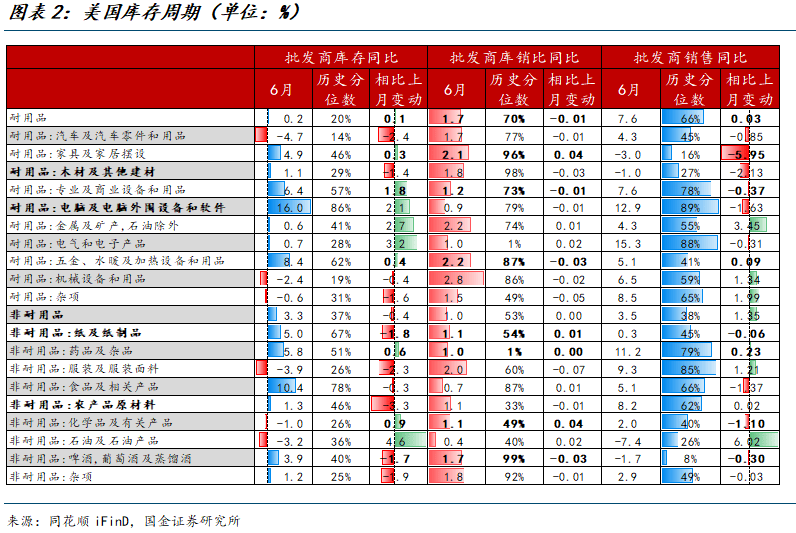
Group 1 - The core viewpoint of the article highlights the decline in U.S. import growth and the impact of tariffs on trade dynamics, particularly between the U.S. and China, while China is leveraging opportunities in ASEAN and Africa for exports [1][2][3] - U.S. import growth dropped from 31% in March to -2.9% in June, indicating a shift towards destocking, with wholesale inventories showing a significant decline [1] - China's exports to the U.S. faced a sharp decline, with a 44% drop in June, and subsequent months showing continued weakness, affecting overall export growth [1][2] Group 2 - Despite the decline in U.S. imports, ASEAN and Africa provided opportunities for China, with U.S. imports from ASEAN remaining stable at around 30% growth from April to June [2] - China's exports to Vietnam and Africa saw significant increases, with Vietnam's exports to the U.S. growing by 17.7% in July and China's exports to Africa increasing by 42.8% [2] - The upcoming increase in tariffs on ASEAN countries may pressure China's re-export trade, indicating a potential shift in trade dynamics [3] Group 3 - China's exports to the EU showed resilience, with a 9.2% year-on-year increase in July, driven by competitive advantages and a stable European economy [7][8] - The EU's economic indicators suggest a stable demand environment, which may support continued growth in Chinese exports to the region [8] - China's overall export share has increased, with significant growth in capital goods exports to Africa and the EU, reflecting an upward trend in competitive positioning [10] Group 4 - The article notes that the demand side is facing downward pressure, which may lead to a decline in exports, despite some competitive advantages [10][12] - The impact of tariffs has been severe, with a dramatic drop in China's exports to the U.S. following the imposition of new tariffs, indicating a potential cliff effect in trade [11] - Future export data, particularly in August, will be critical for assessing the ongoing impact of these trade dynamics [12]
外资持续加码中国市场 以真金白银投下“信任票”
Yang Shi Wang· 2025-07-14 08:09
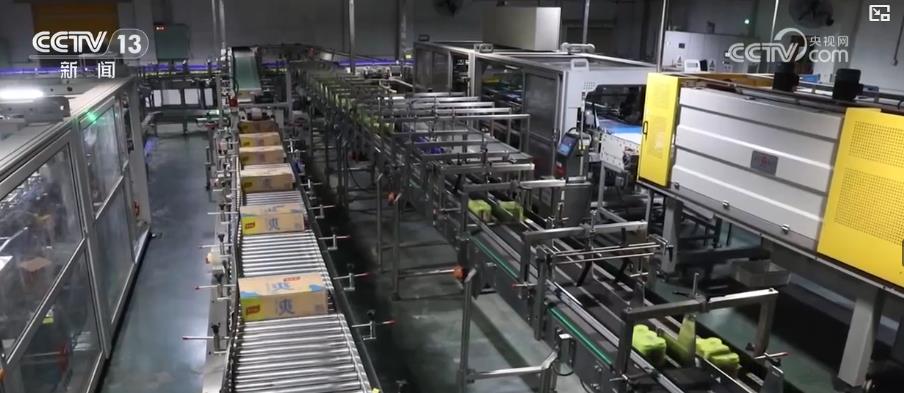
Group 1 - Foreign enterprises in China achieved a total import and export value of 6.32 trillion yuan in the first half of the year, marking a year-on-year growth of 2.4% and maintaining growth for five consecutive quarters [1] - Guangdong province, known as the largest foreign trade province in China, has established over 350,000 foreign enterprises with actual foreign investment nearing 600 billion USD [1] - The food and beverage industry in Foshan, Guangdong, is experiencing a surge in "cooling economy" activity, with significant export orders being fulfilled [3] Group 2 - Foreign enterprises are deeply integrated with the Chinese market, contributing to high-quality economic development and benefiting from shared growth dividends [5] - The local government is focused on creating a transparent and predictable customs environment for foreign enterprises, facilitating rapid clearance for imported production equipment and key raw materials [5] - In the first half of the year, foreign enterprises showed strong performance in industrial exports, particularly in specialized equipment, electrical machinery, and electronic devices, with a notable increase in imports of high-end equipment by 3.2% and a 52.1% rise in imported bonded research and development goods [7]