科技主题ETF

Search documents
基金早班车丨节后两日ETF净流入近40亿,宽基与科技双线吸金
Sou Hu Cai Jing· 2026-02-27 00:39
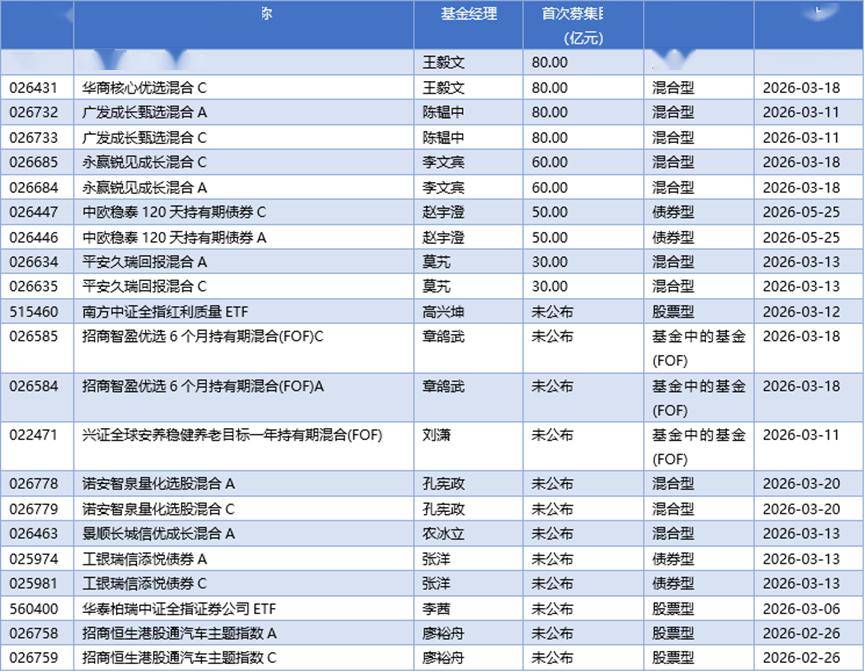
Group 1 - After the Spring Festival holiday, the ETF market experienced a significant inflow of funds, with a net inflow of 3.937 billion yuan from February 24 to 25, reversing the net outflow trend observed in the five trading days prior to the holiday [1] - Broad-based ETFs continued to attract capital due to their stable attributes, while technology-themed ETFs received significant investment due to high growth expectations, indicating a positive outlook and clear allocation logic from investors [1] - On February 26, the A-share market showed a weak oscillation pattern, with the Shanghai Composite Index closing at 4,146.63 points, down 0.01%, while the Shenzhen Component Index rose 0.19% to 14,503.79 points [1] Group 2 - On February 26, a total of 22 new funds were launched, primarily mixed and equity funds, with the Huashang Core Preferred Mixed A fund targeting a fundraising amount of 8 billion yuan [2] - As of February 26, 228 new funds had been established this year, with a total issuance exceeding 210 billion units, reflecting a significant year-on-year increase, driven by strong performance in equity funds last year [2] - The number of public fund products that distributed dividends this year reached 7 times, with quantitative funds being particularly active, as fund managers increasingly focus on dividend and high-yield products to enhance long-term attractiveness [2]

基金双周报:ETF市场跟踪报告-20260202
Ping An Securities· 2026-02-02 07:53
1. Report Industry Investment Rating No information provided in the content. 2. Core Viewpoints of the Report - As of January 30, in the past two weeks, ETF products showed mixed performance. Among domestic major broad - based ETFs, CSI 500 had the largest increase, and among industry and theme products, cyclical theme ETFs had the largest increase. In the past two weeks, among domestic major broad - based ETFs, CSI 2000 ETF had a net inflow of funds, while CSI 300 ETF had a significant net outflow of funds [3][10]. - In 2025, the technology theme ETF had the largest cumulative net inflow of funds, followed by the financial real - estate ETF. Except for the military - industry theme, all other industry theme ETFs had a net inflow of funds in 2025. In the past two weeks, the inflow of funds into cyclical, pharmaceutical, and consumer ETFs accelerated, the inflow of funds into military - industry, financial real - estate ETFs slowed down, the net inflow of funds into other large - manufacturing and new - energy ETFs turned positive, and the outflow of funds from dividend ETFs slowed down [11][17]. - In 2025, the credit - bond ETF had the largest net inflow of funds, followed by the treasury - bond ETF. In the past two weeks, the net inflow of funds into convertible - bond ETFs accelerated, the net inflow of funds into short - term financing ETFs turned positive, and the outflow of funds from policy - financial - bond, credit - bond, treasury - bond, and local - bond ETFs slowed down [17]. 3. Summary by Relevant Catalogs 3.1 ETF Market Review 3.1.1 Main Types of ETF Fund Flows Overview - As of January 30, in the past two weeks, among domestic major broad - based ETFs, CSI 500 had the largest increase, and among industry and theme products, cyclical theme ETFs had the largest increase. In the past two weeks, among domestic major broad - based ETFs, CSI 2000 ETF had a net inflow of funds, while CSI 300 ETF had a significant net outflow of funds [3][10]. - In the past two weeks, the inflow of funds into cyclical, pharmaceutical, and consumer ETFs accelerated, the inflow of funds into military - industry, financial real - estate ETFs slowed down, the net inflow of funds into other large - manufacturing and new - energy ETFs turned positive, and the outflow of funds from dividend ETFs slowed down. In the bond ETF category, the net inflow of funds into convertible - bond ETFs accelerated, the net inflow of funds into short - term financing ETFs turned positive, and the outflow of funds from policy - financial - bond, credit - bond, treasury - bond, and local - bond ETFs slowed down [3]. 3.1.2 Cumulative Fund Flows of Main Types of ETFs - For broad - based ETFs, in 2025, the fund flow trend of major broad - based ETFs changed from outflow to inflow and then back to outflow, with a significant inflow at the end of the year. In April, there was a large - scale inflow of funds into broad - based ETFs such as CSI 300 ETF, and thereafter, all types of broad - based ETFs had a continuous outflow of funds. In mid - to late December, there was a significant inflow of funds into CSI A500 ETF. In 2025, CSI 1000/CSI 2000 had the largest cumulative net inflow of funds, followed by CSI 300 and CSI 500 ETFs. The cumulative funds of science - innovation/growth - enterprise and A - series ETFs all had a net outflow. In the past two weeks, major broad - based ETFs had a significant net outflow of funds, with CSI 300, SSE 50, CSI 500, CSI 1000/CSI 2000 ETFs having an accelerated net outflow, and the net outflow of funds from science - innovation/growth - enterprise and A - series ETFs slowing down [11]. - For industry and theme ETFs, in 2025, the technology theme ETF had the largest cumulative net inflow of funds, followed by the financial real - estate ETF. Except for the military - industry theme, all other industry theme ETFs had a net inflow of funds in 2025. The technology ETF had a large - scale outflow at the beginning of the year and then turned to an inflow of funds since March. In the past two weeks, the inflow of funds slowed down. In the past two weeks, the inflow of funds into cyclical, pharmaceutical, and consumer ETFs accelerated, the inflow of funds into military - industry, financial real - estate ETFs slowed down, the net inflow of funds into other large - manufacturing and new - energy ETFs turned positive, and the outflow of funds from dividend ETFs slowed down [17]. - For bond ETFs, since 2025, the credit - bond ETF had the largest net inflow of funds, followed by the treasury - bond ETF. In the past two weeks, the net inflow of funds into convertible - bond ETFs accelerated, the net inflow of funds into short - term financing ETFs turned positive, and the outflow of funds from policy - financial - bond, credit - bond, treasury - bond, and local - bond ETFs slowed down [17]. 3.1.3 ETF Product Structure Distribution - As of January 30, in the past two weeks, a total of 19 new ETFs were established in the market, with a total issuance share of 1.0963 billion, all of which were stock ETFs. Compared with the end of 2025, the scales of commodity ETFs, industry + dividend ETFs, and QDII - ETFs increased by 38.50%, 23.19%, and 6.01% respectively, while the scales of bond ETFs and broad - based ETFs decreased by 12.49% and 34.99% respectively [23][24]. 3.1.4 Fund Manager Scale Distribution - As of January 30, Huaxia Fund had the largest on - exchange ETF scale of 765.023 billion yuan. The ETF management scale of Guotai Fund expanded by more than 170 billion yuan compared with a year ago [25]. 3.2 Classification - Based ETF Tracking 3.2.1 Technology Theme ETF Tracking in the Past Two Weeks - Products tracking semiconductor materials and equipment had the largest net inflow of funds in the past two weeks, while products tracking science - innovation AI had a net outflow of funds [31]. 3.2.2 Dividend Theme ETF Tracking in the Past Two Weeks - Products tracking low - volatility dividend had the largest net inflow of funds in the past two weeks, while products tracking CSI Dividend had a net outflow of funds [34]. 3.2.3 Consumption Theme ETF Tracking in the Past Two Weeks - Products tracking the S&P 500 Consumer Select Index had a relatively high premium rate. ETFs tracking CSI Tourism had the largest net inflow of funds in the past two weeks, while products tracking CSI Animal Husbandry had a net outflow of funds [37]. 3.2.4 Pharmaceutical Theme ETF Tracking in the Past Two Weeks - ETFs tracking CS Innovative Drugs had the largest net inflow of funds in the past two weeks, while products tracking the All - Index Pharmaceutical had a net outflow of funds [40]. 3.2.5 Large - Manufacturing Theme ETF Tracking in the Past Two Weeks - Products tracking the power grid equipment theme had the largest net inflow of funds in the past two weeks, while products tracking robots had a net outflow of funds [43]. 3.2.6 QDII ETF Tracking in the Past Two Weeks - Products tracking Hang Seng Technology had the largest net inflow of funds in the past two weeks, while ETF products tracking the Hang Seng Index had a net outflow of funds [46]. 3.3 Hot - Theme ETF Tracking 3.3.1 AI Theme ETF Tracking in the Past Two Weeks - AI theme products showed mixed performance in the past two weeks, with an average return rate of - 0.6%. Products tracking GEM Artificial Intelligence had the largest increase. Since 2025, there has been an overall net inflow of funds. There was a large - scale inflow from mid - February to April, a continuous outflow from May to August, and a large - scale inflow since mid - August. In the past two weeks, there was a net inflow of funds of 2.944 billion yuan [56]. 3.3.2 Robot Theme ETF Tracking in the Past Two Weeks - Robot theme products had a poor performance in the past two weeks, with an average return rate of - 5.21%. Products tracking the Robot Index had a relatively small decline. After February 2025, the funds had an overall rapid inflow trend, and there was a small net inflow of funds of 0.052 billion yuan in the past two weeks [60]. 3.3.3 New - Energy Theme ETF Tracking in the Past Two Weeks - New - energy theme products had a poor performance in the past two weeks, with an average return rate of - 3.14%. Products tracking Green Power had a relatively small decline. There was a continuous outflow of funds before August 2025, a large - scale inflow from August to October, a large - scale outflow since late October, and a net inflow of funds of 0.0101 billion yuan in the past two weeks [65]. 3.3.4 Satellite and Commercial Aerospace Theme ETF Tracking in the Past Two Weeks - Satellite and commercial aerospace theme products had a poor performance in the past two weeks, with an average return rate of - 3.55%. Products tracking the National Securities Aerospace Index had a relatively small decline. There was a small inflow of funds in late August 2025, a large - scale inflow since mid - to late December, and a net inflow of funds of 3.896 billion yuan in the past two weeks [70]. 3.3.5 Commodity ETF Tracking in the Past Two Weeks - Commodity ETFs had a good performance in the past two weeks, with an average return rate of 7.26%. Products tracking SGE Gold 9999 had the largest increase. There were large - scale inflows in April and mid - to late October 2025, and a large - scale net inflow of funds of 37.054 billion yuan in the past two weeks. Since the beginning of this year, there has been a large - scale net inflow of funds into gold ETFs, with a cumulative net inflow of 23.471 billion yuan in the past week, and the inflow decreased on January 30 [75]. 3.3.6 Central Huijin, Guoxin, and Chengtong's Holdings of ETF Tracking in the Past Two Weeks - As of June 30, 2025, the total scale of ETFs held by Central Huijin, Guoxin, and Chengtong was 39.1336 billion shares. In the past two weeks, there was a net outflow of funds of 711.4 billion yuan. In the past two weeks, ETFs such as Huatai - Peregrine CSI 300 ETF, E Fund CSI 300 ETF, and Huaxia CSI 300 ETF had the largest outflows of funds [79].
华安基金总经理助理、首席指数投资官许之彦:2026年科技投资将从预期驱动走向业绩兑现
Di Yi Cai Jing· 2026-01-16 08:38
Core Insights - 2025 is viewed as a pivotal year for the technology sector, driven by advancements in artificial intelligence, hardware innovation, and supportive policies, leading to a significant market transformation [1] - The performance of technology-themed ETFs, particularly those represented by the STAR Market and ChiNext, has significantly outperformed the market average, establishing their status as "core growth poles" [2] - The macroeconomic outlook for 2026 indicates a transition from structural pain to "micro recovery," with key indicators expected to show positive trends [3] Group 1: 2025 Review - The technology-themed ETFs have shown remarkable performance, with several related funds achieving net value growth rates exceeding 50%, and the ChiNext 50 Index rising by 57% [2] - The strong performance is attributed to the underlying high growth potential, profitability elasticity, and alignment with policy directions, focusing on high-quality companies characterized by innovation and new technologies [2] Group 2: 2026 Macro Outlook - The macroeconomic environment is expected to improve, with key indicators like PPI, CPI, and PMI projected to recover from low levels, enhancing the corporate profitability landscape [3] - The investment focus in 2026 will shift towards performance certainty, moving away from the previous emphasis on "visions and expectations" [4] Group 3: AI Industry Insights - AI is identified as a long-term structural industry opportunity, with 2026 marking a critical transition from "technology validation" to "scale deployment" [5] - The AI sector is shifting from a focus on infrastructure to application deployment, with significant investments in efficiency and global competitiveness [5] - The core companies in the AI wave are financially healthy, and the demand for computing power is expected to grow significantly over the next 5-10 years [5][6] Group 4: Tooling Configuration - The ChiNext 50 Index is highlighted for its structural advantages, with a balanced industry matrix and a focus on growth and diversification [7] - The index's valuation remains reasonable, with expected annual net profit growth of over 25% in the next three years, indicating a favorable balance between volatility control and growth elasticity [7] - The long-term investment value of the Hong Kong technology sector is increasing, with potential for valuation recovery and phase-based gains [7] Group 5: Conclusion - The key to technology investment in 2026 lies in returning to performance and fundamentals, emphasizing high-quality broad-based indices to navigate market cycles [8] - Focus should be on companies with competitive advantages in the global supply chain, sustained R&D investment, and those entering a profit growth phase [8] - The market's pricing mechanism is shifting from forward-looking expectations to continuous validation of actual operational results, raising the bar for asset allocation and risk management [8]
209只2025年上市ETF获私募机构重仓
Zheng Quan Ri Bao Wang· 2026-01-05 11:26
Group 1 - In 2025, private equity firms showed strong enthusiasm for investing in newly listed ETFs, with 171 firms appearing among the top ten holders of 209 ETFs, holding a total of 3.341 billion shares [1] - Subjective strategy private equity firms emerged as the main contributors to ETF subscriptions, holding 1.257 billion shares, which accounts for 37.62% of the total, while quantitative strategy firms held approximately 1.137 billion shares, representing 34.03% [1] - The preference for technology-themed ETFs was notable, with 68 out of the 209 ETFs containing "technology" or "innovation" in their names, and private equity firms holding a total of 1.136 billion shares in these products [2] Group 2 - The reasons for the active allocation to ETFs by private equity firms include the efficiency, low cost, and risk control offered by ETFs in a rapidly changing market environment, as well as their low fees and diversified holdings [2] - The technology sector's high growth potential and innovation, particularly in artificial intelligence and biomedicine, are driving interest in technology-themed ETFs, providing efficient tools for institutions to seize industry opportunities [3] - Medium-sized private equity firms, particularly those managing between 1 billion and 5 billion yuan, were the most active in ETF allocations, holding 1.357 billion shares, which accounts for over 40% of the total [3]
摩根资产管理中国权益团队展望2026年:锚定中国优质企业全球竞争力
Zheng Quan Ri Bao Wang· 2025-12-19 13:27
Group 1 - The core viewpoint of the article emphasizes the structural opportunities in the Chinese equity market for 2026, driven by the global competitiveness of high-quality Chinese enterprises and the ongoing long-term valuation reassessment of Chinese assets [1] - Morgan Asset Management's China Equity Investment Team suggests that the market will present structural opportunities in 2026, as international investors reassess the allocation value of Chinese assets [1] - The investment strategy should focus on stable growth in industrial demand and sustainable cash flow, moving beyond traditional frameworks of "new and old industries" [1] Group 2 - The balanced growth team leader at Morgan Asset Management believes that the technology growth style will continue to show relative advantages in 2026, driven by the ongoing transformation of the economy and substantial capital expenditure from both domestic and international tech leaders [2] - The focus is on identifying quality companies with sustainable growth potential and reasonable valuations using a "value growth" strategy, particularly in the context of expected economic recovery and corporate profit rebound [2] - The balanced and value team leader highlights two key opportunities: cyclical industries benefiting from supply constraints and cash flow optimization, and high-end manufacturing companies expanding into overseas markets [2] Group 3 - The growth team manager at Morgan Asset Management is optimistic about the lithium battery and energy storage industry, noting that energy storage is becoming a core demand driver, with significant improvements in supply-demand dynamics [3] - There is a strong focus on AI-related hardware and software investment opportunities, with an emphasis on tracking the progress of application implementation and business closure [3] - The trend of ETF development is also highlighted, with a focus on "barbell" allocation strategies, and the establishment of technology-themed and dividend-themed ETFs in the A-share and Hong Kong Stock Connect markets [3]
UP向上,投资有温度︱2025年投资者服务活动第5站:从政策到行业,看懂基金投资的“五碗面”
Xin Lang Ji Jin· 2025-11-27 10:42
Core Viewpoint - The article emphasizes the importance of understanding the "Five Bowls of Noodles" (economic, policy, funding, overseas, and technical aspects) to navigate the current market complexities and make informed investment decisions [3][5][6]. Economic Aspect - The economic cycle is crucial for asset allocation, with the current phase identified as a "weak recovery" [5]. - The Merrill Lynch Investment Clock categorizes economic conditions into four stages: recession, recovery, overheating, and stagflation, each suggesting different fund allocations [5]. - Historical performance data shows fluctuations in the Shanghai Composite Index and various fund indices from 2019 to 2025, indicating the impact of economic cycles on investment returns [5]. Policy Aspect - The Chinese stock market is closely linked to macroeconomic policies and industry guidance, with significant policies historically providing clear direction for market movements [6][7]. - The 2025 "14th Five-Year Plan" emphasizes "technological innovation + self-control," targeting a GDP growth rate of 4.7% and focusing on sectors like AI and deep-sea economy [7]. Funding Aspect - Recent monetary policy changes, including interest rate cuts by the People's Bank of China and the Federal Reserve, have improved global liquidity, positively affecting the A-share market [8][9]. - Historical data shows that previous rate cuts have led to significant increases in the Shanghai Composite Index, indicating a strong correlation between monetary policy and market performance [9]. Overseas Aspect - External factors such as U.S.-China relations and global central bank gold purchasing trends are influencing market risk appetite [10]. - The trade surplus with the U.S. has increased, and China's gold reserves have reached a 20-year high, providing a buffer against geopolitical tensions [10]. Technical Aspect - Technical indicators, including index trends and trading volume, are essential for understanding short-term market rhythms [11]. Investment Strategy - The article suggests a diversified investment strategy based on individual risk tolerance, recommending a mix of technology-focused ETFs, broad index funds, and fixed-income products to balance risk and return [13][15].
“避险走强、进攻收缩”!ETF资金结构生变
Sou Hu Cai Jing· 2025-11-24 23:37
Core Insights - The ETF market is experiencing a shift in funding structure amid a volatile market and weak expectations, with a clear divergence in the scale changes of different ETFs [1][2] - Low-risk, low-volatility bond ETFs are seeing significant inflows, while broad-based equity ETFs and certain technology-themed ETFs are facing outflows [1][2][5] Group 1: Low-Risk Bond ETFs - Bond-related ETFs have become the main source of growth in the ETF market, with significant inflows recorded in the past month [2] - Specific bond ETFs such as the CSI Short Bond Index ETF, CSI AAA Technology Innovation Corporate Bond ETF, and others have seen substantial increases in scale, with inflows of 106.67 billion, 93.50 billion, 52.18 billion, and 43.12 billion respectively [2][3] - The demand for stable assets is evident as both institutional and individual investors seek to enhance portfolio stability through low-volatility bond ETFs [2][3] Group 2: Equity ETFs Under Pressure - In contrast to bond ETFs, broad-based equity indices are experiencing net outflows, with the CSI 300 Index ETF seeing a decrease of 387.60 billion, the STAR Market 50 Index ETF down by 63.97 billion, and others also facing declines [4] - Technology-themed ETFs are similarly under pressure, with significant outflows from products like the CSI Hong Kong Internet ETF, which decreased by 84.49 billion [4] - The market sentiment indicates a shift away from high-volatility and high-beta index products, reflecting a cautious risk appetite among investors [4][5] Group 3: Investor Behavior and Market Outlook - Investors are increasingly focusing on risk management, favoring stable assets in their portfolio adjustments amid limited incremental capital and cautious macro expectations [6] - The current market environment suggests that the trend of inflows into low-risk ETFs may continue, while growth and high-volatility sectors will depend on improvements in macro expectations and liquidity conditions [6]
基金双周报:ETF市场跟踪报告-20251110
Ping An Securities· 2025-11-10 07:42
ETF Market Overview - As of November 7, the performance of ETF products varied, with the CSI 2000 showing the highest increase among major broad-based ETFs, while the new energy theme ETF had the largest increase among industry and thematic products [2][9] - In the past two weeks, major broad-based ETFs such as CSI A500, CSI 2000, and Sci-Tech 50 ETF saw net inflows, while the ChiNext ETF experienced the largest net outflow [2][9] - The recent trend indicates a shift from net inflows to net outflows in cyclical and military industry ETFs, while pharmaceutical ETFs saw accelerated inflows [2][16] ETF Fund Flow Analysis - The cumulative fund flow for broad-based ETFs has shown a trend of outflows turning into inflows and then back to outflows since the beginning of 2025, with A-series ETFs consistently experiencing outflows [10] - Recent net outflows for broad-based ETFs have slowed down, with CSI 1000 and CSI 2000 transitioning from net outflows to net inflows [10][16] - As of November 7, the total number of newly established ETFs in the past two weeks was 16, with a total issuance of 6.53 billion units, of which 13 were stock ETFs and 3 were QDII ETFs [24] Thematic ETF Tracking - In the technology theme ETFs, products tracking the Hang Seng Technology index saw the highest net inflows, while those tracking consumer electronics experienced net outflows [30] - For dividend theme ETFs, products tracking the S&P Hong Kong Stock Connect Low Volatility Dividend Index had the highest net inflows, while those tracking the dividend index saw net outflows [32] Popular Thematic ETFs - AI-themed ETFs, which have a high proportion of AI stocks, experienced an average return of -2.99% with a net inflow of 1.56 billion [2] - New energy-themed ETFs had an average return of 7.67% but saw a net outflow of 5.72 billion [2] - The total holdings of ETFs by Central Huijin, Guoxin, and Chengtong reached 391.34 billion units, with a net outflow of 2.11 billion in the past two weeks [2]
基金双周报:ETF市场跟踪报告-20251027
Ping An Securities· 2025-10-27 10:04
ETF Market Overview - As of October 24, the performance of ETF products varied, with the Shanghai 50 index showing the highest increase among major broad-based ETFs, while the dividend-themed ETFs had the largest gains among industry and thematic products [2][9] - In the past two weeks, major broad-based ETFs such as the CSI A50, CSI 2000, and Shanghai 50 saw net inflows, while the CSI A500 ETF experienced the largest net outflow [2][9] - The recent trend indicates a shift in fund flows, with the New Energy ETF moving from net inflow to net outflow, while the Pharmaceutical ETF transitioned from net outflow to net inflow [16] ETF Fund Flow Analysis - The cumulative fund flow for major broad-based ETFs has shown a trend of outflows turning into inflows and then back to outflows since the beginning of 2025, with significant inflows into the CSI 300 ETF in April, followed by continued outflows in subsequent months [10][12] - Recent data indicates that, apart from the Shanghai 50 ETF, which shifted from net outflow to net inflow, other major broad-based ETFs have transitioned from net inflows to net outflows in the past two weeks [10][12] Thematic ETF Tracking - For technology-themed ETFs, those tracking the Hang Seng Technology index saw significant net inflows, while products tracking the CS Artificial Intelligence index experienced net outflows [32] - Dividend-themed ETFs tracking the low-volatility dividend index had the highest net inflows, whereas those tracking the dividend index saw net outflows [35] New ETF Products and Market Growth - In the past two weeks, a total of 8 new ETFs were launched, with a combined issuance of 2.997 billion shares, all of which were stock ETFs [26] - Compared to the end of 2024, the scale of various ETFs has increased significantly, with bond ETFs, commodity ETFs, industry + dividend ETFs, QDII ETFs, and broad-based ETFs growing by 293.33%, 197.82%, 112.34%, 52.18%, and 13.97% respectively [26] Fund Management Scale Distribution - As of October 24, Huaxia Fund has the largest ETF scale at 912.812 billion, with E Fund's ETF management scale expanding by over 250 billion compared to the previous year [27][28]
港交所:香港ETP市场增长强劲 成为全球第三大市场
Jing Ji Guan Cha Wang· 2025-10-22 04:10
Core Insights - The Hong Kong ETP market is experiencing significant growth, projected to be a breakthrough year in 2025, with a year-on-year asset management increase of 34.1%, reaching HKD 653.5 billion [2][3] Group 1: Market Performance - As of September 2025, the average daily trading volume in the Hong Kong ETP market reached HKD 37.8 billion, a 146% increase year-on-year, making it the third-largest ETP market globally, surpassing South Korea and Japan [2][3] - The turnover rate in the Hong Kong ETP market is leading globally, with a liquidity ratio of 14.7 as of 2025, up from 10.2 in 2024 and 9.0 in 2023 [3] Group 2: Product Innovation - The introduction of individual stock leveraged and inverse products in March 2025 has catered to retail investor needs, providing strategic investment tools for trading international equities during Asian hours [3] - The popularity of covered call option ETFs has increased since their launch in February 2024, appealing to investors seeking high-yield products in an unstable macro environment [4] Group 3: Cross-Border Trading - The average daily trading volume for ETFs through the Shanghai-Hong Kong Stock Connect and Shenzhen-Hong Kong Stock Connect reached HKD 4.2 billion and HKD 3.2 billion respectively, with significant year-on-year increases of 128% and 142% [5] - The anticipated inclusion of more ETFs in the Stock Connect program in November 2025 is expected to further enhance cross-border trading activity [5] Group 4: Sector Focus - In the first three quarters of 2025, 14 technology-themed ETFs were launched in Hong Kong, with a total asset management size of HKD 120.1 billion, reflecting a 102% year-on-year increase [5] - The biotechnology sector has also seen growth, with three biotechnology-themed ETFs launched this year, totaling HKD 3.4 billion in assets, a 123% increase from September 2024 [5] Group 5: Active ETFs - The inflow of funds into active ETFs in Hong Kong reached USD 183 billion in the first half of 2025, driven by strong market rebounds and robust company earnings [6] - Asset management firms are accelerating the launch of more active products to meet investor demand for results-oriented and yield-focused strategies [6]