美泊利珠单抗

Search documents
凡舒卓 在华获批新适应症,用于治疗成人嗜酸性肉芽肿性多血管炎
Cai Jing Wang· 2025-12-30 04:32
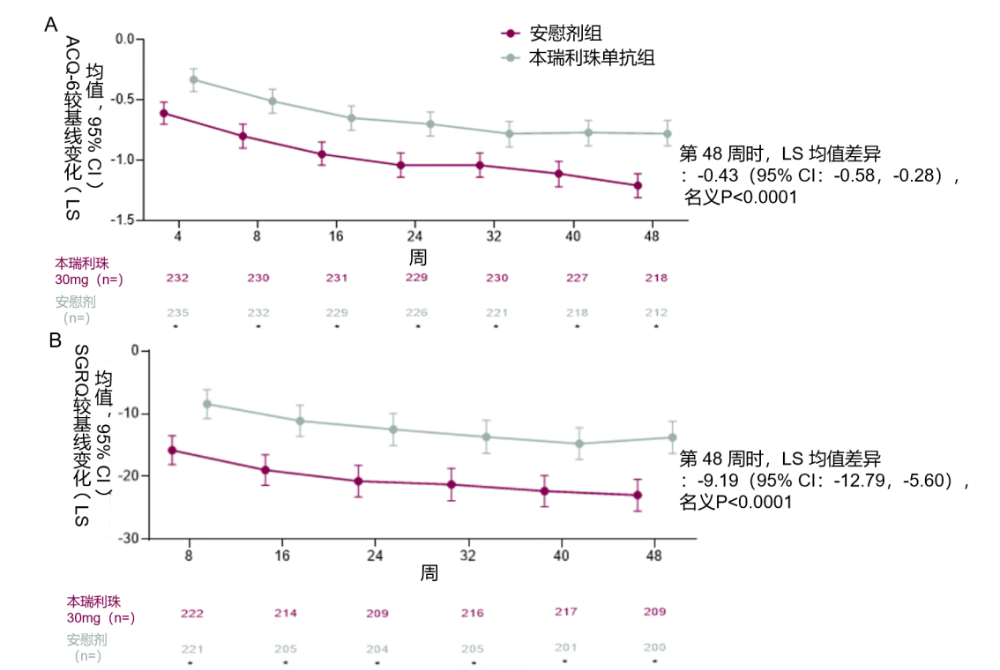
Core Viewpoint - Fasenra (benralizumab) has received approval from the NMPA for the treatment of adult eosinophilic granulomatosis with polyangiitis (EGPA), marking a significant advancement in the treatment options available for this rare autoimmune disease [1][4]. Group 1: Clinical Research and Approval - The approval is based on the results of the MANDARA global Phase III clinical trial, which is the first head-to-head study comparing the efficacy and safety of benralizumab with mepolizumab in patients with refractory EGPA [1][5]. - In the benralizumab treatment group, nearly 60% of patients achieved remission, consistent with the mepolizumab group, while 41% of patients could completely discontinue oral corticosteroids (OCS), compared to 26% in the mepolizumab group [1][5]. - The open-label extension study of the MANDARA trial showed that patients switching from mepolizumab to benralizumab had an OCS discontinuation rate of up to 43.5% [1]. Group 2: Disease Background and Treatment Challenges - EGPA is a rare autoimmune disease characterized by eosinophil infiltration and necrotizing granulomatous inflammation, primarily affecting the respiratory system and leading to severe complications if untreated [2][4]. - Current treatment options are limited, with many patients requiring high-dose OCS and experiencing frequent relapses, as approximately 75% of patients have not achieved remission despite multiple therapies [2][4]. Group 3: Expert Opinions and Future Directions - Experts highlight that benralizumab's approval represents a milestone in providing targeted therapy for EGPA, potentially improving patient outcomes and reducing reliance on corticosteroids [3][4]. - The subcutaneous administration of benralizumab every four weeks enhances treatment convenience for patients, addressing a significant need for effective and safe treatment options [3][4]. - AstraZeneca plans to continue exploring the potential of benralizumab in other eosinophil-related diseases, aiming to innovate treatment strategies in this area [3][6].

孟鲁司特被要求新增警示语,去年前三季度销售额超13亿元
2 1 Shi Ji Jing Ji Bao Dao· 2025-12-25 09:30
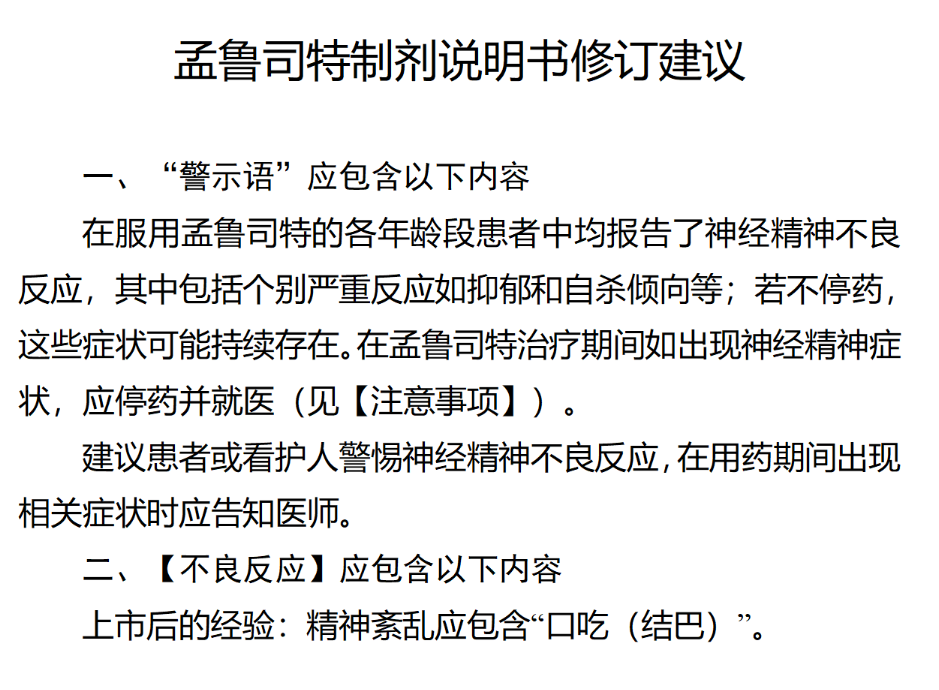
Core Viewpoint - The National Medical Products Administration (NMPA) of China has mandated the addition of warnings regarding neuropsychiatric adverse reactions in the instructions for Montelukast formulations, including serious reactions such as depression and suicidal tendencies, with a deadline for compliance set for March 12, 2026 [1][4]. Group 1: Regulatory Changes - The NMPA requires all Montelukast product license holders in China to revise their product instructions to include warnings about neuropsychiatric adverse reactions [1]. - The revisions must be submitted to the NMPA or provincial drug regulatory departments by March 12, 2026, and all existing product labels must be updated within nine months after the submission [1]. Group 2: Market Context - Montelukast sodium, originally developed by Merck (brand name: Singulair), is a potent selective leukotriene receptor antagonist used for asthma prevention and treatment in children aged 2 to 14 [3]. - Following the expiration of Merck's patent, domestic companies have begun to produce generic versions, with 62 approvals found on the NMPA website from various manufacturers [3]. Group 3: Adverse Reactions and Clinical Implications - The revision of Montelukast's instructions is based on adverse reaction assessments, with the FDA in the U.S. having previously issued a black box warning for similar neuropsychiatric adverse reactions [4][5]. - Reports of adverse reactions, including depression and suicidal behavior, have been documented, with a study indicating that 86.12% of Montelukast prescriptions in a certain hospital were for off-label uses [5][8]. Group 4: Sales and Competitive Landscape - Montelukast ranked third in sales among asthma medications in China for the first three quarters of 2024, with total sales reaching 1.33 billion yuan [9]. - The competitive landscape includes 24 companies with 42 formulations of Montelukast available, with significant market shares held by companies like Eurofarma and Shanghai Anbisen [9]. Group 5: Emerging Treatments - The emergence of biologic therapies is changing the treatment landscape for pediatric asthma, with several new biologics approved for use in children [10]. - The NMPA's revisions to Montelukast's labeling serve as a reminder for the need for safe and effective prescribing practices as new treatment options become available [10].

重度哮喘疾病轨迹研究解读:异质性病程与早期干预的临床启示
Xin Lang Cai Jing· 2025-12-20 09:50
Core Insights - The article discusses a recent study identifying three distinct disease trajectories in severe asthma patients prior to biologic treatment, highlighting the heterogeneity of the disease and its implications for personalized intervention strategies [1][14]. Group 1: Disease Trajectories - The study included 755 severe asthma patients from Denmark, analyzing data from 1995 to 2022, and identified three main disease progression paths: "Chronic Severe Type" (26%), "Gradual Onset Type" (35%), and "Recent Onset Type" (39%) [2][3]. - "Chronic Severe Type" patients have the longest median disease duration of 35 years, the most severe lung function impairment (median FEV1%pred of 64%), and the highest rates of comorbidities related to corticosteroid exposure [2]. - "Gradual Onset Type" patients show a stepwise worsening pattern with a median disease duration of 26 years and a median FEV1%pred of 67%, indicating a progression from mild to severe asthma [3]. - "Recent Onset Type" patients have the shortest median disease duration of 5 years, with a median FEV1%pred of 75%, and a significant proportion of patients (43%) having baseline FEV1%pred > 80% [3]. Group 2: Treatment Response and Prognosis - The study found a clear association between disease trajectories and treatment outcomes, with "Recent Onset Type" patients showing the highest clinical response rate of 32%, compared to 29% for "Gradual Onset Type" and only 17% for "Chronic Severe Type" [4]. - A key barrier for "Chronic Severe Type" patients is the difficulty in restoring lung function, with only 32% achieving normal lung function post-treatment, compared to 56% in "Recent Onset Type" [4]. - The concept of "too late" asthma was introduced, indicating patients who do not achieve FEV1%pred > 80% after 12 months of biologic treatment, with a high occurrence in "Chronic Severe Type" (56%) [4][5]. Group 3: Implications for Early Intervention - The findings suggest that recognizing disease trajectories early can provide actionable intervention opportunities before reaching the "Chronic Severe" stage, potentially preventing irreversible lung damage [5][6]. - The study emphasizes the need to shift the treatment paradigm for severe asthma from a reactive approach to proactive early intervention with biologics, particularly for patients in the early stages of "Recent Onset Type" or "Gradual Onset Type" [6][7]. - Evidence from simulations indicates that initiating biologic treatment 5 years earlier could significantly reduce corticosteroid use, prevent deaths, and lower healthcare costs, highlighting the value of early intervention [7].
新版医保目录新增50种一类创新药,涵盖肿瘤、慢病等多个领域
Bei Ke Cai Jing· 2025-12-08 11:01
Core Insights - The new National Medical Insurance Directory has added 114 new drugs, surpassing last year's addition of 91, with 50 being first-class innovative drugs, achieving an overall success rate of 88%, an improvement from 76% in 2024 [1][2] Group 1: New Drug Additions - The total number of drugs in the directory has increased to 3,253, significantly enhancing coverage for key areas such as oncology and chronic diseases [2] - The directory includes 38 global innovative drugs and 50 first-class innovative drugs, marking a historical high for new additions [2] - Notable inclusions are the first globally approved red blood cell maturation agent, Rotecip, for treating lower-risk myelodysplastic syndromes, and the first domestically developed IL-4Rα antibody drug, Kangyueda, for multiple indications [3][4] Group 2: Oncology Innovations - Several innovative oncology drugs have been added, including Tagolizumab, the first PD-L1 monoclonal antibody approved for nasopharyngeal carcinoma, and non-covalent BTK inhibitor, Jebatib, for relapsed mantle cell lymphoma [4][5][6] - ADCs (antibody-drug conjugates) have gained attention, with new entries like Lukanasatuzumab and Ruikangquzuzumab, targeting advanced breast cancer and non-small cell lung cancer [7][8] Group 3: Chronic Disease Treatments - The directory has included innovative drugs for chronic diseases, such as Novartis' PCSK9 mRNA interference drug for cholesterol management, addressing patients who cannot reach LDL-C targets [14] - AstraZeneca's biologic drug Benralizumab for severe eosinophilic asthma has also been added, providing targeted treatment options for patients [15][16] Group 4: Influenza Treatments - The new directory has incorporated two domestic antiviral drugs for influenza, Masurashave and Angladiv, which have shown promising clinical results in reducing symptoms and viral load [17]

全球大公司要闻 | 好莱坞工会反对奈飞收购华纳兄弟
Wind万得· 2025-12-07 22:59
Group 1 - Netflix announced an agreement to acquire Warner Bros. Discovery for an enterprise value of approximately $82.7 billion, focusing on its film studios and HBO Max streaming assets, including top IPs like Harry Potter and Game of Thrones, aiming to build a "super content" empire, with the deal expected to face strict antitrust scrutiny [3] - OpenAI plans to respond to Google's Gemini 3 with the upcoming GPT-5.2, which is now expected to launch on December 9, ahead of its original schedule [3] - SpaceX is reportedly seeking an $800 billion valuation through a share sale, although Elon Musk denied the accuracy of this report, stating that revenue from NASA is expected to account for no more than 5% of the company's income by 2026 [4] Group 2 - X, the social platform owned by Musk, was fined €120 million under the EU's Digital Services Act for allegedly violating content moderation regulations [4] - Microsoft is in talks with Broadcom to design future custom chips, potentially shifting from its current supplier Marvell [4] Group 3 - Xingqi Eye Care has multiple products included in the National Medical Insurance Directory, with a notable product priced at 1.78 yuan per piece, expected to positively impact long-term operations [6] - Kexin Pharmaceutical's CAR-T drug has entered the commercial insurance innovative drug directory, drawing market attention [6] - Wuliangye will adjust the price of its eighth-generation product starting next year, offering a discount of 119 yuan per bottle from a base price of 1019 yuan [7] Group 4 - Huawei's CEO emphasized the importance of AI research while focusing on the application of large models and big data in agriculture and technology over the next 3-5 years [6] - BYD's chairman noted a decline in domestic sales due to technological lag and user demand issues, indicating the need for significant technological breakthroughs [7] - Baidu Kunlun Chip plans to file for an IPO in Hong Kong as early as Q1 next year, with a recent valuation of 21 billion yuan [7] Group 5 - Samsung Electronics achieved a key breakthrough in 4nm process technology, improving yield rates to 60-70%, which is expected to enhance its competitiveness in advanced manufacturing [12] - SK Hynix announced plans to localize EUV photoresist to reduce dependence on Japanese suppliers [12]






国泰海通|产业:呼吸系统专题(一):慢阻肺治疗缺口突出,PDE3/4及多疗法共破局
国泰海通证券研究· 2025-09-26 11:08
Core Viewpoint - Chronic Obstructive Pulmonary Disease (COPD) has a high prevalence and mortality rate, indicating a significant unmet medical need for new treatment options [1] Group 1: Unmet Medical Needs in COPD - COPD is a leading cause of disability and death globally, with approximately 300 million cases worldwide and 100 million in China [1] - Current standard treatments (LAMA/LABA/ICS) have been in use for 40 years and carry risks of pneumonia, cardiovascular issues, and urinary tract infections, highlighting the urgent need for new therapies [1] Group 2: PDE3/4 Inhibitors and Market Activity - Merck acquired Verona for $10 billion to obtain Ensifentrine, while GSK spent approximately $12.5 billion to acquire HRS-9821 from Hansoh Pharma, reflecting the importance of the respiratory market and PDE3/4 targeted drugs [2] - PDE3 and PDE4 inhibitors have synergistic effects, potentially improving airway smooth muscle contraction and controlling inflammation, thus showing significant application potential [2] - Ensifentrine received FDA approval in June 2024, with sales reaching $217 million by Q2 2025, representing a 44% quarter-over-quarter growth, indicating substantial market potential [2] Group 3: Targeted Therapies for Eosinophilic Phenotype - Dupilumab (IL-4R) and mepolizumab (IL-5) have been successfully approved for COPD, focusing on high eosinophil count populations [3] - Dupilumab, the first targeted therapy for COPD, was approved by the FDA in 2024, with sales exceeding $14 billion in 2024 [3] - Mepolizumab showed positive results in trials with eosinophilic phenotype patients, demonstrating a correlation between eosinophil count and reduced acute exacerbation rates [3] Group 4: Emerging Targets and Domestic Innovations - TSLP and ST2/IL33 targets currently lack approved drugs, but domestic companies are innovating [4] - Amgen/AZ's tezepelumab is the only TSLP monoclonal antibody on the market, while domestic firms like Zhengda Tianqing and Kangnuo are developing differentiated therapies with promising efficacy [4] - The ST2/IL33 target, which is upstream of IL-4/IL-13, is being explored by domestic companies, with no approved drugs globally yet [4]

国金证券:慢阻肺蓝海疗法迭代 国产新药BD潜力凸显
智通财经网· 2025-07-30 03:10
Group 1 - The core viewpoint is that the large patient base for COPD and the limitations of traditional treatment options create a significant opportunity for innovative therapies, which are expected to reshape the treatment landscape and generate substantial market growth [1][2]. - COPD is a prevalent chronic disease in China, affecting approximately 100 million people, and is the third leading cause of death in 2021, highlighting the urgent need for better treatment options [1]. - The current awareness and standardized treatment rates for COPD in China are low, with only 0.9% awareness and 4.5% lung function testing rates, indicating a significant opportunity for improvement in diagnosis and treatment [1]. Group 2 - Recent approvals of innovative therapies, such as ensifentrine and dupilumab, have broken the long-standing absence of new mechanism drugs in the COPD field, leading to an accelerated iteration of treatment options [2]. - The FDA approved ensifentrine in June 2024 as the first new mechanism inhalation product for COPD maintenance treatment in over 20 years, representing a significant advancement in therapy [2]. - Merck's acquisition of Verona for approximately $10 billion underscores the value of innovative COPD treatments and the potential for further market expansion [2]. Group 3 - Chinese innovative pharmaceutical companies are actively developing key targets for COPD treatment, with notable progress in the PDE3/4 inhibitor space, exemplified by companies like Hengrui Medicine and China Biologic Products [3]. - Hengrui Medicine's innovative drug HRS-9821 has entered a collaboration agreement with GSK, which includes a $500 million upfront payment and a potential total deal value of around $12 billion, highlighting the global recognition of Chinese innovation [3]. - The ongoing development of various innovative pipelines in the COPD sector indicates a promising future for Chinese companies in securing external licensing opportunities [3].

孙永昌:哮喘治疗目标已从症状控制提至临床治愈
Yang Shi Wang· 2025-07-26 14:20
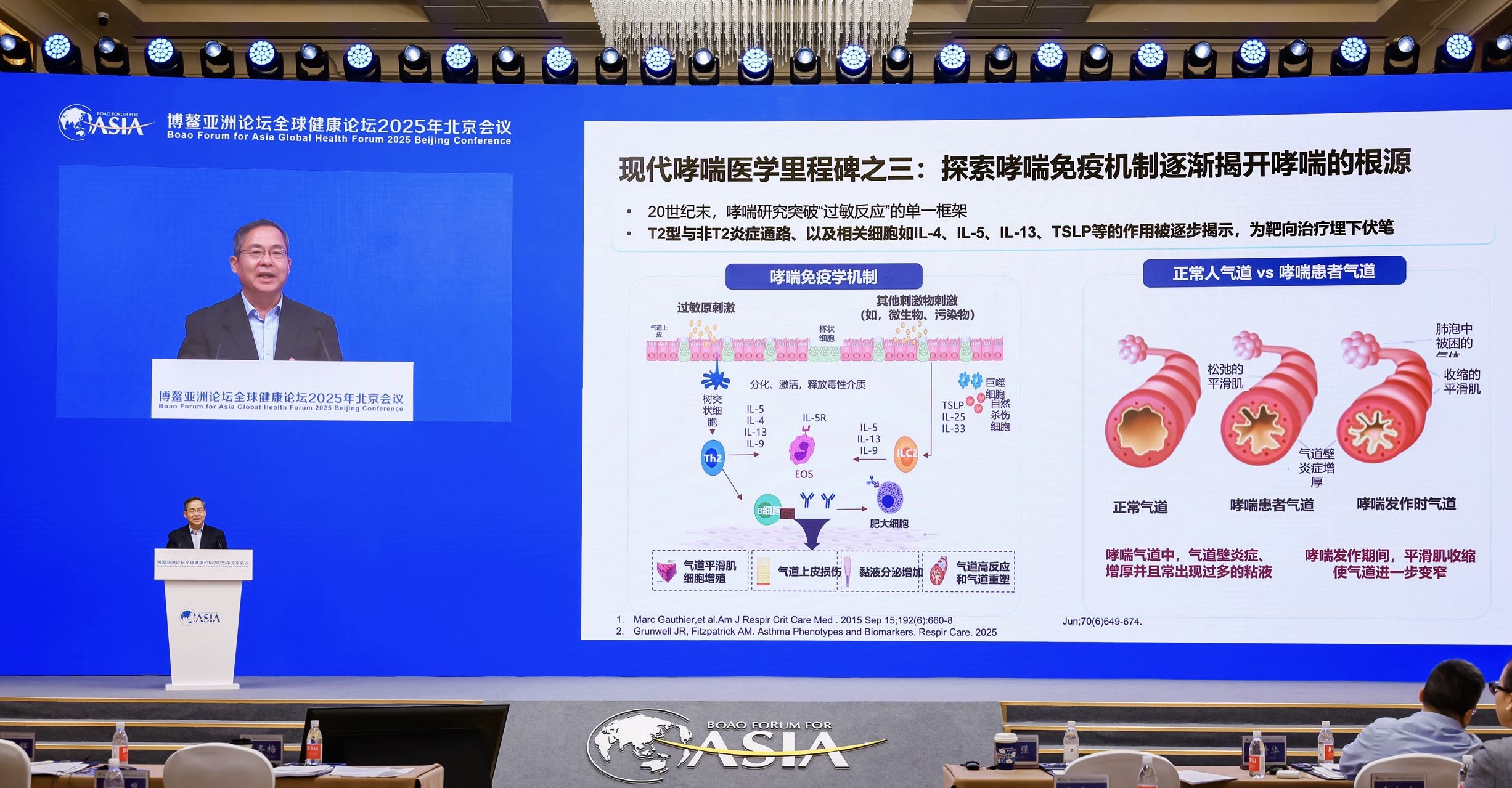
Core Viewpoint - The treatment of asthma has evolved from mere symptom control to achieving clinical cure, supported by advancements in modern medicine and the introduction of biological agents [2][3] Group 1: Asthma Treatment Insights - Asthma has the highest prevalence among chronic respiratory diseases globally, while chronic obstructive pulmonary disease (COPD) ranks first in China, with asthma in second place [2] - The clinical cure goals for asthma include four "zeros": no obvious symptoms, no asthma attacks, normal lung function, and no need for oral steroids [2] - Various biological agents such as omalizumab, mepolizumab, benralizumab, and dupilumab have shown promising clinical cure rates, providing more options for patients [2] Group 2: Challenges and Future Directions - The usage rate of biological agents in China is currently low, presenting challenges for broader adoption [2] - Long-term use of biological agents can effectively reduce acute attacks, emergency visits, and hospitalizations, making them cost-effective in overall healthcare expenditure [2] - Ongoing research is focused on developing targeted drugs for different cytokines and pathways, with new biological agents expected to enter clinical use [3] - Achieving the goal of clinical cure for asthma requires collaborative efforts from healthcare providers, patients, government, and society [3]
国金证券:重磅交易增强创新药信心 ASCO临床数据带来丰富催化
智通财经网· 2025-05-26 07:02
Pharmaceutical Sector - The pharmaceutical sector in China is showing strong performance, with significant transactions such as the $1.25 billion deal enhancing market confidence in the quality and market value of Chinese innovative drugs [1] - Chinese pharmaceutical companies are increasingly making their mark in global licensing transactions and showcasing their clinical pipeline potential at major conferences like ASCO [2] - The outlook for the pharmaceutical sector is optimistic, with expectations of a reversal in market trends by 2025, driven by innovative drugs and the recovery of left-side sectors [1][2] Biopharmaceuticals - GSK announced FDA approval for mepolizumab as an additional maintenance treatment for poorly controlled chronic obstructive pulmonary disease (COPD) patients, with projected global sales of €1.784 billion in 2024 [3] - There is a growing interest in IL-5 targeted drugs, with several domestic companies already engaged in this area [3] Medical Services & Consumer Healthcare - Alcon reported Q1 2025 surgical business net sales of $1.338 billion, a 1% year-on-year decline, but a 2% increase at constant exchange rates [4] - Vision care business net sales reached $1.106 billion in Q1 2025, reflecting a 1% year-on-year growth, driven by innovations in contact lenses [4] Medical Devices - Johnson & Johnson Medical launched the SOUNDSTAR CRYSTAL ultrasound catheter in the U.S. for cardiac ablation procedures, indicating a rich pipeline of innovative products [5] - There is a strong long-term demand trend for innovative medical devices, with a focus on leading companies that are expected to rapidly scale new products [5] Pharmacies - A recent initiative by multiple government departments aims to enhance the health promotion functions of retail pharmacies, indicating a supportive policy environment for non-drug product expansion [6] - Continuous optimization of industry regulations and the implementation of drug traceability measures are expected to create a more favorable environment for pharmacies [6]
医药生物行业跟踪周报:国产创新药闪耀ASCO国际舞台
Soochow Securities· 2025-05-26 00:23
Investment Rating - The report maintains an "Overweight" rating for the pharmaceutical and biotechnology industry [1] Core Insights - The A-share pharmaceutical index has increased by 1.8% this week and 4.3% year-to-date, outperforming the CSI 300 by 1.9% and 5.6% respectively [3][8] - The H-share biotechnology index has seen a rise of 6.7% this week and 36.4% year-to-date, outperforming the Hang Seng Technology Index by -7.4% and 19% [3][8] - The report highlights a significant increase in the number of domestic innovative drugs presented at the ASCO conference, with 25 oral presentations and 24 rapid oral presentations, marking a new high [14] Summary by Sections Industry Performance - A-share raw materials (+4.0%), chemical drugs (+3.6%), biological products (+1.7%), medical services (+1.4%), and pharmaceutical commerce (+1.2%) have shown notable price increases, while medical devices (+0.5%) and traditional Chinese medicine (+0.2%) have seen smaller gains [3][8] - Top performers in A-shares include Shengguojian (+100%), Haichen Pharmaceutical (+52%), and Shutaishen (+49%), while New Ganjing (-12%), Gongdong Medical (-10%), and Jinhao Medical (-9%) faced declines [3][8] R&D Progress and Corporate Developments - GSK's IL-5 monoclonal antibody has been approved for the treatment of COPD, marking a significant milestone as the first IL-5 drug approved for this indication [3] - The report notes strategic partnerships, such as Jingyin Pharmaceutical's collaboration with CRISPR Therapeutics to develop next-generation long-acting FXI-targeting siRNA therapies [3] Investment Strategy - Recommended sub-industry rankings are: Innovative drugs > CXO > Traditional Chinese medicine > Medical devices > Pharmacies > Pharmaceutical commerce [9] - Stock selection strategies include focusing on growth in innovative drugs, undervalued stocks in traditional Chinese medicine, high dividend stocks in traditional Chinese medicine, and left-side opportunities in raw materials and certain CXO and medical devices [9]