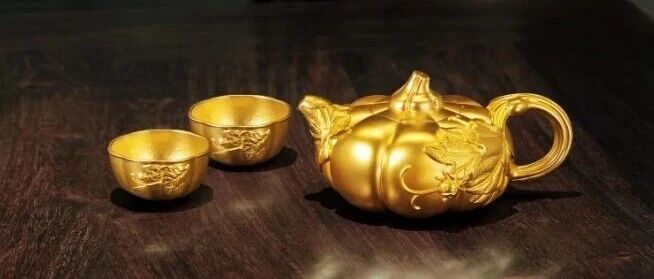
老铺黄金珠宝

Search documents
金价大跌之下,如何看待老铺黄金?
新财富· 2026-02-02 08:06
Core Viewpoint - The article discusses the strong sales performance of Laopu Gold during the 2026 Spring Festival pre-sale period, highlighting the significant consumer demand and the impact of rising international gold prices on the company's stock performance, which surged by 36% from 620 to 845.5 per share [4][8]. Group 1: Sales Performance and Market Reaction - Laopu Gold's sales at Beijing SKP exceeded market expectations, with customers waiting in line for up to 8 hours despite freezing temperatures [4]. - The company achieved a GMV of nearly 700 million yuan in January-February 2025, with February sales alone reaching 610 million yuan, indicating a potential record revenue for the same period in 2026 [14][15]. - The rising gold prices, which increased by over 20% since December 2025, provided Laopu Gold with a competitive pricing advantage as they had not adjusted their prices accordingly [14][15]. Group 2: Consumer Behavior and Market Dynamics - The phenomenon of "purchase anxiety" among consumers is noted, driven by expectations of significant price increases post-Spring Festival, leading to heightened demand [15][16]. - The discount levels at SKP during the Spring Festival were reported to be the lowest of the year, further encouraging early purchases [17]. Group 3: Membership and Customer Retention - The article raises concerns about the sustainability of Laopu Gold's membership growth, suggesting that while new customers were attracted in 2025, their long-term loyalty remains uncertain [27]. - Membership numbers grew from 350,000 at the beginning of 2025 to an estimated 600,000 by the end of the year, indicating a steady growth trend [27][36]. - The company aims to add 200,000 new members in 2026, reaching a total of 800,000, which is considered feasible [36]. Group 4: Future Growth Potential - Laopu Gold's store count increased from 36 to 48 in 2025, contributing less than 20% to overall revenue growth, with expectations for more significant contributions in 2026 [35]. - The average transaction value reached approximately 40,000 yuan in 2025, with projections for a 15%-20% increase in 2026, balancing price increases with consumer demand [36].

参考消息特稿|“中国IP”群体崛起展现跨文化吸引力
Xin Hua She· 2026-01-01 01:33
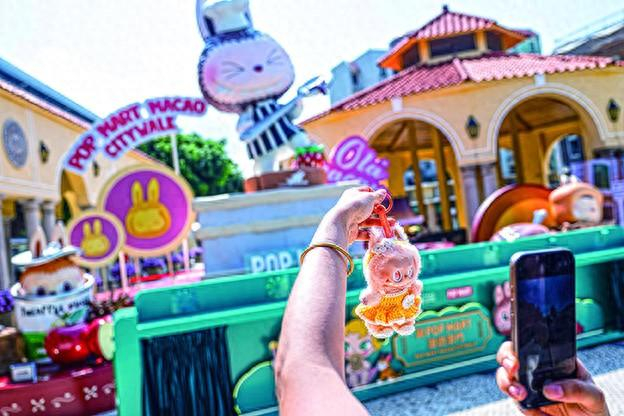
Core Insights - The article highlights the rise of "Chinese IP" on the global stage, showcasing its strong cross-cultural appeal and adaptability in various forms of media and consumer products [1][2][3]. Group 1: Market Expansion - In 2025, "Chinese IP" is expected to shine globally, with significant events like the appearance of LABUBU at the Macy's Thanksgiving Day Parade, marking a milestone for Chinese brands in international markets [2]. - Bubble Mart has expanded its presence to over 60 physical stores and 100 robot stores in the U.S. since starting its overseas expansion in 2018, covering more than 20 countries and regions [2]. - The Americas market for Bubble Mart saw a revenue increase of over 1200% year-on-year in Q3 2025, indicating a rapid growth trajectory [5]. Group 2: Cultural Integration - LABUBU's success reflects a shift in global perceptions of Chinese culture, moving beyond traditional symbols to a more dynamic representation of Chinese creativity and diversity [2][5]. - The international appeal of brands like Laopuhuang, which combines traditional craftsmanship with modern aesthetics, has led to a significant increase in overseas revenue, with a 455.2% year-on-year growth in the first half of 2025 [5][7]. - The "China Travel" initiative has gained traction, with 15.89 million foreign visitors from January to August 2025, a 52.1% increase year-on-year, showcasing a growing interest in Chinese culture [7]. Group 3: Evolution of Chinese IP - The journey of "Chinese IP" has evolved from "borrowing ships" to "building ships," and now to "leading ecosystems," indicating a maturation of China's cultural output [8][12]. - The initial phase focused on traditional content and copyright licensing, while recent developments have seen a shift towards creating original content and platforms for global audiences [9][11]. - The emergence of platforms like ReelShort and others for short dramas signifies a new phase where Chinese companies are replicating successful cultural models abroad [11]. Group 4: Economic and Technological Support - The growth of "Chinese IP" is supported by China's economic development, technological innovation, and a robust entertainment consumption demand [12][15]. - The cross-border e-commerce sector has seen significant growth, with imports and exports reaching approximately 2.06 trillion yuan in the first three quarters of 2025, a 6.4% increase [15]. - The strong manufacturing capabilities in China provide essential support for the production of high-quality cultural products, enabling brands like LABUBU to meet global market demands effectively [15][16].
汇丰研报:店效是卡地亚两倍 老铺黄金成中国首个顶级珠宝品牌
Zhong Guo Jing Ji Wang· 2025-12-15 10:53
Core Viewpoint - The luxury jewelry market is experiencing rapid growth, with companies like Laopuhuang and Richemont benefiting from this trend, highlighting a significant shift in consumer demand and market dynamics [2] Group 1: Company Analysis - Richemont, established in Switzerland in 1988, is a major player in the luxury goods sector, particularly through its brands Cartier and Van Cleef & Arpels [2] - Laopuhuang, a Chinese brand, has successfully carved out a niche in the high-end jewelry market by addressing a new demand without attempting to replicate established brands like Cartier [2] - Laopuhuang's sales surged by 233% year-on-year in the first half of 2025, driven primarily by same-store sales growth [2] Group 2: Industry Trends - The luxury jewelry segment has been the fastest-growing category in the luxury goods industry over the past five years, attributed to better product value propositions and continuous creativity [2] - Predictions indicate that Laopuhuang's net revenue will surpass Richemont's jewelry business by 2025, marking a unique phenomenon in the luxury market [2] - Despite the strong presence of Cartier and Van Cleef & Arpels, Richemont's growth in China is comparatively moderate, contrasting sharply with Laopuhuang's explosive growth [2]
永辉超市回应股价大涨;全球最大冰淇淋公司上市;Lululemon中国三季度大涨46%|品牌周报
36氪未来消费· 2025-12-14 12:29
Group 1: Yonghui Supermarket - Yonghui Supermarket's stock price surged by 41.22% over four days, with three days hitting the daily limit [3] - Following the surge, the stock price fell to 5 yuan per share, but still recorded a weekly increase of 27.23%, marking the largest weekly gain of the year [3] - The company reported a revenue of 42.434 billion yuan for the first three quarters of 2025, a year-on-year decline of 22.21%, and a net loss of 710 million yuan, attributed to store adjustment plans affecting revenue and gross margin [4] - Major shareholders, including the chairman, reduced their holdings, with a total of 90.75 million shares sold for approximately 377 million yuan [4] Group 2: Dream Ice Cream Company - Dream Ice Cream Company went public on December 8, with a total share capital of 612 million shares, achieving a market capitalization of 78 billion euros (approximately 642 billion yuan) on its listing day [5] - The company reported projected sales of 7.9 billion euros for 2024, holding a global market share of 21%, significantly higher than its closest competitor [5] - The company is expected to localize its products, channels, and marketing strategies in the Chinese market following its split from Unilever [7] Group 3: Laopuhuang Gold - Laopuhuang Gold's revenue is projected to surpass that of Richemont's jewelry business in China by 2025, with a significant increase in market share attributed to its successful product offerings [8] - The brand's average sales per store reached 459 million yuan in the first half of 2025, outperforming all domestic and international jewelry brands [8] - The rise of Laopuhuang Gold has drawn international attention, with Richemont acknowledging the competitive landscape and the cultural significance of the brand in China [9] Group 4: Lululemon - Lululemon reported a 46% year-on-year increase in net revenue in mainland China for the third quarter of fiscal year 2025 [11] - The company plans to open approximately 46 new stores in China this year, with a focus on expanding in second and third-tier cities [11] - Despite a decline in revenue in the Americas, the Chinese market accounted for 18% of total revenue, indicating strong growth potential [11] Group 5: Tims China - Tims China reported total revenue of 358 million yuan for the third quarter of 2025, a slight decline of 0.4% year-on-year, while system sales increased by 12.8% [23] - The number of stores reached 1,030, with 15 new stores added during the quarter, expanding its presence in second and third-tier cities [23]


厉峰集团被打趴下了?老铺黄金今年收入将超越历峰集团中国区珠宝业务
Sou Hu Cai Jing· 2025-12-11 08:11
Core Insights - Rothschild's latest industry report indicates that Chinese high-end gold brand Laopu Gold is expected to surpass Richemont's jewelry business in China by 2025, showcasing a successful case of local brands breaking into the international luxury market through differentiated strategies centered on intangible cultural heritage and Eastern culture [1][3] Performance Metrics - Laopu Gold's average sales per store reached 459 million yuan in the first half of 2025, significantly outperforming domestic and international competitors, with its Beijing SKP store achieving annual sales exceeding 3 billion yuan [3] - The brand's membership has grown to 480,000, and it has over 2,100 original design reserves, indicating a strong core competitive advantage [3] Market Positioning - Laopu Gold's differentiation strategy focuses on traditional gold craftsmanship and resonates with high-net-worth individuals, achieving a consumer overlap rate of 77.3% with international luxury brands [5] - Richemont has acknowledged the competitive landscape with Laopu Gold, adopting an open stance towards competition [5] Challenges and Variables - Laopu Gold's growth is challenged by its heavy reliance on offline stores, with online revenue accounting for only 13.1% (approximately 1.618 billion yuan) in the first half of 2025, limiting penetration in non-first-tier cities [7] - The brand's customer structure shows that about 12% of revenue comes from high-frequency buyers, indicating a significant portion of sales is driven by specific channel attributes [7] Industry Context - Richemont's global sales for the fiscal year 2025 are projected to reach 21.4 billion euros, with a year-on-year growth of approximately 4%, contrasting with Laopu Gold's explosive growth [8] - Laopu Gold's breakthrough provides a differentiated reference path for the development of local high-end jewelry brands [8]
罗斯柴尔德报告:老铺黄金营收将超过历峰 其成功是特例
Huan Qiu Wang· 2025-12-09 09:35
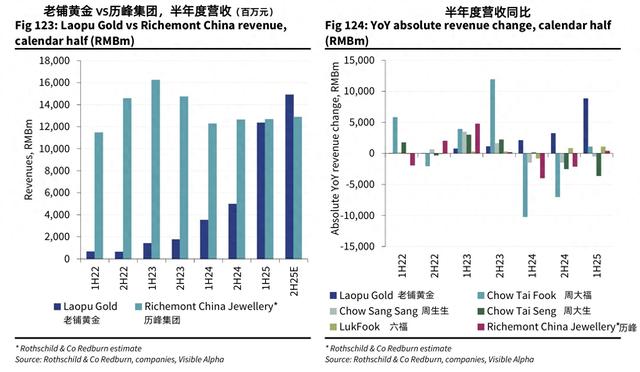
Core Insights - The report by Rothschild highlights that the absolute revenue of Laopuhuang is expected to surpass that of Richemont's jewelry business in the Chinese market by 2025 [1][3] - Laopuhuang's success is described as a unique case within the luxury goods sector, reflecting a significant shift in consumer behavior towards traditional luxury brands [1][3] Group 1: Laopuhuang's Performance - Laopuhuang's store efficiency reached nearly 500 million yuan in the first half of 2025, significantly outperforming all domestic and international jewelry brands [5] - The overlap rate of Laopuhuang's consumers with those of the top five international luxury brands is 77.3%, indicating a substantial shift of traditional luxury brand consumers towards Laopuhuang [5] - Morgan Stanley suggests that Laopuhuang's strong performance could challenge the long-held belief that European luxury brands are not threatened by global competitors [5] Group 2: Market Dynamics - The Rothschild report notes that Laopuhuang resonates with consumers seeking products that reflect Chinese traditions and values, contrasting sharply with the positioning of international brands like Cartier and Van Cleef & Arpels [5] - The report emphasizes that Laopuhuang is an individual phenomenon rather than a general trend of local brands outperforming international ones, attributing its rapid market share growth to its successful product offerings [5] - HSBC reported that Laopuhuang achieved an annual sales figure of 3 billion yuan at a single store in Beijing SKP, accounting for approximately one-seventh of the total sales at this high-end retail location [5]
唤醒血脉中的东方基因 打造融合传统文化好产品
Zheng Quan Shi Bao· 2025-09-24 18:09
Core Insights - The rise of domestic brands, referred to as "Guochao," has become a source of national pride, with companies like Li Ning and Lao Gan Ma integrating traditional cultural elements into their products [1][2] - Despite the enthusiasm surrounding Guochao, there are significant concerns regarding product quality, creativity, and market saturation, leading to a lack of consumer satisfaction among young people [1] - The future of Guochao relies on a foundation of innovation rooted in cultural heritage, emphasizing the need for unique products that possess genuine cultural value [2] Group 1: Current State of Guochao - Guochao brands have successfully launched products that highlight Chinese identity, such as Li Ning's "China Li Ning" line and Lao Gan Ma's new packaging [1] - However, there is criticism regarding the superficial interpretation of traditional culture, leading to a proliferation of similar products lacking depth and quality [1] Group 2: Future Directions - The next phase of Guochao should focus on innovation that respects and builds upon traditional cultural roots, rather than relying solely on trends and superficial marketing [2] - For Guochao to transition from a phenomenon to a mature industry, it must prioritize the creation of products with lasting cultural significance and quality [2]
“零售大变局:中国品牌仅彰显传统特色,就已经奏效了”
Guan Cha Zhe Wang· 2025-06-30 08:53
Core Insights - The article highlights the rise of Chinese brands in the global market, indicating a shift in consumer preferences from Western brands to local alternatives [1][8] - It emphasizes that Chinese consumers are increasingly favoring domestic luxury brands, high-end cosmetics, and local food and beverage options, marking a significant change in consumption patterns [1][4] Group 1: Rise of Chinese Brands - The popularity of the LABUBU toy exemplifies the success of Chinese brands, with its demand leading to a surge in the stock price of its manufacturer, Pop Mart [1][3] - Chinese brands like Kudi and Luckin Coffee are gaining traction by offering quality comparable to international brands like Starbucks at significantly lower prices [3][4] - The jewelry brand Laopu Gold has seen rapid growth, with its average store sales exceeding those of many foreign competitors by at least 50% [4][6] Group 2: Changing Consumer Behavior - Consumers are now willing to pay prices comparable to imported goods for local products, as seen with the high-end tea brand Bawang Chaji, which positions itself as a premium option [4][6] - There is a notable shift in consumer awareness, with younger demographics researching products more thoroughly and seeking local alternatives that offer similar quality at lower prices [6][7] - The success of brands like Mao Geping in the high-end cosmetics market illustrates the changing landscape, as it becomes the only domestic player among the top ten luxury beauty groups in China [6][7] Group 3: Strategic Market Positioning - Many Chinese brands are expanding their presence in lower-tier cities, where consumer activity is reportedly stronger than in major urban centers [7][8] - The strategy of targeting smaller cities has proven effective for brands like Bawang Chaji and Mxue Ice City, which began in less affluent areas before moving to larger markets [7][8] - The article notes that the increasing recognition of these brands internationally will likely enhance their appeal domestically, signaling a potential end to the era where retail trends predominantly flowed from the West to China [8]