自动化工具

Search documents
美国GDP增长4.3%!2025-2026年中国卖家如何抢占市场先机(策略+合规指南)
Sou Hu Cai Jing· 2025-12-31 03:12
Group 1: Economic Overview - The U.S. GDP growth for Q3 2025 reached 4.3%, surpassing the previous quarter's 3.8% and exceeding market expectations of 3.9%-4.0%, marking the fastest growth in two years [3][4] - The growth was driven by a 3.5% increase in consumer spending, expanded business investments, and stable trade policies, while the core PCE inflation rate rose to 2.9%, indicating some inflationary pressure [3][5] - The Federal Reserve plans to implement only one more interest rate cut in 2026, maintaining a cautious monetary policy stance to balance economic growth and inflation control [5] Group 2: Impact on Chinese Sellers - Strong consumer spending growth in the U.S. presents significant opportunities for Chinese cross-border sellers, particularly in categories like electronics, home decor, and leisure products [6][8] - Increased business investments in the U.S. indicate a rising demand for industrial equipment and digital solutions, creating a favorable environment for Chinese B2B sellers [6] - The stability in U.S. trade policies reduces risks associated with tariffs on Chinese goods, allowing for better long-term inventory planning and pricing strategies [6][8] Group 3: Strategies for Chinese Sellers - Chinese sellers should optimize product positioning and market strategies to align with U.S. consumer trends, focusing on high-demand categories [7][8] - Enhancing supply chain resilience and logistics capabilities is crucial, especially in light of ongoing global supply chain challenges [7][8] - Establishing a local entity in the U.S. can improve brand credibility and operational efficiency, with services like those offered by lngStart facilitating this process [9][10]


Why UiPath Stock Surged Today
The Motley Fool· 2025-12-04 23:04
The agentic AI leader is seeing rising demand for its automation tools.Shares of UiPath (PATH +24.36%) popped on Thursday after the autonomous software provider reported solid third-quarter growth metrics. By the close of trading, UiPath's stock price was up more than 24%. AI agents are hereUiPath is a leader in agentic automation, which uses artificial intelligence (AI) to complete complex processes that require decision-making and adaptation. Surging interest in AI agents is thus playing right into UiPath ...


当AI热潮遭遇现实:六张图读懂行业前方的硬性边界
3 6 Ke· 2025-11-17 23:41
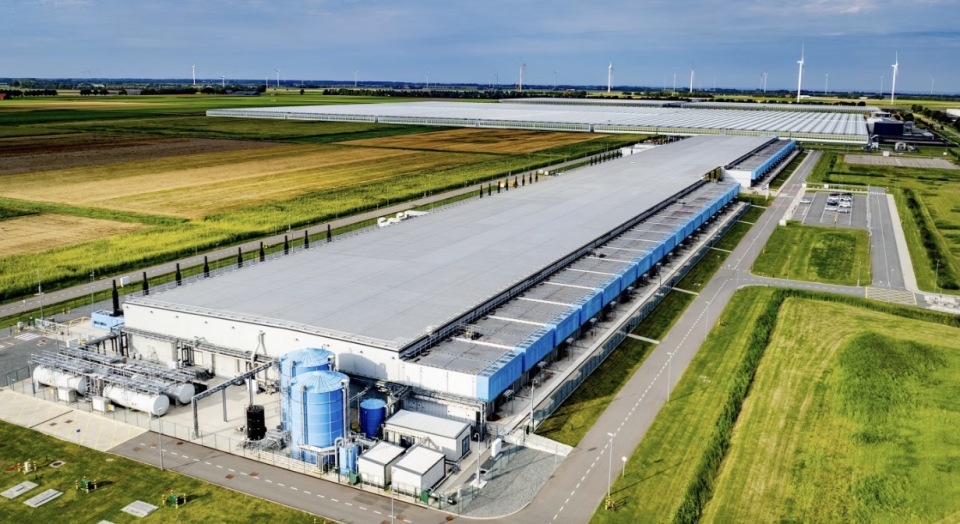
Core Insights - The rapid expansion of artificial intelligence (AI) is driving unprecedented capital investment and infrastructure development in the technology sector [2] - The industry faces physical limitations that could hinder the growth of AI infrastructure, including power supply, equipment capacity, land approval, and investment return expectations [3][5] - The sustainability of AI's current growth trajectory depends on whether the necessary physical and energy conditions can support large-scale AI infrastructure and whether the investments can generate sufficient revenue [2][8] Investment Trends - Major tech companies and AI startups are significantly increasing capital expenditures, with some reporting historic highs in investment [2][5] - Goldman Sachs analysts note that capital for building data centers is currently in a state of almost unlimited supply, leading to a surge in procurement of key components for AI supercomputers [2][8] - Despite rising risks, tech giants continue to enhance their investments in AI infrastructure, resulting in a growing proportion of capital expenditures relative to revenue [5][8] Physical Limitations - The manufacturing cycles for critical components, construction timelines, and supply chain capabilities cannot be infinitely compressed, leading to project delays [3][8] - Key equipment shortages, particularly large transformers, are becoming a core constraint on the expansion of new data centers [8][14] - The construction permitting process and the capacity for natural gas pipeline access also pose long-term constraints on infrastructure development [14] Revenue Generation Challenges - Companies must ensure that their investments in AI infrastructure can be recouped through future revenues, with expectations that consumers and businesses will pay more for advanced AI products and services [14][18] - Optimistic forecasts suggest that AI cloud service revenues could grow nearly ninefold over the next five years [14][18] - Morgan Stanley's model predicts that cumulative global investment in AI infrastructure could reach $5 trillion by 2030, necessitating an annual revenue generation of $650 billion to ensure reasonable returns [17][18] Market Dynamics - The commercialization path for AI remains highly diverse, with potential revenue sources including advertising, enterprise services, and high-value applications for specific industries [18] - The pace of building supercomputing capabilities is constrained by real-world limitations, raising uncertainties about who will ultimately bear the costs of these investments and whether market sizes will meet expectations [18]
“有中国,不怕美国加税,中印本应并肩作战”
Sou Hu Cai Jing· 2025-11-04 16:07
Group 1 - The resumption of direct flights between India and China marks a significant step towards improving bilateral relations, although challenges remain regarding visa and investment restrictions [1][2][4] - Prior to the 2020 conflict, air traffic between the two countries was robust, with nearly 890,000 passengers in 2019, and an additional 1.2 million using third-country transfers [4] - Despite the resumption of direct flights, the number of Indian students in China has drastically decreased from 200,000 in 2019 to only 5,000 in 2024 due to tightened visa policies [6] Group 2 - Indian companies are facing challenges due to government-imposed visa restrictions, which hinder their ability to bring in Chinese technicians for equipment maintenance and installation [5][6] - There is a growing sentiment among Indian analysts that Chinese investment could help reduce India's $99.2 billion trade deficit and boost local manufacturing [6] - The relationship between India and China is influenced by broader geopolitical dynamics, particularly the evolving ties between India and the United States [5][6]

副业指南:程序员如何用技术多赚一份收入
Sou Hu Cai Jing· 2025-08-24 14:45
Core Insights - The article discusses the challenges faced by programmers in the internet industry, including long working hours, tight project deadlines, and slow salary growth, leading many to consider side jobs [1] - It emphasizes the advantages programmers have when pursuing side jobs, such as strong technical monetization capabilities, access to internet resources, and project-oriented thinking [2] - The article concludes that if programmers choose the right direction for their side jobs, they can often start faster than individuals from other industries [3] Summary by Sections - **Challenges in the Industry** - Programmers face issues like excessive overtime, project pressures, and slow salary increases, prompting thoughts about side jobs [1] - **Advantages of Programmers** - Strong monetization ability due to coding skills - Ability to create websites, small programs, and automation tools that can be directly monetized - Greater exposure to internet resources and side job opportunities - Project-oriented mindset that aids in task breakdown and execution [2] - **Potential for Success** - Choosing the right direction for side jobs allows programmers to gain a head start compared to others [3]

美企将放缓招聘
Guo Ji Jin Rong Bao· 2025-08-22 11:46
Group 1 - The trend of hiring slowdown in the U.S. is becoming evident, with one-fifth of employers planning to slow down hiring in the second half of 2025, nearly double the rate from the same period last year [1][2] - The majority of Chief Human Resource Officers (CHROs) are leaning towards reducing hiring for the second consecutive year, reflecting a cautious approach amid economic and policy uncertainties [1][3] - Companies are focusing on strengthening existing teams and maintaining flexibility before engaging in large-scale hiring [2][4] Group 2 - Major companies like Novo Nordisk and Meta are pausing hiring in non-critical areas, indicating a shift towards resource concentration in core competencies [2][3] - The average time for unemployed individuals to find new jobs has increased to 24 weeks, indicating a slowdown in hiring speed and a rise in long-term unemployment [3][4] - The CHRO Confidence Index has dropped to 54 in the second quarter of 2025, down from 59 in the previous year, reflecting growing caution among executives [3][4] Group 3 - Factors such as tariff policies and changes in immigration policies are directly impacting hiring decisions, with 50% of executives expecting negative effects from the Trump administration's policies on the labor market [3][4] - The rise of artificial intelligence is prompting companies to reassess their future workforce structure, leading to hesitance in hiring despite the desire to enhance productivity [4] - Companies are emphasizing achieving higher efficiency with fewer employees, as seen in the case of Union Pacific Railroad, which reported a 3% reduction in workforce but a record high in labor productivity [4][5]
“小北”的大担当
Xin Lang Cai Jing· 2025-08-22 03:48
Core Insights - The article highlights the dedication and innovative spirit of a key figure in the aviation industry, focusing on the development of advanced technologies for helicopter safety and efficiency [2][3][5]. Group 1: Innovation and Technology Development - The individual, referred to as "Xiao Bei," has developed a self-researched program aimed at enhancing helicopter safety through data analysis and algorithm optimization [2][3]. - The introduction of automation tools using Python and MATLAB has significantly improved work efficiency in traditional strength design processes, addressing long-standing challenges in the field [3][5]. - A complete helicopter status monitoring system has been established, utilizing big data and machine learning to predict component lifespan and health status, providing a scientific basis for maintenance decisions [4][5]. Group 2: Team Leadership and Collaboration - The individual plays multiple roles within the team, fostering a collaborative environment and being a go-to person for both technical and personal challenges among colleagues [5]. - The emphasis on helping others and sharing knowledge contributes to a supportive team culture, enhancing overall productivity and morale [5][6]. Group 3: Commitment to the Aviation Industry - The narrative underscores a strong sense of mission within the aviation sector, with a focus on contributing to national interests and advancing the industry through innovation [6].

聊聊项目团队中管理者如何树立威信
Sou Hu Cai Jing· 2025-08-08 02:19
Core Insights - Establishing credibility in the internet industry relies on "professional credibility" and "team influence" due to its results-oriented nature [1] - Traditional authoritative management is ineffective in fast-paced internet teams, where credibility stems from the ability to solve problems others cannot [1] Group 1: Strategies for Building Credibility - New testing managers should focus on three key areas: using data to communicate (e.g., showing historical defect distribution), addressing team pain points (e.g., optimizing CI pipeline duration), and personally participating in key module testing [3] - Quantifying quality risks with data (e.g., "payment interface response delay P99 > 2s could lead to a 15% loss in order conversion during promotions") helps teams recognize unseen risks [4] - Providing actionable solutions alongside problem identification (e.g., "suggest using traffic recording playback to complete payment link automation, expected to reduce 50% regression manpower") is crucial [4] Group 2: Enhancing Team Collaboration - Creating visible value for testing engineers by allowing them to present automation tool results in cross-department meetings [5] - Applying engineering methods to improve efficiency, such as developing tools for test data generation and establishing knowledge bases for recurring issues [6] - Adapting communication to agile rhythms, like using daily stand-ups to highlight key risks and replacing lengthy reports with visual dashboards [6] Group 3: Fostering a Quality Culture - Initiating monthly "Best Quality Guardian" awards voted by product and operations teams promotes a culture of quality [8] - Setting up a "quality red-black list" in the office to publicly display key indicator improvements encourages accountability [8] - Emphasizing the importance of transforming business requirements into testable solutions rather than merely relaying them [8] Group 4: Indicators of Credibility - Trust capital accumulation can be verified through signals such as developers seeking input from the testing team during technical reviews [10] - Allocating time for risk assessment in scheduling meetings indicates the value placed on testing insights [10] - The mantra "Credibility = Professional Depth × Collaborative Warmth × Output Effectiveness" encapsulates the essence of sustainable leadership in fast-paced environments [10]