
苹果17

Search documents
男子年会抽中10万现金,领导让选苹果17或留奖金
Xin Lang Cai Jing· 2026-02-01 22:28
Core Viewpoint - A man won 100,000 cash at a company annual meeting, but the leadership offered him a choice between keeping the cash or selecting an Apple iPhone 17 Pro Max [1] Group 1 - The event highlights the company's engagement in employee recognition and reward systems through cash prizes [1] - The choice presented to the employee reflects a trend in corporate incentives, where tangible rewards like electronics are offered alongside cash [1] - The situation has garnered attention on social media, indicating a potential impact on the company's public image and employee morale [1]


大侠后宫:“当网店客服被名校客户狠狠背刺…?”啊啊啊好窝囊的报复手段!
猿大侠· 2026-01-11 04:11
Group 1 - The article discusses a humorous incident involving a customer service representative and a prestigious university client, highlighting the unexpected interactions that can occur in customer service roles [1][3][4] - It reflects on the cultural perceptions of elite educational institutions, such as Peking University, and how they influence social interactions and expectations [5][9][10] Group 2 - The article includes various comments and reactions from readers, showcasing a range of opinions and humorous takes on the situation described [8][12][18] - It emphasizes the importance of communication and understanding in customer service, as well as the challenges faced by representatives in dealing with diverse customer backgrounds [19][20][21]
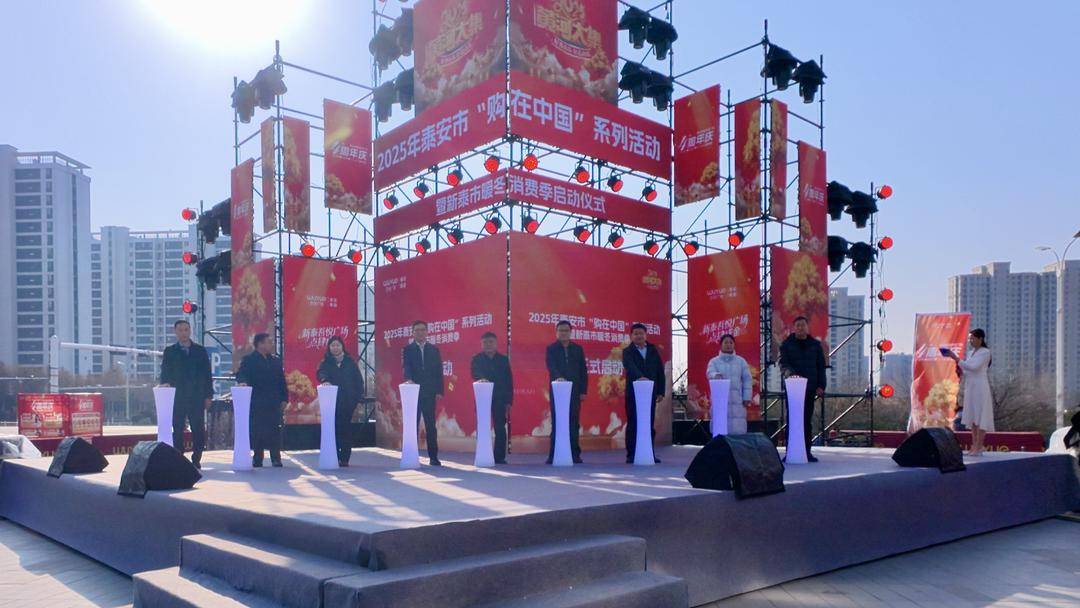
暖冬惠购,好品暖心,2025年泰安市“购在中国”系列活动暨新泰市暖冬消费季启动仪式举行
Sou Hu Cai Jing· 2025-12-29 11:35
Core Viewpoint - The 2025 Tai'an "Buy in China" series event and the New Tai winter consumption season were launched to stimulate winter consumer activity through policy announcements, platform collaboration, and diverse scenarios [1][4]. Group 1: Event Overview - The event theme is "Warm Winter Benefits, Enjoy New Tai Taste," aimed at invigorating winter consumption [1]. - The New Tai winter consumption season coincides with the fourth anniversary of New Tai Wuyue Plaza, featuring various activities from December 24 to January 3, including celebrity appearances and a drone light show [3]. Group 2: Consumer Engagement - The launch event saw increased foot traffic, with citizens engaging in inquiries and purchases at home appliance, automotive, and brand stores [3]. - Activities included modern dance, step dance, Tai Chi, and brisk walking, creating a vibrant atmosphere that combined shopping with fitness [3]. Group 3: Government and Business Collaboration - Leaders from the Tai'an Municipal Bureau of Commerce and New Tai City delivered speeches and announced a winter sports consumption season [4]. - Various platforms, including Wuyue Plaza and e-commerce bases, introduced online and offline promotional policies covering multiple sectors such as automotive, home appliances, and cultural tourism [4]. Group 4: Cultural and Tourism Integration - The winter cultural tourism consumption season continued in the afternoon with performances and cultural promotions, enhancing the overall appeal of the event [7]. - The initiative integrates resources from government, platforms, business districts, and community participation to unleash consumer potential and drive economic growth [7].
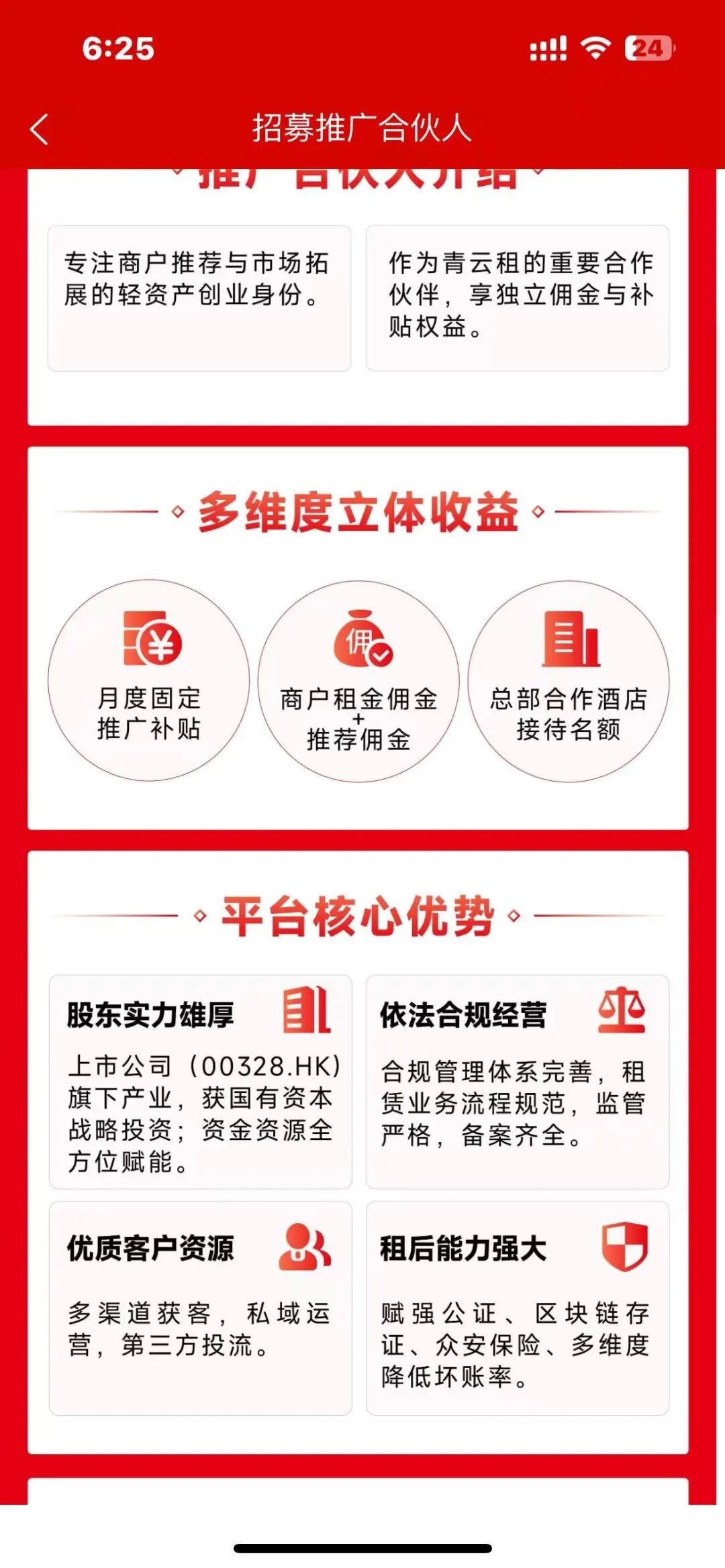
号称“租手机赚钱” 知名平台突然爆雷!有员工抵押房产上班两月 套牢130多万元 投资者:我66台iPhone没了
Mei Ri Jing Ji Xin Wen· 2025-11-11 12:50
Core Insights - The mobile rental platform "Qingyun Rental" has suddenly collapsed, leaving a financial gap of over 1 billion yuan, affecting thousands of investors who had invested amounts ranging from tens of thousands to hundreds of thousands of yuan [1][2][3] - The platform had claimed an annualized return rate of 16.8% and began experiencing withdrawal difficulties in September 2023, leading to widespread investor concern [2][3][4] Company Overview - "Qingyun Rental" positioned itself as a leading mobile rental platform, claiming to have a strong financial background and operations in over 200 cities, serving more than 1 million users [2][3] - The company operated by recruiting investors to purchase various models of Apple phones, which were then rented out to generate rental income [5][6] Investment Model - The investment model involved purchasing Apple phones, with returns based on the rental income generated. For example, an iPhone 16 Pro Max was procured at 9,760 yuan and could yield a total return of 10,306 yuan over a 4-month rental period [5][6] - The platform encouraged longer investment periods and multiple phone purchases to maximize returns, with investment terms of 4, 6, and 12 months [5][6] Investor Experiences - Many investors reported that they initially received returns but faced withdrawal issues starting in September 2023, leading to significant financial losses [9][10] - Reports indicate that employees were also affected, with some having to purchase phones themselves to maintain their jobs, leading to further financial strain [11][13] Company Structure and Ownership - "Qingyun Rental" is operated by Wuhan Qingqing Era Network Technology Co., Ltd., which was established in 2020 with a registered capital of 150 million yuan. The company is partially owned by Shenzhen Aigao Chuangke Holdings Co., Ltd. [15][16] - Aigao Group, the parent company, recently increased its stake in Shenzhen Aigao Chuangke, becoming the controlling shareholder [15][16] Legal and Investigative Actions - Multiple investors and employees have filed reports with local authorities, and investigations are currently underway regarding the company's operations and the financial losses incurred [16]
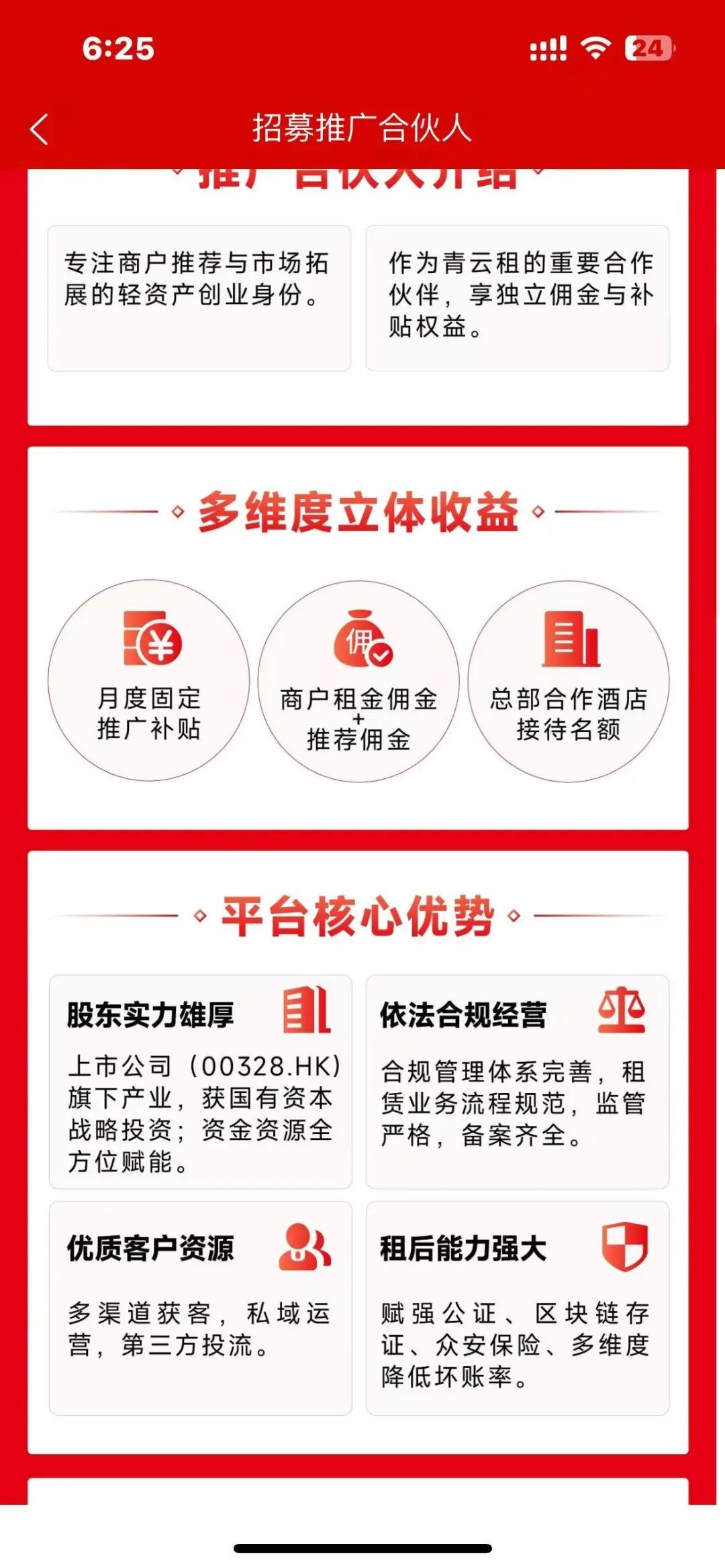
号称“租手机赚钱”的青云租突然爆雷,有员工抵押房产上班两月,套牢130多万元
Mei Ri Jing Ji Xin Wen· 2025-11-11 12:45
Core Insights - "Qingyun Rental," a mobile phone rental platform, has collapsed, leaving over 1 billion yuan in losses and thousands of investors unable to withdraw their funds [1][12][21] - The platform promised an annual return rate of 16.8% and began experiencing withdrawal issues in late September [2][6][12] Company Overview - "Qingyun Rental" claimed to be a leading mobile phone rental platform, backed by state-owned assets and listed on the Hong Kong stock market, with operations in over 200 cities and serving over 1 million users [3][21] - The company was established in 2020 with a registered capital of 150 million yuan, and its main operator is Wuhan Qingqing Era Network Technology Co., Ltd. [21] Business Model - The business model involved attracting investments from individuals, converting funds into various models of Apple phones, and renting them out to generate rental income [6][21] - The platform encouraged longer investment periods and larger quantities of phones to maximize returns, with specific rental terms of 4, 6, and 12 months [6][7] Financial Claims - For example, an iPhone 16 Pro Max was purchased at 9,760 yuan and could yield a total return of 10,306 yuan after 4 months [7] - The platform's promotional materials highlighted potential earnings for partners, with monthly and annual income projections based on the number of phones rented [8] Investor Experiences - Many investors reported being unable to withdraw their funds starting in September, with some having invested amounts ranging from tens of thousands to over a million yuan [1][12][13] - Reports indicate that investors were often introduced to the platform by friends or family, leading to a network of trust that was ultimately exploited [1][12][13] Employee Experiences - Employees also faced significant issues, with reports of unpaid salaries and forced purchases of phones to maintain their jobs [18][19] - Some employees reported investing their own money into the platform, believing in its viability due to the company's claims of a large rental market [19] Legal and Investigative Actions - Multiple investors and employees have filed reports with local authorities, and investigations are ongoing in various cities, including Wuhan and Shenzhen [21]
贵货都上即时零售,骑手频繁上演“零元购”,偷单还会少吗?
3 6 Ke· 2025-11-10 12:13
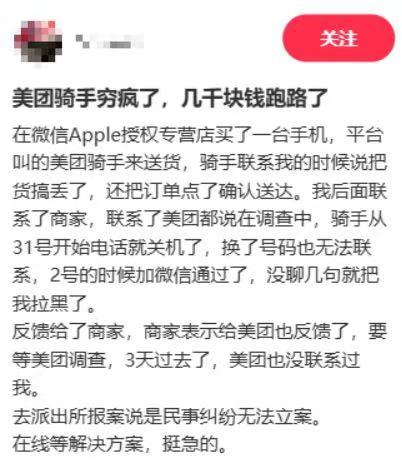
Core Viewpoint - The incident of a lost delivery highlights the growing risks in the instant retail industry, where the convenience of rapid delivery is overshadowed by issues of trust and accountability among platforms, merchants, and delivery personnel [1][3][9]. Group 1: Incident Overview - A consumer from Shaanxi reported that a mobile phone ordered through Meituan was lost during delivery, with the rider claiming the item was missing and the merchant stating the order was completed [1][3]. - The consumer sought help on social media, leading to Meituan eventually compensating the consumer after public pressure [3][6]. Group 2: Industry Implications - The rise of instant retail has led to an increase in high-value item deliveries, making incidents of "zero-cost purchases" by riders more frequent and concerning [4][9]. - Trust is essential in instant retail, and incidents like these can erode consumer confidence, potentially stunting market growth [9][17]. Group 3: Responsibility and Accountability - The lack of clear responsibility among merchants and platforms complicates the resolution of delivery issues, with both parties often deflecting accountability [12][13]. - Merchants are often seen as "passive" in these situations, needing to take a more proactive role in addressing consumer concerns to maintain their reputation [16][21]. Group 4: Future Risks and Market Growth - The rapid expansion of instant retail, projected to reach a market size of approximately 7.515 trillion yuan by 2024, raises concerns about the sustainability of current operational practices if risks are not managed effectively [17][20]. - The shift from low-value items to high-value goods in deliveries necessitates a reevaluation of trust and security measures within the industry [23].

南大999元的帝王蟹,我真想吃一回
36氪· 2025-11-09 02:09
Core Viewpoint - The controversy surrounding the sale of a 999 yuan king crab at Nanjing University's cafeteria reflects broader societal issues regarding consumption, student autonomy, and the role of universities in modern society [5][17][34]. Summary by Sections Introduction - The article discusses the heated debate sparked by the introduction of a 999 yuan king crab at Nanjing University's cafeteria, highlighting differing opinions on luxury consumption in educational settings [5][4]. Arguments For and Against - Opponents argue that offering high-end seafood promotes extravagant spending and contradicts the spirit of frugality, while supporters believe that students should have the freedom to choose their meals, regardless of price [5][13]. - The university's cafeteria has a range of affordable options, indicating that the introduction of the crab was not meant to undermine frugality but to cater to diverse student preferences [5][15]. Market Dynamics - The cafeteria's decision to sell the king crab was part of a market-oriented reform, aiming to enhance the dining experience and meet varied student demands [24][15]. - The overall dining market for universities is projected to exceed 600 billion yuan by 2025, indicating significant growth potential in this sector [15]. Social Commentary - The article critiques the tendency to overreact to the sale of luxury items in educational institutions, suggesting that such reactions often stem from deeper societal anxieties about inequality and consumerism [20][19]. - It emphasizes that the real issue lies in how universities prepare students for real-world choices rather than shielding them from market realities [32][34]. Conclusion - The king crab incident serves as a reminder of the need for a balanced discussion about consumption in educational settings, advocating for a more inclusive approach that respects student autonomy and market dynamics [34][32].

11月4日【中銀做客】恆指、小米集團、比亞迪、泡泡瑪特、建設銀行、
Ge Long Hui· 2025-11-04 20:03
Market Overview - The Hong Kong stock market has shown volatility recently, with the Hang Seng Index fluctuating around 25,900 to 26,000 points [2][6] - Trading volume has decreased from approximately 300 billion to around 200 billion in recent weeks, indicating a more cautious market sentiment [1][2] - Investors are shifting focus from individual stocks to index-related products, such as ETFs and warrants, due to uncertainty in stock performance [2][3] Investment Strategies - Many investors are adopting a more conservative approach as the year-end approaches, preferring to observe market trends before making further investments [1][2] - The pharmaceutical, retail, and technology sectors have performed well throughout the year, with significant interest in chip stocks [1][2] - Investors are increasingly using index tools to capture market fluctuations, with high leverage options available for index warrants [2][3] Product Offerings - The company has increased the issuance of index-related products to meet market demand, providing a variety of options for investors [3][4] - The issuance of warrants is based on three reference prices, allowing for timely product offerings that align with market conditions [3][4] - Investors can communicate their product needs directly to the company, facilitating a responsive product development process [5][6] Individual Stock Analysis - Xiaomi has seen a significant decline in stock price, dropping from around 60 to 42-43, with investors showing interest in call warrants as a lower-cost entry point [6][7] - BYD's stock has also weakened, with prices falling below 100, leading to cautious interest in call warrants as investors await signs of stabilization [9][10] - Pop Mart, once a market favorite, has experienced a downturn, with mixed investor sentiment reflected in both call and put warrant activity [11][12] Banking Sector Performance - Traditional financial stocks, such as China Construction Bank, have gained attention, with stock prices rising from around 7 to over 8, indicating a shift in investor focus towards more stable sectors [14][15] - The company offers high-leverage warrants for banking stocks, allowing investors to capitalize on the recent upward trend in this sector [16][17]



万联晨会-20251022
Wanlian Securities· 2025-10-22 00:50
Core Insights - The A-share market saw a collective rise in the three major indices, with the Shanghai Composite Index up by 1.36%, the Shenzhen Component Index up by 2.06%, and the ChiNext Index up by 3.02% [2][6] - The total trading volume in the Shanghai and Shenzhen markets reached 1,873.701 billion yuan [2][6] - In terms of industry performance, telecommunications, electronics, and construction decoration sectors led the gains, while coal, food and beverage, and transportation sectors lagged [2][6] - Concept sectors such as combustible ice, Tonghuashun fruit index, and shale gas saw significant increases, while horse racing concepts, super brands, and organic silicon concepts had lower gains [2][6] - The Hong Kong market also experienced gains, with the Hang Seng Index rising by 0.65% and the Hang Seng Technology Index up by 1.26% [2][6] - Internationally, the U.S. stock indices showed mixed results, with the Dow Jones up by 0.47%, the S&P 500 flat, and the Nasdaq down by 0.16% [2][6] Economic Overview - Economic growth remains stable, with a slight slowdown in GDP growth to 4.8% year-on-year in Q3, and a quarter-on-quarter increase of 1.1% [8][9] - Industrial production continues to be a significant driver of the economy, with industrial added value increasing year-on-year from 5.2% to 6.5% [8][9] - Investment in fixed assets showed a decline, with cumulative year-on-year growth dropping from 0.5% to -0.5%, particularly in manufacturing, infrastructure, and real estate sectors [8][9] - Retail sales growth has also slowed, with a drop from 3.4% to 3% year-on-year [8][9] Sector Analysis - Real estate investment continues to drag down overall investment growth, with new construction and sales remaining weak [11] - Infrastructure investment growth has declined, with power investment contributing to this slowdown [11] - Manufacturing investment growth has significantly slowed due to multiple factors, including anti-involution policies and tariff uncertainties [11][12] - Consumer spending has also been affected, with a decline in discretionary spending and a slowdown in the growth of durable goods sales [12]
有研粉材(688456.SH):不是苹果17金属粉末材料的供应商
Ge Long Hui· 2025-09-30 07:56
Core Viewpoint - The company indicates that aluminum alloys and copper alloys possess application potential in consumer electronics due to their weight reduction and heat dissipation properties, respectively. The company is not a supplier of Apple's 17 metal powder materials [1]. Group 1 - The potential association described by the company refers to the application of aluminum alloys in weight reduction and heat dissipation, as well as the excellent heat dissipation characteristics of copper alloys [1]. - The company currently does not supply metal powder materials for Apple's 17 series [1].
