荣威M7 DMH

Search documents
技术平权,用户为王:上汽的“开门红”不只是一场销量胜利
Xin Lang Cai Jing· 2026-02-28 02:33
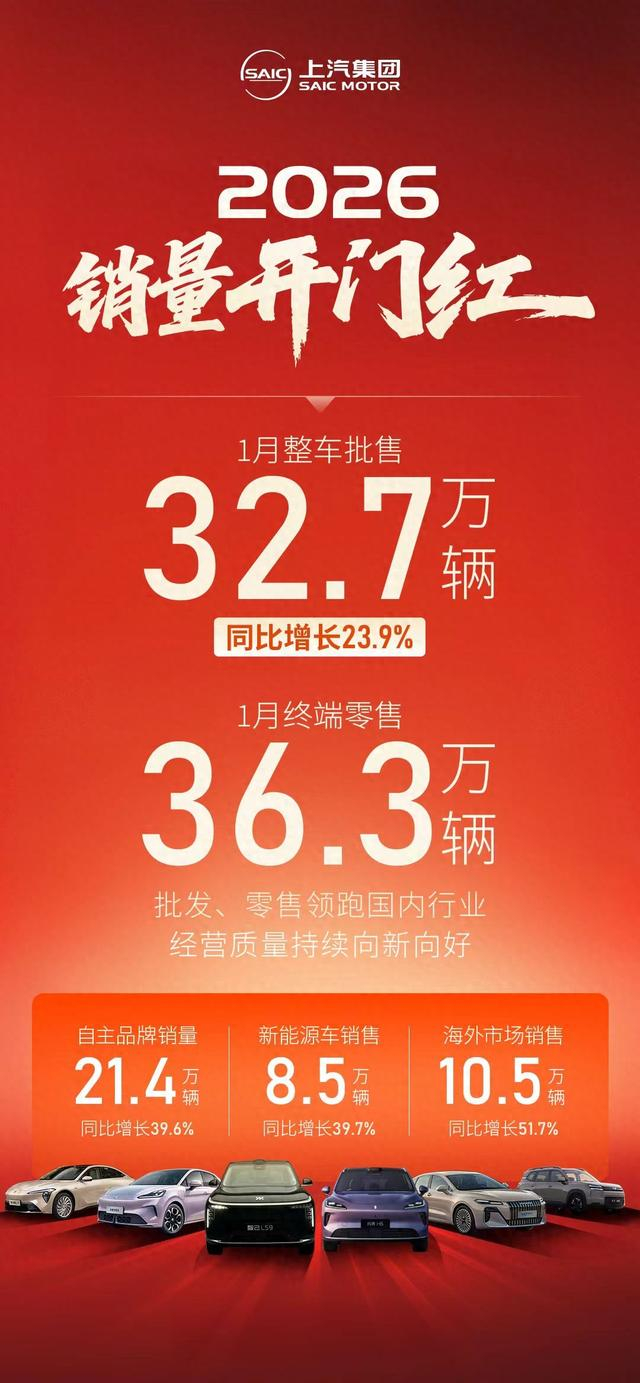
Core Insights - In January 2026, SAIC Motor Corporation achieved significant sales growth, with wholesale sales reaching 327,000 units, a year-on-year increase of 23.9%, and retail sales of 363,000 units [1] - The growth is attributed not only to scale but also to the implementation of "technology equality" and a "user-centric" approach, allowing the company to differentiate itself in a competitive market [1][5] - The company's self-owned brands played a crucial role, with sales of 214,000 units in January, up 39.6%, accounting for 65.3% of total sales, an increase of 7.3 percentage points year-on-year [1][6] Sales Performance - In the new energy vehicle segment, SAIC Motor's sales reached 85,000 units in January, marking a nearly 40% year-on-year increase, positioning the company among the industry leaders [1] - The MG4 model, featuring semi-solid-state batteries and integrated battery body technology, has become a standout product, achieving over 75,000 pre-orders and monthly sales exceeding 10,000 units [7][9] Overseas Strategy - Under the guidance of its Overseas Strategy 3.0, SAIC Motor's overseas sales reached 105,000 units in January, a 51.7% increase year-on-year, with MG delivering nearly 26,000 units in Europe, up approximately 15% [2] Reform and Innovation - The company initiated comprehensive reforms in the second half of last year, enhancing product definition, R&D, production, and marketing, which have begun to translate into improved sales and profitability [5] - SAIC Motor has invested over 150 billion yuan in electric and intelligent technologies, resulting in nearly 26,000 effective patents across various platforms [13][15] User-Centric Approach - The company has established a unified value expression of "understanding cars and understanding you," focusing on reshaping product and service logic to meet diverse user needs [12] - In early 2026, SAIC launched a series of promotional activities to enhance user experience and satisfaction, reinforcing its commitment to a user-centric philosophy [12] Future Product Launches - In 2026, SAIC plans to introduce a range of new products, including the A+ class sedan i6 and the LS9 Hyper version, which will feature advanced technologies such as line control steering [16][18] - The company aims to solidify its position in the high-end electric vehicle market with innovative models that leverage its technological advancements [18] Conclusion - The strong sales performance in January 2026 reflects the successful implementation of SAIC's reform and innovation strategies, marking a significant step towards establishing a new development paradigm focused on user needs and technological capabilities [19][21] - The company's ability to convert technological investments into user value will be crucial for maintaining its competitive edge in the evolving automotive landscape [21]


上汽1月“开门红”背后的质变:自主品牌占比超六成,新能源双线爆发
Guan Cha Zhe Wang· 2026-02-04 01:36
Core Insights - SAIC Motor Corporation reported a total vehicle wholesale of 327,000 units in January, representing a year-on-year increase of 23.9%, with retail sales reaching 363,000 units [1] - The main highlights of SAIC's performance in January include the rise in sales of its own brands, stable growth in new energy vehicle (NEV) sales, and continued expansion in overseas markets [1] Domestic Sales Performance - In January, SAIC's own brand sales (including SAIC-GM-Wuling) reached 214,000 units, up 39.6% year-on-year [3] - SAIC Passenger Vehicles (including Roewe and MG brands) sold 77,000 units, marking a 53.8% increase; SAIC Maxus sold 18,000 units, up 18.2%; and SAIC-GM-Wuling sold 105,000 units, an increase of 37% [3] Joint Venture Performance - SAIC-GM's sales in January were 44,000 units, reflecting a year-on-year increase of 29.3%, while SAIC Volkswagen's sales were 68,000 units, showing a decline of 9% [4] Commercial Vehicle Sales - SAIC's commercial vehicle sales reached 20,400 units, up 21% year-on-year, with domestic sales at 11,100 units (up 28%) and overseas sales at 9,373 units (up 14%) [5] Market Share and Brand Performance - The share of SAIC's own brands (including SAIC-GM-Wuling) accounted for 65.3% of total sales, an increase of 7.3 percentage points compared to the same period last year, making it the main growth driver for the company [5] - SAIC-GM-Wuling's sales nearly accounted for half of the own brand sales, indicating strong penetration in the mainstream market [5] New Energy Vehicle Sales - SAIC's NEV sales reached 85,000 units in January, a year-on-year increase of 39.7% [9] - New models such as MG4, the new generation Zhiji LS6, and others were launched in the second half of last year, contributing to the growth in NEV sales [9] Overseas Market Expansion - The overseas market has become a new growth driver for SAIC, with sales reaching 105,000 units in January, up 51.7% year-on-year [10] - MG delivered nearly 26,000 units in Europe in January, reflecting a growth of approximately 15% [10] Global Strategy - SAIC announced its "Glocal 3.0" strategy, focusing on value creation and standard output, aiming for a full industry chain overseas [13] - The company has established multiple innovation and design centers globally, along with extensive marketing and service networks [13] Future Product Launches - Looking ahead to 2026, SAIC plans to continue launching new products across its brands, covering a wide range of market segments from mainstream sedans to luxury vehicles [14][15] - The company aims to focus on electrification, intelligence, and high-end technology to reclaim its position as the top seller in the Chinese automotive market by 2025 [18]
2026汽势家年华,汇聚中国汽车“一键向上”驱动力
Zhong Guo Jing Ji Wang· 2026-01-26 04:37
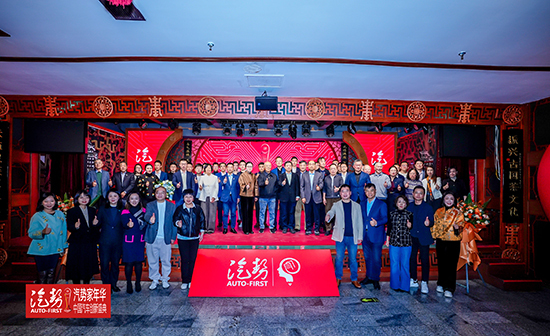
Core Insights - The event "Auto-First Annual Gala and 2025-2026 China Automotive Innovation Festival" highlights the significant transformation in the automotive industry, with a focus on the increasing dominance of Chinese brands and the shift towards intelligent and electric vehicles [1][3][35] Industry Overview - By 2025, China's automotive sales are projected to exceed 34 million units, with the penetration rate of new energy vehicles approaching 50%, indicating a pivotal moment for the industry [3] - The years 2026-2027 are anticipated to be critical for the industry, with leading companies showcasing their scale advantages and competition intensifying [3] Awards and Recognitions - The event recognized various segments, with Lynk & Co 900 winning "Luxury SUV of the Year" and Zeekr 9X awarded "Flagship SUV of the Year," reflecting the strong reputation of Chinese high-end electric brands [7] - SAIC Group was awarded "Car Company of the Year," while the Wuling Hongguang MINI EV was recognized as "National MPV of the Year," showcasing the diversity and innovation within the market [13][21] Market Trends - The penetration rate of new energy vehicles in China is expected to surpass 54% by 2025, with various technological routes such as plug-in hybrids, range extenders, and pure electric vehicles providing consumers with more choices [23] - Traditional joint venture and luxury brands are actively transforming, with models like the GAC Toyota Platinum 3X and Beijing Hyundai EO winning awards, demonstrating their adaptation to the trends of intelligence and electrification [25] Future Outlook - The automotive market in 2026 is described as a battleground for survival, where success will depend on a combination of technology, cost, and channel strength [35] - The industry is encouraged to focus on high-quality development, aiming to transition from being the largest in scale to being the strongest in capability on the global stage [35][36]

向改革要动力:上汽以技术突破重塑增长曲线
Guo Ji Jin Rong Bao· 2026-01-22 04:31
Core Insights - The article highlights the transformation of the Chinese automotive industry, particularly focusing on SAIC Motor Corporation's impressive performance and strategic shift towards high-quality development [2][4][6]. Sales Performance - In 2025, SAIC is projected to sell 4.507 million vehicles, a year-on-year increase of 12.3%, with retail sales reaching 4.67 million units [4]. - The sales of new energy vehicles (NEVs) are expected to reach 1.643 million units, marking a significant year-on-year growth of 33.1% [4]. - Overseas sales are anticipated to be 1.071 million units, reflecting a 3.1% increase compared to the previous year [4]. Profitability - SAIC forecasts a net profit attributable to shareholders of 9 to 11 billion yuan, representing a staggering year-on-year increase of 438% to 558% [6]. - The non-recurring net profit is expected to be between 7 to 8.2 billion yuan, showing a growth of 229% to 251% year-on-year [6]. Strategic Transformation - The company has undergone a strategic overhaul, shifting from a scale expansion model to a value creation approach, focusing on comprehensive reforms to unlock structural benefits [6][7]. - SAIC has broken down traditional departmental barriers, creating a more agile and efficient operational system that enhances user demand responsiveness [7]. Technological Investment - Over the years, SAIC has invested more than 150 billion yuan in electrification and intelligence, resulting in nearly 26,000 effective patents and a robust technical framework covering electric, hybrid, and hydrogen vehicles [11]. - The company has developed advanced technologies such as the DMH engine, achieving a thermal efficiency of 46.3%, and has introduced innovative battery technologies [14]. Product Strategy - SAIC's product strategy emphasizes a user-centric approach, moving from a manufacturing giant to a user-oriented enterprise, with a focus on creating a diverse product lineup that meets various market segments [17]. - The successful launch of models like the Zhiji LS6 and LS9 demonstrates the effectiveness of this strategy, with significant sales growth and market penetration [18]. Ecosystem Collaboration - The company is actively building an ecosystem that enhances user experience through collaborations with tech firms like Huawei and Momenta, integrating cutting-edge technologies into its products [19]. - This collaborative approach aims to provide comprehensive smart mobility solutions, enhancing the overall value proposition for users [19]. Marketing Innovation - SAIC has reformed its marketing strategies to improve direct engagement with consumers, utilizing innovative methods such as pop-up stores and real-time feedback collection to enhance product development [20]. - The marketing efforts for models like the MG4 and Zhiji LS6 focus on translating complex technologies into relatable benefits for consumers, fostering emotional connections with the brand [20]. Future Outlook - Looking ahead, SAIC aims to solidify its position as a leader in the global smart electric vehicle market, continuing to deepen reforms and accelerate technological advancements [21]. - The company's transformation journey serves as a valuable example for traditional automotive giants seeking sustainable growth through self-innovation and user-centric strategies [21].
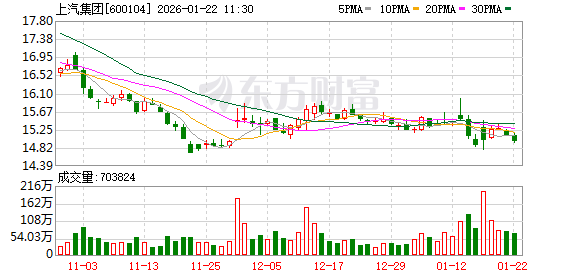
筑底企稳、回升提速,上汽集团2025年净利润同比大增438%-558%
Ju Chao Zi Xun· 2026-01-16 03:29
Core Viewpoint - SAIC Motor Corporation Limited has announced a significant increase in its expected net profit for 2025, projecting a profit of 9 billion to 11 billion yuan, representing a year-on-year growth of 438% to 558% [2] Financial Performance - The company expects a net profit attributable to shareholders, excluding non-recurring gains and losses, to be between 7 billion and 8.2 billion yuan, an increase of 229% to 251% compared to the previous year [2] - In the previous year, the net profit attributable to shareholders was 1.666 billion yuan, with a net profit of -5.409 billion yuan when excluding non-recurring items [2] Business Operations - In 2025, SAIC is projected to achieve wholesale vehicle sales of 4.5075 million units, a year-on-year increase of 12.32% [3] - The company’s core business, particularly its self-owned brands, showed strong performance with sales reaching 2.928 million units, a growth of 21.6% [3] - The company launched new high-end products, including the Buick brand's new energy sub-brand and the first mass-produced model from SAIC Audi [3] New Energy Vehicles - The new energy vehicle segment achieved record sales of 1.643 million units in 2025, marking a year-on-year growth of 33.1% [4] - The company introduced innovative technologies, including the industry’s first mass-produced semi-solid battery vehicle, enhancing safety performance by over 20% compared to industry standards [4] International Market Expansion - SAIC's overseas sales reached 1.071 million units in 2025, a growth of 3.1%, with a new global strategy focusing on both global and local markets [5] - The European market saw significant growth, with MG sales exceeding 300,000 units, a nearly 30% increase, while sales in India and Thailand also showed positive growth [5] - The company has established a presence in over 170 countries and regions, with cumulative overseas sales surpassing 6 million units [5]
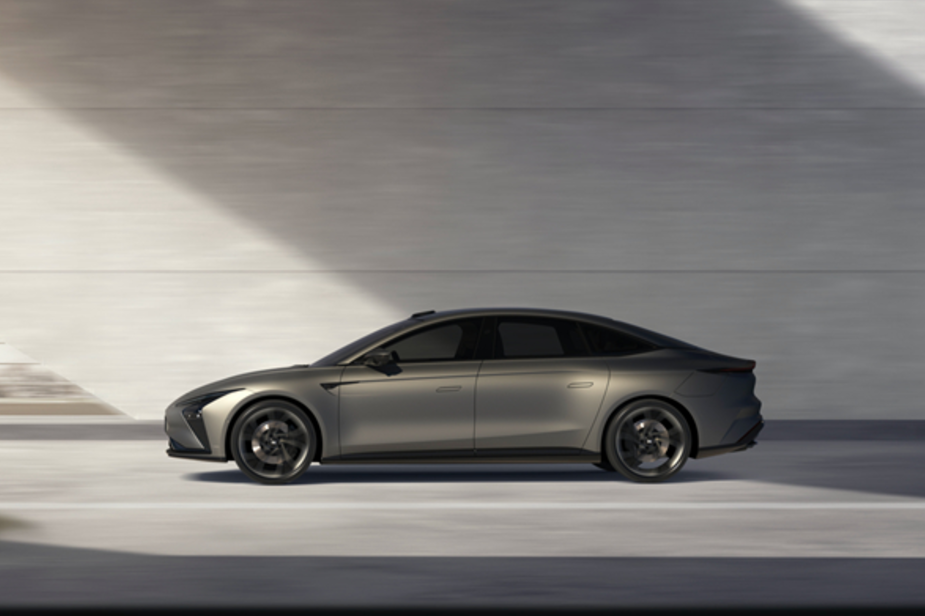
万马奔腾迎春来:上汽2025的体系破局与价值重估
Xin Lang Cai Jing· 2026-01-13 11:33
Core Insights - In 2025, SAIC Motor Corporation achieved significant growth, selling 4.507 million vehicles, a 12.3% increase year-on-year, and maintaining its position as the leading player in the domestic automotive industry [1][28] - A notable internal transformation occurred, with sales of self-owned brands reaching 2.928 million units, a substantial 21.6% increase, marking a historic high of 65% in total sales share [3][28] - The company's strategic focus on self-owned brand development and technological breakthroughs in smart electric vehicles is validated by market performance, indicating a successful transition from joint ventures to self-owned brands [5][30] Market Recognition - SAIC Motor's return to the SSE 50 Index in 2025 signifies a re-evaluation of its growth logic and intrinsic value by the capital market, reflecting a shift in focus from traditional manufacturing scale to sustainable high-quality development potential [6][30] - The return to the SSE 50 is seen as a "trust ticket" for future expectations, confirming that SAIC has successfully navigated its transformation [6][30] User Engagement and Product Innovation - The company is set to welcome its 100 millionth user in 2026, marking a significant milestone in its user-centric approach [7][31] - SAIC showcased a "cluster of blockbuster" products in 2025, demonstrating its capability to create star products across various market segments [7][31] Brand Highlights - The launch of the new generation of Zhiji LS6, featuring the "Star Super Range System" with a class-leading range of 1508 km, exemplifies SAIC's ability to establish a high-end intelligent electric brand [8][34] - The MG4, launched in August 2025, achieved over 10,000 deliveries for four consecutive months, driven by innovative technologies and a strong marketing strategy [11][35] - The Roewe M7 DMH, equipped with the latest DMH 6.0 hybrid system, addresses key consumer pain points with impressive range and fuel efficiency, solidifying its reputation as the "King of Family Cars" [14][38] - The launch of the SAIC Shangjie H5, developed in collaboration with Huawei, showcases a successful integration of smart travel solutions and manufacturing quality [17][41] Systematic Support for Innovation - SAIC's ability to produce multiple successful brands simultaneously is attributed to a robust systemic support structure that facilitates the "batch incubation of blockbusters" [20][44] - The company's comprehensive reform strategy aims to integrate management across passenger and commercial vehicle sectors, enhancing resource allocation and market responsiveness [21][45] - A focus on technology-driven and user-oriented product development has led to significant R&D investments, resulting in products with distinct technological features [23][47] Strategic Partnerships and Global Expansion - SAIC's strategic partnerships with leading tech companies like Huawei and OPPO enhance its technological capabilities and address gaps in smart vehicle features [24][48] - The company's global strategy has evolved to include localized R&D, production, and marketing, expanding its market reach and potential for blockbuster products [25][49] Future Outlook - SAIC's transformation serves as a model for upgrading traditional manufacturing in China, emphasizing strategic determination, technological resilience, ecological collaboration, and organizational vitality [26][50] - The company is positioned to lead the automotive industry towards a new phase of productivity, transitioning from scale leadership to quality leadership [26][50]
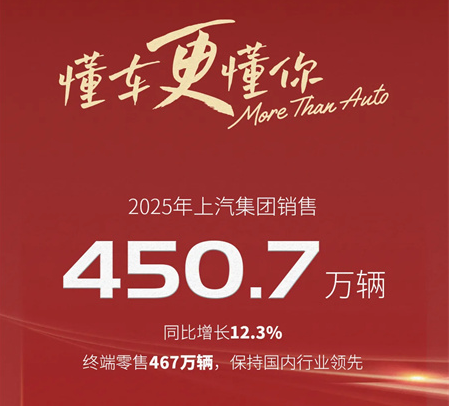
锚定研发与全球化双主线 2025年上汽集团自主品牌销量占比首超65%
Zhong Guo Zheng Quan Bao· 2026-01-08 22:01
Core Viewpoint - In 2025, SAIC Motor Corporation achieved robust growth amidst a challenging automotive market, demonstrating a successful structural transformation towards smart and autonomous vehicles, serving as a reference for traditional automakers' upgrades [1][4]. Group 1: Sales Performance - In 2025, SAIC Motor's total vehicle sales reached 4.507 million units, a year-on-year increase of 12.3%, with retail sales exceeding wholesale, indicating a healthy market supply-demand structure [1]. - The company's revenue for the first three quarters was 468.99 billion yuan, with a net profit attributable to shareholders of 8.101 billion yuan, reflecting year-on-year growth of 9% and 17.3% respectively [1]. - The sales of SAIC's self-owned brands reached 2.928 million units, a 21.6% increase, with their share of total sales rising from 60% in 2024 to 65% in 2025 [2]. Group 2: Brand and Product Development - The growth of self-owned brands was driven by a collaborative effort across the brand matrix, with SAIC's Roewe and MG brands seeing domestic sales increase by 245.3% [2]. - MG brand's sales in Europe reached 300,000 units, a nearly 30% increase, maintaining its position as the top-selling Chinese automotive brand in Europe for 11 consecutive years [2]. - The high-end brand, Zhiji Auto, achieved sales of 81,000 units, a 23.68% increase, with its LS6 model quickly gaining popularity [2]. Group 3: Joint Venture Transformation - SAIC Volkswagen's terminal sales reached 1.06 million units, with a month-on-month increase of 10.9% in December 2025, and electric models accounting for 15% of total sales [3]. - Despite a 16.5% decline in annual sales for SAIC General Motors, the company maintained profitability for five consecutive quarters through product structure optimization [3]. Group 4: International Expansion - SAIC's overseas sales reached 1.071 million units, a 3.1% increase, with self-owned brands accounting for 75% of this figure, highlighting the strategic value of localized operations [3]. - The company’s factories in Thailand and Indonesia are steadily releasing a combined capacity of 500,000 units per year, while the Mexican factory is strategically entering the North American market [3]. Group 5: Technological Innovation - SAIC's growth is attributed to long-term investments in R&D, with over 150 billion yuan invested in electric and intelligent technology, resulting in nearly 26,000 effective patents [4]. - The MG4 semi-solid battery version achieved over 75,000 orders, while the Zhiji LS9 set a new record for range with 1,508 kilometers [4]. - The company has established a complete technical system covering three vehicle platforms and seven technology bases, enhancing its competitive edge [4]. Group 6: Systemic Transformation - SAIC has restructured its passenger vehicle segment to break down barriers between various business units, improving market responsiveness [5]. - The company is focusing on strengthening its self-owned brand base, expanding globally, and building core technological barriers [5]. - Future prospects include the mass production of solid-state batteries and advanced autonomous driving technologies, which are expected to enhance SAIC's global industry influence [5].
2025年上汽集团自主品牌销量占比首超65%
Zhong Guo Zheng Quan Bao· 2026-01-08 20:50
Core Insights - In 2025, SAIC Motor Corporation achieved a total vehicle sales of 4.507 million units, representing a year-on-year growth of 12.3%, with a healthy market supply-demand structure [1] - The company's revenue for the first three quarters reached 468.99 billion yuan, and net profit attributable to shareholders was 8.101 billion yuan, reflecting year-on-year increases of 9% and 17.3% respectively [1] - The shift towards self-owned brands is evident, with self-owned brand sales reaching 2.928 million units, a 21.6% increase, and their share of total sales rising from 60% in 2024 to 65% in 2025 [1][2] Business Structure and Performance - The growth of self-owned brands is driven by a collaborative effort across the entire brand matrix, with significant increases in sales for the Roewe and MG brands, which saw domestic sales rise by 245.3% [2] - The high-end brand, Zhiji Auto, achieved sales of 81,000 units, a growth of 23.68%, with the LS6 model becoming a representative product in the 200,000 yuan intelligent SUV market [2] - SAIC-GM-Wuling maintained a solid market presence with sales of 1.635 million units, and its new energy vehicles surpassed 1 million units for the first time [2] Overseas Market Expansion - In 2025, SAIC's overseas sales reached 1.071 million units, a year-on-year increase of 3.1%, with self-owned brands accounting for 75% of this figure [3] - The company has established a comprehensive strategy of "local R&D + local production + local operation," with factories in Thailand and Indonesia steadily releasing a combined capacity of 500,000 units per year [3] Technological and Systematic Transformation - The growth in key metrics is attributed to long-term investments in R&D, with over 150 billion yuan invested in electric and intelligent technology, resulting in nearly 26,000 effective patents [3][4] - The MG4 semi-solid state version has achieved over 75,000 orders, while the Zhiji LS9 boasts a record range of 1,508 kilometers [4] - The company has enhanced its core component capabilities through strategic investments exceeding 18 billion yuan, focusing on critical supply chain segments [4] Systemic Changes and Future Outlook - SAIC has restructured its passenger vehicle segment to enhance market responsiveness, leading to successful launches of new models [5][6] - The company aims to strengthen its domestic market base, expand globally, and build core competitive advantages through ongoing technological advancements and local production capacity [6]
上汽集团2025年销量450.7万辆 同比增长12.3%
Yang Zi Wan Bao Wang· 2026-01-07 13:50
Core Insights - SAIC Motor Corporation's 2025 operational results show a total vehicle sales of 4.507 million units, a year-on-year increase of 12.3%, with retail sales reaching 4.67 million units, maintaining industry leadership in China [1][5] - The company's sales of self-owned brands exceeded 2.928 million units, marking a significant year-on-year growth of 21.6%, while new energy vehicle sales reached 1.643 million units, a record high with a growth rate of 33.1% [1][5] Group 1: Innovation and Technology - Innovation is identified as the core engine for industrial transformation and a fundamental strength for companies to navigate through cycles [6] - The shift in the Chinese automotive market from price competition to value competition emphasizes the importance of mastering core technologies for development [6] - SAIC's growth is attributed to its commitment to technological innovation and continuous investment, exemplified by the successful launch of the MG4 semi-solid state battery and the DMH 6.0 hybrid system [10] Group 2: Ecosystem Collaboration - Ecosystem collaboration is deemed essential for modern industrial development and a key pathway to activate innovation [11] - SAIC's strategy of "equal rights-driven advancement, co-creating a better travel experience" fosters a diverse collaborative industrial ecosystem, enhancing high-quality development [11] - Collaborations with companies like Huawei and OPPO have led to innovative products that enhance user experience and facilitate rapid application of cutting-edge technologies [13] Group 3: Global Expansion - Globalization is crucial for expanding development space and signifies the Chinese automotive industry's entry into the global market [18] - SAIC's overseas sales reached 1.071 million units in 2025, reflecting a year-on-year growth of 3.1%, with cumulative sales surpassing 6 million units [20] - The company's Glocal strategy aims to deepen international market penetration, transitioning from product export to value chain upgrades, showcasing the global competitiveness of Chinese automotive brands [20]
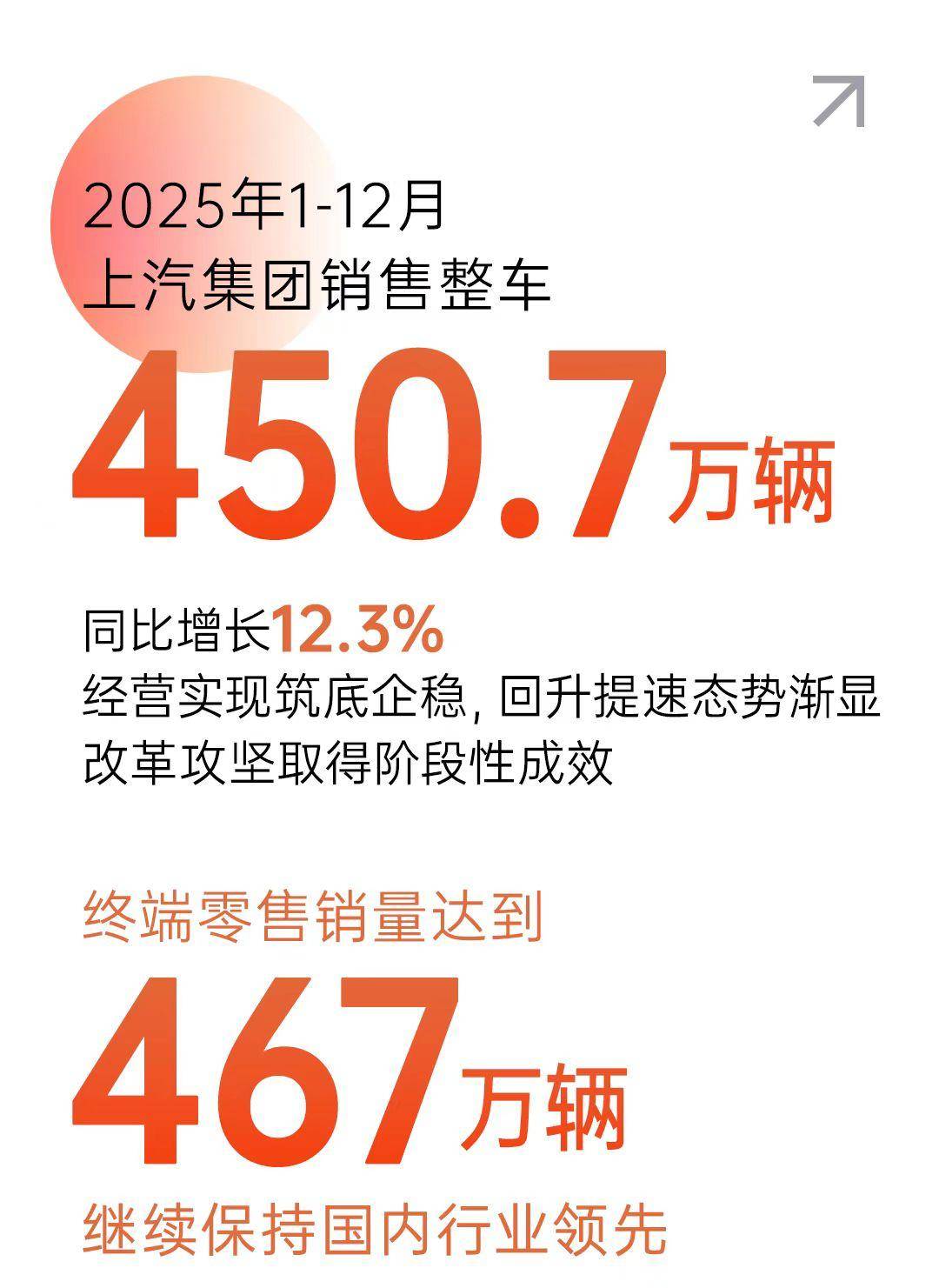
拆解上汽集团2025年答卷:改革攻坚驱动450.7万辆销量 自主品牌占比65%成增长引擎
Zhong Guo Jing Ying Bao· 2026-01-05 12:56
Core Insights - In 2025, SAIC Motor Corporation achieved significant growth, with total vehicle sales reaching 4.507 million units, a year-on-year increase of 12.3%, and retail sales hitting 4.67 million units, maintaining its leading position in the domestic market [2][3]. Group 1: Business Performance - The growth in sales was driven by the collaboration across multiple business segments, including independent brands, joint ventures, and overseas markets, leading to double-digit sales growth [3]. - The independent brand segment saw sales of 2.928 million units, a 21.6% increase, accounting for 65% of total sales, up 5 percentage points from 2024 [4][5]. - The joint venture segment is undergoing transformation, with new high-end electric vehicle brands launched, such as Buick's "至境" and Audi's E5 Sportback, enhancing product offerings [5]. Group 2: Overseas Expansion - SAIC Motor launched its overseas strategy 3.0, focusing on a "Glocal" approach, which emphasizes local ecosystem development and global brand presence, resulting in overseas sales of 1.071 million units, a 3.1% increase [6]. - In Europe, MG sales exceeded 300,000 units, marking a nearly 30% increase, while in India and Thailand, sales also saw significant growth [6]. Group 3: Technological Innovation - The company is committed to innovation, launching over 20 competitive new products and collaborating with tech partners like Huawei and OPPO to enhance smart mobility solutions [7][9]. - In 2025, sales of new energy vehicles reached 1.643 million units, a record high with a 33.1% increase, positioning the company among industry leaders [7][8]. Group 4: Strategic Vision - Looking ahead to 2026, SAIC Motor aims to deepen reforms, focusing on smart and electric vehicle development, and enhancing core competitiveness while building a global, efficient industrial ecosystem [10]. - The company emphasizes user-centric development, aiming to integrate user feedback into all processes from R&D to service, and plans to welcome its 100 millionth user in 2026 [10].