蒙牛牛奶

Search documents
冬奥会|竞技场外,它们也为中国赢下一块“金牌”
Bei Jing Ri Bao Ke Hu Duan· 2026-02-19 13:10
Core Insights - The article highlights the significant presence and contributions of Chinese companies at the Milan Winter Olympics, showcasing their impact across various sectors from athlete support to broadcasting technology [1][4][7]. Group 1: Athlete Experience and Engagement - The introduction of an AI-powered badge exchange station by Alibaba enhances the traditional badge swapping experience for athletes, combining technology with cultural practices [2]. - Athletes can instantly connect with family and friends post-competition through TCL technology, enhancing emotional engagement during the event [2][4]. - The use of 15 FPV drones for broadcasting provides immersive viewing experiences, allowing audiences to appreciate the dynamics of the competitions [3][4]. Group 2: Broadcasting and Technology - The integration of advanced technologies like "bullet time" and "time slice" effects revolutionizes the viewing experience, allowing for real-time analysis and enhanced visual appeal [4]. - Alibaba's AI technology significantly reduces the time required for post-production, enabling live generation of high-quality replays, which improves operational efficiency for broadcasters [4]. Group 3: Transportation and Logistics - The transportation logistics for the Winter Olympics are supported by 68 electric buses from Yutong, designed for optimal performance in cold conditions, ensuring efficient movement across the widely dispersed venues [5][6]. - These buses will continue to serve the local public transport system post-Olympics, contributing to sustainable urban mobility [6]. Group 4: Brand Presence and Influence - Chinese brands have a prominent presence at the opening ceremony, with a significant number of national teams wearing outfits from Chinese companies, reflecting the growing global influence of Chinese manufacturing [7]. - The participation of Chinese companies in various roles at the Olympics demonstrates a shift from mere production to innovation and quality, enhancing the global perception of "Made in China" [7].
从年货大街到春运暖途,大润发联合蒙牛诠释品牌温度
Yang Zi Wan Bao Wang· 2026-02-02 04:35
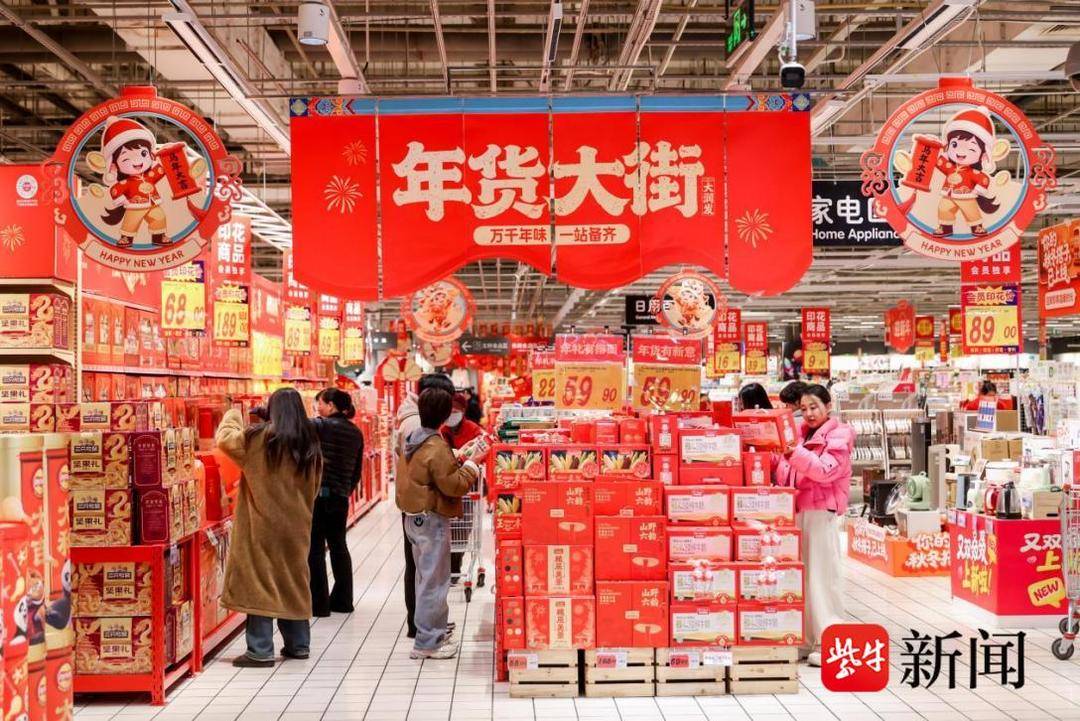
Group 1 - The core initiative is a collaboration between retail brand RT-Mart and dairy brand Mengniu, launching a special campaign called "Spring Festival Return Journey Gifts" to warm the journey of returning home for consumers [1][2] - Starting from February 1, 2026, consumers can exchange their transportation tickets from Shanghai for a unique "Homecoming Gift Package" at designated RT-Mart stores, which includes Mengniu milk and selected butterfly pastries [1] - RT-Mart has also fully launched its New Year goods season, offering customized gift boxes and a variety of products including snacks, seafood, and beverages to meet consumer needs for festive purchases [2] Group 2 - The collaboration with Mengniu represents a practical implementation of RT-Mart's brand youthfulness strategy, aiming to refresh its brand image by engaging consumers emotionally through innovative interactions [2] - By linking the "ticket" as an emotional carrier and designing interactive ways to "unlock" the gift package, RT-Mart is transforming from a traditional retail space into a modern lifestyle space that creates surprises and participates in significant moments [2]


写着写着就没了!好丽友等多个零食品牌突遭下架,从独有品牌到大众品牌:山姆的会员“特权”缩水了?
Mei Ri Jing Ji Xin Wen· 2025-07-15 14:31
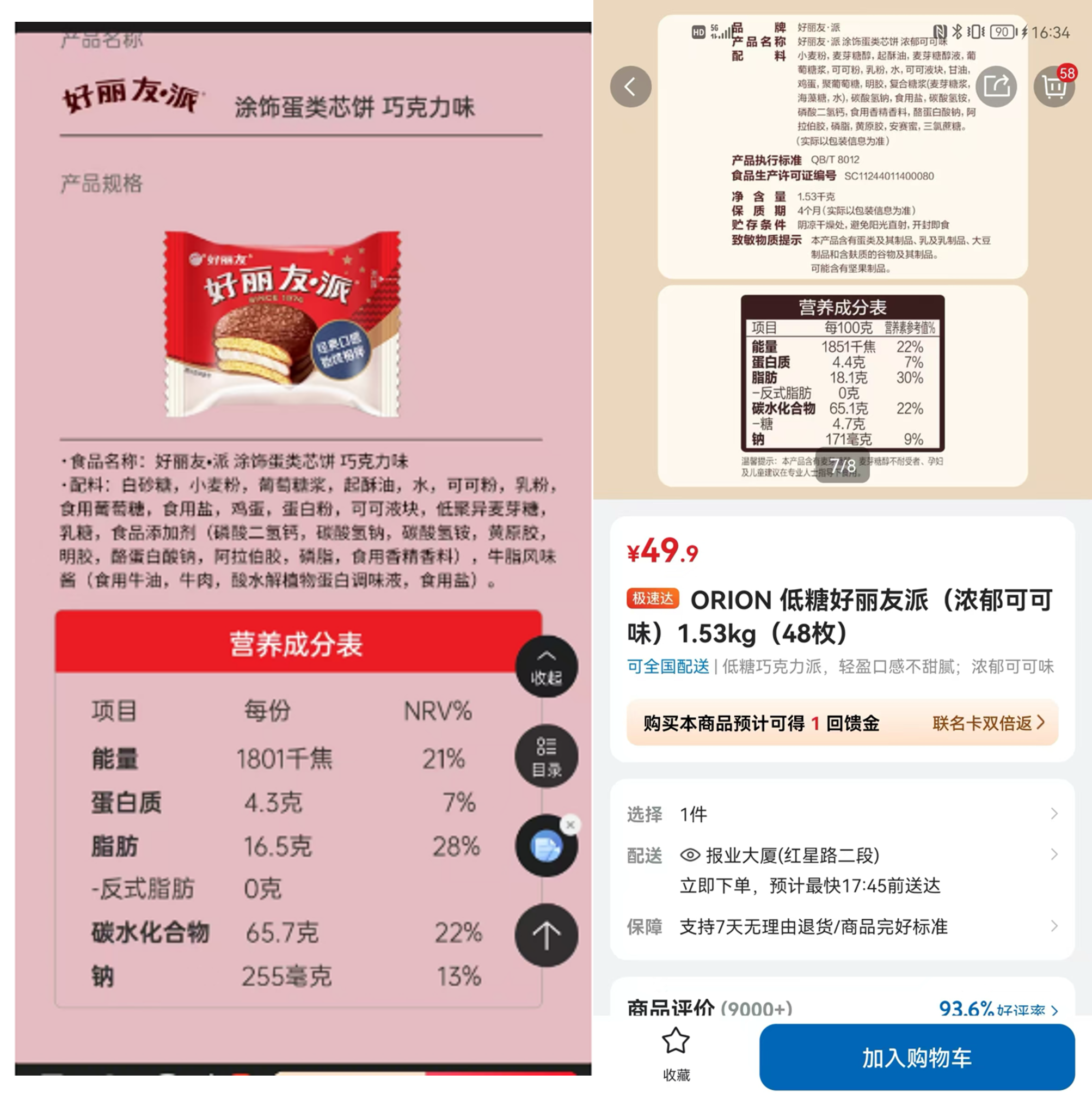
Core Viewpoint - Sam's Club is facing a trust crisis as it introduces common brands like Haoliyou and Weilong, which has led to dissatisfaction among members who expect premium products for their membership fees [1][4][12]. Group 1: Product Controversies - The introduction of "low-sugar" Haoliyou pie has sparked debate, with members questioning the need for such products that are readily available in regular supermarkets [4][12]. - The "special supply" version of Haoliyou pie claims to reduce sugar by 80% and increase cocoa content by 30%, but the differences from the classic version are not significant [4][8]. - The pie's ingredient list includes several artificial sweeteners, leading to consumer feedback that it remains too sweet despite the reduced sugar content [8][9]. Group 2: Brand Positioning and Changes - Brands like Weilong and Xu Fu Ji have altered their product presentations for Sam's Club, with unique packaging and formulations that differ from their standard offerings [12][23]. - The "panpan" branding for products from Panpan Food has been criticized for misleading consumers into thinking they are imported goods due to the upscale packaging [25][27]. - Sam's Club has been noted for its strategy of introducing popular brands with modified packaging, which may not always align with the premium image expected by its members [30][33]. Group 3: Sales and Market Strategy - As of April 2023, Sam's Club has 54 locations in China, with plans to exceed 60 by the end of the year, indicating a strong growth trajectory [33]. - Three stores have already surpassed annual sales of $500 million (approximately 3.67 billion RMB), with expectations for this number to increase significantly by 2025 [33].

内需平稳复苏,新消费急先锋
2025-04-30 02:08
Summary of Key Points from Conference Call Records Industry Overview Alcohol Industry - The liquor industry is showing a stable recovery with major companies like Moutai setting a 9% revenue growth target, Wuliangye aligning with macro indicators, and Luzhou Laojiao emphasizing steady growth. The supply-side pressure in the industry has significantly eased, and channel feedback is expected to improve [1][3]. - Moutai and Wuliangye have reported double-digit growth, slightly exceeding market expectations, while Luzhou Laojiao's cash flow performance is better than its apparent data [3]. Beer Industry - The beer sector performed well in Q1 2025, with small breweries like Zhujiang and Yanjing showing outstanding results. Qingdao Beer and Chongqing Beer met expectations, and structural improvements are noted despite pressure on ton prices [4][5]. Beverage Industry - The beverage sector continues to trend towards health and functionality, with Dongpeng Beverage showing high growth and new products like health water from Lululemon gaining attention. Nongfu Spring is also highlighted as a company to watch [6]. Dairy Industry - The dairy sector is experiencing supply-side adjustments, with Yili's Q1 report showing positive revenue growth. The improvement in demand is expected to resonate with the raw milk cycle, while Mengniu is noted for its defensive attributes [7]. Snack Industry - The snack sector is exhibiting a new consumption growth trend, with companies like Weilong and Yuyou revising their forecasts upward. Yuyou has entered new channels, and Ganyuan's overseas market prospects for Q2 are promising [8]. Textile and Apparel Industry - The textile and apparel industry is showing a trend of low performance followed by high recovery, particularly in sports apparel. Anta Sports is effectively managing multiple brands, while home textile companies like Luolai and Mercury Home Textile are seen as defensive investments [11][12]. Key Recommendations - **Liquor**: Recommended stocks include Moutai, Luzhou Laojiao, and regional leaders like Fenjiu and Wuliangye [10]. - **Beer**: Focus on Qingdao Beer and its strong dividend yield [5]. - **Dairy**: Yili and Mengniu are highlighted as key players [10]. - **Beverages**: Nongfu Spring and Lululemon are recommended [10]. - **Snacks**: Weilong, Yuyou, and Ganyuan are noted for their growth potential [10]. - **Textiles**: Anta Sports and home textile brands like Luolai are recommended for their defensive qualities [11][12]. Additional Insights - The pig farming sector is currently valued highly, with pig prices remaining elevated, but the breeding sector's outlook is cautious due to limited capacity recovery. Key companies to watch include Muyuan, Shennong Group, and Dekang [2][20]. - The poultry industry, particularly yellow feathered chickens, is facing challenges with prices down from last year, but companies like Lihua and Wens continue to expand [21]. - The retail sector is experiencing rapid growth, especially in the snack segment, with companies like Liangpinpuzi expected to open numerous new stores [33][34]. - The home appliance industry is focusing on tariff adjustments and new consumption trends, with companies like Vanward Electric and TCL Electronics showing strong performance [37][38].





2025年食品饮料行业策略:年胜一年,内外兼修方得大成之道
LIANCHU SECURITIES· 2025-04-14 02:21
Group 1 - The report highlights that in 2024, the total demand in the food and beverage industry is under pressure, with a year-on-year growth of 3.5% in social retail consumption, reflecting a significant slowdown compared to previous years [3][12] - The report anticipates that the food and beverage sector will see steady progress in 2025, supported by three main factors: increased consumer subsidies, potential valuation recovery, and accelerated industry innovation [3][4] - The report emphasizes that the food and beverage industry is expected to benefit from a combination of internal and external factors, leading to a more resilient market outlook [3][36] Group 2 - The report identifies that the performance of the food and beverage sector has been mixed, with essential goods showing resilience while discretionary spending remains volatile [12][30] - It notes that the liquor segment may see a strategic shift, with a focus on demand cultivation as the key to future growth [4][31] - The report suggests that the condiment sector could benefit from the recovery of the restaurant industry and the acceleration of chain operations, leading to increased market concentration [4][31] Group 3 - The report indicates that the dairy sector is poised for growth driven by strong domestic demand and a focus on product upgrades, presenting opportunities for domestic replacements and demand expansion [4][31] - It highlights that the snack food market remains fragmented, with supply chain advantages becoming more pronounced, and emphasizes the importance of revenue growth following scale expansion [4][31] - The beer segment is noted for its stable production but faces pressure on sales volume and pricing, with a focus on innovation and structural upgrades [4][31] Group 4 - The report discusses the overall market performance, indicating that the food and beverage sector experienced a cumulative decline of 8% in 2024, ranking it among the lowest in the industry [23][30] - It mentions that the food and beverage sector's revenue growth has been primarily driven by supply-side optimization, with demand remaining weak [30][31] - The report provides insights into the performance of various sub-sectors, with soft drinks and snacks showing double-digit growth, while liquor and processed foods faced declines [30][31]