银河L7

Search documents
吉利汽车系列之十八:2025业绩显著增长,出海、高端化战略持续深化【国信汽车】
车中旭霞· 2026-03-30 08:08AI Processing
2025公司新能源渗透率过半,海外销量42万辆;研发持续迭代 公司2025年新能源销量168.8万辆,渗透率达55.8%;出海42万辆,其中新能源出口12.4万辆,渗透率达29.5%。领克、 极氪、银河三大新能源品牌齐头并进,其中银河位列中国新能源品牌前二。技术迭代方面,2025年公司在辅助驾驶、 智能座舱、新能源三电三大核心技术领域实现突破性进展,全面强化智能电动化竞争力。 2026年深化出海与高端化 吉利汽车系列 车中旭霞 深度报告: 《吉利汽车(00175.HK)-三大改革开启新一轮增长周期》—2025-02-07 《吉利汽车(00175.HK)-4.0时代开启强势周期,模块化架构优势突出》 —2021-10-14 点评报告: 《吉利汽车(00175.HK)系列十八:2025业绩显著增长,出海、高端化战略持续深化》-20260330 《吉利汽车(00175.HK)系列十七:智驾战略叠加新品周期,份额持续提升》-20250327 《吉利汽车(00175.HK)系列十五:智能电混轿车银河L6发布,银河L7销量连续破万》——2023-09-19 《吉利汽车(00175.HK)系列十四:重大事件快评:极氪X重磅 ...



车市上演“三国杀”:谁将登上2026年“一哥”宝座?
经济观察报· 2026-03-09 10:30
Core Viewpoint - The competition among leading Chinese automakers has entered a new phase, with BYD defending its position while SAIC and Geely are aggressively pursuing market share, creating a suspenseful race for the title of the top seller in the domestic market [2][14]. Group 1: Market Dynamics - In early 2026, both SAIC and Geely surpassed BYD in monthly sales for January and February, breaking the previous two-year trend where BYD led the market [2]. - SAIC's sales in 2025 reached 4.387 million units, narrowly losing to BYD's 4.602 million units, indicating a strong competitive resurgence [2]. - Geely's sales in January and February 2026 were 27,000 and 20,600 units respectively, outpacing BYD's 21,000 and 19,000 units, showing a significant recovery in its market position [4]. Group 2: Geely's Performance - Geely's growth is attributed to its strong performance in the new energy vehicle (NEV) sector, with a 19% year-on-year increase in February sales, reaching 117,000 units [4]. - The company's NEV penetration rate exceeded 50% in the first two months of 2026, marking a transition to a "NEV-led" phase [4]. - Geely's overseas exports also surged, with a 138% increase in February, highlighting its strategic expansion in international markets [5]. Group 3: SAIC's Recovery - After a significant decline in 2024, SAIC implemented comprehensive reforms, including restructuring and launching new models, which led to a recovery in sales [8][9]. - In January and February 2026, SAIC sold 32,700 and 26,900 units respectively, achieving a total of 59,700 units, a 6.8% increase year-on-year [9]. - The company aims to regain its position as the market leader through a combination of domestic and international growth strategies [9]. Group 4: BYD's Challenges - BYD, which transitioned to an all-electric model in 2022, has seen its growth rate slow, with a 7.7% increase in 2025 compared to previous years [11]. - In early 2026, BYD faced declining sales, prompting the need for strategic adjustments to maintain its market position [11][12]. - The introduction of new technologies, such as the second-generation blade battery and fast-charging technology, is part of BYD's strategy to counteract competitive pressures [12]. Group 5: Competitive Landscape - The competition among BYD, SAIC, and Geely is characterized by aggressive product launches and international expansion plans, with each company setting ambitious overseas sales targets for 2026 [14]. - BYD aims for 1.3 million units in overseas sales with a growth rate of 24.3%, while SAIC targets 1.5 million units with a 40% growth rate [14]. - Despite their strengths, each company faces challenges, such as BYD's reliance on low-end models and Geely's high-end market struggles, which could impact their competitive positions [15].



零跑C10:03年小姐姐凭眼缘秒定,80后大哥因为颜色玄学买单
车fans· 2025-12-05 00:30
Core Viewpoint - The article discusses the sales performance and customer demographics of the Leap C10 electric vehicle, highlighting its competitive pricing and features in the current market environment [1]. Sales Performance - In October, the store received 39 orders, with 13 units of the C10 sold, indicating a steady demand despite the recent pause in national subsidies [2]. - The store currently has 10 units in stock, with the most popular configuration being the 650悦享版, which has 7 units available, predominantly in black and gray [2][15]. Customer Demographics - The primary customers for the C10 are divided into two groups: middle-aged male customers, typically business owners or private sector employees, who prioritize practicality and cost-effectiveness [3]. - The second group consists of younger female customers, often students or recent graduates, who are more influenced by aesthetics and brand perception [4]. Competitive Analysis - Customers frequently compare the C10 with competitors such as BYD Song PLUS and Deep Blue S07, with battery quality and brand reputation being significant factors in their decision-making process [8][9]. - Older customers express concerns about the Leap brand compared to more established brands like BYD, particularly regarding battery reliability [9]. Pricing and Discounts - The C10 was initially priced firmly upon launch, but by August, discounts of around ¥5,000 became available, with potential total savings reaching nearly ¥20,000 when including government subsidies [15]. - The most popular configuration, the 650悦享版, is priced at ¥125,800 after discounts, with financing options available [16]. Customer Feedback - Common complaints from customers include concerns about battery performance and the vehicle's range, with some attributing these issues to the choice of battery supplier [19]. - Maintenance costs for the C10 are approximately ¥150 for electric models and ¥300-400 for range-extended versions, with service intervals set at 10,000 kilometers or annually [21]. Purchase Incentives - The company offers a trade-in subsidy of ¥4,000 and has recently introduced promotional activities, including a lottery for purchase credits during the National Day period [22].


深蓝接盘现代重庆工厂,闲置汽车产能再迎“接盘”潮
经济观察报· 2025-11-23 07:33
Core Viewpoint - The automotive market is experiencing a significant shift in competitive dynamics, with production capacity transitioning from joint ventures to domestic manufacturers, reflecting a structural surplus in capacity and the implementation of "stock optimization" policies across regions [1][3]. Group 1: Capacity Acquisition and Market Dynamics - Many automotive manufacturers in need of new production capacity are acquiring or managing other manufacturers' factories to supplement their production capabilities, a trend that has become widespread this year [2][3]. - Recent acquisitions include Changan Automobile taking over Beijing Hyundai's Chongqing factory, which has been repurposed for Deep Blue Automotive production, and Geely's acquisition of the former SAIC-GM Beisheng factory in Shenyang for its Galaxy brand [2][3]. - The shift in idle capacity has moved from domestic brands to joint ventures, with companies like Dongfeng acquiring production capacity from Nissan and other joint ventures [3][10]. Group 2: Strategic Goals and Production Capacity - Geely and Changan have set ambitious sales targets of 5 million vehicles by 2030, driving their recent capacity expansions [5][6]. - Changan's production capacity is projected to reach 2.25 million units in 2024, with a utilization rate of 84%, while Geely's capacity is 4.23 million units with a lower utilization rate of 45% due to previous restructuring [7][8]. - Geely's Galaxy brand has seen rapid sales growth, surpassing 1 million units in the first ten months of this year, prompting the company to prepare multiple production bases [7][8]. Group 3: Market Share and Competitive Landscape - The market share of domestic brands has surged from 35.7% in 2020 to 68.7% currently, indicating a significant rise in competitiveness against joint ventures [10]. - Several joint venture companies have exited the market, with factories being repurposed for domestic brands, such as the sale of GAC FCA's Guangzhou factory and the closure of multiple Honda and Nissan plants [10][11]. Group 4: Policy and Asset Optimization - The Chinese government is focusing on optimizing existing assets, with policies aimed at revitalizing idle production capacity, particularly in the context of the transition to electric vehicles [12][13]. - Local governments are actively implementing measures to utilize existing automotive production capacity, as seen in various provinces with specific plans for the automotive industry [12][14].

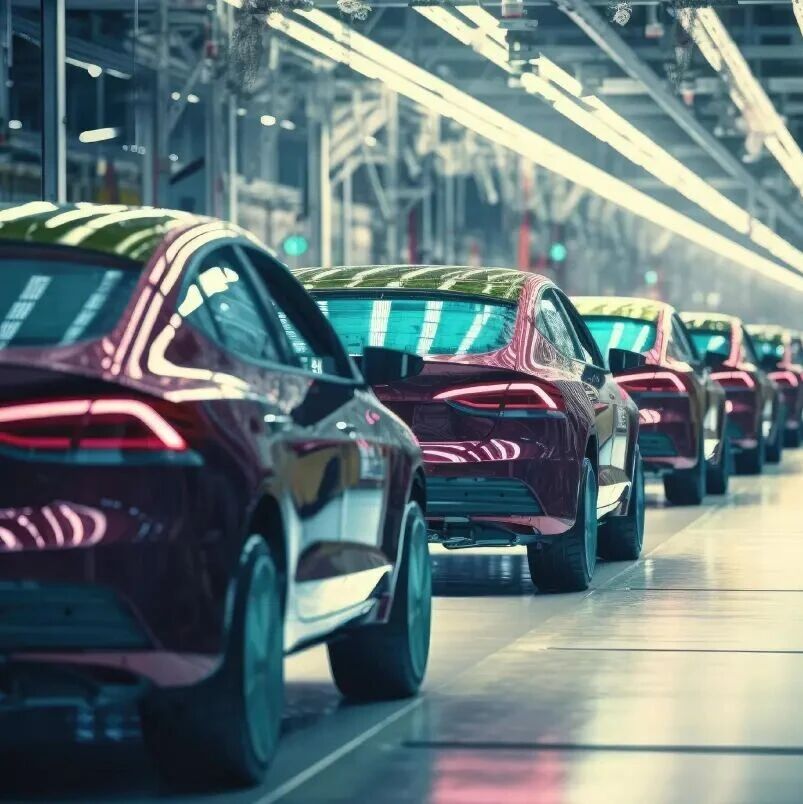
晚点独家丨沈阳原上汽通用工厂改造,吉利将借其缓解银河产能压力
晚点LatePost· 2025-11-03 08:26
Core Insights - Geely Galaxy is experiencing significant sales growth, with nearly 1 million units expected to be sold this year, leading to an optimistic outlook for next year's sales [3][6][9]. Production Capacity and Strategy - The transformation of the former SAIC-GM Beisheng factory in Shenyang is underway to supplement Geely Galaxy's production capacity due to current constraints [4][10]. - Geely's production capacity in China exceeds 3 million units, with over 50% allocated to new energy vehicles [10]. - The company is focusing on internal upgrades and resource reallocation rather than building new factories, as stated by Geely's leadership [13][17]. Sales Performance - In October, Geely Galaxy sold 127,000 vehicles, marking a 101% year-on-year increase and achieving its annual sales target ahead of schedule [6][9]. - The Galaxy series, initially launched as a product line, has seen a resurgence in sales due to competitive pricing and product features, with a projected annual sales of 494,000 units in 2024, an increase of nearly 80% [6][8]. Competitive Positioning - Geely Galaxy's strategy involves competing with BYD's models by offering "affordable prices and superior configurations," exemplified by the Galaxy Star Wish, which has become a best-seller in its segment [8][9]. - The Galaxy series has expanded its product matrix with new models like the Galaxy A7 and M9, which have quickly gained traction in the market [9][12]. International Expansion - Geely's exports of new energy vehicles surged by 214% in the first nine months of the year, with significant growth in Europe and Latin America [15][16]. - The company is adopting a multi-brand strategy in international markets, with plans to establish around 50 stores in the UK by 2025 [16][17]. - Geely is exploring local production options in international markets, including a partnership with Renault in Brazil to utilize existing production capacity [17][18].

宋PLUS DMI:客户对比宋L没相中,喜提宋PLUS不是我卖的
车fans· 2025-06-11 00:29
Core Viewpoint - The article discusses the sales performance and customer preferences for the BYD Song PLUS DMI, highlighting its competitive pricing and market challenges faced against other models like Song L and Galaxy Starship 7 [1][10]. Sales Performance - In a local three-tier city, the dealership sold approximately 130 vehicles last month, with 21 units of Song PLUS sold, indicating a significant interest in this model [2]. - The most popular configuration is the non-intelligent 112KM Honor version, primarily in gray, accounting for about 50% of the sales [2][11]. - Discounts for the non-intelligent version are around 25,000, while the intelligent version sees discounts of about 20,000, reflecting a trend of decreasing prices over the past two months [9]. Customer Demographics - Buyers of the Song PLUS are diverse, primarily using the vehicle for family purposes, with no distinct demographic trends observed [3][18]. - The article mentions a case where a customer initially interested in Song PLUS ended up purchasing from a competing dealership, indicating the competitive nature of the market [5]. Competitive Landscape - The Song PLUS faces stiff competition from models like Song L DMI and Galaxy Starship 7, with the latter gaining more traction among consumers [10]. - The dealership is experiencing intense competition, with sales teams under pressure to outperform each other, leading to a "cutthroat" environment [10]. Customer Preferences and Feedback - The most sought-after configurations are the 112 Honor type, with gray and white being the preferred colors [11]. - The least popular model is the 160KM flagship version, which struggles to sell even with significant discounts [12]. - Customers have expressed dissatisfaction regarding fuel efficiency and tire noise, indicating areas for improvement in the vehicle's performance [18]. Financial Aspects - Maintenance costs for the Song PLUS are estimated to be between 400-500, with the first service required at 5,000 hybrid kilometers or six months [19]. - The article notes that there are various financing options available, including high-interest bank loans with incentives [14]. Additional Considerations - The article mentions that trade-in subsidies are available, with 10,000 for the model and 8,000 for non-model vehicles, which can be combined with national and provincial subsidies [20].
吉利汽车丨2月:新能源持续亮眼 智能化加速布局【民生汽车 崔琰团队】
汽车琰究· 2025-03-02 14:04
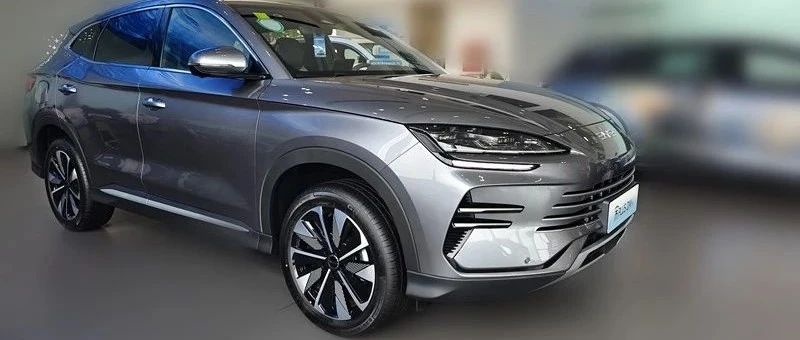
Group 1 - The company reported a total wholesale sales volume of 205,000 units in February, representing a year-on-year increase of 83.9% and a month-on-month decrease of 23.2%. Cumulative sales for January-February reached 472,000 units, up 45.2% year-on-year. The new energy vehicle (NEV) sales in February were 98,433 units, a year-on-year increase of 193.8% and a month-on-month decrease of 18.7%, with a penetration rate of 48.0% [1][2] - The company plans to launch five new NEV models, including two SUVs and three sedans, to strengthen its position in the market segment priced below 200,000 yuan, aiming for a sales target of 1 million units by 2025 [1][2] - The establishment of Zeekr Technology Group, following the acquisition of a 51% stake in Lynk & Co, aims to enhance strategic focus and operational efficiency by integrating internal resources and reducing conflicts [2] Group 2 - The company announced a deep integration with DeepSeek's AI model to optimize its smart vehicle control and interaction systems, with plans to release a comprehensive AI strategy in early March [3] - Revenue projections for 2024-2026 are estimated at 224.78 billion, 289.69 billion, and 338.83 billion yuan, respectively, with net profits expected to be 16.42 billion, 14.10 billion, and 17.45 billion yuan [4] - The company maintains a "recommended" rating, with expected earnings per share (EPS) of 1.63, 1.40, and 1.73 yuan for the years 2024-2026, corresponding to price-to-earnings (P/E) ratios of 10, 12, and 9 times [4]