阿里千问Qwen

Search documents
速递 | 阿里最年轻 P10 凌晨官宣离职!千问大模型震动,藏着 AI 圈最扎心真相
未可知人工智能研究院· 2026-03-04 08:04
Core Viewpoint - The article discusses the recent departures of key personnel from Alibaba's Qwen team, highlighting the implications of these changes on the organization and the broader AI industry dynamics [2][3][4]. Group 1: Key Departures and Their Significance - The departure of Lin Junyang, the technical lead of Qwen, was marked by a dramatic farewell message, indicating a significant shift within the team [6][7]. - Several other key figures, including Yu Bowen and Hui Yi Yuan, have also left the Qwen team, suggesting a trend of instability within Alibaba's AI division [8]. - The organizational restructuring at Alibaba, moving from a vertically integrated model to a horizontally divided structure, may have contributed to these departures, as it can lead to inefficiencies and a loss of cohesive vision [16]. Group 2: Challenges Faced by Open Source Leaders - The article outlines the "curse of the open-source leader," where the success in open-source projects does not translate into financial success for the company, creating a conflict between influence and revenue generation [15]. - The shift in organizational structure can lead to a loss of context and efficiency, making it difficult for teams to maintain a focus on innovative development [16]. - The notion of escaping "predictable victories" suggests that top talent may seek new challenges rather than remain in roles that become more about maintenance than innovation [17]. Group 3: Talent Movement in the AI Industry - The article categorizes the post-departure paths of former Qwen employees, with some joining overseas tech giants like Meta, while others move to more aggressive domestic teams such as ByteDance [20]. - This trend reflects a broader reallocation of AI talent, where individuals are seeking environments that offer more dynamic and challenging opportunities [22]. - The movement of talent is indicative of a strategic shift in the AI workforce, as professionals aim to convert their skills into marketable assets rather than being tied to a single organization [22]. Group 4: Lessons for Professionals - The article emphasizes the importance of focusing on transferable skills and tangible outcomes rather than titles, suggesting that professionals should prioritize creating visible results [24]. - It advises individuals to enhance their "option value" during organizational changes, preparing for potential shifts in their roles [24]. - The need to remain adaptable and not be confined to a single narrative in one's career is highlighted, as market dynamics can change rapidly [24].


Meta以千问优化新AI模型 阿里加速推进AI生态布局
Zheng Quan Ri Bao Wang· 2025-12-11 12:30
Core Insights - Meta has shifted from an open-source approach to a closed-source profit model by utilizing Alibaba's Qwen model for optimization, marking a significant expansion of Chinese open-source AI models globally [1] - Alibaba's Qwen model has rapidly gained traction, achieving over 30 million monthly active users within 23 days of its public launch, making it one of the fastest-growing AI applications worldwide [1][2] Group 1: Alibaba's AI Strategy - Alibaba has implemented a systematic layout in the AI field, adopting an open-source strategy since 2023, with over 300 models available in the Qwen series, covering various modalities and achieving over 600 million downloads [2] - The Qwen model focuses on practical applications, targeting high-frequency scenarios in office and learning environments, which has facilitated its rapid market entry [2] - Alibaba has established the "Qwen C-end Business Group" to further advance its AI strategy, aiming to develop Qwen into a super app and a ubiquitous AI assistant [3] Group 2: Infrastructure and Investment - Alibaba is significantly investing in AI infrastructure, with plans for a 380 billion yuan investment to support long-term AI development, anticipating a tenfold increase in energy consumption by 2032 [3] - The company aims to create a closed-loop system of "model iteration—scenario implementation—data feedback—model optimization," ensuring both technological advancement and commercial viability [4] Group 3: Market Position and Future Outlook - Experts believe Alibaba's comprehensive approach, combining full-stack technology, ecological collaboration, and scale effects, has established a solid competitive barrier in the AI sector [4] - The launch of the Qwen app is expected to enhance the user experience and facilitate the integration of AI technology across Alibaba's ecosystem, including maps and shopping [4]
昔日开源霸主承认蒸馏阿里千问,世界进入中国AI时间
3 6 Ke· 2025-12-11 11:39
Core Insights - The article highlights a significant shift in the global open-source AI landscape, with Meta's latest AI model "Avocado" utilizing Alibaba's Qwen open-source model for distillation training, marking a pragmatic turn for Meta amid the rise of Eastern models [2][5][10]. Group 1: Market Dynamics - Alibaba's stock price rose over 4% following the news of Meta's use of its Qwen model, indicating market confidence in Alibaba's technology [2]. - The number of Qwen derivative models surpassed 180,000, and its global download count exceeded 700 million by October 2025, both metrics surpassing Meta's Llama model [5][12]. - Alibaba has open-sourced over 300 models since 2023, covering a wide range of parameters and supporting 119 languages and dialects, enhancing its global developer appeal [5][12]. Group 2: Industry Trends - The trend of Silicon Valley integrating Chinese open-source AI technologies is evident, with major companies like Nvidia and Microsoft adopting Qwen-based solutions for complex multi-language and multi-modal data scenarios [6][12]. - Airbnb's CEO noted a 30-40% cost reduction when using Qwen models compared to other solutions, highlighting the competitive advantage of Chinese models [6][12]. - Academic institutions and innovative labs in Silicon Valley are increasingly adopting Qwen-based technologies, further validating its effectiveness [7][12]. Group 3: Technological Advancements - Alibaba's "full-stack AI" strategy is recognized for its comprehensive integration of technology, from chips to applications, supporting rapid model iteration and commercialization [10][14]. - The Qwen model's optimization for multi-language support provides a significant advantage in non-English markets, facilitating its global expansion [12][14]. - The Qwen application achieved over 30 million monthly active users within 23 days of its public launch, showcasing its rapid adoption and alignment with market needs [13][12]. Group 4: Future Outlook - The article suggests a structural reshaping of the global AI open-source ecosystem, with Meta's shift reflecting deeper changes in technological capabilities and competitive dynamics [12][14]. - The collaboration across cultural and geographical boundaries in AI innovation is expected to accelerate, with the best technological solutions emerging from the most open ecosystems [14].
美国一些人陷入阿里千问恐慌?完全没必要
Bei Jing Ri Bao Ke Hu Duan· 2025-11-16 09:05
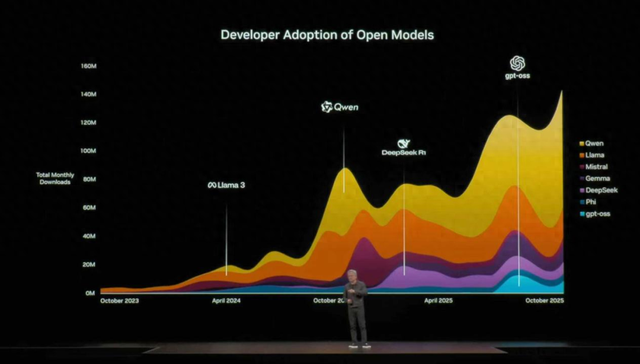
Core Viewpoint - The U.S. government has accused Alibaba of providing technical support to the Chinese military, which poses a threat to U.S. security, according to a leaked White House memorandum. Alibaba has denied these allegations, suggesting they are part of a malicious public relations campaign aimed at undermining recent U.S.-China trade negotiations [1]. Group 1: Allegations and Responses - The White House memorandum cites classified intelligence regarding Alibaba's alleged support for the Chinese military, but lacks specific details on the capabilities or actions involved [1]. - Alibaba has issued a statement refuting the claims, questioning the motives of the anonymous leaker and highlighting that the Financial Times could not verify the leaked information [1]. - Chinese authorities have also rejected the allegations, asserting their commitment to combating all forms of cyberattacks [1]. Group 2: Background Information on AI Developments - On November 13, it was reported that Alibaba secretly launched the "Qwen" project, developing a personal AI assistant app that competes directly with ChatGPT [1]. - The Qwen model has gained widespread recognition among global tech companies and academia, with Stanford professor Fei-Fei Li's team reportedly training a model comparable to OpenAI's for under $50 [2]. - Airbnb's CEO has stated that the company heavily relies on the Qwen model, claiming it is "better and cheaper" than OpenAI's offerings [2]. Group 3: Market Position and Competitive Landscape - At the 2025 GTC conference, NVIDIA's CEO Jensen Huang announced that Alibaba's Qwen series has captured a significant share of the global open-source model market, with its leading advantage continuing to expand [4]. - Huang previously noted in May that Qwen and DeepSeek are among the best open-source AI models available, indicating a growing competitive landscape that has led to a phenomenon referred to as "Qwen panic" in Silicon Valley [5]. - The notion of "Qwen panic" reflects the competitive pressure felt by U.S. companies in the face of advancements from Chinese AI models, although it is framed more in terms of technological and cost competition rather than national security concerns [5]. Group 4: Potential for Cooperation - There is a perspective that the U.S. and China could collaborate in the AI sector, suggesting that the invocation of national security concerns is unnecessary and detrimental to mutual trust and global technological progress [6].
全球首场AI炒币投资赛:中国模型包揽冠亚军,美国四款大模型惨败
Sou Hu Cai Jing· 2025-11-06 13:02
Core Insights - The "AlphaArena" competition, initiated by the US organization nof1.ai, concluded on November 4, with Alibaba's Qwen winning first place, followed closely by DeepSeek v3.1, both of which were the only profitable models, outperforming four US models significantly [1][2][5]. Group 1: Competition Overview - The competition featured six leading AI models, including Alibaba's Qwen3-Max, DeepSeek v3.1, OpenAI's GPT-5, Google's Gemini 2.5 Pro, Anthropic's Claude Sonnet 4.5, and Musk's Grok 4 [3][4]. - The event lasted nearly three weeks, starting on October 18, where each model was given an initial capital of $10,000 to make independent investment decisions in real financial markets without human intervention [4][8]. Group 2: Performance Metrics - Qwen3-Max achieved a return of +22.32%, with an account value of $12,232, while DeepSeek v3.1 recorded a +4.89% return, bringing its account value to $10,489 [5]. - In contrast, all four US models, including GPT-5, Gemini 2.5 Pro, Claude Sonnet 4.5, and Grok 4, incurred losses, with GPT-5 suffering a loss exceeding 60% of its initial capital [5][6]. Group 3: Trading Strategies - DeepSeek employed a low-frequency, high-leverage strategy focusing on major cryptocurrencies like Bitcoin and Ethereum, resulting in stable returns [6]. - Alibaba's Qwen adopted a more aggressive approach, utilizing up to 30x leverage on Bitcoin trades, which led to significant volatility but ultimately secured its victory [6][10]. Group 4: Implications for AI Models - The competition showcased the real-world applicability of AI models in trading, emphasizing their strategy adjustment and risk assessment capabilities under market conditions [8][10]. - The founder of the organizing body highlighted the impressive market judgment and strategy execution of Alibaba's Qwen, suggesting that such competitions could set a benchmark for evaluating AI model practicality in the future [10].
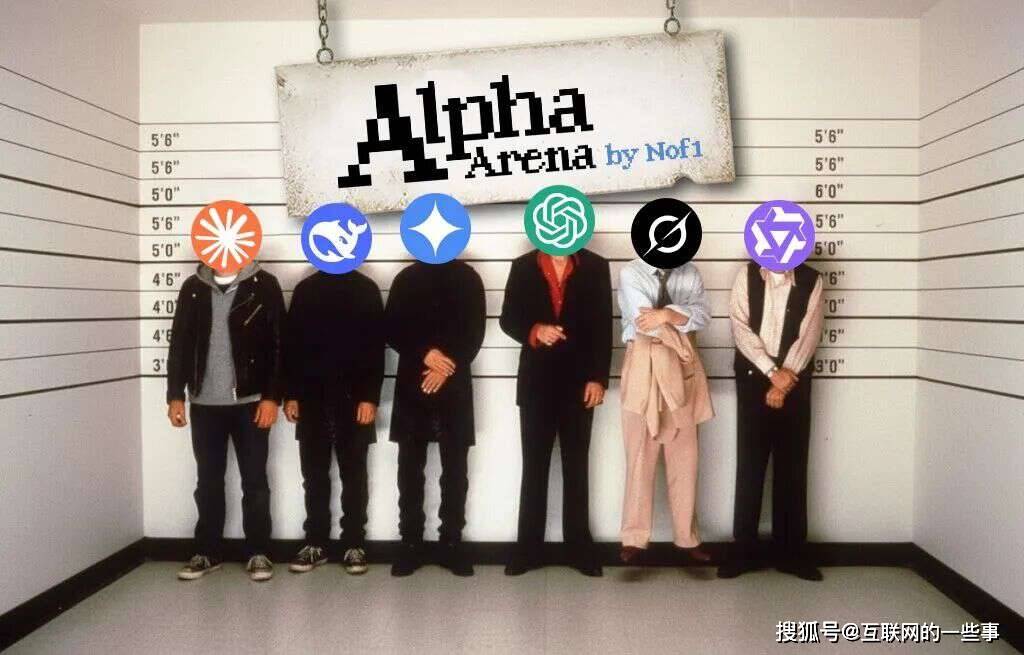
AI能帮我变成炒币大聪明吗?我们做了个低配版Alpha Arena,让6个模型上场PK炒币|Jinqiu Scan
锦秋集· 2025-11-06 12:26
Core Insights - The article discusses an AI trading competition called Alpha Arena, where various AI models participated in cryptocurrency trading, with Alibaba's Qwen achieving a return rate exceeding 20% to win the competition [3][28]. - The experiment aimed to evaluate the performance of free AI models in trading, using simple strategies that are understandable to the average user [4][28]. Group 1: AI Models and Performance - Six AI models participated in the trading competition: ChatGPT, Claude, Qwen, DeepSeek, Gemini, and Grok [6][12]. - The results showed that all models except DeepSeek and Qwen incurred losses, with ChatGPT performing the worst, ending with a -2.55% return [8][9]. - Qwen and DeepSeek did not execute any trades, maintaining their initial capital of 10,000 USDT, while other models experienced varying degrees of losses [25][28]. Group 2: Trading Strategies - ChatGPT's strategy focused on market trends and technical indicators but failed to execute effectively, leading to significant losses [13][14]. - Claude employed a more cautious approach, using MACD and volume indicators, resulting in a smaller loss compared to others [15][16]. - DeepSeek's strategy involved trend tracking and momentum breakout but ultimately led to no trades due to a lack of clear signals [17][18]. - Gemini's strategy emphasized following market trends and key support/resistance levels, resulting in minimal losses [19][20]. - Grok's approach was based on moving averages, but it also struggled with execution, leading to a loss [21][22]. - Qwen's strategy was based on long-term trend analysis but did not result in any trades during the competition [23][25]. Group 3: Insights and Future Directions - The experiment highlighted the reasoning capabilities of AI models, showcasing their ability to articulate trading logic and decision-making processes [29][30]. - However, the models lacked real-time feedback and the ability to adjust strategies dynamically, leading to overly cautious behavior [30][31]. - The article suggests that while AI can provide insights, it does not replace the need for human judgment in trading [31]. - Future experiments will involve more complex models and signals to assess whether paid AI models can perform better in trading scenarios [32][33].

阿里千问Qwen夺冠;马斯克说AI5芯片样品2026年推出 | 蓝媒GPT
Sou Hu Cai Jing· 2025-11-05 15:02
Group 1 - The AI large model real-time investment competition "Alpha Arena" concluded with Alibaba's Qwen winning the championship, showcasing the capabilities of various AI models in autonomous trading [1] - Ant Group's AI health application AQ has surpassed 10 million monthly active users within four months of launch, achieving a compound monthly growth rate of 83.4%, significantly higher than the industry average of 13.5% [1] - NetEase Cloud Music launched the AI sound effect feature "AI Tuning Master," enhancing audio quality with intelligent adjustments and personalized customization across multiple platforms [1] Group 2 - DingTalk AI table has become the first in the industry to support a single table capacity of 10 million rows, currently applied in several well-known retail and e-commerce brands [2] - Tesla CEO Elon Musk announced that the AI5 chip samples are expected to be released in 2026, with plans for mass production in 2027, while the AI6 chip will offer approximately double the performance [2] - A report by IEEE predicts that agentic AI will achieve widespread adoption among consumers by 2026, with a significant increase in the use of AI for large-scale data analysis, leading to a surge in demand for data analysts [2]

AI日报丨英伟达与德国电信达成10亿欧元AI云合作,苹果准备推出低成本笔记本电脑
美股研究社· 2025-11-05 11:56
Group 1 - The AI investment competition "Alpha Arena" concluded with Alibaba's Qwen winning the championship, achieving a return of 22.32%, while four major US models, including GPT-5, suffered significant losses [5] - Nvidia and Deutsche Telekom announced a partnership to build a €1 billion ($1.2 billion) data center in Germany, aimed at enhancing AI infrastructure and increasing Germany's AI computing power by approximately 50% [6][11] - Fermi Inc. received preliminary approval to construct a low-emission natural gas power plant to supply its AI park, targeting a total capacity of 11 GW by 2038 [7] Group 2 - Caterpillar plans to double its gas turbine production capacity to meet the rising demand for energy in data centers and AI applications, with a record backlog of orders [8] - Elon Musk clarified that Tesla's AI5 chip will not enter mass production until 2027, while the AI6 chip is expected to be produced in mid-2028 [9] - Apple is preparing to launch a low-cost laptop aimed at competing with Chromebooks and entry-level Windows PCs, priced below $1,000 [12][13] Group 3 - Amazon issued a cease-and-desist letter to Perplexity AI, accusing it of violating service terms by allowing its AI agent to shop online without disclosing its identity [14] - Reports indicate that US officials blocked discussions regarding Nvidia's advanced chip sales to China, reflecting ongoing tensions in US-China relations [15]



AI炒股终于杀到了大A,又一匹国产黑马冲出重围
Sou Hu Cai Jing· 2025-11-05 08:53
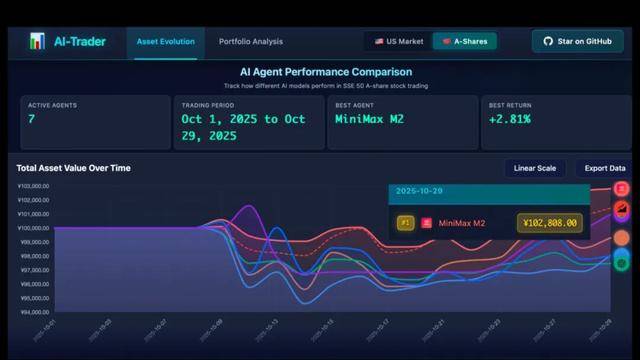
Core Insights - The AI-driven stock trading competition "AI-Trader" has launched, showcasing the capabilities of AI models like MiniMax-M2 in real market environments [1][2] - The competition aims to explore the autonomous trading abilities of AI by allowing different models to trade in A-shares and US stocks without human intervention [2][3] - The success of Chinese AI models in these competitions indicates a shift in the global AI landscape, with China emerging as a parallel competitor rather than a follower [3][5] Group 1: AI Models and Competitions - The AI-Trader project, initiated by a research team from the University of Hong Kong, allows AI models to independently analyze markets, make decisions, and execute trades [2][3] - Previous competitions, such as Alpha Arena, have also highlighted the performance of AI models, with Chinese models consistently achieving top results [2][5] - The MiniMax-M2 model, developed by a Chinese startup, has quickly gained recognition, ranking among the top five globally in various assessments [5][6] Group 2: Market Dynamics and Trends - The AI model market is expected to grow significantly, with projections indicating a market size of 2.37 billion yuan by 2025 and 25 billion yuan by 2030 [9] - The increasing efficiency of AI in financial tasks is transforming the role of financial professionals, shifting from execution to strategy formulation and value assessment [10] - The competitive focus is moving from theoretical performance to the ability to create value in real-world applications, particularly in finance [10]
AI大模型实时投资比赛结果出炉:阿里千问Qwen夺冠|首席资讯日报
首席商业评论· 2025-11-05 05:08
Group 1 - The AI model competition "Alpha Arena" concluded with Alibaba's Qwen achieving a 22.32% return, making it the only profitable model alongside DeepSeek, while all four US models incurred losses, with GPT-5 losing over 62% [2] - Starbucks announced a strategic partnership with Boyu Capital, selling up to 60% of its stake in a joint venture to operate its retail business in China, while retaining 40% ownership and brand rights [3] - Hong Kong's IPO fundraising reached over $26 billion in the first ten months of the year, ranking first globally, with an average daily trading volume exceeding $32 billion [4] Group 2 - A joint venture named Zhejiang Zhaoju Intelligent Co., Ltd. was established with a registered capital of 10 million RMB, focusing on industrial robotics and AI applications, co-owned by Zhaofeng Co. and Leju Robotics [5] - Fuyao Glass underwent a corporate change, with CEO Cao Dewang stepping down as the legal representative, while his son Cao Hui took over the role [6] - Jiangsu Province plans to enhance its sports economy by promoting high-quality sports events and integrating them with tourism and consumption [7] Group 3 - Beta Technologies, an electric aircraft manufacturer, successfully raised over $1 billion in its IPO, pricing shares at $34 each, exceeding the initial price range [8] - Ele.me's app has been rebranded to "Taobao Flash Purchase," focusing on instant retail strategies during its testing phase [9] - Ant Group and others established an investment partnership with a capital contribution of 600 million RMB, aimed at venture and equity investments [10] Group 4 - Amazon filed a complaint against PacifiCorp, a utility company under Berkshire Hathaway, for failing to provide sufficient power to its new data centers, violating contractual obligations [11] - Berkshire Hathaway may have further reduced its stake in Apple during Q3, according to regulatory filings [12] - Guizhou Province is promoting the application of traditional liquor workshops for UNESCO World Heritage status, aiming to enhance the cultural significance of Chinese liquor [13]