
黄金衍生品

Search documents
黄金投资全解析(QA问答版)
Sou Hu Cai Jing· 2026-02-05 08:09
Core Conclusion - As of February 5, 2026, the spot gold price in London is $4,864.01 per ounce, while the domestic gold T+D price is ¥1,092.48 per gram, and mainstream gold shop prices range from ¥1,553 to ¥1,568 per gram. The overall gold price is expected to remain strong with fluctuations, supported by anticipated Fed rate cuts of 50-75 basis points and the normalization of global central bank gold purchases, but a short-term correction risk of 5%-15% should be noted. The core value of gold lies in its role as a hedge against risk and asset preservation, with a recommended allocation not exceeding 15% of total assets [1]. Basic Understanding - Gold is primarily categorized into three types: physical gold, paper gold, and gold derivatives. Physical gold includes gold bars, coins, and jewelry, with gold bars typically having a purity of 99.99%. The investment gold bar prices from major domestic banks range from ¥1,141 to ¥1,229 per gram, while gold jewelry prices are higher due to processing fees and brand premiums, reaching ¥1,553 to ¥1,568 per gram. Paper gold is issued by banks with no physical delivery, allowing for flexible trading without fees, while gold derivatives include gold ETFs (tracking gold prices with trading costs of 0.1%-0.3%) and gold futures (with leverage of 5-10 times and higher entry barriers) [2]. Value Understanding - The core value of gold is its ability to hedge against risk, preserve assets, and combat inflation. In 2025, global central banks net purchased 863 tons of gold, driven by emerging market "de-dollarization" strategies, providing structural support for gold prices. Gold is suitable for three types of investors: those with low risk tolerance seeking stable asset preservation, those looking to hedge against inflation and diversify risks from stocks and funds, and those with short-term speculative needs who have a certain risk tolerance [5]. Influencing Factors - Key factors influencing gold price fluctuations include: 1. Federal Reserve policy: Expected rate cuts of 50-75 basis points in 2026 will lower the cost of holding gold, benefiting its price. 2. Dollar performance: The negative correlation of approximately -0.7 between the dollar index and gold prices means a stronger dollar typically leads to lower gold prices. 3. Central bank purchases: In 2025, global central banks net purchased 863 tons of gold, with an expected monthly average of 60-70 tons in 2026, supporting gold prices. 4. Geopolitical and supply-demand factors: Geopolitical conflicts increase demand for safe-haven assets, with an expected widening of the gold supply-demand gap to 320 tons in 2026, supporting prices [12]. Price Trends - The overall trend for gold prices in 2026 is expected to be strong with fluctuations. The World Gold Council predicts a baseline scenario of ±5% price fluctuations, with an optimistic scenario suggesting that if geopolitical conflicts escalate, prices could rise by 15%-30%, potentially exceeding $6,000 per ounce. In contrast, a risk scenario could see prices correct by 5%-20% if inflation rebounds. Institutions have differing views: UBS has raised its 2026 target price to $6,200 per ounce, while Goldman Sachs expects it to reach $5,400 per ounce by year-end, and JPMorgan has a long-term bullish outlook of $8,000-$8,500, but warns of short-term overbought risks [13]. Product Selection - New investors are advised to prioritize gold ETFs or bank paper gold due to their low entry barriers, controllable risks, and convenient operations. Gold ETFs typically allow investments starting at ¥100, with trading costs of only 0.1%-0.3%, and no physical storage costs. Paper gold can be traded flexibly starting from 1 gram (approximately ¥1,092 based on current T+D prices), with no leverage risk. In contrast, gold futures involve high leverage and risks, while physical gold incurs storage costs, making them less suitable for beginners [9].
手握大量黄金用于出租,“金主”可能已赚翻
Di Yi Cai Jing Zi Xun· 2026-01-29 08:57
2026.01.29 按照现有规定,只有银行能向非金融机构借出黄金。在这个过程中,银行将金库中的黄金"借"给企业, 企业或将其投入生产,或通过金融工具组合,将其变为一种高效的融资手段。 据第一财经初步统计,2025年以来,包括潮宏基、迪阿股份、宝鼎科技、周大生、湖南黄金、山东黄金 等多家企业均在银行办理了黄金租赁业务。 在黄金租赁产业链中,谁在称霸江湖?用金企业如何通过租赁降低成本?又有哪些不为人知的风险与故 事?且看第一财经揭开黄金租赁产业的全貌。 租金需求大涨,产业链玩家多 根据厦门信达最新披露,该公司准备在2026年开展黄金租赁业务,计划通过银行办理黄金租赁,并配套 远期定向黄金购买合约,预计保证金占用不超过5000万元,任一交易日持有的最高合约价值不超过等值 5亿元。 金价接连猛涨,用金企业租赁需求大涨,手握大量黄金用于出租的"金主",这回可能赚翻了。 近期,黄金价格再创新高。Wind数据显示,1月29日,国际金价再度刷新历史高位,突破5500美元/盎司 关口,年内累计涨幅已接近30%。随着金价持续上涨,下游用金企业的租赁需求,也在水涨船高。相较 前些年,一些黄金首饰企业去年的黄金租赁规模,已经以"吨 ...

世界黄金协会:10月全球实物黄金ETF流入达82亿美元 已连续五个月实现流入
Zhi Tong Cai Jing· 2025-11-14 12:29
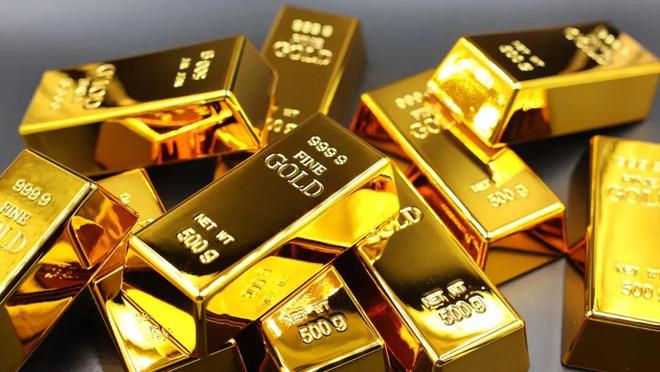
Group 1 - In October, global physical gold ETF inflows reached $8.2 billion, marking the fifth consecutive month of inflows, although the pace slowed compared to the previous month [1] - The cumulative net inflow for the first ten months of the year reached $72 billion, setting a historical record [1] - North America and Europe were the dominant regions for fund inflows, with North America contributing approximately $6.5 billion in October [3][4] Group 2 - Asia recorded approximately $7 billion in inflows for October, the second strongest monthly performance in history, with China alone contributing $4.5 billion [4] - The European region experienced outflows of about $4.5 billion, ending a five-month streak of net inflows, with the UK and Germany recording the largest monthly outflows in history [5][6] - Australia led the market with a net inflow of $2.03 million, while South Africa saw an outflow of approximately $1.18 million, partially offsetting the overall regional performance [9] Group 3 - The global average daily trading volume in the gold market reached approximately $61.1 billion in October, reflecting a month-on-month increase of 45% [11] - The trading volume of gold derivatives surged by 59%, with notable contributions from the New York Mercantile Exchange (+49%) and the Shanghai Futures Exchange (+86%) [13] - The ETF trading volume doubled month-on-month to an average daily level of $17 billion, indicating a significant increase in market activity [14]

委内瑞拉局势持续紧张能否引爆黄金新一轮行情?
Xin Lang Cai Jing· 2025-11-12 10:55
Core Viewpoint - Gold prices have shown a slight correction after a significant rise, currently stabilizing above $4,100 per ounce, with potential resistance at $4,145 and support at $4,095, indicating a bearish trend if the resistance is not broken [1][2] Geopolitical Factors - The U.S. military has increased its presence in the Caribbean, with the deployment of the USS Ford aircraft carrier strike group, amid threats from former President Trump regarding military action against Venezuela [1][2] - Venezuela's military has entered a state of readiness, conducting exercises and establishing a comprehensive defense command to prepare for potential armed conflict, reflecting the long-standing tensions between the U.S. and Venezuela [3] Market Implications - If U.S. military actions escalate, gold prices are likely to break the $4,145 resistance and may reach $4,170 or even $4,200 due to panic buying [2][3] - Conversely, if diplomatic efforts succeed in de-escalating tensions, gold prices may remain in a range-bound movement, awaiting new market drivers [2][3] Investment Methods - Three primary methods for investing in gold are identified: physical gold, paper gold, and gold derivatives, each catering to different risk preferences and investment strategies [4][5][6][7] - Physical gold is suitable for conservative investors but comes with higher holding costs and lower liquidity [5] - Paper gold offers flexibility and lower costs, ideal for short-term trading, but lacks physical ownership [6] - Gold derivatives provide leverage and potential for higher returns, but carry significant risks and are suited for aggressive investors [7]

现货黄金价格突破4060美元,前三季度金饰消费量同比跌超三成
Xin Lang Cai Jing· 2025-11-10 07:29
Core Insights - China's gold consumption in the first three quarters of 2025 reached 682.730 tons, a year-on-year decrease of 7.95% [1] - The demand for gold jewelry fell by 32.50% to 270.036 tons, while gold bars and coins saw a 24.55% increase to 352.116 tons [1] - Industrial and other gold usage increased by 2.72% to 60.578 tons [1] - Spot gold prices surpassed $4,060 per ounce, with a daily increase of 1.78% [1] Consumption Trends - The performance of different gold product categories showed significant variance, with high-value jewelry maintaining strong market appeal despite overall consumption decline [1] - The demand for gold bars remains robust, driven by geopolitical tensions and economic uncertainties, highlighting gold's role as a safe-haven asset [1] - The rapid development of industries such as electronics and new energy has contributed to a steady recovery in industrial gold demand [1] Trading Activity - In the first three quarters of this year, trading in gold derivatives was notably active, with total trading volume at the Shanghai Gold Exchange reaching 23,800 tons, a year-on-year increase of 2.45% [1] - The total trading value at the exchange was 17.68 trillion yuan, up 41.55% year-on-year [1] - The Shanghai Futures Exchange reported a trading volume of 10.36 tons for all gold futures and options, marking a 59.98% increase year-on-year, with a trading value of 61.08 trillion yuan, up 112.60% [1] Production Data - Domestic raw gold production in the first three quarters of 2025 was 271.782 tons, a year-on-year increase of 1.39% [2] - Imported raw gold production reached 121.149 tons, up 8.94% year-on-year, leading to a total gold production of 392.931 tons, a 3.60% increase [2] Price Movements - Spot gold prices peaked at $4,381.29 per ounce on October 20, 2025, before experiencing a decline [2] - On October 27, spot gold prices fell below the $4,000 per ounce mark for the first time in the month [2] Market Outlook - Analysts have differing views on gold price trends, with some suggesting that recent declines may signal the start of a downward trend [2] - Despite acknowledging short-term risks of price corrections, several institutions maintain a long-term bullish outlook on gold, with Standard Chartered raising its 2026 average price forecast by 16% to $4,488 [2]
金价涨至1248元!多家银行紧急提醒,金价疯涨背后隐藏着怎样的秘密
Sou Hu Cai Jing· 2025-10-17 04:58
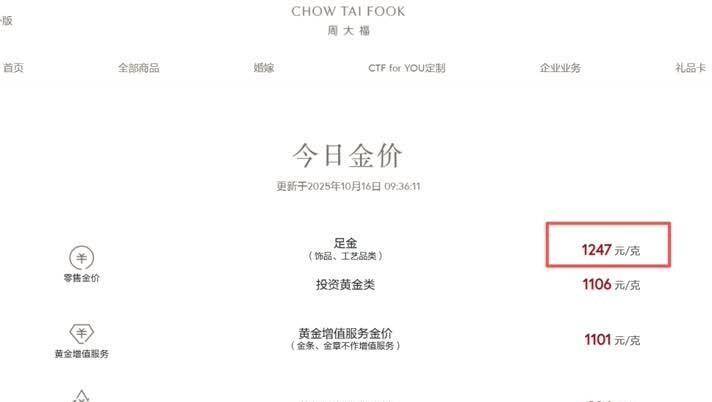
Core Insights - The price of gold jewelry in China has surged, with Lao Miao Gold's price reaching 1248 RMB per gram on October 15, 2025, marking a 13 RMB increase from the previous day, leading to concerns among potential buyers about affordability [1][3] - International gold prices have also hit record highs, with prices exceeding 4200 USD per ounce for the first time, reflecting a year-to-date increase of over 50%, potentially marking the strongest year since 1979 [3][5] - The Federal Reserve's recent interest rate cut has been a significant driver of rising gold prices, as lower interest rates reduce the opportunity cost of holding non-yielding assets like gold [5][13] Market Dynamics - The surge in gold prices is attributed to various factors, including the Federal Reserve's monetary policy, global risk aversion due to geopolitical tensions, and trade disputes, particularly between the U.S. and China [5][7] - Central banks worldwide have been accumulating gold, with emerging market central banks actively seeking to reduce reliance on the U.S. dollar, leading to increased demand for gold [7][17] - Investment banks have raised their gold price forecasts, with Goldman Sachs predicting a price of 4900 USD per ounce by 2026 due to strong demand from central banks and private sectors [7] Investor Behavior - Institutional investors are becoming more cautious, as evidenced by a decrease in speculative net long positions in COMEX gold, while retail investors remain optimistic about gold's potential for appreciation [9][19] - The shift in consumer behavior is notable, with many buyers now prioritizing investment value over aesthetic appeal when purchasing gold [15][19] - Financial institutions have raised investment thresholds for gold products, indicating a cautious approach to the current market volatility [11][15] Technical Indicators - Current technical indicators suggest potential overbought conditions for gold, with the 14-day Relative Strength Index (RSI) reaching 78, indicating a buildup of selling pressure [11][24] - Historical trends show that while gold often performs well during crises, significant price increases are typically followed by periods of correction [24][22] Economic Context - The ongoing high inflation rates in the U.S. and Europe have led to increased interest in gold as a traditional hedge against inflation, although historical data suggests that timing is crucial for successful investment [24][22] - The fluctuation of the U.S. dollar and its impact on gold prices remains a critical factor, with analysts warning that a strengthening dollar could exert downward pressure on gold prices [15][24]





2025 年港市新机遇:解码多元资产配置路径
Sou Hu Cai Jing· 2025-08-21 02:32
Group 1 - The Hong Kong stock market is expected to present structural opportunities in 2025, particularly in growth sectors like renewable energy and biotechnology, attracting global capital attention [1] - Companies with core patents, such as those involved in solid-state battery technology, have seen their stock prices increase by over 30% this year, outperforming the industry average [1] - Fixed income investments, including local government special bonds and offshore RMB government bonds, maintain yields in the range of 4.2%-5.8%, providing a hedge against equity asset volatility [1] Group 2 - A suggested asset allocation strategy is to maintain a portfolio consisting of 40% equities, 35% fixed income, and 25% alternative investments, focusing on specific Hong Kong Stock Connect stocks and cross-border bond varieties [2] - Smart investment advisory products can dynamically adjust portfolio allocations based on real-time data, enhancing the Sharpe ratio by 0.3-0.5 [2] - REITs are highlighted as providing an average annual dividend return of 6.2%, appealing to investors seeking stable income [2] Group 3 - Digital gold certificates launched by the Shanghai Gold Exchange utilize blockchain technology for T+0 settlement, with average daily trading volume exceeding 80 tons this year [1] - Investing in gold ETFs allows ordinary investors to avoid physical storage costs while benefiting from price fluctuations [1]
二季度全球黄金需求总量(含场外交易)仍同比增长3%至1249吨
Sou Hu Cai Jing· 2025-08-02 06:46
Core Insights - Global gold demand increased by 3% year-on-year to 1249 tons in Q2 2025, with a value surge of 45% to $132 billion, marking a historical high [1] - The growth was primarily driven by investment demand, central bank purchases, regional market differentiation, and structural changes in consumption trends [2] Investment Demand: Core Growth Engine - Gold ETFs and similar products were the main drivers of demand growth, with a net inflow of 170 tons in Q2 2025, contrasting with slight outflows in the same period of 2024 [3] - Cumulative inflows for the first half of the year reached 397 tons, the highest since 2020, reflecting institutional investors' hedging against geopolitical risks and economic uncertainties [3] - In China, gold ETF inflows amounted to 464 billion RMB (approximately $65 billion), with holdings increasing to 200 tons and assets under management (AUM) surging 116% year-on-year to 152.5 billion RMB [3] - Demand for gold bars and coins grew by 11% year-on-year to 307 tons, with Chinese investors leading globally with a demand of 115 tons, a 44% increase year-on-year [3] Central Bank Purchases: Long-term Support - Global central banks net purchased 166 tons of gold in Q2 2025, remaining at historically high levels, 41% above the average from 2010-2021 [6] - A survey indicated that 95% of central banks expect to continue increasing gold holdings in the next 12 months, highlighting a trend towards de-dollarization [6] - The People's Bank of China added 6 tons in Q2, totaling 19 tons for the first half of the year, with official reserves reaching 2299 tons, accounting for 6.7% of foreign reserves [6] Consumption Demand: Structural Changes - Global gold jewelry demand fell by 14% year-on-year to 341 tons, nearing 2020 pandemic lows, with China's demand dropping 20% year-on-year to 69 tons, the weakest Q2 since 2007 [7] - Despite the decline, high-end jewelry demand remained resilient, while the mass market shifted towards lighter, more innovative designs, leading to a 21% increase in consumption value to $36 billion [7] - India's demand decreased by 17% year-on-year, although pre-wedding season purchases and trade-in policies mitigated some of the decline [8] Price and Supply: Market Balance Amid High Prices - The average gold price in Q2 reached $3280.35 per ounce, a 40% increase year-on-year, marking a historical high [12] - In China, the average physical gold price surpassed 1000 RMB per gram, with retail prices fluctuating between 984-1018 RMB per gram [13] - Gold mine production increased by 3% year-on-year to 909 tons, a record high for the quarter, while recycled gold supply grew by only 4%, indicating a reluctance among holders to sell [14] - Overall, gold prices rose by 26% in the first half of the year, outperforming most mainstream assets [15] Regional Market: Differentiation and Resilience - The Chinese market exhibited strong investment but weak consumption, with total retail gold demand reaching 245 tons, a 28% increase year-on-year, despite weak jewelry demand [16] - In India, demand for gold bars and coins rose to 46 tons, but jewelry consumption fell by 17% due to price-sensitive consumers reducing purchases [17] - European demand doubled due to post-energy crisis risk aversion, while U.S. demand for bars and coins fell to 9 tons due to a high-interest rate environment [17] - The growth in gold demand underscores its dual value as a safe-haven asset and a long-term allocation tool [17] Future Outlook - Geopolitical developments, monetary policy trajectories, and changes in consumer behavior will be key variables influencing the gold market [19]
金价剧烈震荡下,新手小白如何进行对实物黄金的投资
Sou Hu Cai Jing· 2025-07-23 14:47
Group 1: Market Dynamics - The international spot gold price surged by 1.5% on July 21, 2025, reaching a historic high of $3,400 per ounce, followed by a sharp decline to $3,386 on July 22, indicating a complex market dynamic [1] - Domestic gold jewelry brands saw a price increase of 7-10 yuan per gram, with some stores experiencing a 300% surge in sales on the day of the price spike [1] - As of July 23, the price of gold jewelry from brands like Chow Sang Sang and Lao Feng Xiang showed a mixed trend, reflecting ongoing market volatility [1] Group 2: Demand Drivers - Global physical gold demand showed significant divergence in Q2 2025, with U.S. investors cashing out due to high uncertainty over tariff policies, while Asian markets experienced a 12% increase in demand, particularly a fourfold increase in China's gold ETF holdings [3][4] - The interplay of monetary policy, geopolitical risk, and investment structure transformation is driving the gold market, with central banks globally expected to continue increasing gold reserves [3][4] - The U.S. Federal Reserve's anticipated interest rate cuts and China's central bank's record gold reserves of 73.9 million ounces are key factors supporting gold prices [3] Group 3: Compliance and Technology in Trading - The value of compliance platforms has increased, with Hong Kong's gold exchange reporting a 45% year-on-year growth in trading volume in H1 2025, and AA-class members holding over 70% market share [5] - Strict regulatory requirements for AA-class licenses ensure transaction transparency, while technological advancements allow for rapid market response and risk management [5] - In extreme market conditions, compliant platforms demonstrated superior performance in managing client positions, reducing liquidation risks significantly [5] Group 4: Future of Physical Gold Investment - The gold market is entering a "new normal" characterized by persistent geopolitical risks, long-term central bank purchases, and diversified investment demand [6] - Investors are encouraged to utilize compliant platforms for strategic trading and to create a diversified portfolio that includes both physical gold and derivatives [6] - A significant majority of institutional investors plan to increase their gold allocations in the next two years, potentially reshaping market pricing logic [6]

欧央行警告:美国资产遭严重质疑,恐引发全球金融体系连锁风险
Hua Er Jie Jian Wen· 2025-05-21 11:59
Core Insights - The European Central Bank (ECB) warns of unprecedented investor skepticism towards U.S. assets, highlighting potential systemic risks in the global financial system due to various factors including Trump's tariff policies and high asset valuations [1] - The ECB's semi-annual Financial Stability Assessment indicates a fundamental shift in investor behavior, moving away from traditional safe-haven assets like the U.S. dollar and Treasury bonds, which could lead to significant changes in global capital flows [1][3] - The ECB emphasizes that the unpredictability of U.S. policies has led to higher risk premiums demanded by investors for U.S. assets, potentially undermining confidence in the dollar as a global reserve currency [1][3] Asset Valuation and Market Vulnerability - Despite some easing of tariff threats, asset valuations remain excessively high, contributing to significant market vulnerability and the potential for extreme volatility, particularly in U.S. tech stocks [2] - The ECB warns that investors may be underestimating the likelihood and impact of adverse scenarios, exacerbated by rising uncertainty affecting economic outlooks in Europe [3] Cryptocurrency Risks - The ECB highlights systemic risks posed by cryptocurrencies, particularly stablecoins, due to their rising valuations and increasing ties to traditional finance, which could create large transmission channels for financial instability [4] - Concerns have been raised by policymakers regarding the U.S. support for cryptocurrencies and non-bank financial institutions, with warnings that this could sow the seeds for a future global crisis [4] Gold Market Concerns - The structural vulnerabilities in the gold market, combined with geopolitical risks, pose a significant threat to financial stability in the Eurozone [5] - A report indicates that the Eurozone's exposure to gold derivatives has reached €1 trillion, a 58% increase since November 2024, raising concerns about systemic risks due to opaque trading practices and reliance on leverage [6] Conclusion - The ECB's assessments underscore the interconnectedness of global financial markets and the potential for significant disruptions stemming from U.S. policy changes, high asset valuations, and emerging risks in cryptocurrencies and commodity markets [1][2][4][5][6]