
Atlas浏览器

Search documents
腾讯研究院AI速递 20260323
腾讯研究院· 2026-03-22 16:03
Group 1: Huawei's AI Computing Power - Huawei officially launched the Atlas 350 accelerator card equipped with the Ascend 950PR processor at the China Partner Conference 2026, with seven core ecosystem partners simultaneously introducing server systems [1] - The Atlas 350 single card computing power reaches 2.87 times that of NVIDIA H20, making it the first commercial inference product in China to support FP4 low-precision computing, with an HBM capacity of 112GB and a 60% improvement in multi-modal generation efficiency [1] - Over 400 industry-integrated machines were launched in collaboration with ecosystem partners, serving more than 2,700 customers and capturing over 80% of the domestic AI integrated machine market [1] Group 2: Developments in AI Agents - OpenAI is integrating ChatGPT, Codex, and the Atlas browser into a desktop super app, while acquiring the Python toolchain Astral to fully commit to the Agent space [2] - Google is pursuing a dual strategy with AI Studio integrating the Antigravity coding agent, backed by a $2.4 billion acquisition of the Windsurf team, and secretly testing the Gemini Mac desktop version [2] - Anthropic has rapidly launched Cowork, Dispatch, and Claude Code Channels within two months, embedding Claude into local user systems at a fast product pace [2] Group 3: WeChat's ClawBot Plugin - WeChat has launched the ClawBot plugin, allowing users to connect OpenClaw agents via QR code or command, enabling task completion through chat [3] - Tencent's entire product line is aligned, including cloud shrimp Lighthouse (with an enterprise version Claw Pro), self-developed shrimp WorkBuddy, and local shrimp QClaw, all supporting direct connection via WeChat [3] - The plugin is gradually being rolled out, requiring users to update to the latest version and check installation instructions through the settings menu [3] Group 4: Cursor's Model Controversy - Cursor released its self-developed model Composer, claiming performance surpassing Claude Opus 4.6, but users discovered the underlying model is actually Kimi K2.5 from the Moonlight team [4] - The open-source agreement for Kimi mandates that commercial products with over 100 million monthly active users or $20 million in monthly revenue must disclose their source, while Cursor's valuation is $50 billion with a monthly revenue of approximately $167 million, yet no attribution was made [4] - The founder of Cursor admitted to using Kimi and stated it was an oversight not to credit, but as of the report's publication, no clarification had been added to the Composer 2 blog [4] Group 5: Musk's Chip Manufacturing Facility - SpaceX, xAI, and Tesla are jointly constructing the TERAFAB chip manufacturing facility in Austin, Texas, aiming for an annual production capacity of 1 terawatt, which is about 50 times the current global chip production capacity [5][6] - TERAFAB will produce two types of chips: edge inference chips for the Optimus robot and Tesla vehicles, and high-power chips designed for space AI satellites, with Musk predicting that costs for deploying AI chips in space will be lower than on Earth within 2 to 3 years [6] - Musk defines TERAFAB as a crucial step towards humanity's advancement into a solar system-level civilization, with future plans to build an electromagnetic mass driver on the Moon to scale computing power to petawatt levels [6] Group 6: YC Partners Discussion on Agent Products - YC partners observed that Agents are autonomously selecting development tools, with Supabase being set as the default database due to its superior documentation, and Resend becoming the preferred email sender for its Agent-friendly knowledge base design [7] - An Agent economy is forming alongside the human economy, with infrastructure specifically designed for Agents emerging, such as Agent Mail providing AI-specific inboxes, and the rapid growth of OpenClaw following its popularity [7] - Entrepreneurs need to immerse themselves in the Agent experience to design products from the Agent's perspective, as the developer tool market expands from 20 million professional developers to a broader audience [7] Group 7: AI's Limitations in Autonomous Learning - Researchers from Meta, NYU, and UC Berkeley argue that AI lacks the ability to learn autonomously like humans, as current models are fixed post-deployment, with data selection and training schemes entirely reliant on human engineers [8] - The paper proposes a dual-system framework integrating observational learning (System A) and action learning (System B), with a meta-controller (System M) dynamically coordinating both to address cold start challenges [8] - Researchers believe it may take decades to achieve fully autonomous learning systems, while also highlighting that increased autonomy complicates alignment and may introduce new ethical challenges such as goal misalignment and emotional attachment [8] Group 8: Anthropic's AI Time Study - Anthropic conducted in-depth interviews with 80,508 people across 159 countries, revealing that what people desire most is not stronger AI but more time, with one-third of respondents wanting to free up time to spend with family [9] - The report found that the benefits and harms of AI occur simultaneously for the same individuals: those who enjoy learning assistance face the highest risk of cognitive decline, while those using AI to save time are accelerated into competition [9] - 16.3% of respondents admitted to a decline in thinking ability, and 19% felt AI did not deliver on its promises, indicating that while the benefits of AI are immediately perceivable, the harms are slow and systemic [9] Group 9: Karpathy's AI Experience - Karpathy shared that since December last year, he has not written a line of code, spending 16 hours a day interacting with Agents to drive multiple tasks, feeling anxious when his token limit is not fully utilized, which he describes as "AI psychosis" [10][11] - He utilized OpenClaw for home automation, allowing Agents to autonomously scan the local network for devices like Sonos and build an API control panel, suggesting that apps will eventually disappear and Agents will become the new operating system [10][11] - After running an automation research system overnight, he discovered optimization points he had overlooked in his 20 years of experience, advocating for removing researchers from the loop to maximize token throughput [11]



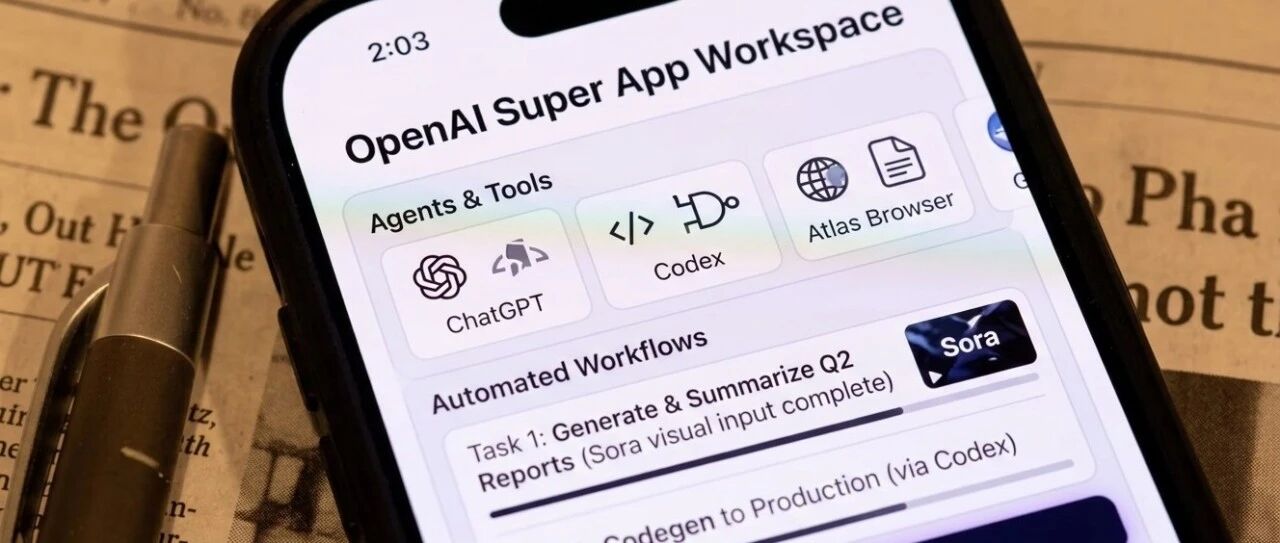
OpenAI桌面SuperApp:ChatGPT+Browser+Codex三合一
海通国际· 2026-03-22 14:51
Investment Rating - The report does not explicitly provide an investment rating for the industry or specific companies involved. Core Insights - OpenAI plans to create a desktop super app that integrates ChatGPT, the Atlas AI browser, and Codex into a single product to enhance user experience and reduce internal inefficiencies amid increasing competition in AI coding and agent-based applications [1][6]. - This integration aims to form a closed task loop for users, combining conversation, workflow execution, and information retrieval, which were previously developed as separate products [2][7]. - The move signals a shift in AI competition from model capabilities to operating-system-level entry points, with the potential to dominate high-frequency user interactions [3][9]. - The evolution of coding tools into general-purpose agent capabilities is highlighted by the rapid growth of Codex and OpenAI's acquisition of Astral to enhance its developer ecosystem [3][9]. - The super app format is expected to improve delivery efficiency and account value for enterprise clients, as demand shifts from simple Q&A to more complex scenarios [3][9]. Summary by Sections Event - OpenAI is developing a desktop super app that combines ChatGPT, Atlas, and Codex to streamline user experience and enhance productivity [1][6]. Commentary - The integration of high-frequency desktop capabilities into a unified workspace aims to reduce context switching for users [2][7]. - The product timeline shows continuity in development, with Codex's launch and subsequent enhancements leading to the current super app initiative [2][8]. Industry Signals - The integration indicates a competitive shift towards operating-system-level entry points in AI, with the potential for significant user engagement [3][9]. - The evolution of coding tools into general-purpose agents is underscored by OpenAI's strategic acquisitions and growth in user engagement [3][9]. - A unified desktop entry point is anticipated to enhance enterprise delivery efficiency and reduce tool-switching costs [3][9]. Defensive Strategy - OpenAI's integration of chat, coding, and browsing reflects a defensive strategy against rising competition in the AI coding space [4][10]. - The super app aims to create a robust platform for developers and enterprise users, enhancing workflow stickiness and data accumulation [4][10]. Long-term Vision - OpenAI's push towards a desktop super app is seen as a strategic move to capture the next-generation productivity entry point in the AI era [4][11]. - The initiative is expected to strengthen user retention and increase average revenue per user (ARPU) across high-value scenarios [4][11].
OpenAI推出“超级应用”,开抢Anthropic的企业客户
AI前线· 2026-03-20 10:03
Core Insights - OpenAI is planning to launch a "desktop super app" that integrates ChatGPT, Codex, and Atlas browser, aiming to consolidate its previously fragmented product offerings [2][3] - This strategic shift is driven by the need to focus on core enterprise and engineering user scenarios, moving away from a simple Q&A interface to an AI workspace that can execute tasks directly on users' computers [3][13] - Anthropic is also advancing in a similar direction with its AI collaboration product Claude Cowork, which allows users to remotely command the AI to handle tasks on their computers [4][5] OpenAI's Strategic Shift - OpenAI's CEO, Fidji Simo, emphasized the need to enhance productivity and focus on core business areas, moving away from a previously scattered approach likened to investing in multiple startups [7][8] - The company has faced challenges with resource allocation and internal coordination due to its broad product lineup, leading to inefficiencies [9][10] - OpenAI's recent meetings among executives have focused on restructuring its product portfolio and prioritizing enterprise markets in response to competitive pressures from Anthropic [11][12] Product Integration and Performance - The upcoming "super app" will enable tighter collaboration within OpenAI's teams and improve focus on a core product, with plans to integrate new "agent" features into Codex first, followed by ChatGPT and Atlas [14] - Codex has seen significant growth, with over 2 million weekly active users and a threefold increase in user numbers since the launch of GPT-5.3-Codex, alongside a 5-fold increase in token usage this year [14] Competitive Landscape - Anthropic has rapidly gained market share in the enterprise sector, holding approximately 40% of enterprise-level large model spending by early 2026, compared to OpenAI's 27% [18] - In the API spending market, Anthropic commands nearly 80% of the share, indicating its strong foothold in enterprise applications [20] - The number of Anthropic's clients spending over $1 million annually has surged from a few dozen to over 500, including eight of the Fortune 10 companies [20] Financial Performance and Projections - Anthropic's Claude Code product has generated over $10 billion in annualized revenue within six months of its public release, with projections exceeding $25 billion by early 2026 [21] - The company has also seen a significant increase in its customer base, with a sevenfold growth in clients spending over $100,000 annually [20] - Anthropic is preparing for an IPO, with expectations of achieving profitability by 2028, which is two years ahead of OpenAI's timeline [30][28]
速递 | 炸了!40亿Chrome用户连夜升级,AI浏览器的生死战已打响
未可知人工智能研究院· 2026-02-01 04:07
Core Viewpoint - Google has integrated its latest AI model, Gemini 3, into the Chrome browser, marking a significant shift towards AI-driven browsing experiences for nearly 4 billion users, which is the fastest and largest scale of AI technology adoption in history [4][8]. Group 1: Product Integration and Features - Gemini 3 is not just a chatbot but is embedded directly into Chrome, allowing users to access it via a sidebar for real-time assistance on any webpage [4]. - The "Auto Browse" feature enables AI to autonomously navigate websites, fill out forms, and complete tasks without user intervention, representing a shift to an "Agent era" where AI acts as a proactive assistant [4][10]. Group 2: Competitive Landscape - The urgency for Google to integrate AI into Chrome stems from competition with emerging AI-native browsers like OpenAI's Atlas and Perplexity's Comet, which provide direct answers without the need for traditional searches [8][10]. - Google's market share in the browser space is approximately 70%, and failure to adapt could result in losing this critical entry point to competitors [8]. Group 3: Business Model Transformation - Google's primary revenue model relies on advertising, projected to generate over $200 billion in 2025. However, the rise of AI may reduce the need for traditional search ads, prompting Google to explore new revenue streams through AI service subscriptions and enhancements [9][10]. Group 4: Market Impact - The integration of Gemini 3 is expected to benefit Google significantly, with stock prices rising nearly 20% in the past two months. Additionally, AI Agent startups and cloud service providers like AWS and Azure are likely to gain from increased demand for computational resources [12][13]. - Conversely, emerging AI browser startups and traditional search engines may face severe challenges as user behavior shifts towards AI-driven solutions that provide immediate answers [13]. Group 5: Domestic Market Response - Major Chinese tech companies, including Baidu, Tencent, and Alibaba, are reportedly testing AI integration in their browsers, although their strategies may differ from Google's approach [16][18]. - The concept of "AI group chat" is being explored by these companies, allowing multiple AI agents to collaborate within a single interface, which could serve as an alternative to traditional browser AI [17][18]. Group 6: Opportunities for Entrepreneurs and Individuals - Entrepreneurs are advised to focus on niche markets such as vertical industry AI agents, enterprise-level multi-agent collaboration platforms, and tools for managing AI applications, as these areas present significant opportunities [20][21]. - For individuals, enhancing productivity through AI tools and learning to manage AI effectively will be crucial for staying competitive in the evolving job market [22][23]. Group 7: Time Sensitivity - The window for capitalizing on these changes is estimated to be limited to the next two years, emphasizing the urgency for stakeholders to adapt and innovate [26].


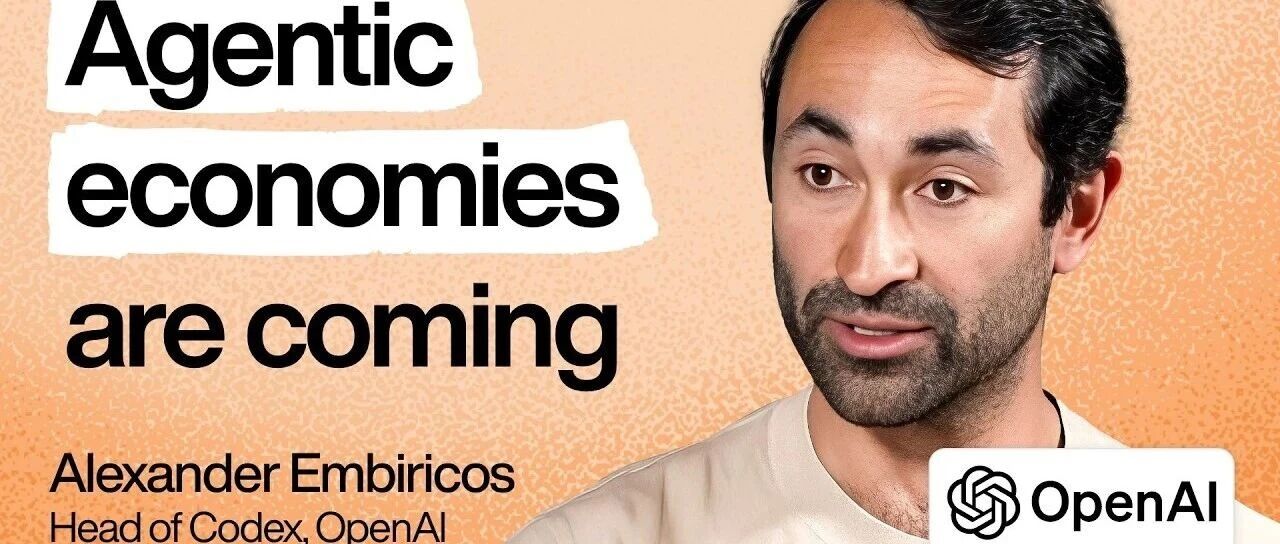
深度|OpenAI产品经理谈Codex爆发式增长背后的AI协作:实现AGI级生产力的真正瓶颈是人类的打字速度!
Z Potentials· 2026-01-19 03:02
Core Insights - Codex, a powerful coding agent developed by OpenAI, has experienced a 20-fold growth since the release of ChatGPT5 in August 2023, processing trillions of characters weekly [3][19]. - The primary goal of Codex is to enhance human productivity by enabling proactive task completion rather than merely responding to commands [9][17]. - OpenAI's organizational structure emphasizes a bottom-up approach, allowing for flexibility and rapid experimentation, which has been crucial for Codex's development [12][14]. Group 1: Codex's Development and Growth - Codex has become a core tool for software engineering teams, functioning as an initial team member capable of writing, testing, and deploying code [15][16]. - The product has seen explosive growth, with usage increasing over 10 times since August, now reaching 20 times, and it is the most utilized code generation model [19][20]. - The integration of product and research teams has facilitated collaborative iterations, leading to more effective experiments and product enhancements [19][26]. Group 2: Proactive Collaboration and User Interaction - Codex aims to function as a proactive collaborator, akin to a new intern, participating in the entire software development lifecycle [16][17]. - The focus is on creating a seamless integration into developers' workflows, allowing Codex to assist without requiring constant user prompts [18][22]. - The feedback loop established through local interactions enhances user experience and encourages gradual adaptation to AI-assisted development [22][23]. Group 3: Future Vision and Market Position - The vision for Codex extends beyond code writing to include capabilities such as scheduling and task management, positioning it as a comprehensive AI assistant [28][29]. - OpenAI is exploring the potential of a "chatter-driven development" model, where communication and collaboration drive coding processes rather than rigid specifications [38][39]. - The company recognizes the need for Codex to adapt to various user environments and preferences, ensuring it remains a valuable tool for diverse teams [25][33].
人工智能浏览器还不够智能 无法接管整个互联网
Xin Lang Cai Jing· 2025-12-23 03:33
Core Insights - OpenAI's launch of an AI-based browser has raised concerns among Alphabet Inc. investors regarding its potential impact on Google Chrome, which serves billions of users globally [1] - Current AI browsers, including OpenAI's Atlas and Perplexity's Comet, have not yet reached a level to replace traditional browsers like Chrome, as they still encounter errors and performance issues [1][7] - The integration of AI assistants aims to enhance user experience by allowing more complex tasks to be performed directly within the browser, although these features are primarily available to paid users due to higher operational costs [1][3] Group 1: User Behavior and Market Response - Different types of browsers are leading to distinct user behaviors, prompting developers and publishers to reconsider their tools for human users versus web crawlers [2] - Mozilla's CEO noted a shift in how users interact with the web, emphasizing the continued reliance on traditional search for complex queries [2] - A survey indicated that 60% of respondents prefer using generative AI for low-risk tasks where they can easily verify the output quality [2] Group 2: AI Browser Functionality and Limitations - Generative AI is seen as beneficial for information retrieval, allowing users to save time, but accuracy remains a concern, leading to a combined use of both AI and traditional search methods [3] - AI browsers are popular for summarizing long YouTube videos and handling multiple queries, with Comet users asking questions significantly more than those using standard chatbots [3] - Users are increasingly requesting features that allow for task automation, such as generating reports or filling out forms, indicating a demand for more advanced functionalities [3][4] Group 3: Technical Challenges and Industry Dynamics - The effectiveness of AI assistants is contingent on website design, with a need for clear and structured data to facilitate task execution [6] - Many existing websites are not optimized for AI interaction, which limits the capabilities of AI browsers [6] - The competitive landscape is shifting as Google and Microsoft integrate AI tools into their traditional browsers, potentially leveling the playing field [8] Group 4: Legal and Ethical Considerations - Major companies like Reddit and The New York Times are suing AI firms over content usage, highlighting the tension between traditional content providers and emerging AI technologies [9] - Concerns about the reliability of AI in financial transactions and decision-making processes are prevalent, with calls for improved trustworthiness in AI systems [9]
奥特曼只是面子,他才是里子?揭秘ChatGPT的30岁“定海神针”
3 6 Ke· 2025-12-11 00:23
Core Insights - OpenAI's ChatGPT success is significantly attributed to product manager Nick Turley, who operates behind the scenes while Sam Altman often takes the spotlight [1][3] - Turley focuses on user experience and has been pivotal in transforming advanced technology into a widely used tool [3][4] Group 1: Turley's Role and Impact - Turley joined OpenAI when ChatGPT was still an internal project, and he quickly shifted focus to making the technology accessible to the public [4][6] - His decisive actions during critical moments, such as the rapid launch of ChatGPT, have been crucial in its development and market acceptance [6][8] - Turley has become the central figure in aligning product direction and execution amidst internal conflicts between research and product teams [9][11] Group 2: Organizational Dynamics - OpenAI's structure has inherent friction between research goals and product development, leading to a chaotic environment that Turley helps to navigate [11][13] - His ability to streamline processes and unify team efforts has made him indispensable, especially as the company faces increased competition from Google [14][19] - The internal "Code Red" alert highlighted the need for a strong leader to refocus efforts on ChatGPT, further solidifying Turley's position [14][19] Group 3: Future Vision and Commercial Strategy - Turley envisions ChatGPT evolving beyond a chat tool to become a comprehensive system that integrates various user needs [20][21] - He is actively pushing for ChatGPT to connect with real-world applications, enhancing its functionality and user engagement [23][26] - OpenAI is exploring new business models, including advertising and transaction integration, to capitalize on its growing user base [26][28]

ChatGPT三周年,那个“对话模型”如何重构我们的世界
3 6 Ke· 2025-12-01 10:22
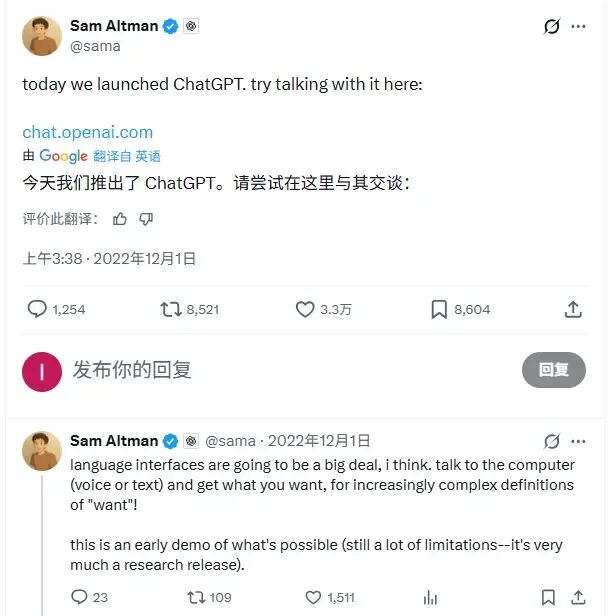
Core Insights - The launch of ChatGPT by OpenAI on November 30, 2022, marked the beginning of a transformative journey in AI, impacting various sectors including technology, business, education, and geopolitics [1] - The rapid user adoption of ChatGPT, reaching 1 million users within five days and 100 million in two months, highlights its unprecedented growth compared to other platforms like TikTok and Instagram [2] - The evolution of ChatGPT from a simple conversational model to a sophisticated platform with multimodal capabilities and real-time voice interaction signifies a major leap in AI technology [2][3] User Growth and Engagement - By the end of 2024, ChatGPT had 300 million weekly active users, growing to 800 million by November 2025, indicating a significant penetration into global markets [5][6] - The mobile revenue surpassed $2 billion in August 2025, with an average revenue per installation of $2.91, showcasing its commercial viability [6] Business Model and Strategy - ChatGPT's pricing strategy evolved from a free model to a tiered subscription model, including a $20/month Plus plan and a $200/month Pro plan, aiming to capture various market segments [6] - The platform's enterprise customer base exceeded 1 million by 2025, making it the fastest-growing business platform in history [6] Technological Advancements - The introduction of GPT-4 and GPT-5 brought significant enhancements, including the ability to perform complex tasks, manage calendars, and generate comprehensive applications [5][10] - The shift from interactive AI to agent-based AI indicates a transformation in how users interact with technology, moving towards more autonomous functionalities [5][10] Market Dynamics and Competition - The competitive landscape has shifted dramatically, with emerging players like DeepSeek challenging OpenAI, prompting a return to open-source models [10] - The stock prices of major tech companies, including Nvidia, have surged significantly, reflecting the capital market's enthusiasm for AI technologies [10] Ethical and Legal Challenges - The rapid growth of ChatGPT has raised concerns regarding safety, with incidents of inappropriate content generation and lawsuits related to mental health issues [8][9] - Ongoing legal battles over copyright infringement and the ethical implications of AI training data highlight the complexities of integrating AI into society [9] Future Outlook - As ChatGPT approaches its third anniversary, questions about its limits and the sustainability of its growth emerge, particularly regarding energy consumption and societal impacts [11][12] - The potential for AI to redefine personal health markets and other sectors indicates a continuous evolution of its applications, while also raising concerns about the implications for future generations [12][13]
软银清仓英伟达,押注OpenAI,AI投资或进入“下半场”
Jing Ji Guan Cha Bao· 2025-11-12 10:07
Core Insights - SoftBank has completely divested its holdings in NVIDIA, cashing out $5.83 billion, and is now focusing on investing in OpenAI, marking a strategic shift in its AI investment approach [1][2][3] Investment Strategy - SoftBank's decision to sell NVIDIA shares is seen as a move to reallocate funds towards OpenAI, with a commitment to invest an additional $22.5 billion, raising its total stake in OpenAI from 4% to 11% [1][2] - The total investment in OpenAI could exceed $30 billion, as SoftBank aims to accelerate the development of AGI (Artificial General Intelligence) and position OpenAI as a leading global company [2] Financial Impact - Following the divestment, SoftBank's cash reserves increased to approximately $20 billion, and the Vision Fund reported investment gains of $19 billion, primarily driven by the rising valuations of OpenAI and Oracle [3] - The market reacted negatively to SoftBank's exit from NVIDIA, with the stock dropping 3%, raising concerns about potential follow-on selling by other investors [3] Market Dynamics - The valuation of OpenAI has surged from $29 billion at the beginning of 2023 to over $500 billion by 2025, indicating strong market confidence in its growth potential [2] - Analysts are divided on SoftBank's strategy; some view it as a necessary liquidity move, while others express concerns about the sustainability of AI valuations and the risks associated with heavy investment in OpenAI [3][4] Strategic Considerations - SoftBank's shift away from NVIDIA may reflect a desire to mitigate risks associated with geopolitical tensions and competition in the semiconductor space [4] - The collaboration between SoftBank's Arm and OpenAI to develop low-power AI chips, along with the "Stargate" project aimed at creating a massive AI training infrastructure, highlights the potential for synergistic benefits within SoftBank's portfolio [4] - The transition from hardware-centric investments to a focus on AI applications suggests a broader trend in the industry, indicating that the next phase of AI investment will prioritize ecosystem integration over mere hardware acquisition [4]

通信ETF(515880)年内涨幅近100%居两市第一,连续5日净流入超23亿元,回调或可布局
Mei Ri Jing Ji Xin Wen· 2025-11-04 06:43
Core Viewpoint - The Communication ETF (515880) has seen a year-to-date increase of nearly 100%, leading the market, with over 2.3 billion yuan net inflow over the past five days, suggesting potential for further investment opportunities during any market corrections [1] Group 1: Market Performance - As of the writing date, the Communication ETF (515880) has achieved a year-to-date market increase of over 98%, ranking first among all ETFs in the market [1] - The ETF has experienced a continuous net inflow exceeding 2.3 billion yuan over the last five days [1] Group 2: Industry Developments - Longjiang Securities reports that Anthropic is collaborating with Google to deploy one million TPUs, aiming to build a computing power cluster exceeding 1GW, expected to be operational by 2026 [1] - Google has introduced the Ironwood super point with new OCS switch cabinets in the Scale-Up architecture, while Tengjing Technology has received significant orders for vanadium acid yttrium, indicating accelerated implementation of OCS [1] - NVIDIA plans to provide loan guarantees for OpenAI to support its data center expansion, coinciding with OpenAI's release of the Atlas browser featuring built-in ChatGPT, which continues to extend the AI application ecosystem [1] Group 3: Market Outlook - With ongoing investments in computing infrastructure both domestically and internationally, the optical module market is expected to maintain a high level of prosperity [1] - The Communication ETF (515880) holds the largest scale in its category, with optical modules accounting for 52% and servers for 22% of its portfolio, alongside fiber and copper connections making up over 81%, reflecting the fundamental strength of overseas computing power [1]