DingTalk Real

Search documents
meta收购manus,百度昆仑芯拆分上市,港股迎来“开门红”
Guolian Minsheng Securities· 2026-01-04 08:59
Market Overview - The Hang Seng Index increased by 2.01%, the Hang Seng Tech Index rose by 4.31%, and the Hang Seng China Enterprises Index gained 2.85% during the week from December 29, 2025, to January 2, 2026[4]. - Net selling through the Hong Kong Stock Connect amounted to 3.4 billion CNY, while southbound funds recorded a net purchase of 1,301.5 billion CNY in 2025, equivalent to 174.92% of the total net purchases for 2024[4]. AI Sector Developments - Meta acquired AI startup Manus for over 2 billion USD, which will continue to operate independently[4]. - Baidu's subsidiary Kunlun Chip submitted a confidential listing application to the Hong Kong Stock Exchange on January 2, 2026[6]. - MiniMax launched the MiniMax M2.1 model and went through the listing hearing with the Hong Kong Stock Exchange[4]. Investment Recommendations - For Tencent Holdings, a PE ratio of 18X is projected for 2026, with expectations of accelerated growth in domestic gaming and healthy overseas growth[4]. - Kuaishou is expected to have a PE ratio of 11X for 2026, with stable growth and potential investment opportunities following any short-term volatility[4]. - Alibaba is projected to have a FY27 PE of 16X, with new AI models and hardware developments to watch[4]. Consumer Sector Insights - Suplay submitted its prospectus for listing on the Hong Kong Stock Exchange, aiming to capitalize on its leading position in the collectible card market[6]. - Pop Mart's valuation is at 14X PE for 2026, with potential sales boosts from the holiday season and strong IP performance expected[4]. Risks - Geopolitical risks may impact overseas revenues and competitiveness, potentially affecting stock prices[22]. - Regulatory risks in the internet sector could influence industry and individual stock performance[22].
——互联网传媒周报20251222-20251226:字节AI春晚合作,游戏潮玩视频消费旺季来临-20251228
Shenwan Hongyuan Securities· 2025-12-28 12:20
Investment Rating - The industry investment rating is "Overweight," indicating that the industry is expected to outperform the overall market [9]. Core Insights - ByteDance's AI collaboration for the Spring Festival is a significant milestone, with its product Doubao achieving over 100 million daily active users. The integration with Douyin's e-commerce platform is expected to enhance monetization through advertising and transaction fees [2]. - Alibaba is focusing on AI advancements, particularly in chip localization and consumer applications, while Tencent is restructuring its AI framework to accelerate the development of large models [2]. - The gaming sector is entering a peak season, with major titles expected to drive user engagement and revenue growth. Notable releases include Giant Network's "Supernatural Action Group" and Tencent's "Delta" [2]. - The collectibles market is also thriving, with Pop Mart's Labubu 4.0 set to launch, reflecting a diverse product range and successful international market expansion [2]. Summary by Sections AI and Technology - ByteDance's AI cloud partnership for the Spring Festival and Doubao's integration with e-commerce are pivotal for future growth [2]. - Alibaba's AI initiatives include the launch of new products and continued growth in cloud services [2]. - Tencent's restructuring aims to enhance its AI capabilities and product offerings [2]. Gaming Industry - The upcoming gaming season is highlighted by major releases that cater to a younger audience, which is crucial for monetization [2]. - Notable games include "Supernatural Action Group" and "Delta," which are expected to perform well during the peak season [2]. Collectibles and Entertainment - Pop Mart's Labubu 4.0 is anticipated to boost sales, supported by a diverse product lineup and international market strategies [2]. - The animation "Chinese Fantasy 2" is set to premiere exclusively on Bilibili, indicating strong collaboration in the entertainment sector [2]. Advertising and Media - Companies like Tencent, Alibaba, and Baidu are expected to benefit from AI product promotions, which will positively impact advertising firms like Focus Media [2]. - The report emphasizes the importance of adapting to AI changes in content production to maintain competitive advantages [2].
阿里巴巴-W(09988.HK):模型能力持续迭代 钉钉发布工作智能操作系统AGENT OS
Ge Long Hui· 2025-12-27 20:05
Core Viewpoint - Alibaba is continuously enhancing its multimodal model capabilities, launching advanced video and image generation models, and aiming to establish a new AI operating system through its DingTalk platform [1][2]. Group 1: Multimodal Model Developments - Alibaba released the new video generation model "Wanshang 2.6" on December 16, achieving a domestic record of 15 seconds for single video length, with added features for role-playing and scene control [1]. - The new image generation model "Qwen-Image-Layered" allows images to be decomposed into multiple layers, enabling high-fidelity editing capabilities such as scaling, moving, and recoloring [1][2]. - The company has developed a comprehensive range of visual creation capabilities, including text-to-image, image editing, text-to-video, and general video editing, which are expected to be widely applied in AI comic, advertising design, and short video creation [2]. Group 2: DingTalk AI Ecosystem - DingTalk held an AI product launch and ecosystem conference on December 23, introducing over 20 AI products, including the Agent OS and DingTalk Real device [2]. - The Agent device "DingTalk Real" facilitates secure access to internal systems and real-time data acquisition, supporting AI agents in making decisions based on real-time data [2]. - The Agent OS is designed to standardize the construction, deployment, and interaction of AI agents, while the "Wukong" feature allows for complex operational processes to be triggered and executed through dialogue [2]. Group 3: Financial Projections - The company is projected to achieve revenues of 1.03 trillion, 1.12 trillion, and 1.24 trillion yuan for FY2026-FY2028, with adjusted net profits of 116 billion, 148 billion, and 179 billion yuan respectively [3]. - The company maintains a "buy" rating due to the continuous enhancement of its AI multimodal capabilities and sustained high revenue growth in its B2B cloud business [3].

从“卖软件”到“卖结果”,钉钉彻底变了
Guan Cha Zhe Wang· 2025-12-27 04:37
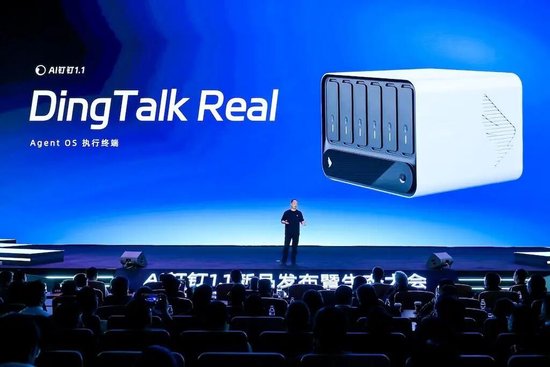
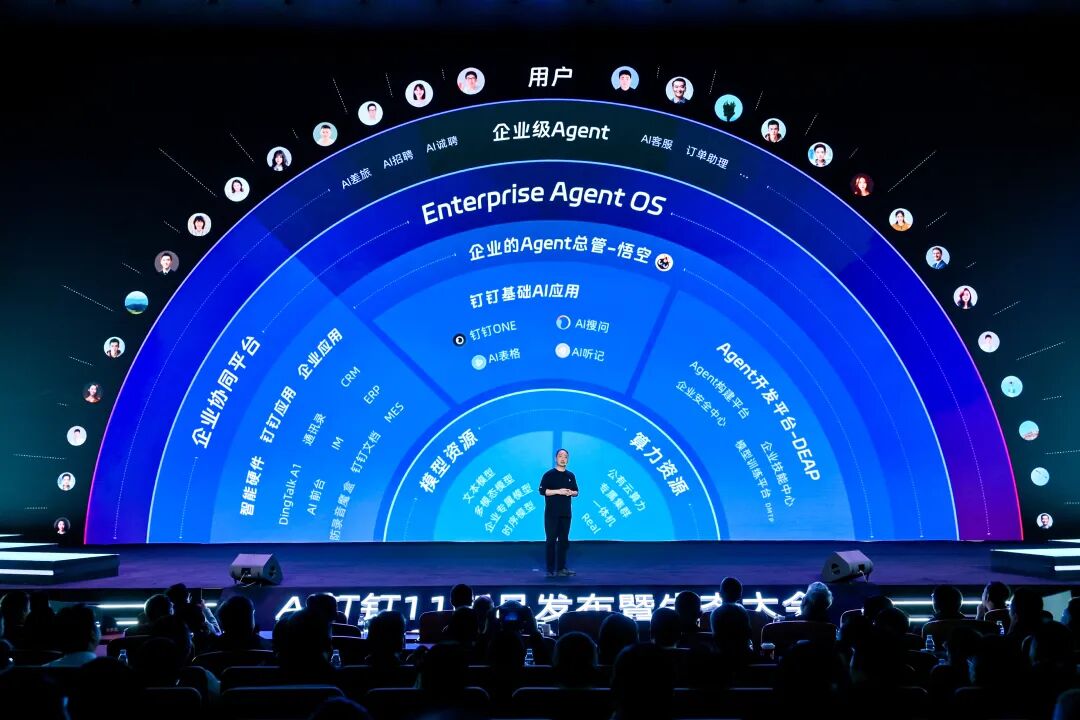
Core Viewpoint - DingTalk has officially launched Agent OS, claiming it to be the world's first AI-driven work intelligence operating system, marking a strategic shift from a mobile internet collaboration tool to an AI infrastructure [1][3] Group 1: Product Features and Innovations - The core of Agent OS is designed to run and collaborate multiple AI agents, addressing three major pain points in enterprise AI implementation: data security, model execution reliability, and commercial delivery [3] - DingTalk ONE serves as a new interactive entry point for human-AI collaboration, integrating information from various sources and proactively pushing important tasks to users [4] - DingTalk Real is an enterprise-grade AI hardware designed to ensure data security and controllability through physical isolation and emergency mechanisms [4] - AI Search Engine enables enterprises to securely access data across various formats, while "Wukong" acts as a general task processing agent capable of understanding complex instructions and executing tasks [4] - DEAP is a platform that supports enterprises in developing, deploying, and managing custom AI agents, providing comprehensive support from data labeling to billing [4] Group 2: Business Model Transformation - DingTalk is shifting from a traditional SaaS model based on user accounts to a "pay-per-result" model, aiming to directly address enterprise pain points and quantify value [5] - Demonstrated agents like the "Order Agent" can significantly reduce order processing time from 1.4 hours to under 1 minute, showcasing the potential for efficiency gains [5][8] - The "AI Travel" feature can complete itinerary planning and price comparisons in one minute, helping companies reduce travel costs by an average of 15% [8] - DingTalk emphasizes that the commercial delivery accuracy of agents must reach over 90%, linking its value directly to enterprise outcomes [8] Group 3: Strategic Shift and Market Positioning - DingTalk's new strategy reflects a shift from providing tools to co-creating industry solutions with enterprises, focusing on specific sectors like manufacturing, retail, and healthcare [8] - The company has announced an open AI ecosystem, collaborating with major model providers while facing challenges in balancing its ecosystem with external partnerships [8][9] - The transformation occurs amid intense competition from domestic players like ByteDance's Feishu and Tencent's WeChat Work, as well as international giants like Microsoft and Google [9] Group 4: Future Outlook - The new version, named "Mulan," symbolizes a fresh start, with the CEO acknowledging that many AI products are still in their early stages [10] - The success of DingTalk's ambitious vision will depend on its ability to convert this blueprint into widely accepted solutions and establish a sustainable business model [10]


钉钉“木兰”破土,直面飞书、企微的AI办公终极卡位战?
Guan Cha Zhe Wang· 2025-12-27 04:29
Core Viewpoint - DingTalk has officially launched Agent OS, claiming it to be the world's first AI-driven intelligent operating system for work, marking a strategic shift from a mobile internet collaboration tool to foundational infrastructure for the AI era [1][3] Group 1: Product Overview - The core of this transformation is Agent OS, designed to run and coordinate multiple AI agents while addressing three major pain points for enterprises: data security, model execution reliability, and dependable commercial delivery [3] - DingTalk has developed a new product matrix including: - DingTalk ONE: A new interactive entry point for human-AI collaboration, integrating information across various applications and proactively notifying users of important tasks [3] - DingTalk Real: An enterprise-grade AI hardware designed to ensure data security and controllability through physical isolation and emergency mechanisms [3] - AI Search: An enterprise-level AI search engine that allows secure access to data and integrates mainstream large models for compliant Q&A [3] - Wukong: A general task processing agent capable of understanding complex instructions and autonomously planning steps to complete tasks [3][4] Group 2: Business Model Transformation - DingTalk is shifting its business model from traditional SaaS, which charges based on user accounts, to a "pay-for-results" model [5] - The company showcased several "commercially deliverable agents" that directly address enterprise pain points, such as: - An "Order Agent" that reduces order processing time from 1.4 hours to under 1 minute [5] - An "AI Travel" agent that can plan trips and compare prices in one minute, helping reduce travel costs by an average of 15% [5] - An "AI Customer Service" agent that quickly initiates conversations and identifies business opportunities [5] - The accuracy of commercial delivery for these agents is targeted to exceed 90%, linking DingTalk's value directly to enterprise outcomes [5] Group 3: Strategic Shift and Market Position - DingTalk's new strategy reflects a shift from providing tools to co-creating industry solutions with enterprises, focusing on specific sectors like manufacturing, retail, and healthcare [5] - Despite positioning itself as an "open AI ecosystem," DingTalk faces challenges in balancing its reliance on Alibaba's underlying capabilities with partnerships to maintain neutrality and openness [6] - The competitive landscape includes rivals like ByteDance's Feishu and Tencent's WeChat Work, as well as international players like Microsoft and Google, all vying for dominance in the AI-driven digital workspace [6] - The launch, named "Mulan," symbolizes a new beginning, with the CEO acknowledging that many AI products are still in early development stages, indicating that the success of this initiative will depend on market acceptance and sustainable business models [6]

钉钉变“硬”了
Xin Lang Cai Jing· 2025-12-25 11:37
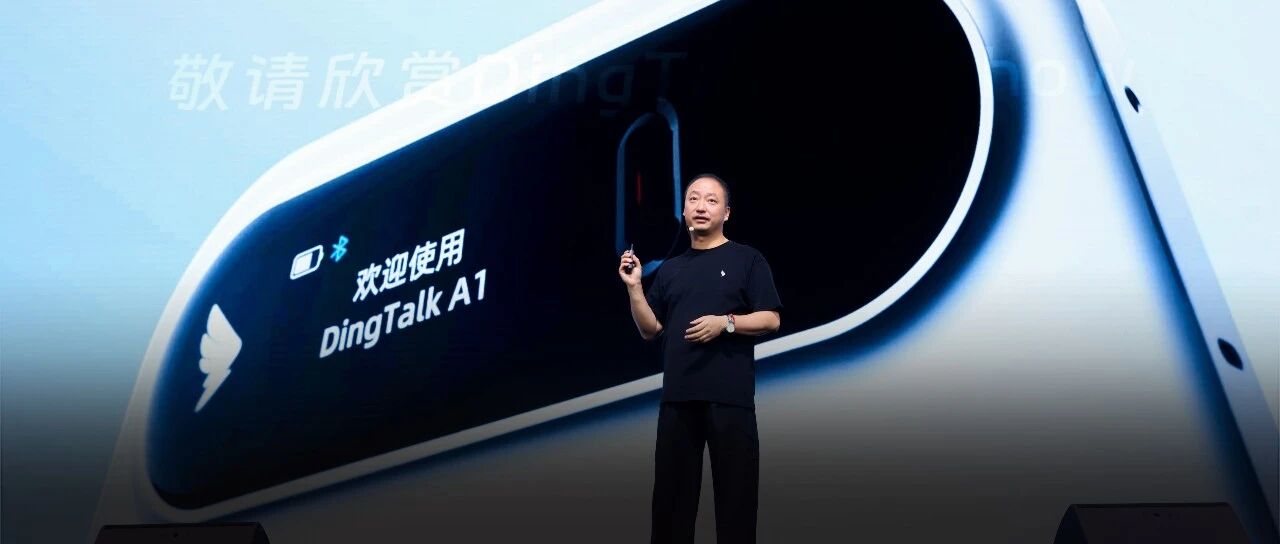
Core Insights - DingTalk has launched a new AI hardware product named DingTalk Real, which integrates its office collaboration capabilities with Alibaba's AI model, aiming to create a new AI terminal entry point [1][19][20] - The return of Chen Hang to DingTalk has shifted the company's AI strategy towards a greater emphasis on AI hardware, moving away from solely software-based solutions [2][23][24] Group 1: Product Development - DingTalk Real is designed to operate independently of the DingTalk app, marking a significant evolution in its product strategy [10][30] - The previous AI hardware, DingTalk A1, was well-received in the market, becoming a top seller during the Double 11 shopping festival, indicating strong consumer interest in AI-enabled office tools [10][30] - DingTalk A1 functions as a lightweight AI recording device that enhances productivity by efficiently recording, transcribing, and summarizing voice communications [8][10][29] Group 2: Market Position and Competition - DingTalk currently holds a market share of approximately 32.7% in the enterprise collaboration sector, but faces increasing competition from rivals like Feishu and WeChat Work, which have been gaining traction [12][33] - The enterprise organization count on DingTalk has only increased by 300,000 over three years, indicating a slowdown in user growth compared to its competitors [13][35] - Feishu has reportedly captured significant clients from DingTalk, impacting its market position and revenue growth [35][36] Group 3: Strategic Shift - Under Chen Hang's leadership, DingTalk is transitioning from a broad functionality approach to a more focused strategy that emphasizes innovative collaboration tools and AI hardware [36][37] - The introduction of AI hardware is seen as a way to differentiate DingTalk from competitors and to enhance its service offerings in the enterprise market [37][38] - The company aims to redefine its role in the AI landscape by integrating its Agent OS capabilities into various hardware solutions, moving beyond traditional app-based services [31][38]
一片录音卡,重写大厂硬件故事
36氪· 2025-12-25 06:44
Core Viewpoint - DingTalk is breaking the curse that internet companies cannot do hardware well, marking a significant shift in the AI hardware landscape [3][7][28] Group 1: AI Hardware Industry Trends - The AI hardware sector has seen a surge in investment and innovation, with over 114 financing events and a total investment exceeding 14.5 billion yuan in the first half of 2025 [2] - Major companies like Alibaba, ByteDance, and Meituan have launched their own hardware products, indicating a competitive landscape in China's AI hardware industry [2][3] - The trend of FOMO (Fear of Missing Out) is influencing investments, with many startups securing funding without proven products [2] Group 2: DingTalk's Product Launch and Strategy - DingTalk held its second product launch in six months, introducing Agent OS and the AI hardware DingTalk Real, establishing a complete AI system architecture [3][5] - The DingTalk A1 has quickly gained popularity, becoming a top-selling product in its category, showcasing the potential for large-scale application [8][10] - The product's design choices, such as using a universal type-C charging port, reflect a balance between user habits and product functionality [10] Group 3: Market Positioning and Competition - DingTalk A1 is positioned not just as a standalone recording device but as a vital component of DingTalk's broader AI ecosystem, serving as a data collection tool [16][27] - The competitive landscape is intense, with existing players like Plaud and iFlytek already established in the market, necessitating DingTalk to clearly define its unique value proposition [8][9][16] - The product's initial reception included criticism, but rapid iterations and user feedback have led to significant improvements and a turnaround in public perception [12][13] Group 4: Future Vision and Ecosystem Development - DingTalk aims to create a seamless interaction between users and AI agents, with the physical button on the A1 serving as a strategic entry point for AI functionalities [20][23] - The integration of AI into business workflows is expected to transform how companies utilize data, turning it into actionable insights and enhancing productivity [17][25] - The vision for DingTalk includes building a robust ecosystem where hardware, data, and AI agents work together, potentially reshaping the future of office collaboration [26][27]
一片录音卡,重写大厂硬件故事
3 6 Ke· 2025-12-25 06:37
Group 1: AI Hardware Industry Trends - The AI hardware industry continues to thrive, with significant investments and developments occurring throughout 2025, including OpenAI's acquisition of io Products for $6.5 billion and the emergence of companies like YingShi Innovation, which reached a market cap of over 100 billion [1] - In the first half of 2025, there were 114 financing events in China's embodied intelligence and AI hardware sector, totaling over 14.5 billion yuan, with May alone seeing over 50% of all funding directed towards AI hardware [1] - Major companies like Alibaba, ByteDance, and Meituan have launched their own hardware products, marking the beginning of a competitive landscape in China's AI hardware industry [1] Group 2: DingTalk's AI Hardware Launch - DingTalk held its second product launch in six months, introducing Agent OS and the DingTalk Real hardware, which enables AI agents to perform tasks securely in enterprise environments [2] - The DingTalk A1 has quickly gained popularity, becoming a leading product in the domestic AI hardware market, challenging the notion that internet companies cannot successfully produce hardware [2][4] - The A1's development was rapid, with the team identifying the recording card product within a week, aiming for a successful transition to AI hardware [5] Group 3: Market Competition and Product Development - The recording card market is competitive, with players like Plaud dominating overseas and other companies like iFlytek and 360 entering the domestic market [6] - DingTalk must address key questions regarding the unique characteristics of AI hardware, the value of data generated, and the reasons for consumers to choose their products [6] - The A1 product faced initial criticism as a "half-finished product," prompting the team to engage in rapid iterations and user feedback to improve its reputation [7] Group 4: AI Integration and Data Utilization - The A1 is positioned as a data collection device within DingTalk's AI ecosystem, transforming recorded data into valuable assets for enterprises [10][11] - The integration of AI into business workflows allows for real-time data analysis and actionable insights, enhancing operational efficiency [11] - The A1's design includes a physical button for easy access to AI capabilities, indicating a strategic move towards seamless user interaction with AI agents [12][13] Group 5: Future Outlook and Industry Impact - DingTalk's AI hardware initiative represents a significant step towards making AI accessible for all, particularly for small and medium enterprises [17] - The competitive landscape is shifting, with major companies focusing on hardware that aligns with their core business strengths, as seen with DingTalk's approach [18] - The success of DingTalk A1 and similar products may redefine user interactions with AI in office environments, leading to a potential reshaping of the industry [16][19]
钉钉为AI打造“身体”
Zhi Tong Cai Jing· 2025-12-24 12:49
Core Viewpoint - DingTalk has launched a new AI-native product suite, featuring a unique software-hardware architecture called "Agent OS" and a dedicated hardware terminal named "DingTalk Real," marking a significant shift from collaboration tools to an intelligent operating system [1][3]. Group 1: Product Development - The release of "Agent OS" and "DingTalk Real" signifies DingTalk's transition towards an intelligent operating system, moving beyond traditional collaboration tools [3]. - The combination of software and hardware aims to enable AI to not only assist but also execute tasks in real-world scenarios, addressing the limitations of existing AI applications [5][6]. - DingTalk Real is designed for enterprise environments, integrating multi-modal sensors and local inference capabilities to function effectively in challenging conditions [6]. Group 2: Market Positioning - DingTalk's approach contrasts with many global AI companies that focus on developing advanced language models, as it seeks to implement AI in physical workspaces rather than just virtual environments [5][6]. - The product philosophy emphasizes solving real pain points in industries like manufacturing and logistics, where efficiency bottlenecks often occur on the front lines rather than in offices [7][8]. - DingTalk aims to redefine the value of enterprise AI hardware, focusing on practical applications that enhance productivity rather than merely offering novel technology [8]. Group 3: Strategic Implications - The development of a quantifiable business outcome-driven AI implementation strategy is seen as a necessary evolution in the era of large models, prioritizing effective acceleration of value realization [9]. - DingTalk's innovations provide a replicable model for Chinese enterprises and showcase the potential of AI-driven work operating systems globally [9]. - The ongoing transformation in work methods suggests a future where humans and AI evolve together, enhancing efficiency and safety in the workplace [9].

Alibaba's DingTalk Bets Big On AI Agents With Its Own Operating System
Benzinga· 2025-12-24 10:13
Core Insights - Alibaba Group is accelerating its artificial intelligence strategy to enhance AI adoption in workplaces and strengthen its cloud and hardware capabilities [1][5] Group 1: AI Strategy and Developments - The company launched Agent OS, an operating system specifically for AI agents, and introduced DingTalk Real, a hardware suite for running these agents [2] - DingTalk's future AI agents will operate on Agent OS, allowing for more direct interaction with the physical world [3] - Industry-specific AI applications were introduced, including a "homework correction machine" for grading assignments and AI agents for automating recruitment and travel expense claims [4] Group 2: Market Position and Financial Performance - Alibaba shares have increased by over 78% year-to-date, driven by growth in cloud services and AI initiatives [5] - Nomura analysts express a bullish outlook on Alibaba's AI prospects, indicating the company is well-positioned to benefit from the rapid adoption of AI in China's tech sector [7] Group 3: Hardware Procurement Plans - Alibaba is considering purchasing 40,000 to 50,000 MI308 AI accelerators from AMD, which are priced around $12,000 each and are approximately 15% cheaper than Nvidia's offerings [6]