IP周边

Search documents
天机控股(01520)拟折让约8.60%配售最多6000万股新股份 净筹约4930万港元
智通财经网· 2026-01-20 23:42
Core Viewpoint - Tianji Holdings (01520) has entered into a subscription agreement with investors to issue up to 8 million subscription shares at a price of HKD 0.92 per share or 90% of the closing price on January 19, 2026, whichever is lower, along with warrants for up to 31 million shares at an exercise price of HKD 1.97 per share [1] Group 1: Subscription Agreement Details - The total consideration for the subscription shares is capped at HKD 7.36 million, which will be fully paid by the investors upon completion of the first subscription [1] - The subscription shares represent approximately 0.84% of the existing issued share capital as of the announcement date and about 0.83% after the issuance [1] - The subscription price of HKD 0.85 per share reflects an approximate discount of 8.60% compared to the closing price of HKD 0.93 on the date of the agreement [1] Group 2: Use of Proceeds from Subscription Shares - The net proceeds of HKD 6.8 million from the subscription shares will be allocated as follows: - Approximately HKD 4 million for the Saudi industrial IP business, which includes establishing a headquarters and team in Saudi Arabia [2] - Approximately HKD 2.8 million for general working capital [2] Group 3: Warrant Details - The warrants will be issued at zero cost to investors, with an estimated fair value of approximately HKD 0.143 per warrant, totaling HKD 4.43 million for 31 million warrants [2] - The exercise price of HKD 1.97 per warrant represents a premium of approximately 111.83% over the closing price of HKD 0.93 on the date of the agreement [2] - The maximum 31 million warrant shares represent about 3.26% of the existing issued share capital and approximately 3.15% after the exercise of the warrants [2] Group 4: Placement Agreement - On January 20, 2026, the company entered into a placement agreement to issue up to 60 million new shares at a placement price of HKD 0.85 per share, which is an 8.60% discount to the closing price of HKD 0.93 [4] - The maximum gross proceeds from the placement are estimated at HKD 51 million, with a net amount of approximately HKD 49.3 million after deducting related expenses [4] Group 5: Use of Proceeds from Placement - The net proceeds from the placement will be allocated as follows: - Approximately HKD 5 million for initial platform development and AI capabilities [5] - Approximately HKD 15 million for investment in Manchester United sports IP business [5] - Approximately HKD 4 million for the Saudi industrial IP business [5] - Approximately HKD 3 million for marketing and user ecosystem development [5] - The remaining HKD 22.3 million for general working capital [5]
潮尚重构消费|场景构建叠加社群崛起 次元经济重塑零售逻辑
Bei Jing Shang Bao· 2026-01-20 06:08
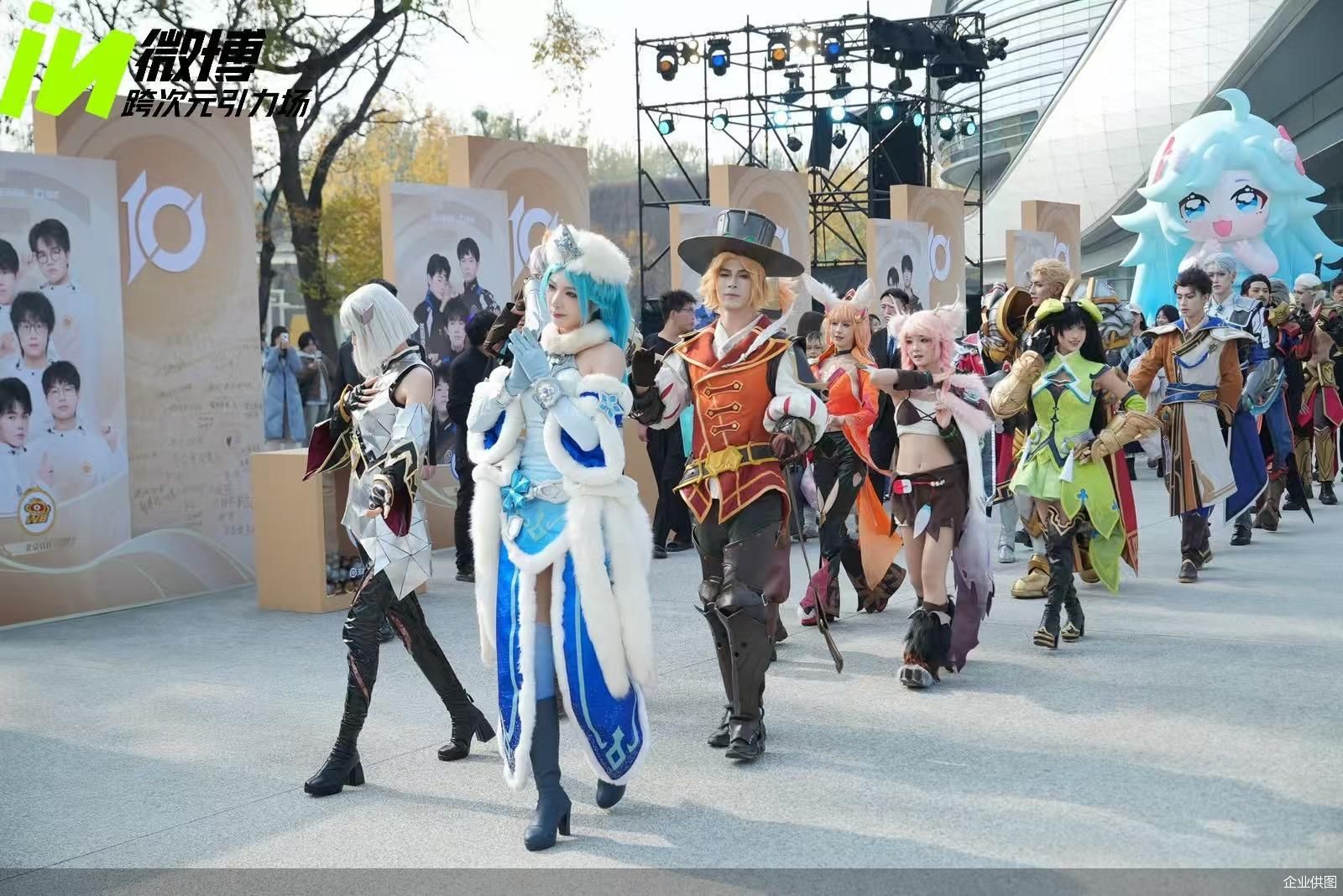
Core Insights - Emotional consumption is driving a transformation in the fashion market in Beijing, shifting user engagement from "traffic acquisition" to "emotional maintenance" [1] - The rise of emotional economy is evident in various retail and experiential formats, such as trendy toys, anime, and music festivals, which have become important outlets for young people to express themselves [1] Group 1: Emotional Consumption and Market Trends - The value of trendy toys is recognized not only by consumers but also by commercial real estate developers, marking a new growth area in the market [3] - The "Guzi economy" is highlighted as a new growth point in consumption, with government initiatives supporting the development of quality anime products and trendy toy hubs [3] - The Wangfujing shopping district has transformed its B2 level into a 10,000 square meter anime-themed space, resulting in a doubling of revenue in 2024 compared to the same period before renovation, with anime-related revenue nearing 100 million [3] Group 2: Consumer Behavior and Demographics - The 2025 "Guzi" trend report indicates a 105% year-on-year increase in Guzi consumption, with the first quarter of 2025 seeing domestic Guzi transaction volumes 1.2 times that of imported Guzi [4] - The "post-05" generation is the fastest-growing demographic in this market, with female consumers making up 78% and averaging 2.9 purchases per month, spending over 100 yuan per transaction [4] Group 3: Event-Driven Consumption - The concert market in Beijing is booming, with over 180 concerts in 2025 and an 80% sell-out rate, significantly boosting related sectors like transportation and dining [8] - Events like the Mayday concert have drawn hundreds of thousands of attendees, creating a ripple effect on local businesses and services [8] Group 4: Market Challenges - Despite the growth, the industry faces challenges such as homogenization and copyright issues, which are hindering high-quality development [10][11] - The rapid increase in "Guzi economy" related enterprises has led to a saturation of similar products, with consumers noting a lack of uniqueness in offerings [10] - Copyright infringement remains a significant issue, with a 46% increase in complaints related to IP products, highlighting the need for better protection and development of original IP [11]

第三十八届北京图书订货会接待观众超10万人次
Ren Min Ri Bao· 2026-01-12 02:17
Core Insights - The 38th Beijing Book Fair concluded on January 10, attracting over 100,000 attendees and hosting more than 420 cultural events [1] Group 1: Event Overview - The book fair showcased over 400,000 types of books, with 711 participating units and 2,765 exhibition booths [1] - The event featured a "President and Editor-in-Chief Live Broadcast" book recommendation activity, promoting the deepening of national reading initiatives [1] Group 2: Cultural Integration - The cross-border cultural product exhibition area included categories such as intangible cultural heritage, IP-related products, trendy stationery, cultural tourism, and technological innovation experiences, highlighting new achievements in cultural industry integration [1]
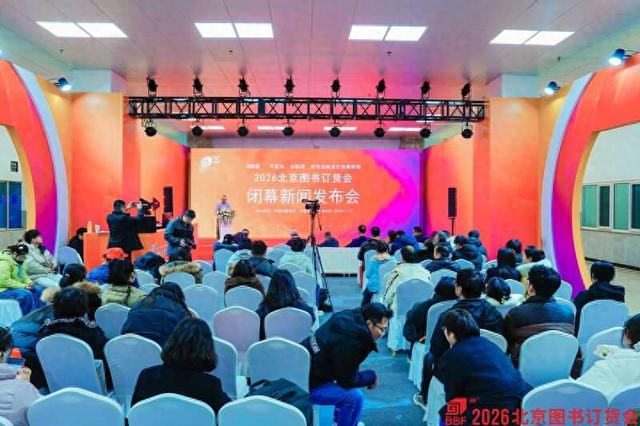
2026北京图书订货会闭幕 40万余种图书吸引观众超10万人次
Xin Lang Cai Jing· 2026-01-10 14:21
Group 1 - The 2026 Beijing Book Fair concluded after three days, showcasing over 400,000 new and key books that reflect the spirit of the times and emphasize academic research and innovative ideas [3][8] - The event attracted over 100,000 attendees, including representatives from national and private bookstores, libraries, and distribution companies, with an exhibition area of 50,000 square meters [3][8] - A total of 711 exhibitors participated, featuring 2,765 booths, and the cross-border cultural product exhibition area increased by one-third compared to the previous year, with 101 booths [3][5] Group 2 - The fair included over 420 cultural activities, highlighting the importance of cultural industry integration and innovation [3][8] - Key themes included the digital transformation of the industry, showcasing advancements such as intelligent editing systems, digital reading platforms, virtual reality books, and AI creative assistants [5][8] - Various upgraded brand cultural activities were held, including forums on high-quality development in publishing and marketing innovation, reinforcing the fair's role as an industry leader [8]
新华社权威快报|人工智能与数字化出版成果亮相2026北京图书订货会
Xin Hua Wang· 2026-01-08 01:09
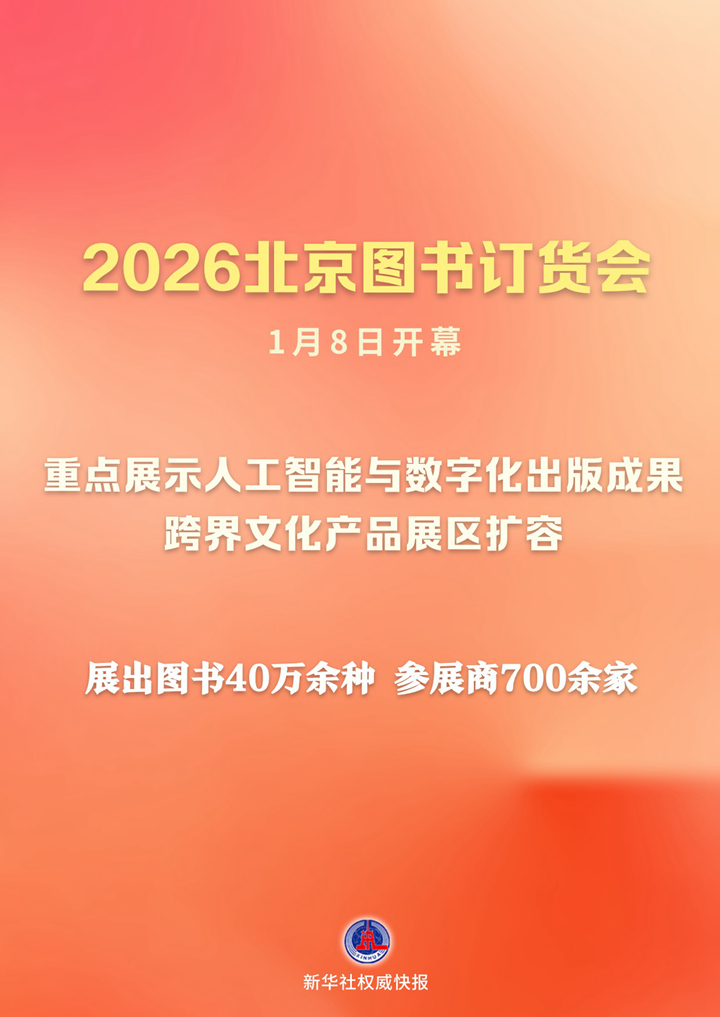
Group 1 - The 2026 Beijing Book Ordering Fair opened on January 8, focusing on the theme "New Chapters, New Situations, New Journeys, Continuing the New Glory of the Publishing Industry" [3] - The exhibition area covers 50,000 square meters, showcasing over 400,000 types of books with more than 700 exhibitors and over 2,700 booths [3] - The cross-border cultural product exhibition area has expanded to 101 booths, an increase of one-third compared to the previous session [3] Group 2 - Key highlights include the display of artificial intelligence and digital publishing achievements, featuring technologies such as intelligent editing systems, digital reading platforms, virtual reality books, and AI creative assistants [3] - The cross-border cultural product area emphasizes "integrated innovation and empowering growth," covering categories like intangible cultural heritage, IP peripherals, trendy stationery, cultural tourism, and science and technology experiences [3] - The Beijing Book Ordering Fair is co-hosted by the China Publishing Association and the China Book and Periodical Distribution Association, established in 1987, and is known as the "Barometer of Chinese Publishing" [3]
中国经济信心说丨惠及9.58亿人,数字消费进一步释放内需潜力
Yang Shi Xin Wen· 2025-12-25 07:35
Core Insights - The report highlights the rapid growth of digital consumption in China, with total digital consumption reaching 9.37 trillion yuan in the first half of 2025, accounting for nearly half of total household consumption expenditure [1] - The user base for digital consumption has surpassed 958 million, indicating a broadening demographic reach, including significant participation from the elderly and rural populations [1] Group 1: Digital Consumption Trends - Digital consumption is no longer limited to a niche market; it has become an accelerator for China's vast consumer potential, with 27.2% of users from Generation Z, 12.2% from the elderly, and 26.0% from rural areas [1] - The shopping experience has evolved, with 71.1% of online shoppers engaging in price comparisons, and 60.6% willing to pay a premium for emotional value and personal interests [2] Group 2: Emerging Consumer Segments - Unique products like "La Bu Bu" toys and cultural creative products are gaining popularity among young consumers, indicating a shift towards personalized and culturally resonant consumption [3] - The rise of new consumption scenarios, such as smart products and traditional cultural items sold online, showcases the innovative fusion of AI and culture in driving consumer demand [3] Group 3: Integration of Online and Offline Experiences - The integration of online and offline shopping experiences is breaking traditional consumption barriers, with 6.26 million users engaging with micro-short dramas and 5.69 million using online food delivery services [4] - This seamless blend of digital convenience and physical experiences enhances consumer engagement and effectively taps into latent domestic demand [4] Group 4: Future Directions - To sustain the momentum of digital consumption, there is a need to strengthen digital infrastructure, bridge the urban-rural digital divide, and encourage innovation in supply to meet user demands [4] - A robust regulatory framework is essential to create a safe and trustworthy consumption environment, which will further boost confidence and expand domestic demand [4]
实用体验并重 我国数字消费用户规模破9.58亿人
Bei Jing Shang Bao· 2025-12-16 12:23
Group 1 - The core digital consumption scale in China reached 9.37 trillion yuan, accounting for 46.5% of total household consumption expenditure, with physical goods making up 66.3% of this total [1] - Digital service consumption, including online education and healthcare, accounted for 29.2%, while digital content such as music and video represented 4.5% [1] Group 2 - By June 2025, the number of digital consumption users is expected to exceed 958 million, with Generation Z users at 261 million, representing 27.2% of the total [3] - The elderly population (60 years and above) accounts for 12.2% of digital consumers, while rural users make up 26.0% [3] - Consumers prioritize both practicality and experience, with 67.1% opting for practical alternatives and 60.6% purchasing for personal enjoyment [3] Group 3 - Digital travel and entertainment consumption exceeded 1 trillion yuan in the first half of the year, with online food delivery also surpassing 1 trillion yuan [4] - Digital livelihood services, including online healthcare and education, exceeded 500 billion yuan [4] - The report emphasizes the shift of China's digital economy from infrastructure to application, highlighting the importance of enhancing customer engagement and extending user interaction time [4] Group 4 - The intersection of artificial intelligence and consumption presents significant potential, with AI expected to drive a new data-driven consumption ecosystem [4] - Future supply-side improvements are anticipated through the development of AI terminal products and enhanced scene-based intelligent services [5] - Companies are expected to leverage AI for high-quality overseas expansion and to build intelligent production and logistics systems [5]

我国数字消费用户规模突破9.58亿人
Xin Hua Wang· 2025-12-16 09:31
Group 1 - The core viewpoint of the article is that digital consumption in China is rapidly growing, with the user base expected to exceed 958 million by the first half of 2025, accounting for 85.3% of the total internet users [1] - The user structure indicates that the "Z generation" constitutes 27.2% of digital consumers, while users aged 60 and above make up 12.2%, and rural users account for 26.0%, highlighting a diverse digital consumption market [1] - The report notes that since 2025, digital consumption has shown strong performance in various segments, with 39.1% of internet users purchasing smart home, smart digital, and wearable devices [1] Group 2 - Digital consumption channels are increasingly integrating, with the boundaries of digital consumption scenarios continuously expanding [1] - The supply of digital entertainment content is diversifying, driving the integration of consumption across smart hardware, culture, and tourism sectors [1] - As of June this year, over 223 million users have utilized online services such as delivery and home repair, with service categories expanding to include pet care and elderly companionship, providing efficient support for daily life [1]
2026北京图书订货会明年1月8日至10日举办
Xin Jing Bao· 2025-12-10 06:56
Core Viewpoint - The 2026 Beijing Book Ordering Conference will be held from January 8 to 10, 2024, featuring various important events focused on high-quality development in publishing and reading [1] Group 1: Event Details - The conference will include the 2026 Publishing and High-Quality Development Forum and the "Reading Without Boundaries Achieves the Future" Reading+ Forum [1] - A special cross-border cultural product exhibition area will be established, covering categories such as intangible cultural heritage creative products, IP peripherals, trendy stationery, cultural tourism, and technological innovation experiences [1] Group 2: Visitor Experience - Attendees will have opportunities to "see, play, purchase, and interact" with the exhibits [1]
汇丰前海证券首席执行官、总经理陆天先生与香港法国工商总会主席对话:聚焦中国的新消费群体
21世纪经济报道· 2025-12-02 13:18
Core Insights - Despite short-term pressures, the Chinese consumer market remains large and diverse, presenting opportunities for companies with clear product positioning [2] - Understanding Chinese consumers is crucial, as their purchasing power is a key driver of economic growth and corporate expansion [2] Consumer Trends - The post-1995 generation, while only about 20% of the population, contributes approximately 40% of consumption, with their spending expected to grow by about 400% to 16 trillion RMB by 2035 [3] - This demographic values self-expression and authentic experiences, favoring experiential consumption such as travel and concerts, and they are significant contributors to luxury goods spending [3] - The average age of high-end consumers in China is only 29, indicating a young market with increasing purchasing power due to wealth inheritance [3] Market Dynamics - Local brands are gaining market share across various sectors, including electric vehicles, beauty products, and collectibles, due to their better understanding of Chinese consumers and competitive pricing [4] - The luxury goods sector is also witnessing a shift towards high-quality, creative brands that reflect Chinese craftsmanship [4] - The jewelry market, characterized by a large capacity and relatively few international competitors, presents opportunities for brands that emphasize cultural and artisanal value [4] Travel and Consumption - The rapid recovery of outbound tourism is expected to impact domestic luxury consumption, as international flight capacity has reached approximately 93% of pre-pandemic levels, with a 20% year-on-year increase in international passenger flights from January to August [4] - The growth of outbound tourism aligns with the demand for experiential consumption, although it may divert some spending from domestic luxury markets [4] Long-term Outlook - The continuous growth of local brands and the recovery of outbound tourism indicate a diversification of the Chinese consumer market [4] - The increasing purchasing power of the post-1995 generation suggests a positive long-term outlook for the Chinese consumption market, despite short-term challenges [4]